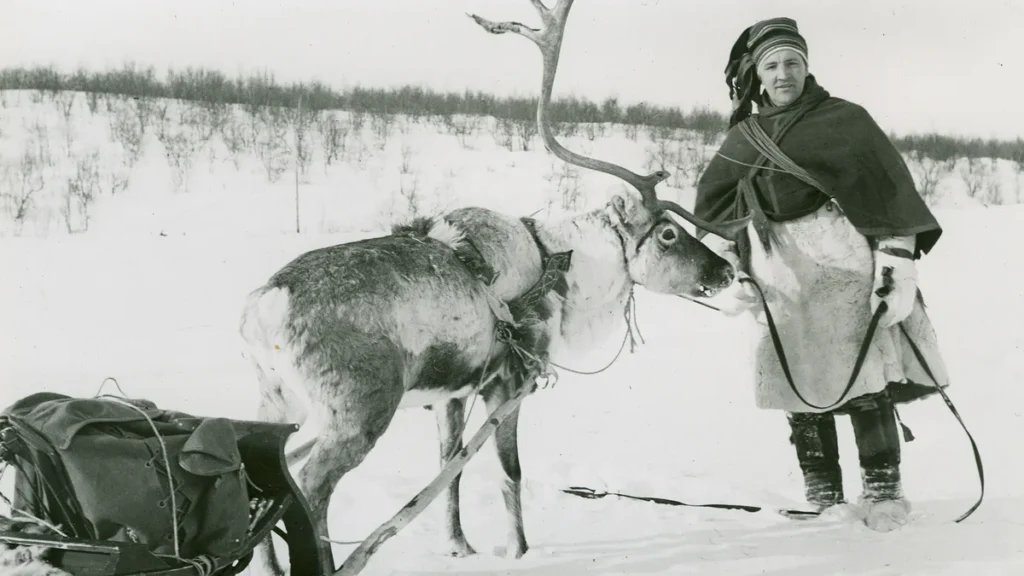
A reindeer barn is not a deer barn with the name changed. A deer barn is built for a wild, flighty animal that must be kept at a distance behind tall pens and high fencing, with fittings designed so a startled animal does not hurt itself. A reindeer barn is built for the opposite animal: a semi-domesticated herd animal that people walk among every day, move between pasture and corral on foot, feed by hand in the dark months, and harness to a sled. The reindeer comes to the herder. The barn has to be built around that daily contact, not around keeping a wild animal away.
That difference shapes every decision a reindeer barn installation startup makes. The corrals are handling corrals, sized for sorting a herd that is used to people, with gates a herder can work alone and races that move animals calmly toward the barn. The feeding system is built around lichen and moss in winter, when the ground is frozen and the herd cannot graze, and around hay and concentrate rations that keep a working herd in condition. The shelter is a winter shelter, a windproof barn that holds heat without trapping damp air, with deep dry bedding and room for calves born in the spring. And the draught work is real work: harnessing, sled rigging, and the yard space to turn a team around without tangling lines.
The nine AI tools in this guide cover that whole build. They plan corrals and herding routes, work out lichen rations, model snow load and wind on the shelter, size harness and sled rigging, plan calving pens, keep water flowing in sub-zero cold, and price the job and hand it over with proper records. Each tool is judged on the herded-deer build: corrals, herding, feeding, shelter, and draught handling at barn scale.
Key takeaways
- A reindeer barn is a herded-deer build, not a wild-deer build: handling corrals and daily contact, not tall pens and high fencing.
- Winter feeding is the hardest part of the job, and it is built around lichen and moss, not the grain and silage rations of a cattle barn.
- Draught handling is part of the installation, so the yard needs harnessing space, sled storage, and a turning area for a team.
- Water has to keep flowing below freezing, which means heated lines, insulated troughs, and a backup plan when the power fails.
- Start with CorralDraft AI for the layout, then LichenFeed AI for the winter ration plan, and price the whole job with ReindeerQuote AI before ordering materials.

The 9 best AI tools for reindeer barn installation startups at a glance
| Tool | What it does best | Best for |
|---|---|---|
| CorralDraft AI | Corral layout and draught-team handling | Sorting corrals and harnessing yards |
| HerdMove AI | Herding routes between pasture and corral | Moving herds without stress |
| LichenFeed AI | Lichen rations and winter feeding | Winter feed plans and stores |
| SnowShelter AI | Winter shelter, snow load and windbreaks | Barn shell and ventilation |
| SledRig AI | Sled rigging and harness fitting | Draught teams and sled storage |
| CalfDrop AI | Spring calving pens and calf care | Calving season layout |
| FrostTrough AI | Freeze-proof water lines and troughs | Sub-zero water supply |
| ReindeerQuote AI | Priced quotes and job costing | Quoting and materials |
| HerdLedger AI | Records, handover and aftercare | Handover and repeat work |
What a reindeer barn startup actually installs
A reindeer barn installation startup builds the whole working yard for a herded reindeer operation. The centre of it is the barn itself: a timber or steel-framed shelter with a high, draught-free roof, deep bedding, and pens that open onto the corral. Around the barn sit the sorting corrals, the handling race, the feed store, the lichen store, the water plant, and the sled store. The yard is laid out so a herder can bring a herd in from pasture, sort it in the corrals, feed it, check it, and harness a team without moving animals through the same gate twice.
The herded-deer distinction matters most in the corrals. A wild deer needs height and distance: tall pens, high fencing, and fittings that protect a panicking animal from itself. That is the deer barn build for wild deer, with tall pens and high fencing, and it is a different job from this one. A reindeer herd is handled daily. The animals walk a race willingly, stand for harnessing, and follow a herder carrying feed. So the corrals in a reindeer barn are built at handling height, with solid lower panels that calm the animals, gates that one person can swing and latch, and a race wide enough for a herder to walk beside the animals rather than behind them. The skill is in the flow: curved approaches, no blind corners, and a sorting pen for every group the herder needs to separate.
Feeding is the second thing that sets the reindeer barn apart. Reindeer are lichen eaters. In the long northern winter, when snow covers the ground, the herd lives on lichen and moss gathered and stored through the summer, topped up with hay and a small concentrate ration. A reindeer barn therefore needs a dry lichen store, a feed passage the herder can work in the dark, and troughs set low enough for a reindeer to eat comfortably. This is nothing like a cattle barn ration of silage and grain, and the tools below are judged on whether they understand lichen as a feed, not on whether they can cost a dairy ration.
Shelter is the third difference. A reindeer does not need a heated barn; it needs a dry, windproof barn that stays above the worst of the wind chill while letting damp air out. The roof has to carry a heavy snow load, the walls have to break the wind without sealing the building shut, and the bedding has to stay dry through months of animals coming in wet from the snow. Draught handling is the fourth: a working reindeer herd pulls sleds, so the yard needs a harnessing area with room to fit harness on a standing animal, a sled store that keeps runners dry, and a turning area big enough for a team to leave the yard without reversing.
The 9 best AI tools for reindeer barn installation startups
1. CorralDraft AI: The Best Tool for Corral Layout and Draught-Team Handling
CorralDraft AI is the layout tool for the whole yard, and it earns the first place because the corral is where a reindeer barn succeeds or fails. The tool takes the herd size, the number of groups the herder sorts, and the shape of the site, then draws the sorting corrals, the handling race, and the harnessing yard as one working system. It sizes each corral for the group that will stand in it, places gates where a single herder can reach them without crossing the flow of animals, and checks that the race from the pasture gate to the barn door has no dead ends or sharp turns where a herd will balk.
What makes CorralDraft AI a reindeer tool rather than a generic pen planner is the draught handling. The harnessing yard is drawn with space for a herder to stand beside a reindeer and fit a harness, with tie points at the right height and a clear run from the yard to the sled store. The tool also plans the turning area, sizing it for a team leaving with a loaded sled rather than for a single animal. A startup that gets the corral wrong spends every winter fighting its own yard, so this is the tool to buy first and the one to run before any timber is ordered.
CorralDraft AI also exports a materials list per corral, so the quote follows the drawing instead of being guessed afterwards. For a small startup, that link between layout and costing is what keeps a first reindeer barn job profitable.
2. HerdMove AI: The Best Tool for Herding Routes Between Pasture and Corral
HerdMove AI plans the routes a herd walks every day: from the grazing ground to the corral, from the corral to the barn, and from the barn back out to pasture. A reindeer herd moves on foot with a herder, so the routes have to be short, level where the ground allows, and free of the fences, ditches, and gates that make a herd split and scatter. HerdMove AI maps the site, marks the wet ground and the steep ground, and draws routes that keep the herd together and keep the herder in sight of the whole group.
The tool also plans the seasonal moves. A herd does not use the same ground in January as in June, and HerdMove AI lets the startup draw a summer route and a winter route, with the winter route kept clear of the deepest snow drifts and the summer route kept clear of the wettest ground. It flags any route that crosses a road or a neighbour’s land, so the startup can raise it with the client before the build starts rather than after the herd is already using it.
For a startup, HerdMove AI is also a selling tool. A client who can see the daily routes drawn on a map of their own land understands the yard in a way a list of pen sizes never achieves, and that understanding is what turns a quote into a signed job.
3. LichenFeed AI: The Best Tool for Lichen Rations and Winter Feeding
LichenFeed AI is the feeding tool, and it is the one tool in this list that no cattle, sheep, or poultry barn tool can replace. It works out how much lichen and moss a herd needs through the winter, how much hay and concentrate tops the ration up, and how big the lichen store has to be to hold it all dry. The startup enters the herd size, the length of the snow season, and the share of the diet the client wants from gathered lichen, and the tool returns a ration per animal per day and a store volume for the season.
The tool also plans the feed passage. It sizes the troughs, sets the feeding height for reindeer rather than cattle, and works out how many animals can feed at once without crowding. It flags the common mistake of building a cattle-height feed passage for reindeer, which leaves the animals stretching and the herder bending all winter. The store plan matters just as much: lichen that gets damp rots, so LichenFeed AI checks the store against the roof and ventilation plan and warns when the store will sweat in a thaw.
For a startup, the value is in the winter numbers. A client who knows the herd will eat a known weight of lichen a week can gather and buy with confidence, and the startup that supplies that number with the barn is the one that gets called back in the spring.
4. SnowShelter AI: The Best Tool for Winter Shelter, Snow Load and Windbreaks
SnowShelter AI designs the barn shell for a northern winter. It takes the site, the snow load the roof must carry, and the direction of the prevailing wind, then sizes the roof structure, the wall bracing, and the windbreaks around the yard. The tool checks that the roof pitch sheds snow instead of holding it, that the eaves do not dump snow onto the corral gates, and that the windbreaks protect the yard without creating a drift that buries the barn door.
Ventilation is the part of the shelter that most startups get wrong, and SnowShelter AI spends most of its effort there. A reindeer barn has to let damp air out without letting the wind in, so the tool models the ridge vent, the side inlets, and the stack effect on a still, cold night, when there is no wind to drive the air. It warns when a design will trap moisture under the roof, which is what rots timber and leaves bedding damp for months. The tool also checks the bedding plan, sizing the deep-bedded area for the herd and working out how much straw the client will need through the winter.
SnowShelter AI is the tool that keeps a reindeer barn standing through its first winter and dry through its tenth. A startup that installs with it can show the client the snow-load numbers for their own roof, which is a stronger sales argument than any promise about build quality.
5. SledRig AI: The Best Tool for Sled Rigging and Harness Fitting
SledRig AI covers the draught work that makes a reindeer barn different from every other livestock barn. It sizes the harness for the reindeer that will pull, matches the sled to the load the client carries, and works out the rigging: the traces, the shafts, and the braking arrangement that lets a team stop a loaded sled on a downhill run. The startup enters the team size and the loads, and the tool returns a harness list, a sled specification, and a rigging diagram the client can keep in the sled store.
The tool also plans the storage. Sled runners rust and warp if they are left damp, and harness leather cracks if it is stored cold and wet, so SledRig AI sizes a dry sled store with racking for the sleds and a warm, dry corner for harness. It plans the harnessing area too, with tie points and enough clear floor for a herder to walk around a harnessed animal without tripping over traces. That floor space is easy to forget on a drawing and impossible to add after the barn is built.
For a startup, SledRig AI turns draught work from a guess into a specification. A client who pulls timber, feed, or tourists with a reindeer team will judge the whole barn by whether the sled work runs smoothly, and this tool is what makes it run smoothly.
6. CalfDrop AI: The Best Tool for Spring Calving Pens and Calf Care
CalfDrop AI plans the calving season, which is the busiest few weeks in a reindeer barn. Reindeer calves are born in the spring, and the barn needs calving pens that are warm, dry, and close enough to the herder’s eye that a difficult birth is seen in time. CalfDrop AI sizes the pens for the number of females due in the same week, places them near the barn door for the herder and away from the draught of the main entrance, and plans the creep area where calves can rest out of the way of the adults.
The tool also plans the first-weeks routine. It works out the bedding change schedule for the calving pens, the milk and supplement stores for any calf that needs help, and the point at which calves can join the main herd without being pushed off the feed troughs. It flags the mistake of putting calving pens at the far end of the barn, where a herder checking at midnight has to walk the full length of a dark building to reach them. A calving pen the herder can reach quickly is a calving pen that gets used properly.
CalfDrop AI is a small tool with an outsized effect on the client’s year. A good calving season is what the client remembers when the next barn job comes up, and a startup that plans for it is a startup that gets recommended.
7. FrostTrough AI: The Best Tool for Freeze-Proof Water Lines and Troughs
FrostTrough AI keeps water flowing when the temperature stays below freezing for weeks. It sizes the heated water line from the supply to the barn, picks the insulation and heat-trace rating for the coldest week on the site, and places the troughs where the water stays liquid without heating the whole barn. The tool checks the fall on every pipe run, so a line that is meant to drain back does not hold a pocket of water that freezes and splits the pipe on the first hard night.
The tool also plans the backup. A heated trough is useless if the power fails, so FrostTrough AI sizes a backup supply: a stored water tank inside the barn, a manual fill route, and a trough the herd can drink from while the power is out. It works out how long the stored water lasts for the herd size, so the client knows whether a power cut is an inconvenience or an emergency. That number belongs in the handover, not discovered in a storm.
For a startup, FrostTrough AI is the tool that stops the midwinter callout. A frozen water line is the most common winter failure in a northern barn, and a startup that installs freeze-proof water is a startup that does not spend January driving back to old jobs.
8. ReindeerQuote AI: The Best Tool for Priced Quotes and Job Costing
ReindeerQuote AI turns the drawings into a priced quote the client can sign. It pulls the materials lists from the corral, shelter, and feeding plans, prices them against the supplier rates the startup loads in, and adds labour by the task: corrals, barn shell, feeding fit-out, water, and sled store. The quote is broken down so the client can see what the corrals cost, what the shelter costs, and what the water plant costs, instead of being handed a single number to accept or refuse.
The tool also handles the parts of a reindeer barn that a generic quoting tool misses. It costs the lichen store as a store, not as spare floor space, it prices the harnessing yard and the sled store as working areas, and it adds the winter working allowance for building in the cold months, when daylight is short and the ground is frozen. Those are the lines that separate a quote that makes money from a quote that loses it. The yak barn build for high-altitude herds faces the same cold-weather costing problem, and the same discipline applies here: price the winter, or the winter prices the job for you.
ReindeerQuote AI keeps a record of every quote against the job it became, so the startup can see which estimates held and which ran over. That record is what turns a second-year startup into a business that prices with confidence instead of hope.
9. HerdLedger AI: The Best Tool for Records, Handover and Aftercare
HerdLedger AI is the records tool, and it is the one that earns the repeat work. It holds the herd record for the barn: the animals, the groups, the feeding plan, the calving dates, and the health checks, alongside the building record: the materials, the snow-load numbers, the water plan, and the warranty dates. At handover, the client gets a single file that tells them how the barn works, what to check each season, and when to call the startup back.
The tool also runs the aftercare. It reminds the startup when a client’s barn is due its first winter check, when the water plant needs its pre-freeze service, and when the sled store needs its spring check before the next season. That reminder list is the startup’s pipeline: a barn that is checked every year is a barn whose owner calls the same startup for the next building. HerdLedger AI turns a one-off installation into a relationship, and in a small northern market, relationships are the business.
For a new startup, HerdLedger AI is also the cheapest marketing there is. A client with a tidy handover file and a startup that calls before the freeze is a client who recommends the startup to the next herder down the valley.
How the tools work together on a real job
A reindeer barn job runs in a fixed order, and the tools follow it. CorralDraft AI draws the yard first, because the corral layout fixes where the barn door, the feed passage, and the water plant all sit. HerdMove AI then draws the routes the herd will walk, and any route that clashes with the corral plan is fixed on paper, not after the fences are up. LichenFeed AI sizes the feed store and the troughs, and its numbers feed straight into SnowShelter AI, which checks the store against the roof and the ventilation plan. SledRig AI plans the harnessing yard and the sled store while the shell is still a drawing, so the draught work is designed in rather than squeezed into whatever space is left.
The second half of the job is the cold-weather work. FrostTrough AI sizes the water plant and its backup, CalfDrop AI places the calving pens for the spring, and ReindeerQuote AI prices the whole job from the drawings before a single order is placed. HerdLedger AI opens the job file on day one and carries it through to handover, so nothing agreed on site is lost between the first visit and the last. A startup that runs the tools in this order does the thinking once, on paper, and then builds what it drew. The emu barn build for a smaller ratite shows the same pattern: a different animal, the same discipline of drawing the whole yard before building any of it.
Checklist: before you quote a reindeer barn
- Walk the herding routes with the client and mark the wet ground, the steep ground, and any crossing that needs agreement before building.
- Count the herd by group, not just by head, so the corrals are sized for the sorting the herder actually does.
- Work out the full winter lichen need and check the store stays dry through a thaw before promising a feeding plan.
- Check the roof snow load and the ridge ventilation together, on the same drawing, so the barn sheds snow and still breathes.
- Plan the water backup before the first freeze, with a stored supply the herd can drink from if the power fails.
- Price the winter working allowance and the sled store as real lines in the quote, not as costs absorbed later.
Frequently asked questions
What is a reindeer barn installation startup?
It is a startup that builds the working yard for a herded reindeer operation: the barn, the sorting corrals, the handling race, the feed and lichen stores, the water plant, and the sled store. It is a building trade for a semi-domesticated herd animal, not a wildlife trade, and its tools are judged on corrals, herding, feeding, shelter, and draught handling.
How is a reindeer barn different from a deer barn?
A deer barn is built for a wild, flighty animal that must be kept at a distance behind tall pens and high fencing. A reindeer barn is built for a semi-domesticated herd that people walk among daily, move on foot, feed by hand, and harness to a sled. The corrals are handling corrals at herder height, the feeding is built around lichen, and the yard includes draught handling that a wild-deer barn never needs.
How much does a reindeer barn cost to install?
It depends on the herd size, the site, and how much of the yard is built in the winter months, when daylight is short and the ground is frozen. The honest answer is to price it from the drawings with a tool like ReindeerQuote AI, broken down by corrals, shelter, feeding, water, and sled store, so the client can see where the money goes and the startup can see where the margin is.
Do reindeer need a heated barn?
No. A reindeer needs a dry, windproof barn that holds off the wind chill while letting damp air out, with deep dry bedding and a roof that carries the snow load. Heating the whole barn wastes money and traps moisture. What does need heat is the water: the lines and troughs must be freeze-proof, with a backup supply for a power cut.
What do reindeer eat in winter?
Lichen and moss, gathered and stored through the summer, topped up with hay and a small concentrate ration. The barn needs a dry lichen store and low troughs set at feeding height for reindeer. A startup should work out the full winter lichen need before promising a feeding plan, because a herd that runs out of lichen in February is a herd in trouble.
Should a reindeer barn startup offer aftercare after handover?
Yes. A reindeer barn needs a pre-freeze water check, a first-winter check, and a spring check of the sled store and calving pens. Aftercare is also the startup’s pipeline: a barn that is checked every year is a barn whose owner calls the same startup for the next building, and in a small northern market that repeat work is the business.
Bottom line
A reindeer barn is a herded-deer build, and the tools that win are the ones that understand that. Start with CorralDraft AI for the yard, LichenFeed AI for the winter ration, and SnowShelter AI for a barn that sheds snow and still breathes. Add SledRig AI for the draught work, FrostTrough AI for water that keeps flowing below freezing, and CalfDrop AI for the spring. Price it honestly with ReindeerQuote AI and hand it over with HerdLedger AI, and the barn will do what a reindeer barn is meant to do: keep a working herd fed, sheltered, and moving through the longest winter.

Keep what speaks to you.
Leave room for your own perspective.


