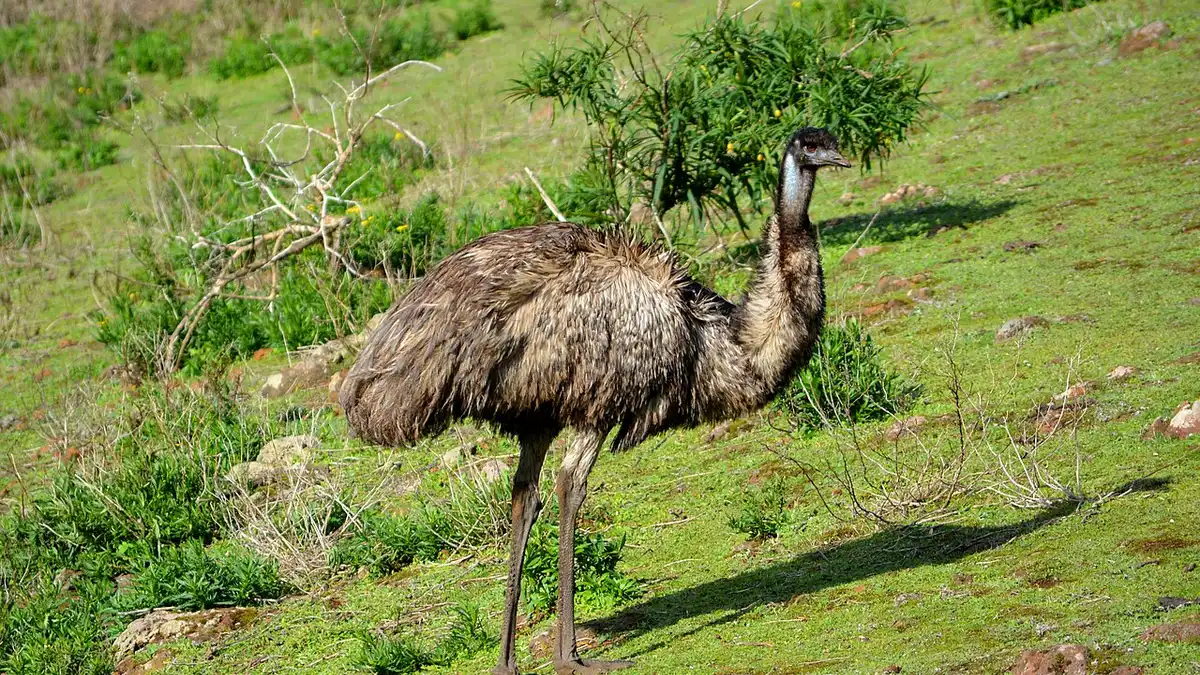
An emu barn installation startup builds barn-scale housing for emus: the pens, the fencing, the feeding lines and the shelter that let a farm keep emus safely through every season. Emus are large flightless birds raised for meat, oil, leather and feathers, and a barn built for them is a working farm building, not a pet enclosure. The birds stand around 1.5 to 1.9 metres tall, they run fast, they kick hard when cornered, and they need room to move in groups without injuring each other. A startup in this trade designs the building, sizes the pens, plans the feeding and watering, and hands over a barn that works on day one.
The emu barn is a smaller build than its closest cousin, the ostrich barn installation startup, and that size difference shapes every decision. Emu pens are smaller, emu fences are lower, and the birds themselves are lighter and easier to handle than the taller ostrich. The emu build also has its own biology to plan around: male emus do the incubating, sitting on the nest for around eight weeks, so the barn needs quiet incubation corners away from the main flock. Emu chicks need warm, dry brooding space in their first weeks, and emu oil — rendered from the bird’s fat — gives the farm a product line that needs clean, separate storage and handling space inside the barn.
This guide compares nine AI tools that cover the whole emu barn build, from the first pen sketch to the final quote. Each tool is judged on what it does for an emu barn specifically: pen sizes for emus rather than cattle, fencing heights for emus rather than taller birds, feeding and watering for a flock of emus, and the incubation, chick rearing and oil handling that make the emu barn its own trade. Use the comparison table to shortlist, then read the tool-by-tool breakdowns to pick the stack that fits your first job.
Key takeaways
- An emu barn is a barn-scale build for a bird around 1.5 to 1.9 metres tall, with smaller pens and lower fences than the taller ostrich barn.
- Male emus incubate the eggs for around eight weeks, so the barn needs quiet incubation corners separated from the main flock.
- Emu chicks need warm, dry brooding space, and chick rearing is one of the three jobs that define the emu barn, alongside feeding and oil handling.
- Emu oil is a real product line for the farm, so the barn plan should include clean, separate storage for rendering and bottling.
- The nine tools below cover planning, pens, fencing, shelter, feeding, water, incubation, chick rearing, oil tracking and quoting — pick three or four to start, not all nine.
Emu barn AI tools compared
The table below compares all nine tools at a glance. Read it as a shortlist, then use the detailed sections that follow to check the fit for your first emu barn job.
| Tool | Best for | What it does | Where it fits |
|---|---|---|---|
| EmuPen Planner AI | Pen layout | Sizes emu pens and runs for flock size | Planning |
| LowFence Emu AI | Emu fencing | Specs lower emu fencing, posts and gates | Build |
| IncubateMale AI | Male incubation | Schedules the male’s eight-week incubation | Breeding |
| EmuChick Rear AI | Chick rearing | Plans brooding heat, space and feeding for chicks | Breeding |
| EmuFeed Mix AI | Feeding | Builds emu rations and feeder layouts | Daily care |
| EmuOil Track AI | Emu oil | Tracks oil yield, rendering and storage | Products |
| EmuShelter Sense AI | Shelter climate | Models ventilation, shade and bedding dryness | Build |
| EmuWater Line AI | Water | Plans drinkers, lines and frost protection | Daily care |
| EmuStart Quote AI | Quoting | Prices the build and tracks the job | Business |
Planning the emu barn before a post goes in
Every emu barn starts on paper, and the planning stage is where most of the money is saved or lost. Pen sizes, gate positions, feeder runs and the incubation corner all have to be settled before the first post hole is dug, because moving a fence line after the concrete is set costs far more than redrawing it. The two tools in this section handle that planning work: one sizes the pens for emus, and the other prices the whole build so the quote survives contact with the real job.
EmuPen Planner AI
EmuPen Planner AI is the layout tool for the emu barn, and it starts from the bird rather than the building. You enter the flock size, the age mix and whether the barn will hold breeding pairs, growing birds or a mixed flock, and it draws pen sizes that give each emu room to turn, feed and move away from a more dominant bird. Emus are social but they squabble at feeders and in tight corners, so the planner spaces the pens wide enough to keep the peace and narrow enough that the barn stays affordable. It also marks out the runs that connect the pens to the outdoor yard, because emus that never get outside grow restless and lose condition.
The planner’s real value shows in the details a first-time builder misses. It places gates where a handler can move a bird without trapping themselves in a corner, and it keeps the breeding pens away from the main traffic so a sitting male is not disturbed. It sizes the chick pens separately, because chicks need smaller, warmer, more sheltered space than adult birds, and it reserves a pen near the barn door for new arrivals or sick birds. The tool also checks the pen count against the flock plan, so a farm that wants to grow from twenty birds to fifty does not have to rebuild the barn in year two. For a startup, that forward planning is the difference between a barn that lasts and a barn that is outgrown before it is paid for.
EmuStart Quote AI
EmuStart Quote AI prices the emu barn build and keeps the job on track once the work starts. You feed it the pen plan, the fencing lengths, the shelter size and the feeding and watering kit, and it builds a line-by-line quote with materials, labour and a margin that reflects the real cost of working with large birds. Emu fencing is not cattle fencing and emu feeders are not chicken feeders, so a generic quoting tool will either underprice the job or scare the client with a number built for the wrong animal. EmuStart Quote AI knows the emu build, and its prices reflect the lower fences, the smaller pens and the chick and incubation spaces that a cattle or poultry quote would miss entirely.
The tool also tracks the job as it runs. Each stage of the build — groundwork, posts, fencing, shelter, feeders, water lines — gets a checklist with costs attached, so the installer can see at a glance whether the job is ahead or behind budget. If a fence run needs more posts than planned because the ground is soft, the tool flags the overrun before it eats the margin. It also stores supplier prices, so repeat jobs get faster to quote and the numbers get sharper with every barn. For a new startup, that pricing memory is worth as much as the quote itself, because the second and third barns are where the profit starts to show.
Pens, fencing and shelter for emus
The physical build of an emu barn comes down to three things: pens that fit the birds, fencing that holds them, and shelter that keeps them dry and comfortable. Emus are strong, fast and curious, and they will test every weak point in a fence line. The two tools in this section handle the fencing specification and the shelter climate, and together with the pen planner they cover the whole structure of the barn.
LowFence Emu AI
LowFence Emu AI specs the fencing for an emu barn, and it is built around one fact: emu fencing is lower than the fencing for the taller ostrich barn, but it still has to hold a strong, fast bird. Emus stand around 1.5 to 1.9 metres tall, so the fence height, the post spacing and the mesh size are all set for that bird, not for a taller one and not for cattle. The tool calculates the fence height for each run — higher where the birds are most active, lower where the ground is flat and the birds are calm — and it picks the mesh or wire spacing that keeps an emu’s head and neck from poking through. A fence that is too tall wastes money on every metre; a fence that is too low or too weak loses birds.
The tool also plans the gates, which are where most emu escapes happen. It specs wide, solid gates that a handler can open with one hand while holding a feed bucket, and it places them so birds can be moved between pens without crossing open ground. Corner bracing gets special attention, because emus lean on fences and push at corners when they want through. LowFence Emu AI marks every corner and gate post for deeper setting and heavier bracing, and it lists the fixings for each run so nothing is left to guesswork on site. It also plans the fence line around the outdoor yard, because emus need outside space and the yard fence has to be as sound as the barn fence.
EmuShelter Sense AI
EmuShelter Sense AI models the climate inside the emu barn, and it starts from the fact that emus are hardy birds that still need dry bedding, shade and still air to stay healthy. The tool takes the barn’s size, orientation and roof height and models how air moves through it in summer heat and winter cold. It flags the spots where damp air will settle and bedding will stay wet, because wet bedding is the fastest route to foot problems and sick birds. It also models the shade pattern through the day, so the shelter gives the birds a cool place to stand in the afternoon without blocking the morning sun that dries the pens.
The tool’s bedding advice is where it earns its keep. Emus need deep, dry bedding in the shelter, and the tool calculates how much bedding each pen needs, how often it should be topped up and when it should be mucked out completely. It ties the bedding schedule to the flock size and the season, so a barn holding fifty birds in a wet winter gets a different schedule from a barn holding twenty birds in a dry summer. It also tracks the cost of bedding over the year, which helps the farmer budget and helps the installer show that the shelter was designed with running costs in mind, not just the build cost.

Feeding, water and daily care
An emu barn earns its keep in the daily routine: feeding, watering and checking the birds. If the feeders are in the wrong place or the drinkers freeze in winter, the farmer’s day gets longer and the birds suffer. The two tools in this section plan the feeding and watering so the daily routine is short, safe and easy to repeat in every season.
EmuFeed Mix AI
EmuFeed Mix AI builds the feeding plan for an emu barn, starting with the ration. Emus eat a mix of grains, greens and a protein supplement, and the mix changes with the bird’s age and the season: growing birds need more protein, breeding birds need more energy, and winter birds need more feed overall. The tool calculates the daily ration per bird for each group in the barn, then sizes the feeders and the storage so the farmer is not refilling every hour. It also plans the feeder positions inside each pen, spacing them so every bird can eat without crowding and so the dominant birds cannot guard all the feed.
The tool also plans the feed store, which is easy to forget and expensive to fix later. It calculates how much feed the barn needs per week, sizes the bins and the storage room, and plans the delivery route so a feed truck can reach the store without driving through the bird yard. It flags the vermin risk in the store and specs the bin lids and seals that keep rats and mice out of the grain. It also tracks the feed cost per bird per week, so the farmer can see what the flock costs to keep and the installer can show that the feeding layout was designed to keep that cost down. A feeding plan that wastes feed is a barn that costs too much to run, and no farmer recommends a barn like that.
EmuFeed Mix AI also handles the changeover between groups. When chicks move from the brooder to the grower pen, their feed changes, and the tool plans the transition so the birds are not switched to adult feed too early or kept on chick feed too long. It produces a simple feeding chart for each pen — what to feed, how much, and when — which goes on the barn wall and into the handover pack. That chart is the kind of detail that makes a barn feel finished rather than just built, and it is the detail farmers remember when they talk to other emu keepers. Large-animal barn builds such as the bison barn installation startup face the same feeding-layout problem at a much bigger scale, but the emu version is sized for a lighter bird and a smaller pen.
EmuWater Line AI
EmuWater Line AI plans the water supply for the emu barn, and it treats water as a system rather than a tap. Emus drink a lot, especially in summer, and they need clean water within easy reach of every pen. The tool calculates the daily water need for the flock, sizes the pipes and the header tank, and places the drinkers so no bird has to walk far to drink. It specs drinkers that emus can use without tipping them over, because a tipped drinker means wet bedding, and wet bedding means sick birds. It also plans the drainage around each drinker, so the water that spills goes away from the bedding instead of into it.
Winter is where the tool proves its worth. Water lines freeze, drinkers ice over, and a barn that works in July can fail in January. EmuWater Line AI maps the frost risk for every run of pipe, specs the insulation and the frost protection for the exposed sections, and plans the drain-down points so the farmer can empty the lines before a hard freeze. It also plans a backup supply, so if the main line fails, the birds still get water. That backup might be a second tank or a simple gravity feed, but the tool makes sure there is one, because a day without water is a serious problem for a flock of emus.
Breeding, chicks and emu oil
Three jobs make the emu barn different from any other livestock barn: the male incubates the eggs, the chicks need careful rearing, and the farm produces emu oil. The three tools in this section cover those three jobs, and they are the reason an emu barn needs its own design rather than a borrowed one.
IncubateMale AI
IncubateMale AI schedules the male emu’s incubation, which is the most unusual part of the emu barn. In emus, the male sits on the nest for around eight weeks, barely eating and rarely leaving the eggs. The barn has to give him a quiet, sheltered corner where he will not be disturbed by the rest of the flock, by the farmer’s daily routine or by sudden noise. IncubateMale AI plans that corner: its size, its position in the barn, its bedding depth and the screen or partition that keeps other birds out. It also schedules the incubation calendar, tracking when each male started sitting, when the eggs are due to hatch, and when the male needs a check without being disturbed.
The tool also plans for the things that go wrong. If a male abandons a nest, the tool flags the eggs for the incubator and adjusts the calendar so the chicks are not expected on the original date. If two males want the same corner, it shows the conflict before the breeding season starts, so the installer can add a second incubation space rather than discovering the problem in April. It also tracks the nest bedding and the temperature around the nest, because a cold or damp nest is a failed hatch. The tool produces a simple incubation chart that the farmer pins up in the barn, with each nest, each male and each expected hatch date marked. That chart turns a confusing breeding season into a plan the farmer can follow.
EmuChick Rear AI
EmuChick Rear AI plans the rearing of emu chicks, from the day they hatch to the day they join the grower pen. Chicks are small, fast and fragile compared with the adults, and they need warm, dry, draught-free space with the right feed and the right amount of room to run. The tool sizes the brooding area for the expected hatch, plans the heat source and the temperature curve for the first weeks, and spaces the feeders and drinkers at chick height so the smallest bird can reach them. It also plans the transition out of the brooder, so chicks move to the grower pen in stages rather than all at once.
The tool’s temperature plan is its most valuable output. Chicks need steady warmth in week one, and the heat comes down gradually as they feather up. EmuChick Rear AI draws that curve for the farmer, with the target temperature for each week and the warning signs that the chicks are too cold or too hot — huddling under the heat source means too cold, spreading to the edges means too hot. It also plans the bedding for the brooder, because chicks on damp bedding chill fast, and it schedules the bedding changes so the brooder stays dry through the rearing period. It tracks the chick count against the space, flagging when a hatch is bigger than the brooder can hold, so the farmer can split the group before overcrowding starts.
EmuOil Track AI
EmuOil Track AI tracks the emu oil side of the farm, from the bird to the bottle. Emu oil is rendered from the bird’s fat, and it is one of the most valuable products an emu farm produces. The tool tracks the oil yield per bird, the rendering batches, the storage and the bottling, so the farmer knows exactly what each bird produced and what each batch is worth. It plans the oil storage space inside the barn — clean, cool and separate from the feed and the bedding — and it specs the containers and the labelling so every bottle can be traced back to its batch.
The tool also plans the rendering workflow. It schedules the rendering runs, tracks the fat stock waiting to be rendered, and flags the batches that need to be processed before the fat spoils. It records the yield from each run, so the farmer can see whether the yield is improving or falling and whether the feed or the bird selection is the cause. It also tracks the oil store levels, so the farm knows how much oil is on hand and when the next rendering run is needed. That stock picture is what turns oil from a sideline into a product line with a real value attached.
Emu barn startup checklist
Work through this checklist before you quote your first emu barn. Each step keeps the build on the emu’s scale and away from the mistakes that come from borrowing another barn’s numbers.
- Confirm the flock size and age mix, then size every pen for emus, not for cattle or taller birds.
- Set the fence height for emus at around 1.5 to 1.9 metres of bird, with deeper-set corner and gate posts.
- Mark out a quiet incubation corner for the sitting male, screened from the main flock and the daily traffic.
- Size the brooding area for the expected hatch, with a heat plan that steps down as the chicks feather up.
- Plan clean, separate storage for emu oil, away from feed, bedding and the rendering mess.
- Price the whole build with an emu-specific quote, and hand over a pack with the pen plan, fence specification and maintenance schedule.
Frequently asked questions
What is an emu barn installation startup?
It is a business that designs and builds barn-scale housing for emus: pens, fencing, feeding lines, water systems and shelter, sized for a bird around 1.5 to 1.9 metres tall. The startup plans the barn, builds it and hands it over with a pen plan and a maintenance schedule. The work covers the incubation corner for the sitting male, the brooding space for chicks and the clean storage for emu oil, which are the three jobs that make the emu barn its own trade.
How is an emu barn different from an ostrich barn?
It is a smaller, lower build for a smaller bird. Emu pens are smaller, emu fences are lower, and the birds are lighter and easier to handle than the taller ostrich. The emu barn also plans around male incubation, chick rearing and emu oil, which shape the layout in ways the ostrich build does not. The two barns look alike from the road, but the pen sizes, fence heights and internal layout are all set for different birds.
Do emus need high fences?
No. Emu fences are lower than the fencing for the taller ostrich barn, but they still have to be strong. Emus are fast and they lean on fences, so the posts, the corner bracing and the mesh matter more than extra height. A well-built emu fence holds the birds with less material than a taller fence, which is one reason the emu barn costs less to fence than its taller cousin.
Why does the male emu incubate the eggs?
In emus, the male sits on the nest for around eight weeks while the female moves on. The barn has to give him a quiet, sheltered corner away from the flock, with water in reach and bedding that stays dry. A disturbed male may abandon the nest, so the incubation corner is planned as a protected space, not as an afterthought in the main pen.
What do emu chicks need in their first weeks?
Warm, dry, draught-free space with feed and water at chick height. The brooding area needs a heat source with a temperature that steps down as the chicks feather up, deep dry bedding, and enough room for the chicks to move without crowding. Chicks move to the grower pen in stages, and the barn plan should make that move easy rather than a full rebuild of the pen.
Is emu oil worth planning space for?
Yes. Emu oil is one of the most valuable products from the farm, and it needs clean, cool, separate storage inside the barn, away from feed and bedding. A rendering and bottling area with batch records lets the farmer trace every bottle, and that traceability is what buyers pay for. The deer barn installation startup shows the same lesson in a different trade: the product store shapes the barn as much as the animal pens do.
Bottom line
An emu barn installation startup builds a barn around one bird: a fast, strong, flightless bird around 1.5 to 1.9 metres tall, with a male that incubates for eight weeks, chicks that need warm dry brooding, and oil that needs clean separate storage. The nine tools in this guide cover the whole build, from the pen plan and the quote to the fencing, the shelter, the feeding, the water, the incubation, the chick rearing and the oil tracking. Start with the pen planner, the fencing tool and the quoting tool, add the incubation and chick tools before your first breeding-season job, and let the oil tracker earn its place once the farm’s first birds are ready. Build the barn for the emu in front of you, not for a taller bird or a different animal, and the barn will pay for itself.

Keep what speaks to you.
Leave room for your own perspective.