
An almond orchard installation startup plants and establishes orchards of almond trees for landowners, farmers and investors, and it does the whole job from the first soil test to the first commercial harvest. Almonds are the nuts of a Mediterranean tree, Prunus dulcis, and a well-planned orchard can produce for twenty-five years or more, which is why clients pay for a proper installation rather than planting a few trees themselves and hoping for the best. The startup surveys the site, chooses varieties and rootstocks that suit the climate, lays out the tree rows, plants, irrigates, prunes the young trees into shape, and then stays involved through the first seasons of shaking the nuts down and hulling them.
What makes an almond orchard different from every other orchard is the harvest. Apples, pears, peaches and plums are picked by hand, fruit by fruit, but almonds are shaken from the tree by a machine, swept from the orchard floor, and run through a huller that strips the green hull from the shell. The whole business turns on timing: shake too early and the kernels are light, shake too late and the nuts sit on damp ground and pick up damage. Pruning matters just as much, because an almond tree that is opened up to light and air bears more, shakes cleaner, and dries faster after rain than a crowded, tangled tree.
The nine tools in this guide cover that full arc, from choosing the site to selling the graded kernels. Each one is judged on what it does for an almond orchard specifically, not for farming in general, and each one earns its place by solving a problem that almond growers actually face: chill hours, frost at bloom, bees at pollination, water in a dry summer, shaker timing, hulling capacity, and the cost of every hour a crew spends in the orchard. Together they let a small startup quote accurately, plant confidently, and hand over an orchard that pays its owner back.
Key takeaways
- An almond orchard is a long-lived tree planting, not a seasonal crop: the trees, the pruning and the shaking equipment shape the business for decades.
- Variety choice is the highest-stakes decision, because chill hours, bloom timing and frost risk are fixed the day the trees go in the ground.
- Pollination is bought in: most almond orchards need hired honeybee hives at bloom, and hive strength decides the size of the crop.
- The harvest is mechanical — shaking, sweeping and hulling — so the startup’s tools must schedule machines and crews, not picking teams.
- Start with site surveying, variety choice and costing tools, then add shaking, hulling and grading tools once the first orchards are in the ground.
The nine tools at a glance
| Tool | Best for | What it does |
|---|---|---|
| AlmondSite Survey AI | Site choice | Maps soil, slope, frost pockets and water before a tree is ordered |
| AlmondVariety Picker AI | Variety choice | Matches varieties and rootstocks to chill hours, frost dates and bloom timing |
| PruneCut Planner AI | Pruning | Plans first-formative pruning and yearly cuts for light, air and shaker access |
| CanopyLight Model AI | Canopy shape | Models light through the canopy and flags crowded, shaded branches |
| BloomBee Planner AI | Pollination | Sizes and times hired honeybee hives for the bloom window |
| ShakerTiming AI | Harvest timing | Calls the shake date from hull split, moisture and weather |
| HullLine Sense AI | Hulling | Plans hulling capacity, drying and stick-tight removal |
| KernelGrade AI | Grading and sales | Grades kernels, tracks sizes and matches lots to buyer specifications |
| NutOrchard Ledger AI | Costing | Costs the installation, quotes the job and tracks cash flow |
How an almond orchard installation startup works
The work starts long before planting, with a walk over the land and a hard look at the soil, the slope, the frost risk and the water supply. Almond trees hate wet feet, so drainage comes first: a block that holds water after rain will lose trees to root disease within a few years, however good the varieties are. The startup tests the soil for texture, pH and salts, checks how cold the site gets in late winter, and works out whether irrigation water is reliable through the long dry summer that almonds need to fill their kernels. A site that fails on any of these counts is turned down, because an orchard planted in the wrong place is a twenty-year mistake.
Planting itself is a short, intense job. Trees arrive as bare-root or potted stock in winter, and the crew plants them in straight rows wide enough for a shaker and a sweeper to pass between them for decades. Young trees are pruned in their first spring to build three or four strong scaffold limbs, and the shape set in those first two years decides how the tree bears, how light reaches the nuts, and how easily a shaker can grip the trunk. Irrigation is laid at the same time, usually drip lines that deliver water to the root zone without wetting the trunk, and the startup’s tools keep the watering schedule matched to the trees’ age and the season.
The nine best AI tools for an almond orchard installation startup
1. AlmondSite Survey AI: the best tool for site choice, soil and frost mapping
AlmondSite Survey AI is the tool that stops a bad orchard before it starts. The startup walks the block with a phone, and the tool builds a map of the ground from soil samples, elevation data and the owner’s records, marking the wet hollows where trees would drown, the frost pockets where cold air pools on still nights, and the sunny slopes where bloom will open earliest. It grades each part of the block for almond suitability and tells the startup where to plant, where to leave alone, and where drainage work must come first. A site report that shows the frost pockets in plain colour is worth more than any sales pitch, because the client can see the risk before spending money on trees.
The tool also works out the practical layout: row direction for sun and wind, row spacing for the shaker the client is likely to hire, and headlands wide enough for trucks and trailers to turn. It folds in the water supply, checking whether the bore or the mains can meet peak summer demand for the whole block, and it flags soil salts and high pH that would stunt young trees. When the survey is done, the startup can quote the drainage, the soil preparation and the planting as separate lines, so the client understands what each part costs and why it matters. That clarity wins work, because landowners have all heard stories of orchards planted on the wrong ground.
2. AlmondVariety Picker AI: the best tool for variety and rootstock choice
Variety choice is the decision an almond orchard lives with for decades, and AlmondVariety Picker AI makes it with numbers rather than habit. The tool takes the site’s chill hours, the last frost dates, the soil results from the survey and the owner’s harvest aims, then ranks almond varieties for that exact block. A late-blooming variety suits a frost-prone site, while an early variety suits a warm site with a long season, and the tool shows the trade-off in plain terms: what the client gains in frost safety, and what they give up in yield or kernel size. It also matches the polliniser varieties that must bloom at the same time, because most almond varieties need pollen from a different variety to set a crop.
Rootstock choice gets the same treatment. A vigorous rootstock suits deep, fertile soil, while a dwarfing or nematode-resistant rootstock suits lighter or problem ground, and the tool explains which rootstock will hold the tree up when a shaker grips it, since a tree that rocks in loose soil shakes badly and drops poorly. The startup can show the client two or three ranked options with their chill needs, bloom dates, shell type and expected harvest window, and the client chooses with their eyes open rather than taking whatever the nursery has in stock. That conversation is where a startup proves it knows almonds rather than just planting trees.
AlmondVariety Picker AI also keeps the startup out of the commonest beginner mistake, which is planting a single variety across the whole block. Without pollinisers, the trees flower beautifully and set almost nothing, and the owner discovers the error in year three when the first real crop fails to appear. The tool lays out the polliniser rows on the planting plan and reminds the crew to order them, and it checks that the bloom windows overlap in a normal year and in a cold one. An olive grove installation startup faces the same pollination arithmetic with its own varieties, but the almond version of the problem is sharper, because the almond bloom is so early and so short that a mismatch of a few days can cost the whole crop.
3. PruneCut Planner AI: the best tool for first pruning and yearly cuts
PruneCut Planner AI plans the cuts that shape a young almond tree and keep a mature one productive. In the first spring after planting, the tool sets the scaffold limbs: three or four strong branches spaced around the trunk, angled upward, with the centre opened so light reaches the middle of the tree. It gives the crew a simple diagram for each tree, so the pruner does not have to guess which branch to keep and which to cut, and it records what was cut so the next year’s plan builds on it. A tree shaped well in its first two years needs less corrective pruning later, bears earlier, and stands up better to the shaker.
In a bearing orchard, the tool’s job changes to maintenance: removing dead wood, thinning crowded branches, lowering trees that have grown too tall for the shaker, and opening the canopy after a heavy-cropping year. The planner works from photos the crew takes in winter, when the bare branches are easy to read, and it marks the cuts that will let light into the centre without stripping the tree of its fruiting wood. It also staggers the work across the block, so the crew prunes the earliest-blooming varieties first and the late ones last, matching the pruning round to the orchard’s own calendar rather than to a generic date.
4. CanopyLight Model AI: the best tool for canopy shape and light through the tree
CanopyLight Model AI shows the startup what the sun sees inside an almond tree. Almonds bear on spurs that need light, and a dense canopy shades its own interior until the inner spurs stop bearing and the crop hangs only on the outside of the tree. The tool builds a three-dimensional model of the canopy from drone photos or phone scans, then simulates the sun’s path through the day and the season, and it colours the branches that are starved of light. The crew can see, before a single cut is made, which limbs to thin and which to leave, and the client can see why the pruning bill is what it is.
The model also guides the long-term shape of the orchard. It compares a tall, narrow tree against a wide, spreading one for the same row spacing, and it shows how each shape affects light, airflow and shaker access over ten years rather than one. A tree that looks fine in year five can become a problem in year twelve, when its canopy closes over the row and the shaker can no longer pass cleanly, and the model flags that collision years before it happens. The startup can then recommend a pruning programme that keeps the rows open, or advise the client to plant the next block wider, turning a one-off installation into a long-term relationship.
Light modelling pays for itself in a subtler way too: it settles arguments. When a client asks why the inner branches are being cut out, the model shows the shaded interior in plain colour, and the conversation ends. When a crew member wants to leave a vigorous upright shoot because it looks healthy, the model shows how that shoot will shade three fruiting limbs within two seasons. A fig orchard installation startup manages light in much the same way, but the almond canopy is taller and the shaker must reach the trunk, so the almond model has to balance light against machine access in a way a hand-picked fig orchard never does.
5. BloomBee Planner AI: the best tool for hired hives and pollination timing
BloomBee Planner AI sizes the pollination that most almond orchards cannot do without. Almond flowers need insects to move pollen between varieties, and in a large orchard there are never enough wild bees, so the startup hires honeybee hives from a beekeeper and places them through the block for the bloom weeks. The tool works out how many hives the block needs from the tree count, the variety mix and the bloom overlap, and it places them on a map so the bees cover the whole block rather than crowding one corner. It also times the order, because hives booked late cost more and hives delivered early sit idle while the beekeeper could be earning elsewhere.
The planner tracks the bloom itself, using weather data and flower counts from the crew to call the start of the bloom window, and it tells the startup when to bring the hives in and when to take them out. Bees fly poorly in cold wind and rain, so the tool flags the days when pollination will be weak and suggests holding the hives a few days longer to cover a late flush of flowers. It records hive strength at delivery, because a weak hive pollinates a fraction of what a strong one does, and the startup can show the beekeeper’s own numbers if the set turns out poor. That record protects both sides: the beekeeper is paid fairly for strong hives, and the startup is not blamed for a thin crop caused by weak bees.
6. ShakerTiming AI: the best tool for calling the shake date
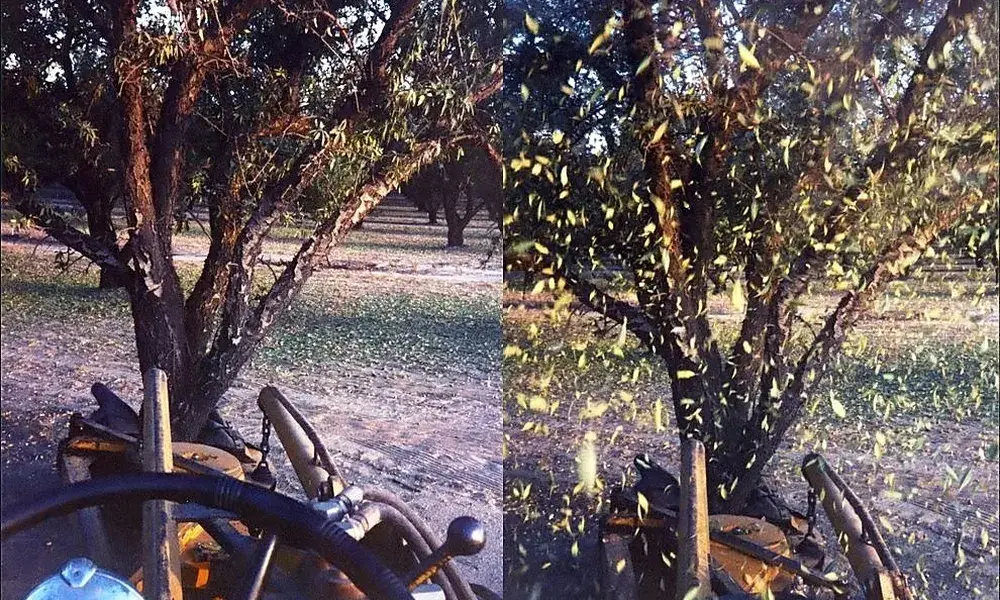
ShakerTiming AI calls the most valuable date in the almond year: the day to shake. Almonds are ready when the hulls split open and the nuts inside have dried to the right moisture, and the tool tracks hull split across the block from samples the crew collects, pairing the counts with weather forecasts and soil moisture readings. It tells the startup which blocks to shake first and which to leave for another week, so the shaker moves in the right order and no block is shaken green or left to sit on damp ground. A shake called a week early costs yield and kernel weight; a shake called a week late costs nuts to rain, mould and hungry pests.
The tool also schedules the machines and the crews around the shake. A shaker, a sweeper and a pickup harvester work as a train, and the tool books them in sequence, allows time for breakdowns, and keeps the nut trailers moving so the shaken nuts do not sit in the orchard overnight. It works out how many hectares the train can cover in a day from the tree spacing and the nut load, and it warns the startup when the booked machines cannot cover the area inside the weather window, so extra capacity is hired before the harvest starts rather than in a panic halfway through. The crew’s day is planned in the same place: which rows, which headland, where the trailers park, and where the shaken nuts are tipped for hulling.
Where ShakerTiming AI proves its worth is in the wet years, when the forecast changes daily and every block has a different risk. The tool ranks the blocks by how much they would lose to a wet week, and the shaker goes to the most vulnerable block first, even if that means breaking the tidy order of the map. It also records the moisture of every load as it leaves the orchard, so the huller knows what it is receiving and the client knows what was harvested and when. A walnut orchard installation startup runs the same kind of shake, and its crews will recognise the routine, but the almond shake comes earlier, drier and faster, and the almond tool is tuned to hull split and kernel moisture rather than to husk colour, which is the walnut grower’s signal.
7. HullLine Sense AI: the best tool for hulling, drying and stick-tight removal
HullLine Sense AI plans the hulling line that turns shaken nuts into saleable product. Fresh from the orchard, almonds wear a green hull that must be stripped, and the tool sizes the huller, the dryer and the storage for the harvest the orchard is expected to produce. It takes the shake schedule from ShakerTiming AI, works out how many tonnes will arrive each day, and tells the startup whether the huller can keep up or whether loads will queue and heat up in the trailers. A huller that cannot keep pace is the bottleneck that spoils an otherwise good harvest, and the tool shows the bottleneck before the first nut is shaken.
The tool also manages the drying, because almonds must be dried to a safe moisture before they go into storage, and damp nuts in a warm store grow mould and lose their buyer. HullLine Sense AI tracks the moisture of each incoming load, sets the dryer time and temperature, and flags the loads that need a second pass. It handles the stick-tights too, the nuts whose hulls refuse to split and cling to the shell, which need a separate pass through the line and cost extra time. By counting the stick-tights as a proportion of each block, the tool shows the client which varieties and which trees are costing the most at the huller, and that evidence feeds back into the next planting plan.
8. KernelGrade AI: the best tool for grading kernels and matching buyers
KernelGrade AI grades the kernels and finds them a buyer. Once the nuts are hulled and dried, the shells are cracked and the kernels are sorted by size, and the tool measures the size distribution from samples, predicts how the lot will grade, and tells the startup which buyers will pay best for it. Large, whole kernels suit one market, while smaller or broken kernels suit another, and the tool matches each lot to the buyer whose specification it meets, rather than selling the whole harvest to the first caller. That matching is where the orchard’s profit is made or lost, because the gap between grades is wide.
The tool also tracks the quality problems that cut the price: insect damage, mould, doubles and chipped kernels all show up in the grading, and KernelGrade AI ties each fault back to the block and the season it came from. A block with heavy insect damage needs better pest watching next year, while a block with many doubles points to a variety or a water problem, and the startup can take that evidence to the client with a plan rather than an apology. The grading record builds up over the years into a picture of which blocks earn their keep and which ones need replanting, and the client who sees that picture trusts the startup’s advice about the next block.
9. NutOrchard Ledger AI: the best tool for costing, quotes and cash flow
NutOrchard Ledger AI is the tool that keeps the startup in business while the trees grow. Almond orchard work is lumpy: a big planting job pays in winter, pruning pays in the dormant season, and shaking and hulling pay in late summer, with long quiet stretches between them. The ledger forecasts cash flow across the year, matching the expected income from each job against wages, fuel, machine hire and nursery bills, and it warns the founder months ahead when a gap is coming. A startup that sees the gap in March can fill it with a pruning round or a survey job; a startup that discovers it in June is already borrowing.
The tool also builds the quotes. It takes the site survey, the variety plan and the pruning schedule, prices the trees, the labour, the irrigation and the machines, and produces a quote that shows the client what is included and what is not. It keeps the true cost of each job against the quote, so the founder learns which jobs were underpriced and by how much, and the next quote is sharper. It handles the extras cleanly too: drainage work, extra trees for gaps, or a second pruning pass are quoted as additions rather than absorbed into the margin, which keeps the client relationship honest when the job grows.
Which tools to buy first
A new almond orchard installation startup should buy AlmondSite Survey AI, AlmondVariety Picker AI and NutOrchard Ledger AI before anything else. The survey tool wins the work, the variety tool makes the central decision correctly, and the ledger makes sure the business is still trading when the trees bear. Those three cost the least to run and protect the startup against its biggest risks: a bad site, a wrong variety and a cash gap. With them in place, the founder can take on the first planting jobs with confidence and learn the orchard trade on real ground rather than on guesswork.
Startup checklist
- Survey the site for soil, drainage, frost pockets and water before quoting a single tree.
- Choose varieties and pollinisers from chill hours and bloom dates, not from nursery availability.
- Prune young trees in their first two springs to set scaffold limbs and an open centre.
- Book honeybee hives early and keep sprays out of the bloom window.
- Call the shake from hull split and kernel moisture, and keep the shaker, sweeper and huller moving in sequence.
- Grade every lot, match it to the buyer it suits best, and show the client the full account.
Frequently asked questions
How much do AI tools for an almond orchard installation startup cost in the first year?
A new startup typically spends a few hundred pounds a month on the first three tools — surveying, variety choice and costing — and adds the pruning, pollination and harvest tools as the work arrives. The tools pay for themselves when they prevent one bad site, one wrong variety or one mistimed shake, any of which costs far more than a year of subscriptions. The dearest tool is the one bought too early and never used, so buy in the order the orchard needs them.
Which AI tool should an almond orchard installation startup buy first?
Buy AlmondSite Survey AI first. Every later decision depends on the site, and a survey that shows the frost pockets, the wet ground and the water supply lets the startup quote honestly and turn down the blocks that would fail. A good site with ordinary tools beats a bad site with the best tools, because the site is the one thing the startup cannot change after planting.
Can AI tools really choose the right almond variety for my site?
They can rank the options with far more care than a catalogue can, because they weigh the site’s chill hours, frost dates, soil and harvest aims together. The tool does not replace the grower’s judgement: the founder still walks the site and talks to the nursery. What it does is stop the common errors, such as planting a variety that needs more chill than the site gets, or forgetting the polliniser rows that the crop depends on.
Do almond orchards need irrigation from the first year?
Almost always, yes. Young almond trees need steady water through their first summers to build roots and scaffold limbs, and even mature trees in a dry Mediterranean climate need irrigation to fill their kernels. Drip lines are the usual choice, because they water the root zone without wetting the trunk. The survey tool checks whether the water supply can meet peak summer demand before the trees are ordered.
How long before a newly planted almond orchard pays for itself?
A new orchard usually gives a light crop in its third year and a commercial crop from year four or five, with full production from around year seven. Payback depends on the site, the varieties, the nut price and how much of the work the owner does, but a well-installed orchard on good ground typically returns its planting cost within eight to twelve years and then produces for another fifteen. The grading and ledger tools track that payback year by year so the owner can see it.
Should an almond orchard installation startup also offer shaking and hulling services?
Yes, once the first orchards it planted start to bear. Shaking and hulling keep the crews and machines busy after the planting season ends, and the startup already knows the orchards it is harvesting, which makes the work faster and safer. The harvest tools in this guide — ShakerTiming AI and HullLine Sense AI — are built for exactly that work, and the service turns one-off planting clients into annual customers.
The bottom line
An almond orchard installation startup is a long-game business: the trees it plants will outlive the startup’s first van, its first shaker and probably its first office. The nine tools in this guide cover the decisions that matter across that long life — the site, the varieties, the pruning, the bees, the shake, the hulling and the sale — and each one is judged on almond work, not on farming in general. Start with the survey, the variety choice and the ledger, add the rest as the orchards grow, and let the tools carry the numbers while the founder carries the relationships.
Done well, the work compounds. A block planted on the right ground with the right varieties bears well, shakes cleanly and grades high, and its owner tells the next landowner. A startup that can point to orchards it planted five years ago, still bearing and still paying, does not need to advertise. It needs to keep planting, pruning and shaking to the standard those orchards set, and the tools in this guide are how a small team does that, year after year.

Keep what speaks to you.
Leave room for your own perspective.


