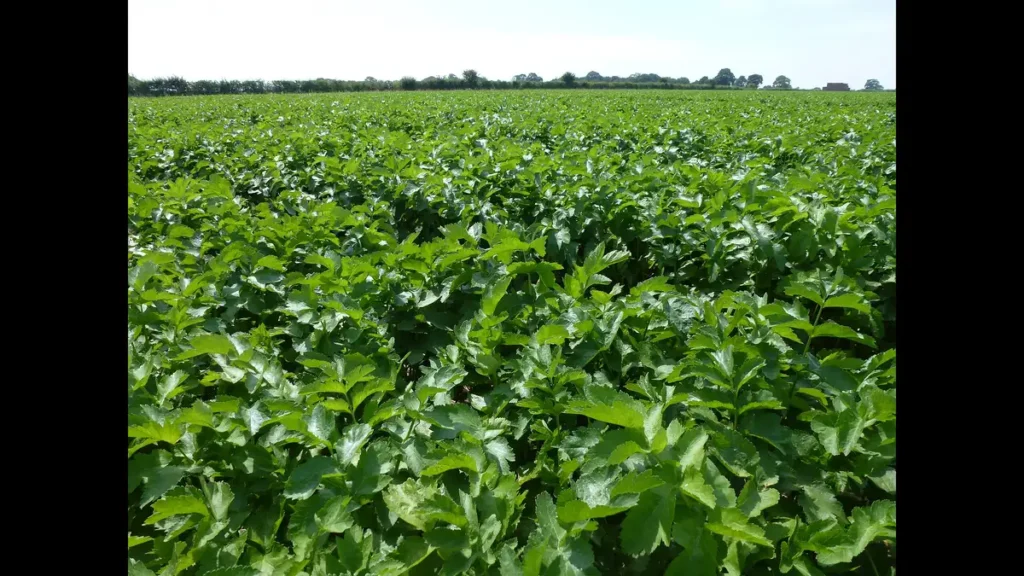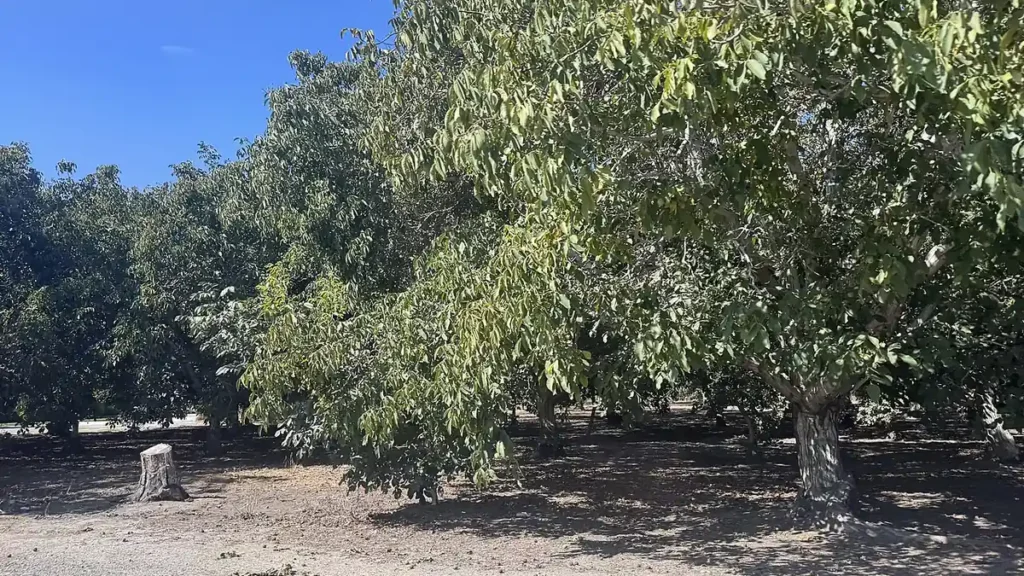
A walnut orchard is a slow, heavy, long-lived build. The trees a startup plants this spring will still be bearing in forty years, and the mistakes made in the first season — the wrong variety for the chill hours, a rootstock that hates the soil, rows too tight for a shaker to pass — stay with the orchard for its whole life. That is what makes a walnut orchard installation startup different from almost every other planting business on this site. It is not a one-season crop, and it is not a fresh-fruit pick. It is a decades-long nut orchard where the harvest is shaken from the tree, the green hulls are stripped off, and the nuts are dried and cured before anyone will buy them.
The work breaks into four clear stages, and each one needs its own kind of planning. First comes the orchard layout: spacing, row direction, hedgerow design and the polliniser rows that make the main variety set nuts. Then comes variety and rootstock choice, driven by chill hours, spring frost risk and soil drainage. Then comes the growing years, where husk fly, codling moth and walnut blight have to be scouted before they cost a crop. And finally comes the harvest itself, which is the part no fresh-fruit orchard shares: mechanical shaking, hulling, washing, drying down to a safe kernel moisture, and grading in-shell nuts against buyer specifications.
This guide compares the nine AI tools that cover that whole build, from the first row map to the first invoice. Every tool below is walnut-specific in what it measures or schedules: chill hours for walnut varieties, Paradox rootstock behaviour, catkin and pistillate bloom timing, husk-fly trapping, shake timing, hulling and curing schedules, and in-shell grading. If a tool could just as well plan an apricot orchard or a parsnip field, it does not belong here — apricots are thinned and picked fresh by hand, parsnips are sown, thinned and lifted as a root crop, and neither is ever shaken, hulled or cured. The nine tools below are the walnut build, end to end.
Key takeaways
- A walnut orchard is a nut orchard, not a fresh-fruit orchard: the crop is shaken from the tree, hulled, dried and cured, and sold in-shell or as kernels — never picked fresh like apricots or peaches.
- Variety choice lives or dies on chill hours and spring frost: Chandler, Franquette, Hartley and Howard each need different winter cold and bloom at different times.
- Rootstock is a forty-year decision — Paradox, Northern California black walnut and English rootstocks behave very differently in wet, heavy or nematode-prone soil.
- Harvest timing is measured in hull split and kernel colour, not in days on a calendar, and nuts left on the ground too long stain and lose grade.
- Curing is the step most new growers rush: walnuts dried too fast crack, walnuts dried too slowly mould, and the target is a kernel moisture near 8 percent.

The nine tools at a glance
| Tool | Best for | Stage of the build |
|---|---|---|
| WalnutRow AI | Orchard layout, spacing and hedgerow design | Planning |
| WalnutChill AI | Chill hours and walnut variety choice | Planning |
| WalnutRoot AI | Rootstock choice and soil readings | Planning |
| WalnutBloom AI | Bloom timing, pollination and frost risk | Growing |
| WalnutHusk AI | Husk fly, codling moth and blight scouting | Growing |
| WalnutShake AI | Shake-harvest timing and shaker crews | Harvest |
| WalnutHull AI | Hulling, washing and curing schedules | Harvest |
| WalnutGrade AI | In-shell grading and buyer specifications | Selling |
| WalnutBooks AI | Costing, quotes and invoicing | Running the business |
Planning the orchard
1. WalnutRow AI: the best tool for orchard layout, spacing and hedgerow design
WalnutRow AI draws the orchard before a single tree is ordered. It takes the field boundary, the slope, the prevailing wind and the access points, and it lays out rows that a shaker, a sweeper and a harvester can actually drive through in ten years’ time, when the canopies have closed in. That forward view is the whole point: young walnut trees look small and harmless, and a new grower’s instinct is to plant them tight to get more trees per acre. Ten years later the tight rows shade each other out, the lower branches die back, and the shaker cannot get a clean grip on trunks that are leaning into their neighbours.
The tool compares the two layouts a walnut startup actually chooses between. A traditional scattered orchard, with wide spacing and big individual trees, gives each tree room to grow into a broad crown and suits a grower who wants low-density, long-lived trees and is happy to wait for full production. A hedgerow orchard, with tighter in-row spacing and trees trained into a continuous wall, brings the orchard into bearing years earlier and suits mechanical shaking and sweeping, but it needs disciplined pruning and a variety that tolerates close planting. WalnutRow AI prices both layouts tree by tree, shows the year-by-year yield curve for each, and flags the point at which a hedgerow starts to crowd itself and needs thinning.
2. WalnutChill AI: the best tool for chill hours and walnut variety choice
WalnutChill AI answers the first question every walnut grower asks: which variety will actually crop on this site? Walnuts need a certain number of winter chill hours to break dormancy properly, and the number is different for every variety. Chandler, the most widely planted commercial variety, needs high chill and leafs out late, which protects it from spring frost but makes it a poor choice for a mild-winter site where it may never get enough cold. Franquette leafs out later still and is the classic choice for frost-prone valleys, while Hartley and Howard sit in the middle and Tulare and Serr suit warmer ground. Plant the wrong one and the tree either wakes up too early and loses its flowers to frost, or never wakes up properly at all and crops thinly for years.
The tool builds a chill-hour record for the exact site from local weather data, counts the hours below the threshold through the winter, and matches the result against the variety list. It does not use a county average or a nearest-town figure, because chill can vary by hundreds of hours across a single valley, and a frost pocket at the bottom of a slope behaves nothing like the ridge above it. It also models spring frost risk against each variety’s leaf-out date, so a grower can see in plain numbers what a late frost would cost a Chandler block against a Franquette block on the same ground. The same kind of chill-hour planning is used across orchard trades, and the AI tools for cherry orchard installation startups work the same way for cherries, but the walnut numbers are walnut numbers: the varieties, the chill bands and the frost dates are all specific to Juglans regia, and a cherry chill count pasted into a walnut plan would pick the wrong tree.
3. WalnutRoot AI: the best tool for rootstock choice and soil readings
WalnutRoot AI pairs the chosen variety with the rootstock that will carry it for forty years. A walnut tree is two plants in one: the variety on top, grafted onto a rootstock below, and the rootstock decides how the tree handles wet soil, drought, nematodes and soil-borne disease. Paradox rootstock, the hybrid of English and black walnut, is vigorous and widely used, but it is also the rootstock that suffers most in waterlogged ground. Northern California black walnut rootstock tolerates wetter soil and resists some root diseases, while English rootstock suits lighter, free-draining ground and gives a smaller, earlier-bearing tree. Get this wrong and the tree grows well for three years and then stalls, yellows and dies back — and by the time the cause is clear, replanting means losing years.
The tool reads soil samples block by block: texture, pH, drainage, organic matter, nematode counts and the depth to any hardpan or water table. It maps the wet corners and the dry ridges separately, because a single rootstock for a whole block is often the wrong answer when half the block drains well and half of it does not. It then recommends a rootstock per block, or per zone inside a block, and prices the difference. Rootstock choice also changes the spacing, because a vigorous Paradox tree needs more room than a smaller English-rootstock tree, so the tool feeds its recommendation back into the row plan and re-checks the layout. The same rootstock-first thinking runs through other orchard builds — the AI tools for apple orchard installation startups pair apple varieties with dwarfing and semi-vigorous rootstocks the same way — but walnut rootstocks are a different set of plants with different weaknesses, and a walnut on Paradox behaves nothing like an apple on M9.
Growing and protecting the crop
4. WalnutBloom AI: the best tool for bloom timing, pollination and frost risk
WalnutBloom AI tracks the bloom from catkin to nut set. Walnuts are unusual among orchard trees because the male and female flowers are separate: the catkins shed pollen, and the small pistillate flowers on the new shoots catch it. The timing has to overlap, and in a bad spring it does not — the catkins finish shedding before the female flowers are receptive, or a frost kills the female flowers outright. The tool watches bud development through the spring, forecasts the pollen-shed window for the polliniser variety and the receptivity window for the main variety, and warns when the two are drifting apart.
When the gap looks too wide, the tool suggests practical fixes rather than just reporting the problem. A second polliniser variety with a later shed, a different mix of polliniser trees in the next block, or a decision to hold off on a frost-protection spend when the flowers are not yet at a vulnerable stage — these are the calls that decide whether a block sets a full crop or a thin one. The tool also runs a frost watch through the bloom period, with temperature forecasts at canopy height rather than at the weather station, and it tells the grower which nights are worth running frost protection on and which are not. Frost protection is expensive to run and pointless to run on a night when the flowers are still tight and hardy, so the saving is real.
5. WalnutHusk AI: the best tool for husk fly, codling moth and blight scouting
WalnutHusk AI is the scout that walks the orchard so the grower does not have to guess. Its headline pest is the walnut husk fly, the insect that no other orchard neighbour has to deal with: the fly lays eggs in the green husk, the maggots feed inside it, and the husk turns black, soft and stained. A stained husk stains the shell underneath, and a stained shell drops a grade and loses money. The tool runs the trap network, counts the fly catch, models the egg-laying window from temperature data, and calls the spray or control timing while the flies are still vulnerable — a week late is too late, because the maggots are already inside the husk where a spray cannot reach them.
Codling moth is the second watch. The moth’s larvae bore into the young nuts in early summer, and the damage is invisible from the outside until the nut drops early or shows the entry hole at harvest. WalnutHusk AI tracks pheromone trap counts, models the moth generations from degree-days, and times the control to the egg hatch, when the larvae are exposed. It also watches for walnut blight, the bacterial disease that blackens young nuts and shoots in wet springs. Blight scouting is a weather job as much as a looking job: the tool combines rainfall, leaf wetness and temperature to flag the infection windows, and it tells the grower which blocks to walk first after a wet spell, so the scouting time goes where the risk is highest.
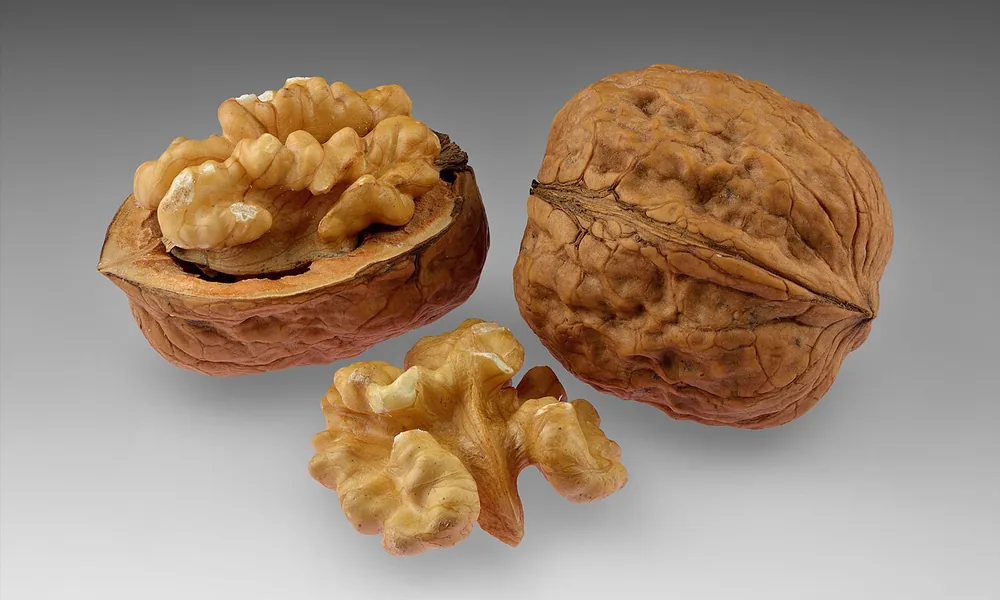
Harvest, hulling and curing
6. WalnutShake AI: the best tool for shake-harvest timing and shaker crews
WalnutShake AI decides the shake day. The signs are specific to walnuts: the husk splitting away from the shell, the kernel inside turning from pale and jelly-like to firm and light brown, and the nuts starting to drop on their own. Shake too early and the kernels are shrivelled and light, the hulls cling to the shell, and the dryer has to work harder on wet nuts. Shake too late and the nuts sit on the ground, the husks stain the shells, mould sets in, and the grade falls. The tool samples nuts across the block, scores the hull split and the kernel colour, and calls the shake window per block, because one side of an orchard is often a week ahead of the other.
It also runs the harvest logistics, which matter more in walnuts than in almost any other orchard crop. A shaker crew, a sweeper and a harvester have to move through the blocks in sequence, and a delay between shaking and sweeping leaves nuts on damp ground. The tool schedules the crews block by block, books the machinery, and staggers the shake so the huller and dryer are never swamped by a whole orchard arriving in one day. It tracks the nuts per hour, the crew cost per acre, and the ground losses, so the grower knows whether the harvest is running to plan or slipping. The contrast with fresh-fruit picking is the point: the AI tools for peach orchard installation startups plan picking crews, ladders and bins for fruit that bruises if it is dropped — walnuts are shaken hard from the tree and swept off the ground, and the whole harvest system is built around that difference.
7. WalnutHull AI: the best tool for hulling, washing and curing schedules
WalnutHull AI runs the shed. As soon as the nuts come in from the field, the green hulls have to come off: a hull left on for a day in warm weather stains the shell and feeds mould, and the stain cannot be washed out afterwards. The tool schedules the huller by the arrival of each load, matches the huller speed to the harvest rate so nuts never wait in a trailer, and checks the wash water and the huller settings against the nut size in each load. It also tracks the hull waste, because a huller that is too aggressive cracks shells and a huller that is too gentle leaves hull on.
After hulling comes the step most new walnut growers underestimate: drying and curing. Freshly hulled walnuts are too wet to store — the kernel moisture is far above the safe level, and a nut put into a bin wet will heat, mould and ruin the whole bin. WalnutHull AI sets the drying schedule by the incoming moisture, the nut size and the dryer capacity, and it watches the drying curve so the nuts come down steadily rather than in a rush. Walnuts dried too fast crack and split, walnuts dried too slowly go mouldy, and the target the tool works to is a kernel moisture near 8 percent, with the shell dry enough to store. It logs the moisture readings per batch, flags any batch that is drying unevenly, and holds the batch in the dryer until the reading is right rather than letting a calendar date decide.
Curing is the quiet part of the schedule that buyers notice first. A properly cured walnut has a light, well-filled kernel that cracks cleanly and tastes sweet; a rushed walnut has a rubbery kernel and a bitter edge. The tool records the curing time per batch and ties it to the grade the batch eventually earns, so the grower can see the money difference between a batch cured properly and a batch rushed to market. It also keeps the food-safety record for the shed — wash-water changes, dryer temperatures, batch numbers and storage bins — because a buyer who asks where a load came from expects an answer with a batch number on it.
8. WalnutGrade AI: the best tool for in-shell grading and buyer specifications
WalnutGrade AI is the tool that turns a dried crop into money. Walnuts are sold against specifications, and the specifications are exact: shell size, kernel colour, kernel fill, the share of halves against pieces, and the share of off-grade nuts a load can contain before the price drops. The tool grades samples from each batch, measures the shell and kernel against the buyer’s specification, and tells the grower what the load is worth before it leaves the shed — not after the buyer has docked it.
It also decides how the crop should be split. Some batches are best sold in-shell, where a clean, well-sized shell earns a premium; some are best cracked for kernels, where a light-coloured, well-filled kernel is worth more than the shell it came in; and some are best sold as pieces or for processing, where chasing a premium grade would waste sorting time. The tool prices each option from the sample grade and the current buyer prices, so the split is a money decision rather than a habit. It also tracks the grade year by year per block, so a grower can see which blocks consistently produce light kernels and which always run dark, and can link that back to the variety, the irrigation and the harvest timing.
Selling the crop and running the business
9. WalnutBooks AI: the best tool for costing, quotes and invoicing
WalnutBooks AI prices the job before it is quoted. It builds a quote from the real costs of a walnut installation: trees, rootstock, planting labour, irrigation, staking, the first years of care, and the machinery time for shaking and sweeping when the orchard comes into bearing. It separates the installation cost from the ongoing care cost, so a client sees what the build costs and what the yearly care costs, and it shows the year-by-year cash flow until the orchard pays for itself. That honesty is what wins a client’s trust and what stops a startup from quoting a price that loses money in year three.
The tool tracks the job as it runs: trees ordered against trees planted, hours per block, irrigation parts used, and the cost of every spray and every pass of the machinery. It flags the jobs that are running over budget while there is still time to fix them, and it keeps a record of the actual cost per acre against the quoted cost, so the next quote is built on real numbers instead of optimism. It handles the invoicing too, with staged invoices tied to the planting, the first-year care and the harvest, so the money comes in through the year rather than all at once at the end.
How the nine tools work together
The nine tools are a chain, and the chain only works in order. WalnutRow AI draws the orchard, WalnutChill AI chooses the variety, and WalnutRoot AI chooses the rootstock — and those three decisions lock in the orchard’s shape for decades. WalnutBloom AI and WalnutHusk AI watch the crop through the growing season, and the notes they keep feed straight into the harvest: a block with a thin set shakes early, a block with husk-fly pressure gets hulled the same day it is shaken, and a block with blight gets watched at grading time.
A new startup does not need to buy all nine on day one. The sensible order is the planning three first — layout, variety and rootstock — because those decisions cannot be undone. The growing-season two come next, before the first flowers open. The harvest three come before the first shake, and WalnutBooks AI comes with the first quote. Bought in that order, each tool pays for itself before the next one is needed.
Your first-season checklist
- Map the site with WalnutRow AI before ordering a single tree, and mark the wet corners, frost pockets and headlands that stay unplanted.
- Count the chill hours for your exact site with WalnutChill AI, then choose the variety — Chandler, Franquette, Hartley or Howard — that matches the cold you actually get.
- Test the soil block by block with WalnutRoot AI and match the rootstock — Paradox, Northern California black walnut or English — to the drainage in each zone.
- Set the polliniser rows in the plan at the right proportion, and check the pollen-shed window against the main variety’s bloom with WalnutBloom AI.
- Put the husk-fly traps out early with WalnutHusk AI, and agree the spray timing before the flies are inside the husk.
- Book the shaker, the huller and the dryer before the shake window opens, and agree the curing target — a kernel moisture near 8 percent — with WalnutHull AI.
Frequently asked questions
How much do AI tools for a walnut orchard installation startup cost in the first year?
Expect the planning three — layout, variety and rootstock — to cost less than a single acre of trees, which is the right way to think about them: they protect a forty-year investment for a fraction of its price. The growing-season and harvest tools are usually priced per acre or per block, so a small startup pays for what it plants and nothing more. WalnutBooks AI pays for itself on the first quote, because a quote built on real costs stops the startup from losing money on its first job.
Which AI tool should a walnut orchard installation startup buy first?
WalnutRow AI, then WalnutChill AI, then WalnutRoot AI, in that order. The layout decides where the trees go, the chill count decides which variety goes there, and the soil readings decide which rootstock carries it. Those three decisions are locked in the day the trees are planted, and no later tool can undo them. The harvest tools can wait until the trees are bearing, but the planning tools cannot wait at all.
Can AI tools really choose the right walnut variety for my site?
They can, because variety choice is mostly arithmetic: chill hours, frost dates, soil drainage and kernel quality, all of which are numbers. What the tools cannot do is walk your field, so the counts still need a site visit to confirm the frost pockets and the wet corners the weather data cannot see. Use the tool to narrow the list to two or three varieties, then make the final call with a local nursery and a walk around the site.
How is a walnut orchard different from an apricot orchard?
An apricot orchard is a fresh-fruit orchard: the fruit is thinned by hand, picked fresh by hand, and sold within days. A walnut orchard is a nut orchard: the nuts are shaken from the tree by machine, swept off the ground, hulled, washed, dried and cured, and sold in-shell or as kernels months later. The trees live far longer, the harvest is mechanical rather than manual, and the money is made in the shed — at hulling, curing and grading — rather than at the picking tray.
How long before a newly planted walnut orchard pays for itself?
Longer than almost any other orchard on this site, and a startup should say so plainly to every client. A walnut tree takes several years to bear a meaningful crop and a decade or more to reach full production, and the orchard does not pay for itself until the yield and the grade are both up. That is why the planning tools matter so much: a wrong variety or rootstock does not just cost a season, it pushes the payback back by years.
Should a walnut orchard installation startup also offer shaking and hulling services?
Yes, and most of the good ones do, because the harvest is the part of the job a new walnut grower is least equipped to do alone. A shaker, a sweeper, a huller and a dryer are expensive machines for one small orchard to own, and a startup that offers shaking, hulling and curing as a service turns a one-off installation into yearly work. It also keeps the startup close to the crop, so it sees the grade its own planting choices produced and learns from it.
The bottom line
A walnut orchard installation startup sells a forty-year build, and the tools that launch it have to match that timescale. The layout, the variety and the rootstock are decided once and lived with for decades; the bloom, the pests and the frost are watched every season; and the shake, the hulling, the curing and the grading are where the year’s money is made or lost. The nine tools in this guide cover that whole arc, and they cover it in walnut terms — chill hours for walnut varieties, Paradox rootstock, husk fly, shake timing, hulling and curing to a kernel moisture near 8 percent, and in-shell grading. Start with the planning three, add the growing-season two before the first flowers open, and have the harvest three ready before the first shake. Done in that order, the orchard gets planted right, the crop gets harvested at the right moment, and the nuts that leave the shed are worth what the trees promised.

Keep what speaks to you.
Leave room for your own perspective.