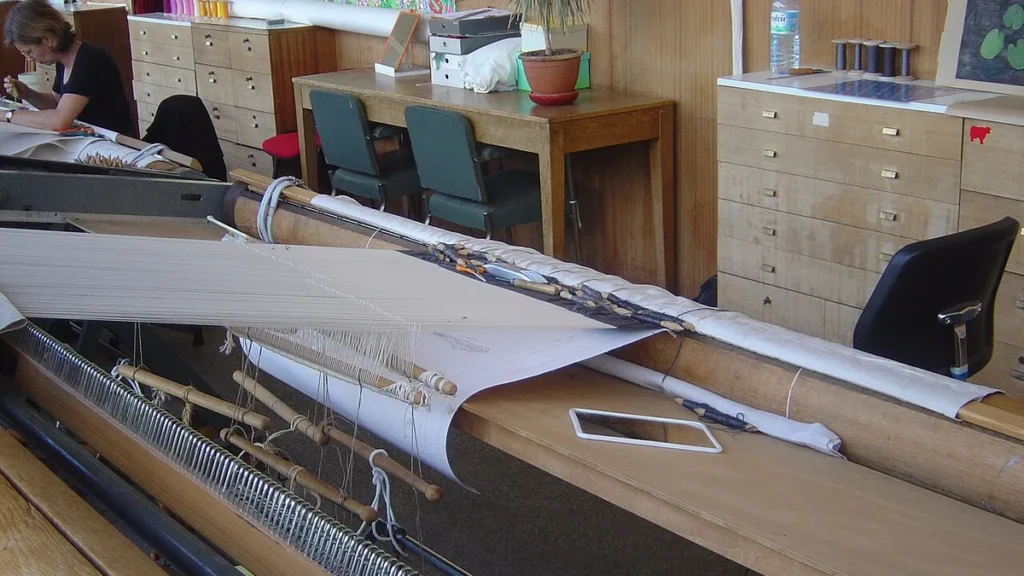
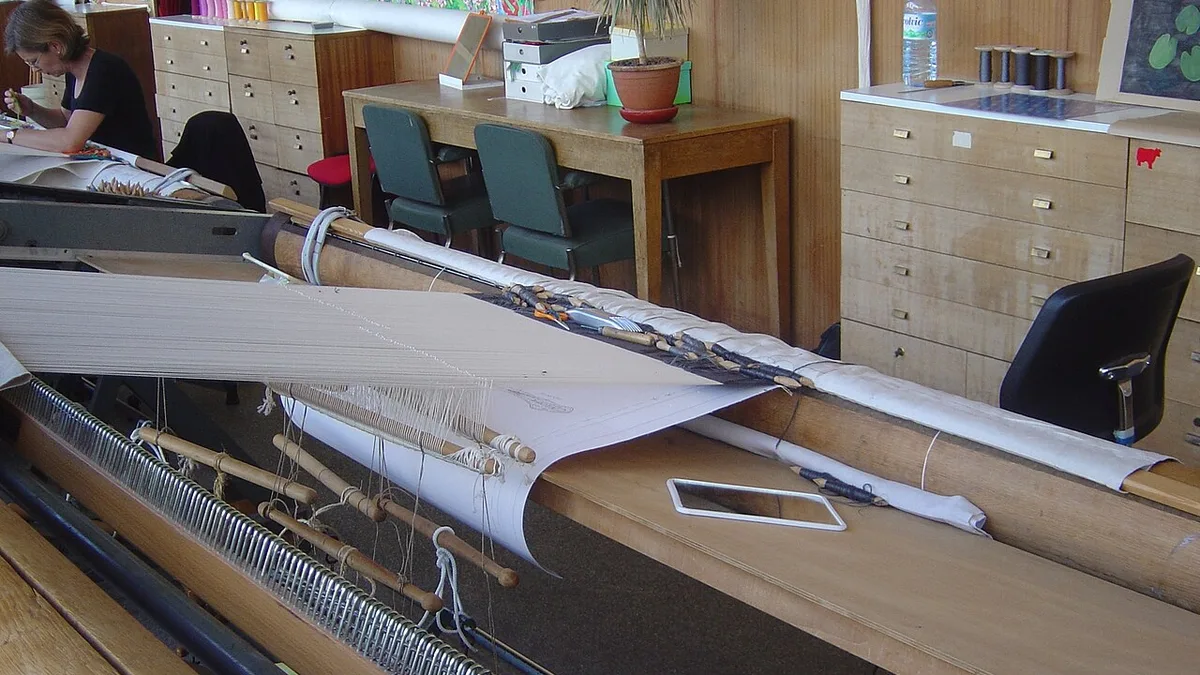
A tapestry workshop is a room built around a single slow act: passing coloured weft through a stretched warp, row after row, until a picture grows out of thread. Nothing in the room is incidental. The loom has to hold the warp at an even tension for weeks, the light has to show true colour, the yarn has to be within arm’s reach in the right order, and the cartoon — the full-size design pinned behind the warp — has to stay exactly where the weaver can read it. A startup that plans the room around that act, rather than around a generic craft-studio template, opens faster, wastes less yarn, and teaches better classes from the first week, because every bench, shelf, and lamp answers a question the weaving itself asks.
A tapestry workshop installation startup is the business that designs and builds those rooms for paying clients, and also the business that runs one itself: fitting out a weaving studio, choosing its looms, setting up its dye bench and yarn store, and putting the booking, pricing, and selling systems around it so the weaving can pay. The tools in this guide cover that whole job. Some of them draw the cartoon and test colourways before a single thread is warped. Some of them are the looms themselves, the yarn, and the dyes. And some of them sell the finished wall hangings and keep the books straight, which matters just as much, because a beautiful tapestry that nobody sees and nobody pays for is a hobby, not a business.
That mix is what makes a tapestry workshop different from its nearest craft neighbours. A basket weaving workshop is built around soaking willow and reed until they bend, and its tools are tubs, loppers, and finishing oil. A tapestry workshop is built around a vertical or horizontal warp under tension, a cartoon, and a weft that is beaten down row by row. The loom does not bend the material; it holds it still while the weaver builds a picture in it. Keep that picture in mind as you read: every tool below earns its place by serving the warp, the weft, the cartoon, or the customer who will hang the finished piece on a wall.
Key takeaways
- Start with the cartoon: an AI image tool and a weaving-draft program let you test a design and its colourway before you warp a loom.
- Choose the loom for the work you will actually sell — a small tapestry loom for classes and samples, a large floor loom for wall-scale commissions.
- Warp is structure and weft is picture: buy warp yarn for strength and even tension, and weft wool for colour, cover, and a soft hand.
- Dye in small, recorded batches so a colour can be repeated for a second panel of the same commission months later.
- Sell where tapestry buyers already shop, and keep the books in a simple accounting tool from the first sale, not the fiftieth.
The nine tools at a glance
These are the nine tools this guide recommends, in the order a startup meets them: design first, then the loom, then the yarn and dye, then the selling and the books. Each one serves the warp, the weft, the cartoon, or the customer, and none of them is a generic workshop tool borrowed from another trade.
| Tool | What it is | What it does for the workshop |
|---|---|---|
| Ideogram | AI cartoon and colourway design | Design the picture before warping |
| WeavePoint | Weaving draft and warp calculation | Count ends and yarn before you buy |
| Mirrix Tapestry Loom | Small tapestry loom | Teach classes and weave samples |
| Glimåkra Standard Tapestry Loom | Large upright tapestry loom | Weave wall-scale commissions |
| Leclerc Mira II Tapestry Loom | Versatile floor tapestry loom | One loom for classes and commissions |
| Harrisville Designs Highland Wool Yarn | Weft wool | Cover the warp with lasting colour |
| Maiwa Natural Dye Kit | Natural dyeing | Dye a repeatable palette in-house |
| Etsy | Online selling | Sell finished tapestries to ready buyers |
| Wave Accounting | Bookkeeping | Record every sale and expense from day one |
Designing the cartoon
1. Ideogram: Best for AI tapestry cartoons and colourway ideas
A tapestry begins as a cartoon, the full-size drawing the weaver follows thread by thread, and Ideogram is the fastest way for a new workshop to produce one worth weaving. You describe the scene — a tree against a pale sky, a hillside in bands of colour, a geometric border — and the tool returns finished images with readable shapes and, unusually for an image generator, legible short text where a title or a date belongs in the design. That matters for tapestries, because a cartoon is not a mood board; it is a working drawing, and a weaver needs clean edges, clear colour blocks, and shapes large enough to follow with a bobbin.
Use it at the design bench, not at the loom. Generate three or four versions of the same idea, print them at a small scale, and pin them beside your yarn shelf to test which palette you can actually dye and weave. A design with forty close shades looks rich on a screen and turns into a muddle on the loom, where each colour is a separate bobbin and a separate pass. The best workshop habit is to ask the tool for a limited palette — six to ten colours, with one dark, one light, and one accent — and then match those colours against the wool you own before you commit. Ideogram also helps with client work: a customer who commissions a wall hanging can approve a picture before you warp, which removes the most expensive argument in the trade, the one that happens after three weeks of weaving.
Keep the tool in its place. It cannot tell you whether a shape will weave cleanly at your warp sett, whether a diagonal will step awkwardly, or whether a fine line will disappear under the weft. That judgement comes from weaving the sample. Run a small test panel of any new design, no bigger than a cushion cover, and weave the hardest corner of it first. If the corner works, the tapestry works. If it does not, change the cartoon now, while the change costs an afternoon, instead of after the warp is dressed and the first panel is half woven.
Planning the weave
2. WeavePoint: Best for weaving drafts and warp planning
WeavePoint is weaving-draft software, and it is the planning tool a tapestry workshop reaches for once the cartoon is settled and the real questions begin: how many warp ends, at what spacing, in what order, and how much yarn will the piece actually eat. You build the draft on screen — the threading, the tie-up, the treadling — and the program shows you the structure before you touch the loom. For a tapestry workshop, the plain-weave and tapestry structures matter most, and the value is not in fancy patterns but in arithmetic: the software counts ends, calculates warp length including loom waste, and tells you how many bobbins of each weft colour to wind.
That arithmetic is where new workshops lose money. Warp dressed too short means a commission that cannot be finished on the loom it started on. Yarn bought by guess means either a shelf of expensive leftovers or a mid-piece shortage in a dye lot you cannot repeat. WeavePoint lets you price a job from the draft instead of from optimism: warp length, weft estimate, and a materials list you can hand to a supplier. It also keeps a record of every draft you have woven, so a customer who orders a second panel in the same size a year later gets the same structure, not a reconstruction from memory.
The looms
3. Mirrix Tapestry Loom: Best for a first tapestry loom
The Mirrix is the loom most new tapestry workshops buy first, and the reason is simple: it is a tapestry loom, not a general weaving loom pressed into tapestry service. It is built around a frame that holds the warp under even tension, with a shedding device that lifts alternate warps so the weft can pass cleanly, and it comes in sizes that fit a teaching bench, a small studio corner, or a spare room. A beginner can warp it in an afternoon, weave a first panel in a weekend class, and take the finished piece off the loom without a second pair of hands, which is exactly the experience a startup needs to sell.
In a workshop, the Mirrix earns its keep in two roles at once. It is the class loom, because a student can see the whole piece, reach every part of it, and understand what their hands are doing without climbing around a floor loom. And it is the sample loom, because a designer can test a cartoon, a colourway, or a new yarn on a small warp before committing a large loom to it for a month. Keep one Mirrix warped with a demonstration piece at all times, so a visitor to the studio can sit down, pass a few rows of weft, and feel the craft in their hands. That five-minute experience sells more classes and commissions than any brochure, because tapestry is hard to explain and easy to feel.
4. Glimåkra Standard Tapestry Loom: Best for wall-scale tapestry weaving
The Glimåkra Standard is the loom a tapestry workshop buys when its commissions outgrow the teaching loom: a large, upright tapestry loom built for wall-scale work, with a frame strong enough to hold a wide warp at high tension for the weeks a big piece takes. It is the kind of loom you see in professional tapestry studios, where the weaver sits or stands before a warp as wide as a doorway and builds the picture row by row, following a cartoon fixed behind the threads. For a startup, it is the statement piece of the workshop — the loom a client sees when they visit, and the loom that makes a three-foot wall hanging a normal job instead of a heroic one.
Fitting out for a loom this size is a room-planning job, not a purchase. It needs floor space for the frame and for the weaver to move along its full width, light that falls evenly across the whole warp without glare, and a wall behind it where the cartoon can hang flat. It needs a yarn store within a few steps, because a weaver working a wide piece changes bobbins constantly and should not cross the room for every colour. And it needs a finishing area nearby, because a tapestry comes off a loom this size heavy, wide, and in need of washing, blocking, and a hanging sleeve before it can be delivered. Plan the room around the loom, and the loom will repay the planning on every large commission.
5. Leclerc Mira II Tapestry Loom: Best for a versatile studio floor loom
The Leclerc Mira II is a tapestry floor loom that gives a workshop a middle path between the small teaching loom and the large upright frame: a floor loom sized for serious tapestry work, with a sturdy frame, a shedding mechanism, and a weaving width that handles wall hangings, cushions, and small rugs without demanding a dedicated hall. For a startup that wants one loom to do most things — classes, samples, commissions, and the occasional rug — it is the practical choice, because it is a working loom first and a showpiece second, and it earns its floor space every week.
Set it up where the light is best and the traffic is least. A floor loom is a piece of furniture that does not move, so its position decides how the whole room flows: the weaver sits at it for hours, students gather around it for demonstrations, and clients stand before it to watch their commission grow. Give it a clear approach from the door, a bench at the right height, and a small table beside it for bobbins, scissors, and the cartoon. Keep the yarn for the piece on the loom on a shelf directly behind the weaver, in the order the cartoon calls for them, so the work never stops while someone hunts for a colour.
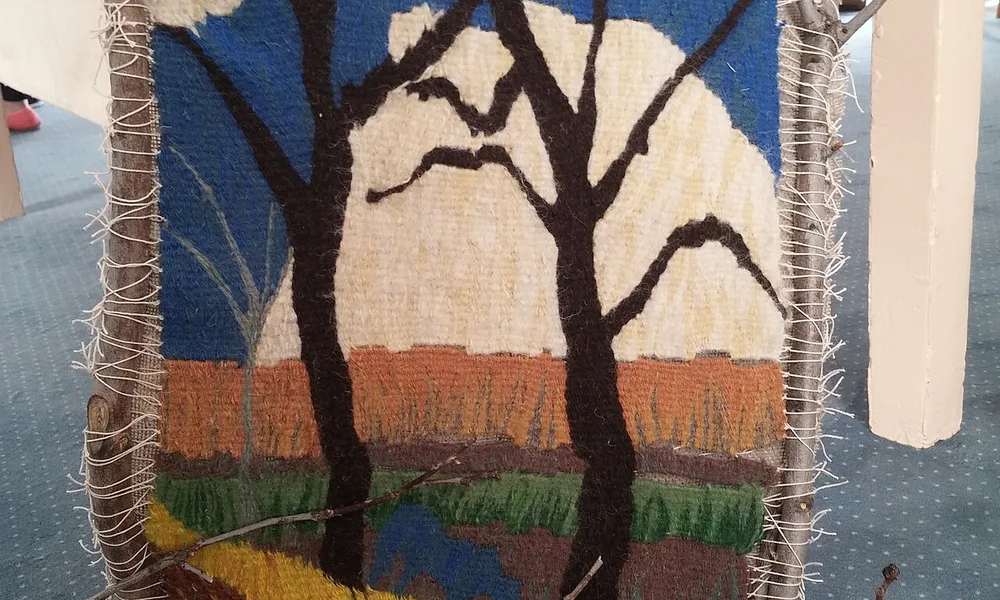
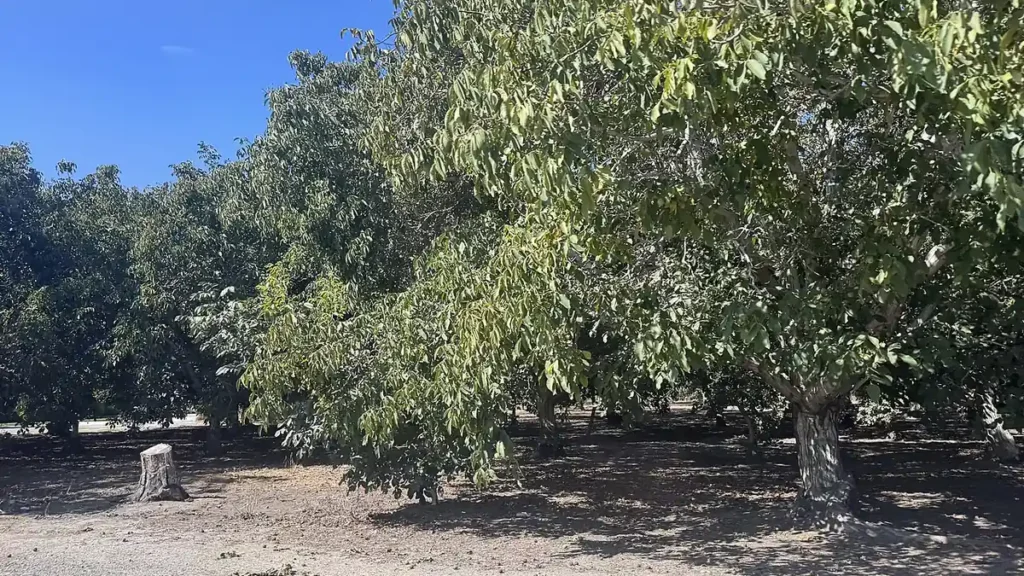
The panel above shows what the tools in this guide are working towards: a finished tapestry, not a pile of equipment. The tree is built from flat areas of colour, each one a separate weft passed back and forth between the same warp threads, and the edges between the colours are clean because the weaver beat each row down firmly and kept the tension even. That is the standard every tool below should be judged against. A design tool is good if it produces a cartoon with shapes this clear. A loom is good if it holds a warp this evenly. A yarn is good if it covers the warp this completely. And a selling tool is good if it finds a buyer who values a piece made this slowly, because the panel took weeks, and the workshop that made it needs to be paid for weeks of skilled work, not for the wool alone.
Colour is where a tapestry workshop most often borrows ideas from its neighbours, and the borrowing has limits. A block printing workshop builds its colour from ink pressed onto cloth in a single pass, so its dyes and paints are chosen for how they sit on the surface. A tapestry workshop builds its colour from weft buried in warp, row after row, so its dyes are chosen for how they soak into wool, how they survive washing, and how they look when beaten down flat. The two crafts share a love of pattern and a shelf of colour, and they part company at the dye pot, which is why the dye kit below is a tapestry dye kit, not a printing ink.
Yarn and dye
6. Harrisville Designs Highland Wool Yarn: Best for tapestry weft wool
Harrisville Designs Highland wool is a weft yarn that tapestry weavers return to because it does what weft must do: cover the warp completely, hold a clean edge where one colour meets another, and keep its colour after washing and years on a wall. It is a woollen-spun yarn with a soft hand and a slightly fuzzy surface, which means it packs down well under the beater and hides the warp, and it comes in a range of colours deep enough to build a picture without dyeing every shade yourself. For a workshop, that range is the point: you can teach a class, weave a commission, and stock a yarn shelf from one reliable source.
Buy it by the cone for the colours you use constantly — the darks for outlines and shadows, the lights for skies and backgrounds, the warm neutrals that sit behind everything — and by the skein for accent colours that appear in one design and may not return. Wind it onto tapestry bobbins before the class or the weaving session starts, not during it, because a weaver who stops to wind yarn loses the rhythm of the row, and a class that stops to wind yarn loses its momentum. Label every bobbin with the colour name and the dye lot, and keep a woven sample card of every colour you stock, so a customer choosing colours for a commission points at thread, not at a screen.
7. Maiwa Natural Dye Kit: Best for dyeing tapestry weft naturally
The Maiwa Natural Dye Kit is the dye bench in a box: natural dye extracts, mordants, and instructions for dyeing wool with plant-based colour, and it is the right starting point for a tapestry workshop that wants its own palette instead of buying every shade ready-dyed. Natural dye suits tapestry because tapestry colours are flat, matte, and slightly varied — exactly what plant dyes give — and because a workshop that dyes its own weft can match a colour in a customer’s curtain, a painting, or a photograph, which a shelf of ready-dyed yarn cannot always do.
Dye in small, recorded batches, and record everything. Weigh the yarn dry, weigh the dye, note the water temperature, the time in the pot, and the mordant, and staple a snippet of the dyed yarn to the page. That notebook is the most valuable document in the dye room, because a commission that needs a second panel, a repair, or a matching cushion six months later depends on being able to repeat a colour. Without the record, you are guessing, and guessing in dyeing means a panel that does not match the first one. With the record, you are a professional, and the customer can see it in the care you take.
Selling and running the business
8. Etsy: Best for selling finished tapestries online
Etsy is where a tapestry workshop sells its finished work to people who are already looking for handmade wall hangings, and that is its whole advantage: you do not have to explain what a tapestry is to an Etsy buyer, or persuade them that handmade is worth paying for, because they arrived already believing both. List the finished piece with photographs taken in daylight against a plain wall, with a hand or a familiar object in one frame for scale, and with the measurements, the fibre, and the hanging method stated plainly. A tapestry is bought with the eyes and the tape measure together, and a listing that hides either one loses the sale.
Price from the weaving, not from the yarn. Count the hours at the loom, add the materials, the dyeing, the finishing, and the time spent photographing and listing, and then add the fee and the postage before you name the price. Tapestry is slow work, and a price that only covers the wool is a price that pays the weaver nothing, which is how workshops quietly close. Etsy also rewards the workshop that lists regularly: a new piece, a new colourway, or a made-to-order listing every week keeps the shop visible, and a shop with recent work looks alive to a buyer in a way a shop with three old listings does not.
Use the shop as the front of the workshop, not as a separate business. Link it from the class page, mention it at the end of every class, and put a card with the shop name in every parcel. A student who wove a small panel in a class is the most likely buyer of a larger piece, and a buyer of a larger piece is the most likely student of an advanced class. The two sides of the workshop feed each other, and Etsy is the shelf where that loop turns into money.
9. Wave Accounting: Best for simple workshop bookkeeping
Wave Accounting is the bookkeeping tool for a tapestry workshop that wants its numbers straight without hiring an accountant in its first year: free accounting software that records sales, tracks expenses, and produces the invoices and reports a small business needs. It fits a workshop because a workshop’s money is simple but scattered — yarn and dye purchases, loom payments, class fees, Etsy sales, commission deposits, and the occasional craft-fair takings — and without one place to record them, the founder ends the year guessing whether the business made money or not.
Set it up before the first sale, not after the first tax deadline. Connect it to the business bank account, record every Etsy payout and every class booking as it arrives, and photograph every receipt for yarn, dye, and loom parts into it the day you buy them. The habit takes five minutes a day and saves a week of panic later. It also makes pricing honest: when the cost of a commission is in the books — the wool, the dye, the hours, the finishing — the next quote is built on evidence, not on hope, and the workshop stops undercharging for its slowest, most skilled work.
Wave will not run the workshop for you, and it should not. Its job is to tell you the truth about the money, clearly and early, so you can decide whether to buy the large loom, run another class, or raise the price of a commission. A tapestry workshop is a slow business in the best sense — it makes things that last — and slow businesses survive on steady numbers, not on bursts of sales. Keep the books clean from the start, and the weaving can stay the thing you think about, instead of the money becoming the thing you worry about.
Teaching is the part of the business that most new founders underestimate, and it is worth learning from the quietest craft studios. A lace making workshop runs on the same model a tapestry workshop needs: small classes, patient teaching, kits students take home, and a product that takes hours to make by hand. The tools differ — bobbins and pillows instead of looms and cartoons — but the business is the same shape, and a tapestry founder who watches how a lace studio prices a class, packs a kit, and turns a student into a repeat customer will run a better tapestry workshop for it.
Tapestry workshop startup checklist
Work through this list before you take your first commission or teach your first class. Each step prevents a mistake that costs more to fix after the warp is dressed than before it.
- Warp a small sample loom first and weave the hardest corner of the cartoon before dressing the large loom.
- Match every colour in the cartoon against the wool on your shelf before you promise a customer a palette.
- Record every dye batch — yarn weight, dye weight, temperature, time, and mordant — with a yarn snippet stapled to the page.
- Photograph each finished tapestry in daylight against a plain wall, with measurements and fibre stated in the listing.
- Keep the dye bench separate from the weaving benches, with its own pots, tools, and ventilation.
- Record every sale, class fee, and yarn purchase in the accounts on the day it happens, not at the end of the month.
Frequently asked questions
What is the best AI tool for a tapestry workshop installation startup to buy first?
Ideogram, because a tapestry workshop lives or dies by its cartoon, and Ideogram produces testable designs and colourways before any yarn is bought or any loom is warped. Pair it with WeavePoint for the draft and the yarn calculation, and you can quote a commission from a picture and a plan instead of from a guess. Buy the loom after the design system is working, not before.
How much should a tapestry workshop startup spend on AI tools each month?
Very little at first. The design and drafting tools in this guide cost a small monthly amount, and the loom, yarn, and dye are the real spending. Budget a modest monthly sum for software, a larger one-off sum for the first loom, and a rolling yarn budget that grows with the order book. Spend on software only when it saves weaving time or prevents a wasted warp, which these tools do from the first commission.
Can AI really design a tapestry?
No, not on its own. AI can propose a picture, test a palette, and give a customer something to approve, but it cannot tell you whether a diagonal will step, whether a fine line will vanish under the weft, or whether a colour will hold after washing. That judgement comes from weaving a sample. Use AI for the cartoon and the colourway, and use your hands for the proof.
Do I need a large loom to start a tapestry workshop?
No. Start with a small tapestry loom such as the Mirrix, teach classes on it, weave samples on it, and let the order book earn the larger loom. A large loom that waits for work is expensive floor space; a small loom that is warped every week is a business. Buy the Glimåkra or the Leclerc when a commission needs it, and keep the small loom as your teaching loom afterwards.
How do I price a finished tapestry?
Count the hours at the loom, add the warp and weft, the dyeing, the finishing, and the time spent photographing and listing it, then add the selling fee and postage before naming the price. A price that only covers the wool pays the weaver nothing. Show the customer the cartoon, the sample, and the finished piece together, so the price is attached to visible skill and time, not to a number on a tag.
Should a tapestry workshop sell classes, commissions, or both?
Both, because they feed each other. Classes fill the looms, teach the craft, and create buyers who already understand how slow and skilled the work is. Commissions fill the order book and pay for the large loom. A student who dyed their own yarn comes back to weave it, and a buyer who commissioned a wall hanging is the most likely student of an advanced class. Run both from the start, and let each one advertise the other.
The bottom line
A tapestry workshop installation startup succeeds when it respects the slowness of the craft and organises everything else around it. Design the cartoon with an AI tool, plan the weave with drafting software, choose the loom for the work you will actually sell, dye a palette you can repeat, and sell where tapestry buyers already shop, with the books kept straight from the first sale. The weaving itself cannot be hurried — a wall hanging grows row by row, and no tool changes that — but every tool in this guide removes a delay, a waste, or a guess from around the loom, so the hours at the loom are spent weaving. Start small, finish pieces, photograph them well, and let the finished tapestries do the selling.

Keep what speaks to you.
Leave room for your own perspective.