A watch making workshop is a small room where big patience meets tiny parts. The bench is narrow, the light is strong, and the work happens at wrist scale: a movement the size of a coin, a case a few millimetres deep, a dial you read at a glance, and hands so light that a breath can move them. A startup in this trade does not need a factory floor. It needs a clean bench, steady hands, the right miniature tooling, and software that keeps track of parts, tolerances and jobs that are measured in fractions of a millimetre.
That scale is what makes the workshop different from every neighbouring trade. A clock making workshop builds movements, cases and dials too, but at clock scale, where a wheel you can hold between finger and thumb is normal; here the same wheel is the size of a grain of rice. The tools in this guide are chosen for that difference: they plan calibres that fit inside a 40-millimetre case, they lay out dials you can read on a wrist, and they schedule assembly work where one movement may take a whole day at the bench.
Making a watch is also a different trade from fixing one. A watch repair business takes in watches that already exist and returns them working; a watch making workshop starts with raw parts and ends with a finished watch that never existed before. The nine tools below cover the whole making journey, from the first calibre sketch to the final timing check and the invoice for the finished piece.
Key takeaways
- A watch making workshop builds new watches at wrist scale — miniature movements, cases, dials and assembly — and its tools must work in millimetres, not centimetres.
- Plan the calibre before you buy parts: CalibrePlan AI and GearTrain AI stop a movement from outgrowing its case.
- Dials, cases and crowns are fitted as a set, not as separate purchases, so the case, the dial feet and the stem all agree with each other.
- Assembly is a bench discipline: clean parts, a set order of work, and a timing check on the finished movement before the case back closes.
- Quote the build honestly and keep a ledger per job, because a single movement can carry dozens of parts and several days of bench time.

The nine tools at a glance
The table below sums up the nine tools in this guide. Each one is covered in full further down, under the stage of the build where it earns its keep.
| Tool | What it does | Best for |
|---|---|---|
| CalibrePlan AI | Plans a movement layout that fits the case | New calibres and first prototypes |
| GearTrain AI | Lays out wheels, pinions and ratios | Getting the going train right |
| DialLayout AI | Designs dials, markers and printing | Readable dials at wrist scale |
| CaseTurn AI | Plans case machining and fitting | Cases that seal and wear well |
| CrownFit AI | Sizes crowns, stems and tubes | Winding and setting that feels right |
| BalanceWheel AI | Guides balance and escapement setup | Steady timing on the bench |
| HandsSet AI | Plans hand fitting and clearance | Hands that never touch the dial |
| MovementQuote AI | Prices a build from parts and bench time | Honest quotes before work starts |
| WatchBench Ledger AI | Tracks jobs, parts and money | Running the workshop day to day |
What a watch making workshop actually builds
A watch making workshop builds complete watches from parts. The heart of the work is the movement: the mainspring barrel that stores energy, the train of wheels that carries that energy forward, the escapement that releases it in small steps, and the balance wheel that sets the pace. Around the movement sits the case, which protects it; the dial, which shows the time; and the hands, which point at it. Every one of those pieces is small, and every one of them has to fit the others. A dial that is a fraction too wide will not sit in its case. A hand that is a fraction too long will catch on the chapter ring. A stem that is a fraction too short will not reach the crown.
The startup version of this workshop is smaller still. Most founders start with one bench, one set of hand tools, and a single movement design they know well. They build a small run of watches, learn what goes wrong, fix the design, and build again. The tools in this guide fit that way of working: they help a one-bench or two-bench workshop plan a movement, order the right parts, fit the case and dial, assemble the watch, check its timing, and charge fairly for the work — without hiring a team to do the paperwork.
Planning a movement that fits on the wrist
Everything in a watch starts with the movement, and the movement starts on paper — or, in a modern workshop, on a screen. The calibre is the plan of the movement: where the barrel sits, where the train runs, where the balance swings, and how much room is left for the dial feet and the hands. Get the calibre wrong and nothing downstream works. The case will be too small, the dial will hide a wheel it should show, or the stem will enter the movement at the wrong height. The two tools in this section exist to stop that from happening, and they are the first tools a new workshop should learn.
CalibrePlan AI
CalibrePlan AI is a movement-planning tool that turns a sketch of a calibre into a measured layout. You enter the case diameter, the thickness you can afford, and the complications you want — date, small seconds, a power reserve — and it draws the movement plate with the barrel, the train and the balance in place. It flags overlaps before you order a single part, which matters because movement parts are ordered in small numbers and a wrong batch can sit on the shelf for a year. For a startup, that early warning is the difference between a prototype that assembles cleanly and one that needs its plates remade.
The tool is at its best when you are designing your first calibre. A first movement is usually a simple hand-wound design with hours, minutes and seconds, and CalibrePlan AI keeps that design honest: it shows you the real space the barrel needs, the real height of the train, and the real clearance above the balance. It also keeps a record of every version, so when you change the barrel size in version three you can see what moved in version two. That version history is worth more than it sounds, because a movement design is revised many times before it is right, and remembering why a bridge moved is hard six weeks later.
GearTrain AI
GearTrain AI plans the going train: the chain of wheels and pinions that carries power from the barrel to the escapement. The train decides how long the watch runs and how smoothly it runs, and it is the part of the design where small errors grow. A wheel with one tooth too many will run fast; a pinion a fraction too tight will steal power and shorten the reserve. GearTrain AI works out the tooth counts and ratios for the reserve you want, and it shows the meshing of each pair so you can see where the train binds before any metal is cut.
For a new workshop, the practical value is in the trade-offs the tool makes visible. A longer power reserve needs a bigger barrel or a slower train, and both cost space that a wrist-size case does not have to spare. GearTrain AI lets you try the trade before you commit to it: change the barrel, watch the reserve change, and see whether the train still fits between the plates. That kind of trying is cheap on a screen and expensive on the bench, where a wrong train means new wheels, new pinions, and a week lost. The tool also keeps the train honest about friction, flagging pairs that will wear quickly so you can change the ratio rather than learn about the wear from a watch that stops early.
Dials, cases and crowns at wrist scale
Once the movement is planned, the workshop turns to the parts the wearer actually sees: the dial, the case and the crown. These are the parts that make a watch look like itself, and they are also the parts where fit matters most, because they meet the wearer. A dial must be readable at a glance, a case must sit comfortably on the wrist, and a crown must wind and set with a feel that says the watch is well made. The three tools in this section plan those parts as a set, because a dial, a case and a crown that were planned separately will argue with each other at assembly.
DialLayout AI
DialLayout AI designs the dial: the face of the watch, with its markers, numerals, printing and any small seconds or date window. It starts from the movement, because the dial feet must land on the movement plate and the hands must clear the dial by a safe margin. You choose the diameter, the style of markers, and the colour, and the tool lays out the printing so the markers sit exactly where the hands will point. It also checks the dial against the case, so a dial that looks right on screen does not turn out to be a millimetre too wide for the case it was made for.
The tool is most useful for readability, which is the dial’s real job. A dial can be beautiful and still fail if the wearer has to hunt for the time, and DialLayout AI tests that by showing the dial at true wrist size rather than blown up on a monitor. Markers that look bold at full screen can look thin at 38 millimetres, and hands that look fine in a drawing can hide the date window. The tool lets you change the marker weight, the hand length and the colour contrast and see the result at real size, which is the only size that matters. For a startup selling its first watches, a dial that reads clearly is the difference between a watch people wear and a watch people admire once and put away.
CaseTurn AI
CaseTurn AI plans the case: the metal shell that holds the movement, carries the dial, and takes the wear of daily life. It works from the movement dimensions and the dial size, and it draws the case profile — the bezel, the middle, the back — with the seats for the crystal, the gasket and the movement ring. It checks the wall thickness at every point, because a case that is too thin at the lugs will bend and a case that is too thick everywhere will be heavy on the wrist. For a workshop without a full machine shop, that planning is what lets a small lathe and a trusted case supplier do the work of a much bigger factory.
The tool’s strength is in fitting. A case is not one part but a set of parts that must seal together: the crystal must sit flat in its seat, the back must close against its gasket, and the crown tube must line up with the stem. CaseTurn AI models those joints and flags the ones that will not seal, which is the kind of fault you only find when a finished watch lets in moisture. It also plans the lug spacing and the strap fit, so the case that leaves the bench takes a standard strap and sits flat on the wrist. A startup that fits its cases properly gets fewer watches back with complaints, and in a small workshop every watch that comes back is a week of bench time lost.
CrownFit AI
CrownFit AI sizes the crown, the stem and the tube that connects them — the small assembly the wearer touches every day. The crown must wind the watch smoothly, set the hands without slipping, and sit neatly against the case when it is pushed in. That sounds simple until you try it: the stem has to be exactly the right length, the tube has to grip the gasket without crushing it, and the crown has to clear the case edge when it is pulled out. CrownFit AI works out those lengths from the case and movement dimensions, and it lists the stem and tube sizes to order.
The tool matters because the crown is where a watch first feels cheap or well made. A crown that wobbles, a stem that drags, or a setting action that jumps the minute hand will colour the wearer’s opinion of the whole watch, however good the movement is. CrownFit AI tests the feel before the parts are ordered by modelling the winding and setting positions and the clearances at each one. It also checks the gasket fit, so the crown that winds nicely also seals properly. For a startup, that is a quiet advantage: the watches leave the bench feeling right in the hand, and the wearer never knows how much planning went into a part the size of a pea.
Assembly, timing and the bench
With the parts planned and ordered, the work moves to the bench, where the watch is actually assembled. Assembly is a set order of operations: the movement is built up wheel by wheel, the balance is fitted and the timing is checked, the dial and hands go on, and the whole movement is cased. Each step depends on the one before it, and a mistake early on — a wheel fitted upside down, a hand pressed too hard — shows up later as a watch that will not run. The two tools in this section support the bench directly: one guides the balance and escapement setup, and the other plans the fitting of the hands.
BalanceWheel AI
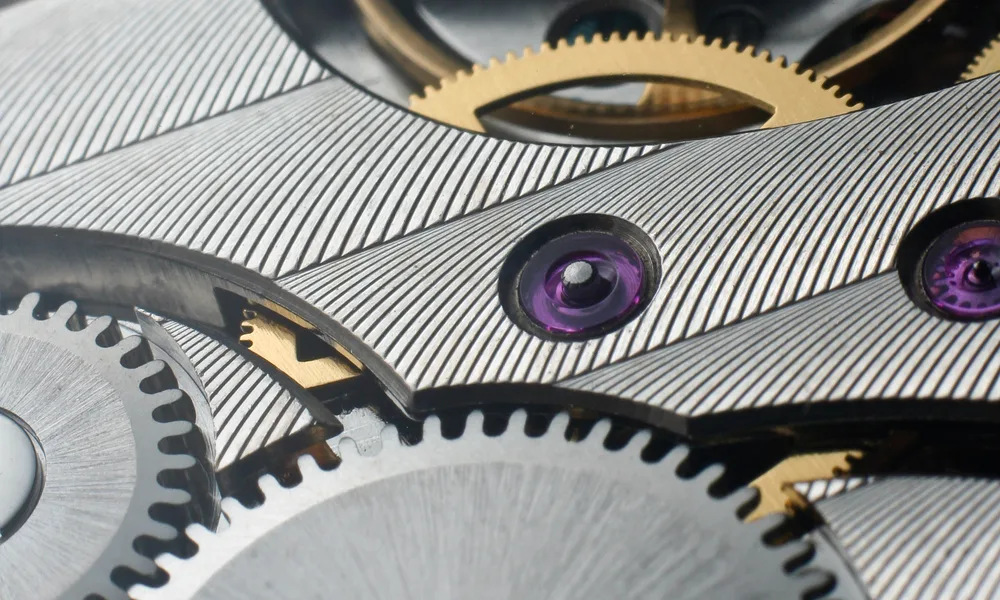
BalanceWheel AI guides the setup of the balance wheel and the escapement — the parts that set the pace of the watch. It takes the readings from the timing machine and turns them into plain instructions: which way the rate leans, how much the amplitude has fallen, and what to adjust first. For a new watchmaker, that translation is the hard part, because a timing trace is easy to misread and a wrong adjustment can make a good movement worse. The tool shows the rate in each position — dial up, dial down, crown up — and it points to the adjustment that will bring the positions together instead of chasing one position at the expense of the others.
The tool is built around the idea that timing is checked on the finished movement, not guessed at. It keeps a record for every movement the workshop builds, so you can see how a calibre behaves across ten watches instead of trusting your memory of one. If the rate drifts in the crown-up position on every watch, the record shows it, and you can look at the balance setup rather than adjusting each watch in turn. That record is also the workshop’s proof of its own standard: when a customer asks how the watch was timed, the record is the answer. A startup that can show its timing record is a startup that can be trusted with a customer’s wrist.
HandsSet AI
HandsSet AI plans the fitting of the hands: the hour, minute and seconds hands that the wearer reads. It works out the hand lengths from the dial layout, checks the clearance between each hand and the dial, and checks the clearance between the hands themselves. A seconds hand that touches the minute hand will stop the watch; an hour hand that drags on the dial will leave a mark. The tool gives the fitting order — hour, then minute, then seconds — and the height of each hand above the dial, so the hands are pressed on once and sit flat.
The tool’s real value is in the clearances, which are measured in hundredths of a millimetre and cannot be judged by eye. HandsSet AI models the stack of hands above the dial and shows where each one sits, including the space the seconds hand needs to pass over the minute hand without touching. It also checks the hand against the crystal, because a hand that clears the dial can still catch the inside of a domed crystal. For a workshop building its first watches, those checks stop the most disheartening fault of all: a finished watch that runs perfectly with the case back open and stops the moment the crystal is fitted.
Quoting and running the workshop
A watch making workshop is a business as well as a bench, and the last two tools in this guide run the business side. A build has to be quoted before it starts, because the parts are ordered for that build and the bench time is booked for it. And the workshop has to keep its books, because a movement can carry dozens of parts and a job can stretch over several days. These tools do that work without pulling the watchmaker away from the bench for hours at a time.
MovementQuote AI
MovementQuote AI prices a build from the parts list and the bench time. You enter the calibre, the case, the dial and the hands, and it adds up the parts at the prices you paid, then adds the bench hours at your own rate. It shows the quote as a clear breakdown, so the customer can see what the parts cost and what the work costs, and it flags the builds where the parts alone are close to the price you meant to charge. For a startup, that flag is the difference between a busy workshop and a profitable one, because a watch that takes three days to build cannot be sold for the price of one day’s work.
The tool is careful about the parts that get forgotten in a quote: the gaskets, the screws, the oils, the strap, and the small consumables that add up across a build. It carries a standard list of those items and adds them to every quote, so the price you give is the price the build actually costs. It also lets you quote in stages — a deposit for the parts, a payment when the movement is assembled, and the balance when the watch is cased and timed — which suits a small workshop that has to pay for parts before the watch is finished. A customer who understands the stages is a customer who pays on time, and a workshop that is paid on time can order the next build’s parts without waiting.
WatchBench Ledger AI
WatchBench Ledger AI is the workshop’s ledger: it tracks every job, every part and every payment in one place. Each build gets a job card with the calibre, the case, the dial, the hands, the parts ordered and the bench hours spent. When a part arrives, it is booked against the job; when an hour is worked, it is logged; when a payment comes in, it is matched to the quote. Nothing in the workshop is tracked on loose paper, and nothing is remembered only in the watchmaker’s head.
The tool earns its keep on the days when several builds are running at once. A one-bench workshop can have a movement waiting for a part, a dial waiting for printing, and a finished watch waiting for collection, all on the same day, and the ledger shows the state of each one at a glance. It also shows the parts shelf: what is in stock, what is on order, and what is running low. A workshop that knows its shelf does not order a part it already owns, and it does not start a build whose key part is still in the post. That kind of order is invisible when it works and expensive when it does not.
One more distinction is worth keeping clear as the workshop grows. A workshop that makes watches is not a shop that sells them: a watch store buys, displays and sells finished watches, while the workshop builds them. The two trades work together — a store needs makers, and a maker needs somewhere for the finished watches to go — but the bench and the shop counter are different jobs, and the tools in this guide are bench tools, not shop tools.
Workshop setup checklist
Before the first build starts, run through this checklist. Each item is a small job on its own, and together they are the difference between a workshop that is ready and one that discovers its gaps halfway through a movement.
- Set the bench first: a clean, level bench with a strong lamp, a loupe, and trays that keep movement parts, case parts and dial parts apart.
- Plan the calibre before ordering parts, using CalibrePlan AI and GearTrain AI, so the movement fits the case you mean to use.
- Order the full part set for one build — movement, case, dial, hands, crown, gaskets and strap — and check every part against the list when it arrives.
- Fit the dial, case and crown as a set with DialLayout AI, CaseTurn AI and CrownFit AI, and check the stem length before the crown is fitted.
- Assemble in order, time the finished movement with BalanceWheel AI, and fit the hands with HandsSet AI before the case back closes.
- Quote the build with MovementQuote AI before work starts, and log every part, hour and payment in WatchBench Ledger AI as the job runs.
Frequently asked questions
What does a watch making workshop startup actually make?
It makes complete new watches from parts: a miniature movement, a case, a dial and hands, assembled at the bench into a finished watch. The workshop designs or chooses a calibre, orders the parts, fits the case and dial, assembles the movement, checks the timing, and cases the watch. It starts with parts and ends with a watch that did not exist before.
How is making a watch different from fixing one?
Making starts with raw parts and ends with a new watch; fixing starts with a finished watch and returns it working. The bench skills overlap — both need steady hands and small tools — but the work is different: a maker plans calibres, orders parts and assembles new movements, while a watch repair business works on watches that already exist. The tools in this guide are for the making side of that line.
How small is the work, really?
The work is measured in fractions of a millimetre. A movement may be 25 millimetres across and 4 millimetres thick, a wheel may be the size of a grain of rice, and the clearance between a hand and the dial may be a few hundredths of a millimetre. That is why the bench has a loupe and a strong lamp, and why the planning tools in this guide work in millimetres rather than centimetres.
Do I need a machine shop to start?
No. Most watch making startups begin with one bench, hand tools, a small precision lathe and a trusted supplier for cases and dials. The planning tools cover the measuring and fitting that a big factory would do with machines, and the assembly is bench work. A machine shop becomes useful later, when the workshop starts making its own plates and bridges.
How long does one watch take to build?
A simple hand-wound watch can take a full day at the bench once the parts are in hand, and a first build takes longer because the design is being proved as well as assembled. The planning stage before that — the calibre layout, the dial design and the case fit — can take a week or more for a new design. Quoting that time honestly is part of the job, and MovementQuote AI is built for exactly that.
What is the first tool a new workshop should buy?
Start with the planning pair: CalibrePlan AI for the movement layout and GearTrain AI for the train. If the calibre does not fit the case, nothing downstream can save the build, and those two tools stop that fault before any parts are ordered. The bench tools and the ledger follow once the first movement is planned and the first build is quoted.
Bottom line
A watch making workshop is a small room, a clean bench and a set of parts measured in millimetres — and the nine tools in this guide cover the whole journey from the first calibre sketch to the finished watch on the wrist. Plan the movement before you order parts, fit the dial, case and crown as a set, assemble in order and check the timing, then quote honestly and keep the ledger straight. Do that, and the workshop will build watches that run well, read clearly and pay for the bench time they took. The trade rewards patience more than speed, and a startup that respects the scale of the work — miniature movements, cases, dials and assembly at wrist scale — has the right foundation to grow one watch at a time.

Keep what speaks to you.
Leave room for your own perspective.