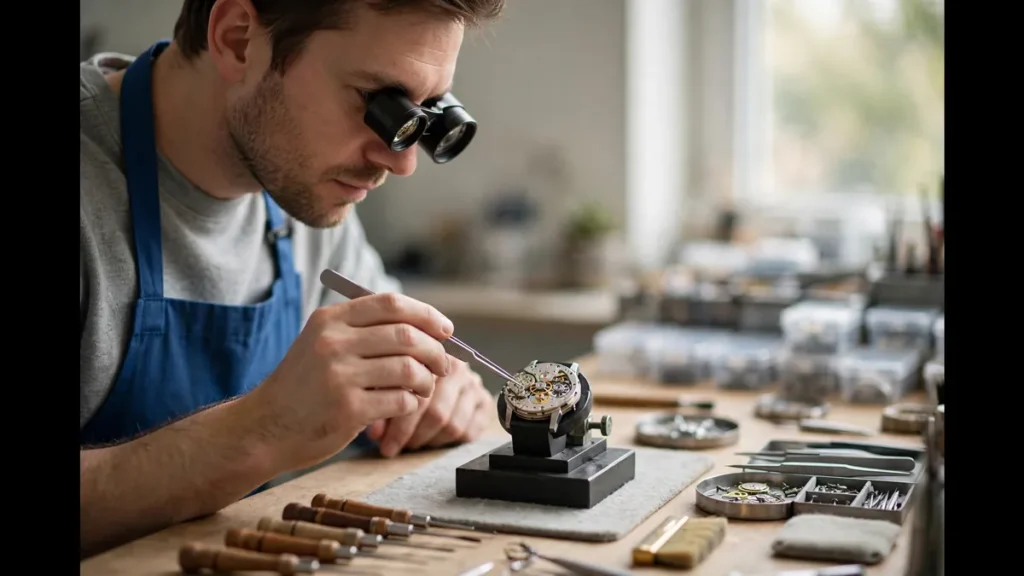
The best AI tools for watch repair startups in 2026 help a small workshop do the work of a much larger business without losing the careful, hands-on craft that makes customers trust a watchmaker with something precious. A watch repair startup is a service business built on patience and precision, and every watch that comes over the counter carries a story: a grandfather’s watch that has stopped after forty years, a diver’s watch that needs a new seal before a holiday, a luxury watch bought second hand that needs to be checked before the buyer commits. The right tools keep those jobs organised, quoted fairly and finished on time, while the watchmaker stays at the bench where the real value is created.
A watch repair business is not a shop that simply sells what is on the shelf, and it is not a general repair counter that fixes anything with a battery. Each job is different, and each watch has its own calibre, its own service history and its own quirks. A quartz watch may need only a battery and a pressure test, while a mechanical watch may need a full service, new gaskets, a replacement mainspring and regulation over several days. The workshop must track every watch from intake to collection, order the right parts, photograph the condition of each piece, and tell the customer honestly what the work will cost and how long it will take. That is a lot of administration for a team of one or two people, and it is exactly where good software earns its keep.
This guide compares the strongest AI tools for every part of a watch repair startup, from the first booking to the final pressure test and the follow-up message that brings the customer back for the next service. It covers booking and intake, bench workflow, battery and quartz work, restoration, authentication, parts and inventory, pricing, customer service, marketing and aftercare. Every tool type below was chosen because it saves a small team real hours, prevents an expensive mistake with a valuable watch, or turns a one-off repair into a customer who returns for every service, battery and strap change for years.
Key takeaways
- Start with one booking and intake tool, one repair tracking tool and one authentication tool. Those three carry most of the launch work for a new watch repair startup.
- Photograph every watch at intake, record the calibre and serial number, and get the customer to agree the condition in writing before the case is opened.
- Build every quote around the movement, the parts and the time on the bench, because customers accept a price they understand and dispute a price they do not.
- Automate service reminders, battery reminders and collection messages first. A watch repair business grows on repeat visits, not one-off jobs.
- Price every tool against the value of one saved sale or one avoided mistake, because a single mishandled luxury watch pays for a year of software.
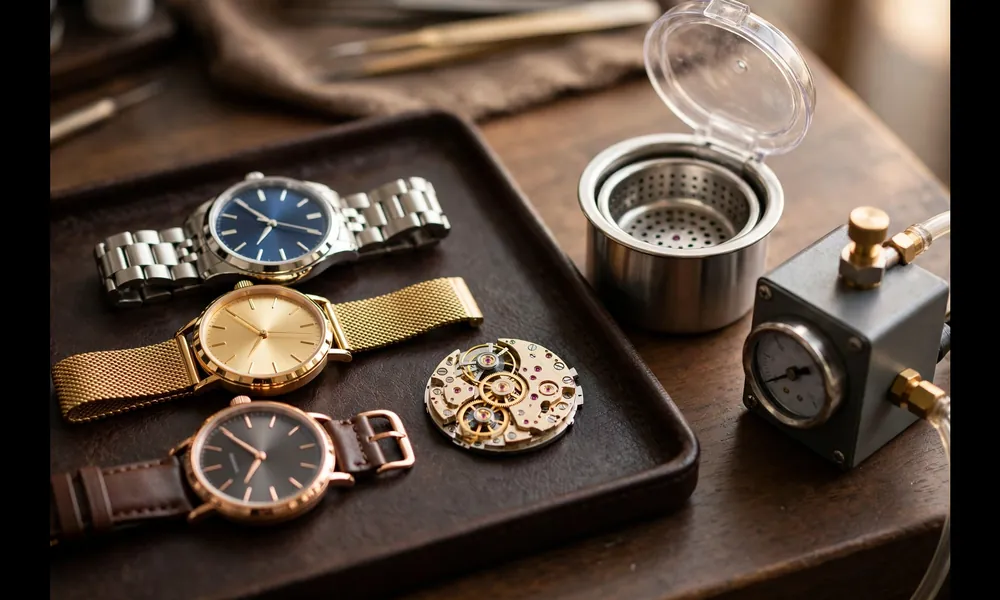
Best AI Tools for Watch Repair Startups at a Glance
The table below gives a quick view of where each type of tool helps most in a small watch repair workshop. The sections that follow explain how to use each one in a real startup, what to look for before you pay, and where small teams usually go wrong. Use the table to pick your first three tools, then read the matching sections before you spend anything.
| Tool type | Main job | Best for | Watch out for |
|---|---|---|---|
| Booking and intake | Appointments, watch check-in, condition photos | Workshops taking watches by post and in person | Forms that skip the calibre and serial number |
| Repair tracking | Job status, bench workflow, customer updates | Teams juggling dozens of jobs at once | Systems built for general repairs, not watches |
| Bench and servicing | Service records, regulation data, timegrapher logs | Workshops servicing mechanical movements | Tools that cannot store amplitude and beat error |
| Battery and quartz | Battery types, seal checks, pressure tests | High-volume battery and reseal work | Forgetting the pressure test after every opening |
| Restoration | Vintage parts, dial work, case refinishing | Workshops restoring older and heirloom watches | |
| Authentication | Checking luxury watches against known fakes | Shops buying, selling or verifying pre-owned watches | Tools that give a verdict without showing evidence |
| Parts and inventory | Ordering movements, straps, crystals and seals | Workshops holding hundreds of small parts | Stock records that ignore calibre compatibility |
| Pricing and quotes | Estimates, invoices, deposits and payments | Startups that need quotes approved before work | Quotes that hide parts costs from the customer |
| Customer service | Questions, updates, reminders and aftercare | Small teams answering the same questions daily | Automated replies that sound cold or vague |
| Marketing and local search | Reviews, local listings, service pages | New workshops building trust in a local area | Promising turnaround times the bench cannot meet |
What Makes a Watch Repair Business Different
A watch repair startup earns money from skilled labour, not from selling boxes off a shelf, and that changes what the business needs from its software. The workshop takes in items that belong to someone else, often items with deep sentimental value or a high resale price, and the owner is responsible for them from the moment they are handed over until the moment they are collected. A tool that works well for a shop selling phone cases will not understand a business where a single job can involve a movement with two hundred parts, a case that must be opened without a mark, and a customer who wants to know exactly what was done to their watch and why it cost what it did.
The work also splits in ways that other service businesses never face. The front of the shop takes bookings and gives quotes, the bench strips and services movements, the cleaning station handles cases and bracelets, and the testing bench checks water resistance and timing. Four different jobs, often for the same watch, and the records must follow the watch through all of them. AI tools earn their place when they connect those jobs, so the person at the counter can see that a watch is waiting for a part, the watchmaker can see the customer’s notes about a loose crown, and the owner can see the true cost and the true margin of every job.
AI Booking and Repair Intake Tools
Booking and intake is where a watch repair startup wins or loses its first customers, because most people arrive anxious about their watch and unsure what the repair will cost. A good AI booking tool lets a customer choose a service, pick a time, and describe the watch before they arrive, and it asks the questions that matter: the brand, the model, the calibre if it is known, whether the watch is quartz or mechanical, and what the problem is. The tool then prepares the intake record so the person at the counter does not have to start from scratch, and the customer arrives feeling that the workshop already understands their watch.
The intake step is where the workshop protects itself. Every watch should be photographed from several angles, the serial number and calibre should be recorded, and the existing marks, scratches and damage should be noted and agreed with the customer before any work begins. AI image tools can help here by prompting the intake checklist, flagging a photo that is too dark or blurred to be useful, and storing the images against the job so they can be compared with the watch at collection. A workshop that skips this step will eventually face a customer who insists a scratch was not there before, and without photos there is no fair answer.
AI Tools for Servicing and the Watchmaker’s Bench
The bench is the heart of the business, and the tools that help most there are the ones that record what was done to each movement without slowing the watchmaker down. A service record should capture the calibre, the amplitude and beat error before and after the service, the parts replaced, the oils used, and the timing results over several days. AI-assisted record tools can turn a few notes and timegrapher readings into a clean service report that the customer can actually understand, and they can flag a movement whose amplitude is low or whose beat error is drifting before the watch is returned.
The same care with precision instruments applies in other specialist repair trades, and the way AI tools for camera shop startups handle delicate equipment, lens servicing and detailed condition records is a useful model for a watch workshop that wants its bench workflow to be just as disciplined. Look for bench tools that work on a tablet at the bench, accept photos and short voice notes, and keep a full history for every watch so the next service starts with the last service report rather than a blank page. The aim is simple: the watchmaker spends the day repairing watches, not typing, and the records still end up complete.
AI Battery Replacement and Quartz Movement Tools
Battery replacements are the bread and butter of most watch repair startups: quick, affordable, and the job that brings a first-time customer through the door. The work looks simple, yet it is easy to get wrong. The wrong battery, a damaged seal, a fingerprint on the movement, or a case back closed without a pressure test can turn a ten-minute job into a ruined watch and an angry customer. AI-assisted job tools help by identifying the correct battery from the calibre, reminding the watchmaker to check the seal and test the water resistance, and recording the battery date so the workshop can remind the customer when the next change is due.
Quartz watches deserve more respect than they often get. A quartz movement can run for decades, but it still needs cleaning, contact checks, and circuit testing when it stops, and a good tool will guide the watchmaker through the checks in order rather than letting them guess. The best systems keep a database of battery types and seal sizes by model, so the person at the counter can quote the job before the watch is opened and the workshop can hold the right stock. They also track how many battery jobs turn into full services, because a customer who came in for a battery and leaves with a serviced watch is the best kind of upsell: honest, useful, and wanted.
AI Tools for Restoration and Vintage Watches
Restoration is the most skilled and most rewarding part of a watch repair business, and it is also the part where good records matter most. A vintage watch may have a dial that cannot be replaced, hands that have faded to a warm patina, and a case that has been polished too many times by previous owners. The customer must understand what can be saved, what must be replaced, and what will change the character of the watch forever. AI tools help by organising the restoration plan, storing reference photos of similar watches, and producing a clear written agreement that lists every step and every cost before the work begins.
Finding parts for older watches is a job in itself. A calibre that stopped production decades ago may need a part that only exists in a donor movement or in a specialist supplier’s drawer, and the workshop must search, compare and verify before it promises anything. AI search and parts-matching tools can scan supplier lists, flag compatible parts across calibres, and warn when a part is a poor match. They can also keep a record of which suppliers delivered on time and which parts failed, so the workshop stops ordering from the same unreliable source twice.
AI Authentication and Counterfeit Detection Tools
Authentication is becoming one of the most valuable services a watch repair startup can offer, because the pre-owned market is large and the fakes are getting better every year. A customer who has bought a watch online wants to know it is genuine before they wear it, and a seller wants a certificate they can show a buyer. AI authentication tools compare the watch against databases of genuine references, flag details that do not match, and guide the watchmaker through a structured check of the dial, hands, case, movement, bracelet and engravings. The tool does not replace the watchmaker’s eye, but it makes sure nothing is skipped.
Authentication overlaps with the work of high-value retailers, and the way AI tools for jewellery store startups handle valuations, high-value stock and customer property held for repair is directly relevant to a watch workshop that authenticates luxury pieces. The same discipline applies: photograph everything, weigh and measure what can be measured, record who handled the piece, and never give a verbal verdict that is not backed by a written report. A workshop that builds a reputation for careful, honest authentication will find that the service brings in servicing work, battery work and sales, because a customer who trusts your verdict trusts your bench too.
AI Inventory and Spare Parts Tools
A watch repair workshop holds hundreds of small, expensive parts, and losing track of them is one of the fastest ways to lose money. Straps, crystals, crowns, seals, batteries, mainsprings, hands and gaskets all look alike in a drawer, and each one fits only certain models. AI inventory tools help by linking every part to the calibres and models it fits, warning when stock of a common part is low, and suggesting the right order quantity based on how often the part is actually used. The workshop stops ordering parts it already has and stops running out of the parts it needs every week.
Inventory discipline is a retail skill as much as a workshop skill, and the forecasting and stock guidance in AI tools for retail startups applies directly to a watch repair business that also sells straps, watches and accessories. The same rules hold: order from real usage, not from optimism; count the slow stock that is tying up cash; and review the stock list every month. A workshop that knows exactly what it holds can promise a turnaround time it can keep, and a turnaround time kept is the best advertising a repair business can buy.
AI Pricing, Quotes and Estimates Tools
Quoting is where many watch repair startups lose money, because the true cost of a job only becomes clear once the watch is open. A service that was quoted as a simple clean and oil can reveal a worn pivot, a cracked jewel or a rusted part, and the workshop must then go back to the customer with a new price. AI pricing tools help by building quotes from real data: the calibre, the typical time for that service, the parts usually needed, and the workshop’s own history of similar jobs. The quote the customer sees is honest, the workshop is paid for the work it actually does, and the awkward second phone call happens far less often.
The best quoting tools also make the quote easy for the customer to approve. A clear breakdown that shows the service, the parts and the testing as separate lines is far more persuasive than a single unexplained number, and a customer who can approve the quote on their phone will do so the same day rather than forgetting about it. Look for tools that handle deposits, staged approvals for restoration work, and automatic reminders when a quote has been sitting unanswered for a week. A quote that is approved quickly is a job that starts quickly, and a bench that is always full is a business that pays its bills.
AI Customer Service and Aftercare Tools
Most of the questions a watch repair workshop receives are the same five questions, asked every day: how much will it cost, how long will it take, is my watch ready, do you service this brand, and can you replace a battery while I wait. An AI customer service tool that knows the workshop’s prices, turnaround times and opening hours can answer those questions in seconds, at any hour, and pass the unusual questions to a person with the full conversation attached. The customer gets an instant answer, and the person at the counter gets their morning back.
Aftercare is where a repair business earns its second and third sale. A watch that has been serviced should come with a clear note about what was done, when the next service is due, and how to look after the watch until then. AI tools can send that note automatically, remind the customer when a battery is due, and check in a month after the repair to ask whether the watch is keeping good time. Those small messages cost almost nothing and they are the reason a customer returns to the same workshop instead of trying the shop down the road.
AI Marketing and Local Discovery Tools
A watch repair startup is a local business first, and most of its customers will come from within a few miles of the workshop or from a search for a repairer near them. AI marketing tools help by keeping the workshop’s local listings accurate, asking happy customers for reviews at the right moment, and writing clear service pages that explain what the workshop does and what it costs. A customer searching for a battery replacement or a service for a particular brand should find the workshop, understand the price, and be able to book in one visit.
Reviews are the most powerful marketing a repair business has, because nobody hands over a valuable watch to a stranger without checking what other customers say. The best tools ask for a review just after the watch is collected, when the customer is happiest, and they make it easy to leave one. They also flag a poor review quickly so the workshop can respond properly and put it right. A workshop with a hundred honest reviews about careful work and fair prices will beat a workshop with a clever advert every time.
How to Choose Your First Three Tools
A new watch repair startup should not buy ten tools on the first day. The right order is to fix the biggest pain first, and for most workshops the biggest pain is the same: jobs getting lost, customers not knowing when their watch is ready, and quotes that turn out to be wrong. Start with a booking and intake tool that photographs the watch and records the calibre, then add a repair tracking tool that follows every job from intake to collection, and then add an authentication tool if the workshop handles luxury or pre-owned watches. Those three tools cover the work that costs the most time and the most money when it goes wrong.
Judge every tool on a free trial with real jobs, not on a demonstration. Put ten real watches through the system, from booking to collection, and watch where the tool slows the work down. A tool that needs five minutes of typing for a ten-minute battery change is the wrong tool, however clever it looks. A tool that the watchmaker will actually use at the bench, on a tablet, with dirty hands and a loupe around the neck, is worth more than a tool with a hundred features nobody opens. Ask the supplier how the tool handles the workshop’s own data if the subscription ends, because the service history of every watch is the workshop’s property and it must be exportable.
Watch Repair Startup Launch Checklist
- Set up booking and intake with condition photos, calibre and serial number recorded for every watch before the case is opened.
- Choose one repair tracking tool and run every job through it, from intake to pressure test to collection, with no jobs tracked on paper alone.
- Stock the common batteries, seals, straps and crystals for the calibres the workshop sees most, and link every part to the models it fits.
- Write a clear price list for battery changes, services and pressure tests, and get the customer to approve the quote before the work begins.
- Decide the authentication process for luxury and pre-owned watches, and never give a verbal verdict without a written report and photographs.
- Ask every happy customer for a review at collection, and send a service reminder when the next battery or service is due.
Frequently Asked Questions
How much do AI tools for a watch repair startup cost?
Most small workshops spend a modest monthly amount on their core tools, often less than the price of a single full service. Booking and intake tools, repair tracking tools and customer messaging tools usually charge by the month, with the price rising as the workshop adds users or jobs. The sensible way to judge the cost is against the time saved and the mistakes avoided: a tool that saves two hours a week or prevents one mishandled watch has paid for itself. Start with one or two tools on a free trial, measure the hours saved over a month, and only then add more.
Can AI tools authenticate a luxury watch on their own?
No, and any tool that claims otherwise should be treated with caution. AI authentication tools compare the watch against reference data, flag details that do not match, and guide the watchmaker through a structured check, but the final judgement belongs to an experienced person who has held the watch. The tool makes sure nothing is skipped and produces a written report with photographs, which is exactly what a customer or a buyer needs. A workshop should always be honest about the limits of its authentication and refer a watch to the maker’s service centre when the evidence is not clear.
Do I need a pressure tester for every battery change?
Yes, for any watch that claims water resistance, the pressure test after the battery change is not optional. Opening the case disturbs the seal, and a watch that was water resistant before the battery change may not be afterwards. A dry pressure test takes only a few minutes and it is the workshop’s proof that the watch left in good order. The tools in this guide remind the watchmaker to run the test and record the result against the job, so the test is never skipped on a busy day. A customer who swims with a watch that was never tested is a claim waiting to happen.
How long should a full mechanical service take?
A full service on a mechanical watch usually takes one to three weeks, depending on the calibre, the parts needed and the testing time. The strip, clean, oil and rebuild may take a day on the bench, but the timing tests should run over several days in different positions, and parts for older calibres can take time to arrive. A workshop should never promise a service in a few days unless it can genuinely deliver it. The repair tracking tools in this guide help by showing the customer where their watch is in the process, so a three-week wait feels honest rather than forgotten.
What should I photograph when a watch arrives for repair?
Photograph the dial, the case front and back, the crown, the bracelet or strap, and any existing marks or damage, and record the serial number and calibre alongside the images. Those photographs are the workshop’s protection if a customer later questions the condition of the watch, and they are the customer’s reassurance that the watch was treated with care. The intake tools in this guide prompt the photographer, flag a blurred image, and store the photographs against the job so they can be compared with the watch at collection. A workshop that photographs everything will rarely need to argue about anything.
Is a watch repair startup profitable in 2026?
Yes, for a workshop that prices its work honestly and builds repeat customers. Battery changes and reseals bring in regular work, full services bring in higher-value jobs, and restoration and authentication bring in work that few competitors can offer. The costs are bench time, parts, tools and rent, and the profit comes from keeping the bench full and the turnaround time reliable. AI tools help by cutting the administration, keeping the diary full, and reminding customers when the next service is due. A workshop with a full bench, clean records and happy customers is a profitable workshop.
The Bottom Line
The best AI tools for watch repair startups in 2026 are the ones that protect the watch, protect the customer and protect the watchmaker’s time. Start with booking and intake, repair tracking and authentication, photograph every watch, quote honestly, test the water resistance after every opening, and let the tools handle the messages, the reminders and the records while the bench does the skilled work. A workshop that runs that way will keep its customers, fill its diary, and earn the trust that turns a first battery change into a customer for life.

Keep what speaks to you.
Leave room for your own perspective.


