A pizza oven is not an appliance you plug in and walk away from. It is a structure: a firebrick floor, a domed chamber that has to hold heat, a flue that has to draw properly, and a base that has to carry a tonne or more of masonry without cracking. That is why installing pizza ovens is a trade of its own, and why the startups doing it well in 2026 are leaning on software that was built for measurement, heat, and jobsite discipline rather than for taking orders.
The work sits at an awkward junction. One half of the job is design and building: surveying a garden or a restaurant courtyard, modelling a dome, working out the flue route, and ordering the right refractory materials. The other half is running a small field-service business: quoting accurately, booking crews, documenting each build, and proving to the customer that the finished oven is safe and performs as promised.
This guide covers nine AI tools that, taken together, cover both halves. They help a new pizza oven installation startup measure a site from a phone, model the oven in 3D, price the job from real quantities, keep the crew on schedule, and check the finished oven with a thermal camera before handover. None of them sells pizza, runs a tour, or manages a restaurant floor. Every one of them earns its place on an installation job.
Key takeaways
- Pizza oven installation is a building trade, not a food trade: the tools that matter most handle 3D design, site measurement, flue routing, and heat checks.
- Start with SketchUp for dome and base design, magicplan for fast site surveys, and Jobber for quoting and scheduling — that trio covers most first jobs.
- A thermal camera check with FLIR before handover is the cheapest insurance a new installer can buy against callbacks for cold spots and smoke leaks.
- Quote from measured quantities with Buildxact, not from gut feel: refractory brick, insulation, and flue parts are where new installers lose money.
- Document every build with OpenSpace so you can prove what was installed, settle disputes fast, and reuse photos in your next quote.
Why pizza oven installation needs its own toolkit
A pizza oven fails in ways that are specific to ovens. The dome geometry decides how heat rolls across the ceiling and down onto the pizza. The flue has to be sized and routed so the oven draws cleanly in still air and in wind, and the base has to spread the load across whatever sits underneath it, from a concrete slab to a timber deck that was never designed for masonry. None of this is visible in a restaurant point-of-sale system or a food-tour booking platform.
The installation itself is also a multi-day, multi-material job: slab or base preparation, insulation layers, the firebrick floor, the dome, the flue, and a curing schedule that slowly drives moisture out of the masonry over several small fires. Gas ovens add a gas line, a regulator, ventilation, and a gas-safe sign-off. Each stage depends on the one before it, and a delay in materials or a missed measurement at the survey stage ripples through the whole week.
That is the gap these nine tools fill. The design and measurement tools stop the expensive mistakes at the survey stage, when a fix costs minutes. The estimating and scheduling tools stop the quiet losses — underpriced jobs, double-booked crews, and materials ordered twice. And the documentation and thermal tools protect the finished job, giving the customer proof that the oven heats evenly and draws properly.
How to choose the right AI tools for your pizza oven installation startup
Choose by the job, not by the feature list. Start by writing down the five things you actually do on every installation: survey the site, design the oven, price the job, run the build, and hand it over. Overlap is where small startups waste money and where crews stop using the software altogether because nobody knows which app holds the truth.
Pay attention to how each tool handles the messy reality of a building site. A design tool is only useful if it can work from the measurements you can actually take in a garden, not from a perfect CAD file. A quoting tool is only useful if it understands materials in the quantities you buy them — bags of mortar, square metres of insulation, lengths of flue — rather than generic line items.
Finally, check the price against the job, not against the month. A tool that costs a few hundred pounds a year but stops one underpriced job or one return visit has paid for itself many times over. The stack recommended below starts lean — three tools cover the first jobs — and adds the specialist tools only when the volume of work justifies them. That way the software grows with the order book instead of eating it.
The best AI tools for pizza oven installation startups
The nine tools below are grouped by the stage of the job they serve, from the first site visit to the final heat check. Each one is judged on the same test: does it make a real installation faster, more accurate, or less likely to come back as a callback? Tools that only looked good in a demo did not make the list.
1. SketchUp: best for 3D dome and base design
SketchUp is the design tool most small building trades reach for first, and it suits pizza ovens well because a dome is a shape you need to see before you build it. That visual agreement matters: most disputes about ovens start with a customer who imagined something different from what was built.
The AI-assisted features in recent versions help with the parts that slow a new designer down. You can generate a starting model from a text description or a rough sketch, then adjust the dimensions to your standard dome profiles rather than drawing every curve from scratch. The 3D Warehouse also holds ready-made components — flue sections, oven doors, stands — that drop into the model and keep the proportions honest.
Where SketchUp really earns its fee is in the quantities. Once the model is right, you can pull measurements straight from it — the floor area in firebrick, the dome surface for insulation, and the base footprint — and feed them into your estimate instead of guessing at material costs.
2. magicplan: best for fast AI site surveys
magicplan turns a phone into a survey tool. For a pizza oven installer, that means you can survey a garden, a courtyard, or a restaurant terrace in twenty minutes and leave with measurements you can trust, instead of a notebook full of numbers that need re-checking back at the office.
The survey matters because oven placement is constrained by things that are easy to miss. The flue needs clearance from windows, boundaries, and overhanging trees. The base needs level ground or a slab that can take the weight. The oven mouth needs to face away from the prevailing wind and the seating area, or every firing will smoke out the people it was built for.
magicplan also speeds up the quote. Because the plan is digital, you can annotate it with the oven position, the flue route, and the access path for materials, then share it with the customer as part of the proposal. It answers the obvious questions before they are asked and shortens the gap between the first visit and a signed job.
3. Hover: best for AI measurements from photos
Hover takes ordinary smartphone photos of a property and turns them into a measured 3D model with AI, including roof lines, wall areas, and ground dimensions.
The practical advantage is that you do not need to be on site to measure it. A customer can take the photos themselves following the app’s prompts, and you can produce a first design and a ballpark price before you ever visit. That changes the sales process: instead of driving to every enquiry, you visit only the jobs that are already roughly priced and genuinely interested.
Hover is also useful for the base and the flue. The model shows the ground levels and the distances the flue has to clear, which are the two measurements that most often surprise a new installer on the day. If the flue needs an extra length to clear a first-floor window, you find out at the design stage, when the part costs a few pounds, rather than on site, when it costs a day.
4. FLIR: best for thermal checks and curing verification
FLIR makes the thermal cameras — including the FLIR One Pro that clips onto a phone — and the Ignite app that pairs with them. For a pizza oven installer, a thermal camera is the tool that turns a handover from a handshake into evidence. Problems that would take a customer weeks to notice show up in seconds.
The curing stage is where the camera earns its keep. A new masonry oven has to be cured with a series of small, gradually hotter fires that drive moisture out of the brick and mortar. Fire it too hard too soon and the dome can crack; fire it too gently and moisture stays trapped. A thermal image at each stage shows whether the heat is spreading evenly, so you can adjust the firing schedule with data instead of guesswork.
FLIR’s app also builds the record. Each thermal image is saved with a temperature scale and a timestamp, so you can attach the handover set to the job file and show the customer the oven reached temperature, the heat is even, and the flue and joints are sound. If a problem appears later, those images separate an installation fault from a year of misuse. The same discipline applies to the flue and fire risk of any solid-fuel appliance, which is why the approach overlaps with the checks used in wood stove installation work.
5. Jobber: best for quoting, scheduling, and invoicing
Jobber is the field-service app that most small installation businesses end up running the whole job on, and it fits pizza oven work because a job is a sequence: quote, schedule, build, handover, invoice. Nothing gets retyped, which means nothing gets lost between the office and the van.
The AI features help with the parts that eat a startup’s evenings. Jobber can draft client messages, summarise job notes, and suggest follow-ups on quotes that have gone quiet, so the admin that used to take an hour after dinner takes ten minutes. The scheduling view shows the week at a glance — which crew is where, which materials are due, and which jobs are waiting on a curing window.
For a new business, the invoicing and payment side matters as much as the scheduling. Jobber lets the customer pay by card from the invoice, sends automatic reminders for deposits, and tracks what is owed without a spreadsheet. That matters on oven jobs, where a deposit covers the refractory materials and the balance is due on handover.
6. ServiceTitan: best for larger install teams and dispatch
ServiceTitan is the heavier field-service platform, and it makes sense once a pizza oven startup grows past a single crew. If you are running two oven builds and a repair visit on the same day, that visibility is the difference between a smooth week and a missed appointment.
The estimating tools are the reason to look at it for ovens specifically. ServiceTitan supports detailed pricebooks, so you can build standard prices for your standard ovens — a 900 mm wood-fired dome, a gas oven on a steel stand, a full outdoor build with base and flue — and quote them consistently no matter who takes the call. That consistency protects your margin: the price a customer hears on Monday is the same price the crew works to on Friday.
It is more expensive and more complex than the leaner tools on this list, so it is not the right first purchase. Buy it when the signs appear: jobs are being missed because the phone was not answered, crews are waiting on site for materials that were never ordered, or you cannot tell which jobs made money and which did not.
7. OpenSpace: best for AI photo documentation of the build
OpenSpace lets a crew member walk a site with a phone or a 360-degree camera, and it automatically maps the photos onto the floor plan and organises them by date and location. For a pizza oven build, that means every stage — the slab, the base, the insulation, the floor, the dome, the flue — is captured in order, tied to the exact spot on the plan, and stored without anyone having to sort photos at the end of the day. The AI does the filing; the crew just walks.
The value shows up in three places. First, disputes: if a customer claims the insulation layer was skipped, you open the dated photos for that exact stage and the conversation ends. Second, quality control: you can review a build from the office the same evening and spot a problem while it is still cheap to fix. Third, marketing: a tidy, dated set of build photos is the best sales material an installer owns, because it shows the work rather than describing it.
OpenSpace also helps with the handover: the finished photo set, combined with the FLIR thermal images, becomes a complete record of what was installed and how it performed. For a startup, that record is also the training manual for the next hire — this is how we build a base, this is how we lay a floor, this is what finished looks like.
8. Buildxact: best for estimating and material takeoff
Buildxact is estimating software for small builders, and it suits pizza oven installation because the job is mostly materials. Buildxact lets you build a takeoff from your design measurements, apply supplier prices, and produce a quote that shows its working — which is exactly what a customer wants when they are comparing your price with a cheaper one.
The takeoff discipline is where new installers lose money. Buildxact’s templates stop that by making the standard oven a repeatable recipe: the same list of materials, in the same quantities, every time, adjusted only for the size of the dome and the length of the flue. Once the recipe is right, quoting a new job takes minutes and the margin is protected by the system rather than by memory.
Buildxact also handles the supplier side. You can send the material list to a supplier for pricing, track the order against the job, and see the real cost of each build once it is done. Over a season, that record tells you which oven sizes are most profitable and where your estimates keep drifting.
9. Fieldwire: best for jobsite task tracking and plan markups
Fieldwire is the jobsite app that keeps the crew working from the same plan. When the mason finishes the firebrick floor, they tick it off and photograph it; when the flue route changes because of a beam nobody saw, the change is marked on the plan for everyone to see. There is no paper drawing getting wet in the garden and no verbal instruction that half the crew missed.
The AI features help with the paperwork that usually piles up. Fieldwire can summarise daily logs, flag tasks that are overdue, and generate the progress reports that customers ask for on multi-day builds — so the admin writes itself in the background instead of waiting until the evening.
Fieldwire’s real strength is that it keeps the standard of work visible. The task list for a standard oven — slab check, base, insulation, floor, dome, flue, cure, handover — is the same on every job, so a new hire can see exactly what done looks like at each stage.
| Tool | Best for | Job stage | Starting point |
|---|---|---|---|
| SketchUp | 3D dome and base design | Design | Free web version, paid Pro for full features |
| magicplan | Fast AI site surveys | Survey | Free trial, then subscription |
| Hover | Measurements from photos | Survey | Pay per report |
| FLIR | Thermal checks and curing | Handover | Camera hardware plus free app |
| Jobber | Quoting, scheduling, invoicing | Running the business | Monthly subscription |
| ServiceTitan | Multi-crew dispatch | Running the business | Quoted pricing |
| OpenSpace | Photo documentation | Build | Monthly subscription |
| Buildxact | Estimating and takeoff | Quoting | Monthly subscription |
| Fieldwire | Jobsite tasks and markups | Build | Free basic plan, paid Pro |
Your starter stack by budget
If you are starting with almost no budget, begin with the free tiers: SketchUp’s free web version for design, Fieldwire’s free plan for task tracking, and the phone camera you already own for site photos. Add magicplan on a monthly plan as soon as surveys start taking half a day each, because the time it saves is worth more than the subscription from the first week. That lean stack will carry you through your first few ovens without a large monthly bill.
Once you are installing regularly, the next money should go to Jobber and Buildxact. Together they fix the two places where growing startups leak profit: quotes that are guessed instead of measured, and jobs that are scheduled by memory instead of by a system. A FLIR One Pro camera belongs in the same round of spending, because a thermal handover check is the single cheapest way to stop callbacks. At this stage the monthly software cost is a small fraction of one oven’s margin, and it is repaid by the first job it saves.
ServiceTitan, Hover, and OpenSpace come last, when the business has the volume to justify them. Hover pays when enquiries arrive faster than you can visit them. OpenSpace pays when you have a crew whose work you need to review without being on every site. ServiceTitan pays when dispatching several teams by phone and memory starts failing. Buy them one at a time, and only when the problem they solve is already costing you money.
Pizza oven specifics the software has to handle
Four details separate a pizza oven job from a general building job, and your tools have to cope with all of them. The first is the dome geometry: the ratio of dome height to floor diameter decides how the oven cooks, so the design tool must model curves accurately and the estimating tool must price the materials the curve actually needs. A flat-walled estimating template will get the brick count wrong, and the error lands on your margin.
The second is the flue. The survey and design tools must capture those clearances, and the quote must include every flue section, flashing, and cowl rather than a single hopeful line. The same flue and clearance thinking runs through the neighbouring trade of outdoor fireplace installation, where the chimney does the same job in a different setting.
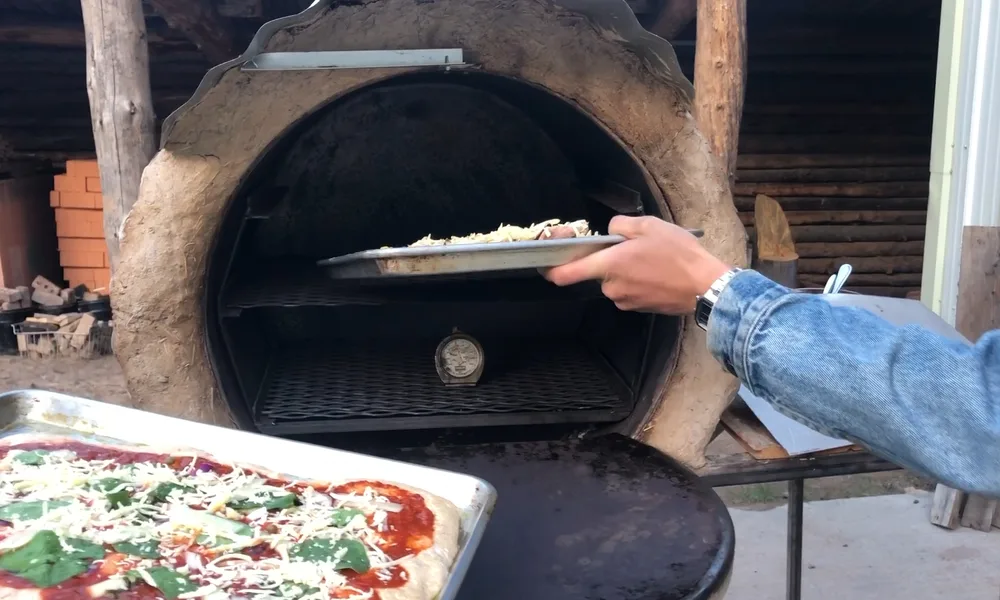
The third is the curing schedule. A new oven cannot be fired hard on day one: the masonry needs a sequence of small fires over several days, and the schedule has to be booked, tracked, and explained to the customer. Your scheduling tool must handle a job that is not finished when the crew leaves, and your documentation must record each curing fire with its thermal images. The fourth is the base load. A finished oven can weigh well over a tonne, so the base design, the slab, and the ground underneath all need to be right.
There is also the question of where the oven sits in the customer’s wider plans. Many ovens are one part of a bigger outdoor project, and the installer who understands the whole space wins the work. That is why it helps to know how the neighbouring trade thinks: the tools and planning used by outdoor kitchen startups cover the seating, lighting, and layout that surround the oven, and an installer who can talk about the whole space is easier to hire than one who cannot.
Checklist: launching your AI-powered pizza oven installation business
- Survey three real gardens with magicplan and build one standard dome model in SketchUp before you take a paying job.
- Price your standard oven in Buildxact from measured quantities, including every flue section, and check the margin before you quote it to anyone.
- Set up Jobber with a deposit invoice, a curing-visit schedule, and a handover checklist so no job is ever finished on a handshake.
- Buy or hire a FLIR camera and practise the thermal handover check on a friendly first oven, so the routine is smooth before a paying customer watches.
- Photograph every stage of your first five builds in OpenSpace and keep the sets as your proof of work and your training material.
- Write the curing instructions, the care notes, and the warranty terms once, and attach them to every handover so every customer gets the same promise.
Common mistakes pizza oven installation startups make
The most expensive mistake is quoting from a guess. Measured takeoffs exist precisely to stop that, and they take less time than the awkward conversation they prevent.
The second mistake is skipping the survey. An oven placed by eye, without measured clearances for the flue and without a check on the ground under the base, is an oven that may smoke, crack, or sink. A twenty-minute survey with a phone is cheap insurance against all three, and it produces the plan the customer signs, which protects both sides. The third mistake is firing the oven too hard during curing, which cracks domes that were built perfectly. A written curing schedule, tracked in the job app and checked with a thermal camera, turns a risky week into a routine one.
The final mistake is treating the handover as the end of the job. The customer who is left with a hot oven and no instructions will misuse it, and the first crack will be blamed on the installer whether or not that is fair. A proper handover — thermal images, curing records, written instructions, and a follow-up call after the first month — costs an hour and buys a reputation.
Frequently asked questions
How much should a pizza oven installation startup spend on AI tools in year one?
Plan for a lean start and grow with the order book. The free tiers of SketchUp and Fieldwire plus a magicplan subscription will carry the first jobs for well under a hundred pounds a month. Add Jobber, Buildxact, and a FLIR camera once you are installing regularly; the three together typically cost less than the margin on a single oven.
Do I need 3D design software to sell pizza ovens?
Strictly, no — ovens were sold for centuries without it. In practice, a 3D model is the fastest way to agree with a customer on exactly what will be built, where it will sit, and what it will look like. It prevents the most common dispute in the trade, which is a customer who imagined a different oven from the one that arrived. It also produces the measurements your estimate is based on, so it pays for itself in accuracy as well as in sales.
Can AI really measure a garden accurately enough for an oven base?
For the first design and quote, yes: phone-based tools like magicplan and Hover are accurate enough to price a job and agree a position. For the final build, always confirm the critical measurements — the base footprint, the levels, and the flue clearances — with a tape and a level on site. Treat the AI survey as a fast, reliable draft and the physical check as the sign-off, and you get the speed of one with the certainty of the other.
What is the hardest part of running a pizza oven installation startup?
Most installers say it is not the building, it is the business around it: pricing jobs accurately, keeping crews and materials in the right place on the right day, and getting paid on time. The building itself is a learnable craft with a clear standard. The scheduling, quoting, and cash flow are where startups fail, which is why the business tools on this list — Jobber, Buildxact, and eventually ServiceTitan — matter as much as the design tools.
Do I need a gas licence to install gas pizza ovens?
Yes, in most places any work on a gas supply must be done or signed off by a suitably qualified and registered gas engineer, and the rules vary by country and region. A startup that installs gas ovens should either hold the qualification in-house or partner with a registered engineer for the gas connection and sign-off, and should never present gas work as something a general builder can finish alone. Check the local rules before quoting a gas installation, and build the sign-off into the job plan and the price.
How do pizza oven installation startups get their first clients?
Most first jobs come from visible proof of work: photos and video of a finished oven, a thermal handover report, and a customer who will recommend you. Build one or two showcase ovens — your own garden, a friendly restaurant courtyard, a community space — document them thoroughly, and share the build photos wherever local customers look. Word of mouth in a neighbourhood beats any advertisement, and a documented build is the thing people share.
The bottom line
A pizza oven installation startup is a building business that happens to build ovens, and the tools that make it work are the tools of the building trade: measure the site properly, model the dome before you build it, price from real quantities, run the crew from a shared plan, and prove the finished oven with a thermal camera. Do that, and the ovens you hand over will cook properly on day one — which is the whole business, in one sentence.

Keep what speaks to you.
Leave room for your own perspective.