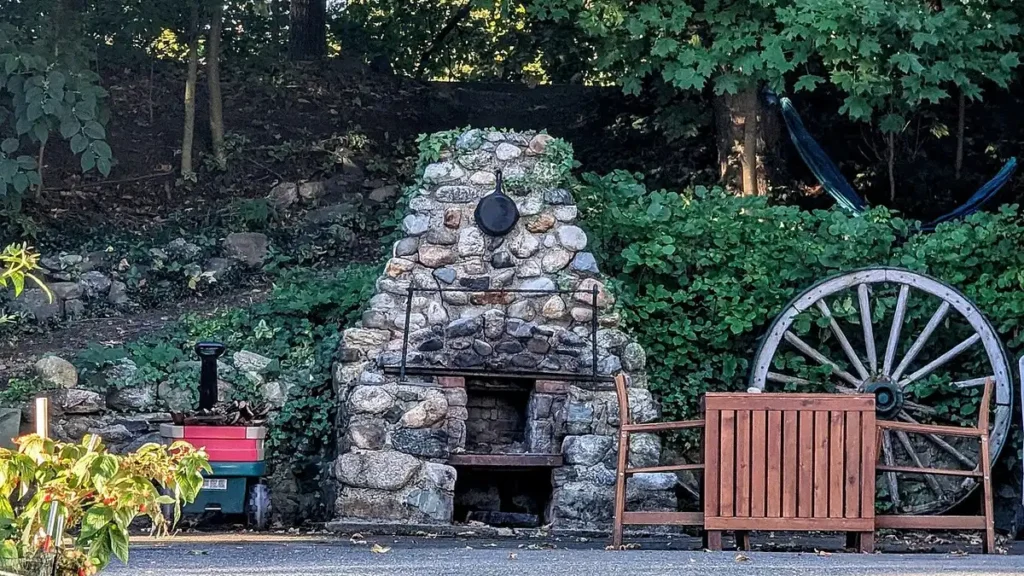
The best AI tools for outdoor fireplace installation startups in 2026 do far more than answer the phone while a crew is laying block for a chimney. They turn a photo of a bare patio into a realistic picture of a finished stone fireplace with a chimney, seating and lighting, work out how much block, stone veneer, firebrick and flue liner a job needs, flag the footing, gas line and permit checks before anyone digs, and keep the mason, the supplier and the homeowner on the same page from the first site visit to the first evening the fire is lit. For a new outdoor fireplace business, that combination matters more than any single clever feature, because the first years are won or lost on how many safe, well-built fireplaces a small crew can finish without dropping the admin that keeps customers coming back.
An outdoor fireplace installation startup is a very particular kind of trade business, and it is not the same as fitting a fireplace indoors or building an open fire pit. An outdoor fireplace is a permanent enclosed structure: a firebox, a chimney, a footing, a hearth and a weatherproof finish that has to stand up to rain, wind, frost and summer heat year after year. Every project is different in fuel type, patio size, ground conditions, wind exposure and access, and every homeowner wants to see the finished fireplace before they agree to pay for it. A simple gas firebox set into a low stone wall and a tall wood-burning masonry fireplace with a chimney, a raised hearth, built-in seating and lighting are entirely different jobs, yet both arrive through the same phone number and the same inbox.
Meanwhile the founder is measuring the patio, checking clearances from fences, trees and the house, ordering block, stone and flue kits, managing a crew and trying to keep the next three weeks booked. When any part of that chain lives in a notebook and a phone full of unread messages, the week wobbles: a missed call becomes a lost booking, a quote that forgets the footing, the flue liner or the stone veneer eats the margin, and a homeowner who waited days for a design signs with the competitor who showed them a picture the same afternoon. This guide is written for founders, not for large established contractors. Every tool below is judged on what an outdoor fireplace installation startup actually needs: low starting cost, no long contract, useful from the first week, and able to grow with the business from one person to a first crew and then to several crews. You will find a comparison table, a startup checklist and answers to the questions new outdoor fireplace installers ask most often, all judged on simple setup, honest pricing, tools that work from a phone on a job site, and software that grows without forcing a painful switch.
Key takeaways
- Start with three tools only: AI outdoor design and visualisation, AI estimating with block, stone and flue takeoffs, and AI customer messaging. Everything else can wait until the diary is full.
- Pick tools that charge per project or per month with no long contract, so a quiet winter month does not punish a young outdoor fireplace business.
- Use AI design visualisation to win higher-value outdoor fireplace projects, because a homeowner who can see the finished chimney, hearth and seating is far more likely to approve a premium masonry or gas build.
- Footings, flues, gas lines and permits are where outdoor fireplace startups lose money and take on risk. Build a simple AI-assisted check into every quote and never let a job start without it.
- Keep the human in charge of pricing judgement, gas and safety decisions, measurements and customer relationships. AI should speed those decisions up, never make them alone.

How the best AI tools for outdoor fireplace installation startups compare
The table below gives a quick view of the tools in this guide. Each one earns its place for a different reason, and the right choice depends on whether the startup is a one-person operation, a growing two-crew team, or a business already planning a second depot. Read the short reviews that follow before deciding, because the cheapest tool is not always the cheapest to run once a crew depends on it every day.
| Tool | Best for | Standout AI feature | Starting point |
|---|---|---|---|
| VizTerra | 3D outdoor living design | Photorealistic renders of the fireplace, patio and seating | From around $99 per month |
| SketchUp | Chimney and masonry modelling | 3D models of the firebox, flue and stonework | From around $349 per year for Pro |
| Chief Architect | Detailed fireplace and chimney plans | Automatic 3D models, elevations and flue layouts | From around $199 per month |
| Jobber | Quoting, scheduling and customer records | AI-assisted quotes and automated follow-ups | From around $49 per month |
| magicplan | Site measurement and clearance layout | Garden and patio scans with measured plans | Free to start, paid plans available |
| Smith.ai | Answering calls and capturing leads | AI receptionists that book site visits around the clock | From around $285 per month |
| Houzz Pro | Design and client proposals | AI room and garden visualisation with instant renders | From around $65 per month |
| QuickBooks Online | Invoicing, expenses and cash flow | AI expense sorting and payment reminders | From around $30 per month |
| ServiceTitan | Dispatch and scaling up | AI dispatch, capacity planning and call insights | From around $125 per user per month |
The 9 best AI tools for outdoor fireplace installation startups in detail
Each tool below is reviewed on its own terms: what it does well for an outdoor fireplace installer, where it falls short, and which kind of startup should buy it first. The order follows the journey of a job, from the first design and measurement to the final invoice and the review that wins the next customer.
1. VizTerra: Best 3D outdoor living design
VizTerra turns a measured garden into a photorealistic picture of a finished outdoor fireplace, and that picture is the single most powerful sales tool a new installer owns. A homeowner who can see the stone chimney, the raised hearth, the seating wall and the lighting in their own backyard will approve a bigger job far more readily than one who is asked to imagine it from a sketch. The software is built for outdoor living, so it handles patios, steps, planting and slopes as part of the design rather than as an afterthought, and the fireplace sits in the middle of a whole outdoor room instead of floating on a blank page.
For a startup, the practical win is speed. A first design can be ready the same afternoon as the site visit, and changes to the stone colour, the chimney height or the hearth width take minutes rather than a new drawing. The AI-assisted rendering does the heavy lifting on light, shadow and materials, so a founder without a design background can still present work that looks professional. Prices can be attached to the design, which means the quote and the picture travel together and the homeowner is deciding on a real project, not a vague idea.
2. SketchUp: Best chimney and masonry modelling
SketchUp is the tool to reach for when the design has to become a buildable plan. An outdoor fireplace lives or dies on its dimensions: the firebox opening, the flue size, the chimney height above the roofline, the footing depth and the clearances from the house and the fence. SketchUp lets a founder model all of that in three dimensions, walk around the structure on screen, and spot the problems before the first block is laid. Finding those mistakes on a laptop costs nothing; finding them on site costs a rebuild.
The AI features in the newer versions help with the repetitive parts of the job. Materials can be swapped across the whole model in seconds, standard firebox and flue components can be dropped in from the 3D Warehouse, and the model can generate the elevations and sections a permit officer wants to see. For a startup that works with a mason or a structural engineer, a clean SketchUp model is also the fastest way to agree on the build: everyone is looking at the same chimney, the same dimensions and the same details, and there is far less room for a misunderstanding that turns into a costly change order.
3. Chief Architect: Best detailed fireplace and chimney plans
Chief Architect sits between a sales render and an engineering drawing, and for an outdoor fireplace startup that is exactly where the money is. It builds automatic 3D models from a floor plan, produces elevations, sections and framing layouts, and keeps the chimney, the flue, the firebox and the surrounding structure in one consistent model. For a business that builds tall masonry fireplaces with real structural demands, that consistency is worth more than a prettier picture.
The AI-assisted drafting is the feature that earns its place here. Walls, roofs, stairs and terrain are generated from simple inputs, and the software flags clashes and missing dimensions as the model is built. A founder can produce a permit-ready drawing set for a freestanding outdoor fireplace in a day rather than waiting a week for a draughtsman, and the same model produces the materials takeoff for the quote. That matters in the first year, when every week of waiting is a week without revenue and every outsourced drawing is money out of a thin margin.
4. Jobber: Best quoting, scheduling and customer records
Jobber is the everyday workhorse of a young outdoor fireplace business. It holds the quote, the schedule, the customer record and the invoice in one place, and its AI-assisted quoting turns a site visit into a professional estimate before the founder has driven home. The estimate can include the block, the stone veneer, the firebox, the flue liner, the footing concrete and the labour as separate lines, so the homeowner can see exactly what they are paying for, and the follow-up reminders chase the unsigned quotes automatically. For a startup, that follow-up is where the money is: most outdoor fireplace jobs are won by the company that replies first and follows up politely, not the one with the lowest price.
On the job itself, Jobber keeps the crew organised. The schedule shows who is on which site, the job notes carry the measurements and the gas and permit checks, and the customer gets a message when the crew is on the way. The mobile app works from a muddy garden, which is where it will be used most, and the invoicing and payment reminders mean the founder is not spending evenings chasing money that is already owed.
5. magicplan: Best site measurement and clearance layout
magicplan turns a phone into a measuring tool, and for an outdoor fireplace installer that changes the first site visit completely. Walk the garden, scan the patio and the house wall, and the app produces a measured plan showing the distances from the proposed fireplace to the house, the fence, the trees and the gas meter. Those clearances decide whether the fireplace can go where the homeowner wants it, whether the flue will clear the roofline, and whether a permit will be granted. Getting them right on the first visit means the quote is accurate, the design is honest, and nobody has to move a half-built fireplace later.
The AI features do the tedious work: room and garden scans become measured plans without a tape measure, and the plan can be marked up with the fireplace position, the seating layout and the gas line route. That marked-up plan is also the document that keeps everyone honest. The mason sees the footing size, the gas fitter sees the line route, the homeowner sees where the seating will go, and the permit officer sees the clearances.
6. Smith.ai: Best answering calls and capturing leads
Most outdoor fireplace enquiries arrive when the founder is on a roof, in a trench, or driving between jobs, and a missed call in this trade is usually a lost job. Smith.ai answers the phone around the clock with trained receptionists and AI assistance, takes the details of the enquiry, and books the site visit into the diary. The homeowner gets a human answer within seconds, the founder gets a clean summary of the job, and the lead is captured instead of going to voicemail and then to a competitor.
The service is tuned for trade businesses, so the receptionists know how to ask the questions that matter for an outdoor fireplace: the size of the patio, the fuel type the homeowner prefers, whether there is an existing gas supply, and when the homeowner is free for a visit. Spam and sales calls are filtered out, so the founder only hears about real jobs. The AI features help with the follow-up too, sending a confirmation message after the call and a reminder before the site visit, which cuts down on no-shows and wasted driving time.
7. Houzz Pro: Best design and client proposals
Houzz Pro is the tool to reach for when a homeowner says they like the idea of an outdoor fireplace but cannot picture it in their own garden. Its design tools turn a photo of the patio into a rendered view of the finished fireplace, complete with stonework, chimney, hearth and seating, so the customer is choosing a real look rather than guessing from a brochure. For a startup, that matters because most outdoor fireplace sales are won or lost in the garden, not on price alone. A homeowner who can see a stone chimney and a raised hearth in their own space will approve a bigger job far more readily than one who is asked to imagine it.
The AI features do the repetitive work: measurements can be pulled from photos, materials swapped in seconds, and a polished proposal with the render, the price and the terms sent the same day. The proposal becomes the record of what was agreed, which protects both sides when the job starts. The built-in lead tools help too, because homeowners looking for outdoor living ideas are already browsing the platform.
8. QuickBooks Online: Best invoicing, expenses and cash flow
QuickBooks Online keeps the money side of an outdoor fireplace startup honest, and that is a bigger job than it sounds. A single masonry fireplace can involve deposits, stage payments, materials from three suppliers, a mason, a gas fitter and a skip, and the margin disappears quickly if any of those costs is forgotten. QuickBooks sorts the expenses with AI, matches the bank transactions to the job, and shows the profit on each fireplace while the job is still running. The founder can see which jobs made money and which ones did not, and price the next one properly instead of guessing.
The invoicing is built for the way this trade actually works. A deposit invoice goes out with the signed quote, a stage payment is raised when the footing is poured, and the final invoice follows the finished fireplace, with payment reminders sent automatically. For a startup, that cash flow discipline is the difference between a business that grows and one that is always waiting for the next payment to buy the next load of stone.
9. ServiceTitan: Best dispatch and scaling up
ServiceTitan is the tool for the day the startup stops being a one-crew business. It handles dispatch, scheduling, capacity planning and call tracking across several crews, and its AI features show the founder which jobs are profitable, which crews are running late, and where the next booking should go. When the business is running two masonry crews, a gas fitter and a designer at the same time, a spreadsheet cannot keep up, and ServiceTitan is built for exactly that moment.
The AI dispatch is the feature that earns its price. It assigns jobs to the crew with the right skills and the shortest travel time, warns when a day is overbooked, and reshuffles the schedule when a job runs long. The call insights show which enquiries turned into bookings and why the others did not, so the marketing spend can be aimed at the jobs that actually pay. The customer record carries the full history of every fireplace the business has built, which makes repeat work and warranty visits simple. For a startup that is planning a second depot, that kind of record is the foundation of the whole business.
Why outdoor fireplace installation is a perfect fit for AI tools
An outdoor fireplace startup is a design business, a building business and a customer service business at the same time, and AI tools help with all three. The design side is the most visible: a homeowner is spending thousands on a structure they will look at every day for decades, and they will not sign until they can see it. AI visualisation closes that gap in hours instead of weeks. The customer service side is about speed: the company that answers first, quotes first and follows up first wins most of the work.
The structure itself is what makes this trade different from its neighbours. An open fire pit is a low ring of stone with no chimney, no footing and no flue, and the tools for open fire pit installation are built around pavers, gravel and seating rather than masonry and venting. An outdoor fireplace, by contrast, is a tall enclosed structure that has to draw properly, shed rain, survive frost and keep its finish looking good through every season. The software has to handle chimney heights, flue liners, footings and weatherproofing, and the tools in this guide were chosen because they do. A startup that buys tools built for a different trade will spend its first year working around them instead of building fireplaces.
Gas, wood and electric: matching tools to the install type
Not every outdoor fireplace is the same job, and the right tool depends on which fuel the startup builds most. Gas fireplaces are the fastest to install and the easiest to sell to homeowners who want instant heat with no smoke and no ash. The work is about the gas line, the burner, the ignition and the safety shut-off, and the software has to track the gas fitter, the inspection and the pressure test.
Wood-burning masonry fireplaces are the opposite: slow, heavy and high value. The work is about the footing, the block, the firebrick, the flue liner and the chimney, and a single job can take two weeks. The software has to handle the materials takeoff, the permit drawings and the staged payments, and the design tools matter most because the homeowner is choosing a permanent structure. VizTerra, SketchUp and Chief Architect are the tools for this kind of work, because they turn a tall chimney and a stone finish into something the homeowner can see and the mason can build from.
Electric outdoor fireplaces are the simplest of the three, and they suit a startup that wants fast, clean installs with no flue and no gas line. The tools that matter most are the quoting and scheduling tools, because the business wins on volume and speed rather than on a single large build. Many of the lessons from indoor fireplace installation still apply to the firebox and the finish, but the outdoor version adds weatherproofing, drainage and wind exposure, and the software has to record those checks or the warranty will come back to haunt the business. A startup should decide which fuel it will lead with, buy the tools for that fuel first, and add the others as the diary fills.

How to choose AI tools for your outdoor fireplace startup
Before buying anything, decide what the startup actually sells. Some outdoor fireplace companies are design-led: they sell a vision, a 3D render and a premium stone finish, and they charge for the design itself. Others are build-led: they sell speed, value and reliable installation, and they win on price and turnaround. A design-led startup should spend first on visualisation software, while a build-led startup should spend first on estimating, scheduling and crew coordination.
Judge every tool on four practical tests. First, does it handle outdoor-specific work, such as chimney heights, flue liners, footings, gas line routes and weather delays, or is it a generic tool that forces the founder to work around it? Second, does it work from a phone on a muddy job site, with photos, voice notes and offline access? Third, does it connect to the rest of the stack, so a signed quote becomes a project, a project becomes a schedule, and a schedule becomes an invoice without retyping? Fourth, can a new hire learn it in a week? A tool that only the founder understands becomes a bottleneck the moment the business grows. Many of the same tests apply to neighbouring outdoor trades, and the lessons from outdoor kitchen startups are worth reading, because an outdoor kitchen shares the gas, stone and weather problems of an outdoor fireplace and the software that handles one usually handles the other.
Pricing and running costs
A realistic first-year stack for an outdoor fireplace startup costs between 150 and 400 dollars a month, depending on how much design work the founder does. Start with one design tool, one quoting and scheduling tool, and one messaging or answering tool, and add the rest only when the diary justifies it. The design tool is the biggest single cost, at around 65 to 199 dollars a month, and it should pay for itself in won jobs: one extra fireplace a month covers the whole stack several times over. The quoting and scheduling tool is the next cost, at around 49 dollars a month, and it pays for itself in saved admin time and followed-up quotes.
Outdoor fireplace installation startup checklist
- Pick one 3D design tool and one quoting and scheduling tool, and learn both properly before buying anything else.
- Build a standard quote template with separate lines for the footing, block, stone, firebox, flue liner, gas work and labour, so no cost is ever forgotten.
- Add a footing, flue, gas line and permit check to every quote, and never let a job start until all four are signed off.
- Photograph every stage of the build, from the footing to the finished chimney, and keep the photos with the job record.
- Ask every happy customer for a review and a photo of the finished fireplace on the day the job is completed, not a month later.
- Review the software stack at the end of each season, cancel what is not earning its keep, and add one new tool only when the diary proves it is needed.
Frequently asked questions
How much should an outdoor fireplace installation startup spend on AI tools each month?
Between 150 and 400 dollars a month is realistic for the first year, starting with one design tool, one quoting and scheduling tool, and one messaging tool. Keep the stack small, prefer monthly billing with no long contract, and add tools only when the diary proves they are needed.
Can AI really design an outdoor fireplace from a single garden photo?
Yes, well enough to win the job. AI visualisation tools turn a photo of the patio into a realistic render of the finished fireplace, chimney, hearth and seating, and the homeowner can see the result in their own garden before signing. The render is a sales tool, not a construction drawing, so the final measurements, footing and flue details still need a proper plan.
What is the most important AI tool for a new outdoor fireplace installer?
AI design and visualisation, because it is what wins the job. A homeowner who can see the finished stone fireplace in their own garden is far more likely to approve a premium build than one who is asked to imagine it. Start with those two and add the rest as the diary fills.
Do outdoor fireplace installation startups need a permit for every job?
It depends on the area and the size of the structure, and the rules change from place to place. Tall masonry fireplaces with a chimney almost always need a permit, while a small gas firebox may not. The tools in this guide help by keeping the drawings, the clearances and the permit record with the job.
How do AI tools handle flues, gas lines and safety clearances?
They do not make the safety decisions, and they should never be allowed to. What they do is record the measurements, flag the checks that are due, and keep the drawings, the photos and the inspection notes in one place. The founder, the mason and the gas fitter still make the judgements about flue sizes, clearances and gas routing.
Will homeowners trust a new outdoor fireplace company that uses AI tools?
Yes, when the tools are used well. Homeowners trust a company that answers quickly, shows them a realistic picture of the finished fireplace, quotes accurately and keeps them updated while the build is happening. AI tools help with all four of those things.
The bottom line
An outdoor fireplace installation startup does not need the most expensive software, and it does not need all of it at once. It needs one good design tool that shows the homeowner a believable finished fireplace, one quoting and scheduling tool that keeps the jobs organised and the money coming in, and one messaging tool that makes sure no enquiry goes unanswered. Start with those three, build the habit of recording every measurement, every cost and every photo, and add the rest of the stack only when the diary proves it is needed. The software is there to make sure the right fireplace gets built, in the right place, for the right price, and that the customer is still happy enough to recommend the business when the first fire is lit.

Keep what speaks to you.
Leave room for your own perspective.