Cornhole looks like a simple game. Two slanted plywood boards, eight bean bags, and a lazy afternoon. Behind that simplicity sits a real installation trade. Bars, breweries, wedding venues, schools, parks departments, and homeowners all buy boards, and they buy them in sets, with matching bags, carrying cases, score towers, and permanent backyard setups. A startup that builds and installs cornhole boards is really selling three things at once: a regulation playing surface, a tidy installation, and a reliable delivery date.
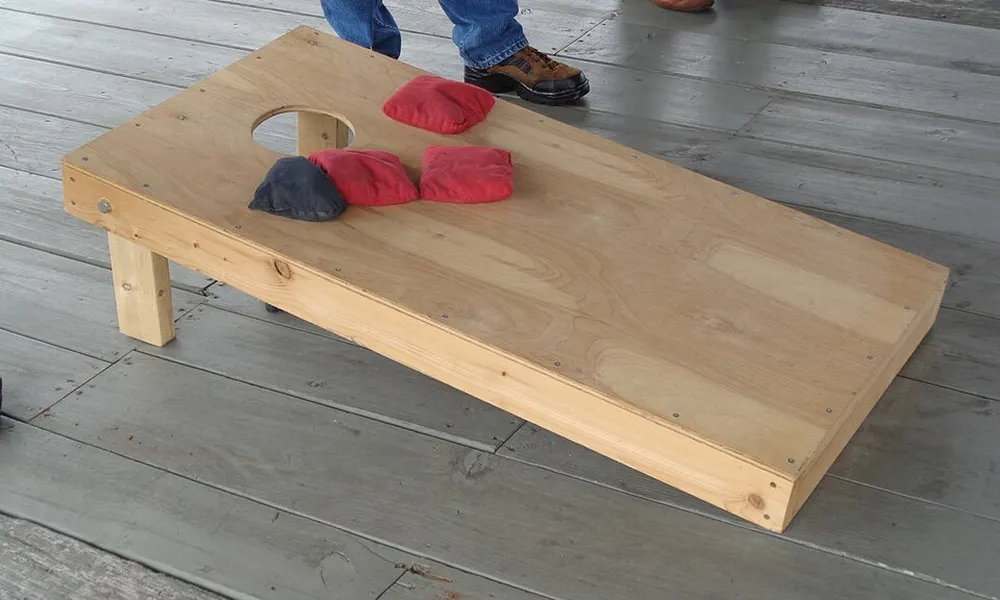
The boards themselves leave no room for guesswork. A regulation board measures 48 inches long by 24 inches wide, with a 6-inch hole centred 9 inches from the top edge. The front edge sits 2.5 to 4 inches off the ground and the back edge rises to 12 inches. Boards face each other 27 feet apart, front edge to front edge, and each bag weighs 15 to 16 ounces. Customers who play in leagues know these numbers by heart. A board that is an inch short, a hole that is half an inch wide, or a surface that grabs instead of slides will be noticed on the first throw, and the installer will hear about it.
That precision is exactly why software matters for a new cornhole board installation business. Quotes have to carry board dimensions, wood grade, finish, leg hardware, bags, and delivery in one clean document. Install days have to be scheduled around weather, venue access, and curing time for paint and sealant. Materials have to be tracked across a dozen small jobs at once. The nine tools below were picked for those jobs, not for generic office work, and each one was judged on how it handles the quoting, scheduling, and job-tracking work that a cornhole board installer actually does.
Key Takeaways
- Cornhole board installation is a specification trade: regulation boards are 48 by 24 inches with a 6-inch hole, and customers check those numbers.
- Quoting is the make-or-break skill, because every job mixes boards, bags, finish, hardware, delivery, and installation in different proportions.
- ServiceM8 is the strongest all-round pick for a solo installer, while Clear Estimates is the best choice when board-build pricing needs to be exact.
- EagleView suits installers who quote permanent backyard setups from aerial measurements before ever visiting the site.
- Start with one quoting tool, one scheduling tool, and one review tool, then add the rest only when the job count justifies it.

Why Cornhole Board Installation Startups Need AI in 2026
A cornhole board startup lives or dies on the quote. A customer asks for two tournament boards, eight bags, and delivery to a wedding venue on a Saturday, and the installer has about a day to reply before the customer asks someone else. A good quoting tool turns that enquiry into a priced, branded document in minutes, with board size, wood grade, stain or paint, bag fabric, and delivery listed line by line. A slow quote, or a quote that forgets the delivery charge, costs the job or the margin. Court-building cousins such as bocce court installation startups face the same quoting problem, because every job is a slightly different size and every customer expects the number to be exact.
Scheduling is the second pressure point. Board builds happen in a workshop, but installations happen in backyards, pub gardens, and event venues, and each one needs a dry day for sealant, a clear access route for a van, and a customer at home to sign off. A tool that shows crew, van, and job on one calendar stops double-booking and stops the wasted trip to a locked gate. The best tools in this list also send the customer a reminder text, which cuts no-shows on installation day to almost nothing.
The third pressure point is reputation. Cornhole is a social game, and most new customers arrive because they played on a friend’s boards at a barbecue or a brewery night. A review request sent the evening after installation, when the customer is still happy, is worth more than any advert. Tools that automate that request, and that collect before-and-after photos of each board set, turn one good job into the next three. A startup that pairs careful board building with tidy software will look bigger and more reliable than its size suggests, and in a trade where the product is judged by a tape measure, that trust is the whole business.
How We Compared the Tools
We judged each tool against the same six tests, all tied to the daily work of a cornhole board installer. First, quoting: can it build a board quote with dimensions, materials, finish, bags, and delivery, and can it turn an approved quote into a job without retyping? Second, scheduling: does it handle workshop builds and on-site installs on one calendar, with crew and van visible? Third, mobile use: does the phone app work on a driveway with patchy signal, and can it capture photos and a customer signature? Fourth, invoicing and payments: can the customer pay by card or link, and does the tool chase late invoices on its own? Fifth, cornhole fit: does it help with the specific details of this trade, such as board dimensions, bag sets, finish curing time, and repeat venue customers? Sixth, price and trial: is pricing published, and can a new business test the tool before paying?
None of the tools below paid for placement, and none of them is a perfect fit for every installer. Prices were checked in November 2026 and change often, so confirm the current price on the vendor’s own site before buying. Where a price is given as “from around”, it is the lowest published plan we could verify at the time of writing. The table that follows gives the short version; the detailed sections explain where each tool shines and where it falls short.
The 9 Best AI Tools for Cornhole Board Installation Startups at a Glance
| Tool | Best for | Standout cornhole feature | Starting price |
|---|---|---|---|
| ServiceM8 | All-round job management | Quote-to-job flow with photos and signatures | Free starter; paid from around $26 per month |
| mHelpDesk | Dispatch and invoicing | Work orders that track boards, bags, and delivery | Quote-based |
| Vonigo | Booking and payments | Online booking for installs and card payments | From around $98 per month |
| GorillaDesk | Routing and repeat jobs | Route planning across a day of installs | Quote-based |
| FieldAware | Mobile job tracking | Field app with time capture and photo records | Quote-based |
| Zuper | Field-service automation | Automated dispatch and customer updates | Quote-based |
| EagleView | Remote site measurement | Aerial reports for permanent backyard setups | From around $18 per report |
| Clear Estimates | Exact board-build pricing | Unit-cost database for materials and labour | From around $59 per month |
| Thryv | CRM, marketing, and reviews | Automated review requests after installation | Quote-based |
The 9 Best AI Tools for Cornhole Board Installation Startups in Detail
1. ServiceM8 for Quoting, Scheduling, and Job Tracking
ServiceM8 is the closest thing to a complete office for a one-person cornhole board business. An enquiry becomes a quote, the quote becomes a job, the job becomes an invoice, and the invoice becomes a payment, all without retyping the customer’s details. For a board installer, that matters because the quote is where the money is made or lost: two regulation boards, eight bags, a stain finish, folding legs, and delivery to a venue all need to appear as separate lines, and ServiceM8 handles that line-item quoting cleanly. The dispatch board shows each job on a map, so a day of three installs across town can be ordered sensibly instead of zig-zagging back and forth.
The mobile app is the real strength. On site, the installer can photograph the finished boards, note the exact placement and spacing, and collect a customer signature on the phone before leaving. Those photos stay attached to the job, which is useful when a customer calls months later about a wobbly leg or a faded finish. The free starter plan covers a small number of jobs, which is enough to test the system on real work, and paid plans start from around $26 per user, per month. The trade-off is that ServiceM8 is a general trade tool, not a woodwork tool: it will not calculate board dimensions or cutting lists, so the installer still needs a separate method for working out plywood and timber quantities. For most startups, though, it is the safest first purchase.
2. mHelpDesk for Dispatch, Estimates, and Invoicing
mHelpDesk is built around the work order, and that fits a cornhole board business well. Each job gets a work order that lists the boards, the bag sets, the finish, the hardware, and the delivery, and the crew sees the same order on their phones. When a customer changes a stain colour or adds a second set of bags, the change is logged on the order instead of living in a text message that nobody can find later. Estimates can be sent by email or text, and the customer can approve with a tap, which shortens the gap between first contact and a confirmed booking.
The dispatch side is straightforward: jobs appear on a calendar, technicians are assigned, and the office can see which jobs are done, which are waiting on materials, and which are waiting on payment. Invoicing follows the same path, and the tool chases overdue invoices with automatic reminders, which is worth real money for a small business that cannot afford to spend Fridays on the phone. The main weakness is pricing transparency: mHelpDesk sells by quote, so a startup has to sit through a sales call to learn the cost, and there is no published starter price to compare. The interface also feels older than its rivals. Even so, for an installer who wants one system for estimates, dispatch, and invoices, it is a solid, proven choice.
3. Vonigo for Scheduling, Payments, and Online Booking
Vonigo suits installers who take bookings online. A customer can pick an installation date, choose a board package, and pay a deposit without a phone call, which is exactly how brewery managers and wedding planners prefer to work. The booking form can collect the details that matter for cornhole: board size, finish, bag colours, venue address, gate codes, and whether the boards are a permanent install or a weekend hire. Those answers flow straight into the job, so the installer arrives knowing what to build and where to put it.
Behind the booking page sits a capable scheduling and invoicing system, with franchise-style controls that also work for a single owner who plans to grow. Payments are handled in the same place, including deposits and final balances, and the reporting shows which board packages sell best and which months are busiest. Pricing starts from around $98 per month, which is higher than the cheapest rivals, and the setup takes longer because the booking pages and service catalogues need to be configured properly. For a startup that expects most customers to book online, that cost pays for itself in saved phone time; for a business that still quotes by email, a simpler tool may be better value.
4. GorillaDesk for Routing and Repeat Install Jobs
GorillaDesk earns its place on route planning. A cornhole installer’s week is a string of short visits: a delivery here, a permanent install there, a repair at a pub, a collection from a wedding venue. GorillaDesk orders those visits into a sensible route, which saves fuel and, more importantly, saves the hour that gets lost when jobs are scheduled in the wrong order. Recurring work is handled well too, which matters for venues that hire boards every weekend or schools that want seasonal maintenance on their sets.
The rest of the system covers the basics without fuss: quotes, invoices, customer records, and a mobile app for the crew. The interface is plain and easy to learn, which is a genuine advantage when the person using it is also the person cutting plywood. Pricing is quote-based, so a startup will need to ask for a number, and the tool is less strong on deep reporting than its bigger rivals. It also assumes a service-business shape, so installers who want detailed material costing will still need a spreadsheet or an estimating tool alongside it. For a small crew doing lots of short local jobs, though, the routing alone justifies a trial.
5. FieldAware for Mobile Job Tracking and Time Capture
FieldAware is designed for the person standing in the customer’s garden with a drill and a tape measure. The mobile app records arrival and departure times, captures photos of the boards in place, and logs the materials used on each job, including the exact bag sets delivered. That record matters when a customer queries an invoice or when a board needs a warranty repair, because the installer can pull up the original job and see the finish, the hardware, and the placement photos in seconds.
The back office turns those field records into invoices and reports without retyping, and managers can see where each crew member is and which jobs are finished. Scheduling and dispatch are included, with drag-and-drop changes when a job runs long or a customer asks to move a date. The downside is that FieldAware is aimed at mid-sized field teams, so a solo installer may find parts of it more complex than needed, and pricing is quote-based with no published starter plan. Even so, if the business plan involves a crew of two or three installers working across a city, FieldAware’s field-first design is hard to beat.
6. Zuper for Field-Service Automation and Dispatch
Zuper is the automation pick. It watches the job pipeline and does the small tasks that a busy installer forgets: confirming the booking, reminding the customer the day before, telling the crew the gate code, and asking for a review after the job is done. For a cornhole board business, that automation is valuable because the jobs are short and numerous, and the admin time per job can easily eat the profit. Zuper’s dispatch board assigns jobs by skill, location, and availability, so the installer who is already near a venue gets the next job there instead of someone driving across town.
The system also handles quotes, invoices, and payments, and it connects with common accounting tools so the books stay tidy. The mobile app gives the crew job details, photos, and checklists, and customers can track the installer’s arrival, which cuts the “when will you be here?” calls. The trade-off is that Zuper is sold by quote, with no published pricing to compare, and the setup is more involved than a simple scheduling app because the automation rules need to be configured. A startup with ten or more jobs a week will feel the benefit quickly; a startup doing two jobs a week may not need this much machinery yet.
7. EagleView for Aerial Measurement of Permanent Setups
EagleView is the odd one out in this list, and it earns its place for one specific job: quoting a permanent cornhole setup without a site visit. When a customer wants boards set into a patio, a paved court area, or a levelled patch of garden, the installer needs measurements before pricing the groundwork. EagleView produces measurement reports from aerial imagery, giving area, distances, and geometry that can be used to price levelling, paving, drainage, and the board placement itself. Ordering a report costs from around $18, which is far cheaper than a wasted site visit to a customer who was never going to buy.
The reports are precise enough to support a firm quote, and they can be attached to the estimate so the customer sees the measurements behind the price. EagleView does not schedule jobs, send invoices, or manage customers, so it is an addition to a quoting system, not a replacement for one. It also only helps where aerial imagery exists and the job involves groundwork; a simple pair of portable boards needs no measurement at all. For installers who take on backyard courts, venue patios, and park installations, though, it turns a vague phone enquiry into a priced proposal in a day, and that speed wins jobs.
8. Clear Estimates for Exact Board-Build Pricing
Clear Estimates is the tool for installers who want their numbers to be exact. It holds a unit-cost database for materials and labour, so a quote can be built from the real cost of a sheet of plywood, a set of folding legs, a tin of sealant, a set of bags, and the hours to cut, sand, paint, and assemble. When timber prices move, the database updates, and old quotes can be compared with new ones to see where the margin went. That discipline matters in a trade where a board set might sell for a few hundred pounds or dollars and a small costing error can erase the profit.
The software includes more than 500 project templates, and a board-build estimate can be assembled in minutes once the installer’s own material list is saved. Estimates look professional, with clear line items that customers trust, and the 30-day free trial is long enough to price a full month of real jobs before committing. Pricing starts from around $59 per month on the standard plan. The limit is scope: Clear Estimates is a residential estimating tool, not a full job-management system, so it will not schedule installs, dispatch a crew, or chase invoices. Pair it with a scheduling tool such as ServiceM8 or GorillaDesk, and the combination covers pricing and delivery cleanly.
9. Thryv for CRM, Marketing, and Reviews
Thryv is the customer-facing half of the business. It keeps every customer, every board set, and every conversation in one place, and it automates the marketing that a small installer never has time for: a thank-you message after installation, a review request that evening, a seasonal reminder to venues before summer, and a referral offer for customers who bring a friend. Cornhole is a word-of-mouth trade, and Thryv is built to turn one happy customer into the next booking.
The system also handles estimates, invoices, online booking, and payments, so a very small startup could run most of its admin from Thryv alone. The review tools are the strongest part: requests go out automatically, reviews are collected in one place, and the installer can reply without logging into five different sites. The weakness is price opacity, since Thryv sells by quote, and the breadth of the platform means the setup takes time. It is also more of a general small-business platform than a trade-specific tool, so installers who want deep job costing will still need an estimating tool. For a startup that wants to grow on reputation and repeat venue work, Thryv is the best marketing investment on this list.
Building Your Launch Stack
A new cornhole board installation business does not need all nine tools on day one. It needs three: one tool to quote, one tool to schedule, and one tool to collect reviews. The most reliable starting combination is ServiceM8 for quoting and scheduling, Clear Estimates for exact board-build pricing, and Thryv for reviews and repeat bookings. That trio costs less than a single lost job each month, and it covers the whole path from first enquiry to five-star review. EagleView can be added on a per-report basis whenever a permanent backyard setup needs measuring, since there is no monthly fee to pay when it is not used.
As the job count grows past ten a week, the stack should grow too. Zuper or FieldAware can take over dispatch and automation when a second installer joins, and GorillaDesk can take over routing when the diary fills with short local visits. The rule is to add a tool when a specific pain appears, not before: if quotes are slow, fix quoting; if installers are driving in circles, fix routing; if reviews are not arriving, fix the review request. If your jobs grow beyond single boards into full game courts, the scheduling lessons from shuffleboard court installation startups transfer directly, because long courts and board pairs both need measured layouts, level ground, and careful diary planning.
Common Mistakes to Avoid
The most expensive mistake is quoting the boards and forgetting the rest. Delivery, installation, bag sets, sealant curing time, and the return visit to collect hire boards all cost time and fuel, and a quote that omits them either loses money or leads to an awkward extra charge later. Build a quote template that lists every element, and use the same template for every job, so nothing is missed when the phone is busy. The same trap catches horseshoe pit installation startups, where the pit is priced and the sand, stakes, backstop, and levelling are forgotten until the job is already underway.
The second mistake is building boards that are almost regulation size. Customers who play in leagues will measure, and a board that is 47 inches long or has a 6.5-inch hole will be returned or reviewed badly. Keep a cutting template, check the first board of every batch with a tape measure, and record the dimensions on the job so there is proof the boards met the standard. The third mistake is promising a finish that has not cured. Paint and sealant need dry weather and time, and a board delivered damp will mark, stick, and disappoint. Schedule the finish a full day before delivery, and never let a customer’s deadline override the curing time.
The fourth mistake is ignoring the off-season. Cornhole peaks in spring and summer, and a startup that spends everything in June will struggle in January. Use the quiet months for workshop builds, venue contracts, and marketing, and use a tool like Thryv to keep in touch with past customers so the spring diary fills early. The fifth mistake is buying software before the process exists. A quoting tool cannot fix a business that has no standard board sizes or price list, so settle the product range first, then pick the tool that fits it.
Checklist: Launching Your Cornhole Board Installation Startup
- Settle your board range: one regulation set, one portable set, and one premium custom set, all with fixed prices.
- Build a quote template that lists boards, bags, finish, hardware, delivery, and installation as separate lines.
- Choose one quoting tool and one scheduling tool, and run ten real jobs through them before adding anything else.
- Photograph every finished install and attach the photos to the job record for warranty and marketing.
- Send a review request the evening after every installation, while the customer is still pleased.
- Plan the off-season now: workshop builds, venue contracts, and spring marketing before the quiet months arrive.
Frequently Asked Questions
How much do AI tools for a cornhole board installation startup cost?
Expect to spend from around $26 to $100 per month for a basic stack in the first year. A solo installer can start on ServiceM8’s free starter plan and add Clear Estimates from around $59 per month when exact board pricing matters. EagleView is pay-per-report from around $18, so it only costs money when a permanent setup needs measuring. Avoid paying for a full field-service platform until the job count justifies it.
Do I need a drone survey for every cornhole board installation?
No. A pair of portable boards needs no survey at all, and most backyard installs need only a tape measure and a level. Aerial measurement is useful for permanent setups where groundwork, levelling, or paving is involved, because it gives firm measurements before a quote is sent. Use EagleView for those jobs and skip it for simple deliveries.
What size should a regulation cornhole board be?
A regulation board is 48 inches long by 24 inches wide, with a 6-inch hole centred 9 inches from the top edge. The back edge stands 12 inches high and the front edge 2.5 to 4 inches high. Boards are placed 27 feet apart, front edge to front edge. Bags weigh 15 to 16 ounces. Build to these numbers and check the first board of every batch.
Which tool is best for quoting cornhole board jobs?
Clear Estimates is the best choice when pricing must be exact, because its unit-cost database tracks timber, hardware, finish, and labour line by line. ServiceM8 is the best all-round choice, because it turns an approved quote into a scheduled job and an invoice without retyping. Most startups use ServiceM8 day to day and Clear Estimates when a job is large or unusual.
Can I run a cornhole board installation business on my own?
Yes, and most startups begin that way. One person can build boards in a workshop, deliver them in a van, and install them in a garden. The software matters more, not less, when working alone, because there is nobody else to remember the quote, the diary, or the invoice. Start with one quoting tool and one scheduling tool, and add help only when the diary is full.
How do I get my first customers?
Start where cornhole is already played: local bars, breweries, wedding venues, and community events. Offer a demonstration set, leave a board pair on loan for a weekend, and ask every happy customer for a review the same evening. League players are the best referrers, because they notice regulation boards and tell their friends where they came from.
The Bottom Line
Cornhole board installation rewards the installer who measures twice and quotes once. The boards are a fixed standard, the customers know the numbers, and the business is won on accurate quotes, tidy installs, and reviews that arrive while the customer is still smiling. ServiceM8 is the strongest all-round tool for a new startup, Clear Estimates is the best choice for exact board-build pricing, and EagleView is the smart addition for permanent backyard setups. Start with those three, photograph every job, and let the software carry the admin while the workshop carries the craft.

Keep what speaks to you.
Leave room for your own perspective.