
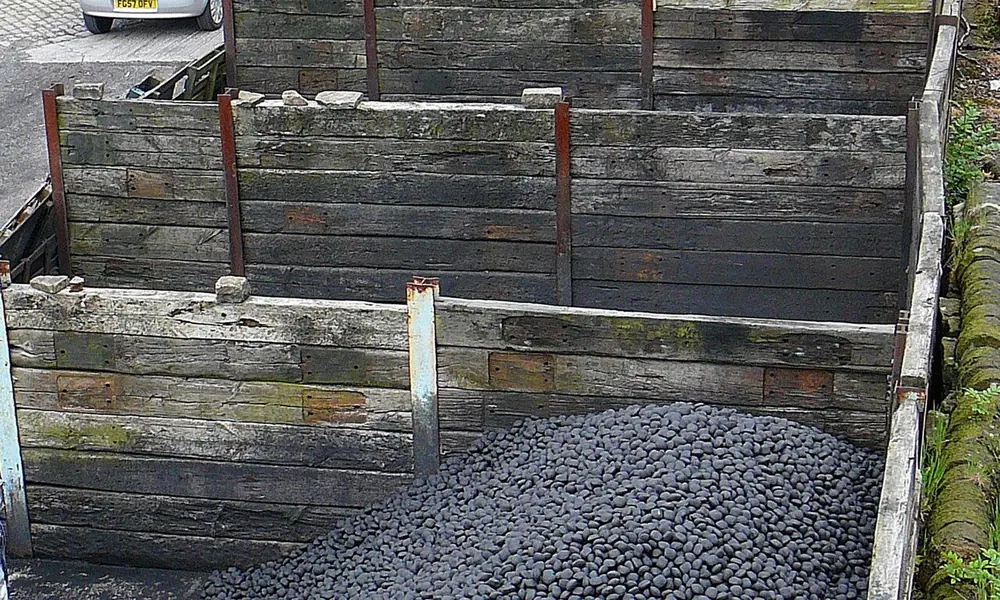
A coal bunker is a small building with a big job. It has to keep a tonne or more of solid fuel dry, contained and easy to reach, through rain, frost and the odd kicked door, for years at a time. The lid has to seal. The lining has to stand up to damp and abrasion. The base has to stay level and drained. And the delivery driver has to be able to get a barrow or a chute to it without crossing a flower bed. Get any one of those four things wrong and the customer phones you back in the first winter.
That is why coal bunker installation startups run on AI tools. Not because the bunker itself is complicated — a lidded box on a raised base is one of the oldest storage builds there is — but because a small crew lives or dies on the details around it. The quote has to cover the lid, the lining, the base and the access in one price. The site has to be measured properly before the boards are cut. The damp spots have to be found before the lining goes in, not after the first load of coal turns to sludge. The right software takes those jobs off the fitter’s clipboard and turns them into a repeatable process.
This guide compares the nine best AI tools for a coal bunker installation startup in 2026. Every tool below was chosen for a specific part of the bunker build — the sealed lid, the lining, the raised base or the delivery access — and every one of them earns its place by saving time on site or preventing a call-back. If you are starting out, read the build section first, then pick one tool from each stage of the job.
Key takeaways
- A coal bunker is a lidded solid-fuel store, defined by four parts: a sealed lid, a lining, a raised base and delivery access.
- Measure the site and the access route before you cut anything — most failed bunkers are the wrong size for the delivery, not the wrong size for the coal.
- Check damp in the lining and the base before you build, because a wet bunker rots from the inside out.
- Quote the lid, the lining, the base and the access as one job, with photographs of each stage attached to the quote.
- Start with one design tool, one measuring tool, one quoting tool and one job-management tool, then add the rest as the order book grows.

The nine tools at a glance
Here is the short version. Each tool below handles one stage of a coal bunker job, from the first site visit to the follow-up message after the lid is fitted. Read the table, then read the full review of any tool that covers a stage where your jobs currently go wrong.
| Tool | Best for | What it does on a bunker job |
|---|---|---|
| RoomSketcher | Bunker layout and lid design | Draws the bunker, the lid and the access route to scale before anything is cut |
| Canvas by Occipital | Site measuring | Scans the garden and the delivery route into a measured 3D model |
| Protimeter Surveymaster | Damp checks | Finds damp in walls, floors and bases before the lining goes in |
| Clear Estimates | Quoting | Builds a priced quote for the lid, lining, base and access in minutes |
| Contractor Foreman | Running the job | Schedules the crew, the materials and the delivery in one place |
| CompanyCam | Photo records | Photographs the lid seal, the lining and the base at every stage |
| Knowify | Job costing | Tracks what each bunker actually costs against the quote |
| SafetyCulture | Site safety | Runs checklists for coal dust, heavy lids and manual handling |
| Podium | Reviews and repeat work | Collects reviews and follows up with customers after the install |
What a coal bunker installation actually involves
A coal bunker looks simple from the pavement, and that is exactly what trips up new installers. From the outside it is a box with a lid. From the fitter’s point of view it is four separate builds that have to work together, and the AI tools in this guide exist to keep those four builds straight.
The lid comes first, because it is the part the customer touches every day. A bunker lid has to seal against rain, open with one hand when it is full of coal, and stay shut in a gale. That means hinges that do not sag, a lip that sheds water away from the opening, and a handle that can be found with gloves on. A lid that warps in its first summer lets rain in all winter, and rain is what turns a bunker into a damp box. When you survey a job, photograph the lid position, measure the opening twice, and note which way the wind drives rain across the garden. The design tool and the measuring tool below both earn their keep here.
The lining comes second. Coal is heavy, sharp and dusty, and it sits against the inside faces of the bunker for months. Bare timber boards wear thin, soak up moisture and shed splinters into the fuel. A proper lining — boards, sheet or a sealed membrane, depending on the build — protects the structure and keeps the coal clean. The lining has to run up the walls, across the floor and around the front opening, with no gaps where fines can collect and hold damp. This is also where a damp check pays for itself many times over. If the wall behind the bunker is wet, or the ground under it holds water, the lining will fail from behind, and no amount of sealant on the visible faces will save it.
The base comes third, and it is the part most often skimped. A coal bunker full of fuel is heavy — a cubic metre of coal weighs the best part of a tonne — so the base has to be level, drained and strong enough to carry the load without settling. A raised base keeps the floor of the bunker clear of standing water and makes it possible to sweep out fines. A base that settles on one side jams the lid, gaps the lining and leaves the customer with a box that looks drunk. Measure the levels, photograph the ground, and quote the base as its own line item rather than burying it in the price of the boards.
Delivery access comes fourth, and it decides whether the job is a pleasure or a punishment. Coal arrives in bags or loose, by barrow, chute or tipper, and somebody has to move it from the vehicle to the bunker without tearing up the garden. A bunker at the end of a narrow passage, behind a locked gate or up a flight of steps costs far more to fill than one beside a drive. Walk the route on the survey, measure the narrowest point, and note the turning circle for a barrow. The access route is also the first thing a customer forgets to mention and the first thing they complain about afterwards. A fuel store is not a fuel tank, and the tools that size a tank do not help here — the closest comparison on this site is the guide to AI tools for oil tank installation startups, which shows how different a liquid-fuel install is from a solid-fuel store, with its own bunds, gauges and pipework instead of a lid, a lining and a barrow route.
How to choose AI tools for a coal bunker startup
There is no shortage of software that claims to run a building business. The trick is to pick tools that answer a bunker question, not a generic building question. A tool that cannot tell you whether a lid will seal, whether a base is level or whether a barrow fits through a gate is a tool you will stop opening by the third job. Compare the guide to AI tools for shed installation startups, which uses the same design tools for a garden structure with windows and doors instead of a sealed lid.
The nine best AI tools for coal bunker installation startups
These are the nine tools, in the order you use them on a real job: design, measure, check for damp, quote, run the job, photograph it, cost it, keep it safe, and win the next one. Each review explains what the tool does on a bunker job specifically, what to watch out for, and who should buy it first.
1. RoomSketcher: The Best Tool for Bunker Layout and Lid Design
RoomSketcher is a floor-plan and 3D design tool, and on a coal bunker job it does the work that used to happen on the back of a quote pad. You draw the bunker to scale — length, width, height, lid opening and hinge side — then you drop it onto a plan of the garden, with the house wall, the gate and the delivery route marked in. The customer sees the bunker in place before a single board is ordered, and you see whether the lid opens fully without hitting the fence.
The lid is where RoomSketcher earns its fee. A bunker lid is not just a flat board; it has an overhang, a drip edge and a hinge line, and all three have to be drawn before the timber is cut. Draw the lid open and closed, check the clearance against the wall behind it, and mark where the handle sits. Customers who have seen the lid drawn open rarely ask for it to be moved afterwards, and that one conversation saves more time than any other part of the design.
2. Canvas by Occipital: The Best Tool for Measuring the Site and the Access Route
Canvas by Occipital turns a phone into a measuring tool. You walk the garden with the phone, scanning the walls, the ground and the route from the gate to the bunker position, and the app builds a measured 3D model with dimensions you can trust. For a coal bunker startup, that scan replaces the tape measure, the spirit level and the notebook full of figures that never quite add up back at the desk.
The base is the part that benefits most. A scan shows the fall of the ground, the high spots and the low spots, and the distance from the bunker position to the nearest drain. That tells you how much levelling the base needs, whether water will run towards the bunker or away from it, and whether the ground needs hardcore before the slab or the bearers go down. A base quoted from a scan is a base quoted with evidence, and customers accept a levelling charge far more readily when they can see the slope on a model.
3. Protimeter Surveymaster: The Best Tool for Damp Checks Before the Lining Goes In
The Protimeter Surveymaster is a damp meter, and it is the least glamorous tool on this list and one of the most valuable. It measures moisture in walls, floors and timber, and it tells you whether the spot where the bunker will sit is dry enough to line, or whether you are about to seal damp inside a box full of coal. A bunker lined over damp rots from behind, and the customer discovers it when the boards go soft and the coal starts clumping.
Use it on the survey, before you quote the lining. Test the wall the bunker will stand against, the ground under the base position, and any existing boards if you are replacing an old bunker. A high reading on the wall means the lining needs a gap or a membrane behind it. A high reading on the ground means the base needs more fall, better drainage or a different position. Either way, you find out on the survey, when the fix is a line on the quote, rather than on the call-back, when the fix is a rebuild.
4. Clear Estimates: The Best Tool for Quoting the Lid, Lining, Base and Access
Clear Estimates is estimating software built for small trade businesses, and on a coal bunker job it turns a survey into a priced quote while you are still standing in the garden. You build the quote from parts — lid boards and hinges, lining, base materials, fixings, labour and delivery — and the software prices each line from your own rates, adds the totals, and produces a clean document the customer can read without phoning you to explain it.
The four-part structure of a bunker quote is what makes Clear Estimates fit. Lid, lining, base and access each get their own section, so the customer sees what they are paying for and you see which part of the job carries the margin. If the base needs extra levelling, it appears as its own line rather than disappearing into the timber price. If the access route needs a temporary ramp or a second pair of hands, that appears too. Quotes that show their workings get fewer arguments and faster yeses.
5. Contractor Foreman: The Best Tool for Running the Job and the Delivery
Contractor Foreman is project management software for small construction businesses, and on a coal bunker job it holds the three things that otherwise live in three different places: the schedule, the materials and the delivery. You book the job, order the boards and the lining, confirm the delivery slot, and assign the crew, all from one screen, and everyone sees the same plan.
The delivery is the part that needs managing most. Coal bunker jobs depend on two deliveries arriving in the right order — the materials first, then the coal — and a missed slot can cost a day. Contractor Foreman lets you tie the material order to the job date, confirm the coal delivery separately, and see at a glance which jobs are waiting on materials and which are ready to build. That stops the classic startup mistake of turning up with a crew and no boards, or with boards and no crew.
6. CompanyCam: The Best Tool for Photographing the Lid Seal, Lining and Base
CompanyCam is a photo documentation app built for trade crews, and on a coal bunker job it does one thing extremely well: it puts a dated, labelled photograph of every stage of the build in one place, tied to the job. You photograph the base before the boards go down, the lining before the lid goes on, and the lid seal when the job is finished, and the app stamps each photograph with the time, the place and your notes.
The lid seal photograph is the one that saves you money. A customer who says the lid leaks six months later is usually looking at a lid that has been left open in the rain, or a seal that has been damaged by a shovel. A dated photograph of a clean, closed seal on the day of handover settles the conversation in minutes. The same goes for the lining: a photograph of the lining fitted tight, with no gaps and no damp marks, is the answer to a damp complaint that starts with the words it was like that from the start.
7. Knowify: The Best Tool for Costing Each Bunker Against Its Quote
Knowify is job costing software for small contractors, and on a coal bunker job it answers the question every startup needs answered and most never ask: did this job make money? You enter the quote, then you log the real costs — boards, lining, hinges, fixings, labour hours, delivery charges — and Knowify shows you the difference, job by job, in plain figures.
That comparison is where the learning happens. A bunker that quotes well and costs badly usually has one culprit: the base took longer than expected, the access needed an extra pair of hands, or the lining needed more material than the plan allowed. Knowify shows you which line went over, so the next quote for the same build prices it properly. Without that record, a startup repeats the same loss on every job that looks like the last one.
8. SafetyCulture: The Best Tool for Checklists on Coal Dust, Heavy Lids and Lifting
SafetyCulture is a checklist and inspection app, and on a coal bunker job it turns the safety habits of a good crew into a routine that happens on every job, not just the ones where somebody remembers. You build a short checklist for the bunker — dust masks, gloves, eye protection, lid lifting, manual handling, site tidy — and the crew runs through it on a phone before the work starts and after it finishes.
Coal dust is the hazard that new installers underestimate. It gets into eyes, lungs and clothes, and it coats every surface on a still day. A checklist that reminds the crew to mask up before the old bunker comes apart, and to damp down or sweep up before they leave, protects their health and keeps the customer’s garden clean. A dusty garden is a complaint; a dusty crew is a health problem. The checklist catches both.
9. Podium: The Best Tool for Reviews and Repeat Work After the Install
Podium is a messaging and review tool for local businesses, and on a coal bunker job it does the work that starts the day the lid is fitted: it asks the customer for a review, while the tidy bunker is still fresh in their mind, and it keeps the conversation open for the next job. A short message with a photograph of the finished bunker, sent on the evening of the install, gets more reviews than any number of leaflets.
Reviews matter more for a bunker installer than for most trades, because a bunker is a visible job. Neighbours see it, ask about it, and look it up. One review that mentions a clean install, a lid that seals and a crew that left the garden tidy is worth a month of advertising, and it is the kind of review Podium collects well, because it asks at the right moment and makes replying easy.
A coal bunker job, start to finish
Stage one is the survey. Walk the access route, measure the space, scan the site with Canvas by Occipital, and test the damp with the Protimeter Surveymaster. Photograph the lid position, the wall behind the bunker and the ground under the base. Note the narrowest point on the delivery route and the fall of the ground. A survey that takes forty minutes properly saves four hours of remedial work later.
Stage three is the quote. Build it in Clear Estimates, with the lid, the lining, the base and the access as separate lines, and send it the same evening. A quote that arrives while the survey is still fresh in the customer’s mind gets answered; a quote that arrives three days later gets compared with two others.
Stage four is the build. Schedule it in Contractor Foreman, order the materials against the job, and run the SafetyCulture checklist before the first board is cut. Build in the order that keeps the damp out: base first, then lining, then lid. Photograph each stage in CompanyCam — the base levels, the lining fitted, the lid seal closed — and log the real costs in Knowify as you go, not at the end of the week.
Stage five is the handover. Show the customer the lid, open it and close it together, and point out how the seal works and where the coal goes. Sweep the access route, leave the garden as you found it, and send the Podium message that evening with a photograph of the finished bunker. A tidy handover is the last thing the customer remembers, and it is what they describe to the neighbours. The closest parallel on this site is a fuel store built for a different fuel — the guide to AI tools for log store installation startups follows the same five stages, but for a ventilated timber store built to dry logs, with slatted sides and airflow instead of a sealed lid and a lining.
Mistakes that ruin a coal bunker
Most failed bunkers fail in one of four ways, and all four are avoidable on the survey. The first is a lid that does not seal. It warps, it sags on its hinges, or it was drawn without an overhang, and rain runs straight into the coal. The fix is to design the lid before the boards are cut, draw it open and closed, and fit hinges that can carry the weight for years rather than months.
The second is a lining fitted over damp. The boards look fine on the day, the coal goes in, and by the first winter the lining is soft, the coal is clumping and the customer is on the phone. The fix is a damp reading on the survey, a lining that suits the readings, and a gap or a membrane where the wall behind the bunker stays wet.
The third is a base that settles. The bunker goes in level, the coal goes in heavy, and the ground gives way on one side. The lid jams, the lining gaps, and the whole box leans. The fix is a measured base, proper hardcore or a slab, and a fall that takes water away from the bunker rather than towards it.
Checklist: before you quote a coal bunker job
Run through this list on every survey, before you price anything. It takes ten minutes, and it catches the four mistakes above while they are still cheap to fix.
- Walk the delivery route from the vehicle to the bunker position, and measure the narrowest point for a barrow.
- Photograph the lid position, the wall behind the bunker and the ground under the base.
- Test the wall and the ground for damp, and write the readings on the survey.
- Measure the fall of the ground and note where water runs when it rains.
- Draw the lid open and closed, and check the clearance against the wall and the fence.
- Price the lid, the lining, the base and the access as four separate lines on the quote.
Frequently asked questions
What is the best AI tool for a coal bunker installation startup to buy first?
Buy the design tool first. RoomSketcher lets you draw the bunker, the lid and the access route to scale, show the customer the plan, and agree the size before anything is cut. A bunker that is designed properly is quoted properly and built properly, and the design tool is the cheapest way to get all three right. Add the measuring tool second, and the quoting tool third.
How much should a coal bunker installation startup spend on AI tools each month?
Most startups in this trade spend the price of a small job each month on software, and get it back on the first job that is quoted the same evening. Start with one design tool and one quoting tool, which together cost less than a day of wasted labour, and add the job-management and costing tools once you are running three or more jobs a week. Do not buy all nine on day one; buy the tool for the stage where your jobs currently go wrong.
Can AI tools really measure a garden and a bunker base accurately?
Yes, for the measurements that matter on a bunker job. A phone scan gives you the clear widths on the access route, the fall of the ground and the space for the bunker, all to a tolerance that is fine for timber work. It does not replace a level for the final base check, or a damp meter for the lining, but it replaces the tape measure and the notebook for the survey, and it gives you a model you can show the customer.
Do coal bunker installers need different AI tools from general shed builders?
Yes, in the details. A shed builder worries about windows, doors, garden layout and storage, while a bunker installer worries about a sealed lid, a lining that survives coal and damp, a raised base under a tonne of fuel, and a delivery route for a barrow. The design and scheduling tools overlap, but the damp checks, the lid design and the access measuring are specific to the bunker, and the tools in this guide were chosen for those jobs.
How long does a coal bunker installation take?
A standard single-lid timber bunker on a prepared base takes a day, including the lining and the lid fitting. A bunker that needs a new base, levelling or drainage takes two days, and a replacement job — taking the old bunker apart, disposing of it and building the new one — takes a day and a half. The survey, the design and the quote take another half day spread across the week, which is why the software matters: it keeps the office half of the job from eating the building half.
Should a coal bunker installation startup also offer log store work?
It can, and many do, because the customers overlap — a house that burns coal often burns wood too. But a log store is a different build, with slatted sides and airflow to dry the wood, while a coal bunker is a sealed store built to keep fuel dry and contained. Price them as separate jobs, design them separately, and do not assume the tools or the timber list carry across unchanged. The customer who wants both is a good customer; the installer who treats them as the same job is a busy one with call-backs.
The bottom line
A coal bunker installation startup is a small business built on four details: a lid that seals, a lining that survives damp and coal, a base that stays level under a tonne of fuel, and an access route a barrow can actually use. The nine tools in this guide cover those four details in order — design the bunker, measure the site, check the damp, quote the four parts, run the job, photograph it, cost it, keep it safe, and ask for the review. Start with the design tool, add the measuring and quoting tools as the order book grows, and let the record-keeping tools prove your work. Do that, and the first winter will bring you recommendations instead of call-backs.

Keep what speaks to you.
Leave room for your own perspective.


