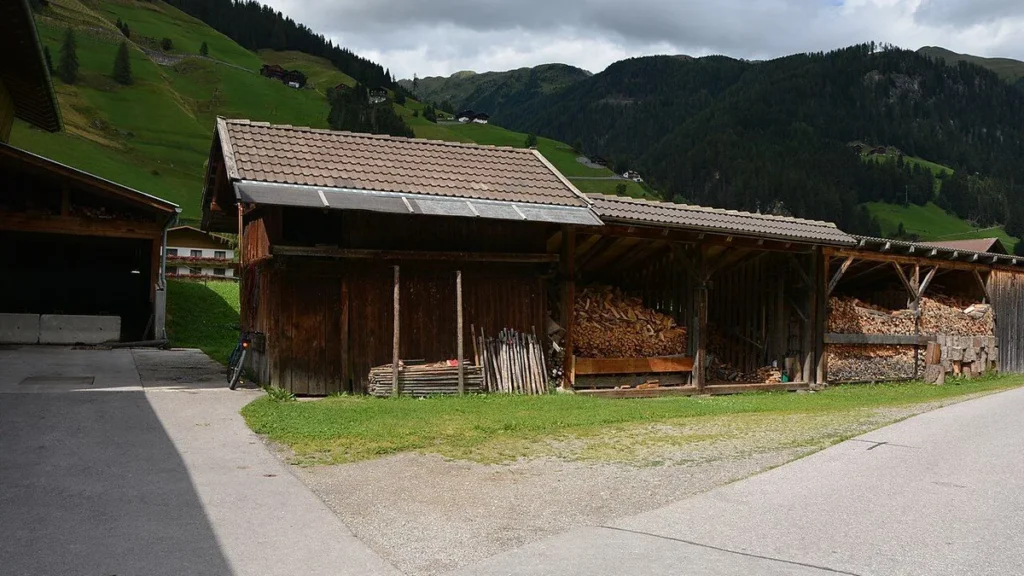
A log store is a small, open-sided timber structure built for one job: keeping firewood dry while the wind finishes drying it. Slatted sides let air move through the stack, a raised base keeps the bottom row off the damp ground, and a solid roof keeps the rain off the top. It is not a shed, it is not a lidded storage box, and it is not a fuel tank. A shed is a closed, general-purpose building with a door; a storage box is a lidded container you lift a lid on; a log store is a drying frame that stays open to the weather on purpose, and every decision in the build — the gap between the slats, the height of the base, the depth of the roof overhang — is a decision about airflow.
That narrow definition is what makes a log store installation startup a real trade business rather than a sideline of general garden building. The customer is usually a household that burns wood through the winter and has learned that a tarpaulin over a pile does not work. They want a store sized to what they burn, sited where the prevailing wind reaches it, built from timber that lasts outdoors, and finished before the autumn deliveries start. The installer who measures well, prices the timber accurately and books the build into a short weather window wins the job.
The nine tools in this guide are judged against that specific job. Each one earns its place by helping with a part of the build that general tools handle badly: designing slatted sides with real airflow gaps, turning a design into a cutting list, checking that the logs going in are actually dry enough, siting the store where the wind helps, and running the small-business side — quotes, bookings, customer records and marketing — without hiring office staff. If a tool could not prove itself on slats, airflow, base and roof, it did not make the list.
Key takeaways
- A log store is a ventilated drying frame — slatted sides, a raised base and a roof — not a closed shed or a lidded box, and the tools that matter are the ones that handle airflow, slat spacing and seasoning.
- Design the store in 3D first and let the software produce the cutting list, because slat gaps and batten lengths are where timber waste and callbacks both come from.
- Check log moisture with a meter before you promise a drying time, and site the store facing the prevailing wind so the structure does the drying work for you.
- Price by the store, not by the hour, and keep quotes, bookings and customer records in tools built for small trade businesses rather than in notebooks and text messages.
- Start with the design, cutting-list and moisture tools, add quoting and booking once jobs are coming in, and add the website and scheduling tools when you need a second crew.
What makes a log store different from a shed or a storage box
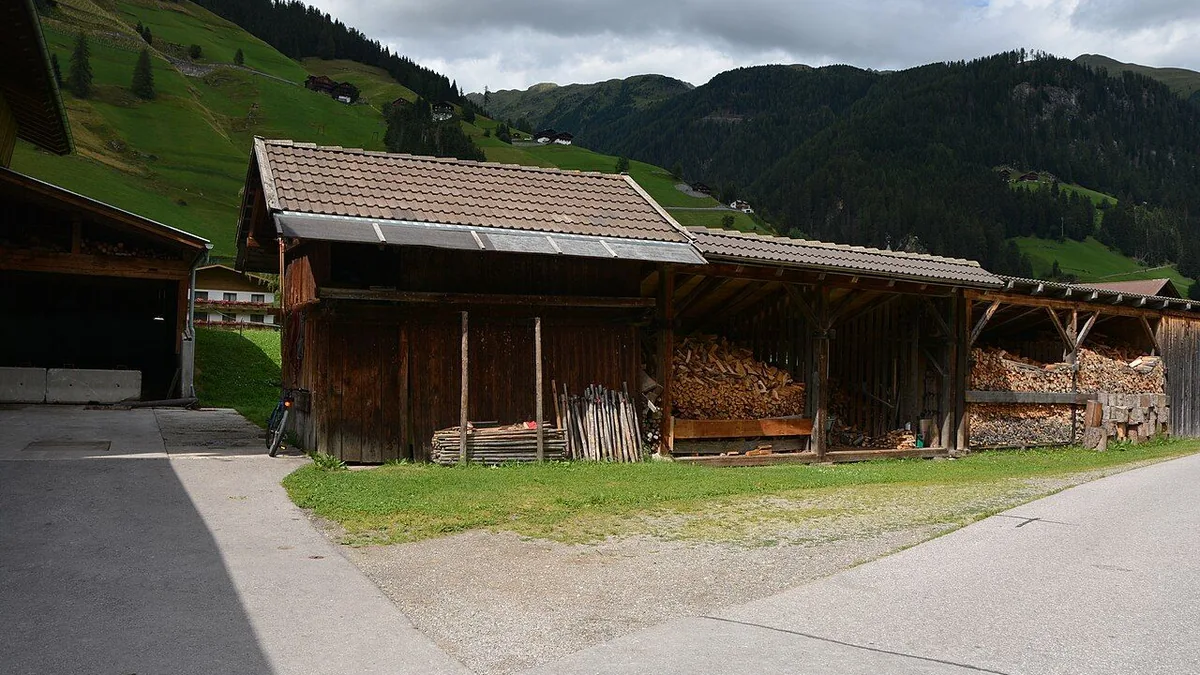
The confusion is understandable, because a log store looks like a small shed from the road. The difference is in what the walls do. A shed has solid walls and a door because its job is to keep things in and the weather out. A log store has slatted walls with deliberate gaps because its job is to let the wind in while keeping the rain off. Close the gaps and the logs stay damp; make them too wide and wind-blown rain soaks the stack. Balancing those two forces on every side is the trade.
The base matters just as much. Logs stacked straight onto soil or paving draw damp into the bottom row, and that row rots first. A proper store stands on a raised base — bearers, blocks or a low plinth — with clear air underneath. The roof needs a deep enough overhang that rain running off the front edge falls clear of the stack. These are small details, but they are the difference between a store that keeps wood dry for a decade and one the customer replaces after two winters.
That is why the familiar shed installation playbook does not transfer. Shed installation startups plan enclosed buildings with doors, windows and floors, and their tools are built for that. A log store startup plans an open frame, and its tools must answer different questions: how wide should the slat gaps be for this wind exposure, how many battens does the design need, and which side of the garden gets the drying wind. None of the products below appears in the shed, storage-box, oil-tank or firewood-storage guides already on this site.
There is also a line worth drawing against the wider firewood business. A firewood storage installation business sells the drying system as a whole — racks, seasoning batches, delivery rounds and cord volume. A log store startup sells the structure itself: the timber frame, the slats, the base and the roof, built to last. One manages wood from delivery to stove; the other measures, cuts, assembles and levels a building. This guide is written for the builder.
How to choose AI tools for a log store installation startup
Start from the job, not the software catalogue. A log store job has five stages, and a tool should earn its place by making one of them faster or more accurate: measuring and siting, designing the frame and slats, cutting and ordering timber, assembling on site, and the business admin around the job. The stages are where the money leaks: timber waste comes from bad cutting lists, callbacks come from damp logs and poor siting, and lost jobs come from slow quotes and designs the customer cannot picture.
Judge every tool on three questions. First, does it work from a phone on a muddy garden, or does it need a desk? Most of your day is outdoors, so a tool that only works in the office will be abandoned by the second week. Second, does it produce something you can hand to a customer or a timber merchant — a picture, a cutting list, a moisture reading, a dated quote? Third, does it cost less in a month than one wasted hour of your time? In the first year, a tool that saves one callback or one wasted timber order has paid for itself many times over.
The 9 best AI tools for log store installation startups
The nine tools below cover the whole job, from the first site visit to the repeat order two winters later. Each one is described by the log store problem it solves, what it costs in practice, and where its limits are, so you can pick the three or four that match the stage your business is at.
1. Shapr3D: Best 3D design for slatted log stores
Shapr3D is a 3D modelling app built for the iPad and the pencil, and it is the fastest way to turn a garden measurement into a log store a customer can actually see. You draw the frame, the slatted sides, the raised base and the roof on site, and the customer watches the store take shape on the screen. That matters more for log stores than for almost any other garden build, because the customer has to understand an unusual idea — a building with gaps in its walls — before they will pay for it. A sketch on paper rarely convinces them; a 3D model with visible slat gaps does.
The slats are where Shapr3D earns its money. You set the slat width and the gap once, then copy the pattern across a whole side in seconds, and changing the gap in one place updates every side. A store for a windy, exposed garden gets wider gaps and a deeper roof overhang; a store for a sheltered, rainy corner gets narrower gaps and taller sides. Showing the customer both versions turns a technical argument about ventilation into a visible choice they feel part of.
Shapr3D also solves the oldest problem in small timber builds: the customer who agrees to a size, then asks for it bigger once the timber is ordered. Because the model is dimensional, every change updates the measurements, and those measurements feed straight into the cutting list in the next tool. The app runs a subscription, with a free tier that is enough to test on real jobs, and it works offline on site. Its limit is that it is a design tool, not a quoting tool, so pair it with a quoting app rather than expecting it to run the business.
2. CutList Plus: Best timber cutting lists for slats and battens
CutList Plus takes the measurements from your design and turns them into a cutting list that wastes as little timber as possible. For a log store, that is the difference between profit and loss on a small job. A store is mostly repeated parts — slats, battens, bearers and roof boards — and the waste comes from cutting them in the wrong order or from boards a handspan too short. The software lays out every part on the standard board lengths your timber merchant stocks and tells you how many boards to order.
The slat pattern is where it saves the most money. A typical two-bay log store can need sixty or more slats, and cutting them one at a time from mixed lengths is slow and wasteful. CutList Plus groups identical parts, optimises the cuts across the whole job, and prints a list you can work through without stopping to measure. It also records the offcuts, which is more useful than it sounds: the offcuts from one store are often exactly the battens for the next one, and a startup that reuses them quotes lower without earning less.
The software is a one-off purchase rather than a subscription, which suits a business that wants to keep its monthly costs low, and it runs on a laptop in the van or the workshop. It has no AI features in the fashionable sense — it will not design the store for you — but its optimisation is exactly the kind of quiet, mathematical help that a timber business needs. Its limit is that it only knows what you tell it: feed it a bad design and it will optimise the waste out of a bad store.
3. Wagner Orion 950: Best moisture checks for seasoned logs
The Wagner Orion 950 is a pinless moisture meter with a companion app, and it answers the question every log store customer asks sooner or later: is my wood actually dry? The meter reads moisture through the surface of a split log without leaving pin holes, and the app logs the reading against the stack, the date and the customer. That record is the startup’s best defence against the most common log store complaint — a customer burning damp wood and blaming the store.
Use it at three moments in the job. First, on the site visit, when the customer shows you the wood they already have: a reading above twenty percent tells you the new store needs to be sized for a full extra season of drying, and you can say so with a number rather than a guess. Second, at handover, when you measure the wood going into the finished store and leave the customer a dated record. Third, on the follow-up visit a few months later, when a second reading proves the store is doing its job and gives you a natural reason to ask for a referral. Each reading takes seconds, and each one makes the business look more professional than a competitor who never measures anything.
The meter itself is a serious purchase for a new business, and the pinless reading needs a flat split face to be accurate, so it will not measure a round log reliably. The app is simple and does not try to be a full job manager, which is a strength — it does one thing well and exports its readings cleanly. For a log store startup, it turns the claim “this store dries wood” from a sales line into a measured fact, and that is worth more than any advertisement.
4. Windy: Best wind and drying-weather siting
Windy is a weather app built around wind, and siting a log store is mostly a wind decision. The store needs the prevailing wind to reach the slatted sides, which means it needs to stand where the wind actually blows rather than where the garden looks tidiest. Windy shows wind direction, speed and gusts on a detailed map, with forecasts days ahead, so you can stand in a customer’s garden and place the store with its open sides facing the wind instead of facing a fence.
The app earns its place on the site visit, not in the office. Walk the garden with the customer and show them the wind that will dry their logs — then show them what happens if the store goes against the house wall, where the wind never reaches it. That two-minute demonstration prevents more bad siting decisions than any amount of advice. Windy also helps with timing: check the forecast before booking an install day, and you avoid assembling a roof in a gale.
Windy is free at the level a small startup needs, with a paid tier that adds longer forecasts and more detail. It is not a design tool and it will not tell you how wide the slat gaps should be, so it sits alongside the design and moisture tools rather than replacing them. Its limit is that forecasts are forecasts — the wind on the day can still surprise you — but a startup that checks the wind before siting a store is already ahead of one that puts the store wherever the customer points.
5. Invoice2go: Best quotes and invoices for small log-store jobs
Invoice2go is a quoting and invoicing app made for one-person trade businesses, and it fits a log store startup because most of its jobs are small, fixed-price builds. You build a quote from the cutting list — timber, fixings, base materials and labour — and send a clean, professional document from the van before you leave the site. The customer who gets a quote the same afternoon signs faster than the customer who waits three days for a handwritten estimate, and in a seasonal trade that speed is the difference between a booked autumn and an empty one.
The app’s strength is its simplicity. It keeps a list of your standard items — a single-bay store, a double-bay store, a raised base, a roof upgrade — so you are not typing the same lines for every job, and it tracks which quotes were accepted, which are still waiting and which invoices are overdue. That tracking is the part most new installers skip, and it is the part that costs them money: a quote never followed up is a job that went to someone else, and an invoice never chased is a day’s work given away.
The subscription is modest, and the app works on a phone with no office needed. It will not design the store or manage a crew, and its reporting is basic compared with a full accounting package, so a growing business will eventually outgrow it. But for the first year, when the founder is the salesperson, the installer and the bookkeeper at once, an app that turns a measurement into a sent quote in ten minutes is the right tool for the stage the business is actually at.
6. Setmore: Best booking for site visits and measure-ups
Setmore is an online booking tool, and it fits a log store startup because the site visit is the sale. Most customers decide whether to hire you during the first ten minutes in their garden, so the gap between their enquiry and your visit should be measured in hours, not days. Setmore puts a booking link on your website and social pages, shows your real availability, and lets the customer pick a slot themselves without a single phone call. The booking lands in your calendar with the customer’s address, so you arrive knowing whether you are measuring for a single bay or a double.
The app sends automatic reminders, which is the feature that pays for it. A missed site visit costs half a day and a lost job, and reminders cut no-shows sharply. Setmore is free at the level a one-person startup needs, with a paid tier that adds more staff calendars when you take on a second installer. It will not quote the job or track the build, so it sits next to the quoting app rather than replacing it, but for a seasonal trade where the autumn rush decides the year, a booking tool that fills your diary while you are on site is worth having from the first month.
7. Zoho CRM: Best customer records for repeat log customers
Zoho CRM is a customer record system built for small businesses, and a log store startup needs one more than most trades because its customers come back. A household that buys a store this autumn will want a second bay, a cover, or a repair in two years, and a log supplier who refers you will want to know you looked after their customer. Zoho keeps every customer in one place — address, store size, timber used, moisture readings, quote history — and reminds you to follow up at the right moment, such as the spring check on a store built the previous autumn.
The free tier covers a solo founder, and the paid tiers stay cheap as the business grows. Zoho’s AI assistant can draft follow-up emails and flag the customers most likely to order again, which is genuinely useful once your list passes a hundred names. Its limit is that it is a general business tool, not a trade tool: it will not hold a cutting list or a site photo, so keep the job details in your design apps and use Zoho for the customer, not the build.
8. Durable AI: Best AI website and marketing for a log-store startup
Durable AI builds a small business website in minutes from a few answers about the trade, and for a log store startup that is exactly the right amount of website. Customers searching for a local installer want three things: photos of finished stores, a price range, and a way to book a visit. Durable generates the pages, writes the first draft of the text, and produces a site that looks professional on a phone — which is where most of your customers will find it. You can then replace its wording with photos of your own stores and your own prices, which takes an afternoon rather than a month.
The AI also drafts the marketing around the site: short social posts about a finished build, answers to common questions, and a simple advert you can run in the autumn when demand peaks. The subscription is modest for what it replaces — a web designer, a copywriter and a marketing freelancer. Its limit is that an AI-written site still needs your eye: check every claim it makes about timber, drying times and guarantees before it goes live, because a wrong number on your own website is worse than no website at all.
9. Motion: Best AI scheduling for install days and deliveries
Motion is an AI scheduling app that builds your day around your priorities, and a log store installer’s day is exactly the kind that needs it. Site visits, timber deliveries, install days and quote deadlines compete for the same week, and the weather can move an install day at a morning’s notice. Motion takes your task list and calendar and rebuilds the plan automatically when something slips, so a rained-off roof day does not quietly push three quotes into the following week.
For a two-person crew, that automatic rescheduling is the difference between a week that works and a week that unravels. Motion blocks time for the install itself, protects travel time between gardens, and keeps the quoting slots from being eaten by the urgent job of the day. It is a paid subscription, and the most expensive tool on this list per month, so buy it when you have a crew and a full diary rather than on day one. It schedules the work you give it — it cannot tell you whether a store design is right — but for a founder juggling installs, deliveries and quotes, a calendar that repairs itself is worth paying for.
Log store tools at a glance
| Tool | Best for | Log-store job it solves | Starting cost |
|---|---|---|---|
| Shapr3D | 3D design | Slatted sides and airflow gaps the customer can see | Free tier, then subscription |
| CutList Plus | Cutting lists | Slat and batten optimisation with least timber waste | One-off purchase |
| Wagner Orion 950 | Moisture checks | Proving logs are dry enough, with a dated record | Meter purchase, app included |
| Windy | Siting | Facing the store into the prevailing wind | Free, paid tier optional |
| Invoice2go | Quotes and invoices | Same-day fixed-price quotes from the van | Low monthly subscription |
| Setmore | Bookings | Site visits booked without phone tag | Free tier, then subscription |
| Zoho CRM | Customer records | Repeat orders and referrals from past installs | Free tier, then subscription |
| Durable AI | Website and marketing | A professional site and autumn adverts in days | Monthly subscription |
| Motion | Scheduling | Install days that survive weather and slippage | Monthly subscription |
What a log store startup should budget
Budget in the order the work demands, and keep the monthly total low until the jobs are coming in. The design and cutting-list tools come first and cost the least: Shapr3D’s free tier and a one-off CutList Plus purchase cover the whole design-to-timber chain for less than a single wasted board order. The moisture meter is the only serious hardware purchase on this list, and it earns its place by preventing the damp-wood callbacks that cost a new business its reputation. Windy and the free tiers of Setmore and Zoho add nothing to the monthly bill.
Startup checklist
- Measure the garden and check the prevailing wind before choosing where the store will stand.
- Design the store in 3D with real slat gaps, a raised base and a roof overhang, and show the model to the customer.
- Run the design through a cutting list and order timber by the list, not by guesswork.
- Measure the customer’s existing logs with a moisture meter and size the store for the drying time they actually need.
- Send a fixed-price quote from the van on the day of the visit, and follow it up if there is no reply in three days.
- Record the handover moisture reading, book a follow-up check for the spring, and ask the happy customer for a referral.
Frequently asked questions
How much does it cost to start a log store installation business?
Most founders start for the price of a van, basic carpentry tools, a moisture meter and a handful of low-cost software subscriptions. The timber for the first few stores is usually bought to order against a deposit, so the startup does not need to hold stock. The software in this guide costs a few hundred a year in total, and each tool pays for itself by preventing one wasted order or one lost job.
Is a log store the same as a shed?
No. A shed is a closed building with solid walls and a door, built to keep things in and the weather out. A log store is an open-sided frame with slatted walls, a raised base and a roof, built to let wind through the stack while keeping rain off. The two need different designs and different tools, and a customer who wants one will be disappointed by the other.
How wide should the gaps between the slats be?
There is no single right answer, because the gap depends on the wind exposure of the site and the rain it gets. A sheltered, rainy garden needs narrower gaps; a windy, exposed site can take wider ones. The design tools in this guide let you change the gap across the whole model at once, so you can show the customer the version that suits their garden rather than guessing on site.
Do I need planning permission for a log store?
In most cases a small garden log store does not need planning permission, but the rules depend on where you live, how tall the store is and how close it stands to a boundary. Check your local rules before you quote, and tell the customer what you checked.
What is the best way to price a log store installation?
Price by the store, not by the hour. Work out the timber from the cutting list, add fixings, base materials and delivery, add your labour for the build day, and quote a single fixed price. Customers compare fixed prices easily and trust them more than an hourly rate.
When is the best time of year to sell log stores?
Late summer and early autumn, when households are thinking about the winter ahead and firewood deliveries are being booked. Build your website and booking pages before the rush, not during it, so the enquiries land while you still have install days free.
The bottom line
A log store startup succeeds on four details — slats, airflow, base and roof — and the tools in this guide are the ones that get those details right. Design the store so the customer can see the gaps, cut the timber from a list rather than a guess, measure the moisture rather than assuming it, site the store into the wind, and run the business with quotes, bookings and records that do not depend on memory. Do those things well, and the store will dry the wood and the customer will come back for the second bay.
For most households, the logs in a well-built store feed a stove through the winter, so it helps to understand the heating side too: heating with a wood stove is the reason the store exists in the first place, and a startup that can talk sensibly about both the store and the stove wins the customer’s trust twice over.

Keep what speaks to you.
Leave room for your own perspective.


