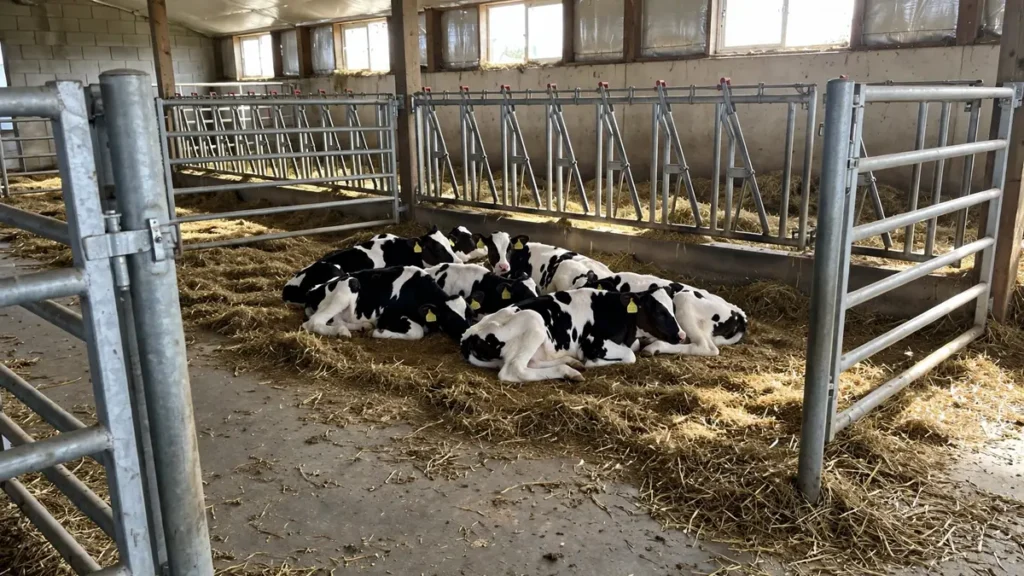
A calf barn is a building for raising young calves together in groups, and a calf barn installation startup is a small business that designs, builds and fits out those barns for dairy and beef farms. The work is not about one calf at a time. It is about pens that hold a small group of calves of a similar age, deep bedding that stays dry, fresh air that moves without chilling the animals, and feeding points that every calf in the pen can reach. A farmer who commissions a calf barn wants calves that grow well, stay healthy and move smoothly into the milking herd or the finishing group, and the startup that builds the barn is judged on exactly that.
That is why artificial intelligence tools have become useful for this kind of startup, even though the building itself is made of steel, concrete, timber and straw. The tools in this guide help a new installer plan the pen layout, work out how much bedding a group will use, model the air moving through the building, size the feeding equipment, price the job honestly and hand over records the farmer can actually use. They do not replace a site visit, a tape measure or a conversation with the farmer about how the calves are managed. They make those site visits sharper, because the installer arrives with a plan that already fits the herd, the site and the budget.
This guide looks at nine tools that fit a group calf-housing build, from the first sketch of the pens to the handover after the last gate is hung. Each one is judged on what it does for a calf barn in particular, not on what it does for a general farm building. A tool that is excellent for a milking parlour can be the wrong choice for calves, and a tool built for single-animal housing can miss the point of a group pen entirely. The nine tools below were chosen because they deal with groups, bedding, ventilation and feeding together, which is what a calf barn has to get right every single day.
Key takeaways
- A calf barn houses calves in small groups of a similar age, so the tools must plan for groups, not for single animals.
- Bedding, ventilation and feeding decide whether a calf barn works; get those three right and most other problems shrink.
- Start with a pen-layout tool, then add bedding and ventilation tools before you price the job.
- Price the straw, the labour and the aftercare in the quote, not just the steel and the gates.
- Hand over simple records for each pen, so the farmer can see how the barn is meant to be used.

What a calf barn installation startup actually builds
A calf barn is a roofed building divided into group pens, each pen holding a small number of calves that are close in age and size. The pens are usually bedded with straw, although some barns use sawdust or a deep bed of another dry material, and each pen has its own feeding point, water supply and gate so calves can be moved without disturbing the whole barn. The building needs a solid, well-drained floor, walls that keep out driving rain but let air move, and a roof with a ridge or vents that let warm, damp air escape. The calves spend their first weeks and months here, so the barn has to be warm enough in winter, cool enough in summer and dry all year round.
A group calf barn is a different build from an individual hutch, even though both house young calves. In a hutch each calf lives alone, which makes feeding and health checks simple but takes up more space and more labour. In a calf barn the calves share a pen, so they learn to eat and drink alongside each other, the labour per calf falls, and the building can house more animals on the same footprint. The trade-off is that disease can spread faster in a group, so the pen size, the bedding and the air have to be right. That difference is why the tools for individual calf hutches are not the same as the tools for a group calf barn, and why this guide keeps its focus on group housing from start to finish.
A startup in this niche usually works for dairy farms that rear their own replacement heifers, for beef farms that buy in young calves, and for mixed farms that want a dedicated calf building rather than a corner of an older shed. The jobs are smaller than a full dairy unit and larger than a single shelter, which suits a small team: a survey, a design, a materials order, a build of a few weeks, and a handover. The startup needs to be good at talking to farmers, good at reading a site, and good at keeping costs under control, because a calf barn is judged on calf health and on the price, and a farmer who is happy with one barn will ask the same team back for the next one.
The nine tools at a glance
The table below gives a quick view of all nine tools, the part of the calf barn each one handles best, and the stage of the job where it earns its keep. Read it as a shortlist, then use the detailed sections that follow to decide which tools to buy first.
| Tool | Best for | Stage of the job |
|---|---|---|
| PenGroup AI | Group pen layout and calf grouping | Design |
| CalfFlow AI | Calf movement, pen changes and weaning | Design and handover |
| BedDry AI | Bedding depth, moisture and straw use | Design and daily use |
| VentCalf AI | Ventilation, air speed and draught checks | Design |
| BarnSense AI | Temperature, humidity and ammonia sensing | After handover |
| FeedPen AI | Group feeding, milk and starter intake | Design and daily use |
| StrawStock AI | Bedding supply, storage and costing | Quoting and supply |
| CalfBid AI | Quotes, materials and job costing | Quoting |
| HerdCare AI | Health checks, handover records and aftercare | Handover and aftercare |
Designing the group pens
The pens are the heart of a calf barn, and the design stage is where most of the value is created. A good pen gives every calf enough space to lie down, stand up and reach the feed without being pushed aside, and it lets the farmer see every calf at a glance. A pen that is too small leads to dirty bedding, stressed calves and slow growth. A pen that is too large wastes building space and makes the calves harder to watch. The three tools in this section help a startup get the pen sizes, the group sizes and the movement between pens right before any steel is ordered.
1. PenGroup AI: The Best Tool for Group Pen Layout and Calf Grouping
PenGroup AI is the tool to open first on a calf barn job, because it turns the farmer’s herd numbers into a pen plan. The installer enters the number of calves, their ages, the batch size and how often new calves arrive, and the tool suggests how many pens are needed, how many calves should go in each pen, and how the pens should be arranged along the feeding passage. It works in groups rather than single animals, which is the whole point of a calf barn, and it flags groups that mix calves of very different sizes, which is one of the fastest ways to get uneven growth in a pen.
In practice, the tool is most useful on the farm, with the farmer standing beside the installer. The farmer can see how a change in batch size changes the number of pens, and the installer can show why a slightly larger pen is worth the extra steel. The plans it produces are clear enough to hand to a steel supplier, with gate positions, feeding frontage and passage widths marked, and simple enough that the farmer can follow them when the calves move. For a new startup, that clarity matters: it turns a conversation about calves into a drawing that both sides understand, and it stops the most common mistake in calf barns, which is building pens for the calves the farmer has today and forgetting the calves that will arrive next month.
2. CalfFlow AI: The Best Tool for Calf Movement, Pen Changes and Weaning
CalfFlow AI plans how calves move through the barn as they grow, from the youngest pen near the entrance to the older pens and then out to weaning. A calf barn is not a set of pens that stay the same all year; calves arrive in small batches, grow, change pens and leave, and the barn has to keep working while all of that is happening. CalfFlow AI maps that movement week by week, so the installer can see whether a pen will be empty, overcrowded or blocked at any point, and whether the farmer will have somewhere to put a new batch on the day it arrives.
The tool earns its place because it deals with the awkward weeks that a simple floor plan hides. It shows what happens when two batches arrive close together, when a group stays in a pen longer than planned because of a health problem, and when the weaning pen is full on the day the oldest calves should move out. An installer who has seen those problems on a screen can design in a spare pen, a flexible gate or a wider passage before the build starts, which is far cheaper than fixing the problem after the calves are in. For the farmer, the movement plan is also a management plan: it shows who moves where and when, so the daily routine stays simple even when the barn is full.
3. FeedPen AI: The Best Tool for Group Feeding, Milk and Starter Intake
FeedPen AI sits in this section because feeding decides the pen layout as much as the walls do. In a group pen, every calf needs to reach the milk feeder or the trough at the same time, or the bold calves eat and the shy ones go hungry. FeedPen AI works out how much feeding frontage each pen needs, how many teats or trough places a group requires, and how the milk and starter feed should be split across the day so that intakes stay even. It takes the group size from the pen plan and turns it into a feeding specification the installer can build.
The tool also helps a startup avoid the most expensive feeding mistake, which is fitting a feeder that suits the calves on day one and not the calves at six weeks old. FeedPen AI models intake as the calves grow, so the installer can see when a feeder will become too small and plan for a second feeding point or a larger trough from the start. It keeps the records simple too: daily intakes per pen, a note when one pen is eating less than the others, and a clear handover sheet that tells the farmer how much milk and starter each pen should be getting. That matters because uneven feeding in a group pen is hard to spot by eye, and by the time it shows in the calves, the growth has already been lost.
Keeping bedding, air and health right
Once the pens are drawn, the next question is whether the calves will stay dry, warm and healthy inside them. Bedding and air are linked: wet bedding makes the air damp, damp air makes calves cold, and cold calves get sick. A calf barn startup has to design for both at once, and the tools in this section help it do that with numbers rather than guesswork. They are the tools that separate a barn that looks right on handover day from a barn that still looks right in the middle of a wet winter.
4. BedDry AI: The Best Tool for Bedding Depth, Moisture and Straw Use
BedDry AI works out how much bedding a group pen needs, how deep it should be, and how often it should be topped up. Deep, dry bedding is the cheapest health insurance a calf barn has: it keeps calves warm, gives them a comfortable place to lie, and soaks up moisture before it reaches the air. BedDry AI takes the pen size, the number of calves, the bedding material and the season, and gives a depth and a topping-up routine for each pen. It also estimates how much straw the barn will use in a month, so the farmer can order in time and the installer can quote the running cost honestly.
The tool is useful because bedding needs change through the year and through the life of a group. Young calves need deeper, drier bedding than older ones, and a wet autumn uses far more straw than a dry summer. BedDry AI shows those changes in advance, so the farmer is not caught short and the installer is not blamed for a bedding bill nobody warned about. It also helps with the floor design: a pen that drains well needs less bedding than a pen that holds water, and the tool can show the difference in straw use between the two. For a startup, that is a practical selling point, because a barn that uses less straw without making calves cold is a barn the farmer will recommend to neighbours.
5. VentCalf AI: The Best Tool for Ventilation, Air Speed and Draught Checks
VentCalf AI models the air moving through a calf barn and checks whether it is fresh enough without being draughty. Calves need a steady supply of fresh air to carry away moisture and ammonia, but a cold draught at calf height can chill them badly, especially in the first weeks. VentCalf AI takes the building shape, the ridge and inlet positions, the pen layout and the outside weather, and shows where the air moves, how fast it moves at calf height, and where stale air is likely to sit. It is the tool that turns ventilation from a feeling into a measurement.
In a new build, the tool helps the installer place inlets, outlets and fans so that every pen gets fresh air and no pen sits in a draught. In an existing barn that a startup is refitting, it shows why one pen always has coughing calves while the pen next door is fine, which is often a matter of a blocked inlet or a ridge that is too small. The results are easy to explain to a farmer, because the tool shows the air as a simple picture rather than a page of numbers. That matters for trust: a farmer who can see the draught on a drawing will agree to move a vent, while a farmer who is only told about it may not. Ventilation is also where a calf barn differs most from a general livestock building, and the same thinking that sizes a dairy barn installation for milking cows needs to be scaled down and slowed down for calves, which is what this tool is built to do.
6. BarnSense AI: The Best Tool for Temperature, Humidity and Ammonia Sensing
BarnSense AI is the sensing tool a startup fits at handover, so the farmer can see what the air and bedding are doing after the builders have left. Small sensors in each pen record temperature, humidity and ammonia, and the tool turns those readings into simple alerts: this pen is too damp, that pen is too cold at night, the ammonia is rising in the oldest pen. The farmer does not need to read graphs all day; the tool flags the pens that need attention and leaves the rest alone.
For a startup, BarnSense AI does two jobs at once. First, it proves the barn works, because the readings from the first winter show whether the ventilation and bedding design did what the drawings promised. Second, it gives the startup a reason to stay in touch, because the installer can check the readings with the farmer, adjust a vent or a bedding routine, and catch a problem before it becomes a vet bill. The sensors are cheap compared with the building, and they are fitted in the pens rather than in the roof, so they measure the air the calves actually breathe. A calf barn that comes with its own monitoring is easier to sell than one that does not, and it is far easier to defend if a farmer later says the barn is too cold: the readings show what happened, night by night.
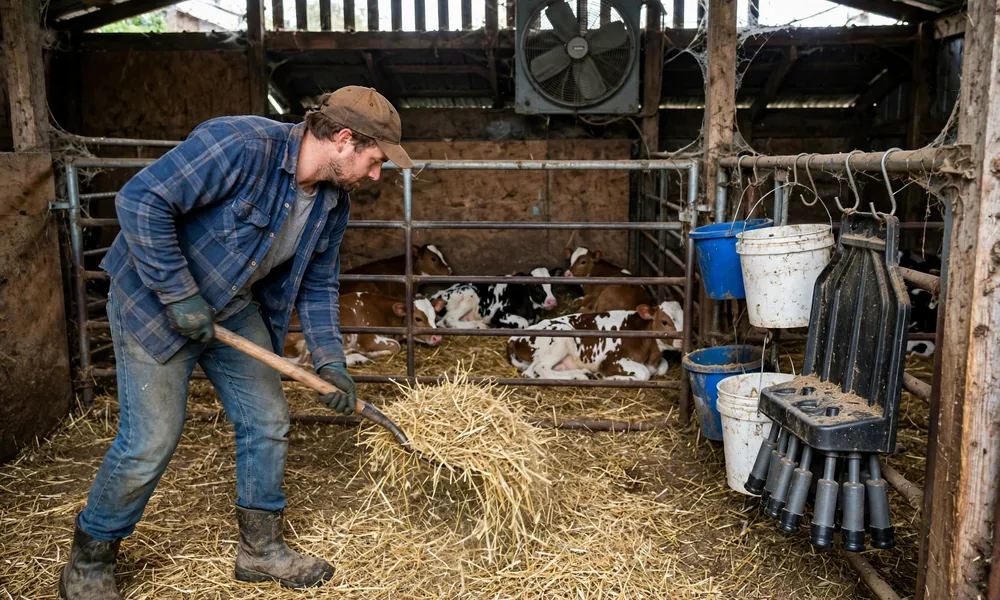
Feeding records, costing and running the business
A calf barn startup is a business as well as a building team, and the last three tools deal with the parts of the job that happen away from the barn: keeping the straw coming, pricing the work so the business survives, and keeping records that the farmer and the installer can both rely on. These are the tools that decide whether a startup that builds good barns also makes enough money to build the next one. They are less visible than a pen plan, but they matter just as much over a year of jobs.
7. StrawStock AI: The Best Tool for Bedding Supply, Storage and Costing
StrawStock AI manages the bedding supply for a calf barn, from the amount of straw the barn will use to where it should be stored and what it will cost. A group calf barn uses a lot of straw, and the straw has to be dry, close to the pens and easy to move on a wet morning. StrawStock AI estimates use pen by pen, works out how much storage the farm needs, and shows the cost per calf per week, so the farmer can budget for it and the installer can include it in the running-cost sheet at handover.
The tool also helps a startup plan the straw store as part of the build, rather than leaving it as an afterthought. A store that is too small means straw gets stacked outside and spoils; a store that is too far from the pens means the daily bedding round takes twice as long. StrawStock AI shows both problems before the building is finished, and it keeps a simple ordering record so the farmer knows when to buy the next load. For a startup, it is a useful tool to mention in the quote, because it shows the farmer that the installer has thought about the daily work, not just the day the barn is handed over.
8. CalfBid AI: The Best Tool for Quotes, Materials and Job Costing
CalfBid AI builds the quote for a calf barn job, from the steel and gates to the straw store, the fans and the labour. The installer enters the pen plan, the materials and the build time, and the tool produces a priced quote with each part shown separately, so the farmer can see what the money is for and the installer can see where the margin is. It keeps a record of what each job actually cost against the quote, which is how a new startup learns to price the next job better than the last. CalfBid AI is the tool that keeps a good builder in business, and it is worth learning before the first big job rather than after it.
The tool is at its best when it is used to compare options with the farmer, rather than to produce a single take-it-or-leave-it price. A farmer can see what a larger pen, a better fan or a bigger straw store adds to the cost, and can choose where to spend and where to save. That conversation builds trust, because nothing is hidden in a single lump sum. CalfBid AI also keeps the materials list tied to the pen plan, so a change in the design updates the quote instead of leaving the installer to recalculate it by hand. Compared with the costing tools used on larger livestock buildings, it is sized for the smaller, faster jobs a calf barn startup takes on, and it does not carry the overhead of a tool built for a whole cattle shed build with a different scale and a different set of materials.
9. HerdCare AI: The Best Tool for Health Checks, Handover Records and Aftercare
HerdCare AI is the record-keeping tool a startup leaves with the farmer, and it is the tool that turns a finished building into an ongoing relationship. It holds a simple record for each pen: when calves arrived, how they are growing, which calves needed treatment, and what the bedding and feeding routine should be. The farmer can update it in a minute a day, and the installer can see, with the farmer’s agreement, whether the barn is being used as it was designed to be used.
The value of HerdCare AI shows up in the months after handover, when small problems are still cheap to fix. A pen that is growing slowly, a group that keeps needing treatment, or a bedding routine that has slipped will show in the records before it shows in the calves. The installer can then visit, adjust a gate, a vent or a routine, and record the change, which is far better than waiting for a phone call about sick calves. For a new startup, aftercare is also the best source of new work: a farmer who gets a helpful visit six months after handover is the farmer who recommends the startup to the next farm. HerdCare AI makes that aftercare easy to offer, because the records are already there and the visit has a clear purpose.
A startup checklist for your first calf barn
Use this checklist on your first calf barn job, and keep it with the quote and the handover papers so nothing is missed.
- Walk the site with the farmer and agree the calf numbers, batch sizes and ages before you draw anything.
- Plan the pens for groups, with enough feeding frontage for every calf in the pen to eat at once.
- Check the ventilation at calf height, not just at roof height, and plan for a cold, still night.
- Work out the bedding depth, the topping-up routine and the monthly straw use for every pen.
- Price the straw, the fans, the sensors and the labour in the quote, not just the steel and gates.
- Hand over a pen-by-pen record sheet and agree a date for a first aftercare visit.
Frequently asked questions
What is a calf barn installation startup?
A calf barn installation startup is a small business that designs, builds and fits out buildings where young calves are raised together in group pens. It surveys the farm, plans the pens, bedding, ventilation and feeding, builds the barn, and hands it over with records the farmer can use. Most of its work is for dairy farms rearing replacement heifers and beef farms buying in young calves.
How is a calf barn different from a calf hutch?
A calf hutch houses one calf alone, while a calf barn houses calves together in small groups of a similar age. Group housing uses less space and less labour per calf, and calves learn to eat alongside each other, but disease can spread faster in a group, so the pen size, bedding and air have to be right. A calf barn is a shared building; a hutch is a single-animal unit.
How many calves should go in one group pen?
It depends on the age of the calves, the size of the pen and how the farmer manages them, but most calf barns use small groups of a similar age, often between four and twelve calves per pen. The pen must give every calf room to lie down, stand up and reach the feed at the same time. A pen-layout tool can work out the right group size for a particular barn rather than relying on a single rule for every farm.
How much does a calf barn installation cost?
The cost depends on the size of the barn, the number of pens, the materials, the ventilation and feeding equipment, and the site work needed before the build. A small barn for one farm costs far less than a large barn for a big herd, and the straw, fans and sensors add to the running cost as well as the build cost. A priced quote that lists each part separately is the only honest way to compare one installer with another.
Can AI tools really design a calf barn without a site visit?
No, and a startup that claims otherwise should not be trusted. AI tools can turn herd numbers into a pen plan, model the air and work out the straw use, but they cannot see the slope of the yard, the direction of the wind, the state of the access track or the way the farmer works. The tools make a site visit sharper; they do not replace it, and every plan should be checked on the farm before it is built.
Should a calf barn startup offer aftercare after handover?
Yes, and it is one of the best ways for a new startup to win repeat work. A visit a few months after handover, with the pen records and the sensor readings to look at, can catch a ventilation or bedding problem while it is still cheap to fix. Farmers remember the installer who came back, and they recommend that installer to other farms, which matters more to a small startup than any advertisement.
The bottom line
A calf barn installation startup succeeds by getting four things right together: group pens that fit the calves, bedding that stays dry, air that stays fresh without draughts, and feeding that reaches every calf in the pen. The nine tools in this guide help with each of those four things, and with the costing and records that keep the business itself healthy. Start with a pen-layout tool, add bedding and ventilation tools, price the job honestly, and hand over records the farmer will actually use.
The barn that follows from that approach is not the cheapest barn, and it is not the most complicated one. It is the barn where calves grow well, stay healthy and move on smoothly, and where the farmer can see that the installer thought about the daily work as well as the building. That is the barn a farmer recommends, and for a new startup, that recommendation is the most valuable tool of all.

Keep what speaks to you.
Leave room for your own perspective.


