A strawberry farm is a race run on hands and knees. From the day the first runner is pegged into a raised bed, a grower has a short season to get the rows straight, keep the beds moist without wetting the fruit, bring in pollinators for the exact week the flowers open, and pick every ripe berry before it softens or rots. There is no second crop from the same bed in the same year, and no way to fix a badly spaced row once the plants have rooted. That is why strawberry farm installation startups now run on AI tools: the planning work that used to live in a notebook and a grower’s memory is now done by software that measures the field, models the season, and flags problems while there is still time to act.
The tools in this guide were chosen for the strawberry growing build, not for a neighbouring crop. Every one of them solves a problem that belongs on a strawberry farm: laying out raised beds and rows that a picker can work without stepping on the plants, setting runner spacing so the bed fills without crowding, reading soil moisture under black plastic mulch, scheduling drip irrigation for a shallow-rooted crop that hates both drought and wet feet, watching the flowers through bloom, planning the bees, organising the picking crews, and calling the picking day when the berries are red, firm, and ready. A strawberry farm grows strawberries commercially, in rows and runners, with picking and irrigation at the heart of the work, and the software that serves it has to understand that cycle, from bed preparation to the last punnet, rather than borrowing a plan built for trees, vines, berries of another kind, roses, lavender, or olives.
This guide compares nine AI tools that cover the whole installation, from the first field survey to the first invoice. Each tool is judged on what it actually does on a strawberry farm, what it costs a startup to run, and where it fits alongside the other eight. If you are setting up a strawberry farm installation startup in 2026, use this guide as a buying order: plan the beds and runners first, get the soil and water right second, watch the flowers third, organise the picking fourth, and only then worry about the money side.
Key takeaways
- Strawberry beds are the first decision and the hardest to undo, so bed and row planning software comes before any other purchase.
- Runners fill a bed fast, so spacing and plant density decide whether the crop crowds itself out before the first pick.
- Strawberries are shallow-rooted and hate wet fruit, so drip irrigation under mulch is worth more than extra plants.
- Picking is the biggest cost on a strawberry farm, so crew planning and picking-day calls decide whether the season makes money.
- Nine tools cover the whole build, and a startup can launch with the first four and add the rest as fields are signed.
The nine tools at a glance
| Tool | Best for | Strawberry job | Starting point |
|---|---|---|---|
| BerryRow AI | Bed and row layout | Mapping fields and drawing strawberry beds | Field survey and bed plan |
| RunnerRate AI | Runner spacing | Plant density and runner management per bed | Per-field planting prescription |
| BedMoist AI | Soil readings | Moisture readings under mulch in raised beds | Sensor kit per field |
| DripBerry AI | Irrigation | Drip scheduling that keeps fruit dry | Weekly irrigation plan |
| PetalWatch AI | Flowering | Drone and camera checks on bloom and fruit set | Weekly bloom flights |
| PolliBerry AI | Pollination | Bee placement and flowering timing | Hive plan per field |
| BerryPick AI | Picking crews | Crew size, picking routes and punnet counts | Daily picking plan |
| PickWindow AI | Picking timing | Ripeness scoring and picking-day calls | Daily ripeness readings |
| BerryBooks AI | Money | Quotes, contracts and invoicing | First signed field |
Plan the strawberry beds and runners before a plant goes in
Everything on a strawberry farm follows from the beds. Bed width decides how far a picker has to reach, how much light each plant gets, and how easily a sprayer or a drip line can be run without crushing the crop. Plant too tight and the runners tangle, the air stops moving, and grey mould finds the fruit. Plant too wide and the field wastes ground that should have been carrying berries. The two tools in this section do the same job from different ends: one draws the field, the other decides how many plants go into each metre of it. Together they turn a rough field boundary into a planting plan a crew can actually follow.
Bed planning is also where a strawberry farm differs most clearly from a blueberry farm. A blueberry farm plants bushes that will stand for decades, so its software thinks in bush spacing, acid soil, and years of pruning. A strawberry bed is replanted every year or two, so its software thinks in a single season, in raised beds a picker can work from the path, and in runners that fill the bed in weeks. The comparison with blueberry farm installation tools is useful precisely because it shows how different the two builds are: one plans for bushes that last, the other plans for runners that spread.
BerryRow AI: the best tool for strawberry bed and row layout
BerryRow AI starts with a map of the field and ends with a bed plan a planting crew can follow. The startup walks or flies the field boundary, marks wet corners, headlands, access tracks, and any patch that should not be planted, and the software draws straight raised beds across the workable ground. It accounts for the width of the picking paths, because a picker carrying a tray needs room to walk without stepping on the bed edge, and it keeps the beds aligned to the field’s longest straight edge, which cuts down on short runs and wasted turning time for the bed former.
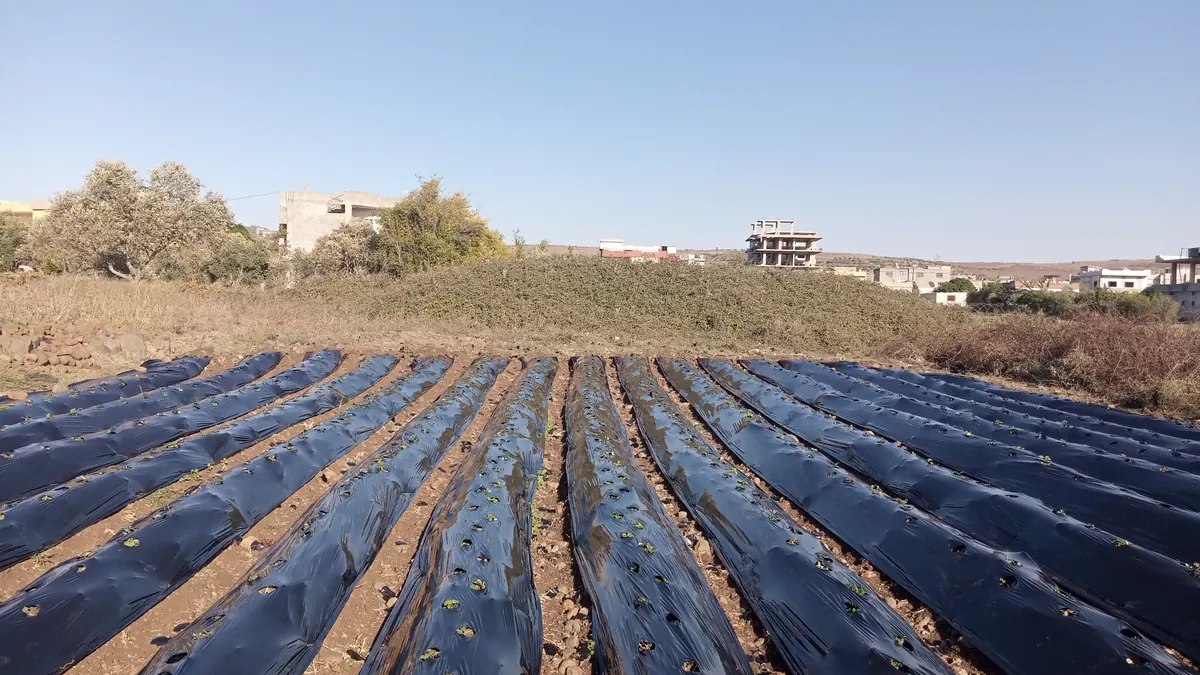
What makes BerryRow AI a strawberry tool rather than a generic field mapper is the way it treats the bed itself. Strawberries are grown on raised beds, often under black plastic mulch, and the bed has to be high enough to drain, wide enough for two rows of plants, and firm enough to hold its shape through the season. The software marks the bed profile on the plan before a single plant is ordered, so the plant count is calculated on the planted bed area only and the client is quoted on the real planted ground, not on the whole field boundary. For a startup, that honesty matters: quoting on the boundary and planting less is the fastest way to lose a farm client in the first season.
RunnerRate AI: the best tool for strawberry runner spacing and density
RunnerRate AI answers the question every strawberry grower asks before planting: how many plants per metre, and how far apart should the rows be. The answer changes with the variety, the soil, and whether the crop is grown for fresh picking or for processing, and getting it wrong is expensive in both directions. Too many plants and the runners crowd, the leaves stay wet, and the berries rot before they are picked. Too few and the bed never fills, weeds take hold, and the yield per hectare falls away. RunnerRate AI takes the variety data, the soil reading, and the target berry size, and returns a rate for each field rather than a single farm-wide guess.
The tool earns its place on a strawberry farm because it treats runners as a cost to be managed, not as a number to be copied from last year. Strawberry plants are not cheap, and a startup that plants ten percent too many across a season has spent real money for smaller berries. RunnerRate AI shows the plant cost per field next to the expected berry count, so the grower can see the trade-off in pounds rather than in abstract rates. It also plans the runner work: which runners to peg down to fill gaps, and which to cut so the bed does not choke itself, and the software makes that call automatically instead of leaving it to a guess on the day.
Read the soil and water it like a strawberry farm
Strawberries are forgiving in poor soil and demanding in dry soil, but they are also shallow-rooted, which makes them easy to drown. The plant puts down roots only a few inches deep, and it pulls moisture from a thin band under the mulch, which is why the surface can look damp after a shower while the root zone is already empty, or look dry while the bed is still wet underneath. A strawberry farm that waters by looking at the surface will water at the wrong time, in the wrong amount, and usually too late. The two tools in this section replace looking with measuring, and they do it in a way that fits a crop with a short, intense season.
Soil and water planning is also where strawberry farming parts company from orchard farming. An orchard plants trees with deep roots that can pull moisture from far down, so its software is built around deep soil and long watering cycles. Strawberries want a shallow moisture reserve topped up little and often, so their software is built around frequent small drinks that never wet the fruit. The orchard installation tools show the contrast clearly: the same soil sensor can serve both crops, but the advice it gives has to be written for the crop in the ground, and strawberry advice is about keeping a shallow root zone moist while the berries stay dry.
BedMoist AI: the best tool for strawberry soil readings
BedMoist AI is a set of soil probes and a dashboard that turns their readings into plain advice for strawberry beds. The probes sit at two shallow depths under the mulch, one near the crown and one deeper in the bed, and they report moisture and temperature every hour. The dashboard shows whether the root zone is filling or emptying, and it flags the moment the shallow probe starts to fall, which is the moment a strawberry crop is about to feel stress even though the leaves still look healthy. For a startup, that early flag is the product: it turns a soil reading into a decision made days before the crop shows the problem.
The tool also tracks nutrients in a way that suits strawberries. The crop takes up a lot of potassium and a moderate amount of nitrogen, and too much nitrogen late in the season produces soft leaves and soft fruit that bruises in the punnet. BedMoist AI keeps a simple record of what was applied, when, and what the probes showed afterwards, so the grower can see whether the fertiliser actually reached the root zone or sat in dry mulch. That record matters for the next season too, because a bed that was short of potassium this year should be the first bed on the list next year, not the last.
DripBerry AI: the best tool for strawberry drip irrigation scheduling
DripBerry AI decides when to water and how much to apply, and it does so for strawberries specifically. It takes the soil readings, the weather forecast, and the growth stage of the crop, and it returns a watering plan for the week ahead. The critical window is the month before the first pick, when the plant is setting fruit and its water demand climbs sharply. Water too little in that window and the berries stay small. Water too much and the bed stays wet, the roots lose air, and grey mould finds the fruit. DripBerry AI holds the crop in the middle of that band, watering enough to keep the berries swelling and little enough to keep the bed breathing.
The software also knows that strawberries do not want water on the fruit at any point in the season. Wet berries rot, and a rotten berry in a punnet spoils the ones around it. DripBerry AI runs the water through drip lines under the mulch, so the leaves and fruit stay dry while the roots drink. That single piece of crop knowledge is what separates a strawberry irrigation tool from a generic watering timer: a timer waters on a schedule, while DripBerry AI waters on the growth stage and the bed moisture, and the growth stage is what decides whether the water helps or harms.

Watch the flowers and bring in the bees
Bloom is the busiest and most delicate part of the strawberry season. In the space of two or three weeks, the field goes from green runners to a carpet of white flowers, and during those weeks the crop needs pollinators, dry fruit, and a grower who notices problems early. A missed week at bloom is a missed season, because a flower that is not pollinated does not set a berry, and a berry that is not set cannot be fixed at picking. The two tools in this section cover that window from two directions: one watches the field from above, and the other plans the bees that do the pollinating work.
PetalWatch AI: the best tool for strawberry flowering and bloom scouting
PetalWatch AI flies a drone over the field once a week from first flower to full bloom, and turns the photographs into a map of the flowering. The map shows which parts of the field are flowering, which parts are still in bud, and which parts have flowers that look small or pale. A uniform bloom is a healthy field; a patchy bloom is a field with a problem, and the map shows the grower exactly where to walk. For a startup, the weekly flight is a service that can be sold on its own: the farmer gets a bloom map every Monday, and the startup gets a reason to be on the farm every week of the season.
The tool also counts open flowers per square metre, which is the earliest real yield signal of the season. A bed that shows a strong flower count at bloom is a bed that will pick well if the weather holds, while a bed with a thin flower count is a bed where the grower should already be thinking about what went wrong. PetalWatch AI stores the count for every flight, so the season builds into a curve rather than a single snapshot, and the curve can be compared with last year’s beds to show whether the farm is improving. That comparison is what turns a drone flight into advice, and advice is what a startup is paid for.
PolliBerry AI: the best tool for strawberry pollination planning
PolliBerry AI plans the bees. Strawberries depend on pollinators to set well-shaped fruit, and a bed without enough bees will grow berries that are small, misshapen, and hard to sell. The software takes the size of the field, the flowering date from the bloom scout, and the number of hives available, and it returns a placement plan: how many hives, where to put them, and when to move them in. It keeps the hives close enough to the flowering beds that the bees work the crop rather than the hedgerow, and far enough from spray operations that the bees are not harmed.
The timing in PolliBerry AI is the part that matters most. Hives that arrive a week early sit idle and eat their stores. Hives that arrive a week late miss the first flush of flowers, and the first flush sets the biggest berries. The software watches the bloom map and calls the move-in day when a set share of the field is about to open, not when the calendar says it should. For a startup, that call is a service the farmer cannot easily make alone, because it needs the bloom data, the hive count, and the weather forecast in the same place at the same time.
Pick the berries and call the picking day
After bloom, the work changes. The field stops flowering and starts ripening, and the grower’s job becomes measurement and labour: how many berries are red, how many pickers are needed, and when the picking day has arrived. A strawberry that is picked too early is sour and pale. A berry that is picked too late is soft, bruises in the punnet, and rots before it reaches the buyer. The two tools in this section make those calls with numbers instead of hunches, and they do it at the point in the season when a wrong call is the most expensive mistake on the farm.
BerryPick AI: the best tool for strawberry picking crews and routes
BerryPick AI organises the picking. It takes the ripeness map, the number of beds ready to pick, and the size of the crew available, and it returns a daily picking plan: which beds to pick first, how many pickers each bed needs, and how many punnets each picker should fill in an hour. The plan keeps the crew moving along the beds in order, so no picker walks past ripe fruit to reach a bed that is not ready, and no bed is picked twice while another waits. For a startup, that order matters, because picking is paid by the hour and by the punnet, and a crew that walks more than it picks is a crew that costs money.
The tool also tracks the pick itself, bed by bed, so the grower can see which beds are earning and which are not. A bed that fills punnets fast is worth picking every day, while a slow bed might have a water problem or a variety that ripens unevenly. BerryPick AI does not diagnose the cause, but it shows the pattern, and the pattern tells the grower where to look. That record is the proof the startup hands over at the end of the season: a picking log, a punnet count, and a labour cost the farmer can compare with the sales ticket.
PickWindow AI: the best tool for strawberry ripeness and picking-day timing
PickWindow AI decides the picking day. It takes daily berry colour readings, the weather forecast, and the buyer’s delivery slot, and it returns a window: the days when the berries are red enough to pick and the weather is settled enough to get the crew through the beds. The software tracks the ripening curve as it rises, so the grower can see the day approaching rather than discovering it has arrived. For a strawberry farm, that forward view is the product, because the pickers, the trays, and the transport all have to be booked before the window opens, not after.
The tool also puts a price on waiting. Every extra day in the bed risks bird damage, slugs, and soft fruit, and every day of picking early costs flavour and size. PickWindow AI shows both costs side by side, so the grower can see whether waiting two days for redder berries gains more in quality than it loses in rot. That calculation is the kind of decision a grower used to make by feel, and it is the kind of decision that is better made with numbers, because the feel of a season is usually the feel of the last season, and the last season’s weather is not this season’s weather.
Run the money side like a business
A strawberry farm installation startup is a business before it is a set of tools, and the last tool in this guide is the one that keeps the business honest. Field work is easy to love and easy to undercharge for, especially in the first season, when every job feels like a favour and every quote feels like a guess. A startup that cannot quote accurately, track its costs per bed, and invoice on time will run out of money in the middle of its best season. The vegetable garden installation tools show the same quoting problem in another planting trade: the crop and the harvest differ, but a seasonal job across several beds still needs the same mix of fixed quotes and variable field work, and a strawberry startup that quotes like a business from the first job will still be trading when the season ends.
BerryBooks AI: the best tool for strawberry farm costing and invoicing
BerryBooks AI turns a bed plan into a quote. It takes the planted area from the row plan, the plant rate, the irrigation plan, and the number of drone flights, and it builds a price for the job with the costs shown line by line. The client sees what the plants cost, what the flights cost, and what the startup’s time costs, which makes the quote easy to accept and hard to argue with. For a startup, that transparency is a sales tool: a client who can see the costs trusts the total, and a client who trusts the total signs faster.
The software also tracks the real cost of each job against the quote, so the startup learns which jobs make money and which do not. A bed that needed three extra visits, a second soil probe, or a re-flown bloom map will show up as a job that cost more than it earned, and the next quote for a similar bed can be adjusted. That learning loop is the difference between a startup that grows and a startup that works harder every year for the same money. BerryBooks AI keeps the loop honest by recording the actual hours and the actual kit used, rather than letting the founder remember the season as better than it was.
What a strawberry farm installation actually costs to set up
A startup does not need all nine tools on the first day. The honest starting order is the planning pair, then the soil and water pair, then the bloom pair, and finally the picking pair and the money tool as the first fields are signed. BerryRow AI and RunnerRate AI come first, because a bed plan and a plant prescription are what a farm client asks for before anything else. BedMoist AI and DripBerry AI follow once the first beds are planted, PetalWatch AI and PolliBerry AI come next for bloom, and BerryPick AI and PickWindow AI can wait until the first berries are approaching ripeness.
Strawberry farm installation checklist
- Survey the field boundary, mark wet corners and headlands, and draw the strawberry beds before ordering plants.
- Set the runner rate per field for the variety and the soil, and peg runners to fill gaps while cutting the ones that crowd the bed.
- Fit soil probes under the mulch at two shallow depths and record the deep bed reading, not just the surface.
- Write the drip irrigation plan for the month before the first pick, and keep water off the fruit at all times.
- Fly the bloom route weekly, book the hives for the week the field opens, and count flowers twice before picking starts.
- Call the picking day on berry colour and the forecast, then invoice the field the day the work is done.
Frequently asked questions
How many AI tools does a strawberry farm installation startup need to launch?
A startup can launch with four tools: a bed planner, a runner rate tool, a soil sensor kit, and an irrigation scheduler. Those four cover the planning and the growing work that a farm client asks for first. The bloom, picking, and money tools can be added as fields are signed, because they only earn their fee once there is a crop in the ground to watch and a harvest to pick.
Why do strawberry beds need their own planning software?
Strawberry beds are replanted every year or two and have to be straight, evenly spaced, and wide enough for a picker to work from the path without stepping on the plants. The spacing decides light, airflow, and berry size, and a badly spaced bed cannot be fixed once the runners have rooted. Planning software draws the beds on the real field boundary, accounts for paths and mulch, and exports the plan to the planting crew.
When do strawberries need the most water?
Strawberries drink hardest in the month before the first pick, while the fruit is swelling. Watering in that window decides berry size, and watering on the fruit at any time risks rot. An irrigation scheduler that follows the growth stage and the bed moisture, rather than a fixed calendar, keeps the water in the right window and under the mulch, where it belongs.
Do strawberries really need bees?
Yes. Strawberries depend on pollinators to set well-shaped fruit, and a bed without enough bees will grow berries that are small and misshapen. Hives should be moved in when a set share of the field is about to open, not a week early and not a week late. Pollination planning software uses the bloom map to call the move-in day and to place the hives where the bees work the crop.
How is the strawberry picking day decided?
The picking day is a ripeness call, not a calendar call. Berry colour is tracked daily as it reddens, and the picking window is the set of days when the berries are red and firm enough to pick and the weather is settled enough to run the crew. Picking too early costs flavour and size, and picking too late costs soft fruit and rot in the punnet.
Is a strawberry farm the same as a pick-your-own business?
No. A strawberry farm grows strawberries commercially, with beds, runners, drip irrigation, pollination, and a picking crew that harvests the crop for sale. A pick-your-own business takes visitors to pick berries for themselves. The tools in this guide are for the growing and harvesting trade: bed planning, runner rates, soil readings, drip irrigation, bloom scouting, pollination, picking crews, and picking-day timing.
The bottom line
A strawberry farm installation startup succeeds when it plans the beds well, manages the runners, waters under the mulch, watches the bloom, and calls the picking day on ripeness rather than on habit. The nine tools in this guide cover that whole season in order, from BerryRow AI drawing the first bed plan to BerryBooks AI sending the last invoice. Buy the planning pair first, add soil and water once the first beds are planted, and let the fees from those fields pay for the bloom and picking tools. Start with the rows, and the rest of the season follows.

Keep what speaks to you.
Leave room for your own perspective.