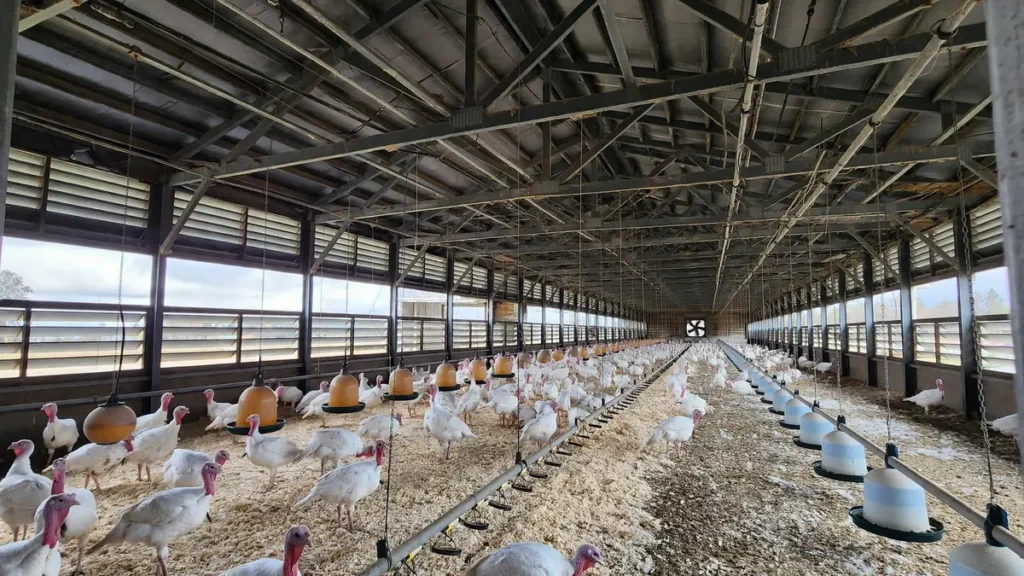
A turkey barn installation startup is a small building business that designs, builds and fits out large enclosed barns where flocks of turkeys live, eat and grow. One building can hold thousands of birds under a single roof, so every decision about floor space, feed lines, ventilation and litter is multiplied across the whole flock. A mistake that would be a nuisance in a garden shed becomes a flock-wide problem in a turkey barn, and that is why the firms that do this work well plan the building on a screen before they cut a single sheet of cladding.
Turkeys make the job harder than it looks, and that is exactly why software earns its place. A turkey flock grows fast and grows big, so a barn that fits day-old poults comfortably can be crowded six weeks later if the floor space was worked out on a guess. The birds need dry litter underfoot at all times, fresh air moving through the building without draughts at bird level, and feeders and drinkers spaced so that every bird can reach them. Get any one of those wrong and the flock shows it in poor growth, wet litter and vet bills.
This guide compares the nine best AI tools for turkey barn installation startups in 2026, chosen for the barn-scale build rather than the backyard coop. Every tool here works with flock numbers in the thousands, litter and ventilation at whole-barn scale, and the practical reality that a turkey barn is a working farm building, not a garden feature. Use them together and a one- or two-person firm can survey a site, draw a barn that fits the flock, price it honestly and hand it over with records the keeper can use.
Key takeaways
- A turkey barn is an enclosed, barn-scale building for a flock of thousands of birds, with feed lines, drinkers, whole-barn ventilation and deep litter, not a small coop or a three-sided shelter.
- Floor space, feeder numbers and ventilation must be worked out for the finished weight of the flock, not for the day-old poults that arrive first.
- Dry litter is the daily cost that decides whether a turkey barn is cheap or expensive to run, so litter depth, moisture and the bedding store belong in the design.
- Brooding heat is a separate design problem from whole-barn heating, and it needs its own layout, controls and running costs.
- Buy the layout tool first, the quoting tool second and the ventilation tool third, then add the rest as the order book grows.

What a turkey barn installation startup actually builds
A turkey barn is a roofed, walled building where a whole flock lives under one roof, and the difference from the smaller structures on the same farm is the scale of everything inside it. The barn holds the flock from the brooding stage through to the finished birds, with a feed store at one end, drinker and feeder lines running the length of the building, ventilation inlets along both side walls, and litter across the entire floor. The birds never leave the building except through the catching doors at the end of the cycle, so the building has to provide everything the flock needs for weeks on end.
That definition matters because the smaller structure is a different job. A turkey coop is usually a small house for a handful of birds with a run outside, and a field shelter is an open-fronted structure that birds can walk in and out of. Neither needs whole-barn ventilation, a feed line, or a litter plan for thousands of birds. A turkey barn does, and the firms that build them are really building a controlled environment: a long, clear-span building where air, heat, feed, water and litter are all managed as one system rather than five separate afterthoughts.
The typical job starts with a measured survey, because the barn has to sit level, drain away from the building, and leave room for feed lorries, a litter store and the catching crew. The survey records the levels, the wind direction and the access route, and those measurements become the base layer of the design. The design then follows a fixed order: flock size and finished weight first, then floor space, feeder and drinker numbers, ventilation, litter and heat, and only then the steelwork and cladding. Flock-scale planning is a skill that transfers across farm buildings, and the way sheep barn installation startups plan for a whole flock shows the same discipline of sizing a building for the animals it will hold at their largest.
How to choose the best AI tools for a turkey barn startup
Start with the animal, not the software. A tool is only useful for a turkey barn if it lets you set flock sizes in the thousands, bird weights from poult to finished tom, and floor space per bird that changes as the flock grows, because a tool built for garden poultry will simply not have the numbers a turkey barn needs. Check that it handles litter depth and moisture, tunnel and side-wall ventilation, and feeder and drinker spacing for birds that grow to twenty kilos or more. If it cannot do those things, it will not save you time, however pretty its drawings look.
Then check the workflow. The best tools here do one job well and hand their numbers to the next tool without retyping: layout hands flock sizes and floor areas to the ventilation tool, the ventilation tool hands fan sizes to the quoting tool, and the quoting tool hands the finished price back to the client. A tool that locks its numbers inside its own file format costs you an afternoon of retyping on every job, and that afternoon is the margin on a small barn.
Finally, check the cost against the job, not against other software. A tool that costs thirty dollars a month and saves a day of drawing on every barn pays for itself on the first job, while a tool that costs ten dollars a month and produces drawings the client cannot read costs you the job itself. Look for clear monthly pricing, no charge per project, and support that answers in hours rather than days, because a question about a fan size usually arrives the evening before the steel is ordered.
The 9 best AI tools for turkey barn installation startups at a glance
| Tool | Best for | What it does | Plans from about |
|---|---|---|---|
| FlockPlan AI | Flock layout | Sets flock numbers, floor space and bird flow for the whole barn | $29 a month |
| GobbleFeed AI | Feed and water | Plans feeder lines, drinkers and ration stages for the flock | $24 a month |
| TomVent AI | Ventilation | Sizes tunnel and side-wall ventilation for the whole barn | $27 a month |
| LitterDry AI | Litter | Plans litter depth, moisture control and bedding stores | $19 a month |
| BroodWarm AI | Brooding heat | Lays out brooders, heat zones and temperature curves | $22 a month |
| RoostSpace AI | Perches and rest | Plans perches, resting areas and night-time bird flow | $18 a month |
| PoultCare AI | Poult health | Tracks poult checks, early mortality and first-week routines | $21 a month |
| TurkeyBid AI | Quoting | Builds priced quotes, materials lists and job costing | $25 a month |
| FlockHandover AI | Handover | Builds handover packs, records and aftercare reminders | $17 a month |
The 9 best AI tools for turkey barn installation startups
1. FlockPlan AI: The Best Tool for Barn-Scale Flock Layout
FlockPlan AI is the layout tool to buy first, because every other decision in a turkey barn hangs off the flock plan. It starts from a measured survey, the target flock size and the finished weight of the birds, and it works out how much floor space the barn needs, how the flock should be divided into groups, and where the feed lines, drinker lines and catching doors should sit. The plan it produces is a working drawing, not a sketch, so the steelwork and cladding can be ordered from it with confidence.
The tool also handles the parts of the barn that are easy to forget. It places the brooding area at the warm end of the building, keeps the feed store next to the delivery door so the lorry never has to cross the flock, and reserves space at the far end for catching. It checks that the passages are wide enough for a small loader and a litter spreader, and it flags any corner where a feeder line would block the route the keeper walks twice a day.
2. GobbleFeed AI: The Best Tool for Feed Lines, Feeders and Rations
GobbleFeed AI plans the feeding side of the barn, which is where most turkey barns quietly go wrong. Turkeys grow fast and eat a lot, so a barn needs enough feeder space for every bird to eat without queuing, enough drinkers for the whole flock to drink at once, and a feed line that can keep up with a flock that doubles its daily intake in a matter of weeks. The tool works from the flock plan, the bird weights and the ration stages, and it places the feeder lines, the drinker lines and the feed store so that the whole system works as one.
The tool’s ration planning is the part clients notice most. Turkeys need different feed at different ages, and the change from starter to grower to finisher feed has to be timed to the flock, not to the calendar. GobbleFeed AI sets the changeover dates from the flock’s age and weight, works out how much of each ration to order and when, and warns when a changeover would fall on a weekend when the feed lorry does not run. It also sizes the feed store so that a full delivery fits without blocking the passage.
3. TomVent AI: The Best Tool for Whole-Barn Ventilation
TomVent AI sizes the air for the whole barn, and it is the tool that separates a dry, healthy building from a damp one that smells of ammonia by February. A turkey barn holds thousands of birds that all breathe, drink and drop litter in the same air, so the ventilation has to move a large volume of air without creating draughts at bird level, in weather that swings from a still summer evening to a freezing winter night. The tool takes the flock size, the bird weights and the local climate, and it works out the fan sizes, the inlet areas and the control settings that keep the air fresh and the litter dry.
The tool also plans for the seasons, which is where fixed vents fail. In summer it opens the calculation up for tunnel ventilation, setting the fan capacity and the inlet size that will pull a steady stream of air down the length of the building. In winter it closes the calculation down to minimum ventilation, keeping just enough fresh air moving to clear ammonia and moisture without chilling the birds. Between the two it sets the staging, so the fans come on in steps as the temperature rises rather than all at once.
TomVent AI also checks the building itself, which is the part of ventilation that gets missed when the fans are ordered first and the building is designed second. It checks that the inlets are spread evenly along both side walls and that the fan housings sit where the air they throw can actually leave the building. Barn-scale ventilation follows the same principles whatever the animal inside, and the way pig barn installation startups size whole-barn ventilation and feed lines is a useful cross-check before the fans are ordered.
4. LitterDry AI: The Best Tool for Litter Depth, Moisture and Bedding Stores
LitterDry AI plans litter, which is the daily cost that decides whether a turkey barn is cheap or expensive to run. Turkeys live on their litter for the whole cycle, so the litter has to stay dry, deep and friable from the day the poults arrive to the day the flock is caught. The tool works from the flock size, the drinker numbers and the ventilation rates, and it works out how deep the litter should start, how much topping up it will need each week, and how much bedding the store must hold. It prices the litter as a running cost, so the client can see what the barn will cost to run, not just what it costs to build.
The tool’s moisture planning is the part that saves flocks. Wet litter causes foot problems, breast blisters and ammonia, and all three start long before the litter looks wet to the eye. LitterDry AI tracks the moisture balance of the barn, combining the water the birds drink, the water the drinkers spill and the air the ventilation removes, and it warns when the balance tips toward wet litter days before the keeper would notice it underfoot. It suggests where to add litter, where to check the drinkers for leaks, and when to raise the ventilation a step.
5. BroodWarm AI: The Best Tool for Brooding Heat and Temperature Curves
BroodWarm AI lays out the brooding area, which is the warmest and most delicate part of a turkey barn. Day-old poults need heat that a finished flock does not, so the brooding area has to be warm, draught-free and easy to watch, with heat that can be turned down gradually as the birds grow and feather up. The tool works from the flock size, the brooder type and the barn layout, and it places the brooders, sets the temperature curve from arrival to the end of brooding, and works out the fuel or power the brooding stage will use.
The tool also plans the controls, which is where brooding goes wrong most often. A brooder that runs too hot drives the poults to the edges of the circle, where they pile up and chill; a brooder that runs too cold leaves them huddled under the lamp, where they eat and drink less than they should. BroodWarm AI sets the sensor positions, the alarm levels and the backup plan, so a failed heater is caught by a second sensor before the poults are cold, and the keeper gets a warning on the phone rather than finding the problem on the morning round.

6. RoostSpace AI: The Best Tool for Perches and Resting Areas
RoostSpace AI plans the perches and resting areas, which are the part of a turkey barn that most designs leave to chance. Turkeys like to roost, and a flock that has somewhere to perch at night settles better and rests better than a flock with nowhere to go but the flat litter. The tool works from the flock size, the bird weights and the barn layout, and it places the perches at heights the birds can reach, with enough space per bird that the whole flock can rest without crowding.
The tool also plans the night-time flow of the barn, which is where perches earn their keep. It checks that the birds can move from the feeder lines to the perches without crossing the drinker lines, that the perches do not sit over the feeders where droppings would fall into the feed, and that the keeper can still walk the barn in the dark for the evening check without disturbing the whole flock. It also sets the perch spacing for birds that grow heavy, because a perch that suits a young bird will sag when the same bird is a finished tom.
7. PoultCare AI: The Best Tool for Poult Health and First-Week Routines
PoultCare AI tracks the first week of the flock, which is the week that decides the whole cycle. Day-old poults are fragile, and the difference between a flock that thrives and a flock that struggles is usually set in the first seven days: whether the poults found feed and water quickly, whether the brooding temperature stayed steady, and whether any early problem was spotted on the day it started rather than the day it spread. The tool sets the first-week routine, with checks for feed intake, water intake, temperature and behaviour, and it records the results against the plan.
The tool also tracks early mortality, which is the number every keeper watches and nobody enjoys talking about. A small number of losses in the first days is normal, but a rising number is a warning that something in the barn needs attention, and PoultCare AI plots the daily figures against the expected range so that a problem is visible on a chart before it is visible in the barn. It suggests the checks to run when the figures rise, from drinker heights to brooder temperatures to feed freshness, and it keeps a record of what was done, so the next flock benefits from what the last one taught.
8. TurkeyBid AI: The Best Tool for Priced Quotes and Job Costing
TurkeyBid AI turns the plans into a price the client can trust, and it is the tool that protects a new firm’s margin. It takes the materials lists from the layout, feeding, ventilation and litter tools, prices them against the firm’s own supplier rates, and builds a quote that shows the client what they are paying for: the steelwork, the cladding, the feed lines, the fans, the litter, the labour and the design time, each on its own line. A client who can see the parts of the price is a client who trusts the total, and a client who trusts the total signs the order.
The tool also tracks the job against the quote once the build starts. It records what was ordered, what was delivered and what changed, so when a client asks for an extra door or a bigger feed store halfway through the build, the cost of the change is clear before the work is done rather than argued about after it. It flags the items that are running over budget while there is still time to fix them, and it keeps a running total of the job’s margin, so the firm knows whether the barn is making money before the final invoice is written.
TurkeyBid AI also keeps the firm’s pricing honest over time, because it records the actual cost of every job against the quote that was given. After a few barns, the firm can see which items it prices well and which it prices badly, and the next quote gets better. Clear, itemised quoting runs through every barn-building trade, and the way cattle barn installation startups turn a layout into a priced quote follows the same pattern of listing every part before the total is agreed.
9. FlockHandover AI: The Best Tool for Records, Handover and Aftercare
FlockHandover AI closes the job, and it is the tool that turns one barn into repeat work. It takes the finished plan, the flock sizes, the feed routine, the ventilation settings, the litter plan and the brooding curve, and it builds a handover pack the keeper can actually use: a single folder with the drawings, the settings, the supplier list and the daily routine, written in plain language rather than in the jargon of the building trade. A keeper who understands the barn on the first day is a keeper who runs it well, and a keeper who runs it well recommends the firm that built it.
The tool also schedules the aftercare that most firms forget. It sets reminders for a check-in call after a month, a visit after three months and a full check after the first flock is caught, so the firm finds out about a stiff gate or a noisy fan while the client still remembers the firm’s name fondly. It records what was found on each visit, so a problem that appears on the second barn can be traced back to the first, and it keeps the client’s details in one place, so the next barn is quoted from a position of knowledge rather than from scratch.
What the tools cost and which to buy first
Bought together, the nine tools in this guide cost about $202 a month at their starting prices, which is less than a day of labour on a barn job, and less than the cost of a single afternoon spent retyping measurements between programs that do not talk to each other. Most of the tools offer a discount for paying yearly, but even at the monthly rate the stack pays for itself on the first barn, because the time it saves on drawing, pricing and record-keeping is time that can be spent on the next job.
The starter stack for a one-van firm is three tools: FlockPlan AI for layout at about $29 a month, TurkeyBid AI for pricing at about $25 a month, and TomVent AI for ventilation at about $27 a month. Those three cover the decisions that decide whether a barn works: how big it is, how much it costs, and whether the air inside it stays fresh. Add GobbleFeed AI and LitterDry AI when the second barn is ordered, and add the rest as the order book grows.
Budget for the tools the way you budget for materials: as a cost of the job, not as office overhead. A barn quote that includes a small line for design and software is a quote the client understands, because the client can see the drawings and the records that the software produced. A firm that hides its software cost in its margin will cut corners on the software first, and the corners it cuts are the ones the flock pays for.
Launch checklist: your first turkey barn job
- Survey the site in wet weather if you can, and record levels, drainage, wind direction and the route for feed lorries and the catching crew before you draw anything.
- Fix the flock size and finished weight with the client in writing, then work the floor space, feeder numbers and ventilation from those figures, not from a guess.
- Draw the barn in FlockPlan AI, check the passages against a loader and a litter spreader, and send the plan to the client for sign-off before ordering steel.
- Price the job in TurkeyBid AI with every item on its own line, include the design time and the litter for the first cycle, and agree the price before the build starts.
- Set the brooding curve and the ventilation staging in advance, test the heaters and fans before the poults arrive, and walk the barn with the keeper on handover day.
- Book the aftercare visits in FlockHandover AI before you leave the site, and call the client after a month to ask how the first flock is doing.
Frequently asked questions
What is a turkey barn installation startup?
A turkey barn installation startup is a small building business that designs, builds and fits out large enclosed barns where flocks of turkeys live, eat and grow. The work covers the survey, the layout, the steelwork and cladding, the feed and drinker lines, the ventilation, the litter plan and the handover, and it is sold as a complete barn rather than as a set of separate parts.
How is a turkey barn different from a turkey coop?
A turkey coop is a small house for a handful of birds with a run outside, while a turkey barn is a large enclosed building that holds a flock of thousands under one roof for the whole cycle. The barn needs whole-barn ventilation, feed lines, drinkers and a litter plan for thousands of birds, while the coop needs none of those things at that scale.
How much does a turkey barn installation cost?
A small turkey barn for a flock of a few thousand birds usually costs from about $60,000 to about $150,000, while a larger barn with tunnel ventilation, automated feeding and a full litter store can cost from about $200,000 to about $400,000. The final price depends on the flock size, the site, the ventilation system and the level of automation.
How many turkeys should go in one barn?
The number depends on the finished weight of the birds and the floor space the barn can offer, and it should be worked out for the birds at their largest rather than for the poults that arrive first. As a starting point, a barn that offers around one square metre of floor per finished bird will hold a flock comfortably, but the exact figure depends on the breed, the ventilation and the litter system.
What ventilation does a turkey barn need?
A turkey barn needs ventilation that can move a large volume of air without creating draughts at bird level, and it needs to do it in every season. Tunnel ventilation suits long barns in warm weather, side-wall inlets with ridge extraction suit smaller barns, and minimum ventilation keeps the air fresh in winter without chilling the flock. The fan sizes and inlet areas should be worked out from the flock size and the local climate, not copied from another barn.
Should a turkey barn startup offer aftercare after handover?
Yes, and aftercare is one of the best ways a new firm wins repeat work. A check-in call after a month, a visit after three months and a full check after the first flock is caught will find the small problems before they become big ones, and they show the client that the firm cares about the barn after it has been paid for.
Bottom line
A turkey barn is a serious building for a serious flock, and the firms that do it well are the ones that measure first, plan the whole barn as one system, and hand it over with records the keeper can use. The nine tools in this guide cover that whole job, from the first survey to the last aftercare visit, and together they cost less than a day of labour on a barn job.
Start with the flock, not the software. Fix the bird numbers and the finished weight, work the floor space and the air from those figures, and let the tools do the arithmetic that turns a good plan into a barn that works. A flock that grows well, on dry litter, in fresh air, is the best advertisement a turkey barn firm will ever have, and it starts with a drawing that was done properly before the first sheet of cladding was ordered.

Keep what speaks to you.
Leave room for your own perspective.


