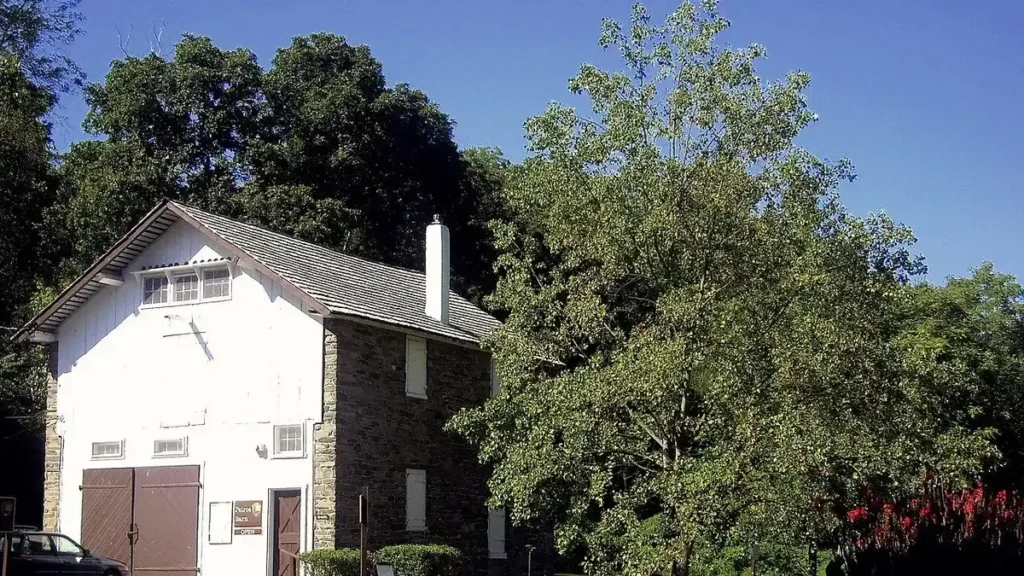
A spring house is a small stone building raised over a natural spring, and everything about the business of installing one follows from that one fact. Cold spring water runs through the building all year, so the stone walls stay cool, the air inside stays damp and steady, and the floor is often a shallow basin or trough where the water itself does the work. Before electric refrigeration, families kept milk, butter, cream and fresh produce in a spring house because the water held the temperature near the spring’s own cold, somewhere around ten to thirteen degrees, whatever the weather did outside. A startup that builds spring houses is therefore selling a cooling building, not a storage shed and not a plumbing job. The water is the product, the stone is the insulation, and the building is the frame that keeps the two together.
That distinction shapes every decision on site. The spring has to be found, tested and measured before a single stone is laid, because a spring that runs strong in March can slow to a trickle in August, and a spring house built over a weak or dirty source is a handsome stone box with nothing inside it. The stonework has to be laid to hold water without leaking it away, the floor has to be graded so the water flows through the trough and out again without pooling against the walls, and the roof and vents have to keep the inside cool and dry enough that the stored food stays fresh instead of going mouldy. Customers judge the job by one thing, which is whether the water still runs cold and clear through the building on the hottest day of the year, and whether the milk set in the trough in the morning is still cool at supper.
This guide compares nine tools that fit a spring house installation startup in 2026, chosen for the spring, the stone, the water and the cooling rather than for general building work. They scan the spring basin in three dimensions, draw plans the customer can approve, price the stonework honestly, keep the diary and the invoices straight, test the water, log its temperature through the seasons, measure how much water the spring actually yields, and prove with a thermal camera that the finished building holds its cool. Every tool was judged on the same questions a founder actually asks: does it solve a problem this specific trade has, does it work from a phone beside a spring, and does it pay for itself within the first few jobs.
Key takeaways
- A spring house is a stone building over a natural spring, cooled by the spring water itself, so judge every tool on the spring, the stone, the water and the cooling, not on general building work.
- Measure the spring before you price the building: its flow, its temperature and its water quality decide whether the site can support a spring house at all.
- Start with a scan and a plan the customer can approve, because stonework is expensive to change once the first course is laid.
- Prove the cooling after the build with temperature logs and a thermal camera, since cold water on the hottest day is the promise the customer is buying.
- Keep the software bill small at first: a design tool, a pricing tool, a job tool and a water-testing routine will carry the first dozen jobs.
What a spring house is — and what it is not
A spring house is not a well house, even though the two are often confused, and the confusion is expensive if it reaches a quote. A well house shelters a wellhead, the top of a drilled or bored well, with its casing, cap and first stretch of pipe, and it is opened to inspect the wellhead and reach the shut-off. A spring house shelters a natural spring where water rises out of the ground on its own, and it is opened to use the water, to set food in the trough and to check that the flow is still running. The two buildings have different water, different doors and different reasons to open them, and a crew that prices one like the other will get the water work wrong. The well house installation guide covers the drilled-well building in full, and it is worth reading alongside this guide precisely because the contrast makes the spring house trade clearer.
Nor is a spring house a pump house. A pump house is a small insulated building that shelters a pump and its pressure system, and its whole design is about keeping machinery alive through frost. A spring house has no pump at the heart of it, because the spring delivers the water by gravity, and its whole design is about keeping stone cool and water moving. It is not an outhouse either, which is a timber structure built around a seat and a vent, and it is not a general shed, a granary, a wash house or a tractor shed. A wash house is a laundry building, a tractor shed is a machinery shed, and a granary stores grain, while a spring house stores food in cold running water. Each of those is a different trade with a different build, and the tools in this guide were chosen for the spring-water building alone.
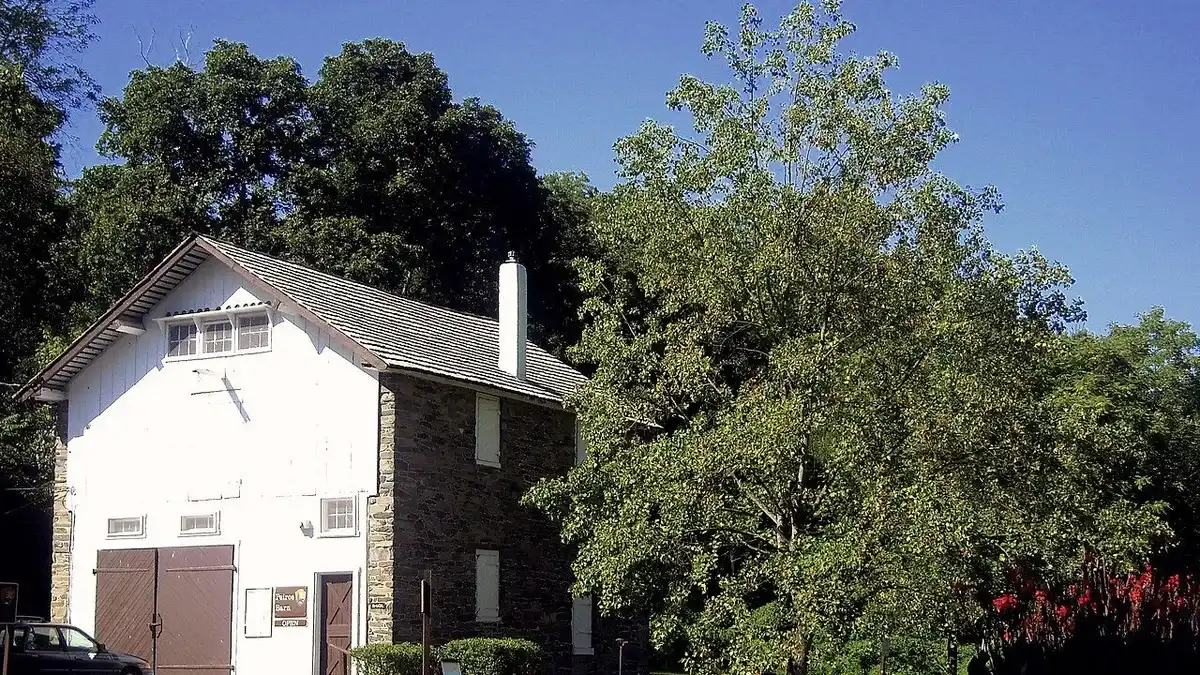
The classic spring house is a small stone structure, often no bigger than a garden room, with thick walls, a pitched roof, a door wide enough to carry a milk churn through, and a floor that is part stone and part water. The spring is boxed or channelled into a trough that runs along one wall or across the floor, and the water flows in at one end and out at the other, so it is always fresh and always cold. Jars and crocks sit in the trough, or on shelves just above it, and the stone walls hold the cool in through summer. Some spring houses are built half into a bank so the earth itself adds insulation, and some have a second room above for storage, but the heart of every one is the same: spring, stone, water and cooling, in that order.
The 9 best AI tools for spring house installation startups at a glance
| Tool | Best for | Standout feature for a spring house job | Starting point |
|---|---|---|---|
| Polycam | Scanning the spring basin and stone shell | Phone 3D scans that capture the spring, the stonework and the site levels | Free plan; paid plans for exports |
| RoomSketcher | Customer-approved floor plans | Fast 2D and 3D plans showing the trough, door swing and clearances | Free plan; paid plans for 3D |
| STACK | Digital takeoffs for stone, timber and roofing | AI-assisted measurement and material counts from plans | Paid plans; trial available |
| Workiz | Scheduling, dispatch and invoicing | Job scheduling, quotes and payments in one field-service app | Paid monthly plans; trial available |
| Tap Score | Spring water quality testing | Laboratory water tests with clear, customer-readable reports | Buy per test kit |
| Onset HOBO MX2201 | Logging spring water temperature | Waterproof temperature logger that records the spring through the seasons | Buy per logger |
| Seametrics | Measuring spring yield | Flow meters that record how much water the spring actually delivers | Buy per meter |
| FLIR ONE Pro | Proving the cooling works | Thermal camera that shows cold spots, damp and heat leaks in the stonework | Buy per camera |
| Xero | Bookkeeping and cash flow | Cloud accounting with invoicing, expenses and bank reconciliation | Paid monthly plans; trial available |
How the tools in this guide were judged
Every tool here was judged against the spring house build itself, in the order a real job runs: find and measure the spring, plan the stone shell, price the work, build it, prove the water and the cooling, and hand over a building the customer can trust. A tool that is excellent for general builders but blind to spring flow, water quality, stone quantities or cooling performance did not make the list. Price mattered too, because a new startup cannot carry nine subscriptions before its first invoice is paid, so the guide says plainly where a tool is bought once, like a logger or a camera, and where it is a monthly subscription.
Measure and design the stone shell
1. Polycam: The Best Tool for Scanning the Spring Basin and Stone Shell
Polycam turns a phone into a 3D scanner, and for a spring house startup that is the fastest way to capture a site that no tape measure describes well. A spring site is uneven ground, a wet hollow, a stone basin that may be half buried, and a bank that slopes away on one side, and a flat sketch misses most of it. The founder walks the site with the phone, scans the spring basin, the ground levels and any surviving stonework, and ends up with a measured three-dimensional record that can be revisited from the office, shared with a stonemason, or used to check a dimension that was missed on site.
The scan earns its place again during the build. A second scan once the footings are in shows whether the floor levels match the plan, and a scan at handover gives the customer a record of the finished stonework and the water channel, which is worth more than a dozen photographs when a question comes up months later. The free plan covers basic scanning, while the paid plans unlock exports that feed into design and estimating tools, so a new startup can start free and upgrade only when the scans start feeding real quotes.
2. RoomSketcher: The Best Tool for Customer-Approved Floor Plans
RoomSketcher is the plan tool for a spring house startup because it is fast enough to use on a first visit and clear enough for a customer to approve without a lesson in reading drawings. The founder draws the stone shell, the door, the water trough and the shelving in two dimensions, then switches to a three-dimensional view that shows the customer exactly what they are buying: where the water runs, where the churns sit, and how the door swings. That matters more on a spring house than on a shed, because the customer is buying a water building they may never have seen before, and a drawing they cannot read is no better than no drawing at all.
RoomSketcher lets the founder move those elements on screen and show the customer the change in seconds, instead of discovering the clash halfway through the stonework. The free plan covers basic floor plans, and the paid plans add the three-dimensional views and high-quality exports that make a quote look like it came from an established builder rather than a first-year startup.
Price the stonework honestly
3. STACK: The Best Tool for Digital Takeoffs of Stone, Timber and Roofing
STACK is a digital takeoff tool, and on a spring house job it answers the question that decides whether the job makes money: how much stone, mortar, timber and roofing does this building actually need. The founder loads the plan, measures the wall lengths and heights on screen, and STACK counts the materials and prices them from a price list, instead of the founder guessing from a notebook and a tape measure. Stonework is the part of a spring house quote that is easiest to get wrong, because a thick stone wall uses far more material than a timber wall of the same size, and a shortfall discovered halfway through the build means either an expensive extra delivery or a wall finished in the wrong stone.
The takeoff also protects the startup when the customer changes the plan. A higher wall, a wider trough or an extra course of stone changes the quantities in seconds, and the revised quote can be sent before the work starts, with the numbers to back it up. STACK is a paid tool with a trial available, so a new founder can run the first few real quotes through it and judge it on the money it saves, which on a stone building is usually visible in the first job.
Run the jobs and the diary
4. Workiz: The Best Tool for Scheduling, Dispatch and Invoicing
Workiz runs the business side of a spring house startup, from the first enquiry to the final payment, and it does it from a phone in the field. A spring house job stretches across weeks, with a site visit to find and measure the spring, a day or two of stonework, a water test that takes days to come back from the laboratory, and a handover visit to prove the cooling. Workiz keeps that chain in one place, so the founder can see which job is waiting on a test result, which one is ready for the stonemason, and which customer is still waiting for an invoice, without digging through text messages and notebooks.
The quoting and invoicing tools are the part a new startup feels first. A quote can be built on site, sent to the customer before the founder has driven home, and turned into an invoice the moment the job is finished, with the deposit and the balance tracked in the same place. Workiz is a paid monthly tool with a trial available, and it earns its place because it replaces the three separate apps, for diary, quotes and invoices, that most new builders start with and outgrow within months. A building that shelters machinery rather than spring water needs a different stack, and the pump house installation startups guide shows which tools fit a pump and pressure system instead.
Prove the water: testing, temperature and flow
5. Tap Score: The Best Tool for Spring Water Quality Testing
Tap Score, from the water testing company SimpleLab, is the tool that answers the first question every spring house customer asks, which is whether the water is safe. A spring can look clear and still carry bacteria, nitrates or minerals that make it unsuitable for storing food or for drinking, and a startup that builds over an untested spring is gambling its reputation on water it has never measured. Tap Score sells test kits that the founder fills at the spring and posts to a laboratory, and the results come back as a clear report that says what was found, what it means, and whether the water needs treatment before the building is used.
After the build, a second test proves the finished spring house delivers the same clean water it promised, and the customer gets a document they can keep, which is far more convincing than the founder saying the water looks fine. Tap Score is bought per test kit, so there is no subscription to carry, and the cost of one test is small against the cost of a stone building that nobody trusts enough to use.
6. Onset HOBO MX2201: The Best Tool for Logging Spring Water Temperature
The Onset HOBO MX2201 is a small waterproof temperature logger, and it is the tool that proves a spring house does the job it was built for. The logger is set in the spring water, or in the trough, and it records the water temperature every hour for weeks or months, through the hottest part of summer and the coldest part of winter. The founder can then show the customer a graph, not a guess, that says the water held steady near the spring’s own cold while the air outside swung by twenty degrees. That graph is the whole sales argument for a spring house, because cooling is the product, and a temperature log is the proof.
The MX2201 talks to a phone by Bluetooth, so the readings can be checked on a visit without pulling the logger out of the water, and the battery lasts for months. It is bought per logger, so a startup can start with one, move it between jobs, and buy a second once the diary fills up.
7. Seametrics: The Best Tool for Measuring Spring Yield
Seametrics makes flow meters, and a flow meter is the tool that tells a spring house startup how much water the spring actually delivers. The founder fits a Seametrics meter on the outflow, or measures the flow through a known channel, and records the yield in litres per minute over days and weeks, so the design is based on the spring’s real output instead of a guess made on a wet day in spring.
The yield number shapes the whole building. A strong spring can feed a wide trough and a second cooling shelf, while a modest spring needs a narrow channel that keeps the water moving and cold, and a spring with a big seasonal swing needs a design that still works in the low season. Seametrics meters are bought per meter, and one meter, moved between sites, covers the first year of jobs.
Prove the cooling
8. FLIR ONE Pro: The Best Tool for Proving the Cooling Works
The FLIR ONE Pro is a thermal camera that clips onto a phone, and it is the tool that shows, in colour, whether a spring house holds its cool. The founder walks around the finished building with the camera and sees the stone walls as a map of temperature: cold where the spring water runs behind the stone, warm where the sun hits the roof, and hot where a gap in the mortar or a badly sealed door is letting summer air in. A photograph that shows a cool interior on a hot afternoon is worth more than any promise in a quote, and it is the kind of image a customer shows their neighbours.
The camera earns its place before handover too. A warm patch on a wall that should be cold points to a leak or a void in the stonework, a hot line along the roof points to missing insulation, and a warm draught around the door points to a seal that needs adjusting, and each of those can be fixed while the crew is still on site. The FLIR ONE Pro is bought once, it fits in a pocket, and it turns the most important claim a spring house startup makes, that the building stays cold, into something the customer can see.
Keep the money straight
9. Xero: The Best Tool for Bookkeeping and Cash Flow
Xero is cloud accounting software, and it is the tool that keeps a spring house startup solvent while the founder is out on site. Stone, mortar and timber are bought in lumps, invoices are paid in stages, and a job that looks profitable on paper can quietly run out of cash if the material bills land before the customer pays the balance. Xero tracks the money as it moves, matches bank payments to invoices, chases overdue bills, and shows the founder, at a glance, whether the business can afford the next stone delivery or needs to wait for a payment to clear.
The trial lets a new founder run the first few jobs through it and see the cash position clearly, and the paid monthly plans scale as the business grows. A startup that knows its cash position can take on the next spring house with confidence, and one that does not will turn down work it could have afforded, or take on work it cannot fund.
Your first spring house job: a six-point checklist
- Walk the spring in the driest month you can, and measure its flow, temperature and water quality before you promise anything, because a spring that fails in August cannot be fixed with stonework.
- Scan the basin and the ground with a phone scanner, and draw a plan the customer approves, showing the trough, the door swing and the space to kneel beside the spring.
- Price the stonework from a measured takeoff, not a guess, and agree any change to the wall height or trough width in writing before the work starts.
- Grade the floor so the water flows through the trough and out again without pooling against the walls, and check the fall with a level before the stone goes down.
- Log the water temperature through the first hot spell, and walk the finished building with a thermal camera, so the cooling is proved rather than promised.
- Photograph every stage, from the bare spring to the finished stonework, and file the water test, the flow reading and the temperature log with the job, because those records are what the customer keeps and what protects the business later.
Small outbuildings share the same discipline of measuring first and building second, and the outhouse installation startups guide shows how the same habit works on a timber structure with a very different job to do.
Frequently asked questions
What is a spring house?
A spring house is a small stone building raised over a natural spring, where cold spring water runs through a trough or basin inside the building. The water keeps the interior cool all year, so food such as milk, butter, cream and fresh produce was traditionally stored there before electric refrigeration. The building is defined by the spring, the stone, the water and the cooling, in that order.
How is a spring house different from a well house?
A well house shelters the wellhead of a drilled or bored well, with its casing, cap and pipes, and it is opened to inspect the wellhead and reach the shut-off. A spring house shelters a natural spring where water rises on its own, and it is opened to use the water and to store food in the trough. The water source is different, the building is different, and the tools that fit one do not automatically fit the other.
How is a spring house different from a pump house?
A pump house shelters a pump and a pressure system, and its design is about keeping machinery alive through frost. A spring house has no pump at its heart, because the spring delivers water by gravity, and its design is about keeping stone cool and water moving. A pump house is opened to service machinery, while a spring house is opened to use the water.
Do I need to test the spring water before building?
Yes. A spring can look clear and still carry bacteria, nitrates or minerals that make it unsuitable for storing food or for drinking, and a test also tells you whether the spring is worth building over at all. Test before the build to choose the site, and test again after the build to prove the finished spring house delivers the same clean water it promised.
How much water does a spring need to yield for a spring house?
There is no single figure, because it depends on the size of the trough and what the customer stores in it, but the yield must be measured rather than guessed. A strong spring can feed a wide trough, a modest spring needs a narrow channel that keeps the water moving, and a spring with a big seasonal swing needs a design that still works in the low season. Measure the flow over days and weeks, including the driest month, before you design the trough.
How do I prove a spring house stays cool?
Log the water temperature through the hottest part of summer with a waterproof logger, and walk the finished building with a thermal camera to check the walls, roof and door for heat leaks. A temperature graph that shows the water holding steady while the air outside swings, and a thermal image that shows a cool interior on a hot afternoon, are the proof the customer is buying.
The bottom line
A spring house installation startup is a water business before it is a building business, and the tools that win are the ones that respect that order. Measure the spring first, with a scan, a flow meter, a temperature logger and a laboratory test, and only then design the stone shell, price the stonework and build it. The nine tools in this guide cover that order from end to end, and a new founder can start with four of them, a scanner, a plan tool, a takeoff tool and a water test, and add the rest as the diary fills.
The reward for getting the order right is a building that does what it promises on the hottest day of the year, and a customer who tells their neighbours that the milk stayed cold all summer. That is the reputation a spring house startup is built on, and it is earned one measured spring at a time.

Keep what speaks to you.
Leave room for your own perspective.


