
An art room is a working room, not a spare bedroom with an easel pushed against the wall. It is a home fit-out built around four things: an easel at the right height and angle, a sink where brushes can be washed without ruining the plumbing, storage that keeps paints, paper and canvas visible and within reach, and lighting that shows true colour at any hour. When those four elements are planned together, the room works for oil painting, watercolour, drawing, printmaking and every other kind of making a client brings into it.
An art room installation startup is the business that designs and builds those rooms for paying clients. The founder visits the home, measures the space, plans the layout, sources the easel, sink, storage and lighting, then installs it all and hands over a room that is ready to paint in. It is a fit-out trade, closer to fitted furniture and small joinery than to a structural build, and it serves a client who usually knows exactly how they like to work and can tell at once when a room gets in their way.
The best AI tools for art room installation startups in 2026 help a small founder do the work of a much larger firm without turning the workshop into a software company. They draw the room in 3D before a single board is cut, test paint colours and light levels on screen, keep supply lists and quotes organised, and turn a finished room into the photographs and reviews that win the next job. This guide compares nine of them, chosen for a home art-making room, and explains where each one earns its place.
Key takeaways
- An art room is a home fit-out, not a school or a therapy studio: easels, sink, storage and lighting are the brief.
- Start with layout software before buying anything: a 3D plan catches a bad easel position while it is still free to fix.
- Spend the real money on the easel, the sink and the light; storage can be modular and grow with the client.
- Keep wet and dry work apart: the sink, the drying rack and the paper store should never share one corner.
- Quote every job from the same checklist, so no room leaves without ventilation, wash-up and proper task lighting.
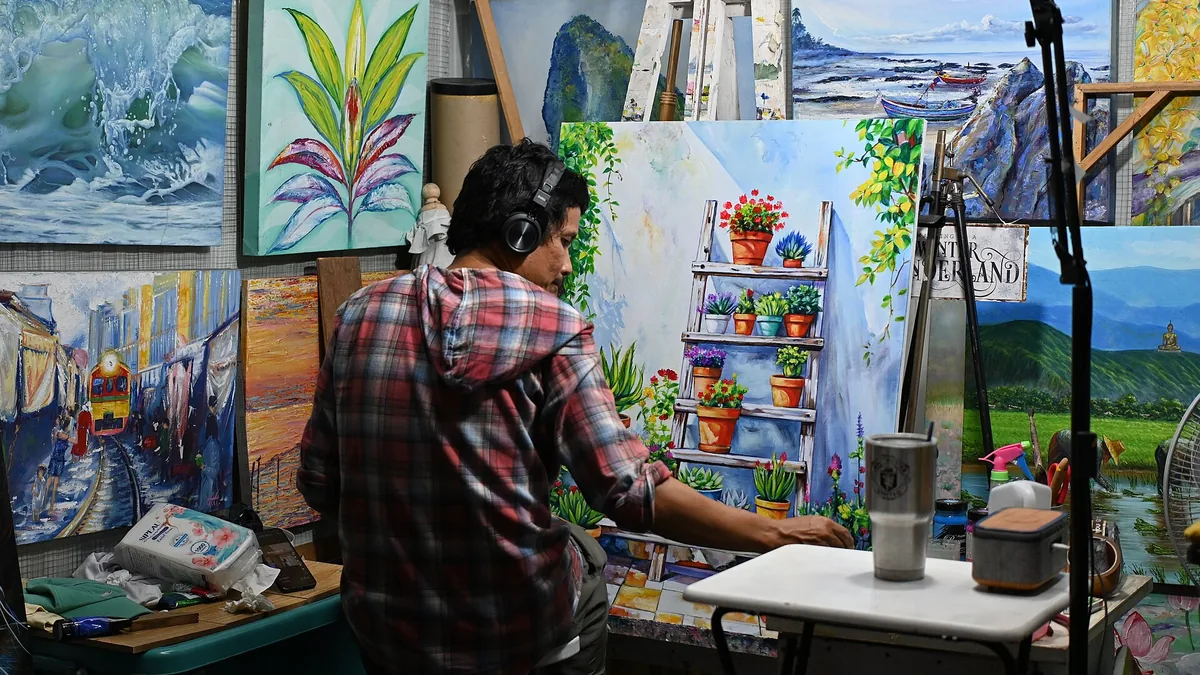
Use the table below as a shortlist. Read the full review of any tool before you put it on a quote, because the right choice depends on the room, the medium the client works in, and how much of the build you do yourself.
| Tool | Best for | What it does in an art room job |
|---|---|---|
| Planner 5D | AI room layouts and 3D views | Shows the client the finished room before ordering |
| SketchUp | Measured joinery and storage plans | Draws built-in storage and the easel wall to size |
| Foyr Neo | AI colour and material palettes | Tests wall colour, flooring and worktops on screen |
| Mabef | Professional studio easels | Supplies the stable H-frame easel the room is built around |
| Elkay | Wash-up sinks that survive paint | Deep stainless sinks with room for buckets and boards |
| IKEA BESTÅ | Modular art storage | Shallow and deep units for paper, canvas and paints |
| Blick Art Materials | Paints, surfaces and supply lists | Builds the client’s first stock list from real ranges |
| Philips Hue | Adjustable art-room lighting | Daylight scenes for colour work, warm scenes for evenings |
| Housecall Pro | Quotes, scheduling and invoicing | Runs the business side of every installation job |
What an art room installation startup actually builds
Most art rooms serve one main medium, with room for a second. A painter needs an easel wall, a palette table and a drying rack. A watercolourist needs a flat worktop, clean water close by and paper stored flat, away from damp. A printmaker needs a heavy bench, inking space and a wash-up area that can cope with ink and solvents. The founder’s first job on every site visit is to find out which of these the client really does, because a room built for the wrong medium is a room that never gets used.
The four elements stay the same whatever the medium. The easel decides where the light falls and where the painter stands, so it is placed first and everything else is fitted around it. The sink decides where the wet work happens, and it needs a waste route that can cope with paint and plaster, not just a handy corner. Storage decides whether the room stays usable after the first month, because paints, brushes, paper and half-finished canvases spread to fill whatever space they are given. Lighting decides whether the client can trust what they see, and it is the element most often left until last, which is exactly why it deserves to be planned first.
That brief is what separates an art room from its neighbours. A craft room installation startup works to a different brief, building a maker room around cutting machines, sewing and many small supplies, while an art room is built around one easel and one sink. A yoga room is planned around floor, mirrors and quiet, which is a different fit-out again. And an art room is not a school or a therapy studio: nobody is booking classes or running group sessions in it, so the tools below are fit-out tools, not booking and enrolment software.
How the nine tools were chosen
Every tool in this guide had to pass the same four tests. It had to fit a home art-making room, not a classroom or a commercial studio. It had to be a real product a founder can buy and use this week, not a concept or a demo. It had to work for a one-person startup, with a free tier or a modest subscription rather than an enterprise contract. And it had to earn its place in the room itself, either by improving the design, the build or the way the job is run.
Prices and plans change, so check the current price of any tool before you put it on a client quote. Where a tool has a free tier, treat it as a way to start, not as a promise that it will be enough for a full working year. The honest test is a real job: run the tool on one paid installation, note what it saved and what it missed, and only then make it part of your standard kit.
Design and planning tools
Design software is where an art room job is won or lost. A client who can walk through their room on screen before work starts will approve faster, change their mind while changes are still free, and forgive the dust later because they already know what the finished room looks like. The same layout-first method works for other home rooms: a yoga room installation startup plans floor, mirrors and light before buying anything, and an art room deserves the same discipline. These three tools cover that stage between them, and they are cheap compared with moving a sink or rebuilding a storage wall after the fact.
1. Planner 5D — Best for AI room layouts and 3D views
Planner 5D is the fastest way to show a client what their art room will look like before anything is ordered. You draw the floor plan from your site measurements, drop in an easel, a worktop, a sink unit and storage, and the AI design tools suggest layouts and finishes that fit the shape of the room. The 3D view then lets the client stand in the room on screen and see whether the easel catches the window light or sits in its own shadow.
Its strength is speed and clarity. A first draft can be ready the evening after a site visit, which keeps the job moving while the client is still excited about it. The renders are good enough to sell the layout, and the plan view is good enough to check door swings, walkways and the reach from easel to sink. For a founder who is also the salesperson, that combination is worth more than a perfect drawing that takes a week.
2. SketchUp — Best for measured joinery and storage plans
SketchUp is where the room stops being a picture and becomes a build. You model the storage wall, the easel position, the sink cabinet and the drying rack to real dimensions, and you can see at once whether a canvas store clashes with a door swing or a socket lands behind a wet bench. For built-in work, that kind of clash check is the whole point: it is far cheaper to move a socket on screen than to move it in a finished wall.
The learning curve is steeper than Planner 5D, but the free web version is enough to start, and the model library saves hours on standard units and fittings. A founder who builds the same storage wall three times can reuse the model, adjust the width, and send the joiner a drawing that already has the shelf spacing and drawer depths worked out. That reuse is where SketchUp pays for itself.
Use it alongside the sales render, not instead of it. Show the client the Planner 5D view to agree the look, then build the SketchUp model to agree the sizes. Keep both files with the job record, because the next time the client asks for a matching unit, the model is already there.
3. Foyr Neo — Best for AI colour and material palettes
Foyr Neo is the tool for the part of the job clients find hardest to imagine: colour. Its AI design tools generate palettes and renders from the room plan, so a client can compare a pale warm white against a mid grey or a deep green accent wall without painting a single test patch. For an art room, that matters more than in most rooms, because the wall colour changes how every painting in the room looks.
It also helps with materials. Test the worktop, the flooring and the splashback together on screen, and check how they look under daylight and under artificial light, since an art room is used at both. A worktop that looks clean in a morning render can glare under a task lamp, and a floor that looks warm on screen can turn cold under a north-facing window. Catching that on screen costs nothing.
The fit-out: easels, sink and storage
Once the design is agreed, the room is built around three physical decisions: the easel, the sink and the storage. Get these right and the room forgives a modest budget everywhere else. Get them wrong and no amount of clever lighting will save a room where the easel wobbles, the sink is too shallow and the canvas store is already full. These four suppliers cover that stage, and each one is chosen for a home room rather than a commercial studio.
4. Mabef — Best for professional studio easels
Mabef makes the kind of easel an art room is built around. Its H-frame studio easels are stable, adjustable and made to hold large canvases at a working height without flexing, which is the difference between a tool and a piece of furniture. A painter leaning into a canvas needs the easel to stay exactly where it was put, and a cheap easel that creeps or wobbles will quietly ruin more work than any other single item in the room.
Choose the easel to match the room and the medium. A full H-frame suits a dedicated room with space to step back, while a table easel suits a small room or a client who works small and flat. Check the weight, the footprint and the maximum canvas size before you order, and check that the floor is level where the easel will stand, because an easel on a sloping floor is a problem no amount of tightening will fix.
The easel is also the single best place to spend money in the whole fit-out. It is the tool the client touches every day, it lasts for decades when it is looked after, and it is the first thing a visiting painter will judge. Buy it once, buy it well, and build the room around it.
5. Elkay — Best for wash-up sinks that survive paint
Elkay makes deep stainless steel utility sinks that can take the daily punishment of an art room. Brushes, palettes, boards and buckets all need a basin deep enough to work in without splashing the wall, and stainless steel shrugs off paint, plaster and solvents that would stain or crack a domestic sink. A sink that is too shallow is not a minor annoyance; it is the reason paint ends up in the bathroom basin and the client stops using the room properly.
Plan the plumbing before you promise the position. A wash-up sink needs a waste route that can cope with paint solids, so fit a sediment or plaster trap and tell the client to scrape brushes and tip rinse water through it, never straight down the drain. Set the tap high enough to fill a bucket, fit a splashback that can be wiped clean, and keep a shelf above the sink for soap, rags and brush cleaner, so none of it ends up on the worktop.
6. IKEA BESTÅ — Best for modular art storage
IKEA BESTÅ is the practical answer to art storage, because it is modular, shallow enough for paper and deep enough for canvas, and it can grow with the client. Shallow drawers hold paper flat and visible, deep units hold stretched canvas and boards, and glass doors let the client see what they own without opening every cupboard. For a startup, that matters: you can specify the same system on job after job and know the sizes, the fixings and the lead time before you arrive.
Label everything and keep the system honest. Paints by medium, brushes by size, paper by weight, and nothing stored on top of the units where it will collect dust and fall behind them. Fix tall units to the wall, fit a plinth or legs so the floor can be cleaned, and leave one empty drawer in every room, because a full storage wall on handover day is a storage wall that fails within a month.
Keep solvents, mediums and anything flammable out of BESTÅ and in a separate metal cabinet, away from heat and out of reach of children. Modular storage is for the everyday stock; the hazardous stock gets its own home, its own label and its own place in the handover notes.
7. Blick Art Materials — Best for paints, surfaces and supply lists
Blick Art Materials is the supplier to build the client’s first stock list from, because its ranges cover the whole room: paints, brushes, canvas, paper, boards, mediums and studio equipment, in student and professional grades. That range is useful at handover, when the client asks what to buy first and does not want to learn the difference between ten brands of acrylic by trial and error. A short, honest list from a real supplier is worth more than a long list of guesses.
Grade matters, so say so plainly. Student paint is fine for practice and large studies, but professional paint holds its colour when mixed and thinned, and paper weight changes how watercolour behaves on the sheet. Match the list to the medium the client actually works in, keep it short enough to buy in one order, and write down what to reorder and when, so the room stays stocked after you leave.
Check availability and delivery before you promise a brand on a handover list. Ranges change and stock runs out, so confirm the key items are in stock, offer a named alternative for anything that is not, and never list a product you have not checked this month.

Light, colour and running the job
A finished art room is judged in two ways: by the light in it and by how the job was run. The lighting decides whether the client can trust their own eyes, and the admin decides whether the founder gets paid on time and gets the next job. These two tools cover that final stage, and both are chosen for a small business rather than a large firm.
8. Philips Hue — Best for adjustable art-room lighting
Philips Hue is the simplest way to give an art room the light it needs at different times of day. Adjustable white bulbs can be set to a cool daylight scene for colour matching, a neutral scene for drawing, and a warm dim scene for an evening in the room, all from the app or a wall switch. For a painter, that control is not a luxury: the same painting looks different under warm and cool light, and the wrong light is how colours go wrong.
Light the easel wall first and the rest of the room second. Put the brightest, most accurate light where the work happens, add a task lamp over the palette table, and keep the general room light soft enough not to glare on wet paint. Check the colour rendering of every bulb you specify, because a bulb with poor colour rendering will lie about the work under it, however bright it is.
Budget for the bulbs as a system, not one at a time, and make sure the client is comfortable with the app before you leave. Set up the scenes on handover day, name them plainly, and write them down: daylight for painting, warm for evenings, and dim for looking at finished work.
9. Housecall Pro — Best for quotes, scheduling and invoicing
Housecall Pro runs the business side of an art room installation startup: quotes, scheduling, invoicing and reminders in one place, so a job does not live in text messages and memory. One job record holds the site visit notes, the measurements, the quote, the deposit and the handover photographs, which means nothing is lost when the next job starts and the last one is still waiting for a final payment.
Its value is in the routine it enforces. Quote from the same template every time, take a deposit before ordering the easel and the sink, send a reminder the day before the install, and ask for a review at handover while the client is still standing in the finished room. That routine is what turns one good room into a pipeline of work, because the review and the photographs are the marketing for the next job.
What a good art room costs to set up
There is no single price for an art room, because the room, the medium and the client’s ambition all change the number. The honest way to talk about cost is in bands, and to show the client where the money goes. The easel is usually the single biggest item, followed by the sink and its plumbing, then the storage wall and the lighting. The design software is the smallest line on the quote and the one that saves the most money, because it stops the expensive items from being ordered twice.
Give every client an itemised quote, with the easel, sink, storage, lighting and labour as separate lines, plus a small contingency for what the site visit could not see, such as an uneven floor or a longer waste run. An itemised quote lets the client cut the storage wall without touching the easel, which is exactly the right order: the tools that touch the work every day are the last things to cheapen.
Never quote a room you have not measured. Photographs hide sloping floors, shallow sills and radiators in the wrong place, and every one of those changes the plan. Visit, measure, draw, then quote, and the price you give will be a price you can stand behind on handover day.
Installation checklist: six steps before handover
Run this checklist on every room, in this order, and do not hand over until all six are ticked. It is the same list whether the room is a small spare bedroom or a full garden studio, and it is the fastest way to catch the small failures that turn into call-backs.
- Easel tested: the easel stands level, holds the client’s largest canvas, and adjusts smoothly from sitting to standing height.
- Sink running: the tap fills a bucket, the waste runs clear, the sediment trap is fitted, and the splashback is sealed.
- Storage labelled: every drawer and cupboard is labelled, tall units are fixed to the wall, and one drawer is deliberately left empty.
- Light checked: the daylight scene, the warm scene and the task lamp are all set up and tested against the client’s own work.
- Ventilation confirmed: the room has fresh air for solvents and mediums, and the client knows when to open a window and when to step out.
- Handover pack left: the supply list, the lighting scenes, the care notes and the review request are all in the client’s hands.
Frequently asked questions
What is the best AI tool for an art room installation startup in 2026?
Planner 5D is the best starting point, because it turns a site visit into a 3D room the client can approve the same week. Pair it with SketchUp for measured joinery drawings and Foyr Neo for colour, and you have the whole design stage covered without an enterprise subscription. The best tool is the one you actually use on every job, so start with the layout software and add the rest as the work grows.
How much should an art room installation startup spend on AI tools?
Start with the free tiers of the design tools and pay for the first subscription only when a paid job needs it. A small founder can run the whole design stage on modest monthly subscriptions, and the money is better spent on the easel, the sink and the light, which are the items the client touches every day. Review the subscriptions every quarter and cancel anything that has not been used on a live job.
Is an art room the same as a craft room?
No. An art room is built around an easel, a sink, storage and lighting for painting and drawing, while a craft room is built around many making hobbies, with cutting machines, sewing and a much wider spread of small supplies. The two rooms share a planning method, but the brief, the tools and the budget are different, and a founder should quote them as different jobs.
Do I need planning permission to install an art room?
Converting a spare room inside a home does not usually need planning permission, but a garden studio, an extension or a change of use can. Rules vary by area, so check with the local planning authority before promising a garden room or any structural work, and put the answer in writing in the quote. Never guess on planning: a wrong guess can stop a job after the money is spent.
How do I price an art room installation job?
Price from an itemised quote after a site visit: easel, sink and plumbing, storage, lighting and labour as separate lines, plus a small contingency. Take a deposit before ordering the big items, agree in writing what is included and what is not, and charge for changes after the design is agreed. The cheapest quote is rarely the one that leaves the client happiest a year later.
Should an art room installation startup offer a maintenance plan?
Yes, and keep it simple: an annual visit to check the easel, clean the sink trap, test the lighting scenes and top up the storage labels. It gives the client a reason to call you first when they want more storage, and it gives you a reason to photograph the room a year on, when it looks lived in and loved. Price it as a flat visit fee, not as a percentage of the original job.
Bottom line
An art room installation startup succeeds on four decisions: the easel, the sink, the storage and the light. The nine tools in this guide cover those decisions from the first 3D layout to the final invoice, and none of them asks a one-person founder to become a software company. Design the room on screen, build it around a good easel and a deep sink, light it so the client can trust their eyes, and run every job from the same checklist.
If the client wants classes, enrolments and exhibitions rather than a room of their own, that is a different business altogether, and it belongs with art school startups, not with a fit-out. For everyone else, the brief is simple: a home room where the paint, the paper and the light are all within reach, and where the next painting starts the moment the last one is finished.

Keep what speaks to you.
Leave room for your own perspective.


