A well house is a small, insulated structure built over a wellhead. It keeps the wellhead, the pipes and the fittings out of the weather, stops them freezing in winter, and gives the owner a door they can open when something needs checking. It is a modest building with a serious job, and a startup that builds them well can stay busy for years.
Most homeowners only think about their well house twice: when the water stops in January, and when a builder quotes them for a replacement. A good installer thinks about it all year. The frost line, the slope of the ground, the swing of the door, the vent that stops condensation, the insulation that holds heat on the coldest night — every detail decides whether the structure does its job or becomes an expensive garden ornament.
This guide looks at the nine tools that help a new well house installation startup do that work properly, from the first sketch to the final invoice. They cover design, estimating, winning jobs, frost protection and the money side of the business, and each one earns its place by solving a problem this specific trade actually has.
Key Takeaways
- A well house shelters the wellhead itself, so every design decision starts with wellhead access, frost protection and a door that opens in any weather.
- Design tools that show the client a finished structure before a single board is cut prevent most of the expensive changes that eat a small job’s profit.
- Accurate estimating matters more than speed on small builds, because one missed line of insulation or roofing can erase the margin on a whole job.
- Frost protection is the product promise: insulation, a freeze alarm and a vented, dry interior are what the customer is really buying.
- The tools below were checked against the nearest neighbouring guides, and none of them appears in the well pump, shed, pool pump or pump house startup guides.

What a Well House Actually Is
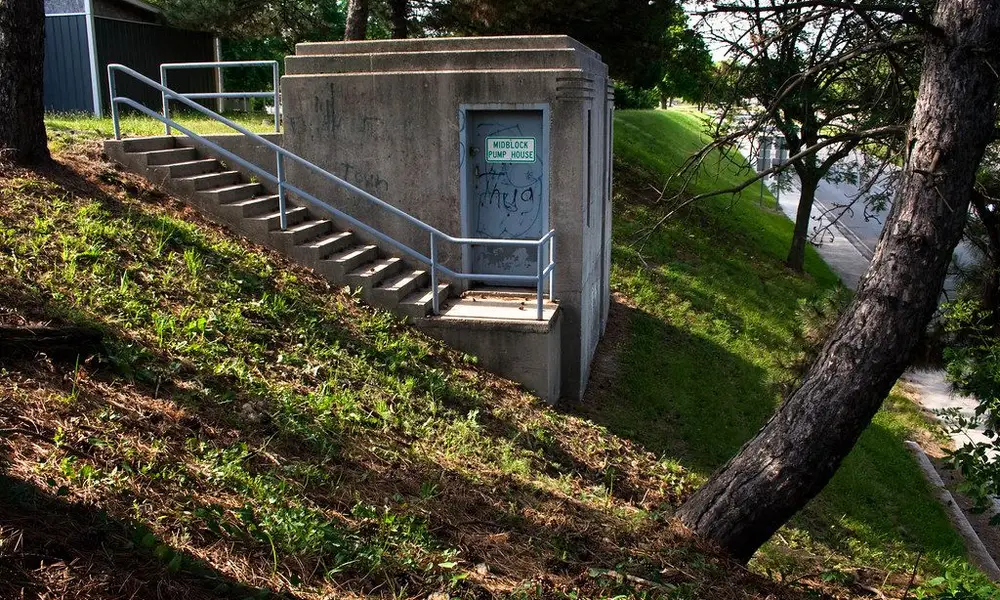
A well house is not a pump house, even though the two are often confused. A pump house shelters a pump and a pressure system. A well house shelters the wellhead — the top of the drilled well, the casing, the cap and the first stretch of pipe. The distinction matters on site, because the two structures have different doors, different ventilation and different reasons to open them. A pump house is opened to service machinery. A well house is opened to inspect the wellhead, check for frost, test the water and reach the shut-off.
The classic well house is a small timber or block structure, usually no bigger than a garden shed and often smaller, with a pitched roof, an insulated shell and a door wide enough for a person carrying a toolbox. Inside there is the wellhead, a pressure tank in some setups, a light, and enough clear space to kneel beside the casing. Outside there is a path, a drain that moves water away from the walls, and a roof that sheds snow instead of holding it.
Four things define a good one. The wellhead must be reachable without dismantling anything. The interior must stay above freezing through the coldest week of the year. The door must open when the ground is frozen and the hinges are stiff. And the cover — the roof and the walls — must keep rain and snow out while letting damp air escape. Get those four right and the rest is finish work. Get one wrong and the customer will be calling in January, which is the worst possible time to meet a new client.
That is also why the trade is a good startup niche. The jobs are small enough for a two-person crew, the materials are ordinary, the customers are motivated, and the work repeats: every rural property with a private well is a potential customer, and every old well house eventually needs replacing. The firms that do well are the ones that treat a small build with the same discipline as a big one, and that is exactly what the tools below are for. The closest neighbouring trade is the well pump installation startup, which installs the pump itself rather than the structure over the wellhead, so the two trades often refer work to each other.
The 9 Tools at a Glance
Here is the short version. The sections that follow explain what each tool does, where it helps a well house startup most, and what to watch out for before you pay for it.
| Tool | What it does | Best for |
|---|---|---|
| Chief Architect Home Designer | 3D design and construction drawings for small structures | Permits and client sign-off |
| Planner 5D | Fast 3D mock-ups and room layouts | Showing clients the finished build |
| Buildxact | Estimating, takeoffs and quoting | Accurate small-job pricing |
| Knowify | Job costing, budgets and progress billing | Knowing if a job made money |
| Houzz Pro | Leads, proposals and client management | Winning local work |
| ChatGPT | Drafting quotes, permits and customer messages | Paperwork and follow-up |
| MarCELL | Freeze, power and humidity alerts | Protecting finished well houses |
| Owens Corning FOAMULAR XPS | Rigid foam insulation for walls and floors | Frost-proofing the shell |
| QuickBooks Online | Invoicing, expenses and accounts | Running the business side |
Design Tools That Get the Build Right
Design is where a well house job is won or lost. The structure is small, so a mistake of a few centimetres can mean a door that will not open past the wellhead cap, or insulation that leaves a cold bridge straight to the pipe. Drawing the build before ordering materials is the cheapest insurance a startup can buy.
Chief Architect Home Designer
Chief Architect Home Designer is a home design program that produces proper 3D models and construction drawings, and for a well house startup it is the tool that turns a sketch on a notepad into something a building inspector and a client can both understand. You draw the walls, set the roof pitch, place the door and the wellhead, and the program generates the views, the dimensions and the material list. That matters because well houses are usually built under a permit or at least under local rules, and a clear drawing answers most of the questions an inspector will ask before they ask them.
The strength of the tool is its accuracy. Wall thicknesses are real, roof slopes are real, and the model shows whether the door clears the casing when it swings open. You can test the frost details too: where the insulation sits, how thick it is, and whether the floor is insulated or left open to the ground. For a startup, that accuracy is also a sales tool. A client who can see the finished structure, with the roofline and the door exactly as it will look beside their house, signs faster and changes their mind less often.
It is not the cheapest option, and it takes a few evenings to learn properly. A new founder should set aside time to build a standard well house template — one model with the usual dimensions, the usual door, the usual roof — and then copy and adjust it for each job. Once that template exists, a new design takes an hour rather than a day. The other habit worth building is to print or send the drawing with every quote, so the price and the picture always travel together and nobody argues later about what was included.
Planner 5D
Planner 5D is a lighter, faster design tool, and its job in a well house startup is to show the client the finished building before any money changes hands. Where Chief Architect Home Designer produces the drawings for the permit, Planner 5D produces the picture for the kitchen table. You can build a small structure in minutes, walk the client through it on a phone or a laptop, and change the cladding colour or the roof finish while they watch.
That speed is the point. Most well house customers are not buying a building; they are buying the end of a worry. They want to know the structure will look right next to the house, that the door will be where they expect it, and that the whole thing will not look like a box someone dropped in the garden. A quick 3D mock-up answers all three questions in one short meeting, and it does so without the startup spending half a day on drawings for a job that has not been won yet.
Planner 5D also has AI-assisted design features that suggest layouts and finishes, which is useful when a client has no strong opinion and wants guidance. The founder should still keep the engineering decisions in their own hands — the software does not know the local frost depth or the height of the wellhead — but for presentation and for quick options it is hard to beat. Use it early, in the first visit, and keep the detailed drawings for the job that follows. The general shed world has its own software habits, and the shed installation startup guide shows how a different kind of outbuilding is designed, which is a useful contrast when a client asks why a well house is not just a shed with a door.
Estimating and Job Costing
Small builds live or die on estimating. A well house uses little material, so a single missed item — a roll of membrane, a sheet of insulation, a vent, a length of treated timber — can take the whole margin. The two tools in this section exist to stop that happening, one before the job is priced and one while it is running.
Buildxact
Buildxact is an estimating and job management platform built for small builders, and it fits a well house startup because it treats a small job with the same rigour as a large one. You build the estimate from a price list, measure the takeoff from your drawing, and the software adds up the lumber, the insulation, the roofing, the fixings and the labour. The result is a quote that is complete, consistent and easy to explain to a client who asks why the number is what it is.
The most valuable habit Buildxact encourages is the template. A well house has a short, stable list of materials, and once that list is priced properly, every new quote starts from a known-good base instead of a blank page. The founder updates the prices when suppliers change them, and the template stays honest. The software also produces a professional quote document, which matters more than it sounds: a tidy, itemised quote is often the difference between a customer choosing your firm and choosing the cheaper builder whose quote is a single number on a text message.
Buildxact also tracks the job once it starts, so the estimate and the actual spend sit side by side. That comparison is where a new business learns. If the insulation always costs more than the estimate says, the template is wrong and the founder can fix it before the next quote. If the labour always runs long on the roofing, the schedule needs adjusting. A startup that reviews that comparison after every job will be pricing accurately within a season, and accurate pricing is what keeps a small trade alive.
Knowify
Knowify is a job costing and project management tool for small contractors, and its role in a well house startup is to answer the one question that matters after the build: did this job make money? It tracks budgets against actual costs, handles progress billing, and keeps purchase orders, timesheets and invoices in one place. For a business doing small jobs in quick succession, that single view is worth more than any single feature.
The strength of Knowify is that it ties the money to the job rather than to the month. A founder can open a finished well house job and see exactly what the materials cost, how many hours the crew spent, and what was billed at each stage. That makes it easy to spot the jobs that looked profitable and were not, which is the most common surprise in a new building business. It also makes progress billing painless: the client pays a deposit, a stage payment when the shell is up, and the balance on completion, and Knowify keeps each invoice linked to the job it belongs to.
There is a learning curve, and a one-person startup may find the full setup more than it needs in the first month. The sensible approach is to start with the basics — one budget per job, one invoice per stage — and add the deeper features as the business grows. The discipline it teaches is the point: a well house startup that knows its true cost per job can price with confidence, turn down the jobs that do not pay, and grow without accidentally working for free.
Winning Work and Keeping Clients
A well house startup does not need a national brand. It needs a steady flow of local jobs, a reputation for turning up when promised, and customers who recommend it to their neighbours. The two tools in this section cover the front of the business: finding the work, and keeping the customer informed while it is done.
Houzz Pro
Houzz Pro is a business platform for home improvement professionals that combines lead generation, proposals, client communication and invoicing. For a well house startup, its value is that it puts the business where homeowners are already looking for a builder. A profile with photos of finished well houses, honest reviews and clear service descriptions will bring enquiries from people who have already decided they need the work done.
The proposal tool is the part that earns its keep. A Houzz Pro proposal can carry the drawings, the specification, the price and the terms in one document the client can approve online, which shortens the gap between the first visit and the signed job. That gap is where small builders lose work: the customer talks to three firms, the slowest one to follow up loses, and the winner is often the one whose paperwork arrived first rather than the one whose price was lowest.
Houzz Pro also keeps the client conversation in one thread, which prevents the lost messages and forgotten promises that cause most customer complaints. Photos of progress, messages about delivery dates, and the final invoice all sit in the same place. A startup should still answer the phone, because a worried homeowner with a frozen pipe wants a voice, not a portal — but for everything else, a single organised thread is a real advantage. The cost is a monthly subscription, so the founder should treat it as a marketing expense and check each quarter whether the jobs it brings are worth more than the fee.
ChatGPT
ChatGPT is a general-purpose AI assistant, and in a well house startup it does the writing that would otherwise eat the founder’s evenings: quote cover notes, permit application wording, customer follow-up messages, website pages, and the small print of a job specification. It is not a specialist building tool, and it should never be trusted with a structural decision, but for words it is the fastest employee a new business will ever have.
The practical uses are unglamorous and valuable. A founder can draft a standard reply for the five questions every customer asks — how long will it take, what does it cost, will it freeze again, do I need a permit, what happens if the wellhead needs access — and then tailor the answer to each job. ChatGPT can turn a rough list of materials into a tidy specification, turn a site note into a polite email, and turn a finished job into a short case study for the website. None of that is difficult work, but all of it takes time, and time is the scarcest thing in a new trade business.
The rule for using it well is simple: the founder supplies the facts, and the AI supplies the phrasing. Never let it invent a price, a dimension, a frost depth or a regulation. Check every number it produces against the estimate and the drawing, and read every customer message before it is sent. Used that way, it takes an hour of paperwork down to fifteen minutes, and those saved hours are the difference between a founder who quotes five jobs a week and one who quotes two.
Frost Protection and the Wellhead Itself
Everything else in this guide supports the build. This section is the build. Frost protection is the reason a well house exists, and the two entries here are the ones the customer will judge the startup by when the first hard winter arrives.
MarCELL
MarCELL is a remote monitoring device that watches temperature, humidity and power at a property and sends an alert to the owner’s phone when something goes wrong. For a well house, that means a warning when the interior temperature falls towards freezing, or when the power to a heater fails, or when humidity climbs high enough to cause condensation and rot. It is the one product in this list that keeps working after the builders have left.
A startup can offer a MarCELL unit as part of the build, installed inside the finished well house and set up on the customer’s phone before handover. That turns a one-off construction job into an ongoing service: the customer has proof the structure is doing its job, and the builder has a reason to call in the spring and ask how the winter went. It also protects the builder’s reputation, because a customer who gets a warning in time can act before a pipe bursts, and a burst pipe is the kind of event that ends with a blame argument rather than a referral.
The device needs a mobile signal and a power supply, so the founder should check coverage on the site before promising it, and should be honest that it is a monitor, not a heater — it warns, it does not warm. Fitted with that caveat, it is the most convincing frost protection a startup can sell, because it does not ask the customer to trust a claim about insulation. It shows them the temperature, day after day, all winter long.
Owens Corning FOAMULAR XPS
Owens Corning FOAMULAR XPS is a rigid foam insulation board, and it is the material that makes a well house frost-proof rather than merely sheltered. Fitted to the walls, and ideally under the floor and around the base, it slows heat loss so effectively that the small amount of warmth from the ground and the well water is enough to keep the interior above freezing. It is not software, and it has no AI features, but it is the product decision that decides whether the structure works.
The reason to name a specific product is that not all insulation behaves the same in a damp, cold, ground-level building. FOAMULAR XPS resists moisture, holds its insulating value when damp, and can be cut to fit the awkward spaces around a wellhead casing. A startup that specifies it by name is making a promise the customer can check, and a promise that can be checked is worth more than a vague line in a quote that says insulation included.
The details matter. Boards must be cut tight, joints taped or sealed, and the insulation must run continuously, because a single gap becomes a cold bridge that defeats the rest of the work. The floor deserves the same attention as the walls: heat rises from the ground, and an uninsulated floor is the most common reason a well house that looks well built still freezes. A founder who photographs the insulation going in, and shows those photos to the client at handover, is doing the best marketing in this trade — proof, not promises. The neighbouring trade that shelters a pump rather than a wellhead faces the same cold, and the pump house installation startup guide is worth reading alongside this one to see where the two builds overlap and where they part ways.
Money In, Money Out
A trade business fails on cash flow more often than on craftsmanship. The work is seasonal, the materials are bought before the customer pays, and the winter rush arrives all at once. One solid accounting tool, used every week without fail, is enough to keep the business honest.
QuickBooks Online
QuickBooks Online is cloud accounting software that handles invoicing, expenses, bank reconciliation and tax preparation, and for a well house startup it is the bookkeeping system that keeps the founder’s evenings free. Invoices go out from the phone on site, expenses are photographed and logged as they happen, and the bank feed reconciles itself against the books. The AI-assisted features categorise recurring expenses and flag duplicates, which removes the monthly chore of sorting a pile of receipts.
The habit that makes it work is weekly, not monthly. A founder who spends twenty minutes every Friday checking the invoices, the unpaid bills and the bank balance will never be surprised by a cash shortfall, and will always know which customers still owe money. That knowledge is power in a seasonal trade: it decides whether the business can afford to take on an extra crew member before winter, or whether it should wait until spring.
QuickBooks Online also produces the reports a growing business needs — profit by job, expenses by category, and the tax figures an accountant will ask for — without the founder having to build a spreadsheet. The subscription is a real cost, and a brand-new startup doing a handful of jobs could manage with a simpler tool for the first month. But once the job count rises above a handful, proper accounts pay for themselves in saved time and avoided mistakes, and they make the business look serious to banks, suppliers and the customers who ask for a proper invoice.
Your First-Job Checklist
Before the first well house job, run through this list. It is the difference between a startup that looks organised and one that is making it up as it goes along.
- Visit the site and measure the wellhead, the frost depth and the access route before quoting anything.
- Draw the structure, agree the drawing with the client, and attach it to the written quote.
- Price the job from a template, including insulation, membrane, vent, fixings and the door hardware.
- Confirm the permit position in writing, and keep a copy of whatever the local authority says.
- Fit a freeze monitor, photograph the insulation, and hand the photos to the customer at completion.
- Invoice on the day the job finishes, and follow up on any unpaid balance within a week.
Frequently Asked Questions
What is a well house installation startup?
It is a small building business that designs and builds insulated structures over wellheads. The work covers the design, the permit paperwork, the construction of the shell, the insulation and ventilation, and the handover, including frost protection and access for future servicing.
How is a well house different from a pump house?
A well house shelters the wellhead — the top of the well, its casing and cap — while a pump house shelters a pump and pressure system. The two structures look similar from outside, but they have different doors, different ventilation and different reasons to open them, and a builder should never confuse the two when quoting.
How much does a well house installation cost?
Costs vary widely with size, materials, access and local rules, so no honest guide can give a single number. The reliable way to price a job is a measured takeoff from a drawing, a priced materials template, and a written quote that lists what is included — which is exactly what the estimating tools in this guide are for.
Do I need a permit to build a well house?
That depends on local rules, and the answer changes from one area to another. Some places treat a small well house as a minor structure with no permit needed, while others require approval, especially near a water source. Check with the local authority before building, and keep the answer in writing.
How do I stop a well house freezing in winter?
Use continuous rigid insulation on the walls and floor, seal the joints, vent the interior so damp air escapes, keep the door closing properly, and fit a freeze monitor that alerts the owner before the temperature reaches freezing. No single measure is enough on its own; the combination is what works.
What should a new well house startup buy first?
Start with the design and estimating tools, because accurate drawings and honest quotes win work and protect margins. Add the job costing and accounting tools once the first jobs are running, and offer frost monitoring as part of every handover from the very first build.
The Bottom Line
A well house installation startup is a small trade with a clear promise: a wellhead that stays dry, unfrozen and reachable in every season. The nine tools in this guide cover the whole job, from the first drawing to the last invoice, and the ones that matter most are the ones that protect that promise — the design that gets the door and the casing right, the estimate that prices the insulation properly, and the monitor that proves the building works all winter. Build that way, photograph the work, invoice on time, and the second winter will bring the best advertising a small builder can get: a neighbour asking who built the well house that never froze.

Keep what speaks to you.
Leave room for your own perspective.