
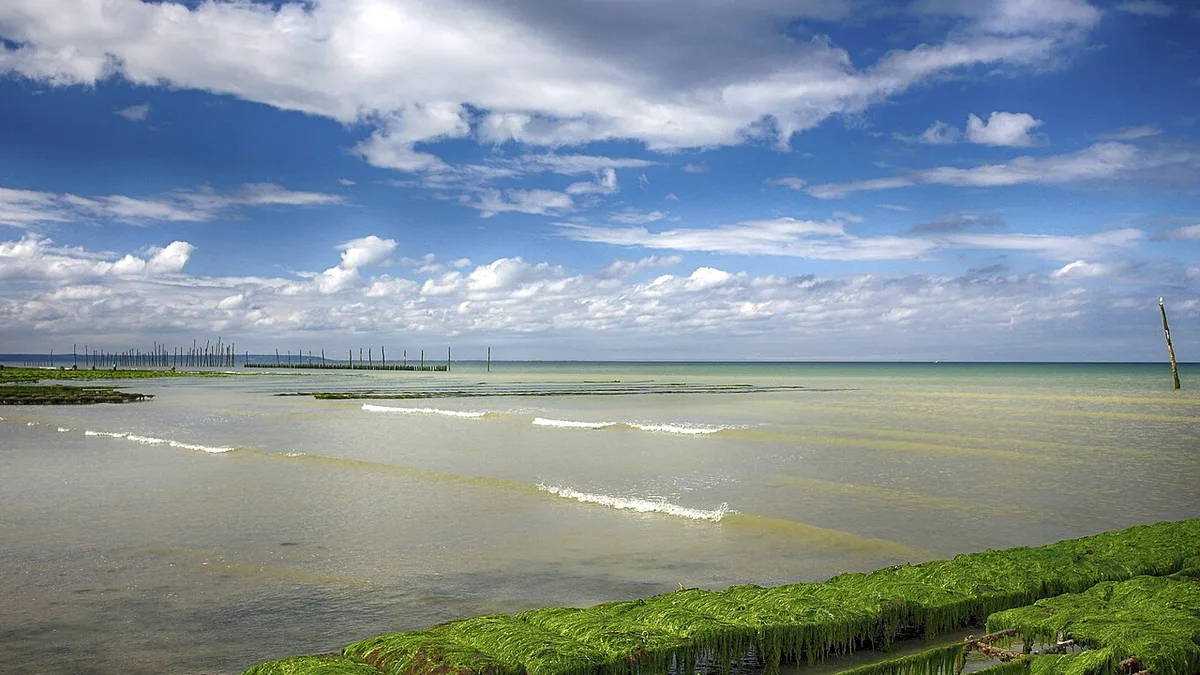
An oyster farm is a shore business before it is anything else. The oysters live on the intertidal shore, on low steel trestles and in mesh bags that sit above the mud, and everything a new startup does happens around the tide. Twice a day the water comes in and covers the trestles, and twice a day it goes out and leaves them standing in the air, ready for a crew to walk out to them with a barrow and a grading table. That rhythm is the whole business. A founder who plans around the tide can run a productive farm with a small crew and a modest budget,
The oyster itself does most of the growing. Oysters filter what the tide brings past them, so there is no daily round of carrying food out to the stock, and no store of feed to buy, mix and keep dry. The farmer’s work is different: setting the trestles level, keeping the bags clean and turned, sorting the oysters by size and shape as they grow, and holding the finished oysters in clean water until they are ready to sell. It is hands-on, muddy, tidal work, and the tools that help most are the ones that respect that rhythm rather than trying to replace it. A salmon farm installation startup plans around deep water and moored structures that stay afloat in all weathers, but an oyster farm plans around the shore, the tide table and the walk out to the trestles at low water.
This guide covers the nine tools that fit the oyster build best in 2026. Each one handles one part of the job: finding the ground, laying out the trestles, managing the bags, settling the spat, grading the growing stock, working the tides, timing the harvest, checking the depuration water and keeping the records straight. None of them is a shortcut around the work itself. Used together, they give a small startup a clear picture of what it owns, what stage every batch of oysters has reached, and what the next tide allows it to do.
Key takeaways
- An oyster farm grows oysters on intertidal trestles and in mesh bags, not in deep water, so every plan starts with the shore and the tide table.
- Spat comes from a hatchery and is settled onto shell before it goes out to the trestles, which makes the seed stage a controlled nursery job rather than a gamble on wild settlement.
- Bag work is the daily job: turning, shaking and cleaning the bags keeps the oysters growing evenly and stops the mesh from choking.
- Grading by size and shell shape decides what sells, what goes back for another season and what is held for the next order.
- Depuration is the final gate: finished oysters are held in clean, checked water until they pass, and no batch should leave the farm before it does.
The nine tools at a glance
| Tool | What it does | Buy it when |
|---|---|---|
| TrestleSite AI | Surveys the intertidal ground and maps the lease | Before you sign the lease |
| TrestlePlan AI | Lays out trestle rows, spacing and access tracks | Before the first trestle goes in |
| BagCulture AI | Plans bag sizes, mesh grades and turning rounds | With the first trestle order |
| SpatSettle AI | Times hatchery spat settlement onto shell | Before the first seed order |
| OysterGrade AI | Grades oysters by size, shape and cup depth | At the first grading |
| TideWork AI | Plans crew days around low-tide windows | Before the first working week |
| OysterHarvest AI | Times the harvest to orders and tide windows | Before the first sale |
| DepuraCheck AI | Checks depuration water and purge timing | Before the first batch is held |
| TraceShell AI | Tracks every batch from seed to buyer | From the first day of trading |
Setting up the shore: site, trestles and bags
The first three tools decide where the farm sits and how it is built. Get the ground wrong and every later job is harder: trestles sink into soft mud, bags sit in still water that starves the oysters, and the crew spends its working hours walking further than it needs to. Get the ground right and the farm almost runs itself between tides, with the crew walking a short, firm track out to rows that drain cleanly and catch the flow.
1. TrestleSite AI for intertidal surveys and lease mapping
TrestleSite AI starts with the ground itself. A founder walks the shore at low water with a phone, and the tool records the ground underfoot, the slope of the shore, the way the water drains off the mud and the patches of firm ground where a trestle will stand level for years. It pairs those notes with tide data and the lease boundary, so the map it draws shows not just where the farm is allowed to sit, but where the farm will actually work. A lease that looks generous on paper can hide a hollow that holds stale water, or a soft patch where trestles sink a little further every season, and both are cheaper to find before the lease is signed than after the first trestles are in.
The survey matters because an oyster trestle is a fixed structure on a moving shore. The tide covers it and uncovers it twice a day, and the ground beneath it shifts a little with every storm. TrestleSite AI flags the ground that will hold a level trestle through a winter, and marks the ground to avoid: soft sinking mud, channels that scour around the legs, and low spots where water sits and warms in summer.
For a startup, the tool earns its keep at the lease stage. It turns a walk on the shore into a dated, mapped record that can be shown to the leaseholder, the regulator and the bank, and it gives the founder a clear answer to the first question any of them will ask: why this ground, and why these rows. A farm that can show its ground was surveyed, its drainage was checked and its access was planned looks like a business, not a hope.
2. TrestlePlan AI for trestle rows, spacing and access
TrestlePlan AI takes the surveyed ground and turns it into a working layout. It draws the trestle rows across the firm ground, sets the spacing between rows wide enough for a barrow and a grading table, and lines the rows up with the flow of the tide so the water runs past the bags rather than sitting between them. The layout it produces is a practical one: rows a crew can walk without stepping on the stock, turning space at the end of each row, and a clear track from the shore to the furthest trestle. A layout that looks tidy on a screen but leaves no room to turn a barrow is a layout that will be rebuilt within a year.
Spacing is the decision that shapes everything else. Rows set too close together shade each other and slow the flow, so the oysters on the inner rows grow more slowly than the ones on the edge. Rows set too far apart waste good ground and make the crew walk further for every bag they turn. TrestlePlan AI models the flow and the walking distance together, so the spacing it suggests balances growth against effort, and it shows what each change costs: move the rows a metre wider and the farm holds fewer trestles, but the crew finishes the turning round an hour earlier. That trade-off is the kind of decision a founder should make with numbers in front of them, not by guessing on the shore.
3. BagCulture AI for mesh bags, turning and cleaning
BagCulture AI runs the part of the farm the crew touches every day. Oysters grow in mesh bags laid on the trestles, and the mesh size, the number of oysters in each bag and the turning round all decide how fast they grow. A bag packed too full starves the oysters in the middle, and a bag left unturned lets silt settle and the mesh clog, so the water stops flowing through and growth stalls. BagCulture AI sets the stocking for each bag size, picks the mesh grade for the size of oyster in it, and builds the turning round: which rows get turned this tide, which get shaken out, and which get their mesh brushed clean.
Turning is the work that makes the difference between a good oyster and a poor one. An oyster that lies still in a bag grows a long, thin shell, while an oyster that is tumbled and turned grows a deep, cupped shell that buyers pay more for. BagCulture AI tracks how long each batch has sat since its last turn, and flags the batches that need turning before they start to grow the wrong shape.
The tool also keeps the bag stock straight, which matters more than it sounds. A farm with several year-classes on the trestles at once can easily lose track of which bag holds which batch, and a batch that is graded a month late is a batch that has spent a month growing at the wrong density. BagCulture AI labels every bag by batch, size and date, and prints the labels the crew sticks on the bags at the shore. When the grading table comes out, the crew knows exactly what it is sorting.

Seed, growth and grading
The middle three tools cover the living part of the farm: the seed that arrives from the hatchery, the growth that happens on the trestles, and the grading that sorts the crop as it grows. This is the stage where a startup either builds a steady supply of well-shaped oysters or ends up with a muddle of sizes that no buyer wants in one order. The tools do not grow the oysters, but they keep the batches separate, the sizes known and the work done on time.
4. SpatSettle AI for hatchery spat and settlement timing
SpatSettle AI handles the youngest oysters on the farm. The seed arrives from the hatchery as spat, tiny oysters that need to settle onto shell before they can go out to the trestles. The tool plans the settlement: how much shell to prepare, how long the spat needs in the settlement tanks, and when the settled seed is strong enough to move out to the bags. Settlement is a delicate stage, and a batch that goes out too early is a batch that washes off the shell at the first strong tide, while a batch held too long crowds in the tanks and grows slowly.
Timing is everything at this stage, and SpatSettle AI ties the hatchery delivery to the tide table. Seed that arrives on a spring tide can go out to the trestles on the next low water, while seed that arrives on a neap tide may need to wait in the tanks for the bigger tides to return. The tool shows that window in advance, so the founder orders the seed for a week when the tides and the crew are both available, rather than for a week when the seed sits in tanks while the crew is busy elsewhere.
The nursery stage is also where the farm’s records begin. Every batch of settled seed gets a number, a date and a hatchery name, and that number follows the oysters through every bag, every grading and every sale. A farm that can trace a batch back to its settlement date can answer a buyer’s question about the oysters in front of them, and can spot a weak hatchery delivery before it becomes a weak harvest. SpatSettle AI starts that record at the very beginning, when it is cheapest to keep.
5. OysterGrade AI for size, shape and cup depth
OysterGrade AI runs the grading table. As the oysters grow, the crew lifts the bags, tips the oysters out and sorts them by size and shape, and the tool turns that sorting into a plan. It sets the size bands the farm will sell, shows how many oysters sit in each band, and flags the batches that have outgrown their bags and need splitting into two. A grading that is done on time keeps the fast growers from crowding the slow ones, and it keeps the farm’s stock spread across the sizes buyers actually order, rather than bunched in one size that nobody wants this month.
Shape matters as much as size for an oyster. Buyers pay for a deep cup and a neat, rounded shell, and the tool records the shape of each batch alongside its size, so the founder can see which batches are shaping well and which need more turning. A batch that is growing long and thin needs turning more often, and a batch that is already well cupped can be left alone. OysterGrade AI makes that judgement visible: the crew can see on the screen which batches need attention and which are on track, instead of relying on memory and a glance at the bag. A carp farm installation startup grades its stock in still fresh water with a different set of problems, but the principle is the same: grade on time, and the crop stays saleable.
6. TideWork AI for low-tide crew days
TideWork AI plans the working week around the one thing the farm cannot change: the tide. Every job on the trestles can only be done at low water, and the low-water window moves a little later every day, so a crew that starts at eight o’clock on Monday may find the water already coming back by ten on Friday. The tool lays the week’s jobs against the tide table, shows the working window for each day, and builds the crew rota around it: which days are long working days, which are short ones, and which days the tide gives no window at all and the crew works on the shore instead.
The tool earns its keep on the days the tide is awkward. A spring tide gives a long, low window and a big working day, while a neap tide gives a short window and a day when only the nearest rows are reachable. TideWork AI flags those days in advance, so the founder does not promise a buyer a grading that the tide will not allow, and does not book a crew for a day when the water never leaves the trestles. It also plans the heavy jobs for the best tides: trestle repairs, new rows and big turning rounds all go on the spring tides, and the small jobs fill the neap days. A farm that plans this way wastes fewer crew days and breaks fewer promises.
Harvest, depuration and sale
The last three tools cover the end of the cycle: lifting the finished oysters, holding them in clean water until they pass, and selling them with records a buyer can trust. This is the stage where the farm’s reputation is made. A buyer who gets well-graded oysters, on time, with clean paperwork, orders again, and a buyer who gets a mixed bag with no records does not. The tools keep the harvest timed, the water checked and the paperwork straight.
7. OysterHarvest AI for harvest timing and orders
OysterHarvest AI times the harvest to the orders coming in. A finished batch is only worth harvesting when a buyer wants it, and the tool matches the stock list against the order book, showing which batches are at saleable size, which buyers have ordered them and which tide windows allow the crew to lift them. It stops the farm from harvesting early, when the oysters are still a size band short of the price the buyer will pay, and it stops the farm from harvesting late, when the oysters have sat too long and the buyer has gone elsewhere.
The harvest itself is a tidal job like all the others, and the tool plans it around the low water. It lists the bags to lift, the order they come in, and the crew needed for each tide, so the lifting round is done before the water comes back and the oysters are on the shore, graded and packed, while they are still fresh from the trestles. It also plans the packing: the boxes, the labels and the chilled transport, so a batch lifted at dawn is on its way to the buyer the same day rather than sitting in the sun while someone looks for boxes.
8. DepuraCheck AI for depuration water and purge timing
DepuraCheck AI runs the last gate before sale. Finished oysters are held in tanks of clean, checked water, where they purge themselves of anything they picked up on the shore, and the tool watches that water: its temperature, its flow, its clarity and the time each batch has spent in it. A batch that has not purged for long enough is a batch that should not leave the farm, and the tool makes that decision a matter of record rather than a matter of judgement on a busy morning.
The checks are routine, but they are the checks a buyer and a regulator will both ask about. DepuraCheck AI logs every reading against the batch number, flags any reading that falls outside the set range, and holds the batch until the readings come back clean. It also tracks the tanks themselves: which tank holds which batch, when each tank was cleaned, and when the water was changed. A tank that is not cleaned on schedule is a tank that will let a batch down, and the tool makes sure the cleaning is done before the next batch goes in, not after it fails.
9. TraceShell AI for batch records from seed to buyer
TraceShell AI keeps the record that ties the whole farm together. Every batch gets a number at settlement, and the tool follows that number through every bag, every grading, every tank and every sale, so the founder can answer the question every buyer asks sooner or later: where did these oysters come from, and what happened to them on the way. A batch that can be traced back to its seed delivery, its trestle rows and its depuration tank is a batch a buyer can trust, and a batch that cannot is a batch the buyer will think twice about.
The record is practical, not decorative. It shows which batches are on which trestles, how long each has been growing, what it graded at last time and when it is due for its next grading. It also shows the money: what each batch cost in seed, bags and crew time, and what it is worth at its current size. A founder who knows the cost of each batch can price with confidence, and can spot the batches that are costing more than they will ever sell for before they eat another season of work.
Startup checklist
- Walk the shore at low water and survey the ground before signing the lease, and mark the firm ground, the drainage and the access track.
- Lay out the trestle rows with room for a barrow and a grading table, and line the rows up with the flow of the tide.
- Order the bags and mesh grades for the sizes you will actually grow, and label every bag by batch, size and date.
- Book the hatchery seed for a week when the tides and the crew are both available, and settle it before it goes out to the trestles.
- Build the crew rota around the tide table, and put the heavy jobs on the spring tides and the small jobs on the neap days.
- Hold every finished batch in checked depuration water until it passes, and keep the record against the batch number.
Frequently asked questions
How much does it cost to start an oyster farm?
Most small oyster farms start with a leased stretch of intertidal shore, a few dozen trestles, a set of mesh bags, a grading table and a small depuration setup, and the cost is mostly in the trestles, the lease and the first seed order. The tools in this guide are a small part of that budget, and a founder should price the trestles and the lease first, then buy the tools that cover the jobs the farm will actually do in its first year. A farm that buys every tool before it has trestles in the mud has spent its money in the wrong order.
Is an oyster farm the same as a mussel farm?
No. A mussel farm installation startup grows a different shellfish by a different method, and an oyster farm grows oysters on intertidal trestles and in mesh bags, with hatchery spat settled onto shell, bag turning for shell shape and depuration before sale. The two farms share the salt water and the depuration step, but the build, the daily work and the tools are different, and a founder who copies the other farm’s plan will build the wrong farm.
Do oysters need to be fed?
No. Oysters filter what the tide brings past them, so there is no daily round of carrying food out to the stock and no feed store to keep. The farmer’s job is to keep the bags clean and turned so the water flows through them, and to keep the oysters at a density where every oyster in the bag gets its share of the flow. A bag that is packed too full or left unturned starves the oysters in the middle, even though the tide is bringing food past the farm all day.
When should I grade my oysters?
Grade when the fastest growers in a batch have outgrown the bag, or when the batch has been sitting at one density for a full growing season. The grading table is where the farm learns what it owns, and a grading done on time keeps the sizes spread across the bands buyers order, while a grading done late leaves the crop bunched in one size. Most farms grade each batch two or three times before harvest, and the first grading is the one that tells the founder whether the seed settled well.
What is depuration, and can I skip it?
Depuration is holding finished oysters in clean, checked water so they purge themselves before sale, and it cannot be skipped. It is the final gate between the farm and the buyer, and the water, the time and the readings all need to be recorded against the batch. A batch that has not been through depuration should not leave the farm, however good it looks on the grading table, and a buyer who asks for the depuration record should be able to see it.
Do I need all nine tools to start?
No. Start with the tools that cover the jobs you are about to do: the site survey and the trestle layout before the build, the bag and spat tools when the first seed arrives, and the harvest, depuration and traceability tools before the first sale. A farm that buys the grading and harvest tools before it has trestles in the mud is spending money on jobs it cannot do yet, and a farm that waits until the first sale to buy its traceability tool will spend its first month rebuilding records it should have kept from the start.
The bottom line
An oyster farm is a tidal business, and the tools that suit it are the ones that work with the tide rather than against it. Survey the ground, lay the trestles out with room to work, keep the bags turned and clean, settle the spat on time, grade as the oysters grow, plan the crew around the low water, harvest to the orders, hold every batch in checked water until it passes, and keep the record from seed to buyer. Do those nine things well, and a small crew on a modest stretch of shore can build a farm that sells well-shaped oysters, on time, to buyers who come back.

Keep what speaks to you.
Leave room for your own perspective.


