The best AI tools for outdoor storage box installation startups in 2026 turn a small resin deck box, a patio full of cushions and a customer who only knows roughly where the box should sit into a booked, priced and finished job before the first hinge is screwed in. A storage box installation looks simple from the driveway, and it turns awkward the moment the patio is measured, because a box that should take one hour can take three when the ground slopes, the lid cannot open fully against a wall, or the customer changes their mind about the size halfway through the visit. The right tools watch all of that at once, so a small crew can quote honestly, arrive with the right box and fixings, and finish on time while still giving each customer the feeling that their patio is the only job that matters that day.
An outdoor storage box installation startup is really several small services sharing one van, one phone number and one reputation. Every week brings a different mix of work: compact resin boxes for cushions and garden tools, large deck boxes that double as extra seating, weatherproof boxes for pool toys and patio gear, wooden storage benches that need careful sealing, and the repair jobs where a warped lid, a rusted hinge or a cracked base needs a professional to put it right. When any part of that mix is handled in a separate notebook, a separate app or a separate inbox, the whole week wobbles. A missed message becomes a lost booking, a crew sent with the wrong size box becomes a wasted day, and a quote that forgets delivery, assembly or weatherproofing becomes a job that loses money.
This guide compares nine tools that fit an outdoor storage box installation startup, from AI design and measurement to 3D scanning, quoting, scheduling, customer records and payments. Every tool was judged on the same questions a founder actually asks: does it save time on a real storage box job, does it work from a phone on a patio, does it pay for itself within the first few jobs, and can a two-person crew learn it without a training course. The result is a practical stack, not a wish list, built for a business that earns its money outdoors, in all weathers, one patio at a time.
Key takeaways
- Measure before you order: Magicplan and Matterport turn a phone scan into accurate patio dimensions, so the box, the lid swing and the access route are planned around real walls, slopes and doorways instead of guesses.
- Sell the finished patio with a visual: Planner 5D produces 3D layouts the customer can approve before a single box is delivered, which cuts size changes and second visits.
- Quoting is where storage box startups lose money, so Jobber and FreshBooks matter more than any design tool, because a quote that forgets delivery, assembly or weatherproofing turns a good job into a loss.
- Calendly and HubSpot keep the diary full and the follow-up honest, from the first site visit to the final invoice, without the founder chasing customers by phone.
- Start with three tools, not nine: one measurement tool, one quoting tool and one job-management tool, then add the rest only when a real job shows you need them.

Best AI Tools for Outdoor Storage Box Installation Startups at a Glance
| Tool | Best for | Starting price | Standout feature |
|---|---|---|---|
| Planner 5D | 3D patio layouts and box placement | Free plan; paid from around $9.99 per month | Quick 3D patio designs the customer can approve |
| Magicplan | Measuring patios from a phone | Free plan; paid from around $9.99 per month | Floor plans and measurements from a phone scan |
| Matterport | 3D scans and site records | Free plan; paid from around $69 per month | Detailed 3D scans that settle size and access disputes |
| Jobber | Quoting, scheduling and invoicing | From around $49 per month | Quotes, jobs and payments in one installer workflow |
| FreshBooks | Invoicing and bookkeeping | From around $19 per month | Clean invoices and expense tracking for small crews |
| Calendly | Booking site visits | Free plan; paid from around $10 per month | Self-service booking that ends back-and-forth messages |
| HubSpot CRM | Customer records and follow-up | Free CRM; paid plans from around $20 per month | One customer record from first enquiry to repeat order |
| Canva | Visual quotes and before-and-after images | Free plan; Pro from around $15 per month | Polished quote covers and patio visuals without a designer |
| Zapier | Connecting the tools together | Free plan; paid from around $19.99 per month | Automations that move bookings and invoices between apps |
What Makes an Outdoor Storage Box Installation Startup Different
An outdoor storage box installation startup is not a general building firm, and it is not a garden centre either. It sits in a narrow space where carpentry, weatherproofing, logistics and customer service all meet on one small patio. The customer is usually a homeowner who has already bought the box or is choosing between sizes, and they expect the installer to handle everything they have not thought about: the ground level, the lid clearance, the hinge strength, the drainage under the box and the way the box will cope with rain, sun and frost. That breadth is what makes the business hard to run without good tools, and it is also what makes it profitable when it is run well.
The lid is the second thing that catches new storage box businesses out. A lid that opens against a wall, a fence or a patio door will not open fully, and a customer who cannot reach inside the box comfortably will not be happy, however neat the installation looks. Hinges, gas struts and seals all wear differently, and a box that is opened every day needs stronger hardware than a box that is opened once a month for pool toys. A good installer checks the lid swing, the hinge screws and the seal before leaving, and records the check so a later warranty question has a clear answer. That habit is also what separates a storage box specialist from a general installer: the specialist thinks about the box as a working lid, a seal and a set of hinges, not just as a container.
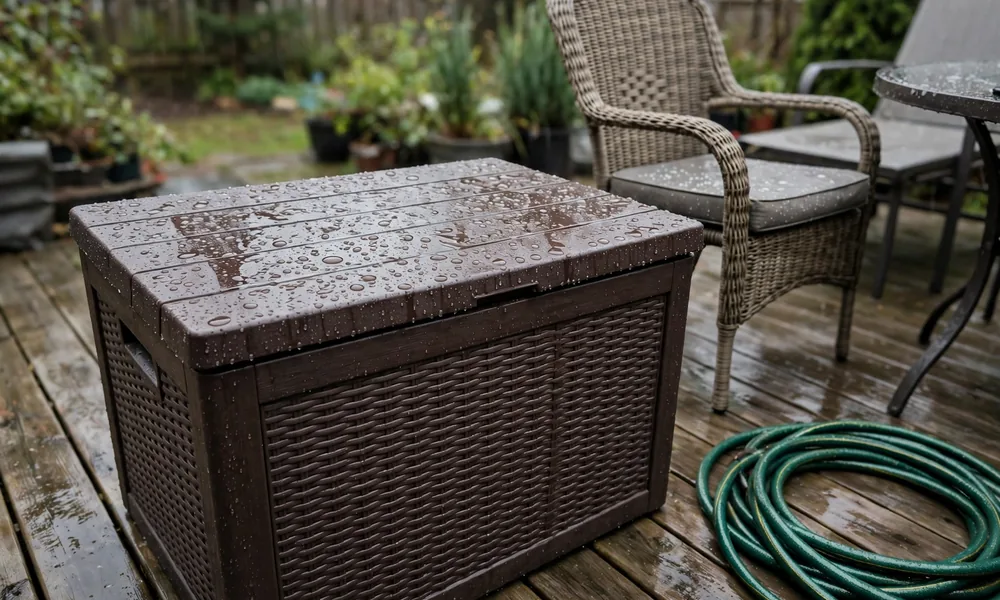
Weatherproofing is the third difference, and it is the one customers remember longest. A resin box can look perfect on a dry day and still let water in through a poor seal, a gap at the hinge line or a base that sits in a puddle. Installers who test the seal, check the drainage and explain how to keep the inside dry earn repeat work and referrals, because a dry box is the whole point of the purchase. The closest comparison is a shed, which also lives or dies on its base, its door and its weatherproofing, and our guide to the best AI tools for shed installation startups shows how the same measurement and quoting discipline scales up to a larger garden building.
How to Choose AI Tools for an Outdoor Storage Box Installation Startup
Start with the job, not the software. A storage box startup spends most of its time on three things: measuring a patio, agreeing a size and a price, and turning up with the right box on the right day. Any tool that does not make one of those three things faster or more reliable is a distraction in the first year, however impressive its demo looks. Ask for a trial on a real job, not a sample project, and judge the tool on whether the crew actually used it on the patio, in the rain, with dirty hands and a phone that is running low on battery.
Price the stack per job, not per month. A tool that costs $50 a month sounds expensive until it saves one wasted delivery, one wrong-size box or one lost booking, and then it has paid for itself several times over. Work out the cost per completed installation, compare it with the margin on a typical box, and drop any tool that costs more per job than the time it saves. Free plans are useful for testing, but a free plan that limits the number of jobs, photos or quotes will become a bottleneck exactly when the business starts to grow.
The 9 Best AI Tools for Outdoor Storage Box Installation Startups
1. Planner 5D: The Best Tool for 3D Patio Layouts and Box Placement
Planner 5D lets a founder build a simple 3D patio in minutes, place the storage box where it will actually sit, and show the customer how the finished patio will look before anything is ordered. That visual matters because most customers cannot picture a 120-gallon box from a tape measure, and they change their mind about the size once they see it against their patio furniture. A quick 3D layout settles the size question on the first visit, which means fewer returns, fewer second deliveries and fewer arguments about whether the box is too big for the space.
2. Magicplan: The Best Tool for Measuring Patios From a Phone
Magicplan turns a phone into a measuring tool, building a dimensioned patio plan from a short walkaround with the camera. For a storage box installer, that matters because the three numbers that decide the job are the length and width of the patio, the clearance behind the box for the lid, and the width of the access route from the van to the patio. A phone scan captures all three in minutes, without a tape measure stretched across wet decking or a notebook full of figures that have to be deciphered later.
The plans Magicplan produces are easy to share with the customer and with the supplier. A dimensioned plan attached to a quote answers the size question before it is asked, and it gives the crew a clear picture of the site before they load the van. If the access gate is narrow, the plan shows it. If the patio slopes, the plan and the site photos together make the case for levelling work. That evidence protects the price: when the customer can see the measurement, they are far less likely to argue that the job should have been cheaper.
3. Matterport: The Best Tool for 3D Scans and Site Records
Matterport creates a detailed 3D scan of a patio and its surroundings, giving the startup a permanent record of the site before, during and after the installation. That record is useful on the day, when the crew needs to check a measurement or a hinge position, and it is even more useful later, when a customer asks why a box was placed in one spot rather than another, or when a warranty question turns on whether the base was level on the day of the job. A scan answers those questions with pictures, not with memory.
For storage box work, the scan is most valuable on larger or more awkward sites: a patio with steps, a deck with a slope, a garden where the box has to be carried through the house, or a job where the customer wants the box to match existing furniture and planting. The scan shows the whole space in context, so the founder can plan the delivery route, the levelling work and the lid clearance together, rather than discovering a problem when the box is already on the patio. It also helps with repeat work, because the scan of a first box makes the second box, or a matching bench, much easier to plan.
4. Jobber: The Best Tool for Quoting, Scheduling and Invoicing
Jobber is the working core of a storage box startup, because it holds the quote, the job, the schedule and the invoice in one place. A founder can build a quote on the patio, send it before leaving the house, turn it into a scheduled job when the customer accepts, and send the invoice when the lid is fitted and the seal is checked. That single flow removes the admin gap where most small installers lose money: the quote that was never sent, the booking that was never confirmed, and the invoice that was sent a week late.
The quoting side is where Jobber earns its keep. A storage box quote needs line items for the box itself, delivery, assembly, levelling, hinge and seal checks, and any weatherproofing extras, and a quote that forgets one of those lines either loses money or creates an awkward conversation on the day. Jobber makes it easy to save a standard quote template, adjust it for the size of the box, and send a clean, professional version that the customer can accept on their phone. The customer sees a clear price, the crew sees a clear job, and the founder sees a clear margin.
5. FreshBooks: The Best Tool for Invoicing and Bookkeeping
FreshBooks keeps the money side of a storage box startup tidy, from the first invoice to the end-of-year accounts. It produces clean invoices that show the box, the delivery and the installation as separate lines, tracks which invoices have been paid and which are overdue, and records expenses such as fuel, fixings, seals and replacement hinges. For a founder who would rather be on a patio than at a desk, that clarity is the difference between knowing the business is profitable and merely hoping it is.
The tool fits storage box work because most jobs are small, frequent and similar, which is exactly the pattern FreshBooks handles well. A standard invoice template, a standard set of expense categories and a regular weekly check are enough to keep the books straight, and the time-tracking and mileage features help a founder see which jobs actually make money once travel and second visits are counted. A box that looks profitable on the quote can turn out to be a loss once a long delivery and a return visit are added, and FreshBooks makes that visible before the pattern repeats.
6. Calendly: The Best Tool for Booking Site Visits
Calendly lets customers book their own site visit, choosing a time that suits them from the slots the founder has actually made available. That sounds like a small thing, but for a storage box startup it removes the longest delay in the whole sales process: the back-and-forth messages about when the founder can visit, when the customer is home, and whether Tuesday morning or Thursday afternoon works better. A customer who can book in thirty seconds is a customer who books, while a customer who has to wait a day for a reply often books with someone else.
The booking page can ask the right questions before the visit, which makes the visit itself far more useful. A short form that asks for the patio size, the box size the customer has in mind, whether the box is already bought or still to be ordered, and whether there are steps or a narrow gate gives the founder enough information to arrive with the right samples, the right tape and a realistic idea of the job. It also filters out the enquiries that are not ready yet, so the diary fills with visits that are likely to turn into paid work.
7. HubSpot CRM: The Best Tool for Customer Records and Follow-Up
HubSpot CRM gives a storage box startup one record for every customer, from the first enquiry to the repeat order a year later. That record holds the patio measurements, the box size, the hinge and seal notes, the quote, the invoice and every message in between, so the founder never has to search three inboxes and a notebook to answer a simple question. When a customer calls back about a second box, or about a lid that has started to stick, the founder can see the whole history in seconds and give a useful answer instead of a guess.
8. Canva: The Best Tool for Visual Quotes and Before-and-After Images
Canva lets a storage box startup produce polished quote covers, patio visuals and before-and-after images without hiring a designer. A quote that arrives with a clean cover, a photo of the chosen box in a similar patio, and a short list of what is included looks like it comes from a much larger company, and customers trust it more than a plain text email with a price at the bottom. That trust matters on a small job, where the customer is choosing between several installers who all quote a similar price.
Before-and-after images are the most useful thing Canva produces for this trade. A photo of a cluttered patio, next to a photo of the same patio with a neat storage box in place, tells the whole story in seconds, and it works on a website, on a social media post and in a quote. Canva makes it easy to put those two photos side by side, add a short caption about the box size and the lid check, and keep the branding consistent so every image looks like it came from the same business. Over a season, those images become the portfolio that wins the next job.
9. Zapier: The Best Tool for Connecting the Tools Together
Zapier connects the other eight tools, moving information between them so the founder does not have to retype it. A Calendly booking can create a HubSpot contact, a Jobber quote can create a FreshBooks invoice, and a completed job can trigger a follow-up email a week later. Each automation is small on its own, but together they remove the admin that eats the evening after a day on the patios, and they remove the copying mistakes that cause double bookings and missed invoices.
The best automations for a storage box startup are the boring ones. A new enquiry that creates a customer record, a quote acceptance that creates a job and a calendar event, and a paid invoice that updates the customer record are worth more than any clever marketing automation, because they protect the money and the diary. A founder should start with two or three automations, test them on real jobs for a fortnight, and only then add more, because an automation that moves the wrong information is worse than no automation at all.
Building Your Outdoor Storage Box Installation AI Stack
The second layer adds HubSpot for customer records and follow-up, Canva for visual quotes and before-and-after images, and Zapier to connect the tools together. That layer is about growth rather than survival: it wins back quiet quotes, it makes the business look professional, and it removes the admin that would otherwise need a part-time helper. Add Matterport last, for larger or more awkward sites where a full 3D record is genuinely worth the time and the cost. A deck installation is a larger structural job with footings, framing and inspections, and our guide to the best AI tools for deck installation startups shows how a similar stack scales up when the project grows from a box to a full deck.
What an Outdoor Storage Box Installation Startup Should Budget for AI Tools
A new storage box startup should budget around $80 to $180 a month for software in the first year, starting at the low end with the three-tool starter stack and rising as the diary fills. That figure sounds like a lot until it is compared with the cost of one wasted delivery, one wrong-size box or one lost booking, any of which costs more than a month of software. The founder should review the stack every quarter, drop any tool that has not been used on a real job in the last month, and only add a new tool when a real job has shown a gap that the current stack cannot fill.
Common Mistakes New Outdoor Storage Box Installation Startups Make With AI Tools
The most common mistake is buying the design tool first and the quoting tool last. A beautiful 3D patio is useless if the quote that follows it forgets delivery, assembly or weatherproofing, and a founder who spends a week learning a design tool before learning to quote properly will lose money on the first few jobs. Quote first, measure second, design third, and the business will be profitable while it is still learning.
The second mistake is trusting a phone measurement without a final check. Phone scans are fast and usually accurate, but they can be thrown off by clutter, poor light or a sloping deck, and the one dimension that matters most, the lid clearance, is also the one that is easiest to get wrong. Always check the lid clearance with a tape before ordering the box, and always photograph the base, because a photograph is the only evidence that settles a later argument about whether the ground was level.
Outdoor Storage Box Installation Startup Checklist
Use this checklist on every job, from the first enquiry to the final handover, so nothing important is left to memory.
- Measure the patio, the lid clearance and the access route, and photograph the base before quoting.
- Agree the box size, the lid swing and the weatherproofing extras with the customer in writing.
- Order the right box and check the hinges, struts and seal before loading the van.
- Level the base, fit the box, test the lid and check the seal before leaving the patio.
- Send the invoice on the day, record the job in the CRM, and ask for a review while the patio is still tidy.
- Follow up after a week to check the lid, the seal and the drainage, and note any warranty work needed.
That follow-up call is also a good moment to mention related storage work. A customer who has just had a deck box fitted often needs a better place for bikes as well, and our guide to the best AI tools for bike storage installation startups shows how a storage box crew can add bike racks and lockers without learning a whole new trade.
Frequently Asked Questions
What is the best AI tool for an outdoor storage box installation startup to buy first?
Buy a quoting and job-management tool first, such as Jobber, because quoting is where storage box startups lose money. Add a measurement tool such as Magicplan second, and a design tool such as Planner 5D third, once the quoting and measuring are already working on real jobs.
How much should an outdoor storage box installation startup spend on AI tools each month?
Budget around $80 to $180 a month in the first year, starting with a three-tool stack and adding tools only when a real job shows a gap. Review the stack every quarter and cancel any tool that has not been used on a real job in the last month.
Can AI really measure a patio and a storage box accurately?
Yes, for the dimensions that matter, provided the scan is done in good light on a tidy patio and the critical measurement, the lid clearance, is checked with a tape before the box is ordered. Phone scans are a working plan, not a substitute for a final tape check.
Do outdoor storage box installers need different AI tools from general builders?
Yes, because the job turns on the lid, the seal, the base level and the patio layout, not on structural framing or permits. General building tools are too heavy for a one-hour box installation, while the tools in this guide are built for small, frequent, mobile jobs.
How do outdoor storage box installation startups find clients?
Most early clients come from local search, referrals and before-and-after photos of real patios. A clean quote, a tidy installation and a follow-up call a week later earn more repeat work than any advert, because a dry box and a lid that closes properly are easy to recommend to a neighbour.
What should an outdoor storage box installation startup charge for a storage box job?
Charge for the box, delivery, assembly, levelling and weatherproofing as separate lines, so the customer can see what they are paying for. Prices vary by box size and site, so quote each job on its own measurements rather than copying a flat rate from another installer.
Bottom Line
The best AI tools for outdoor storage box installation startups are the ones that make a small patio job faster, more accurate and easier to sell: a phone measurement that gets the size right, a 3D layout that helps the customer choose, and a quoting and invoicing flow that never forgets delivery, assembly or weatherproofing. Start with Magicplan, Jobber and FreshBooks, add Planner 5D and Calendly as the diary fills, and let HubSpot, Canva and Zapier carry the follow-up and the admin as the business grows. A dry box, a lid that closes properly and a customer who would recommend you to a neighbour are the real measures of success, and the right tools make all three more likely on every job.

Keep what speaks to you.
Leave room for your own perspective.