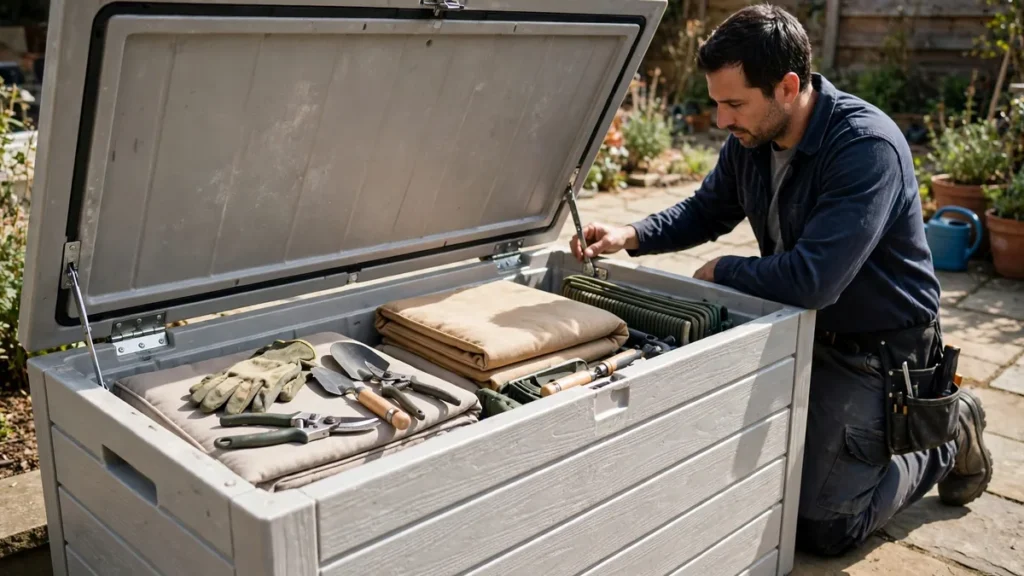
The best AI tools for bike storage installation startups in 2026 turn a cluttered garage, a narrow hallway or an unused corner of a garden into a tidy, secure home for bicycles before the first drill hole is marked. A rack that should take one hour can take three when the wall is plasterboard with no studs, the ceiling is too low for a hoist, or the customer changes their mind about how many bikes the household will own next year. The right tools watch all of that at once, so a small crew can quote honestly, arrive with the right fixings, and finish on time.
A bike storage business is really several small services sharing one van, one phone number and one reputation. Every week brings a different mix: wall-mounted hooks and rails in a garage, freestanding floor stands for a hallway or flat, vertical systems that lift bikes out of the way, outdoor sheds and lockers with proper locks, and the security jobs where a family that has already lost a bike to theft wants anchors and ground locks. When any part of that mix lives in a separate notebook, app or inbox, the whole week wobbles, and a missed message becomes a lost booking while a crew sent without the right brackets becomes a wasted day.
This guide compares nine tools that fit a bike storage installation startup, from AI measurement and 3D room design to quoting, scheduling, site records and payments. Every tool was judged on the same questions a founder actually asks: does it save time on a real bike storage job, does it work from a phone in a garage, does it pay for itself within the first few jobs, and can a two-person crew learn it without a training course.
Key takeaways
- Measure before you design: Polycam and CubiCasa turn a phone scan into accurate dimensions, so racks, hooks and hoists are planned around real walls, studs and ceiling heights instead of guesses.
- Sell the finished bike room with a visual: Foyr Neo and Houzz Pro produce renders and 3D plans the customer can approve before a single bracket is fixed to the wall.
- Quoting is where bike storage startups lose money, so Tradify and Quotient matter more than any design tool, because a quote that forgets fixings, locks or waste removal turns a good job into a loss.
- ServiceM8 and Buildxact keep install days on track, from the first site visit to the final invoice, without the founder chasing the crew by phone.
- Start with three tools, not nine: one measurement tool, one quoting tool and one job-management tool, then add the rest only when a real job shows you need them.
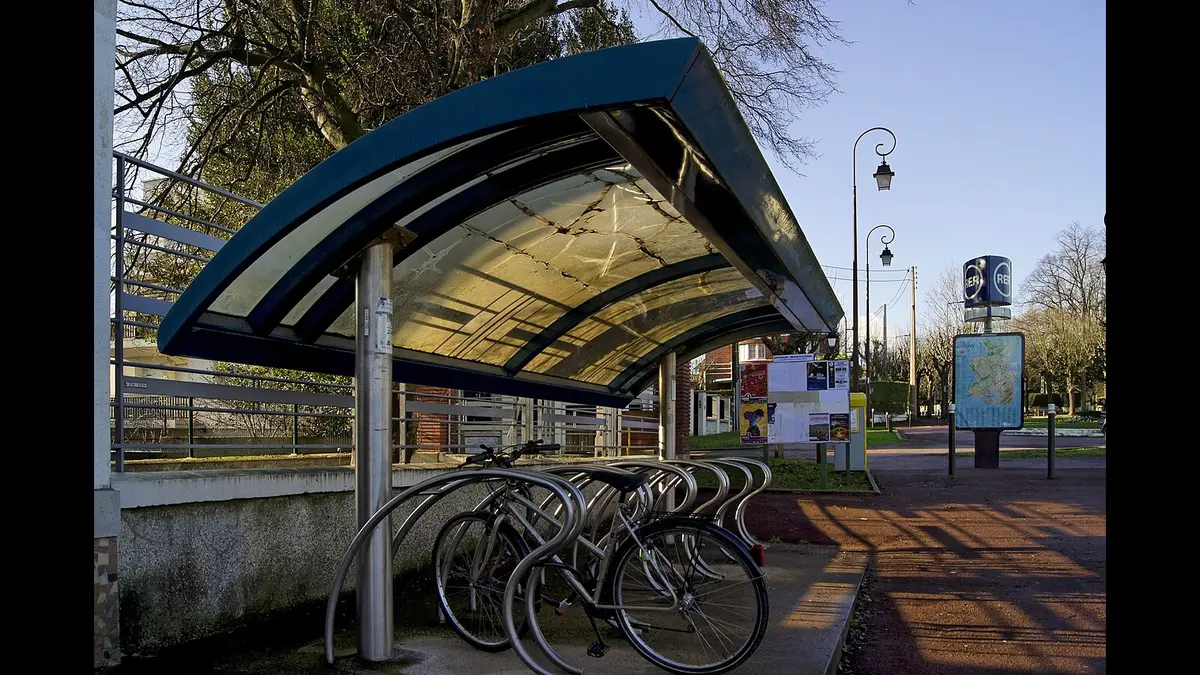
Best AI Tools for Bike Storage Installation Startups at a Glance
The table below gives a quick view of all nine tools, what each one is best for, and what it costs to start. The sections that follow explain how to use each one in a real bike storage business, what to look for before you pay, and where small teams usually go wrong.
| Tool | Best for | Starting price | Standout feature |
|---|---|---|---|
| Polycam | 3D scans and measurements | Free plan; paid from around $13 per month | LiDAR scans of garages and bike rooms from a phone |
| CubiCasa | Floor plans from a phone scan | Free LITE plan; PLUS from $15 per floor plan | Dimensioned floor plans from a five-minute walkthrough |
| Foyr Neo | 3D bike room designs | From around $39 per month | Photorealistic renders of storage walls and bike rooms |
| Houzz Pro | Proposals and client management | Free plan; Pro from $199 per month | 3D plans, proposals, invoices and payments in one place |
| Tradify | Quoting and job management | From $47 per user per month | AI-assisted quoting and job tracking built for installers |
| ServiceM8 | Job cards and dispatch | Free plan; paid from $29 per month | Job cards, scheduling and payments priced by job count |
| Buildxact | Takeoffs and estimates | Free plan; paid from around $169 per month | Takeoffs and estimates for sheds, lockers and storage builds |
| CompanyCam | Photo records and proof of work | From around $63 per month | Time-stamped job photos and customer-ready reports |
| Quotient | Quotes that actually close | From $28 per month | Clean online quotes with e-signatures and open tracking |
What Makes a Bike Storage Installation Startup Different
A bike storage installation startup is not a general building firm, and it is not a bike shop either. It sits in a narrow space where carpentry, metalwork, security and customer service all meet in one small garage or hallway. The customer is usually a homeowner or a flat dweller who already owns the bikes, and they expect the installer to handle everything they have not thought about: the wall strength, the spacing between bikes, the handlebar clearance, the lock position and the route in and out of the house.
The wall decides everything on a bike storage job. A brick wall, a timber stud wall, a plasterboard partition and a concrete garage wall all demand different fixings, different drill bits and different time. A wall that looks solid to the eye can hide a stud pattern that puts every hook in the wrong place, and that gap will show up as a rack that pulls loose or a bike that leans into the next one. The best installers measure the wall before they promise a date, and they photograph it, because a photograph of a stud finder reading is the difference between a fair extra charge and an argument.
Security is the second thing that catches new bike storage businesses out. A family that has already had a bike stolen does not want a pretty rack; they want an anchor that cannot be cut in thirty seconds, a lock position that a thief cannot reach easily, and a layout that keeps the most expensive bike hardest to reach. Many storage customers arrive with a bike that also needs work, and our guide to the best AI tools for bike repair startups shows how a repair bench and a storage install can share one booking system and one customer record.
How to Choose AI Tools for a Bike Storage Installation Startup
Choosing AI tools for a bike storage startup starts with an honest map of where the day actually breaks down. Spend a week noting every moment when work stalls: the phone ringing while both installers are on a ladder, the customer waiting for a price, the bracket that turns out to be out of stock, the job that overruns because nobody checked the wall type. The pattern that appears will point at the first tool to buy.
Next, check whether a tool understands small install jobs. A bike storage job has a wall type, a bike count, a rack model, a lock type and a fixing list, and a quote that cannot hold those details will be wrong in exactly the places that cost money. Test every tool on a real job before you pay for a year of it: run one quote through it, scan one garage with it, and send one customer a render made with it.
The 9 Best AI Tools for Bike Storage Installation Startups
Each tool below earns its place for a different part of the job. The first three cover measurement and design, the next four cover quoting, scheduling and estimating, and the last two cover proof of work and closing the sale. Read them in order if you are building a stack from scratch, or jump to the section that matches the bottleneck costing you the most time today.
1. Polycam: The Best Tool for 3D Scans and Measurements
Polycam turns a phone into a 3D scanner, using the LiDAR sensor on supported iPhones and iPads or photogrammetry on any camera phone, and that makes it the fastest way to capture a garage or bike room exactly as it is. Walk the space once, and you have a measured 3D model with wall lengths, ceiling heights and the position of doors, windows, pipes and beams, all without pulling a tape measure across a dusty floor. For a bike storage installer, that scan answers the questions that decide the layout: how high the ceiling really is, where the studs and sockets sit, and whether a vertical rack will clear the garage door mechanism.
The scan also becomes the evidence that protects the business. A model taken on the first visit shows the wall condition before any drilling, the existing marks and cracks, and the exact position of the car, the boiler and the fuse box. Polycam exports to common 3D formats, so a scan can feed straight into a design tool or a quote, and the free plan is enough to test it on a few real jobs before paying. The paid plan, from around $13 per month, unlocks unlimited captures and the full export range.
2. CubiCasa: The Best Tool for Floor Plans From a Phone Scan
CubiCasa turns a five-minute phone walkthrough into a dimensioned floor plan, and that simplicity is exactly what a bike storage startup needs on a first visit. There is no scanner to carry, no tripod to set up and no drawing to sketch by hand. Walk through the garage, hallway or garden room while the app records, upload the scan, and a finished 2D plan arrives within a day, with room dimensions, wall lengths and the position of doors. The free LITE plan covers a basic 2D plan, and the PLUS plan, at $15 per floor plan, adds fixtures, total area, custom styling and branding.
The plan becomes the document the whole job hangs on. Attach it to the quote so the customer can see exactly where each rack, hook and locker will sit, and attach it to the job card so the crew arrives knowing the layout instead of discovering it. For flats and shared bike rooms, the plan is also what a building manager wants to see before approving the work. Because CubiCasa charges per plan rather than per month, a startup that does a handful of surveys a week pays only for the plans it actually uses.
3. Foyr Neo: The Best Tool for 3D Bike Room Designs
Foyr Neo is a browser-based interior design tool that takes a floor plan and turns it into a 3D bike room the customer can walk through on screen, and that visual is what closes bike storage sales. A customer who cannot picture four bikes on a wall will hesitate, while a customer who has seen a render of their own garage, with the racks, the hooks, the helmet shelf and the lock anchor all in place, will approve the job on the spot. Foyr Neo builds that render from a real catalogue of products and materials, so the storage wall in the picture matches the storage wall the crew will install.
The tool is strongest for indoor jobs: garage bike rooms, hallway storage walls, spare-room bike corners and the bike area of a home gym. Start from the CubiCasa plan or a Polycam scan, place the racks and stands, choose finishes that match the room, and export a photorealistic render in minutes. The Basic plan, from around $39 per month, includes thirty render credits a month, which is enough for a startup doing a few design-led quotes a week. Build a template for your most common layouts, a two-bike garage wall, a four-bike family wall and a shared bike room, and reuse it instead of starting from a blank room on every job.
4. Houzz Pro: The Best Tool for Proposals and Client Management
Houzz Pro is the all-in-one option for a bike storage startup that wants design, proposals, invoicing and payments in a single system instead of four separate apps. Its 3D floor planner turns a survey into a visual plan, its estimates and proposals turn that plan into a polished document the customer can accept online, and its invoicing and online payments close the loop without a separate accounting chase. For a founder who is also the salesperson, the installer and the bookkeeper, that single login is worth more than any single feature.
The tool is strongest at the selling end of the job. A Houzz Pro proposal carries the renders, the product list, the price and the terms in one clean page, and the customer can approve it from their phone without a site visit or a printed quote. The built-in CRM keeps every customer, every quote and every follow-up in one place, so a quote that goes quiet gets a reminder instead of being forgotten. The free plan covers the 3D floor planner, estimates and invoicing, while the Pro plan, from $199 per month, adds takeoffs, bid management, change orders and budget tracking.
5. Tradify: The Best Tool for Quoting and Job Management
Tradify is job management software built for small trade crews, and it fits a bike storage startup because it treats a quote, a schedule, an invoice and a job card as one connected workflow instead of four separate chores. Build a quote from a template that already lists the common rack models, brackets, locks and fixings, send it to the customer for online acceptance, then turn the accepted quote into a scheduled job with the right crew, the right van stock and the right address. The Plus plan adds AI SmartTools that read supplier bills and draft job notes, which saves the evening paperwork that eats into every installer’s week.
The quoting templates are where Tradify earns its fee. A bike storage quote has a predictable shape, a site visit, a rack or locker, fixings, a lock, labour and waste removal, and a template that holds those lines means every quote goes out complete and consistent. Pricing starts at $47 per user per month, and every user is chargeable, so a two-person crew pays for two seats.

6. ServiceM8: The Best Tool for Job Cards and Dispatch
ServiceM8 is job management software that prices by the number of jobs per month rather than by the number of users, and that pricing model suits a bike storage startup with a small crew and a growing job count. The free plan covers one user and thirty jobs a month, the Starter plan costs $29 a month for fifty jobs, and every paid plan includes unlimited users, so the whole crew can carry the app without the bill climbing with every hire. Each job gets a card with the customer, the address, the rack model, the photos, the checklist and the invoice, all in one place.
The tool is strongest on install day. The dispatcher sees the day’s jobs on one board, the installer sees the address, the access notes and the fixing list on their phone, and the office sees the job move from booked to done to invoiced without a phone call. Electronic forms capture the customer’s sign-off and the before-and-after photos, and the invoice goes out before the van leaves the driveway.
7. Buildxact: The Best Tool for Takeoffs and Estimates
Buildxact is estimating and project management software for residential builders, and it earns its place in a bike storage stack on the bigger jobs: freestanding sheds, outdoor locker banks, shared bike rooms and any install that needs a materials takeoff before the price can be trusted. Its on-screen takeoff measures the wall runs, the floor area and the materials straight from a plan, and those quantities feed an estimate that already knows the price of the rack, the fixings, the timber and the labour. The free Go plan covers a few AI estimate credits, and paid plans start from around $169 per month on annual billing.
The estimating discipline is what matters most. A bike shed quote built from a takeoff will not forget the concrete pad, the damp-proof course or the delivery charge, because the takeoff lists every item before the price is set. When the job is a freestanding bike shed rather than a set of wall racks, our guide to the best AI tools for shed installation startups covers base preparation, access and framing in detail, and Buildxact is the estimating tool that ties those two guides together.
8. CompanyCam: The Best Tool for Photo Records and Proof of Work
CompanyCam is a photo documentation app built for field crews, and it solves the problem that causes most bike storage disputes: nobody can prove what the wall looked like before the drill came out. Every photo is stamped with the time, the date and the GPS location, filed under the job address, and shared with the crew and the customer in a clean report. The installer photographs the wall before work, the fixings during work and the finished racks after work, and that timeline becomes the record that settles any argument about damage, spacing or finish.
The before-and-after reports are also the startup’s best marketing. A customer who receives a tidy photo report on the afternoon of the install is a customer who leaves a review and recommends the business to a neighbour, and a portfolio of finished bike rooms, sheds and locker banks wins the next quote before the salesperson says a word. Pricing starts from around $63 per month for the Core plan, which covers one user, with extra users at $29 a month.
9. Quotient: The Best Tool for Quotes That Actually Close
Quotient is online quoting software that does one thing well: it turns a price into a clean, professional quote the customer can accept and sign from their phone. There is no full field-service platform to learn, no CRM to configure and no project module to ignore. Build the quote from a template, add the rack, the fixings, the lock and the labour as line items, send it, and watch the open and acceptance notifications arrive. The Solo plan costs $28 a month for one member and up to one hundred quotes, and the Team plan costs $48 a month for up to five members and unlimited quotes.
The quote itself is the selling tool. A Quotient quote shows the options clearly, good, better and best rack packages side by side, with the price, the terms and the e-signature in one place, and the customer can accept the middle option without a phone call or a second visit. For a startup that wins work on speed and clarity, a quote that arrives within the hour, looks professional and can be accepted with one tap will close more jobs than a cheaper quote that arrives two days later as a plain email.
Building Your Bike Storage Installation AI Stack
A sensible starting stack is three tools: Polycam for measurement, Quotient for quoting and ServiceM8 for job cards and dispatch. That trio covers the whole job, from the first scan of the garage to the invoice that follows the install, for around $70 a month, and it can be learned in a week. Add CubiCasa when customers start asking for formal floor plans, add Foyr Neo when design-led sales become the way you win work, and add CompanyCam the moment a customer disputes a wall mark and you have no photos to answer with.
Keep the stack in that order and resist the urge to buy everything at once. A tool that is not used daily is a subscription, not a system, and a crew that has to check three apps before drilling a hole will check none of them. If most of your installs happen inside garages, our guide to the best AI tools for garage organization startups covers the layout, slatwall and workbench side of the same space. Review the stack every quarter and drop whatever the crew avoids.
What a Bike Storage Installation Startup Should Budget for AI Tools
A new bike storage startup should budget between $70 and $200 a month for software in its first year, and that range is honest rather than optimistic. The starter stack of Polycam, Quotient and ServiceM8 lands near the bottom of it, while adding Foyr Neo and Tradify pushes the total toward the top. Houzz Pro and Buildxact sit outside that range for a reason: they are tools for a business doing enough volume to justify them, and buying them in month one is how a new startup burns cash before it has a customer base.
Common Mistakes New Bike Storage Installation Startups Make With AI Tools
The most common mistake is designing the storage before measuring the wall. A render of a perfect bike room means nothing if the studs are in the wrong place, the ceiling is too low for a hoist, or the garage door mechanism blocks the top rail. Measure first, design second, and never let a customer approve a render that was built from a guess. The second mistake is quoting from memory. A price remembered from the last job will be wrong on the next one, because the wall type, the bike count and the lock are different every time, and a quote built from a template with real line items is the only one that can be trusted.
Bike Storage Installation Startup Checklist
- Scan and measure the wall, ceiling and floor on the first visit, and confirm stud positions and ceiling height before ordering fixings.
- Send a visual plan or render with every quote, so the customer approves the layout before a single bracket is fixed.
- Quote from a template with real line items for racks, fixings, locks, labour and waste removal, and never quote from memory.
- Photograph the wall before work, the fixings during work and the finished storage after work, and send the customer a photo report the same day.
- Check the security of every install: anchors, lock positions and the route a thief would take, not just how tidy the racks look.
- Review the software stack every quarter, keep one shared customer record, and cancel any tool the crew has stopped using.
Frequently Asked Questions
What is the best AI tool for a bike storage installation startup to buy first?
Buy a measurement tool first, because every other decision depends on accurate dimensions. Polycam is the best first purchase: a phone scan of the garage gives you wall lengths, ceiling heights and door and beam positions in minutes, and the free plan is enough to test it on real jobs. Pair it with Quotient, and you can measure in the morning and send a professional quote the same afternoon.
How much should a bike storage installation startup spend on AI tools each month?
Budget between $70 and $200 a month in the first year. A starter stack of Polycam, Quotient and ServiceM8 costs around $70 a month, and adding Foyr Neo and Tradify brings the total toward $200. Avoid the expensive all-in-one platforms until the volume of jobs justifies them, and review the spend every quarter against the hours the tools actually save.
Can AI really measure a garage and a bike room accurately?
Yes, well enough to plan a layout and price a job, with one condition: confirm the critical measurements by hand. A LiDAR scan or a CubiCasa floor plan will get wall lengths and ceiling heights right to within a few centimetres, which is enough to place racks and choose fixings. Stud positions and wall strength should still be checked physically before you drill, because a scan cannot tell you what is inside a wall.
Do bike storage installers need different AI tools from general builders?
Yes, because the job is smaller, faster and more specific than general building work. A bike storage install has a wall type, a bike count, a rack model and a lock type, and the tools in this guide handle those details without forcing a two-person crew to learn a system built for a fifty-person contractor. General builders’ tools assume multi-day projects and large crews, while bike storage tools assume short jobs, quick quotes and a van full of brackets.
How do bike storage installation startups find clients?
Most early clients come from local visibility and referrals: a tidy portfolio of finished bike rooms, before-and-after photos on social media, listings on local trade directories, and partnerships with bike shops that meet riders who need storage. A visual quote with a render of the customer’s own garage wins far more work than a plain price, and a customer who receives a photo report on the day of the install will recommend the business to neighbours and cycling friends.
What should a bike storage installation startup charge for a bike storage job?
Prices vary with the rack, the wall and the security level, so quote each job from a template rather than a flat rate. A simple two-bike wall rack install is a half-day job with a small materials bill, while a freestanding shed or a shared bike room is a multi-day build with a takeoff, a concrete pad and a lock system. Price the survey, the racks, the fixings, the lock, the labour and the waste removal as separate lines.
Bottom Line
The best AI tools for bike storage installation startups are the ones that make the real job faster: measuring the wall properly, showing the customer the finished bike room before work starts, quoting with real line items, and keeping a photo record of every install. Polycam and CubiCasa handle the measurement, Foyr Neo and Houzz Pro handle the design and the sale, Tradify, ServiceM8 and Quotient handle the quoting and the running of the business, and Buildxact and CompanyCam cover the bigger builds and the proof of work.
Start with three tools, use them on every job for a month, and add the next one only when a real job shows you need it. A bike storage startup does not need the most software; it needs the smallest stack that never lets a quote go out incomplete, a wall go unmeasured or a finished job go unphotographed.

Keep what speaks to you.
Leave room for your own perspective.