An outdoor faucet looks like the simplest job in plumbing. A homeowner wants a hose bib on the side of the house, a frost-proof sillcock that will not burst in January, and a water line that drains cleanly when the cold arrives. The work itself is a morning for a skilled installer, yet the business around it is where most new startups stumble. Quotes go out late, winterisation reminders never get sent, and a crew drives across town twice because nobody confirmed the shut-off valve location before the van left.
That gap is exactly what modern field-service software is built to close. The best AI tools for outdoor faucet installation startups do far more than store customer names. They read a photo of a rusted sillcock and draft a quote, they route a van around three hose-bib replacements in one neighbourhood, they remind a customer to disconnect the garden hose before the first freeze, and they chase an unpaid invoice while the installer is already on the next job. For a one-van startup, that kind of help is the difference between five jobs a week and fifteen.
This guide compares nine tools that fit an outdoor faucet installation startup in 2026. Every one of them handles quoting, scheduling, and invoicing, but they differ in the places that matter for this trade: frost-proof installation workflows, photo-based quotes, winterisation reminders, and the simple plumbing of running a small crew. Pick the one that matches how you actually work, not the one with the longest feature list.
Key takeaways
- Outdoor faucet work is seasonal and route-dense: winterisation in autumn, replacements in spring, and clusters of small jobs in the same neighbourhood.
- Photo-based quoting matters more here than in most trades, because a frost-proof sillcock, a corroded hose bib, and a buried water line are three very different jobs.
- A one-van startup should spend under $150 a month on software in year one and only add a second tool once the first one is genuinely full.
- Winterisation reminders are the cheapest repeat revenue in this trade: one automated message in October can fill a whole week of November.
- Every tool below handles the basics, so choose on crew size, quoting style, and how much of the admin you want automated.
The best AI tools for outdoor faucet installation startups at a glance
| Tool | Best for | Starting price | Standout feature |
|---|---|---|---|
| Housecall Pro | All-round job management | From $49 a month | Online booking and instant quotes |
| Kickserv | Small crews | From $49 a month | Simple scheduling and dispatch |
| mHelpDesk | Dispatch simplicity | From $99 a month | Clean job tracking from call to cash |
| BuildOps | Commercial plumbing scale | Custom pricing | Project and contract management |
| Zuper | Smart scheduling | From $39 a month | AI-assisted route planning |
| Fieldd | Fast quoting | From $49 a month | Quotes in minutes from a photo |
| Service Fusion | Invoicing and payments | From $49 a month | Estimates, invoices, and card payments in one place |
| GorillaDesk | Route-dense neighbourhood work | From $49 a month | Route optimisation for clustered jobs |
| JobProgress | Job tracking and photos | From $49 a month | Photo records for every sillcock fitted |
The tools in detail
1. Housecall Pro: Best all-round job management
Housecall Pro is the safest first pick for a new outdoor faucet installation startup because it covers the whole job without asking the owner to learn five systems at once. A customer books a hose-bib replacement online, the job lands on the day board, the installer gets the address and the notes on the phone, and the invoice goes out before the van door closes. For a trade where most jobs are under two hours, that speed is worth more than any single advanced feature.
The quoting flow fits faucet work well. A homeowner sends a photo of the old sillcock, the owner prices the replacement from the truck, and the customer approves it on the spot instead of waiting for a formal estimate to arrive by email. Housecall Pro also handles the seasonal rhythm of this trade: autumn winterisation reminders can be scheduled in bulk, so one afternoon of setup can fill the diary for the whole of November.
Where it shows its limits is on bigger commercial work. If a startup grows into fitting frost-proof sillcocks across a housing development or a school estate, the project tools feel thin and a heavier platform starts to look sensible. But for residential hose bibs, garden taps, and frost-proof replacements, it is the most complete single tool on this list, and its price stays fair while the business is small.
Housecall Pro works best for a one-to-three-van startup that wants one system for bookings, dispatch, invoicing, and reviews, and does not want to stitch tools together. Start on the basic plan, add the online booking page in the first month, and judge it on one number: how many quotes turn into booked jobs within a day.
2. Kickserv: Best for small crews
Kickserv is built for the kind of business an outdoor faucet startup actually is in year one: one owner, one or two installers, and a phone that never stops ringing in spring. Its scheduling board is simple enough to run from the van, and the job history keeps every address, every sillcock model fitted, and every warranty note in one place. That matters when a customer calls back two winters later and asks which frost-proof model went into their wall.
The invoicing is straightforward and the customer messaging is strong for a tool at this price. A text goes out when the installer is on the way, another goes out when the job is done, and the review request follows automatically. For a local trade that lives or dies on neighbourhood reputation, those small touches bring in the next street of work without any advertising spend.
Kickserv does not try to be a marketing platform or a project manager, and that is a strength rather than a gap at this stage. The trade-off is that a startup that grows past five vans will eventually want deeper reporting and more automation than Kickserv offers. Until then, it is one of the cheapest ways to look organised from the very first job.
Choose Kickserv if you want the diary, the invoice, and the customer message in one calm place, and you would rather spend your evenings fitting taps than learning software. It pairs well with a simple spreadsheet for costs and a phone camera for before-and-after photos.
3. mHelpDesk: Best for dispatch simplicity
mHelpDesk earns its place on this list by doing one thing very cleanly: turning a phone call into a finished, paid job without anything falling through the cracks. A customer rings about a leaking hose bib, the call becomes a job, the job gets a time slot and an installer, and the invoice follows the moment the work is signed off. There is very little to configure, which is exactly what a working installer needs.
The dispatch view is the part that fits outdoor faucet work best. A day of small jobs across one estate can be dragged into a sensible order in seconds, and the installer sees the access notes, the shut-off location, and the parts list for each stop. That stops the classic faucet-job failure: arriving at a house, finding the water cannot be isolated, and losing an hour to a second visit.
The reporting is lighter than some rivals, and the marketing tools are basic. A startup that wants detailed profit-per-job analysis or automated review campaigns will need a second tool sooner. But as a dispatch and job-tracking core, mHelpDesk is hard to beat for clarity, and its price is honest for what it does.
mHelpDesk suits an owner who still answers the phone and runs the diary themselves, and who wants the software to keep up rather than slow them down. If your biggest problem is missed calls and forgotten follow-ups, this is the tool that fixes it first.
4. BuildOps: Best for commercial plumbing scale
BuildOps is the heavyweight on this list, and it belongs here because outdoor faucet work is not always residential. A startup that wins a contract to fit frost-proof sillcocks across a housing development, a holiday park, or a school estate needs project tracking, contract billing, and a proper handle on parts and labour across dozens of identical installs. BuildOps is built for exactly that scale.
Its strength is the way it ties a quote to a project and a project to an invoice, so nothing leaks between the sales promise and the final bill. For a run of fifty hose bibs on one site, the owner can see which units are fitted, which are waiting on parts, and what has actually been invoiced, all from one dashboard. That visibility is what keeps a commercial job profitable instead of merely busy.
The trade-off is price and setup time. BuildOps is not a tool to buy in week one of a one-van startup; it makes sense once commercial work is a real share of the diary and the admin is starting to hurt. Smaller residential-only startups will find it more than they need, and the learning curve is steeper than the simpler tools here.
Pick BuildOps when the diary starts to include estates, developments, and facilities contracts alongside the residential hose-bib calls. It is the tool that lets a faucet startup grow into a plumbing contractor without rebuilding its systems from scratch.
5. Zuper: Best for smart scheduling
Zuper is the scheduling specialist of this list, and scheduling is where an outdoor faucet startup quietly wins or loses money. Most jobs are short, most are in the same few neighbourhoods, and a badly ordered day can burn two hours of driving between jobs that take forty minutes each. Zuper’s AI-assisted routing groups nearby jobs together, so a van can finish five hose-bib replacements in one estate before lunch instead of three scattered across town.
The customer side is strong too. Automated arrival messages, live tracking links, and digital job cards mean the homeowner knows when to expect the installer and what was fitted, without a phone call. That is a small thing on one job and a huge thing across two hundred jobs a year, because every avoided phone call is time back on the tools.
Zuper is less complete as an accounting tool than some rivals, so many owners pair it with a separate bookkeeping app. The scheduling and dispatch are the reason to buy it, not the invoicing. For a startup whose diary is the bottleneck, that is the right trade to make.
Choose Zuper if your days already feel like a driving tour rather than a workday, or if you are taking on enough volume that route order decides whether the week is profitable. It pays for itself the first time it saves a van an hour a day.
6. Fieldd: Best for fast quoting
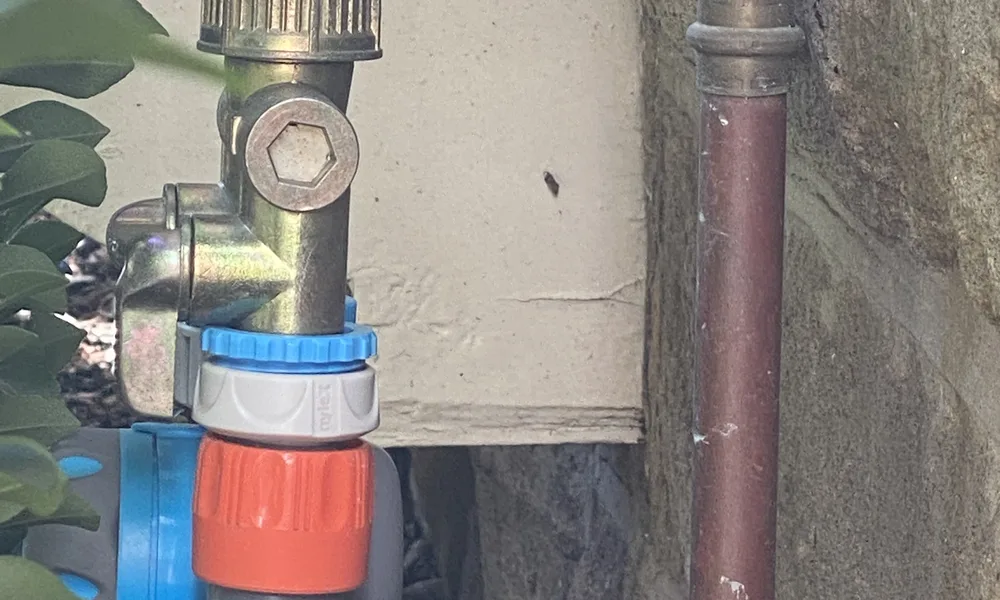
Fieldd is built around a single idea that fits faucet work perfectly: a quote should take minutes, not days. A homeowner sends a photo of a corroded hose bib or a frost-damaged sillcock, the owner prices the replacement from the van, and the customer approves it on their phone. In a trade where the job is small and the customer is choosing between three installers, the first good quote usually wins.
The job management behind the quote is simple and solid. Jobs move from quote to booked to done on a clean board, the installer sees the parts and the access notes, and the invoice goes out with the completion photo attached. That photo record matters for frost-proof work, because it proves which model was fitted and where the shut-off sits if anything goes wrong later.
Fieldd is a younger and smaller platform than the biggest names here, so its integrations are fewer and its reporting is lighter. A startup that needs deep accounting links or a large marketplace of add-ons may feel the difference. But for quoting speed, which is the decisive skill in this trade, it is one of the best options available.
Pick Fieldd if you lose jobs to slower competitors, or if most of your enquiries arrive as photos on a phone. It turns the fastest part of the job, the quote, into your competitive advantage.
7. Service Fusion: Best for invoicing and payments
Service Fusion is the tool for the startup that has the work but struggles to get paid for it. Outdoor faucet jobs are small, and small invoices are the ones that slip: the customer forgets, the paper invoice sits on a kitchen table, and the money arrives three weeks late. Service Fusion keeps estimates, invoices, and card payments in one place, so the customer can pay on the doorstep before the van leaves.
The estimating tools suit this trade well. A frost-proof sillcock replacement, a garden tap relocation, and a winterisation visit can each be saved as a standard estimate, so quoting stops being a fresh piece of admin every time. The job history then builds a record of every property, every fitting, and every warranty, which makes repeat work and call-backs far easier to handle.
The scheduling is capable rather than exceptional, and the interface takes a little longer to learn than the simplest tools on this list. But once it is set up, Service Fusion is one of the most reliable ways to keep cash flow steady in a trade built on small, frequent jobs.
Choose Service Fusion if unpaid invoices and slow payments are already a problem, or if you want the money side of the business to run itself while you focus on the fitting. It is the least glamorous pick here and one of the most profitable.
8. GorillaDesk: Best for route-dense neighbourhood work
GorillaDesk was built for route-based field work, and that is exactly how a busy outdoor faucet startup spends its days: a cluster of jobs in one neighbourhood, then another cluster the next day. Its route optimisation and batch scheduling help an owner plan a week of hose-bib replacements the way a delivery round is planned, with the van moving in one sensible loop instead of criss-crossing town.
The customer communication tools are a good fit for residential faucet work. Automated reminders, arrival texts, and simple online booking mean the homeowner is kept informed without the owner spending the evening on the phone. The recurring-job features are also useful for the seasonal side of this trade: annual winterisation visits can be set up once and offered to every customer from the previous year.
GorillaDesk is less strong on heavy commercial project work, and its reporting is simpler than the enterprise tools here. A startup that grows into large contracts will want to reassess. But for a residential business built on volume and neighbourhood density, it is a very good fit at a fair price.
Pick GorillaDesk if your best weeks are the ones where every job is within a few streets of the last one, and you want the software to help you win more of those weeks. It rewards the startup that thinks in routes, not in single jobs.
9. JobProgress: Best for job tracking and photos
JobProgress earns its place with the photo record. Every outdoor faucet job should leave a trail: the old sillcock before removal, the new frost-proof fitting, the shut-off valve location, and the drainage fall. JobProgress makes that record part of the job itself, with photos attached to the job card and visible to the office, the installer, and the customer. When a warranty question arrives a year later, the answer is already on file.
The job tracking is thorough without being complicated. A job moves from lead to estimate to scheduled to done, and the owner can see at a glance which jobs are waiting on parts, which are waiting on the customer, and which are ready to invoice. For a trade with many small jobs running at once, that clarity stops the quiet losses: the job that was quoted but never booked, the part that was ordered but never fitted.
JobProgress is not the cheapest tool here, and its marketing features are modest. It is a job-tracking and documentation tool first, and it shows. But for a startup that wants every install documented properly, especially frost-proof work where a mistake can mean a burst pipe, that documentation is worth paying for.
Choose JobProgress if you want a photographic record of every sillcock you fit, and a job board that shows the truth about the week at a glance. It is the tool for the installer who takes pride in the work and wants the paperwork to prove it.
Building your outdoor faucet installation stack
A sensible first stack is one core tool, one payments route, and one way for customers to find you. Start with the core tool that matches your size: Housecall Pro or Kickserv for a one-van startup, Zuper if routing is the bottleneck, Fieldd if quoting speed is the problem. Add card payments through the same tool rather than a separate system, because a customer who can pay on the doorstep pays on the day.
The second layer is the seasonal one. Outdoor faucet work has a calendar that no other plumbing trade quite shares: spring replacements, summer garden taps, and the autumn winterisation rush. Set up the winterisation campaign in September, before the diary fills, and let the software send the reminders while you are still on summer jobs. A startup that owns October in its neighbourhood owns the whole winter.
Resist the urge to buy a second tool in the first three months. Run the core tool hard, learn which reports you actually read, and only add something new when you can name the exact job it will do. The most common mistake in this trade is not buying too little software; it is buying three tools, using none of them properly, and going back to a notebook. One tool, used well, beats a stack that nobody opens. Backflow preventer installation startups face a similar choice, and the lesson is the same: a compliance-heavy trade rewards one reliable system over a shelf of half-used apps.
Pricing an outdoor faucet job without losing money
The arithmetic of a faucet job is unforgiving because the ticket is small. A standard hose-bib replacement might be priced at $180 to $320 including the fitting, and a frost-proof sillcock replacement at $250 to $450 depending on access and the water line run. Out of that, the fitting itself, the van, the fuel, and the hour of labour all have to be paid. A quote that forgets the drive time or the second visit is a quote that loses money.
That is why the quoting tools on this list matter more than they first appear. A saved estimate template for each job type, with parts and labour already priced, stops the owner from guessing under pressure on a doorstep. The tools that attach a photo to the quote also cut the costliest mistake in this trade: quoting a simple replacement and arriving to find a buried water line that needs half a day of digging.
Winterisation is the counterweight to the small ticket. A winterisation visit is quick, it can be batched by street, and it brings the customer back every year. Price it fairly, do it well, and it becomes the base load that keeps the van busy when replacement work goes quiet. Outdoor shower installation startups work the same seasonal pattern, and the ones that survive are the ones that sell the autumn visit as carefully as the summer install.
As a rule of thumb, keep software under ten percent of monthly revenue in year one, and review it every quarter. If a tool is not saving at least an hour a day or winning at least one extra job a week, it is the wrong tool or it is not being used properly. The numbers will tell you before your gut does.
Outdoor faucet installation startup checklist
- Choose one core tool and run every job through it from the first week, so no quote or invoice lives only in a text message.
- Build saved estimate templates for a hose-bib replacement, a frost-proof sillcock, and a winterisation visit before the busy season starts.
- Photograph every install before and after, and record the shut-off valve location on the job card.
- Set up the autumn winterisation campaign in September, with reminders by street so the van works in tight loops.
- Price the drive time into every quote, and track which jobs actually needed a second visit.
- Ask every happy customer for a review on the day, while the new tap is still gleaming, and reply to every review within a day.
Frequently asked questions
What is the best AI tool for an outdoor faucet installation startup?
Housecall Pro is the best all-round pick for most new startups, because it covers booking, quoting, dispatch, and invoicing in one system. If quoting speed is your main problem, Fieldd is the sharper choice, and if your days are lost to driving, Zuper’s routing will save more money than any other feature. The right answer depends on which part of the job is currently costing you the most.
How is an outdoor faucet different from a kitchen faucet to install?
A kitchen faucet sits indoors on a sink with easy access to supply lines and a shut-off under the basin. An outdoor faucet is a hose bib or frost-proof sillcock through an exterior wall, with a water line that must drain or be protected from freezing, and the work often involves the outside wall, the ground, and the drainage around the house. The install is more exposed to weather and to freeze damage, which is why the tools for this trade put so much weight on photos, winterisation reminders, and route planning. The comparison with kitchen faucet installation startups is useful, but the two trades run on different calendars.
Do I need a frost-proof sillcock on every outdoor faucet job?
In any climate with freezing winters, yes, a frost-proof sillcock is the standard fit, because it shuts the water off inside the warm wall rather than at the outside tap. In mild climates a standard hose bib is fine. The installer should always explain the difference to the customer and record which model was fitted, because that record is what protects the warranty if a pipe bursts.
Can AI really quote an outdoor faucet job from a photo?
It can quote the common jobs well: a corroded hose bib, a standard sillcock replacement, and a winterisation visit are all visible in a photo. It cannot see a buried water line, a cracked wall, or a shut-off valve hidden behind a panel, so the quote should always carry a note that the final price is confirmed on site. The tools that do this best treat the photo quote as a fast first price, not a fixed promise.
How much should an outdoor faucet installation startup spend on software?
Under $150 a month in year one is a fair budget, which covers one core tool and card payments. Once the diary is consistently full and the van is running five days a week, $200 to $300 a month is reasonable if the second tool is genuinely saving an hour a day. Never spend more on software than the jobs it wins or the hours it saves.
How do I stop an outdoor faucet freezing in winter?
Fit a frost-proof sillcock where the climate demands it, make sure the water line drains or is shut off from inside, and remind the customer to disconnect the garden hose before the first freeze. The hose left connected is the most common cause of a burst sillcock, and a single automated reminder in October prevents more call-outs than any other message a startup can send.
The bottom line
Outdoor faucet installation is a small-job trade, and small-job trades are won on speed, routing, and follow-through rather than on any single big sale. The nine tools in this guide all handle the basics; the right one is the one that fixes the part of your week that currently hurts most, whether that is quoting, driving, invoicing, or simply remembering to send the winterisation reminder.
Start with one tool, use it on every job, and let the seasonal rhythm of this trade do the rest. Spring brings the replacements, autumn brings the winterisation rush, and the startup that is organised for both will still be fitting taps when the next spring arrives.

Keep what speaks to you.
Leave room for your own perspective.