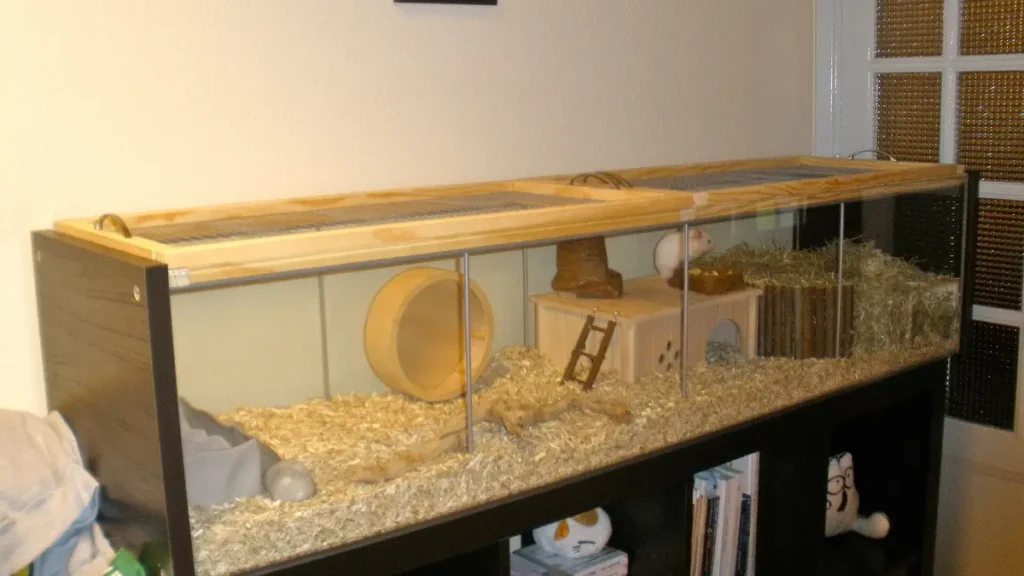
A hamster house is a small build with very little room for error. The animal inside it weighs less than a paperback book, chews everything it can reach, burrows through bedding that is deeper than it is tall, and can squeeze through a gap the width of a fingertip. When a customer pays a startup to install one, they are not buying a box. They are buying a safe, measured home where a tiny animal can sleep, run, dig, hide, and gnaw without getting hurt, stuck, or out.
That is why a hamster house installation startup lives or dies on its measurements. A wheel that is two centimetres too small bends a Syrian hamster’s spine a little more every night. A platform that is ten centimetres too high turns a normal tumble into a broken leg. Bedding that is five centimetres too shallow collapses every burrow the hamster digs. The tools in this guide exist to catch those mistakes on a screen, in the workshop, and on site, before a single panel is cut or a single screw is driven.
This article compares the nine best AI tools for hamster house installation startups in 2026. Each one handles a different part of the build, from the first site survey to the final handover, and each one is judged on the same question: does it make the finished hamster house safer, better measured, and easier to install? The answers below cover tunnels, wheels, bedding, chew-proofing, runs, ventilation, estimating, and bookkeeping, so a new startup can launch with confidence instead of learning the expensive lessons on a customer’s living-room floor.
Key takeaways
- A hamster house is a burrowing build first: deep bedding, solid floors, and low fall heights matter more than height or decoration.
- Wheel size is the most common measurement mistake, so size the wheel to the species before anything else is fixed in place.
- Chew-proofing is a materials job, not an afterthought: untreated hardwood, safe joints, and correct bar spacing keep the hamster inside and unharmed.
- Ventilation must move air without creating a draught across the sleeping house, and that balance has to be planned, not guessed.
- The nine tools below cover the whole job, from layout and quoting to handover, and they pay for themselves by preventing one bad install.

What a hamster house installation startup actually builds
A hamster house installation startup builds and fits a complete home for one hamster, usually a Syrian hamster or a dwarf species, in a customer’s home. The work starts with a survey of the room: where the house will stand, how much floor space is genuinely free, how warm or draughty that corner is, and whether the floor is level. It ends with a finished house that is clean, safe, and ready for bedding, food, water, and a hamster that will test every joint within an hour of moving in.
This is a wooden build, and that distinction matters. A hamster house is made from untreated hardwood panels, wooden dowels, and mechanical fixings, with mesh only where ventilation demands it. It is not a sealed glass tank, and it is not a reptile habitat: there are no heat lamps, no misting systems, and no basking zones, because a hamster needs a cool, dry, well-ventilated sleeping space and deep bedding, not a heated glass box. The tools in this guide are built around that wooden, burrow-first design, and they treat glass as a viewing panel at most, never as the whole house.
Customers also expect the startup to explain its choices. A new owner who has read that a hamster needs a big wheel will ask why the wheel in the quote is 28 centimetres and not 20. A customer comparing quotes will ask why one startup allows 20 centimetres of bedding and another allows eight. The tools in this guide produce the drawings, the measurements, and the written record that answer those questions before they are asked, and that record is part of what the customer is paying for. Anyone weighing the cost of the house itself against the cost of the animal’s everyday life can start by reading how to save money on a new hamster cage before they book a survey, because the same sizing and bedding rules decide whether a cheap cage is a bargain or a false economy.
How the nine tools were compared
Every tool below was judged against the same five tests. First, does it measure something a hamster house genuinely depends on, such as wheel diameter, fall height, bedding depth, or bar spacing? Second, does it work from a real room survey, with the customer’s actual floor space and species, rather than from a generic template? Third, does it produce a record the installer can follow on site and the customer can keep afterwards? Fourth, does it save time or prevent a mistake that would otherwise cost a call-back, a rebuild, or a vet bill? Fifth, does it fit a small startup, with pricing and setup that a one-van business can actually run?
| Tool | Best for | What it checks | Starting point |
|---|---|---|---|
| HammyLevel AI | Multi-level layouts | Platform heights and fall distances | Room survey and species |
| WheelFit AI | Wheel sizing | Wheel diameter, clearance, and noise | Species and floor plan |
| BurrowBed AI | Bedding and burrows | Bedding depth, stability, and nesting zones | Base depth and bedding type |
| ChewGuard AI | Chew-proofing | Materials, joints, and bar spacing | Material list and drawings |
| TubeLink AI | Tunnels and tubes | Tube diameter, length, and ventilation | Layout and species |
| HammyBreeze AI | Ventilation | Airflow, draughts, and humidity | Room survey and mesh plan |
| HammyRun AI | Attached runs | Run size, fencing, and predator-proofing | Garden or room survey |
| HammyQuote AI | Estimates and quotes | Materials, labour, and job costing | Measured layout |
| HammyLedger AI | Jobs and bookkeeping | Invoices, schedules, and aftercare | Confirmed quote |
The 9 best AI tools for hamster house installation startups
1. HammyLevel AI: the best tool for multi-level layouts and safe drop heights
HammyLevel AI designs the levels inside a hamster house and checks every drop height before the build starts. The installer enters the floor footprint, the species, and the height of the base, and the tool draws the platforms, ramps, and ladders that fit inside it. It then flags any platform from which a fall could injure the animal, and it suggests a lower platform, a deeper bedding landing zone, or a ramp with a gentler slope instead.
This matters because hamsters are poor climbers with poor eyesight, and they fall. A rabbit or a ferret can cope with a steep ramp and a long drop, but a hamster that falls from a high platform onto a hard floor can break a leg, and a broken leg in an animal that small is a serious injury. HammyLevel AI treats 15 centimetres as a cautious ceiling for an unguarded drop onto bedding, and it treats any drop onto a hard surface as a fault to be designed out, not a risk to be accepted.
2. WheelFit AI: the best tool for wheel size, placement, and silent running
WheelFit AI sizes the exercise wheel to the species and checks that it fits the house without forcing a compromise anywhere else. The installer enters the species, and the tool sets the minimum diameter: at least 28 to 30 centimetres for a Syrian hamster, and at least 20 centimetres for a dwarf hamster, with a solid running surface and no rungs or mesh that can catch a foot. It then checks the clearance above the wheel, the space behind it, and the distance to the nearest wall, so the wheel can spin freely without rubbing.
A wheel that is too small is the single most common fault in a hamster house, and it is also the hardest for a customer to spot, because a hamster will still run on a wheel that is bending its spine. The damage builds up night after night, and by the time the owner notices a curved back or a reluctance to run, the harm is done. WheelFit AI makes the minimum diameter a hard rule in the design, not a suggestion, and it flags any layout that tries to fit a smaller wheel to save space.
3. BurrowBed AI: the best tool for bedding depth, burrow stability, and nesting zones
BurrowBed AI plans the bedding in a hamster house the way a builder plans foundations: as the part everything else stands on. The installer enters the base depth, the bedding type, and the species, and the tool calculates how deep the bedding must be in each zone, how much bedding the job needs in litres, and whether the burrows the hamster digs will hold their shape or collapse. It recommends 15 to 20 centimetres across most of the base, deeper in one corner where the hamster is most likely to nest, and shallower only where a wheel or a sand bath needs a firm footing.
Bedding depth is the part of the build that customers most often try to cut, because deep bedding looks messy and costs more than a thin layer. BurrowBed AI gives the installer the numbers to defend it: a Syrian hamster in 8 centimetres of bedding cannot dig a burrow at all, and a hamster that cannot burrow is a stressed hamster that chews bars, climbs, and tries to escape. The tool shows the customer a simple cross-section of the house with the burrow drawn in, which makes the reason for the depth obvious in a way that words alone do not.
4. ChewGuard AI: the best tool for chew-proofing, bar spacing, and gnaw-safe materials
ChewGuard AI checks every material and every joint in a hamster house against one fact: the hamster will chew it. A hamster’s teeth grow throughout its life, and gnawing is how the animal keeps them worn down. That means the house itself is a chew toy, and any material that is poisonous, any glue that is toxic, and any joint that comes apart when chewed is a fault in the design, not a maintenance issue.
Bar spacing gets its own check, because a hamster can flatten its body and squeeze through a gap that looks far too small. ChewGuard AI sets the maximum gap at 10 millimetres for a Syrian hamster and 7 millimetres for a dwarf hamster, and it checks mesh panels, ventilation slots, and lid gaps against those limits. It also checks the lid and the door latches, because hamsters learn to push, lift, and gnaw at the same weak point every night, and a latch that holds on the first evening may not hold on the thirtieth.

5. TubeLink AI: the best tool for tunnel and tube routes and connectors
TubeLink AI designs the tunnels and tubes that connect the parts of a hamster house, and it checks each one for the two ways a tunnel can go wrong: it can be too small, or it can be too long. The installer draws the route from the sleeping house to the run, or from one level to another, and the tool checks the diameter against the species, the length against the ventilation, and the slope against the risk of a fall. A tube that a Syrian hamster cannot turn around in is a trap, and a tube that is long and steep is a slide the animal did not ask for.
The tool is strict about diameter. A Syrian hamster needs a tube of at least 10 centimetres inside diameter, and a dwarf hamster needs at least 7 centimetres, with a smooth inside surface and no narrow connector rings that catch fur or feet. TubeLink AI rejects the small, brightly coloured plastic tubes sold for smaller animals, because they are the most common cause of a hamster getting stuck, and it records the approved diameter on the order list so a cheaper substitute cannot slip in during the build.
6. HammyBreeze AI: the best tool for ventilation without draughts
HammyBreeze AI plans the airflow through a hamster house so that fresh air moves through it without blowing across the sleeping hamster. The installer enters the room’s temperature, the position of windows and radiators, and the mesh plan for the lid and sides, and the tool models where the air will go. It then flags any vent that sends a draught straight into the sleeping house, and it suggests moving the vent, adding a baffle, or changing the mesh size instead.
This is a balance that is easy to get wrong in both directions. A house with too little ventilation builds up ammonia from urine, and the damp, stale air irritates the hamster’s lungs and makes the bedding smell within days. A house with too much ventilation in the wrong place leaves the sleeping chamber cold and draughty, and a cold hamster stops eating properly and sleeps badly. HammyBreeze AI treats both faults as equal, and it will not sign off a design that solves one by creating the other.
7. HammyRun AI: the best tool for attached runs and playpen sizing
HammyRun AI sizes the attached run and the playpen that give a hamster safe time outside its house. The installer enters the available space, whether indoors or in a garden, and the tool draws a run that is large enough for the animal to explore without being so large that the hamster cannot find its way back to the house. It checks the fencing height, the mesh size, and the floor of the run, and it flags any gap, any climbable corner, and any surface that could injure a foot.
An outdoor run needs more protection than an indoor one, and the tool plans for that from the start. It checks the run against predators, including cats and birds, and against the weather, including rain, wind, and direct sun. It requires a solid roof or cover on any outdoor run, a floor that the hamster cannot dig out of, and a shaded corner where the animal can retreat from the heat. It also checks that the run is never left unattended for long, and it prints that warning on the handover card, because a run is a supervised space, not a second house.
8. HammyQuote AI: the best tool for measured estimates and job costing
HammyQuote AI turns the finished design into a priced quote that a customer can understand and a startup can stand behind. It takes the measurements from the other tools, the material list, the labour time, and the travel distance, and it produces a line-by-line estimate with the wheel, the bedding, the panels, and the fixings priced separately. The customer can see what each part costs, and the installer can see where the margin is, which makes the awkward conversation about price much shorter.
The tool also handles the comparisons that customers actually make. A customer who has seen a cheap wire cage online will ask why a wooden hamster house costs more, and HammyQuote AI produces a short comparison that shows the floor space, the bedding depth, and the wheel size side by side, so the difference is visible. The same comparison works against other small-animal housing, and it is worth remembering that a different animal’s housing is a different build with different costs: a reader who wants to see how another small-pet installation is priced can look at the way guinea pig hutch installation startups are quoted, and the contrast makes the hamster’s burrowing and wheel requirements stand out all the more clearly.
9. HammyLedger AI: the best tool for jobs, invoices, and bookkeeping
HammyLedger AI runs the business side of the startup once the design is sold: the job schedule, the invoices, the deposits, and the aftercare reminders. A confirmed quote becomes a job with a date, a van slot, a material order, and a checklist, and the tool keeps those pieces together so that nothing is booked without its materials and no material is ordered without its job. For a one-van business doing three or four installs a week, that coordination is the difference between a smooth week and a week of missed appointments.
The tool also manages the aftercare that turns a single install into repeat work. It schedules a check-in message a week after handover, a bedding top-up reminder after a month, and a safety-check reminder after six months, and it records the customer’s answers. A customer who reports that the hamster has chewed through a panel gets a fast repair visit, and a customer who reports that everything is fine gets a note to book a wheel check before winter. Those small contacts are where referrals come from, because a hamster owner who feels looked after will tell the next hamster owner they meet.
What a hamster house installation costs in 2026
A hamster house installation in 2026 usually costs between £180 and £450 for a standard wooden build, depending on the size, the species, and the parts fitted. A basic dwarf hamster house with a 20-centimetre wheel, standard bedding, and a single sleeping house sits at the lower end of that range. A large Syrian hamster house with a 30-centimetre wheel, deep bedding, tunnels, and an attached run sits at the upper end, and a custom build with a fitted stand or a garden run can go beyond it.
Labour is usually priced as a half day for a standard install, including the survey, the build, and the handover, and a full day for a custom build or a garden run. The survey itself is often free when the customer accepts the quote, and charged as a small fee when they do not, which is a fair way to handle the time spent measuring a room that never becomes a job. Travel is priced by distance, and a startup that works in one town will quote travel differently from one that covers a whole county.
From survey to handover: how a job runs
A typical hamster house installation takes between three and seven days from the first call to handover, and most of that time is design and ordering, not building. The survey takes about an hour, the design takes a day, the materials take two or three days to arrive, and the build and installation take half a day. A startup that promises a finished house the next morning is either keeping stock of standard sizes or cutting corners on the survey, and the customer should know which one it is.
The build usually happens in the workshop, not in the customer’s home, because cutting panels and drilling mesh is dusty work. The installer cuts the panels from the cutting list, assembles the house, fits the wheel, the tunnels, and the sleeping house, and tests every latch and connector before the house leaves the workshop. The installation itself is then a matter of positioning the house, levelling it, filling the bedding to the planned depth, fitting the water bottle and the food bowl, and checking the ventilation with the house in its final position.
Checklist: before you take the first booking
- Confirm the species, because a Syrian hamster and a dwarf hamster need different wheel sizes, different bar spacing, and different amounts of floor space.
- Measure the room, not the catalogue picture, and check the floor is level, the corner is free of draughts, and the house will not sit in direct sunlight.
- Price the wheel by its true running diameter, and check the model against the box before the order is placed.
- Plan the bedding depth on paper, and make sure the base is deep enough to hold 15 to 20 centimetres without spilling over the sides.
- List every material the hamster can chew, and remove anything glued, painted, or treated before the cutting list is sent to the workshop.
- Book the handover as a lesson, with the care card printed, the first check-in dated, and the photographs of the finished house ready to hand over.
Frequently asked questions
How much does it cost to start a hamster house installation business?
Starting a hamster house installation business usually costs between £1,500 and £4,000, depending on whether the founder already owns a van and workshop tools. The largest costs are a reliable van, a saw and drill setup, and the first stock of hardwood panels, mesh, wheels, and fixings. The AI tools in this guide are a small part of that total, and most of them pay for themselves within the first few jobs by preventing a wrong measurement or a wasted trip to the supplier. A founder who starts from a home workshop with a small van can begin at the lower end of the range and add a dedicated workshop once bookings are steady.
What size hamster house does a hamster actually need?
A Syrian hamster needs at least 100 centimetres by 50 centimetres of unbroken floor space, with bedding 15 to 20 centimetres deep and a wheel of at least 28 centimetres in diameter. A dwarf hamster needs at least 100 centimetres by 50 centimetres as well in most welfare guidance, with a wheel of at least 20 centimetres, although the smaller species tolerates a slightly smaller footprint when the bedding is deep and the wheel is correctly sized. The key point is that floor space matters more than height, and that a tall, narrow house is a poor substitute for a low, wide one, no matter how impressive it looks. Measure the floor first and let the height follow.
How is a hamster house different from a rabbit hutch?
A hamster house and a rabbit hutch are different builds for different animals, even though both are wooden houses with a run. A hamster house is a burrowing build with deep bedding, a large exercise wheel, narrow bar spacing, and low platforms, because the animal digs, runs at night, and can squeeze through a gap of 10 millimetres. A rabbit hutch is a grazing build with a much larger footprint, a ramp the rabbit can hop up, and space for hay, because the animal is larger, eats hay constantly, and needs room to stretch and hop. The tools, the materials, and the safety checks are different for each, which is why this guide measures the hamster house on its own terms; a reader comparing the two trades can see the contrast in the way rabbit hutch installation startups plan their builds, where the ramp, the hay store, and the outdoor run drive the design instead of the wheel and the burrow.
Do I need planning permission to install a hamster house?
A hamster house installed inside a home almost never needs planning permission, because it is furniture, not a building. The position to check is an outdoor run or a garden structure: a large permanent run, a shed conversion, or a structure close to a boundary can fall under local rules, especially in a listed building or a conservation area. A startup that installs garden runs should check the local rules for each job and note the answer on the quote, so the customer is not surprised later. When in doubt, a short call to the local planning office is cheaper than rebuilding a run in a different place.
How do I protect a hamster house from cats and other pets?
A hamster house in a home with cats needs a lid that a cat cannot lift, latches a cat cannot paw open, and a position the cat cannot sit on top of for hours. The house should stand on a solid stand or table, not on the floor, with the lid fixed by a latch that needs a thumb to open, and the mesh should be strong enough that a cat cannot bend it. The run should never be used in a room with a cat unless the cat is shut out, and the house should be checked weekly for any panel a cat has been pawing at. A dog in the house is a smaller risk than a cat, but the same rule applies: the hamster’s house is the hamster’s space, and other pets do not get access to it.
What is the most profitable service for a hamster house startup?
The most profitable service for a hamster house startup is usually the refit and upgrade, not the brand-new install. A new install is a one-off sale, but a refit brings the startup back to a customer who already owns a hamster, already trusts the business, and already knows the house needs a bigger wheel, deeper bedding, or safer materials. Refits are also faster to quote, because the survey is shorter and the customer already understands the measurements. The second most profitable service is the safety check, which is a short visit that often leads to a refit, a run, or a second house, and which keeps the startup in touch with customers who will recommend it to other hamster owners.
The bottom line
A hamster house installation startup succeeds on measurements, not on marketing. The wheel must fit the species, the bedding must be deep enough to hold a burrow, the platforms must be low enough to fall from safely, the materials must be safe to chew, and the ventilation must move air without chilling the sleeping hamster. The nine tools in this guide cover each of those measurements in turn, and together they turn a small wooden build into a professional service with drawings, quotes, records, and aftercare to match.

Keep what speaks to you.
Leave room for your own perspective.


