A dog wash station installation startup lives or dies on details that never appear in a grooming salon brochure. The best AI tools for dog wash station installation startups in 2026 understand that difference. They help a small crew size a raised tub to the dogs that will actually use it, price a warm-water supply and a drainage run that carries hair and shampoo away from the house, and remember the non-slip ramp a nervous old dog will actually climb. A tool built for a bathroom refit will happily quote a tiled stall and a glass door, but it will not ask where the wash water goes, how a wet Labrador gets into the tub, or whether the floor stays safe when shampoo and water mix underfoot.
Dog wash stations are a small trade with a loyal customer base. Homeowners want a wash tub in the garage, mudroom or garden room so muddy walks end at the back door instead of in the bath. Groomers opening a self-service wash need rows of tubs that survive constant use, and boarding kennels, breeders, doggy daycare centres and veterinary practices all need a station that washes dogs quickly and safely without soaking the person doing the washing. The jobs usually take one or two days, the ticket is often higher than a simple plumbing swap because of the tub, the water supply and the drainage, and the customer judges the result every time a wet dog comes in from the garden. Word of mouth travels fast among dog owners, and one flooded utility room or one tub a large dog cannot climb into can cost a new business its first season of referrals.
This guide compares nine AI tools that fit a dog wash station installation startup, not a bathroom showroom and not a general plumbing firm. Every tool was judged on the same practical questions: does it help with the wash-specific work of tubs, sprayers, ramps, drainage and warm water; does it work from a phone on a wet job site; and can a two-person crew learn it in a week? You will find a comparison table, detailed reviews, a startup checklist, and answers to the questions new owners ask most often.
Key takeaways
- Start with one design or scanning tool, one quoting tool, and one photo documentation tool. Those three carry most of the revenue for a new dog wash station installation startup.
- Drainage and warm water decide the job. A station that floods the floor, drains slowly, or runs cold halfway through a wash will generate complaints no shiny tub can fix, so design the fall and the hot-water supply before you quote.
- Size the tub to the dog, not the room. A tub that fits a spaniel but not a retriever, or has no ramp for an arthritic dog, will be replaced within a year.
- Photograph every stage, from the bare floor to the finished station. Wash stations are judged in daily use, and a photo record settles disputes about drainage, sealing and finish.
- Keep the stack small and charge per job where you can. A quiet winter month should not punish a young business with software bills it cannot cover.

Best AI tools for dog wash station installation startups at a glance
| Tool | Best for | Starting price | Standout feature |
|---|---|---|---|
| Polycam | 3D site scans from phone photos | Free plan, Pro from around $10 per month | Room scans that measure a utility space in minutes |
| Booster Bath | Raised wash tubs for home installs | Tubs from around $200 | Elevated tubs that save the washer’s back |
| Flying Pig Grooming | Stainless steel tubs with ramps and doors | Tubs from around $450 | Walk-in tubs with ramps for large and older dogs |
| SHELANDY | Handheld sprayers and pet dryers | Sprayers from around $25, dryers from around $80 | Affordable shower and drying kits for every install |
| Shernbao | High-velocity dryers | Dryers from around $150 | Fast drying that shortens every wash appointment |
| K-9 III Dryer | Heavy-duty drying for kennels and salons | From around $400 | Two-motor power built for all-day commercial use |
| NDS | Drainage that keeps wash stations dry | From around $35 per kit | Channel drains and catch basins that trap hair |
| CompanyCam | Photo documentation | From around $29 per user per month | AI-tagged site photos proving what was built |
| Jobber | Quoting, scheduling and invoicing | From around $49 per month | Quotes, bookings and invoices in one place |
What makes a dog wash station installation startup different
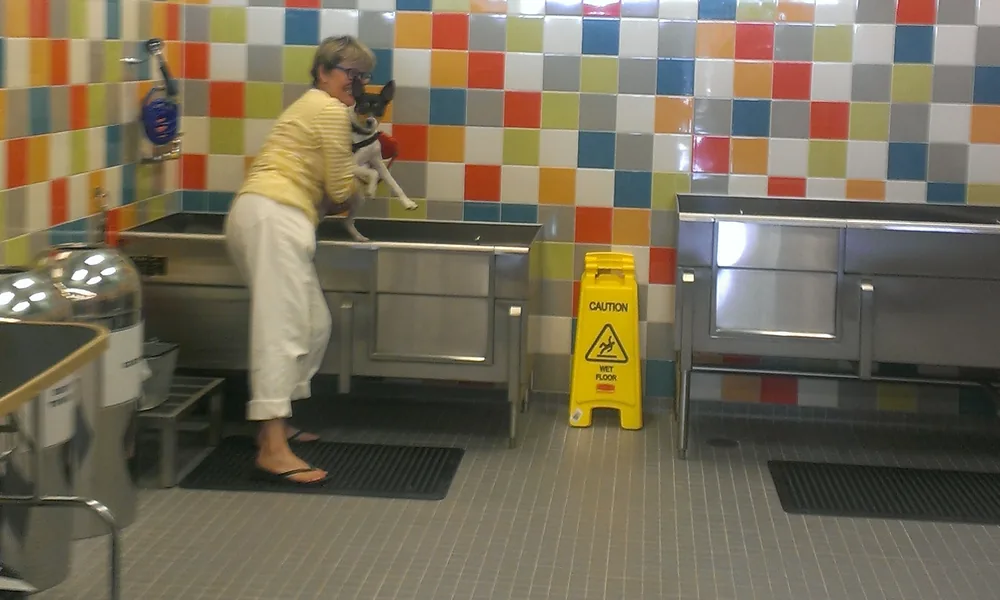
A dog wash station is not a shower, and it is not a bath. It is a raised wash tub built for an animal that cannot be told to stand still, step up, or keep the water inside the tub. The installer has to think about the dog, the person washing it, and the building, all at the same time. The tub must be high enough that the washer is not bent double, low enough or ramped enough that the dog can get in, and strong enough to hold a large breed that shifts its weight suddenly.
Water is the second problem, and it is bigger than most new founders expect. A dog wash uses far more water than a hand basin and far more hair than any household drain was designed for. The supply needs to stay warm through a full wash, which means checking the boiler or water heater rather than assuming it will cope. The drain needs a fall that carries water away, a trap that catches hair before it blocks the pipe, and a floor that slopes gently towards the drain. The same drainage thinking applies to a dog run installation, where a run that floods in the first heavy rain comes straight back to the installer.
The third difference is the customer. Dog owners are emotional buyers. They are buying comfort for an animal they love, and they will pay for a station that is kind to an old dog, a nervous rescue, or a giant breed that hates baths. They also talk to other dog owners constantly, at the park, at training classes, and in breed groups online. A good install in one house often leads to three more enquiries in the same street, and a bad one travels just as fast. That is why the tools in this guide are judged on the finished job as the customer experiences it, not on how clever the software looks in a demo.
Finally, the work itself is a mix of trades. One job can involve a plumber for the supply and waste, a tiler or flooring fitter for a non-slip wet floor, a joiner for boxing in pipework and building a ramp, and an electrician if a dryer or a water heater needs a new circuit. The startup that wins is the one that coordinates those pieces without losing the details between them, and AI tools help most when they carry measurements, photos and prices from the first visit through to the final invoice without anything being retyped or forgotten.
How to choose AI tools for a dog wash station installation startup
Start from the job, not the app store. Write down the five things that eat your time on a typical install: measuring the space, designing the layout, pricing the tub and the plumbing, booking the crew and the customer, and proving the finished work. Then buy one tool for each of the first three, and let the quoting tool handle the last two. Anything beyond that is a nice extra, not a need.
Judge every tool on wet-site reality. If it needs a laptop, a clean desk and strong Wi-Fi, it will not survive a garage with wet hands and a dog shaking water everywhere. The tools that work run on a phone, save offline, and take a photo or a measurement in seconds. Ask for a trial and run it on a real job: if the crew does not reach for it on the second job, cancel it and move on.
Watch the pricing model as closely as the features. A tool that charges per report or per user can look cheap and then grow quietly as the team grows. The safest shape for a startup is a free tier or a low monthly plan with no long contract, so a quiet month does not punish the business. The warm-water supply and drainage have more in common with an outdoor shower installation than with a bathroom refit, so the tools that help you plan water and drainage for outdoor work are worth a look even though the end product is a dog tub, not a human shower.
Finally, pick tools that talk to each other, or at least export cleanly. A scan that cannot become a quote, or a quote that cannot become an invoice, creates retyping, and retyping creates mistakes. One shared customer record, one set of photos, and one price list are worth more than three clever features that live in separate apps.
The best AI tools for dog wash station installation startups in detail
1. Polycam: The best tool for 3D site scans from phone photos
Polycam turns a phone into a 3D scanner. Walk around the garage, utility room or kennel with the camera running, and the app builds a measured 3D model of the space, including the floor, the walls, the existing plumbing points and the door the dog will come through. A scan captures all of that in minutes, and the measurements can be checked later at the desk instead of guessed on site.
The scan also changes the sales conversation. Instead of describing a tub size with hand gestures, the founder can show the customer the tub sitting in a model of their own room, at the right height, with space for the ramp. Customers who can see the layout approve faster and change their minds less often. Polycam offers a free plan, with Pro from around $10 per month. Very small, cluttered rooms can confuse the model, so take a second scan after the room is cleared and keep a tape measure in the van for the one measurement that decides the job.
2. Booster Bath: The best tool for raised wash tubs for home installs
Booster Bath makes the elevated tub that most home dog wash stations are built around. The tub sits on legs at waist height, so the person washing does not bend over a bath or kneel on a wet floor. It comes with a drain hose, a sprayer attachment and a restraint system, and it breaks down for transport, which makes it easy to carry into a customer’s home for a demonstration. For a startup, that demonstration matters: a customer who watches their own dog stand comfortably in the tub, at a height where the owner is not straining, is most of the way to saying yes.
Tubs start from around $200, which makes them the most affordable way into the trade and a sensible first product to stock. They suit small and medium dogs best, and they are the right recommendation for flats, small utility rooms and customers on a budget. They are not the answer for very large breeds or for commercial use, where a heavier steel tub earns its keep. Stock one for demos and small-dog jobs, be honest about its limits, and use it to win the customers who will later upgrade to a plumbed-in steel station.
3. Flying Pig Grooming: The best tool for stainless steel tubs with ramps and doors
Flying Pig Grooming builds stainless steel dog wash tubs that suit the serious end of the trade: plumbed-in stations in grooming salons, kennels, daycare centres and larger homes. The tubs are heavy-gauge steel, so they do not flex, stain or hold smells, and they come with a walk-in door and a ramp option that lets large and older dogs step in without being lifted. That ramp is the difference between a station that works for every dog and one that quietly excludes the arthritic Labrador and the nervous rescue that will not be picked up.
Prices start from around $450 for the smaller tubs, with larger walk-in models costing considerably more, so specify carefully rather than stocking on spec. Measure the dog first, then the room, then the door the tub has to pass through, because a steel tub that does not fit through the customer’s back door is an expensive mistake. Pair the tub with a proper hair trap and a non-slip floor, and quote those together so the job does not come back for a blocked drain.
4. SHELANDY: The best tool for handheld sprayers and pet dryers
SHELANDY is the brand behind the sprayer and dryer kits that turn a tub into a working wash station. The handheld shower heads are designed for pet coats, with a gentle spray that reaches through thick fur without frightening the dog, and the dryer kits pair a blower with a hose and nozzles that dry a coat far faster than a towel. For a startup, SHELANDY is useful because the kits are affordable, widely available, and easy to fit on almost any install, from a budget home station to a salon refit. Sprayers start from around $25 and dryers from around $80.
The practical value is in the demonstration. A customer who feels the sprayer pressure and hears the dryer on its lowest setting understands what they are buying far better than any brochure can explain, so keep a demo kit in the van. The limit is durability: SHELANDY dryers are excellent value for home and light commercial use, but a salon washing twenty dogs a day will wear one out faster than a heavier commercial dryer. Recommend them honestly for the right volume.
5. Shernbao: The best tool for high-velocity dryers
Shernbao makes high-velocity dryers that blast water out of a thick coat in minutes. A high-velocity dryer pushes a strong stream of air that drives water off the coat and out of the undercoat, and it can cut drying time by half or more. For a grooming salon or a self-service wash, that time is money: a station that washes and dries a dog in forty minutes instead of seventy can fit more appointments into the same day.
Dryers start from around $150, which makes them an easy add-on to any install, and they need only a standard power socket and a little wall or shelf space. Warn customers that high-velocity dryers are loud, especially on the highest setting, and that nervous dogs need to be introduced to the airflow slowly. Fit the dryer where the hose reaches the tub without trailing across the floor, and show the customer how to start on low speed.
6. K-9 III Dryer: The best tool for heavy-duty drying for kennels and salons
The K-9 III Dryer, from the Electric Cleaner Company, is the workhorse of commercial dog drying. It has two motors, a variable speed control, and a steel body built to run all day in a kennel or a busy salon. Where a home dryer would overheat or lose power by the tenth dog, the K-9 III keeps the same airflow from the first appointment to the last. For a startup fitting out kennels, boarding centres and high-volume grooming salons, it is the dryer to specify when the customer asks for the best rather than the cheapest.
Prices start from around $400, and the dryer needs a dedicated space and a power supply that can handle the load, so check the electrics on the survey and quote any extra circuit honestly. A dryer that trips the power halfway through a wash is worse than no dryer at all. The payoff is reliability and speed: a salon that dries dogs quickly can take more bookings, and it is one of the few products in this guide that customers already know by name.
7. NDS: The best tool for drainage that keeps wash stations dry
NDS makes the channel drains, catch basins and grates that keep a dog wash station from becoming a paddling pool. A wash station produces a lot of water and a lot of hair, and a standard household drain will block. NDS channel drains run along the front of the tub and carry water to a catch basin, where a basket traps the hair before it reaches the pipe. The grates are rated for foot traffic, the channels can be cut to length, and the whole system is designed to be lifted and cleaned, which is exactly what a wash station needs.
Kits start from around $35, which makes drainage one of the cheapest parts of the job and one of the most expensive to fix later. Design the drainage before the tub is ordered, not after it arrives, and show the customer how to lift the grate and empty the hair basket. A customer who knows how to clean the trap will not ring in a panic when the water drains slowly.
8. CompanyCam: The best tool for photo documentation
CompanyCam is a photo app built for trades. Every photo taken on site is stamped with the time, the place and the job, and the team can add notes, draw on the image, and share a link with the customer. For a dog wash station startup, that record is worth more than any single tool: the floor before the work, the pipes before they are boxed in, the fall of the drain and the sealing around the tub are all hidden by the finished job, and all of it is what a dispute is about when something leaks six months later.
Pricing starts from around $29 per user per month, which is easy to justify on a single avoided dispute. The app works offline and uploads when the signal returns, so it survives garages and kennels with poor reception. The habit matters more than the app: photograph every stage before covering anything up, and send the customer a short set of finished photos on the day.
9. Jobber: The best tool for quoting, scheduling and invoicing
Jobber is the office behind the van. It turns a site visit into a quote, a quote into a booking, and a booking into an invoice, all from the same customer record. A founder can send a quote from the driveway before leaving the customer’s house, which is often the difference between winning the job and losing it to the next installer who rings back first. The scheduling view shows which days the crew is free, the invoicing chases late payment automatically, and the customer can approve a quote online without a phone call.
Pricing starts from around $49 per month, which is the largest software cost in this guide and the easiest to justify: a single job won by a same-day quote can cover a month of the subscription. The limit is that Jobber is only as good as the price list behind it, so build honest prices for tubs, plumbing, drainage and flooring before the first quote goes out.
Building your starter stack for a dog wash station installation startup
Buy three tools first and earn the rest. A Polycam scan on the survey, a Jobber quote before leaving the driveway, and CompanyCam photos at every stage will carry most of the revenue for a new dog wash station business. Those three cost little, work from a phone, and solve the three problems that sink new firms: measuring wrong, quoting slowly, and having no record when something is questioned.
Stock one demo tub, one sprayer kit and one dryer in the van. The demo tub is Booster Bath for home customers, with a Flying Pig brochure and measurements for salon work. Customers who book a wash station often ask about the rest of the garden setup too, from a dog house installation to fencing and shelter, so knowing the neighbouring trades helps the conversation even when the wash station is the only job being quoted.
Grow the stack in the order the work grows. When the jobs are mostly home installs, add SHELANDY kits and NDS drainage to every quote as standard. When salon and kennel work arrives, add Shernbao and K-9 III dryers and the heavier Flying Pig tubs. When the team grows past two people, add the scheduling and time-tracking features inside Jobber rather than buying a separate app. A stack that grows with the work never costs more than the work it supports.
Dog wash station installation startup checklist
- Measure the space with a 3D scan and confirm the door, the drain position and the hot-water supply on site.
- Size the tub to the largest dog that will use it, and confirm the ramp or step works for old and nervous dogs.
- Design the drainage first, with a hair trap the customer can clean, and a floor that falls gently towards the drain.
- Check the water heater can stay warm through a full wash, and quote any upgrade honestly.
- Fit non-slip flooring, seal every joint, and photograph the pipework before it is boxed in.
- Send the quote the same day, book the job in Jobber, and send finished photos and the invoice on completion day.
Common mistakes dog wash station installation startups make with AI tools
The most common mistake is buying software before understanding the job. A founder who has never fitted a tub will buy a design app, a quoting app and a marketing app in the first week, then discover that none of them knows what a hair trap is. Spend the first month on installs, even small ones, and let the real problems choose the tools.
The second mistake is sizing the tub to the room instead of the dog. A tub that fits neatly in the corner but cannot hold the customer’s retriever is a wasted install, and the customer will not forgive it. Always ask what dogs will use the station, how big they are, and how they get into a bath today. An old dog that cannot jump needs a ramp or a walk-in door, and a nervous dog needs a tub it can step into without being lifted. Get the dog right and the room usually follows.
The third mistake is treating drainage as plumbing someone else will sort out. The drain is the heart of a wash station, and the installer who designs it is the installer who does not get called back. Check the fall with a level, fit a hair trap, and show the customer how to clean it. A slow drain in week one becomes a bad review in week two, and a bad review in a dog-owning community travels further than any advert.
The final mistake is forgetting the human at the end of the hose. The person washing the dog will use this station in wet clothes, with a wet dog, several times a week. If the sprayer hose is too short, the dryer is out of reach, or the floor is slippery, they will stop using the station and tell their friends why. Walk through a wash yourself before handover and fix the small annoyances while the tools are still in the van.
Frequently asked questions
What are the best AI tools for dog wash station installation startups in 2026?
The best starter set is Polycam for 3D site scans, Jobber for quoting, scheduling and invoicing, and CompanyCam for photo documentation, plus Booster Bath tubs for home installs and Flying Pig steel tubs for salons and kennels. Add SHELANDY sprayers and dryers, Shernbao and K-9 III dryers, and NDS drainage as the jobs demand them.
How much should a dog wash station installation startup spend on AI tools?
Budget around $100 to $150 per month for software in the first year, covering a scanning app, a quoting app and photo documentation. Product stock is separate: one demo tub, one sprayer kit and one dryer in the van will cost a few hundred pounds or dollars once, and the tubs themselves are ordered per job. Keep every subscription monthly with no long contract until the work is steady.
How do I size a dog wash tub correctly?
Size the tub to the largest dog that will use it. The dog should be able to stand, turn around and lie down comfortably, with room for the washer’s hands on both sides. Measure the dog’s length and height, not just its weight, and check the door the tub must pass through. For old, arthritic or nervous dogs, choose a walk-in tub with a ramp or a door rather than a tub the dog must be lifted into.
Do dog wash stations need a special drain?
Yes. A wash station needs a drain with a fall that carries water away quickly, a trap or basket that catches hair before it reaches the pipe, and a floor that slopes gently towards the drain. A standard household drain will block with hair. Fit a channel drain and a cleanable hair trap, and show the customer how to empty it.
What is the best first AI tool for a one-person dog wash station business?
Jobber, because it turns a site visit into a quote the same day and chases the invoice afterwards. A one-person business wins work by being fast and organised, and a same-day quote from the driveway beats a prettier quote that arrives three days later. Add Polycam for measuring once the quoting habit is in place.
Will AI tools replace the need for skilled dog wash station installers?
No. AI tools measure rooms, draft quotes and organise photos, but they cannot feel whether a floor is slippery when wet, judge whether a nervous dog will climb a ramp, or solder a joint that will not leak. The installer’s judgement about dogs, water and buildings is the business. The tools make a good installer faster, not a beginner skilled.
The bottom line
A dog wash station installation startup succeeds on the same things its customers care about: a tub the dog can get into, warm water that lasts the whole wash, a drain that never blocks, and a floor that stays safe underfoot. The AI tools in this guide help a small crew deliver those things reliably, quote quickly, and prove the work with photos. Start with a scanner, a quoting tool and a camera, stock one demo tub, and let the jobs choose the rest.

Keep what speaks to you.
Leave room for your own perspective.