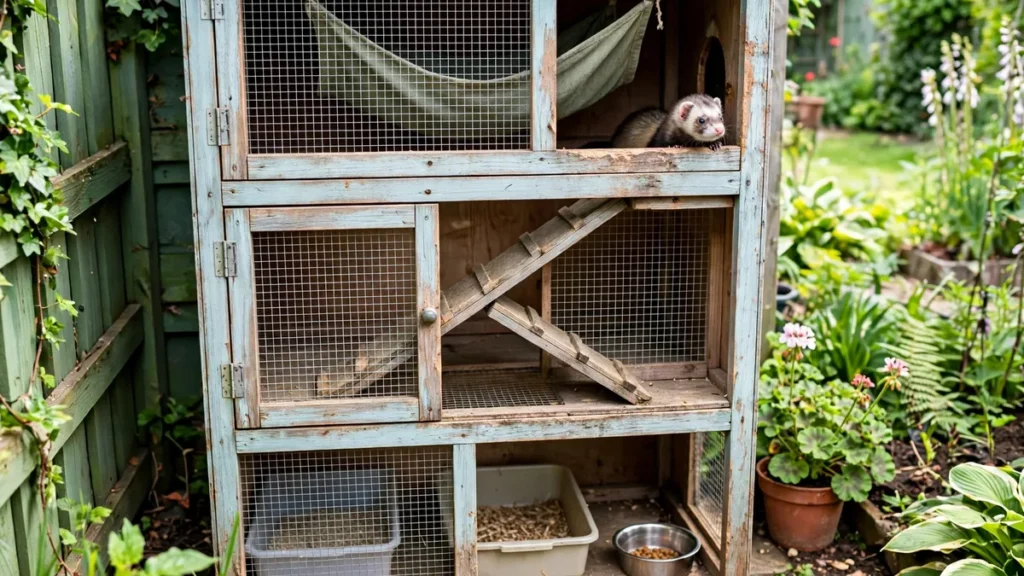
A dog kennel installation startup builds the house that dogs sleep in. That is the whole trade, and it is worth stating plainly at the start, because the word kennel gets used for several different businesses. The build itself is a small building job with a very particular client: a row of sleeping quarters, each with its own attached run, put together so the dogs stay warm, dry and clean, and so the person who looks after them can feed, water and muck out without a daily struggle. The sleeping box is the heart of it. It needs solid walls, a raised floor, insulation that holds heat through a cold night, and a doorway sized for the dog, not for the person. The run in front of it needs fencing that a determined dog cannot climb or chew through, a gate that latches properly, and a floor that drains. Water, drainage, light, ventilation, a feed store and a wash-down point complete the build.
Most kennel jobs go wrong in the same few places, and almost all of them are decided before a single panel is ordered. A sleeping box that is too big will not hold a dog’s body heat. A run laid dead flat will hold puddles, and puddles mean damp bedding, sore paws and smell. A kennel put on the lowest corner of a garden will flood in the first heavy rain. A quote that counts panels but forgets the slab, the drainage, the insulation and the gates will run out of money halfway through. The tools in this guide turn a garden, a set of measurements and a list of dogs into a kennel layout that fits, a drainage fall that actually falls, and a price that covers the whole job.
The nine tools below cover the kennel build from the first site visit to the final invoice. Three handle planning: surveying the ground, drawing the layout of sleeping quarters and runs, and checking what permissions the build needs. Three handle the building itself: sizing the runs, working out insulation, and getting drainage right. The last three handle feeding, pricing and the books, which decide whether the startup survives its first year. None of them is a boarding-booking tool, and none of them is a dog-exercise product. Running a boarding kennel is a different trade from building one, and the tools that run a boarding business will not tell you whether a sleeping box will stay warm in January. What follows is a builder’s toolkit, chosen for the kennel house itself.
Key takeaways
- A dog kennel is a house first: sleeping quarters, attached runs, insulation, drainage and feeding points, built as one working unit.
- Measure and draw the layout before ordering anything, because run sizes, gate positions and drainage falls are expensive to change once panels are cut.
- Insulation and drainage decide whether a kennel works in winter; a cold, wet sleeping box is a failed build, however tidy the fencing looks.
- Price the slab, the drainage, the insulation and the gates as well as the panels, or the quote will run short halfway through the job.
- Keep a record of every kennel you build, with sizes, materials and photos, because the next customer will ask for exactly that.
The nine tools at a glance
| Tool | Best for | What it does for a kennel build |
|---|---|---|
| KennelPlan AI | Layout of sleeping quarters and runs | Draws the kennel block, sizes each sleeping box to the dog, and places gates and feeding points |
| KennelSite Survey AI | Site survey and ground levels | Maps the ground, finds the falls and the wet corners, and sets slab heights before digging starts |
| KennelPermit AI | Permissions and compliance | Checks what a kennel build needs locally, and assembles the drawings and documents for the application |
| RunDraft AI | Run sizing and panel layouts | Sizes each run, works out panel lengths and fixings, and produces a cutting list for the fencing |
| InsulKennel AI | Insulation and warmth | Models heat loss from each sleeping box and specifies insulation, draught proofing and bedding depth |
| DrainKennel AI | Drainage and wash-down | Designs falls, channels and soakaways so runs drain and wash down without pooling |
| FeedKennel AI | Feeding stations and storage | Plans feeding points, water supply and dry feed storage for the number of dogs the kennel holds |
| KennelBid AI | Estimating and quoting | Prices the whole build, slab and drainage included, and turns it into a clear written quote |
| KennelLedger AI | Jobs and bookkeeping | Tracks each kennel job, its costs and its payments, and keeps the startup’s books in order |
Planning the kennel before a panel goes up
Every good kennel starts on paper, or on a screen, long before anyone picks up a drill. The planning stage is where the expensive mistakes are cheapest to fix: a run a foot too short, a gate that opens the wrong way, a sleeping box facing the prevailing wind, a slab laid without a fall. Each of these is a small drawing decision that becomes a big rebuilding job once the concrete has set. The three tools in this section survey the ground, draw the kennel block and check the paperwork, so the crew works from a settled plan.
KennelPlan AI: the best tool for kennel layouts
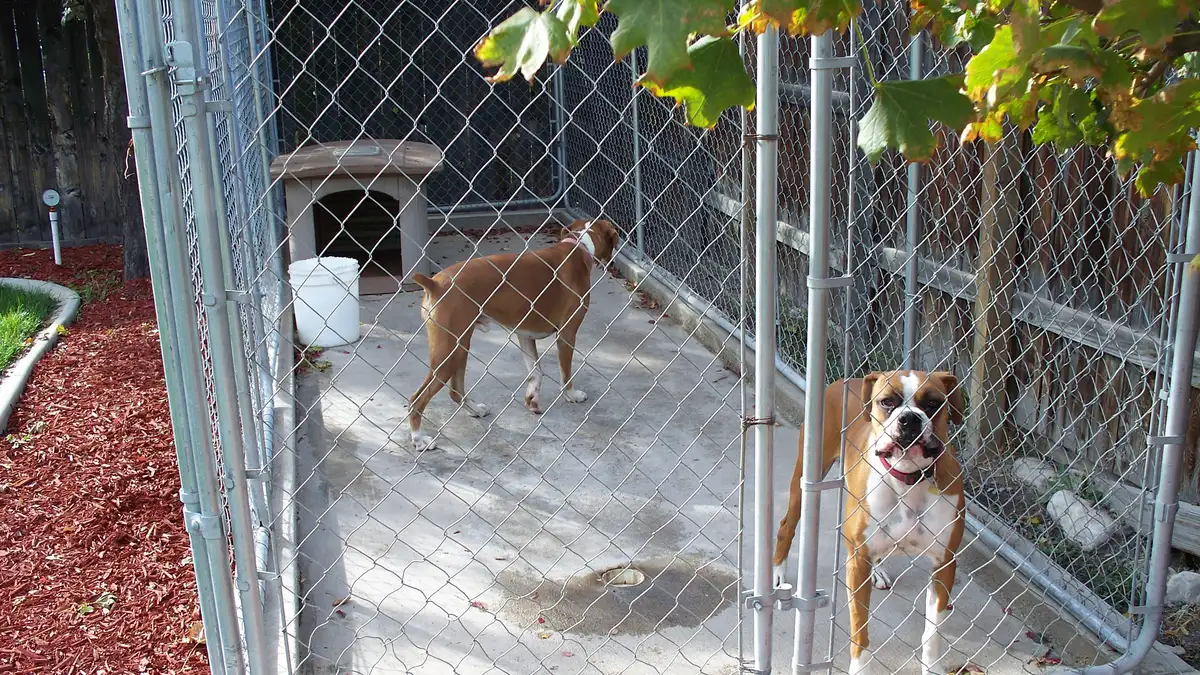
KennelPlan AI is the drawing board for the kennel block. You start with the dogs the kennel has to hold, because the dog decides the size of everything else. A kennel for a pair of boxers needs different sleeping boxes and runs from a kennel for a pack of hounds. KennelPlan AI takes the breed sizes and the number of dogs, and works out sleeping-box dimensions that hold body heat without cramping the dog, run lengths that give a dog room to move, and partition heights that stop a dog jumping into the next run. It lays those boxes out in a block, with a service passage behind them so feeding and mucking out happen without walking through every run.
What makes it a kennel tool, rather than a generic shed planner, is that it thinks in pairs: every sleeping quarter gets its run, every run gets its gate, and every gate gets a latch position a dog cannot nose open. The plan shows where the water reaches, where the feed store sits, and where the drainage channel runs, so the services are drawn in rather than added as an afterthought. It also flags which way the sleeping-box doors should face, so driving rain does not blow straight into the bedding, and where the sun falls in the morning, so the runs dry after a wet night. A customer who can see that level of thought on a drawing is a customer who trusts the build.
KennelSite Survey AI: the best tool for site surveys
KennelSite Survey AI answers the first question of any kennel job, which is whether the ground is on your side. A kennel lives outside, in all weathers, and the ground decides more than the customer usually realises. The tool takes phone photos and a few measured points around the plot, and builds a picture of the levels: where the high ground is, where the water runs when it rains, which corner stays wet for days after a storm, and how much fall there is across the kennel. That matters because a kennel slab needs a fall to drain, and a fall needs somewhere to go. A slab that drains towards the house, or towards a neighbour’s fence, is a problem waiting for the first heavy rain.
The survey also settles the practical questions that shape the build and the price. It shows where the digger can get in, where the spoil can go, and whether the ground is soft enough to need a deeper slab. It records how far the water supply and the drainage have to travel, and how far materials have to be carried from the road to the build. A kennel at the bottom of a long garden costs more to build than the same kennel beside a driveway, and the survey makes that cost visible before the quote goes out rather than after the job has started.
KennelPermit AI: the best tool for permissions and compliance
KennelPermit AI handles the part of the job that no installer enjoys and every installer needs: the paperwork. A dog kennel is a structure, and structures have rules. Whether a kennel needs formal permission depends on where it sits, how big it is, how close it is to boundaries, and what the dogs will be used for. A two-run kennel for a family’s own dogs is a different case from a twelve-run kennel for a breeding or boarding business. KennelPermit AI takes the kennel size, the plot and the intended use, and works out what applies: whether the build is likely to need permission, what drawings an application needs, and which local rules about noise, smell and drainage are likely to matter.
The tool’s real value is that it builds the application from the same drawings the crew will build from. The layout and the levels go in, and the application comes out with consistent numbers: the same footprint, the same heights, the same drainage route. Nothing undermines an application faster than a drawing that disagrees with the survey. KennelPermit AI keeps a checklist of what has been submitted and what is still outstanding, and it drafts the plain-language description of the build that planning officers and neighbours actually read: what is being built, where it sits, and how noise and waste will be handled.
Building the kennel house: sleeping quarters, runs and warmth
Once the plan is settled, the build comes down to three things: the runs, the warmth and the water. The runs are what everyone sees, but they are only one third of the job. A kennel that looks smart and leaves its dogs cold and wet is a bad kennel, and a kennel that is warm and dry but impossible to clean will not stay good for long. The sleeping quarters have to hold heat, the runs have to drain, and the whole block has to be washable, because a kennel is cleaned every day. The three tools in this section each own one of those three things, and together they decide whether the kennel works in February, when the dogs spend the longest hours inside.
RunDraft AI: the best tool for run sizing and panel layouts
RunDraft AI sizes the runs and works out the fencing. A run is not just a fenced square: its length decides whether a dog can move, stretch and turn comfortably; its width decides whether two dogs can pass without a scuffle; its height decides whether a dog stays in. RunDraft AI takes the dog sizes from the plan and sets each run to fit, then lays out the panels, posts and gates to match. It works out panel lengths so that cuts are kept to a minimum, because every cut panel is a weak point and a waste of material, and it places the posts where the ground is firmest rather than where the drawing happens to fall.
The tool is careful about the details that dogs test every day. It specifies mesh sizes that a puppy cannot squeeze through and a large dog cannot get a jaw around, and it sets the bottom of the fencing low enough that a digging dog cannot get underneath. It places gates so they open into the service passage rather than into the run, which is the difference between a handler walking in safely and a dog walking out. It also works out the fixings: the bolts, brackets and post anchors that hold the fencing to the slab and to the sleeping quarters, because a run is only as strong as its fixings, and a panel that rattles is a panel a dog will worry at until it gives.
There is a clear line here that matters for this guide. A run on its own is an exercise space, and there is a separate trade that builds those: a dog run installation is about open ground, turf and exercise, not about a house dogs sleep in. A kennel run is different, because it is attached to a sleeping quarter, it is roofed or partly roofed, and it is built to be cleaned daily. RunDraft AI designs kennel runs, not exercise yards: the runs it sizes connect to sleeping boxes, drain to the same channel, and share the same roofline. A startup that understands that difference will not sell a customer an exercise yard when they need a kennel.
InsulKennel AI: the best tool for insulation and warmth
InsulKennel AI models the heat of a sleeping box, and it is the tool that decides whether the dogs are warm at three in the morning. A sleeping box works because a dog’s body heat warms a small, enclosed space. If the box is too big, the heat is lost. If the walls are thin, the heat passes straight through. If there is a draught, the heat never builds up at all. InsulKennel AI takes the box size, the wall and roof materials, the bedding depth and the local winter temperatures, and works out whether the box will hold its heat through a cold night. It then specifies what is needed: how thick the insulation should be, where the draughts will come from, and how the doorway should be covered so heat stays in while the dog can still come and go.
The tool also thinks about the rest of the kennel block. A row of sleeping boxes shares walls, and shared walls lose less heat than outside walls, which is one reason kennels are built in blocks rather than as separate boxes scattered around a garden. The roof matters as much as the walls: heat rises, and a thin roof over a sleeping box is a hole the warmth escapes through. InsulKennel AI checks the roof, the floor and the bedding, because a raised floor with insulation underneath is worth more than a thicker wall on a cold slab. It also warns about the summer problem: a kennel that holds heat in January can overheat in July, so the tool checks ventilation and shade as well.
DrainKennel AI: the best tool for drainage and wash-down
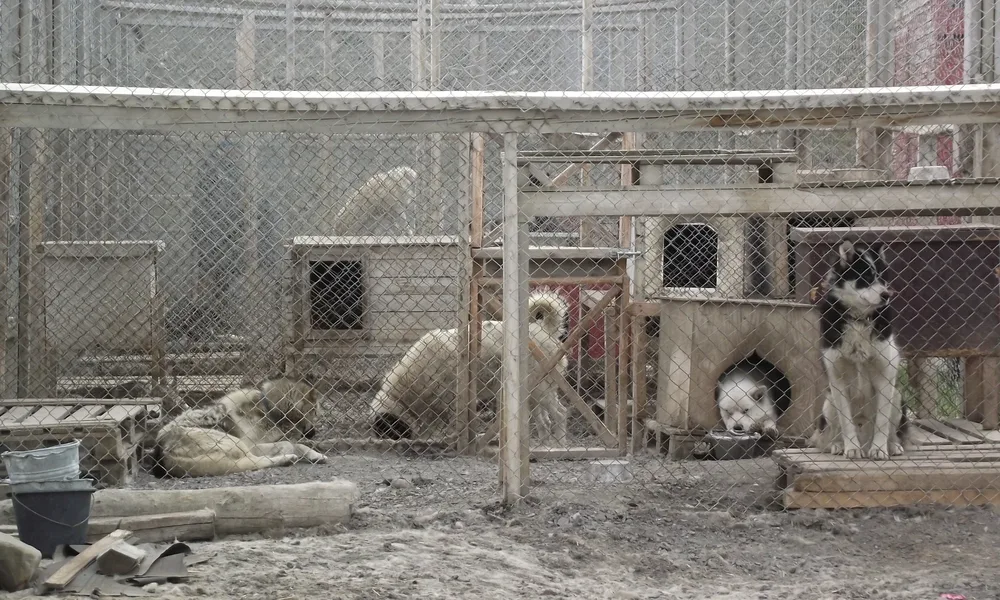
DrainKennel AI designs the drainage, which is the least glamorous and most important part of a kennel. A kennel is washed down every day, and the water has to go somewhere. If it pools in the runs, the dogs stand in it, the bedding gets damp, and the smell builds up. If it runs towards the sleeping boxes, the boxes get wet from underneath. DrainKennel AI takes the slab levels from the survey and sets the falls: the gentle slope of each run towards its channel, the fall of the channel towards its outlet, and the route from the outlet to the soakaway or the drain. A fall of a few millimetres per metre is enough, but it has to be consistent, and it has to be right in every run, not just in the first one.
The tool also plans the wash-down itself. It places the water points so a hose reaches every run without dragging across the sleeping boxes, and it checks that the drainage can take the flow of a proper wash-down rather than just the rain. It works out where the solids go, because a kennel drain that clogs with bedding and waste is a drain that stops working, and it specifies traps and access points so the drainage can be cleared without digging the slab up. It also checks the ground beyond the kennel: a soakaway needs ground that drains, and a kennel on heavy clay needs a different answer from a kennel on free-draining soil.
Drainage is also where the kennel meets the wash station, and the two should not be confused. Some kennels have a wash station fitted inside them, and that is a separate piece of kit with its own trade: a dog wash station installation is about baths, dryers and warm water for washing dogs, not about building the kennel itself. DrainKennel AI makes sure the kennel’s own drainage can serve a wash station if the customer wants one, with a fall and a trap in the right place, but it does not pretend that a wash station is a kennel. The kennel comes first, the drainage comes with it, and anything fitted into the kennel afterwards has to work with the drainage that is already there.
Feeding, quoting and keeping the books
A kennel that is built well but priced badly will not keep its builder in business, and a kennel that is fed badly will not keep its dogs healthy. The last three tools cover feeding, pricing and the books. Feeding is a building decision, because the feeding points, the water supply and the feed store have to be built into the kennel, not added afterwards. Pricing is a building decision too, because a quote that forgets the slab and the drainage loses money. And the books are what turn a run of good builds into a startup that can afford the next van and the next quiet month.
FeedKennel AI: the best tool for feeding stations and storage
FeedKennel AI plans how the dogs eat and drink, and where the food is kept. Every run needs a feeding point that is easy to reach from the service passage and hard for the dog to tip over, and every kennel needs a water supply that does not freeze in winter and does not go stale in summer. The tool works out how many feeding points the kennel needs, where they sit in each run, and how the water reaches them, whether that is a piped supply with frost protection or a filling point that the keeper can reach with a bucket. It also plans the feed store: a dry, vermin-proof place close to the runs, big enough for the food the kennel goes through in a week.
The feeding plan matters for the dogs’ health as well as for the keeper’s convenience. Dogs fed in a damp corner will eat damp food, and food stored in a damp shed will spoil. FeedKennel AI checks the store against the damp: it should be raised off the ground, ventilated, and away from the drainage channel, not sitting in the wettest corner of the plot because that was where there was space. It also thinks about the daily routine. Feeding ten dogs should take minutes, not an hour, and the feeding points, the store and the water should sit on a route that makes sense, so the keeper is not carrying buckets across runs full of dogs.
KennelBid AI: the best tool for estimating and quoting
KennelBid AI prices the job, and it prices all of it. The tool takes the layout, the run sizes, the insulation, the drainage and the feeding plan, and turns them into a line-by-line estimate: panels and posts, concrete and drainage, insulation and bedding, gates and fixings, water and feed storage, labour and travel. It prices the parts customers forget to ask about, which are usually the parts that cost the most: the slab under the runs, the channel and the soakaway, the insulation inside the sleeping boxes, and the gates, which are small in number and large in price. A quote that lists those parts separately is a quote the customer can understand, and a quote the customer understands is a quote they are more likely to accept.
The tool also keeps the pricing honest in the other direction. It is easy to overprice a kennel by guessing, and a startup that overprices will lose jobs to installers who price properly. KennelBid AI prices from the measurements, so two kennels of the same size cost the same to quote, and the difference between two quotes is a real difference in the build. It also tracks what the job actually cost against what was quoted, so the startup learns where its estimates go wrong: whether the concrete always runs over, whether the drainage always takes longer than expected, or whether the travel to rural plots is eating the margin.
KennelLedger AI: the best tool for jobs and bookkeeping
KennelLedger AI keeps the books, and it keeps them job by job. A kennel startup’s money comes in lumps: a deposit, a payment on delivery of materials, a final payment when the kennel is finished. Its money goes out in lumps too: panels, concrete, insulation, fuel, and the occasional broken tool. KennelLedger AI tracks each job from the first deposit to the final payment, so the installer always knows which jobs have been paid, which are waiting on a payment, and which are owed money. It matches the costs to the job they belong to, so the profit on each kennel is visible, not just the money in the bank.
The tool also keeps the records that a kennel business needs beyond the money. Every job gets a file: the survey, the layout, the quote, the materials used, the photos of the finished kennel, and the customer’s details. That file is worth real money, because the next customer will ask what the last kennel looked like, how big it was and what it cost, and an installer who can answer from a file will win work that an installer who has to guess will lose. It is also the record that settles arguments: when a customer says a gate was supposed to open the other way, or a run was supposed to be longer, the file shows what was agreed.
A kennel installation checklist
- Walk the ground and survey the levels before drawing anything, and mark where the water runs when it rains.
- Size every sleeping box to the dog that will sleep in it, and check that the box will hold heat through a cold night.
- Draw the runs with their gates, fixings and drainage falls on the same plan as the sleeping quarters, not as an afterthought.
- Price the slab, the drainage, the insulation and the gates as well as the panels, and put every line on the written quote.
- Check what permissions the build needs, and get them before the concrete is ordered, not after it is poured.
- Photograph the finished kennel, file the survey, the layout and the quote together, and keep them for the next customer who asks.
Frequently asked questions
What does a dog kennel installation startup actually build?
It builds the kennel house itself: a row of sleeping quarters, each with its own attached run, plus the insulation, drainage, water and feeding points that make the kennel work. The sleeping quarters keep the dogs warm and dry, the runs give them space to move and relieve themselves, and the drainage and feeding points make the kennel cleanable and workable every day. The startup builds the structure; looking after the dogs inside it is a different trade.
How is a dog kennel different from a dog run?
A dog run is an open exercise space, usually a fenced area of turf or ground where dogs run and play. A dog kennel is a house: it has insulated sleeping quarters with doors, attached runs that are built to be washed down daily, and services such as water, drainage and feed storage. A kennel run is part of the kennel and connects to a sleeping box; a dog run stands on its own. The two trades share fencing skills, but they build different things.
How much insulation does a kennel sleeping box need?
Enough that the box holds a dog’s body heat through the coldest night in the area. That usually means insulated walls and roof, a raised insulated floor, and a doorway with a flap or a baffle to stop draughts. The exact thickness depends on the box size, the materials and the local winter temperatures, which is why the insulation should be worked out for each kennel rather than guessed. A box that is too big for the dog will not hold heat, however thick the insulation is.
What drainage does a kennel run need?
Every run needs a fall towards a channel, and the channel needs a fall towards an outlet, which leads to a soakaway or a drain. The fall only needs to be a few millimetres per metre, but it has to be consistent across every run. The drainage also has to take the flow of a daily wash-down, not just the rain, and it needs traps and access points so it can be cleared without digging up the slab. A run that holds puddles is a run that will stay damp and smelly.
Do I need planning permission for a dog kennel?
It depends on the size of the kennel, where it sits on the plot, how close it is to boundaries, and what the dogs will be used for. A small kennel for a family’s own dogs is often a different case from a large kennel for breeding or boarding. The safe step is to check before building, with drawings of the footprint, the heights and the drainage, rather than assuming no permission is needed. A kennel built without the permission it needed can be ordered to come down.
What should a kennel installation quote include?
The whole build, line by line: panels and posts, the concrete slab, drainage channels and soakaway, insulation and bedding, gates and fixings, water supply and feed storage, labour and travel. A quote that lists only the panels is not a quote for a kennel, it is a quote for a fence. A clear, itemised quote lets the customer compare like with like, and it protects the installer when the customer asks for changes, because each change can be priced from the same list.
Bottom line
A dog kennel is a house, and a dog kennel installation startup is a builder of houses for dogs. The job is the sleeping quarters, the runs, the insulation, the drainage and the feeding, built as one working unit that stays warm in winter, dry in the rain and cleanable every day. The nine tools in this guide cover that job from the survey to the books. Start with the ground, draw the kennel before ordering anything, price every line, and keep a record of every build. A kennel built that way will keep its dogs comfortable, its keeper happy and its builder in work.

Keep what speaks to you.
Leave room for your own perspective.