A courgette farm installation startup builds the ground a courgette crop grows on and keeps it growing through the season. The work starts with seed and beds: choosing varieties that fruit early and keep fruiting, laying out wide beds with room for bushy plants to spread, and setting up water so the plants never stall in a dry spell. Then the season turns into a picking rhythm, because courgettes are picked young and often, sometimes every two days at the height of summer, and every missed round leaves marrows behind that slow the plant down. A good installation makes that rhythm easy, with clear picking access, crates close to hand, and a packing routine that gets fruit from the bed to the buyer while it is still firm and glossy.
Courgettes are a fruiting squash crop, and that shapes every decision the startup makes. The plants are bushy rather than climbing, so they need bed space and open air instead of trellises and ties. The fruit is picked young, at fifteen to twenty centimetres, rather than left to swell into marrows, which means the picking plan matters more than the planting plan once the season is under way. And the crop is sold fresh, packed the same day it is picked, so cooling and packing sit at the heart of the build rather than at the edge of it. The tools below are chosen for that exact build: seed, beds, picking and packing, with nothing borrowed from orchards, root crops or leafy greens.
This guide compares nine AI tools that fit a courgette farm installation startup in 2026, from sowing dates to buyer invoices. Each tool is judged on the courgette job it does best and the mistakes it helps a new grower avoid. A tomato farm installation startup shares the fruiting-vegetable season but trains its plants up trellises, while a courgette farm keeps its plants low and bushy in open beds.
Key takeaways
- A courgette farm is a fruiting squash build: seed, beds, picking and packing, with fruit picked young and often through the summer.
- Bushy plants need wide beds and open picking access, not trellises, ties or climbing frames.
- Succession sowing keeps fresh plants coming so the picking never gaps and the packing never stops.
- Watering must stay steady, because dry spells followed by heavy watering split fruit and stall flowering.
- Start with the planning tool, add the picking tool when the first flowers open, and add the ledger before the first sale.
The nine best AI tools for courgette farm installation startups at a glance
| Tool | Best for | First-season job |
|---|---|---|
| CourgetteSow AI | Variety choice, sowing dates and succession slots | Sets the sowing calendar and variety list |
| MarrowBed AI | Bed layout, spacing and picking access | Draws the bed plan with room to pick |
| SquashBloom AI | Flower counts and fruit-set tracking | Counts flowers and forecasts the first pick |
| CourgetteWater AI | Irrigation scheduling for steady fruiting | Keeps water even through dry spells |
| MarrowScout AI | Pest, disease and mildew scouting | Flags mildew and slugs before they spread |
| PickYoung AI | Picking windows, crews and crates | Plans the every-two-days picking round |
| CourgettePack AI | Grading, packing and box sizes | Grades fruit and packs it for sale |
| MarrowCool AI | Rapid cooling and the cold chain | Cools picked fruit fast and keeps it firm |
| CourgetteLedger AI | Costing, quotes and buyer records | Prices the crop and tracks every sale |
Planning and planting the courgette farm
Planning is where a courgette farm is won or lost, because the crop grows fast and forgives very little. Seed sown a fortnight late fruits a fortnight late, and beds laid too narrow turn into a wall of leaves by July. The three tools in this section take that planning work over: one sets the sowing dates, one draws the beds, and one watches the flowers.
1. CourgetteSow AI: Best for variety choice, sowing dates and succession slots
CourgetteSow AI is the planning tool to buy first, because every other decision on the farm hangs off the sowing calendar it builds. The grower enters the field size, the first safe sowing date for the local frost pattern, and the buyers the farm will sell to, and the tool returns a variety list and a sowing schedule that spreads the crop across the season. It favours varieties that fruit early and keep fruiting rather than varieties that crop heavily for three weeks and then stop, and it staggers sowings so a fresh batch of plants comes into fruit just as the first batch starts to tire. That staggering is the heart of a courgette farm, because a single sowing gives a glut in midsummer and a gap in late summer, while three staggered sowings give a steady pick every two days from June into September.
The tool also keeps the variety list short on purpose. A new grower does not need eight varieties; three is enough, with one early variety for the first pickings, one main variety for the bulk of the season, and one late variety that holds up when the nights turn cool. CourgetteSow AI scores each variety for fruiting speed, disease tolerance and fruit shape, and it warns when a variety is known for producing too many male flowers early in the season, which is the most common reason a new grower sees flowers everywhere and fruit nowhere. It also tracks seed lots, so the grower knows which packet each bed came from if a batch germinates badly, and it holds the sowing dates against the weather forecast, nudging a sowing forward by a few days when a cold snap is coming rather than letting tender seedlings sit in cold soil.
For a startup, the sowing calendar becomes a promise the grower can make to buyers. When a stall asks when the first courgettes will arrive, the grower answers with a date checked against variety, frost and succession. The planner also sizes each sowing to the picking labour available, so the farm never plants more than its crew can pick every two days.
2. MarrowBed AI: Best for bed layout, spacing and picking access
MarrowBed AI draws the beds, and on a courgette farm the beds are the farm. Courgette plants are bushy and spread wide, with big leaves that shade the soil and hide the fruit, so a bed laid too narrow becomes a wall of leaves that the picker has to push through, and fruit gets missed, swells into marrows, and slows the whole plant. The tool lays out beds with generous spacing between plants, usually around ninety centimetres, and paths wide enough for a picker carrying a crate to walk without stepping on plants or snapping leaves. It also angles the beds to the sun and the prevailing wind, because courgettes fruit best in open sun and still air, and a bed tucked behind a hedge stays damp and mildews early.
The layout is built around the picking round, not just the planting. Each bed has a picking side, and the tool checks that no fruit sits further than an arm’s reach from a path. It marks where crates should be staged at the bed ends, so the picker never carries a full crate further than a few steps.
The tool also handles the soil side of the bed plan, mapping compost to the beds that need it most and recording what grew in each bed last year, so courgettes never follow squash. It flags beds that hold water in spring, because courgettes hate wet feet and a flooded bed in May loses plants in June.
3. SquashBloom AI: Best for flower counts and fruit-set tracking
SquashBloom AI watches the flowers, and on a courgette farm the flowers are the forecast. Courgettes produce male and female flowers, and only the female flowers set fruit, so a plant covered in flowers can still be a week away from its first pick if the female flowers have not opened yet. The tool counts flowers from phone photos taken on the picking round, separates male from female, and turns the count into a first-pick date and a weekly fruit estimate. That estimate is what lets the grower tell buyers how many crates to expect next week, and it is what lets the picking crew know whether Tuesday will be a light round or a heavy one.
The tool is also the earliest warning system the farm has. If the flower count stalls while the plants look healthy, the tool flags the likely causes in order: cold nights slowing female flowers, dry soil holding back fruit set, or poor pollination because bees are scarce in a wet week. Each flag comes with a fix the grower can act on the same day, such as watering the beds before the evening or hand-pollinating the first female flowers with a soft brush. The tool keeps a running record of flowers per plant, so the grower can see which beds are fruiting hard and which are falling behind, and move the picking crew to the beds that need them most. It also notes the ratio of male to female flowers across the season, which tells the grower whether the variety choice is working or whether next year’s list needs a variety that sets female flowers earlier.
For a startup selling to shops, the fruit-set forecast is the difference between a buyer who trusts the farm and one who stops calling. A shop ordering twenty crates a week needs to know on Monday how many crates Friday will bring, and SquashBloom AI gives that number with the flowers as evidence rather than a guess.
Growing, watering and picking
Once the plants are in the ground, the farm becomes a routine: water steadily, scout for trouble, and pick every two days. A missed watering in a hot week splits the fruit, a missed mildew patch spreads across a bed in days, and a missed picking round turns the next round into marrows. A pumpkin patch installation startup grows a cousin crop that is left to swell and cure on the vine, while a courgette farm picks its fruit young and keeps picking, and the three tools in this section keep that young-and-often routine honest.
4. CourgetteWater AI: Best for irrigation scheduling for steady fruiting
CourgetteWater AI schedules the water, and steady water is what keeps a courgette plant fruiting without a break. Courgettes drink heavily in summer, and the worst thing a grower can do is let the soil dry out and then flood it, because the fruit swells fast after the flood, splits its skin, and goes soft before it reaches the buyer. The tool reads soil moisture from probes in the beds and the weather forecast for the coming week, and it sets a watering schedule that keeps the soil evenly damp, watering early in the morning so the leaves dry before nightfall. It waters the root zone rather than the leaves, because wet leaves invite mildew, and it raises the water slowly in a heatwave instead of doubling it in one day.
The tool also splits the farm into watering zones. Young plants in the latest succession need light, frequent watering to settle their roots, while plants in full fruit need deeper watering to fill the fruit without splitting it. Each zone gets its own schedule, adjusted daily against soil probes and the forecast.
For a startup, the tool pays for itself in fruit that reaches the buyer firm and unblemished. Split courgettes are graded out at packing, and every crate graded out is money lost, so the watering schedule is really a packing schedule in disguise. It also guards the water bill by watering only what the soil has lost.
5. MarrowScout AI: Best for pest, disease and mildew scouting
MarrowScout AI scouts the leaves, and the leaves tell the grower everything about the health of the crop. The first sign of powdery mildew is a faint white dusting on the oldest leaves, the first sign of slugs is a ragged edge on a young leaf overnight, and the first sign of vine trouble is a wilting leaf in the morning that does not recover by evening. The tool reads phone photos taken on the picking round, marks the suspect leaves on a map of the beds, and ranks the problems by how fast they spread. Mildew at the top of the list, because it can cover a bed in a week, and slugs next, because they work at night and a single wet week can cost a whole succession of young plants.
The scouting routine is short and regular: a walk through every bed twice a week, photos of any leaf that looks wrong, and a check of the undersides where pests hide. The tool compares each new photo against the bed’s own history, so it can tell whether a patch of mildew is new or the same patch from last week growing bigger.
The tool also keeps the spray and treatment record, which matters more than most new growers expect. Buyers ask what was used on the crop and when, and a clean record answers in seconds. It logs every treatment against the bed and date, and holds the harvest interval, so fruit is never picked before the safe interval has passed.
6. PickYoung AI: Best for picking windows, crews and crates
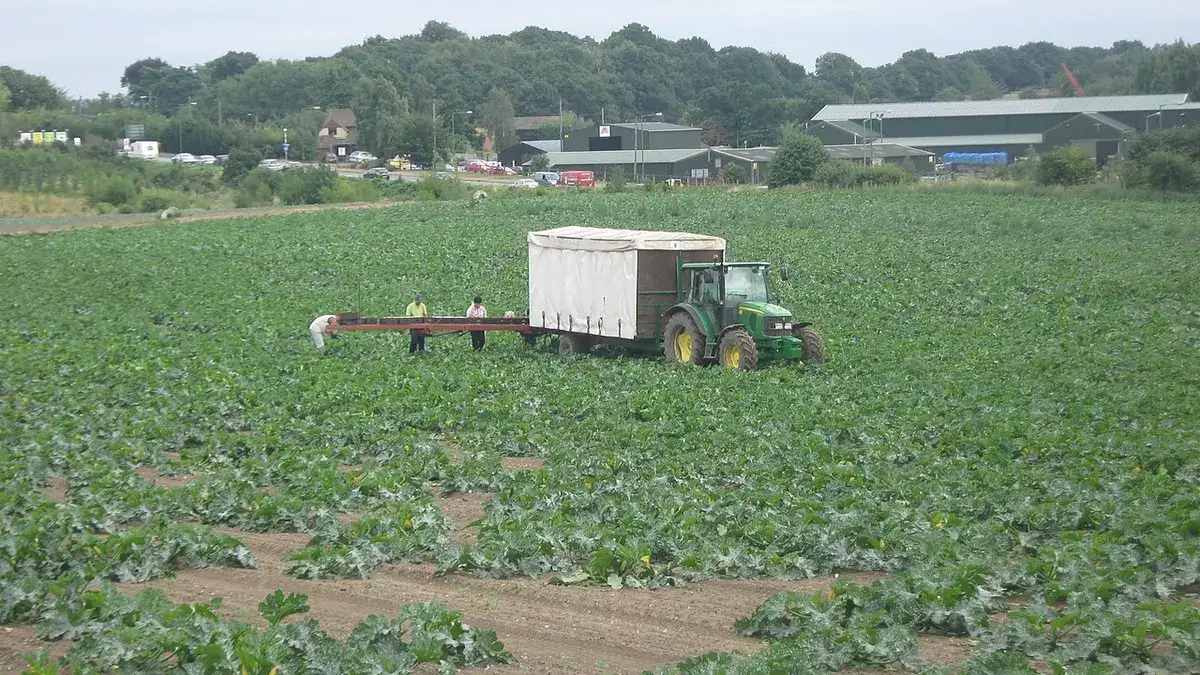
PickYoung AI plans the picking round, and the picking round is the farm’s heartbeat. Courgettes are picked every two days at the height of the season, and the tool builds the round from the flower counts, the weather and the crew available. It lists the beds in picking order, starting with the beds whose fruit is closest to the ideal size, and it sizes the crew to the fruit expected, so a light round gets two pickers and a heavy round gets four. It also sets the crate count for each bed, because a picker who runs out of crates mid-bed leaves fruit behind, and fruit left behind is a marrow by the next round.
The tool teaches the picking standard as well as the schedule. Fruit is picked at fifteen to twenty centimetres, with a short stalk left on and a clean cut rather than a twist, because a torn stalk rots and a long stalk bruises the fruit next to it in the crate. PickYoung AI shows the standard with photos on the picker’s phone, and it lets the crew leader grade a sample crate at the end of each round, so the standard stays the same from the first pick in June to the last pick in September. It also tracks the picking speed per bed, so the grower knows which beds are slowing the crew down, usually the beds where the spacing was tight or the leaves have grown over the paths, and can fix the layout next year.
The tool also ties the picking round to the packing shed, timing rounds for the cool of the morning and staggering beds so crates arrive in a steady flow rather than all at once at noon. It logs the weight picked per bed and per picker, giving the grower the numbers to pay fairly and forecast the week’s sales.
Packing, cooling and selling
Picking is only half the job, because a courgette loses firmness fast once it leaves the plant. The fruit picked in the morning needs to be graded, packed, cooled and sold the same day, and a farm that picks well but packs slowly sells soft fruit at a low price. The three tools in this section close the loop: one grades and packs, one cools and holds the cold chain, and one prices the crop and keeps the buyer records. Together they turn a good picking round into money in the bank, and they give the grower the records to prove the farm is worth buying from again next week.
7. CourgettePack AI: Best for grading, packing and box sizes
CourgettePack AI grades and packs the fruit, and grading is where the farm’s price is set. Buyers pay for firm, straight, glossy fruit of an even size, and they discount anything bent, soft or oversized, so the tool sorts each crate into grades as it is packed, with the top grade going to the shops that pay the most and the second grade going to stalls and box schemes that accept a wider size. The tool sets the grade standard with photos, so every packer grades the same way, and it sizes the boxes to the grade, because a box packed with mixed sizes bruises in transit while a box packed with even sizes travels well.
The tool also matches the pack to the buyer. A farm shop wants small boxes for the shelf, a market stall wants crates it can tip onto the table, and a box scheme wants a set number per box. The tool holds each buyer’s specification and prints the pack list for the day, so the shed packs what was ordered and nothing else.
For a startup, the packing tool is also the waste tool, because it finds a home for the seconds instead of letting them pile up. Fruit too bent for a shop can still go to a soup kitchen, a processor or a pickling buyer, and the tool keeps those buyers on the list with their own grade and price.
8. MarrowCool AI: Best for rapid cooling and the cold chain
MarrowCool AI cools the fruit fast, and fast cooling is what keeps a courgette firm from the field to the buyer. A courgette picked in the morning sun is warm, and warm fruit softens in the crate, loses its gloss, and shortens its shelf life by days. The tool schedules the cooling so crates move from the field to the cold room within the hour, and it sets the cold-room temperature to hold the fruit firm without chilling it, because courgettes bruise in cold that is too deep just as surely as they soften in heat. It tracks the temperature of every batch from the field to the buyer, so the grower can prove the cold chain never broke.
The tool also plans the cold room itself, which is a small space with a big job. MarrowCool AI sizes the cooling to the day’s pick, so a heavy round gets the fans and the space it needs while a light round does not waste power cooling an empty room. It stacks the crates with air gaps between them, because a stack packed tight stays warm in the middle, and it rotates the stock so the morning’s pick ships first and nothing sits for a second day. The tool logs the cooling time for each batch, and if a batch took too long to cool, it flags the reason, usually crates left in the sun at the bed end or a cold room door left open during packing.
For a startup selling to shops, the cold chain is the promise behind the price. A shop that receives firm, glossy courgettes on Friday will order again on Monday, while a shop that receives soft fruit will find another grower. The tool gives the grower the temperature record to stand behind the fruit.
9. CourgetteLedger AI: Best for costing, quotes and buyer records
CourgetteLedger AI keeps the money straight, and on a new farm the money is the easiest thing to lose track of. Seed, compost, water, crates, cooling and picking labour all cost money before a single courgette is sold, and the tool holds every cost against the beds it belongs to, so the grower knows the true cost of a crate from each bed. It builds quotes from those costs rather than from a guess, adding the picking and packing time the tool has already logged, so a quote to a shop covers the farm’s costs and leaves a margin instead of quietly losing money on every order.
The tool also keeps the buyer record, which is the farm’s most valuable asset after the soil. Every buyer has an entry with the grades they take, the pack they want, the price they pay and the day they order, and the tool turns that record into a weekly order list, so the grower knows on Monday who is expecting what on Friday. It invoices from the pack-out record, so the invoice matches the crates that left the shed, and it chases the payments that are late, because a small farm cannot carry a buyer who pays a month late. The tool also shows the margin per buyer, which tells the grower which buyers are worth keeping and which are costing the farm money with small orders and long drives.
For a startup, the ledger turns a good season into a second season. It shows the cost, price and profit per crate and per bed, and carries those numbers into next year’s plan, so the farm plants more of what paid and less of what did not. A farm that knows its numbers can grow with confidence.
Courgette farm installation checklist
- Choose three varieties: one early, one main-season and one late, all picked for steady fruiting rather than one heavy flush.
- Lay out wide beds with ninety-centimetre spacing and paths a crate-carrying picker can walk without stepping on plants.
- Set up steady morning watering at the root zone, and never let the beds dry out and then flood.
- Walk every bed twice a week with the scouting tool, and pull the worst mildewed leaves before the patch spreads.
- Pick every two days at fifteen to twenty centimetres, cool the crates within the hour, and pack and sell the same day.
- Price every crate from the ledger’s true costs, invoice from the pack-out record, and keep the buyer list up to date.
Frequently asked questions
How much does it cost to start a courgette farm installation startup?
The first season costs the most, because the beds, the water and the cold room all have to be built before the first sale. Seed is the smallest cost, while bed preparation, compost, drip lines, crates and a small cold room take the bulk of the budget. A farm that starts with a few beds and sells direct can start for less than a farm planting a whole field for wholesale.
Which AI tool should a courgette farm installation startup buy first?
Buy the planning tool first, because the sowing calendar and the bed plan shape everything that follows. CourgetteSow AI sets the varieties and the succession dates, and MarrowBed AI draws the beds the picking crew will work in all season. Add the picking tool when the first flowers open and the ledger before the first sale, because a farm that picks well but never invoices properly runs out of money in its first summer. The watering and scouting tools can follow once the plants are in the ground and the routine is under way.
When should courgette seed be sown for a courgette farm installation startup?
Sow after the last frost, when the soil is warm and the nights stay above ten degrees, because courgettes are tender and a cold night can check a young plant for weeks. In most of the UK that means sowing under cover in late April and planting out in late May, with direct sowings following in June for the later successions. The sowing tool holds the dates against the local frost pattern and the forecast, and it staggers the sowings so a fresh batch comes into fruit as the first batch starts to tire.
How is a courgette farm different from a tomato farm?
A courgette farm grows bushy plants in wide open beds and picks the fruit young every two days, while a tomato farm trains tall plants up trellises and picks the fruit as it ripens in trusses. The courgette bed needs picking access on foot with crates close at hand, and the tomato row needs trellis wires, ties and truss counts. The two farms share a summer season and a packing shed, but their tools are different, because the courgette build is seed, beds, picking and packing on the ground, and the tomato build is trellis, truss and ripeness up a string. A vegetable garden installation startup grows a little of everything in one garden, while a courgette farm grows one crop at field scale, and that single-crop focus is what makes the tools in this guide pay.
Can one person run a courgette farm installation startup?
One person can run a small courgette farm, but not a large one, because the picking round will not wait. A few beds can be picked, packed and sold by one grower working mornings, while a field of beds needs a crew of two or three at the height of the season, when the fruit comes every two days and the crates pile up fast. The picking tool sizes the crew to the fruit expected, so a one-person farm can see the week coming when it needs help and book it in time, instead of discovering on a Tuesday morning that the fruit is ready and the hands are not.
How long does it take for a newly planted courgette farm to pay for itself?
A courgette farm can pay its first-season running costs in its first summer, because the crop fruits fast, often within seven weeks of sowing, and keeps fruiting for months. The beds, water and cold room take longer to pay back, usually two or three seasons, which is why the ledger matters from the start.
The bottom line
A courgette farm installation startup is a fruiting squash build, and it succeeds on a steady rhythm: sow in succession, lay wide beds with room to pick, water evenly, scout twice a week, pick every two days while the fruit is young, and pack, cool and sell the same day. The nine tools in this guide cover that rhythm from the first seed to the last invoice, and the grower who starts with the planning tool, adds the picking tool when the flowers open, and keeps the ledger honest from the first sale will have a farm that fruits all summer and pays its way. Pick the tool that fixes your weakest step first, and let the courgettes do the rest.

Keep what speaks to you.
Leave room for your own perspective.