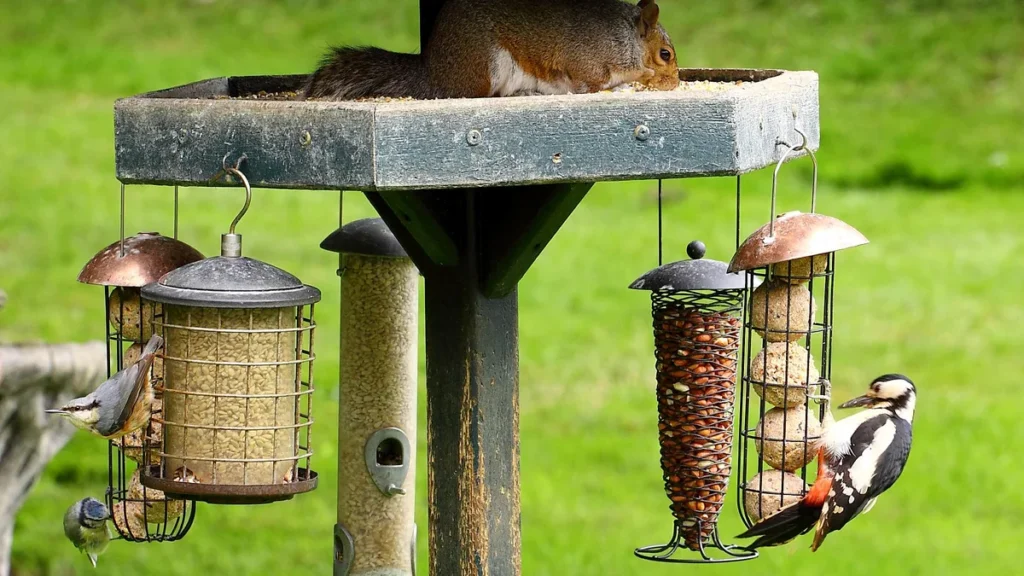
A bird feeder looks like the simplest job in the garden trade. It is a pole in the ground, a tube of seed and a bracket on a fence, and a keen homeowner could put one up in an afternoon. That is exactly why it is such a good startup niche — and exactly why so many new bird feeder installers undercharge, overpromise and run out of work by the end of the first summer. The job itself is small, but the business around it is not. Somebody has to choose the right feeder for the birds that actually live in the area, set the pole at the right height on ground that is never as flat as it looks, keep the seed dry and the feeder clean without disturbing the birds, and then come back next season when the customer wants a second feeder for a different species. The installs are quick, often finished inside an hour, which means the diary fills with many small jobs instead of a few big ones.
Artificial intelligence will not dig a post hole or scrub out a mouldy seed tube. What it can do is take the admin around dozens of small jobs and make it fast, consistent and cheap: turning a photo of a garden into a feeder placement a homeowner can approve, drafting a priced quote before the founder has driven home, packing the diary into sensible routes, and sending the seed-refill reminder that turns a one-off customer into a regular.
This guide compares the nine AI tools that matter most for a bird feeder installation startup in 2026, from smart feeders and bird identification to placement design, quoting, scheduling, seed inventory and customer messages. Every tool below is judged on what a new founder actually needs: a low starting cost, no long contract, useful from the first week, and able to grow with the business from a solo installer to a small crew. Pick the feeder and quoting tools first, then add scheduling, and only buy the rest once the diary is full.
Key takeaways
- Start with three tools only: an AI smart feeder, an AI quoting tool, and an AI scheduling tool. Everything else can wait until the diary is full.
- Placement is where installs go wrong, so use placement design and site measurement on every job: height, distance from cover, and a clear view from the house window.
- Squirrels are the most common complaint in this trade, so sell squirrel guards and baffles as part of the install, not as an afterthought.
- Pick tools that charge per month or per job with no long contract, so a quiet winter month does not punish a young business.
- Keep the human in charge of mounting, bird welfare and customer relationships. AI should speed those decisions up, never make them alone.
The best AI tools for bird feeder installation startups at a glance
| Tool | Best for | What it does best | Starting cost |
|---|---|---|---|
| Bird Buddy | AI smart feeder | Identifies visiting birds by photo and sends app alerts | From about $199 per feeder |
| Birdfy | AI feeder camera | Video of visitors, solar power, species alerts in the app | From about $169 per feeder |
| Haikubox | Bird-song identification | Listens around the clock and names the birds it hears | From about $249 per unit |
| iScape | Placement design | Shows the finished feeder in the customer’s own garden | Free plan, paid plans from about $30 a month |
| Magicplan | Site measurement | Measures the garden and records every pole and bracket | Free plan, paid plans from about $10 a month |
| FieldPulse | Quoting and scheduling | Quotes, jobs, routes and invoices in one field app | From about $49 a month |
| Sortly | Seed and stock inventory | Tracks seed, feeders and hardware across the van and the shed | Free plan, paid plans from about $29 a month |
| Merlin Bird ID | Bird identification | Identifies visiting birds by photo or sound, free | Free |
| Hootsuite | Customer messages | Seasonal refill reminders and social posts on a schedule | From about $99 a month |
Why bird feeder installation is a different kind of startup
A bird feeder installation startup is not a general garden business, and it is not a carpentry business either. It sits in a small, specific gap between the two. The founder has to think like a builder about setting a pole so it stays upright through winter storms, like a gardener about sun, shade, shelter and sightlines, and like a wildlife gardener about which birds will actually visit, what seed they eat, and how to keep that seed dry and safe. Most new founders already know one of those three angles well and learn the other two on the job, which is exactly where mistakes happen. A feeder hung too low becomes an easy meal for a cat. A pole set in soft ground leans within a month. A tube feeder left in full sun grows mould, and the customer notices the empty feeder every morning.
The work itself is also unusually small and fast. A bird feeder install is often a one-hour job, not a one-week project, so the business has to win many jobs instead of a few large ones. A shed installer might do two jobs a week; a bird feeder installer might do six in a day. That volume changes the economics completely. Every minute spent on admin is a minute that could have been spent on another install, so quoting, scheduling and invoicing have to be nearly automatic. A tool that saves ten minutes per job is worth far more here than it would be to a business doing one big install a month. The closest comparison in the garden trade is a birdhouse, and our guide to the best AI tools for birdhouse installation startups shows how the same admin problems look when each job involves a wooden box, an entrance hole and a different set of species rules instead of a feeder, a pole and a bag of seed.
There is also the question of repeat work. A bird feeder is not a fit-and-forget product. The seed needs refilling, the tube needs cleaning, the pole needs checking after a stormy winter, and in spring the customer often wants another feeder for a different species, or a squirrel baffle after the first raid. A founder who only sells the install will always be hunting for the next customer. A founder who sells a refill round, a cleaning visit and a seasonal seed plan has work booked for the whole year, and the AI tools below are what make that repeat work manageable without hiring an office manager.
Squirrels deserve a paragraph of their own, because they are the single biggest source of complaints in this trade. A customer who watches a squirrel empty a feeder in an afternoon does not blame the squirrel; the customer blames the installer. That means squirrel guards, baffles, pole placement away from fences and overhanging branches, and weight-sensitive perches are part of the quote and part of the design, not extras to mention at the end of the job.
The nine best AI tools for bird feeder installation startups
The nine tools below cover the whole job, from the first garden photo to the refill reminder a year later. They are listed in the order a new founder should buy them: the feeder and identification tools that win the sale first, then the design and measurement tools that stop mistakes, then the quoting, scheduling and inventory tools that keep a full diary under control, and finally the messaging tool that keeps customers coming back.
1. Bird Buddy
Bird Buddy is the tool most likely to win the sale, because it turns an ordinary feeder into something the customer can show their friends. It is a smart feeder with a camera built in, and its AI identifies each visiting bird by photo, names the species in the app, and sends an alert with a photograph every time a new bird arrives. For a startup, that matters twice over. First, it gives the customer a reason to pay for a professional install rather than a cheap tube from a garden centre: the feeder is positioned, levelled and aimed so the camera sees the birds clearly, and the installer sets up the app on the customer’s phone before leaving. Second, it gives the founder a reason to come back, because the customer who can see their birds will ask about a second feeder, a different seed, or a camera angle that catches the morning light.
The feeder costs from about $199, which fits neatly into a quoted install price, and the app is free for the customer, so there is no monthly fee to explain. The weakness to plan around is connectivity: a smart feeder needs a decent Wi-Fi signal in the garden, so test the signal at the pole position during the survey, and be honest with customers whose gardens are too far from the house for a reliable connection.
2. Birdfy
Birdfy is the second smart feeder on this list, and it earns its place because it solves a different problem from Bird Buddy: video and power. Where Bird Buddy is built around still photos and species alerts, Birdfy records video of visiting birds, runs on a solar panel so the battery is not a weekly chore, and sends species alerts through its own app. For a founder, that video is a sales tool in itself. A short clip of a woodpecker at the feeder, shown on the customer’s phone during the quote visit, sells the next feeder faster than any brochure, and the solar panel removes the most common objection to a camera feeder, which is that the battery will always be flat when something interesting happens.
Birdfy feeders start from about $169, which makes them the cheaper of the two smart feeders here, and that price gap is useful when a customer wants two feeders but balks at the cost of two premium units. The watch-out is the same as with any camera feeder: check the Wi-Fi signal and the sun on the solar panel, and do not promise species identification on birds the AI has never seen well.
3. Haikubox
Haikubox is the odd one out in this list, because it is not a feeder at all. It is a small box that listens to the garden around the clock and uses AI to identify birds by their song, then reports which species it heard and when. For a feeder installer, that sounds like a strange purchase until the first survey visit. A customer who says “we never get any birds here” is often wrong, and a Haikubox left in the garden for a week before the install proves it, with a list of species the customer had never noticed. That list is the strongest possible argument for a feeder, and it tells the founder exactly which seed and feeder type to quote, instead of guessing from a catalogue.
A Haikubox costs from about $249, so it is not a tool to give away. The sensible model is to own one or two units and lend them to customers during the survey week, then collect the box at the install. The limitation is honest and worth stating: it identifies birds by sound, so a noisy road or a barking dog will reduce its accuracy, and it cannot identify a bird that never sings.
4. iScape
iScape is the placement tool on this list, and placement is where bird feeder installs go wrong. The app lets the founder take a photo of the customer’s garden and drop a feeder, a pole and planting into the picture, so the homeowner can see the finished job before anything is dug or drilled. That visualisation is the fastest sale in this trade, because a homeowner who can see the feeder from their kitchen window says yes far sooner than one staring at a catalogue photo. It also stops the most common argument after the job, which is that the feeder is in the wrong place, because the customer approved the exact position on their own photograph.
The app has a free plan to learn on, with paid plans from about $30 a month for the full design tools, which is a small cost against even one saved job a month. It is strongest on layout and weakest on practical details, so it does not replace a tape measure: it will not tell the founder that the ground is soft or that a branch overhangs the feeder and gives squirrels a runway.
5. Magicplan
Magicplan is the measurement and site-record tool, and it earns its keep on the ground rather than on the screen. The app uses the phone camera to measure distances and build a simple sketch of the garden, recording the pole position, the distance from fences and branches, the height of the feeder, and the route the installer will carry materials through the garden. That record matters more than it sounds, because a feeder install is a small job with a long memory: when the customer calls six months later to say the pole is leaning, the founder who can open the original sketch and see the ground conditions, the pole depth and the bracket type can answer with facts instead of guesses.
The app has a free plan, with paid plans from about $10 a month, which makes it one of the cheapest tools on this list. The founder should take the measurements during the survey, photograph the pole position and the ground, and attach both to the job, so the person doing the install has the same information as the person who sold it. A phone measurement is accurate enough for a feeder pole, and not accurate enough to settle a boundary dispute.
6. FieldPulse
FieldPulse is the quoting and scheduling tool, and it is the tool that decides whether a diary full of one-hour jobs makes money or loses it. The app handles the whole chain in one place: a priced quote built from the survey, a booked job with a time slot and a route, a customer record with the feeder type and the seed plan, and an invoice that goes out the same day the job is finished. For a feeder startup, that chain is the business. A founder doing six small jobs a day cannot afford to write quotes by hand in the evening, chase invoices by phone, or lose a booking because a message was missed, and FieldPulse is built for exactly that volume of small, repeatable work.
Plans start from about $49 a month, which sounds like a lot until it is measured against a single lost job: one recovered booking or one route that fits an extra job into the day pays for the month. The watch-out is setup time, so build the price lists and standard jobs before the diary fills, and resist keeping a second system on paper alongside it, because two systems always disagree at the worst moment.
7. Sortly
Sortly is the inventory tool, and inventory is the quiet problem in a feeder business. A van that carries three types of seed, four feeder models, poles, brackets, baffles, hooks and fixings will run out of exactly the item the next job needs, usually on the far side of town. Sortly tracks that stock with phone photos and simple counts, so the founder can see what is in the van, what is in the shed, and what needs ordering, without a spreadsheet or a memory test. It also tracks which seed goes to which customer, which matters when a customer calls to say the finches have stopped visiting and the founder needs to know whether the seed was nyjer, sunflower hearts, or a general mix.
The app has a free plan for a small stock list, with paid plans from about $29 a month. The habit that makes it work is a five-minute count at the end of each day: scan the van, update the numbers, and let the app warn when seed or a popular feeder model is running low. It will not sell a single feeder, and its value is entirely in the habit of using it every day.
8. Merlin Bird ID
Merlin Bird ID is the free identification tool on this list, and it is the one the founder should put on the customer’s phone before leaving the garden. The app, built by the Cornell Lab of Ornithology, identifies birds by photograph or by sound, and it does it well enough that a customer who points a phone at a feeder can name the bird in front of them within seconds. For a startup, that is a gift. It costs nothing, it makes the customer feel clever rather than sold to, and it turns the feeder from a garden ornament into a daily habit, because the customer who can name their visitors will watch them every morning and will notice when the seed runs out.
The founder should use Merlin on every job, not just as a customer handout but as a working tool: at the survey, a sound recording identifies the birds already in the garden; at the install, a photograph of the first visitor proves the feeder works. The limitation is that Merlin is an identification app, not a business tool. It keeps no customer records and sends no invoices, so pair it with the smart feeder and the messaging tool on this list.
9. Hootsuite
Hootsuite is the customer-message tool, and it closes the loop that the other eight tools open. A feeder business lives on repeat contact: the seed refill reminder, the spring cleaning visit, the autumn squirrel-baffle check, and the quiet message in February when the birds are hungriest and the customer has forgotten the feeder. Hootsuite schedules those messages and the business’s social posts from one place, so the founder can write a week of reminders in one sitting instead of remembering to send them one by one. A short post with a photo of a customer’s feeder, shared with permission, is also the cheapest advertising this trade has, because it shows the finished job in a real garden rather than a catalogue.
Plans start from about $99 a month, which is the most expensive tool on this list and the one to buy last, not first. Buy it when the customer list is big enough that a missed reminder costs more than the monthly fee, and until then send the reminders by hand. The watch-out is tone: scheduled messages that sound like a robot will be ignored, so every reminder should read as if it was written that morning for that customer.
How to choose your first three tools
A new founder should not buy all nine tools on the first day. The right starting stack is one smart feeder, one quoting tool and one identification app: Bird Buddy or Birdfy for the sale, FieldPulse for the quote and the diary, and Merlin Bird ID, which is free, for the identification. That stack costs little more than the quoting app each month, and it covers the whole job from the first survey to the first refill. The design and measurement tools come next, once the diary is filling and the mistakes are the expensive kind: iScape to agree the position with the customer, and Magicplan to record it. The inventory and messaging tools come last, when the stock list and the customer list are both big enough to need them.
Pricing the job is where most new feeder installers lose money, and the tools above only help if the price is honest. A quote should include the feeder and the pole, the fixings and the baffle, the seed for the first fill, and the travel time. It should not include a promise the founder cannot keep, such as a named species visiting within a week, or a squirrel-proof guarantee that no honest installer can give. The comparison with water in the garden is instructive, and our guide to the best AI tools for bird bath installation startups shows how the same pricing problem looks when each job involves levelling a heavy pedestal and keeping water clean instead of setting a pole and filling a tube.
The other pricing decision is the refill and cleaning plan, and it is the decision that turns a one-hour install into a year of income. Offer it at the install, while the customer is standing in the garden looking at the feeder, not a month later by email when the seed has run out and the feeder is empty. A simple plan — a monthly seed refill, a seasonal clean, and a baffle check before winter — is easy to explain, easy to price, and easy to deliver with the scheduling and messaging tools above. The customer gets birds all year without thinking about seed, and the founder gets a diary that fills itself. That is the whole business, and the AI tools in this guide exist to make that diary manageable, not to replace the person who digs the hole and hangs the feeder.
Bird feeder installation startup checklist
- Survey the garden with the customer present, and agree the feeder position on a photograph they have approved.
- Test the Wi-Fi signal and the sun on any smart feeder before promising camera alerts or solar charging.
- Set the pole deep enough to stay upright in winter wind, and keep the feeder clear of fences, branches and cat routes.
- Fit a squirrel baffle and a rain guard as part of the quoted install, and show the customer how both work.
- Photograph every pole, bracket and feeder, and attach the photos and measurements to the job record.
- Book the first refill and cleaning visit before leaving, and set the reminder that brings the founder back.
Frequently asked questions
Do I need a smart feeder to start a bird feeder installation business?
No, and a new founder should not feel pressured to sell one on every job. A well-set pole feeder with the right seed will bring birds without a camera, and many customers prefer it. The smart feeder earns its place when the customer wants to see and name their visitors, when the garden is close enough to the house for reliable Wi-Fi, and when the founder wants a reason to come back and talk about a second feeder. Start with standard feeders, add the smart feeder as an option, and let the customer choose.
How much should a bird feeder installation cost?
The honest answer is that it depends on the pole, the feeder, the ground and the travel, and a founder who gives one fixed price for every garden will lose money on the difficult ones. A simple single-feeder install on easy ground is the cheapest job; a twin-feeder station with a squirrel baffle, a deep-set pole and a long carry from the van costs considerably more. Quote each garden after a survey, include the first seed fill and the first refill visit in the price, and be clear about what is included so the customer is never surprised.
How do I stop squirrels emptying the feeder?
There is no feeder that is squirrel-proof in every garden, and any installer who promises one is setting up a complaint. What works is a combination: a pole-mounted feeder with a baffle below it, a position well clear of fences, walls and overhanging branches, and a weight-sensitive perch that closes under a squirrel.
What seed should I recommend for a new feeder?
Start with sunflower hearts, which suit the widest range of garden birds and leave no messy husks on the ground below. Add nyjer seed if the survey shows finches in the area, and suet in winter when birds need fat to stay warm. Avoid cheap mixed seed with a high proportion of wheat and filler, because most garden birds will throw it on the ground, where it attracts rats. The identification apps in this guide will tell the founder which birds already visit the garden, and the seed choice should follow that list, not a catalogue.
How often does a bird feeder need cleaning?
A feeder should be cleaned at least once a month, and more often in warm, damp weather when seed goes mouldy quickly. The tube, the perches and the tray should be scrubbed with hot water, rinsed well, and dried before refilling, and any wet or mouldy seed should be thrown away rather than topped up. A cleaning visit is also the natural time to check the pole, the brackets and the baffle, and to talk to the customer about the birds they have seen since the last visit.
Can AI really identify the birds at my feeder?
Yes, within sensible limits. The identification tools in this guide are strongest on common garden birds seen clearly in daylight or heard clearly without background noise, and they will name most of the visitors to a typical feeder. They are less reliable on distant birds, on birds seen only in silhouette, or on gardens next to a busy road. Treat the identification as a guide and a conversation starter, not as a scientific record, and the customer will be delighted rather than disappointed.
The bottom line
A bird feeder installation startup is a small-job business, and it succeeds on volume, repeat visits and a reputation for feeders that actually attract birds. The nine tools in this guide do not dig the hole or hang the feeder. What they do is take the admin around dozens of small jobs and make it fast enough to be profitable: a smart feeder that wins the sale, a design tool that agrees the position, a quoting tool that prices it honestly, and a messaging tool that brings the founder back for the refill. The comparison with larger animal housing is worth a look too, and our guide to the best AI tools for chicken coop installation startups shows how the same quoting and scheduling problems look when each job involves a coop, a run and a flock instead of a feeder, a pole and a bag of seed. Buy the feeder and quoting tools first, add the rest as the diary fills, and keep the human in charge of the pole, the seed and the customer.

Keep what speaks to you.
Leave room for your own perspective.