
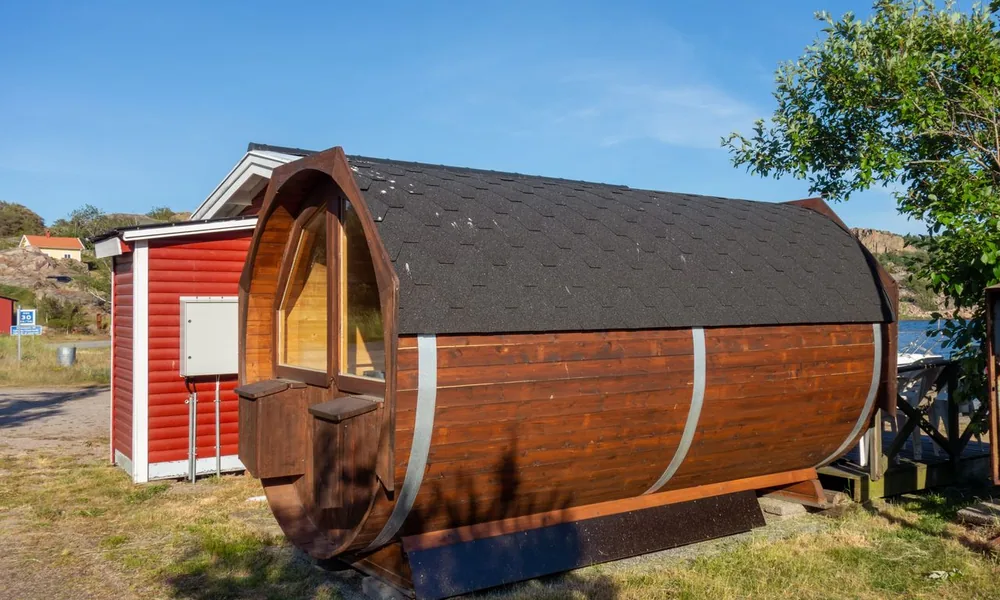
The best AI tools for barrel sauna installation startups in 2026 do far more than answer the phone while your crew is fitting staves in a garden. A barrel sauna is a horizontal, stave-built outdoor sauna: curved timber staves held tight by steel bands, a heater sized for a round chamber, benches fitted to the curve, and insulation that keeps the heat in through cold evenings. The tools that matter most turn a photo of a garden into a measured barrel sauna design, a stave count, a heater size, a build schedule and a quote a homeowner can trust, all before a single board is cut.
A barrel sauna installation startup is a joinery business, an outdoor building business and an electrical business sharing one van, one phone number and one reputation. Every job has a garden that must be measured properly, a level base that must be prepared, staves that must be cut to the right curve and length, bands that must be tensioned evenly, a heater that must match the volume of the round chamber, benches that must sit level inside a curved shell, and a homeowner waiting to sit in steady, even heat. When any one of those pieces slips, the whole job wobbles. A missed message becomes a lost booking, staves cut to the wrong radius leave gaps that leak heat, a heater that is too small leaves a barrel sauna that never reaches temperature, and a customer who waited all day for an arrival window that never came will not call again.
This guide compares the tools that matter most for a barrel sauna installation startup, from garden design and stave planning to quoting, scheduling, heater sizing, electrical checks, insulation records, payments and reviews. It focuses on what a small, growing team actually needs in its first years: simple setup, honest pricing, tools that work from a phone beside a half-built barrel sauna, and software that grows from one installer to several crews without forcing a painful switch. You will find a comparison table, a startup checklist, and answers to the questions new owners ask most often.
Key Takeaways
- Design the barrel before you cut a stave. The curve, the stave count, the band positions, the heater size and the bench layout all come from the design, and AI design tools make that work faster and far less error prone.
- Size the heater to the round chamber, not to the catalogue. Check the barrel volume, the insulation, the glass door area and the ventilation before you quote, because an undersized heater is the most expensive mistake in barrel sauna installation.
- Record every stave, band and electrical note in the same place. A barrel sauna history you can search beats a glovebox full of paper slips when a homeowner asks why the room heats slowly or a band needs retensioning.
- Automate quotes, reminders and follow-ups first. Speed wins barrel sauna jobs, and a clear quote with a garden design sent in an hour beats a perfect quote sent the next day.
- Keep the stack small and measure the numbers weekly. Track quote-to-booking time, build days per barrel sauna, heater rework, repeat service bookings and review growth, and change one thing at a time until the numbers move.

The Best AI Tools for Barrel Sauna Installation Startups at a Glance
| Tool | Best for | Standout AI feature | Starting point |
|---|---|---|---|
| Chief Architect | 3D barrel shell design | AI-assisted curved modelling and stave layout | Monthly subscription with a free trial |
| Planner 5D | Garden placement visuals | AI room and garden layout suggestions | Free basic plan, then a subscription |
| Cedreo | Outdoor living proposals | AI-rendered 3D garden and sauna visuals | Monthly subscription with a free trial |
| Jobber | Scheduling and dispatch | Smart route and crew scheduling | Monthly plans with a free trial |
| Housecall Pro | Quoting and on-site payment | AI-assisted estimates and invoice follow-up | Monthly plans with a free trial |
| Buildertrend | Multi-day barrel builds | Project tracking and schedule automation | Monthly subscription, quote-based |
| Fieldwire | Site plans and punch lists | Plan markups and task automation on site | Free basic plan, then per-user pricing |
| Thryv | Customer follow-up and reviews | AI-written follow-ups and review requests | Monthly subscription with a free trial |
| OpenPhone | AI phone answering | Call summaries and AI voicemail replies | Per-user monthly pricing |
How a Barrel Sauna Startup Really Works
A barrel sauna installation day is a chain of timed steps, and one late link breaks the rest. The garden must be measured and the base levelled before the staves arrive, the first staves must be set true before the bands go on, the heater must be chosen before the electrician arrives, the benches must be fitted to the curve before the heater is tested, and the insulation and ventilation must be checked before handover. A tool that only handles one of those steps leaves the rest to memory, and memory is where installation jobs go wrong. The best stack for a new barrel sauna business connects the garden survey, the barrel design, the stave plan, the quote, the build schedule and the handover record into one flow, so nothing is retyped and nothing is forgotten.
The sales side is where most new barrel sauna startups lose money without realising it. A homeowner comparing two quotes will usually choose the installer who replies first with a clear picture of the finished barrel sauna in their own garden, a firm price and a date. That means the design tool, the quoting tool and the phone system matter as much as the saw. An AI design render sent within the hour, a quote that already includes the base, the staves, the bands, the heater, the benches and the insulation, and a message that confirms the crew arrival time will win jobs that a slower rival never sees. The wider world of sauna installation startups covers indoor rooms too, but a barrel sauna startup lives or dies on outdoor work, so every tool here is judged on garden jobs first.
The build side is where profit is protected. Staves are not cheap timber, and a miscut batch can erase the margin on a whole job. Bands tensioned unevenly will pull a barrel out of round, and benches fitted to a shell that moved will rock. The tools in this guide help a small team measure once, cut once, and keep a record of every barrel sauna they build, so the second, tenth and fiftieth installations are faster and cleaner than the first. That record is also the aftercare service: when a customer rings a year later about a band that needs retensioning or a heater element that has failed, the team that can pull up the original stave plan, heater model and insulation notes will fix it in one visit.
Design the Barrel Before You Cut a Stave
Design is the highest-value work in a barrel sauna startup, because every costly mistake on site starts as a vague drawing. The three tools below cover the barrel shell itself, the garden it sits in, and the proposal the homeowner signs, and together they replace the sketch on the back of a delivery note with a measured plan a crew can build from.
Chief Architect
Chief Architect is the heavyweight design tool for a barrel sauna startup that wants to model the barrel itself, not just draw a rectangle and hope. Its 3D modelling handles curved walls, which is exactly what a barrel sauna is: a circle of staves, not a box. You can set the barrel diameter, the stave thickness, the bench heights and the heater position, then walk the homeowner through the finished shape on screen before any timber is ordered. AI-assisted modelling suggests layouts and flags clashes, such as a bench that would block the heater guard or a door swing that would hit a bench end.
The real payoff is the materials list. Chief Architect can count staves, estimate timber lengths, and show the band positions around the shell, so the quote is built from the model rather than guessed from experience. That matters when timber prices move, because repricing a job becomes a ten-minute edit instead of a full requote. The learning curve is steeper than the simpler tools below, so give one person on the team ownership of it and let them build a barrel sauna template with your standard diameters, stave profiles and bench layouts. Once the template exists, each new job starts from a proven shell and only the garden, the size and the heater change.
Planner 5D
Planner 5D is the fast, friendly tool for showing a homeowner where a barrel sauna will sit in their garden. It is not a joinery tool, and it will not count your staves, but it is very good at the question every customer asks first: will it fit, and will it look right? You can drop a barrel sauna shape onto a garden plan, move it beside the fence or the patio, check the path the delivery crew will need, and show the homeowner a simple 3D view from their kitchen window. AI layout suggestions help when a garden is awkwardly shaped or sloped, and the mobile app means you can sketch the placement while you are standing in the garden on the survey visit.
For a startup, Planner 5D earns its place because it shortens the sales cycle. A homeowner who can see the barrel sauna in their own garden stops imagining problems and starts choosing finishes. Keep it as the survey and placement tool, and hand the serious stave and heater work to Chief Architect. The free basic plan is enough to test it on real surveys, and the paid plan adds the rendering quality that makes proposals look professional rather than sketched.
Cedreo
Cedreo is built for outdoor living projects, which makes it a natural fit for barrel sauna proposals. It turns a garden plan into a rendered 3D proposal quickly, with decking, planting, paths and the barrel sauna itself shown together, so the homeowner sees a finished outdoor space rather than a lone timber tube. AI rendering does the heavy visual work, producing images that look close to a photograph and that a customer can share with a partner before deciding. That shared image often closes the sale while the installer is still driving home.
Cedreo also keeps the proposal honest. The render is tied to the plan, so the barrel sauna in the picture is the size, position and finish in the quote, not a stock image of a different model. Use it for the proposal stage and for social proof: with the customer’s permission, before-and-after renders make strong portfolio material for a new business with few finished jobs to show. The monthly subscription is a real cost for a startup, so trial it on five live quotes first and keep it only if your quote-to-booking rate rises.
Quote, Schedule and Get Paid
A barrel sauna startup fails slowly when quoting is slow, scheduling is guesswork and payment chases drag on for weeks. The two tools below cover that middle of the business: turning a design into a firm price, getting the crew to the right garden on the right day, and getting paid without awkward phone calls.
Jobber
Jobber is the scheduling and dispatch backbone for outdoor crews, and a barrel sauna team is an outdoor crew. It holds the customer, the garden address, the barrel size, the stave delivery date and the electrician visit in one job record, then builds the day around real travel times instead of optimistic guesses. Smart scheduling suggests the order of jobs, flags clashes when a delivery and a build land on the same morning, and sends the customer an arrival window automatically. The crew sees the job on a phone, with the stave plan, the heater model and the base notes attached, so nobody rings the office from a garden asking what size the barrel is.
Jobber also handles the money side of the job cleanly. Quotes turn into jobs, jobs turn into invoices, and invoices can be paid on site by card, which matters when a barrel sauna handover ends with a happy customer standing next to a warm, working sauna. Follow-up reminders chase the deposit and the balance without the owner having to remember. For a startup growing from one crew to two, Jobber scales without a rebuild: add a crew, add a van, and the same job flow carries on.
Housecall Pro
Housecall Pro is the quoting and payment tool for installers who spend their days on site rather than at a desk. Its estimate builder lets you price a barrel sauna job from a template: base preparation, staves, bands, heater, benches, insulation, electrics and delivery, each as a line the customer can understand. AI-assisted estimating suggests prices from similar past jobs and flags a quote that is far below your usual margin, which is the quiet protection a new business needs most. The customer can approve the estimate from a phone, pay the deposit online, and book the build date in the same flow.
On the day, Housecall Pro keeps the job moving. The crew checks in on arrival, the office sees the job start in real time, and the final invoice goes out before the crew has packed the van. On-site card payment means the balance is often settled at handover, when enthusiasm is highest. If your team already runs Jobber for scheduling, choose one of the two rather than both; they overlap heavily, and a startup with two scheduling tools will use neither properly.
Manage the Build Site
A barrel sauna build stretches over days: base one day, staves and bands the next, heater and electrics after that, then benches, insulation checks and handover. The two tools below keep that multi-day build on plan and keep the site record clean enough that anyone on the team can pick the job up mid-build.
Buildertrend
Buildertrend is the project tool for barrel sauna builds that run over several days with more than one trade involved. It holds the schedule, the budget, the stave delivery, the electrician booking and the customer messages in one project, so the owner can see every live barrel sauna job at a glance instead of ringing each crew for an update. Schedule automation moves the later steps when an early step slips, so a delayed stave delivery automatically pushes the banding day rather than leaving the electrician arriving to a half-built shell. Customers get a portal with photos and progress notes, which cuts the daily where-are-we calls that eat an owner’s afternoon.
Buildertrend is bigger and pricier than a simple scheduling app, so it suits a startup that is already winning multi-day outdoor builds and wants to run several at once. Set it up with a barrel sauna project template: base, staves, bands, heater, benches, insulation, electrics, handover. Every new job then starts from the same checklist, and the budget tracking shows which step eats margin. If you are still a one-crew business doing one barrel at a time, Jobber alone will do; move to Buildertrend when you have two crews or a waiting list.
Fieldwire
Fieldwire is the site tool for the crew actually holding the staves. It puts the barrel plan, the stave layout and the punch list on a phone or tablet, with markups the crew can draw on while standing beside the shell. When a stave does not sit true, the installer photographs it, marks the plan, and assigns the fix to a teammate, so the problem is recorded at the moment it is found rather than remembered at the end of the day. Task automation turns the build checklist into assigned jobs with due dates, and the office can see which barrel sauna jobs have open punch items before promising a handover date.
Fieldwire is at its best on the messy middle of a build, when plans change in the garden. A base that is not quite level, a fence that blocks the delivery route, a heater position that must move: each change gets a photo, a note and a decision in the same place. The free basic plan is enough for a small crew to learn it, and the per-user pricing stays fair as the team grows. Pair it with Buildertrend for the project view and Fieldwire for the site view, and the two together cover a barrel sauna build from first delivery to final handover.
Win Work and Keep Customers
The best barrel sauna build in the county is worth little if the phone rings unanswered and past customers never hear from the business again. The two tools below cover the two ends of the customer relationship: answering every enquiry well, and turning a finished installation into reviews, service visits and referrals.
Thryv
Thryv is the customer tool for a barrel sauna startup that wants repeat business rather than one-off sales. It holds every customer, every barrel sauna model installed, every heater type and every service date, then automates the follow-ups that a busy installer forgets: a thank-you message after handover, a band-retensioning reminder after the first season, a heater service prompt before winter, and a review request when the customer is happiest. AI-written follow-ups draft those messages in the business voice, so the owner only has to approve and send rather than write each one from scratch.
Thryv also keeps the pipeline honest. Enquiries that never became quotes, quotes that never became bookings, and customers who never left a review are all visible in one list, so the owner can see where work is leaking instead of guessing. The review flow matters most: barrel sauna buyers research heavily before spending, and a steady stream of recent, genuine reviews will win more jobs than any advert. Give Thryv your real customer list from day one, even if it is only twenty names, because a follow-up system started late has to chase a year of lost contact.
OpenPhone
OpenPhone is the AI phone system for a startup whose crew is always outdoors and whose office is often an empty van. It gives the business a proper number that rings on the team’s phones, records every call, and uses AI to summarise each conversation and draft a reply. When a homeowner rings while the crew is tensioning bands, the call is answered, summarised, and waiting in the inbox with the customer’s number and question attached, instead of going to a personal voicemail nobody checks. AI voicemail replies can confirm a survey time or send the quote link before a human is free.
OpenPhone also ends the argument about who said what. Every quote discussion, every change to a barrel size, every promise about a date is in the call record, searchable by customer name. That record is worth its weight when a customer remembers a different price or a different delivery week. The per-user monthly pricing is modest, and the shared inbox means any team member can pick up an enquiry without the customer having to repeat the whole story. For a new barrel sauna business, answering every call well is the cheapest marketing there is.
Choosing Your Barrel Sauna Stack
Start with four tools, not nine. A new barrel sauna startup needs one design tool, one quoting and scheduling tool, one site tool and one phone tool. A sensible first stack is Planner 5D for garden placement, Housecall Pro or Jobber for quoting and scheduling, Fieldwire for the build, and OpenPhone for calls. That covers the whole job, from the first garden photo to the final payment, without asking a two-person team to learn nine systems at once. Add Chief Architect when the barrel designs get complex, Cedreo when proposals need to win against bigger rivals, Buildertrend when two crews run at once, and Thryv when the customer list is big enough to need real follow-up.
Price the stack against one lost job a month. If a tool costs less than the margin on a single barrel sauna installation, and it plausibly wins or saves one job a month, it pays for itself. The expensive mistake is the opposite: buying every tool in this guide on day one, using none of them properly, and going back to paper and memory within a month. Trial each tool on live jobs, keep the one that shortens quote time or build days, and drop the one the crew avoids. A related outdoor build, such as log store installation startups, faces the same garden, timber and delivery problems, and the same discipline of starting small applies there too.
Measure the stack weekly with five numbers: hours from enquiry to quote, quote-to-booking rate, build days per barrel sauna, heater or stave rework, and reviews gained. If quote time falls and bookings rise, the design and quoting tools are working. If build days fall, the site tools are working. If reviews rise, the follow-up tools are working. Change one tool at a time and give it a month of real jobs before judging it, because a new system always feels slower in its first week. The goal is not a clever software collection; it is a barrel sauna business where every job is designed once, quoted fast, built on schedule and remembered afterwards.
Barrel Sauna Startup Checklist
- Measure the garden, level the base, and confirm delivery access for the staves before you quote a price or a date.
- Model the barrel shell, count the staves, place the bands, size the heater for the round chamber, and lay out the benches before ordering timber.
- Price the full job in one template, including base, staves, bands, heater, benches, insulation, electrics and delivery, and send the quote within the hour.
- Schedule the crew, the stave delivery and the electrician in one system, with the customer arrival window confirmed automatically.
- Build from a shared site plan, photograph every change, and keep a punch list that is empty before you promise handover.
- Hand over with a written record of the heater model, the insulation, the band positions and the aftercare dates, then ask for a review while the sauna is still warm.
Frequently Asked Questions
How much does it cost to start a barrel sauna installation business?
Most startups begin with a van, basic joinery and electrical tools, insurance, and a software stack of roughly four tools, which keeps monthly software costs modest. The big costs are timber stock, a reliable vehicle, and the time spent on unpaid surveys and quotes before the first booking. Keep the tool stack small at first, price every job from a template, and take a deposit before ordering staves, so a cancelled job never leaves you holding a barrel of timber.
Which AI tool should a barrel sauna startup buy first?
Buy the quoting and scheduling tool first, because it touches every job and every pound of revenue. A barrel sauna business that quotes fast, schedules cleanly and gets paid on site will survive a rough design process, while a business with beautiful designs and slow quotes will starve. Add the design tool second, once the quotes are flowing, and the site tool third, once you have more than one crew or more than one live build.
How do I size a heater for a barrel sauna?
Size the heater to the volume of the round chamber, then adjust for insulation, glass area and ventilation. A barrel sauna heats differently from a square room because the curved shell has less dead air at the corners, but a poorly insulated barrel with a large glass door still needs more power than the catalogue suggests. Use the heater maker’s sizing guide, record the volume and insulation in the job file, and test the finished barrel sauna to temperature before handover so the customer never discovers an undersized heater on their first evening.
Do barrel saunas need planning permission?
Rules vary by area, and a barrel sauna in a garden is usually treated as an outbuilding, so height, position and distance from boundaries matter. Check the local rules before you quote, note any permission or neighbour issue in the job file, and never promise a customer that permission is unnecessary. A startup that flags planning questions early looks professional; one that discovers them after the staves arrive looks careless.
How long does a barrel sauna installation take?
A standard barrel sauna usually takes one to three days on site once the base is ready: a day for staves and bands, then heater, electrics, benches and finishing. Larger barrels, difficult garden access, and electrical work that needs a separate visit can stretch that to a week. The honest answer belongs in the quote, with the base preparation, delivery and electrician visits shown as separate steps, so the customer judges you on the plan you kept rather than a date you never explained.
What aftercare does a barrel sauna need?
A barrel sauna needs band retensioning as the staves settle, heater and stone checks, ventilation cleaning, and timber care through the seasons. The first retensioning usually comes after the first months of use, and a service visit before winter is the most useful appointment a startup can sell. Wellness buyers often pair a barrel sauna with a cold water routine, and cold plunge installation startups face the same aftercare and review opportunity, so a shared service list can grow both businesses. Keep the aftercare dates in the customer record and book them before the customer has to ask.
The Bottom Line
A barrel sauna installation startup wins on design, speed and memory. Design the barrel before you cut a stave, quote within the hour, build from a shared plan, and keep a record of every heater, band and bench you install. The nine tools in this guide cover that whole journey, but the business only needs four of them to start: one for design, one for quoting and scheduling, one for the build site, and one for the phone. Start there, measure the numbers weekly, and add the rest only when the work demands it. The barrel sauna itself is simple, honest timber and heat; the tools just make sure the business around it is just as solid.

Keep what speaks to you.
Leave room for your own perspective.


