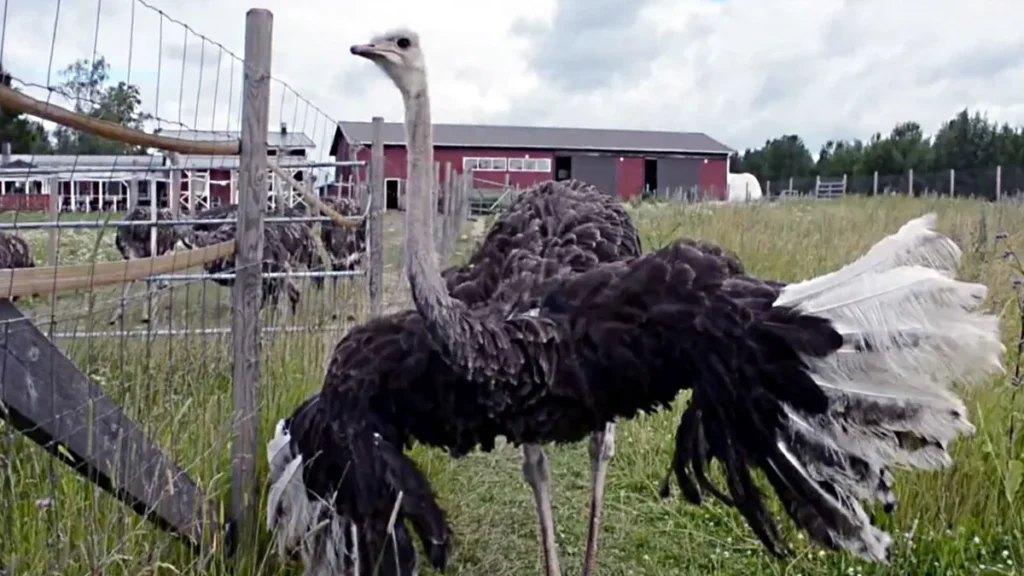
An ostrich barn is not a bigger chicken shed. It is a barn built around the largest farmed bird on earth: a bird that stands close to three metres tall, weighs well over a hundred kilos, runs faster than most farm vehicles, and kicks forward with enough force to break a fence post, a gate, or a leg. A startup that installs ostrich barns has to plan for height, strength, and temperament at the same time, and it has to do it on ground where a mistake in pen size or fence height cannot be patched with a taller perch or a stronger latch.
That scale is what makes the build different from every other barn a new installer might know. A turkey barn is a poultry barn, sized for birds that stay on the floor and follow a flock routine, and a duck barn is a waterfowl barn organised around ponds and wet litter. A deer barn is the closest cousin in height, and the way deer barn installation startups plan tall pens and quiet races is the nearest working model an ostrich installer can borrow from. But an ostrich is not a deer with feathers: it nests in a ground scrape, guards that scrape, feeds on the move, and needs shelter that keeps a two-and-a-half-metre bird dry without trapping heat and dust.
The nine tools below are built for that barn-scale ostrich job. They cover tall pen layout, high fencing, feeding on the move, handler safety around kicking birds, nest scrapes, chick rearing, plume storage, quoting, and bookkeeping. Each one is judged on the ostrich build itself: pens, fencing, feeding, and shelter at barn scale. Use them together and a new startup can survey a site, price the build, lay out the pens, and hand over a barn that keeps ostriches, stock, and people safe from the first day.
Key takeaways
- An ostrich barn is a barn-scale build for the largest farmed bird, not a poultry shed: plan for birds close to three metres tall that kick forward.
- Tall pens and high fencing come first, because an ostrich that can see over a fence or reach over a gate will test both on the first day.
- Feeding has to follow the birds on the move, with troughs and water points placed so stock never has to cross a pen of restless adults.
- Nest scrapes, chick brooding, and plume storage are ostrich-only jobs that poultry tools do not cover, so they need their own tools.
- Quote the build on ostrich numbers — fence height, pen area per bird, and handling races — and keep the books in a ledger that knows what an ostrich barn costs.

The 9 best AI tools for ostrich barn installation startups
The table below gives the short version. Each tool is covered in full further down, with what it does on an ostrich barn, where it fits in the build, and what to watch for before you trust it on a live job.
| Tool | What it does | Best for |
|---|---|---|
| OstrichPen Planner AI | Lays out tall ostrich pens at barn scale | Pen layout and bird numbers |
| RatiteFence AI | Specs high fencing for ratites | Fence height and strength |
| KickGuard Ostrich AI | Maps kick zones and safe handling routes | Handler safety |
| StrideFeed AI | Plans feeding for birds on the move | Feed and water placement |
| NestScrape AI | Plans ground nest scrapes and breeding pens | Breeding layout |
| OstrichChick AI | Plans chick brooding and rearing pens | Chick rearing |
| PlumeStore AI | Tracks plume harvest and storage | Feather income |
| OstrichQuote AI | Prices ostrich barn builds | Quoting and estimates |
| OstrichLedger AI | Keeps the startup books | Bookkeeping and cash flow |
Planning the barn shell: pens, fencing, and safe handling
Every ostrich barn starts with the shell: the pens, the fences, and the routes people use to move around birds that can kick. Get the shell wrong and nothing else matters, because a pen that is too small makes the birds restless, a fence that is too low makes them bold, and a handling route that crosses a pen makes every feeding round a risk. The three tools in this section work on the shell before a single sheet of cladding goes up.
OstrichPen Planner AI
OstrichPen Planner AI lays out tall ostrich pens at barn scale, and it is the first tool to open on any new job. The installer enters the site boundary, the barn footprint, the number of birds, and the split between breeding pairs, growers, and chicks, and the tool returns a pen plan with pen sizes, gate positions, and race widths that fit birds close to three metres tall. It treats pen area per bird as the number that decides everything else, because ostriches pace, spar, and chase in straight lines, and a pen that gives them room to move in a straight line without hitting a corner is a pen where the birds stay calmer and the fences last longer.
The plan it produces is practical rather than decorative. Pens sit in a row off a central handling race, so stock can move birds from one pen to another without walking through a pen full of adults. Gates open into the race, not into the next pen, so a bird that slips a gate ends up in a contained corridor instead of in with the breeding males. The tool flags pens where the run is too short for the birds to turn without crowding the fence, and it flags corners where two pens meet at a sharp angle, because sharp corners are where ostriches pile up and where fencing takes the most punishment.
What makes it an ostrich tool rather than a generic pen planner is the height logic. Every pen wall, gate, and sight screen is checked against the reach of an adult bird, so a gate that would be tall enough for cattle is flagged as too low for an ostrich that can lean over it and peck at a handler. The tool also checks the sight lines between pens, because ostriches that can see a rival male in the next pen will spend the day pacing the shared fence, and a solid sight screen in the right place is cheaper than replacing a fence panel every month. For a startup, that height and sight-line logic is the difference between a pen plan that looks right on paper and one that still looks right after a year of birds living in it.
RatiteFence AI
RatiteFence AI specs the high fencing that holds ratites, and ostriches are the tallest and strongest of the group. The tool takes the pen plan, the ground conditions, and the wind exposure of the site, and it returns a fence specification: post spacing, post depth, rail heights, mesh type, and the height of the top rail. It is built around one fact that catches out installers who come from poultry work: an ostrich fence is not a taller chicken fence, it is a fence that has to stop a heavy bird leaning, pushing, and kicking at it, day after day, in all weather.
The specification it gives is specific to each run of fence. A fence along an exposed boundary gets deeper posts and closer spacing than a fence inside a sheltered yard, because wind load on a tall fence is real and a fence that leans after the first winter storm is a fence the birds will test. A fence between two breeding pens gets a solid lower section, because two males that can see each other through mesh will spar through it, while a fence around a grower pen can stay open mesh higher up so the birds get light and air. The tool prices each run separately, so the client can see why the breeding-pen fence costs more than the grower-pen fence, and why cutting the specification on the shared fence is the most expensive saving on the whole job.
KickGuard Ostrich AI
KickGuard Ostrich AI maps kick zones and safe handling routes, and it is the tool that keeps people safe on an ostrich barn. An ostrich kicks forward, with long legs and sharp claws, and a handler who walks into the kick zone of a cornered bird is in real danger. The tool takes the pen plan and marks the zones where a bird can reach a person: the corners where birds get trapped, the gateways where birds push past, and the feeding points where birds crowd together. It then draws the safe routes through the barn, so stock can feed, water, and check the birds without standing where a kick can land.
The routes it draws are built into the barn, not added afterwards. Feeding points sit behind a barrier or at the end of a race, so stock can fill a trough without entering the pen. Water points are reachable from outside the fence, so a frozen drinker can be fixed without climbing in with the birds. The handling race is wide enough for a bird to move forward without turning on the handler, and narrow enough that the bird cannot turn around and face the person behind it. Every gate has a safe side, and the tool marks which side a handler should stand on when a pen is opened, so a bird that comes through the gate meets an empty race rather than a person.
For a new startup, this tool does two jobs at once. It keeps the crew safe, which is the first duty on any livestock build, and it gives the client a handling plan they can follow after handover. A barn that is safe to work in is a barn the client will use properly, and a barn the client uses properly is a barn where the birds stay calm and the fences stay intact. Walk the kick zones with the client at handover, show them the safe routes, and leave the plan on the barn wall. That single sheet of paper is worth more than any amount of verbal advice, because it is there on the morning when a new stockperson starts work and nobody is around to explain the barn.
Feeding and daily care: moving birds, breeding, and chicks
Once the shell is planned, the daily work begins: feeding birds that eat on the move, giving breeding pairs somewhere to nest, and rearing chicks that need warmth and protection from the adults. This is where an ostrich barn pulls furthest away from the poultry barns it is sometimes compared with. A duck barn installation startups plan is organised around water and wet litter, and none of that fits an ostrich, which needs dry ground, long feeding runs, and nest scrapes in open, well-drained pens.

StrideFeed AI
StrideFeed AI plans feeding for birds on the move, and it starts from the way ostriches actually eat. They walk while they feed, picking at feed and forage along a run, and a feeding system that makes them stand still in one place to eat is a system that fights the bird. The tool lays out trough runs and water points along the length of each pen, so the birds move along the fence line as they feed, and it spaces the troughs so that every bird in the pen can eat without crowding the strongest birds into one corner.
The layout it returns is practical for the stockperson as well as the bird. Troughs fill from outside the pen, through a hatch or over a low barrier, so feed can be delivered without entering a pen of hungry adults. Water points sit at the end of the trough run, so birds drink after they eat and the water stays cleaner than it would beside the feed. The tool calculates the daily feed quantity per pen from the number and age of the birds, and it flags pens where the trough length is too short for the flock, because short troughs mean hungry birds at the back of the queue, and hungry birds are restless birds that test fences.
It also plans for the seasons. In winter, when the ground is frozen and the birds eat more to stay warm, the tool increases the feed allowance and shortens the distance between troughs so the birds do not have to walk far in the cold. In summer, it moves the feeding times and the water points into the shade, because ostriches drink heavily in heat and a water point in full sun is a water point the birds will avoid. That seasonal thinking is what turns a feeding plan into a working routine, and it is the kind of detail a client notices when the birds stay in condition through the first winter in the new barn.
NestScrape AI
NestScrape AI plans ground nest scrapes and breeding pens, and it covers the part of the ostrich barn that no poultry tool understands. Ostriches do not lay in nest boxes. They scrape a shallow hollow in dry ground, usually in the open, and the hen lays in it while the male guards the pen. The tool takes the breeding pen plan and marks where the scrapes should go: on high, dry ground that drains after rain, away from the fence line where a guarding male can trap a handler in a corner, and far enough apart that two pairs in neighbouring pens are not nesting against the same shared fence.
Each scrape gets a specification: the size of the hollow, the depth of the sand or dry soil, the shelter over it, and the sight screen that keeps the nesting pair calm. The tool also plans the breeding pen around the scrape, with a quiet corner for the nest, a clear run for the male to patrol, and a gate that lets stock check the nest without walking across it. That layout matters, because a nest that is disturbed every day is a nest the birds will abandon, and a nest that floods after rain is a nest that loses eggs.
OstrichChick AI
OstrichChick AI plans chick brooding and rearing pens, and it covers the most delicate part of the whole build. Ostrich chicks are small, fast-growing, and fragile in their first weeks: they need warmth, dry bedding, protection from draughts, and separation from adult birds, and they need it in a pen that can grow with them as they put on size week by week. The tool takes the number of chicks, the hatching dates, and the barn layout, and it returns a brooding plan with heated areas, chick-height fencing, and rearing pens that step up in size as the birds grow.
The brooding area it plans is warm without being stuffy, because chicks that are cold huddle and chicks that are overheated pant, and both are signs the brooding plan is wrong. Heat lamps or heated pads sit over dry bedding, with a cool zone the chicks can move into when they are warm enough, and the tool checks that the chicks can always reach feed and water without crossing a cold or draughty patch of floor. The fencing is chick height, with mesh fine enough that a chick cannot push through it and solid enough at the bottom that it cannot see the adults in the next pen and try to join them.
As the chicks grow, the tool moves them through a series of rearing pens, each larger than the last, until they are big enough to join the grower pens. That stepping-stone plan is what stops the common mistake of putting fast-growing chicks straight into a pen built for adults, where they get lost in the space, miss feed, and pick up injuries from fencing that was never meant for small birds. The tool also plans the cleaning routine between batches, because chick pens need to be emptied, disinfected, and re-bedded before the next hatch, and a pen that cannot be cleaned quickly is a pen that will carry disease from one batch to the next.
Running the business: plume income, quoting, and the books
A barn that works is only half the startup. The other half is the business around it: knowing what the build costs, pricing it so the startup makes money, and keeping track of the income the barn itself produces. The three tools in this section cover that business side. A turkey barn installation startups quote is built on poultry numbers, with short cycles and small birds, and none of those numbers fit an ostrich barn, where the build is taller, the fences are stronger, and the birds stay for years.
PlumeStore AI
PlumeStore AI tracks plume harvest and storage, and it covers the income stream that is unique to an ostrich farm. Ostrich plumes are harvested, graded, cleaned, and stored, and a barn that has nowhere to do that work properly will lose money on every bird. The tool plans the storage space inside the barn: a dry, clean room with racks for plumes, grading tables, and packing space, kept away from dust, damp, and the main bird areas so the plumes stay clean from harvest to sale.
The tracking it does is simple and valuable. Every harvest is logged by bird, by date, and by grade, so the client can see which birds produce the best plumes and which pens produce the most. Storage conditions are checked against the grade, because plumes stored damp lose value quickly, and the tool flags any store where humidity or dust is creeping up. It also tracks what is sold and what is still in store, so the client knows what is on the shelf and what it is worth, rather than discovering a box of damaged plumes months after they were harvested.
For the installer, the plume store is a small room with an outsized effect on the client. A barn with a proper plume store tells the client that the builder understands the farm as a business, not just as a building. Plan the store into the barn from the start, near the handling race so plumes can be brought in without crossing bird pens, and fit it with the racks and tables the tool specifies. It is a modest part of the build, but it is the part the client will use every time they harvest, and it is the part that turns the barn from a cost into an income.
OstrichQuote AI
OstrichQuote AI prices ostrich barn builds, and it is the tool that turns a survey into a quote a startup can stand behind. The installer enters the pen plan, the fence specification, the feeding layout, and the site conditions, and the tool returns a priced quote with materials, labour, and a margin that reflects the real cost of building tall and strong. It prices on ostrich numbers: fence height, post depth, pen area per bird, gate strength, and handling races, so the quote reflects the barn that will actually be built rather than a poultry barn with the numbers scaled up.
The quote it produces is broken down by section, so the client can see what the pens cost, what the fences cost, what the feeding system costs, and what the chick pens and plume store cost. That breakdown matters, because it lets the client make informed choices about where to spend and where to save, and it lets the startup defend the price of the parts that cannot be cut. When a client asks to lower the fence or shrink the pens, the tool shows what the saving is and what the risk is, so the decision is made with the numbers in front of both sides.
OstrichLedger AI
OstrichLedger AI keeps the startup books, and it is the tool that turns a busy installer into a business. It records every job, every invoice, every material order, and every payment, and it shows the startup where its money is: which jobs made money, which jobs lost money, and which clients pay on time. It is built for a small building startup, with job costing at its centre, so every barn is tracked as its own job with its own costs and its own margin.
The job costing it does is the part that matters most. Each barn is costed against its quote, line by line, so the startup can see whether the fences came in on budget, whether the feeding system ran over, and whether the chick pens cost more than expected. That record is what makes the next quote better, because it is based on what the last barn actually cost rather than what the installer remembers it costing. It also tracks cash flow across jobs, so the startup can see when money is coming in and when it is going out, and plan material orders around payments rather than around hope.
It handles the routine as well: invoices, receipts, tax records, and the day-to-day paperwork that takes an installer away from building. The tool keeps the records in order, so the startup can find any invoice, any receipt, and any job cost without digging through a pile of paper. That order is what a client sees when they ask for a copy of an invoice or a breakdown of a bill, and a startup that can produce its records quickly is a startup that looks professional.
Ostrich barn installation checklist
Use this checklist on every ostrich barn job, from the first site visit to the day the birds move in. It is the short version of the whole article, and it is worth printing and keeping with the pen plan.
- Survey the site for tall pens first: check the ground, the drainage, and the space for pens sized to birds close to three metres tall before anything else is priced.
- Spec the fences to ratite strength: agree the post depth, rail heights, and mesh type for every run, and do not lower the specification on the shared breeding-pen fences.
- Draw the kick zones and the safe routes before the shell goes up, so feeding and watering never put stock inside a pen of restless adults.
- Place troughs and water points along the pens so birds feed on the move and stock can fill them from outside the fence.
- Mark the nest scrapes on dry, high ground and build the chick pens with the adult pens, so the barn is ready for breeding and hatching from the first season.
- Hand over the pen plan, the handling plan, and the plume store with the barn, and walk the client through the safe routes on the day the birds arrive.
Frequently asked questions
How tall should an ostrich barn fence be?
An ostrich fence has to be tall enough that an adult bird, standing close to three metres high, cannot lean over it or reach over a gate to peck at a handler. In practice that means a fence well above cattle or poultry height, with a top rail the birds cannot hook a beak over and posts set deep enough to hold against a heavy bird leaning on them. If a bird can see over it, it will test it, so build it taller than the bird and keep it tight.
How much pen space does each ostrich need?
Each ostrich needs far more pen space than a poultry bird, because ostriches move in long straight lines, pace along fences, and need room to turn without crowding. The pen area per bird decides how calm the flock stays and how long the fences last, so set it from the number and type of birds in the pen, with breeding pairs given the most room. A pen that is too small makes restless birds, and restless birds damage fences.
Can an ostrich barn be adapted from a poultry barn?
No, and trying to adapt one is the most expensive mistake a new installer can make. A poultry barn is built for small birds that stay low and roost, while an ostrich barn is built for tall birds that kick forward, nest in ground scrapes, and feed on the move. The pens, fences, gates, feeding runs, and handling routes are all different, so an ostrich barn should be planned as an ostrich barn from the first survey.
What is a nest scrape, and why does it matter?
A nest scrape is the shallow hollow an ostrich scrapes in dry ground to lay its eggs, usually in the open with the male guarding nearby. It matters because it is where breeding success starts: a scrape on dry, high ground that drains after rain will hold eggs safely, while a scrape in a wet or disturbed corner will be abandoned or flooded. Mark the scrapes, grade them, and shelter them before the birds move in.
How do you keep handlers safe around ostriches?
Handlers stay safe by never standing in the kick zone of a cornered bird, and by working along routes that keep a fence or a barrier between them and the birds. Feeding and watering points should be reachable from outside the pen, gates should open into a contained race rather than another pen, and every handler should know which side of each gate is the safe side. Walk the routes at handover and leave the handling plan on the barn wall.
What does an ostrich barn installation startup need to start?
It needs a pen planner that understands tall birds, a fencing specification built for ratites, a handler-safety plan, a feeding layout for birds on the move, and a quoting tool that prices the build on ostrich numbers. With those in place, a startup can survey a site, price the job, lay out the pens, and hand over a barn that works from the first day. The books matter too: a ledger that tracks each job against its quote turns a good first barn into a business.
Bottom line
An ostrich barn is a barn-scale build for a tall, strong, fast bird, and it rewards the installer who plans it as one. Start with tall pens and high fences, draw the safe handling routes before the shell goes up, feed the birds along the pens, give the breeding pairs their scrapes and the chicks their brooding pens, and price the job on ostrich numbers. Build it tall, build it strong, and build it for the ostrich.

Keep what speaks to you.
Leave room for your own perspective.