
A Finnish sauna is not a box with a heater in it. It is a hot room built around a single ritual: heat the stones, throw water on them, and let the burst of steam — löyly — roll across the benches. Everything in the room exists to serve that moment. The heater has to be sized to the cubic volume of the room, not to the floor area. The benches have to sit at heights where the steam actually reaches the people sitting on them. The timber has to stay comfortable to touch at 80 degrees, and the ventilation has to bring in fresh air without killing the heat. Get any one of those wrong and the room feels flat, however good it looks in a photograph.
That is why a Finnish sauna installation startup is a different business from a general sauna installer. The work is slower and more exact, and it depends on the client trusting your judgement before a single board is cut. Homeowners compare installers on the details: how you size the heater, which timber you specify, how you plan the bench tiers, and how you explain the steam. A startup that can show its working — a measured drawing, a heater calculation, a ventilation plan — wins those conversations.
The nine tools in this guide are chosen for that kind of startup. None of them is a booking system for a sauna venue, and none is a generic tool carried over from a broader build. Each one solves a specific Finnish-sauna problem: drawing a hot room that works, sizing a heater for löyly, tracking a timber order, scheduling a two-person crew, or following up a quote before the homeowner signs with someone else.
Key takeaways
- A Finnish sauna is defined by its heater, tiered benches, löyly steam and timber — size the heater to the room volume and plan the benches around the steam, not the other way round.
- Win work with drawings and calculations, not brochures: a measured plan and a heater sizing sheet beat a cheaper quote with no detail behind it.
- Keep the nine tools in this guide separate from venue booking software — this is an installation build, and the tools here are for designing, building and running the job.
- Timber, ventilation and safety clearances decide whether a sauna feels right and passes inspection, so lock them down before the first board is ordered.
- Follow up every quote within two working days, and book a handover visit — most repeat work and referrals come from the clients you check back on.

What makes a Finnish sauna build different
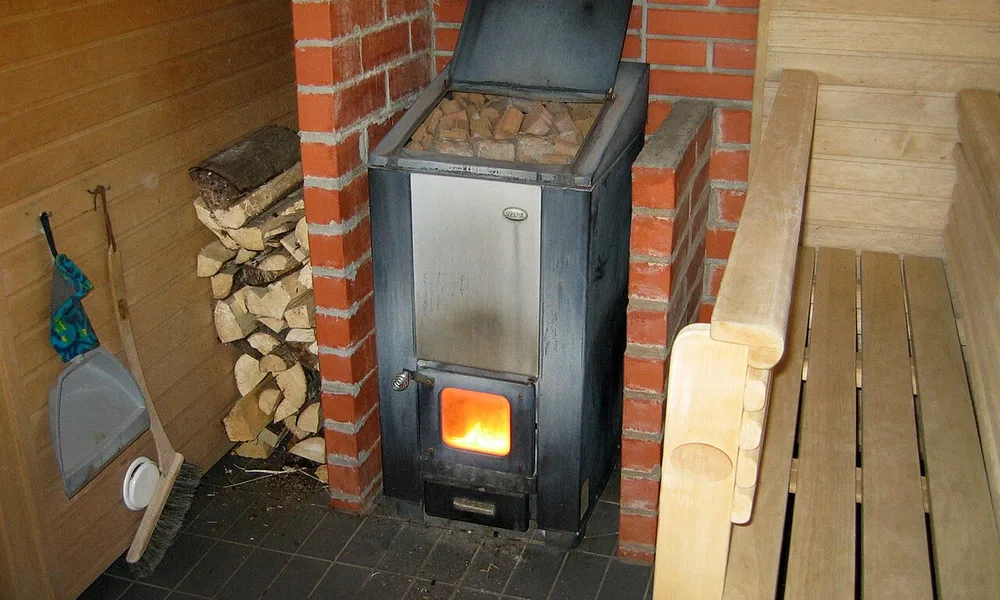
The traditional Finnish sauna is a hot room, usually lined in aspen, alder or spruce, heated by a wood-fired or electric stove loaded with stones. Water thrown on the stones creates löyly, a sharp wave of humid heat that rises to the ceiling and settles over the top bench. The room runs at roughly 70 to 90 degrees, with low humidity between bursts of steam. That combination — dry heat, sudden steam, timber that stays touchable — is the whole product, and it is what separates a Finnish sauna from every other kind of heat room.
Compare that with the alternatives a client might be considering. A barrel sauna is a stave-built cylinder that sits outdoors, and its curved shell changes how you plan the benches, the heater position and the door. An infrared cabin heats bodies directly with panels and never makes löyly at all. The generic sauna installation guide on Face Zem covers the standard install well, but it treats the sauna as one job among many, while a Finnish build demands its own decisions about heater sizing, bench tiers, steam and timber. A startup that leads on those four things is selling a different build, and clients who want a real Finnish sauna can tell the difference within minutes of the first site visit.
Timber choice is part of the design, not a finishing touch. Aspen stays coolest to the touch and is the usual pick for benches. Alder brings a warmer colour. Spruce is common for walls and ceilings but can weep resin if it gets too hot near the heater. A startup that can explain those differences in plain language, and show the client samples before ordering, avoids the most common complaint in the trade: benches that are too hot to sit on.
The nine tools at a glance
| Tool | Best for | What it does for a Finnish sauna startup |
|---|---|---|
| AutoCAD | Precise hot-room drawings | Heater, bench and ventilation plans with exact dimensions and clearances |
| Coohom | 3D hot-room visualisation | Shows the client the finished room, bench tiers and timber before building |
| Matterport | 3D site capture | Scans the existing room or garden so the design starts from real measurements |
| Procore | Multi-crew build management | Keeps drawings, schedules and costs in one place across the whole build |
| JobProgress | Job tracking and quoting | Turns a survey into a quote, a schedule and an invoice without retyping |
| monday.com | Pipeline and crew scheduling | Shows every job, every crew and every order on one board |
| HubSpot | Client follow-up | Tracks every enquiry, quote and follow-up so no lead goes cold |
| Calendly | Survey bookings | Lets clients book a site survey without a round of phone calls |
| Xero | Invoicing and accounts | Quotes, invoices and timber costs tracked against each job |
Design and measuring: getting the hot room right
Design is where a Finnish sauna startup earns its margin. A room that is drawn properly before building goes up faster, wastes less timber and produces better löyly. The three tools in this section cover the three design jobs that matter: precise drawings, a visual the client can understand, and a survey that starts from real measurements instead of a guess. Use all three and the build starts with everyone — you, the client and the electrician — looking at the same room.
1. AutoCAD: Best for precise hot-room drawings
AutoCAD is the drawing tool for the parts of a Finnish sauna that cannot be approximate. Heater clearances, bench heights, ventilation openings and door swings all need exact dimensions, and a hand sketch will not convince an electrician or a building inspector. In AutoCAD you draw the room to scale, place the heater with its safety distances marked, set the bench tiers at heights that put bathers in the steam layer, and show the supply and extract vents on the same plan. When the client asks to move a bench or change the heater, you move it on the drawing first and see what else moves with it.
For a startup, the real value is reuse. A Finnish sauna has a small number of room shapes — a square garden room, a rectangular basement room, a long narrow conversion — and each one can become a template with the heater, benches and vents already placed. A new survey becomes a matter of adjusting dimensions rather than starting from a blank page, which means a quote can go out with a drawing attached instead of a promise to draw one later. Keep a library of your standard details — bench sections, heater plinths, vent positions — and every job gets faster without getting sloppier.
2. Coohom: Best for 3D hot-room visualisation
Coohom turns a flat plan into a room the client can see. You build the hot room in three dimensions — benches, heater, stones, timber walls, door, window — and the client can walk through it on screen before a single board is ordered. That matters more for a Finnish sauna than for most builds, because the client is buying a feeling: the height of the top bench, the closeness of the heater, the colour of the timber in warm light. A plan cannot show that. A 3D view can, and it answers the questions clients actually ask, like whether the top bench will feel too close to the ceiling or whether the heater will dominate the room.
3. Matterport: Best for 3D site capture
Matterport captures the existing space in three dimensions, so the design starts from what is actually there. For a conversion — a basement room, a spare bedroom, an outbuilding — that is worth more than a tape measure and a notebook, because old rooms are never square and never quite the size the client remembers. A scan shows the low beam, the awkward soil pipe, the window that cannot move, and the floor that slopes two centimetres across the room. You design around those facts instead of discovering them halfway through the build.
The scan also helps with the client conversation. Walk the client through the scan on screen, point at the wall where the heater will sit, and show them where the ventilation will run. Clients who have seen their own room in the model understand the plan faster and argue less about it. For outdoor builds, a scan of the garden and the base helps place the sauna so the door, the path and the cold-water point all make sense together, and it gives the groundworker a picture instead of a description.
Running the build: crews, schedules and costs
A Finnish sauna build is a short job with a lot of moving parts: timber delivery, heater delivery, electrician, flue installer, tiler or floor layer, and your own carpenter. The three tools in this section keep those parts in order. They are not design tools. They are the tools that stop a two-week build from becoming a four-week build because the timber arrived before the room was ready or the electrician was booked for the wrong day.
4. Procore: Best for multi-crew build management
Procore is the control room for a build with more than one crew. Drawings, schedules, costs, variations and site photos live in one place, so the carpenter, the electrician and the founder are all working from the same version of the plan. When the client asks for a wider top bench, the change is logged as a variation with a price, approved in the system, and pushed to the crew the same day. Nothing depends on a phone call remembered wrong or a note left in a van.
For a Finnish sauna startup, the strongest use is the handover trail. Every heater model, stone grade, timber batch and vent position can be recorded against the job, with photos of the vapour barrier, the insulation and the heater connections before they are covered up. If a client calls a year later about a cold spot or a damp patch, you open the job and see exactly what was installed and how. That record is also your defence if a warranty question ever turns into a dispute.
5. JobProgress: Best for job tracking and quoting
JobProgress takes a job from survey to invoice without retyping the same details five times. The survey notes become the quote, the quote becomes the schedule, and the schedule becomes the invoice. For a Finnish sauna startup, that single thread matters because the details are the product: heater model, stone grade, timber species, bench layout, vent positions. If those details are retyped at every stage, they drift, and the crew ends up building from a quote that no longer matches the design.
6. monday.com: Best for pipeline and crew scheduling
monday.com is the board where the whole startup can see what is happening. Every job is a row, every stage is a column, and every crew member can see what they are doing this week and next. For a small team, that shared view replaces the morning meeting where everyone asks what the plan is. The carpenter sees the timber delivery date, the founder sees the quote pipeline, and nobody has to ask whether the heater for Thursday’s job has arrived.
Build the board around the Finnish sauna workflow, not around generic sales stages. Columns for survey booked, design approved, timber ordered, heater delivered, build started, test complete and handover booked tell the truth about a job in a way that “in progress” never does. Add a column for the heater model and one for the timber species, and the board doubles as a stock check: if three jobs need the same heater, you order three, not one, and you order them before the supplier runs out.
Winning work and keeping clients
The best-built sauna in the county is worth nothing if nobody books it. The three tools in this section cover the commercial side of the startup: keeping track of every enquiry, making it easy to book a survey, and getting paid without chasing. They are deliberately ordinary tools. A Finnish sauna startup does not need exotic software to win work. It needs to answer fast, follow up once, and invoice cleanly.
7. HubSpot: Best for client follow-up
HubSpot keeps every enquiry, quote and conversation in one place, so no lead goes cold because it lived in one person’s inbox. A homeowner who asked about a Finnish sauna in March and is ready to build in September is still a live lead, but only if the startup remembers them. HubSpot remembers: the room size they mentioned, the heater they liked, the timber sample they asked for, and the date you promised to call back. When September comes, the follow-up is a real conversation, not a cold call.
8. Calendly: Best for survey bookings
Calendly removes the back-and-forth from booking a site survey. The client picks a time that suits them, the survey goes into the calendar with the address and the room details attached, and both sides get a reminder. For a Finnish sauna startup, that matters because the survey is the sale: it is the visit where you measure the room, talk through the heater and the benches, and leave the client feeling that you know the trade. Anything that makes that visit easier to book wins work.
9. Xero: Best for invoicing and accounts
Xero is where the money side of the startup stays honest. Quotes, invoices, deposits, timber costs and heater costs all sit against the job they belong to, so the founder can see whether a job made money or only looked like it did. A Finnish sauna job has a lot of bought-in cost — heater, stones, timber, ventilation kit, controls — and if those costs are not tracked per job, the startup can be busy all year and still end up short. Xero makes the margin visible while there is still time to fix it.
Use it to run a simple, firm payment rhythm. Deposit on order, so the timber and heater are paid for before they are delivered. A stage payment when the room is lined and the benches are in. Final payment on handover, after the test burn and the client walkthrough. That rhythm protects the startup from funding the client’s sauna, and it protects the client too, because every payment follows visible progress. Send the invoice the day the stage is complete, not the week after, and chase the one that is a week overdue with a phone call, not a third email.
Heater, benches, steam and timber: the four decisions that define the build
Every Finnish sauna is judged on four things, and they are decided in this order: heater, benches, steam, timber. The heater sets the heat. The benches set where the heat is felt. The steam — löyly — sets how the heat arrives. The timber sets how the room feels to sit in. Get the order right and the decisions make sense. Get it wrong and the startup ends up choosing timber first and discovering the heater does not fit the room it has already lined.
Start with the heater, and size it to the room volume. A rough guide is one kilowatt per cubic metre, adjusted up for glass, stone or uninsulated surfaces and down for a small, well-insulated room — but a guide is not a calculation. The calculation takes the volume, the surfaces, the ventilation rate and the client’s habits, and it produces a heater size and a stone load. An undersized heater takes forever to reach temperature and never recovers between rounds of löyly. An oversized heater cycles on and off, dries the air and bakes the top bench. Neither is a small mistake, because the heater is the most expensive single item and the hardest to swap after the room is finished.
Benches come next, and they are about heights, not lengths. The top bench should put the bather’s head in the hottest layer of air, which usually means the top bench sits about a metre below the ceiling. The lower bench is for cooling off and for children. The gap between the benches should let a bather sit comfortably with their feet on the lower tier. A room with benches at the wrong heights feels wrong in a way the client cannot always describe but never forgets. Draw the bench section full size, stand in the room at that height, and check the steam will reach the people, not just the ceiling.
Steam is the difference between a Finnish sauna and a hot room, and also the difference from a steam room installation. A steam room runs continuously humid; a Finnish sauna runs dry and hot, and the steam arrives in bursts when water hits the stones. That means the stones matter as much as the heater: the right grade and size, stacked loosely enough for air to move, and replaced when they crack. A startup that explains löyly to the client — how much water, how often — is teaching them to use the product.
Timber is the last of the four, and the choice is simpler than the catalogues make it look. Aspen for benches, because it stays coolest. Alder for warmth of colour. Spruce for walls and ceilings, kept away from the hottest spots. Whichever species you choose, it must be knot-free where bodies touch it, properly dried, and fixed with hidden fixings that will not burn a bather. Order a little extra, because a board with a defect in the middle is a board you cannot use on a bench, and a job that stops for a timber delivery is a job that loses a day.
Ventilation, safety and the handover
Ventilation is the part of a Finnish sauna most often drawn last and most often regretted. The room needs fresh air coming in low, near the heater, and stale air leaving high, on the far side, so the air moves across the benches instead of short-circuiting above them. Without that path, the room feels stuffy, the steam hangs, and the bather gets a headache instead of a good sweat. With it, the room recovers its temperature between rounds and the air stays fresh for the whole session. Plan the vents on the drawing, not on site with a drill.
Safety is not a separate chapter. It is the clearances around the heater, the guard rail that stops a bather touching the stones, the heatproof base under a wood-fired stove, the flue clearances through the roof, the electrical supply sized for the heater, and the door that opens outwards and can be opened from inside without a handle hunt in the dark. Every one of those is a line on the drawing and a check on the handover list. A startup that treats safety as paperwork will eventually meet the client who treats it as a claim.
The handover is where the job is won or lost in the client’s memory. Heat the room, throw the water, sit on the top bench with the client, and show them how the controls work, how much water to use, how to ventilate the room after a session, and how to look after the timber. Leave a written sheet with the heater model, the stone grade, the timber species and the ventilation settings. Book the check-back visit before you leave. A client who has sat in their sauna with the installer who built it does not go looking for another installer next time.
Your six-point handover checklist
- Heater sized to the room volume, installed with full safety clearances and a guard rail fitted.
- Benches at the planned heights, knot-free where bodies sit, with hidden fixings and no exposed screws.
- Löyly tested: water on the stones, steam reaching the top bench, room recovering temperature between rounds.
- Ventilation working: fresh air in low near the heater, stale air out high on the far side.
- Controls, flue or electrical supply, and door operation all demonstrated to the client in person.
- Written handover sheet left behind, with heater model, stone grade, timber species and the check-back visit booked.
Pricing a Finnish sauna job without guessing
Price a Finnish sauna from the items, not from the last job. Heater and stones, timber by the square metre, bench labour, insulation and vapour barrier, ventilation kit, controls, door, flue or electrical work, delivery, and your own labour — each one priced, each one visible on the quote. A client who can see the items can understand the price, and a client who understands the price argues about the items, which is a conversation you can win with a better heater or a different timber, instead of arguing about a single number you cannot defend.
Watch the three costs that sink sauna quotes. The first is timber waste: order ten percent extra and price it in, because the boards you cannot use are still boards you paid for. The second is the heater: a cheap heater that cannot hold temperature will cost you a callback, a replacement and a reputation, so price the heater that works and explain why. The third is the return visit: a job that needs two trips to finish because something was forgotten is a job priced for one trip. Build a second-visit allowance into every quote and you will rarely need it; leave it out and you will pay for it from your margin every time.
Mistakes new Finnish sauna startups make
The first mistake is selling a Finnish sauna the way you would sell a barrel sauna installation. A barrel is a curved outdoor shell with its own geometry, and the pitch is about the shape and the garden. A Finnish sauna is a hot room, and the pitch is about the heater, the benches and the steam. Clients who wanted a barrel will not be won by a Finnish pitch, and clients who wanted a Finnish sauna will not be won by a barrel pitch. Know which build you are selling before the survey, and say so plainly.
The third mistake is treating the benches as furniture. Benches are the product the client touches for the whole session. Heights, depths, gaps, timber, fixings — every one of those is a decision about comfort, and a bench built from a guess is a bench the client notices every time they sit down. Draw the bench section, build a mock-up if the room is unusual, and sit on it yourself before the client does.
The fourth mistake is forgetting the ventilation until the room is lined. Vents cut after the timber is up are vents in the wrong place, and a room that cannot clear its steam is a room the client stops enjoying within a month. Put the vents on the drawing and test them with the first burn. The fifth mistake is the quietest one: no follow-up. The quote went out, nobody called, and the client signed with the installer who did.
Frequently asked questions
What is the best AI tool for a Finnish sauna installation startup?
There is no single best tool, because the job has three parts. AutoCAD is strongest for precise hot-room drawings, Coohom for showing the client the finished room, and JobProgress for turning a survey into a quote and a schedule. Buy first the tool that fixes your biggest bottleneck.
How much should a Finnish sauna startup spend on software?
Start small and spend in the order the work demands. A drawing tool and a job tracker cover the first year for most startups, and the rest can wait until there are two crews to coordinate. If a tool does not save a day a month or win a job a quarter, it is not earning its subscription.
Can AI tools size a sauna heater correctly?
They can help, but they cannot replace the calculation. A drawing tool can give you the exact room volume, and a quoting tool can carry the heater options, but the sizing decision still needs the volume, the surfaces, the ventilation rate and the client’s habits weighed together. Always check the result against the heater maker’s own sizing guidance.
Do I need a ventilation plan before I build a Finnish sauna?
Yes, and it belongs on the drawing before the first board is cut. Fresh air should enter low near the heater and leave high on the far side, so it moves across the benches. Vents added after the lining goes up end up in the wrong place, and a room that cannot clear its steam is one the client stops enjoying.
How is a Finnish sauna different from an infrared sauna?
A Finnish sauna is a hot room heated by a stove with stones, running at roughly 70 to 90 degrees, where steam arrives in bursts when water is thrown on the stones. An infrared sauna heats the body directly with panels, runs cooler, and never makes löyly. They are different products with different builds and different clients.
Should a new Finnish sauna startup offer a service and maintenance plan?
Yes, and it is one of the steadiest sources of repeat work in the trade. An annual visit to check the heater, replace cracked stones, re-oil the benches and check the ventilation keeps the sauna working well and keeps you in front of the client — and produces the referrals a new startup needs most.
Bottom line
A Finnish sauna installation startup wins on four things: a heater sized to the room, benches built at the right heights, löyly that reaches the people sitting on them, and timber that feels right to sit on. The nine tools in this guide exist to make those four things repeatable — drawn properly, priced honestly, built on schedule and followed up after handover. Start with the drawing and the quote, add the rest as the work grows, and let the room do the selling.

Keep what speaks to you.
Leave room for your own perspective.


