My stand mixer was the most expensive thing in my kitchen, and the least used. It cost $279, weighed more than a toddler, and sat on the counter like a monument to a baker I was not. I used it maybe six times a year, and every time I did, I spent longer cleaning it than baking with it. So one Saturday I lifted it off the counter — with both hands, and a grunt — and gave it away. My kitchen has been lighter, simpler, and easier ever since.
This is why I stopped using a stand mixer, what it was really costing me, and what I bake with instead now, every single week.
The weight
The first reason was the weight. A stand mixer weighs 10 to 12 kilos, and it lives on the counter because it is too heavy to lift in and out of a cupboard. That means it takes up the best spot in the kitchen — the stretch of counter where I actually work — and every time I cook, I work around it. Moving it to clean underneath was a two-handed job, and moving it back was worse. A tool that is too heavy to move is a tool that owns its spot, and the stand mixer owned mine for three years. The story of why I stopped using a blender is the same shape: a heavy machine that takes the best place in the kitchen and gives the least back.
The washing up
The second reason was the washing up. A stand mixer turns one bowl of cake batter into four things to clean: the bowl, the beater, the splash guard, and the machine itself, which always has flour in places a cloth cannot reach. A cake that took twenty minutes to mix took fifteen minutes to clean up after, and the beater was awkward enough that washing it felt like a chore every single time. I counted once — four parts and a machine, against one bowl and a wooden spoon for the same cake. The machine did not save time. It moved the work from baking to cleaning, and cleaning is the part I hate most.
It made baking feel like a production
The third reason was the feeling. Baking with a stand mixer felt like setting up a factory: drag out the machine, find the right beater, lock the bowl in, and stand back while it did the work. Baking by hand feels like baking — a bowl, a spoon, and ten minutes of honest work. My cakes got better when I stopped using the machine, because I could feel the batter: too thick, too thin, just right. The best ways to save money on groceries all start the same way: buy fresh ingredients and treat them properly, and a machine that turns baking into a production line is not helping.
The money
The fourth reason was the money. The mixer itself cost $279, and then came the extras: the pasta attachment at $89, the meat grinder at $69, and the extra bowl at $45 — $482 in total for a machine I used six times a year. That is $80 per cake, before the ingredients. A wooden spoon costs $4, a whisk costs $6, and a bowl costs $8 — $18 in total, and they have lasted a decade. The mixer was the most expensive thing in my kitchen and the least used, and the maths never made sense once I did it.
What I use instead
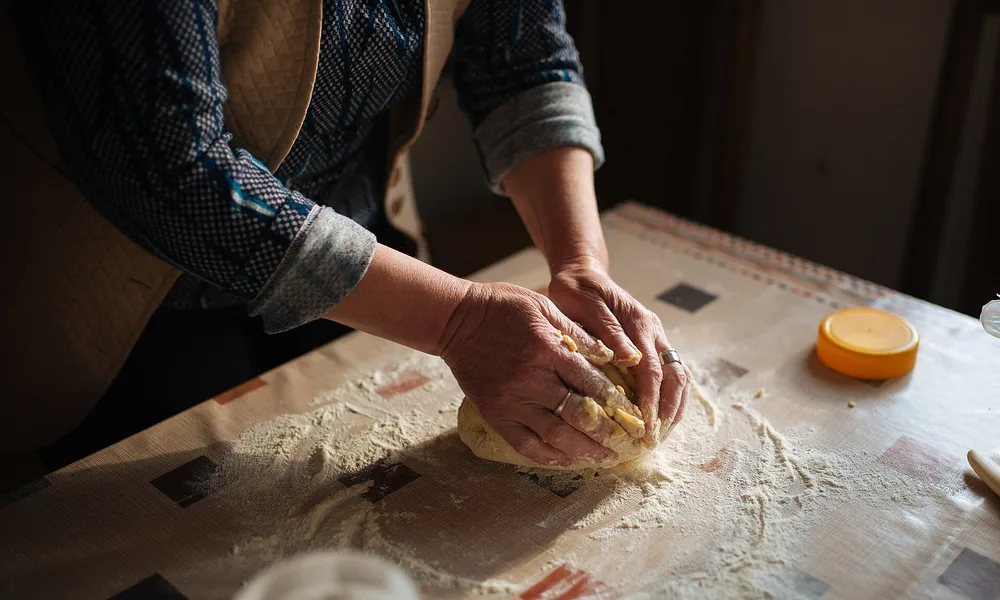
For cakes, I use a bowl and a wooden spoon: ten minutes of mixing, a cake that tastes better, and one bowl to wash. For bread, I use my hands — kneading dough is the best part of baking, and the machine never let me feel it. For cream and meringues, I use a hand whisk, which takes three minutes and leaves nothing to clean except the whisk. Nothing I made in the stand mixer needed a stand mixer; it needed a bowl, a spoon, and ten minutes. The cakes are better, the kitchen is lighter, and the only machine left on the counter is the kettle.
What changed after a year
A year without the stand mixer, and three things have changed. First, my baking tastes better — the spoon and my hands give me control over every minute, and the cakes keep their character instead of being beaten into the same smooth batter. Second, my kitchen is easier: the best stretch of counter is free, there is no heavy machine to clean around, and the washing-up pile is smaller every single week. Third, and most surprising, I bake more. Without the machine to set up and clean, I reach for the bowl without thinking, and the cakes that used to feel like a project now feel like an evening’s quiet work. The stand mixer promised to make baking easier. The year without it actually made baking better — and lighter, and cheaper, and more fun.
The bottom line
I do not miss the stand mixer. I miss the idea of it — the baker with the gleaming machine who whips up perfect cakes in minutes. That baker was never me. The real me bakes with a bowl and a spoon, kneads the dough with my hands, and spends nothing on a machine that weighs twelve kilos and gathers dust. If yours is sitting on the counter, try a month without it. The story of why I stopped using a coffee maker taught me the same lesson: the thing you think you need is usually the thing you can stop paying for, and the spoon you already own does the job better.
Frequently asked questions
Do you still bake cakes?
Yes — every week. A bowl and a wooden spoon take ten minutes, the cake tastes better, and there is one bowl to wash. The stand mixer version took twenty minutes to set up and fifteen to clean, and the cake tasted the same. The spoon wins the evening outright.
What did you do with the stand mixer?
I gave it to a friend who bakes every weekend and uses hers three times a week. It cost me nothing to pass on, and she uses it more in a month than I did in three years — which is a better ending for it than my kitchen counter.
Was the stand mixer really that expensive?
The machine was $279, and the attachments added $203 more — $482 in total for a machine I used six times a year. That is $80 per cake, before the ingredients. A bowl, a spoon, and a whisk cost $18 in total, and they have lasted a decade.
Is hand mixing really as good as a machine?
For home baking, yes — and often better, because you can feel the batter and stop at the right moment. A machine beats the batter until it is smooth, and smooth is not always better. The hand-mixed cake has texture, and the baker has a better time making it.

Keep what speaks to you.
Leave room for your own perspective.