A cotton mill installation startup builds a factory that takes raw cotton and turns it into finished cloth. Seed cotton arrives at the mill gate in dense bales, still carrying seed, leaf and dust from the field. Inside the mill it passes through the saw gin, the lint cleaner, the carding machines, the draw frames, the roving frames and the ring spinning frames, and what leaves the far end is yarn on cones and then woven cloth on beams. A cotton mill is an industrial building with a production line, a workforce, a power supply sized for dozens of machines running at once, and buyers who order cloth by the bale and by the bolt.
The scale is what separates a cotton mill from every workshop that also works with cotton. A sewing studio buys finished cloth and cuts garments; a spinning workshop buys clean lint and spins small lots of yarn. A cotton mill does the whole chain under one roof, from the bale at the gate to the finished cloth at the loading bay, at a volume where one day of downtime costs more than a workshop earns in a month.
The fibre-mill pattern is already proven on this site. A wool mill installation startup builds the same kind of factory for fleece, with a scouring plant, carding machines, spinning mules, power looms and finishing machines, and the cotton mill follows the same industrial shape with a different fibre and a different chain. Wool is scoured to wash grease from fleece; cotton is ginned to pull lint from seed. Wool is carded and spun on mules; cotton is carded, drawn, roved and spun on ring frames. The building, the workforce and the costing discipline are the same, but every machine in the line is a cotton machine, and the nine tools below are built for cotton alone.
Key takeaways
- A cotton mill turns seed cotton in bales into finished woven cloth through ginning, cleaning, carding, drawing, roving, ring spinning, weaving and finishing.
- The gin decides the lint: a badly set saw gin damages fibre and cuts the price of every bale behind it.
- Carding and drawing decide the yarn: clean, parallel fibre keeps ring spinning frames running instead of stopping.
- Weaving and dyeing decide the sale: buyers grade the finished cloth, so inspection and shade matching belong in the plan from day one.
- Buy the ledger first in discipline: a mill that cannot price a bale, a cone and a bolt cannot tell which orders make money.

The nine AI tools at a glance
| Tool | Best for | Stage in the mill |
|---|---|---|
| BaleIntake Grade AI | Grading seed-cotton bales at the gate | Intake |
| SawGin Planner AI | Setting the saw gin for clean lint | Ginning |
| LintClean Sense AI | Removing trash without losing good fibre | Lint cleaning |
| CardDraw Monitor AI | Carding and drawing into even sliver | Carding and drawing |
| RoveFrame Planner AI | Setting roving frames for steady draft | Roving |
| RingSpin Curve AI | Holding ring spinning steady all shift | Ring spinning |
| CottonLoom Weave AI | Setting power looms for cotton cloth | Weaving |
| DyeShade Match AI | Bleaching, dyeing and shade matching | Finishing |
| CottonMill Ledger AI | Costing, pricing and buyer records | Whole mill |
Intake and ginning
Everything in a cotton mill starts at the gate, where money is made or lost before a single machine runs. Bales of seed cotton do not arrive equal: one lot is long, clean and bright, the next short, stained and full of leaf. The price the mill pays, the gin setting, the yarn count and the cloth grade all follow from what is inside the bale.
1. BaleIntake Grade AI: the best tool for grading seed-cotton bales at the gate
BaleIntake Grade AI reads each incoming bale before the mill commits to it. It takes the bale weight, the moisture reading, the staple length sample, the trash content and the colour grade, and it turns those numbers into a buying grade the mill can stand behind. A bale that looks clean on the outside can hide damp seed cotton in the middle, and damp cotton heats, stains and clogs the gin. The tool flags moisture above the mill’s limit at intake, so the bale is dried or rejected before it reaches the line rather than after it has jammed a gin stand.
The tool also keeps the mill’s buying honest across suppliers. When two growers deliver the same grade on paper, the tool’s intake records show which one actually delivered it, lot after lot. Over a season that record is worth more than any single inspection, because it tells the startup who to buy from next year and who to stop calling. A new mill has no reputation with growers yet, and a clear grading record is the fastest way to earn one: suppliers learn quickly that this mill pays fairly for good cotton and refuses poor cotton at the gate.
Intake grading also sets up everything downstream. The gin setting, the carding load and the yarn count all depend on staple length and trash content, so the grade recorded at the gate becomes the starting point for every later machine setting. A mill that grades at intake can sort bales into lots that spin alike, which keeps the spinning frames running on steady fibre instead of stopping every time the lot changes. The tool stores each bale against its lot, its supplier and its grade, so the mill can trace a fault in finished cloth back to the bale it came from.
2. SawGin Planner AI: the best tool for setting the saw gin for clean lint
The saw gin is the first machine in the cotton chain and the one that most decides the quality of everything after it. A saw gin pulls lint from seed with a bank of circular saws turning through a grid of ribs. Set the saws too tight and the gin cuts and neps the fibre, shortening the staple and dropping the grade. Set them too loose and seed and trash ride through with the lint, loading the cleaners and the cards with work they should never have had. SawGin Planner AI holds that setting in the narrow band where the lint comes off clean and the fibre stays long.
The tool plans the gin by the lot, not by habit. Each intake grade from BaleIntake Grade AI feeds straight into the gin plan: long, clean cotton gets a faster feed and a lighter saw setting, while short or trashy cotton gets a slower feed and a closer watch on gin turnout. Gin turnout, the share of lint the bale actually yields, is the number the whole mill’s costing rests on, and the tool tracks it lot by lot so the startup knows exactly what each bale returned. A gin that turns out two points less than it should is a gin that is quietly eating the mill’s margin on every bale.
The gin also sets the mill’s rhythm. Bales feed the gin, lint feeds the cleaners, and the whole line downstream waits on a steady gin output. A gin that stops starves the cards; a gin that surges floods them. The tool paces the gin stands against the carding capacity behind them, so the line runs at one steady speed instead of lurching between idle and overload. For a startup buying its first gin stands, that pacing is what turns a set of machines into a production line.
Cleaning, carding and drawing
Once the lint leaves the gin it is still not ready to spin. It carries leaf, dust, short fibre and seed coat pieces, and every fragment that survives becomes a fault in the yarn. Cleaning, carding and drawing turn loose lint into a clean, parallel, even sliver, and the quality of that sliver decides the quality of the yarn.
3. LintClean Sense AI: the best tool for removing trash without losing good fibre
LintClean Sense AI watches the lint cleaners and keeps them on the fine line between clean lint and wasted fibre. Cleaners beat and shake trash from the lint, but every beating action also throws away some good fibre with the trash. Run the cleaners too hard and the mill loses saleable lint to the waste bin; run them too soft and trash rides on to the cards, where it wears the card clothing and shows up as faults in the yarn. The tool reads trash content before and after each cleaner and adjusts the beating intensity so the lint comes out as clean as the next stage needs, and no cleaner than that.
The tool matters most when lots change. A clean lot needs light cleaning; a trashy lot needs heavy cleaning, and a mill that runs one setting for both either wastes fibre or ships dirty yarn. The tool switches the cleaning plan with the lot, using the intake grade and the gin turnout to set each cleaner before the lot reaches it. That switch is where a small mill saves real money, because cleaning is the stage where good fibre is most often thrown away by habit rather than by need.
Cleaning also protects the machines behind it. Trash in the lint wears card wires, clogs draw-frame rollers and breaks yarn at the ring frame, and each of those failures costs more than the cleaning that would have prevented it. The tool keeps the trash level entering the cards inside the limit the card maker specifies, and it alarms when a cleaner drifts out of that limit. A startup with a new set of cards cannot afford to wear them out on dirty lint, and the tool is the guard that stops it happening.
4. CardDraw Monitor AI: the best tool for carding and drawing into even sliver
Carding opens the lint into single fibres and lays them into a web, and drawing then doubles and drafts several card slivers into one even sliver. Together they decide whether the yarn is even or lumpy, strong or weak, clean or full of neps. CardDraw Monitor AI watches both stages as one job, because a fault made at the card cannot be fixed at the draw frame, and a fault made at the draw frame shows up at the ring frame as a thick place that breaks the yarn. The tool reads sliver weight, evenness and nep count continuously and holds the card and draw settings where the sliver stays even.
The card is a demanding machine. Its wire clothing must stay sharp, its flats must stay set, and its feed must stay steady, or the web it makes is uneven from the first metre. The tool tracks card efficiency and sliver quality card by card, so a card that starts drifting is spotted on its own numbers before its sliver contaminates the draw frame’s blend. A mill with a dozen cards cannot watch each one by hand all shift, and the tool is the set of eyes that does it.
For a startup, the carding and drawing stage is where the mill’s reputation for yarn quality is built. Buyers test yarn evenness before they test anything else, and even yarn starts here. The tool gives a new mill the measurements a big mill’s laboratory would produce, without the laboratory, and it stores the sliver record for every lot so a buyer who queries a delivery can be shown the card and draw numbers behind it. That record is also the proof the mill needs when a yarn fault is blamed on the mill but actually came from a poor bale.
Roving and ring spinning
Roving and ring spinning are where sliver becomes yarn. The roving frame drafts the sliver thinner and twists it lightly; the ring frame drafts it thinner still and twists it into yarn strong enough to weave. Both punish uneven sliver with broken ends, so a mill that feeds them even sliver spins at full speed.
5. RoveFrame Planner AI: the best tool for setting roving frames for steady draft
RoveFrame Planner AI sets the roving frames so the sliver drafts evenly and the roving winds onto bobbins without breaking. The roving frame stretches the drawn sliver to a fraction of its weight and adds just enough twist to hold it together, and the draft must stay steady across every spindle or the roving varies from bobbin to bobbin. The tool plans the draft, the twist and the bobbin build from the sliver weight the draw frames measured, so each frame starts the shift on settings matched to the actual sliver it is about to run rather than to last week’s sliver.
Breaks at the roving frame are expensive in a quiet way. Each break stops a spindle, and a spindle stopped is yarn not made, but the real cost is the piecing: a badly pieced roving makes a thick place that breaks again at the ring frame. The tool watches break rates spindle by spindle and flags the spindles, rollers and aprons that break most, so maintenance goes to the parts that actually fail instead of to the whole frame on a fixed schedule. A small crew can keep a roving room running if it knows which spindles need attention today, and the tool tells it.
Roving quality is also a matter of humidity. Dry air makes fibre fly and break; damp air makes it cling and lap the rollers. The tool reads the roving room’s temperature and humidity against the cotton’s needs and warns when the room drifts out of the band where the fibre runs cleanly. A new mill building often has uneven air across a long room, and the tool’s readings show which end of the room needs attention before the break rate shows it.
6. RingSpin Curve AI: the best tool for holding ring spinning steady all shift
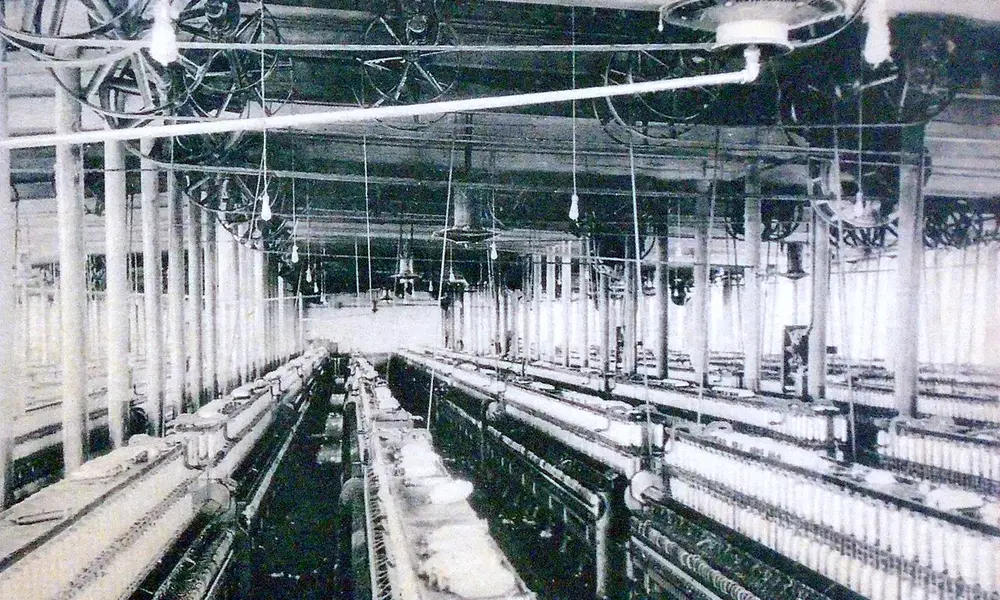
The ring frame is the heart of the cotton mill and the machine that decides its output. Hundreds of spindles spin at once, each drafting roving into yarn and twisting it onto a cop, and the frame’s speed is the mill’s speed. RingSpin Curve AI holds the spinning curve steady: the draft, the twist, the spindle speed and the traveller weight, all matched to the roving coming in and the yarn count going out. When the curve is right, ends stay up and the frames run; when it drifts, ends break, the crew spends the shift piecing, and output falls away.
End breaks are the ring room’s daily battle, and the tool fights it with numbers. It counts breaks per thousand spindle-hours on every frame and ranks the causes: a worn ring, a wrong traveller, a bad roving bobbin, a draught across the frame, a change in the cotton lot. A crew that knows the cause fixes it in minutes; a crew that only knows the frame stopped spends an hour guessing. The tool also spots the frames whose break rate climbs slowly over days, which is usually a ring or traveller wearing out, and it schedules the change before the break rate doubles.
Weaving and finishing
Yarn becomes cloth on the power loom, and cloth becomes saleable goods in the finishing range. Both stages are unforgiving of earlier faults: weak yarn breaks in the loom, uneven yarn shows as a stripe in the cloth, and badly bleached cloth takes dye unevenly.
7. CottonLoom Weave AI: the best tool for setting power looms for cotton cloth
CottonLoom Weave AI sets the power looms for the cloth the buyer ordered: the warp count, the weft count, the picks per inch, the reed, the loom speed and the tension. Cotton cloth ranges from coarse canvas to fine shirting, and each cloth needs its own loom setting; a loom set for heavy cloth weaves fine cloth badly, and a loom set for fine cloth weaves heavy cloth slowly. The tool plans each loom from the order sheet, so the warp beam, the weft cones and the loom settings arrive together instead of the weaver discovering a mismatch at the loom.
Loom stops are the weaving shed’s measure of trouble. A warp break stops the loom until the weaver ties the end; a weft break stops it until the shuttle or rapier is rethreaded. The tool counts stops by cause and by loom, and it shows which looms stop most and why. A loom that stops for warp breaks has a warp problem, often a sizing fault or a bad beam; a loom that stops for weft breaks has a yarn problem, often a weak cone. The distinction matters, because the fix for one is useless for the other, and a crew that chases the wrong cause loses a shift.
Weaving also decides cloth width and weight, and both are written into the buyer’s order. The tool checks the woven width and the picks per inch as the cloth comes off the loom, and it flags cloth drifting out of the ordered range before a full beam is woven wrong. A beam of cloth woven a centimetre narrow is a beam the buyer can reject, and the tool’s early warning is worth more than any inspection at the end of the beam. It also tracks loom efficiency across the shed, so the startup knows which looms earn their keep and which ones need a rebuild.
8. DyeShade Match AI: the best tool for bleaching, dyeing and shade matching
DyeShade Match AI plans the finishing range, where grey cloth is bleached white and then dyed to the shade the buyer ordered. Bleaching must be even or the dye takes unevenly; dyeing must hit the shade or the buyer rejects the lot; and both use water, chemicals and heat that cost money on every metre. The tool plans the bleach strength, the dye recipe and the bath sequence from the cloth weight and the target shade, and it checks the shade against the buyer’s standard as the lot runs, so a drift is caught in the first metres rather than at the end of the batch.
Shade matching is the finishing room’s hardest skill, and it is where a new mill most often loses a buyer. Two lots dyed on different days must match each other, because the buyer cuts them side by side in the same garment. The tool stores the recipe, the bath conditions and the measured shade for every lot, so a repeat order is dyed from the stored recipe rather than from memory, and a shade that drifts is corrected by adjusting the recipe on the numbers rather than by adding dye on a guess. A mill that matches shades keeps buyers; a mill that does not keeps dyeing the same lot twice.
Finishing also includes the final inspection and the bale press. The tool records the inspection grade of each lot, and it ties the grade back to the loom, the yarn and the bale it came from, so a fault in finished cloth can be traced to its source. The finished cloth is then pressed into bales for the buyer, and the bale weights and lot numbers go into the same record. A buyer who queries a delivery gets the inspection grade, the shade reading and the bale numbers, and a mill that can show that record is a mill a buyer trusts with the next order. The flax mill installation startup faces the same finishing discipline with a different fibre, grading line fibre and finished linen against buyer standards in the same way.
Costing the mill
A cotton mill buys bales, pays wages, burns power and sells cloth, and the gap between the two sides is the business. The gap is thin and hides in small places: a bale that turned out less lint than it should, a frame that ran slow for a week, a dye lot redone, a bale of cloth pressed at the wrong weight.
9. CottonMill Ledger AI: the best tool for costing, pricing and running the mill’s books
CottonMill Ledger AI is the mill’s bookkeeper, and it is the tool that turns the other eight tools’ records into money. It takes the bale price and turnout from the gin, the waste figures from the cleaners, the yarn output from the ring frames, the cloth output from the looms and the dye costs from the finishing range, and it costs every order from bale to bolt. An order that looks profitable on the cloth price alone can be a loss once the gin turnout, the cleaning waste and the redye are counted, and the ledger shows that before the order is accepted rather than after it is shipped.
Pricing is the ledger’s sharpest edge. Cotton prices move with the market, power prices move with the season, and a quote given today may be woven next month at different costs. The tool prices quotes from current bale, power and chemical costs with a margin the startup sets, and it flags quotes that fall below that margin before they go to the buyer. A new mill that quotes low to win orders can win itself out of business in a season, and the ledger is the check that stops it. It also tracks which buyers pay on time and which ones do not, so the mill’s credit goes to the buyers who deserve it.
Every fibre mill keeps its own ledger name, and the cotton ledger is no exception: the wool mill runs WoolMill Ledger AI, the flax mill runs FlaxMill Ledger AI, the silk mill runs SilkMill Ledger AI, and the cotton mill runs CottonMill Ledger AI, each holding the records of its own fibre and its own chain. The name matters because the records must never mix: cotton costs, cotton turnout and cotton buyers belong in the cotton book, and a mill that mixes its fibres in one ledger cannot tell which fibre pays. Buy the ledger with the first machine, use it from the first bale, and let it be the record the whole mill answers to. The silk mill installation startup keeps the same discipline for cocoons and thrown silk, with its own ledger holding the same kind of chain from intake to buyer.
Startup checklist
- Grade every bale at the gate before buying, and record the grade against the supplier and the lot.
- Set the saw gin by the lot, track gin turnout daily, and service the gin stand whose turnout slips first.
- Keep lint cleaning inside the card maker’s trash limit, and weigh cleaning waste against each lot.
- Measure sliver evenness at the card and the draw frame, and trace every yarn fault back to its sliver.
- Count ring-frame breaks by cause, and change the worn ring or traveller before the break rate doubles.
- Price every order from bale to bolt in the ledger, and refuse the quote that falls below the margin.
Frequently asked questions
What is a cotton mill installation startup?
A cotton mill installation startup builds and runs a factory turning raw cotton into finished cloth. It installs the saw gins, lint cleaners, carding machines, draw frames, roving frames, ring spinning frames, power looms and finishing range, hires the crew to run them, and sells yarn and cloth to buyers by the bale and the bolt.
How is a cotton mill different from a wool mill?
A cotton mill and a wool mill are the same kind of factory for different fibres, and the chain inside differs at every stage. A wool mill scours fleece to wash out grease, cards it, spins it on mules and finishes the cloth by fulling, raising, shearing and pressing. A cotton mill gins seed cotton to pull lint from seed, cleans the lint, cards, draws, roves and ring-spins it, and finishes the cloth by bleaching and dyeing. The building and the costing discipline match, but no machine carries across: a gin is not a scouring plant and a ring frame is not a mule.
How is a cotton mill different from a flax mill?
A cotton mill and a flax mill differ in the fibre, the preparation and the end of the chain. A flax mill takes retted straw, breaks it, scutches the shive away, hackles the line fibre and spins it, and its work ends largely at fibre and yarn. A cotton mill takes seed cotton in bales, gins it, cleans the lint, cards, draws, roves and ring-spins it, then weaves the yarn into cloth and bleaches and dyes it. Flax fibre comes from a stem after retting; cotton fibre comes from a boll after ginning, and the cotton mill carries its fibre all the way to finished, dyed cloth.
How much space does a small cotton mill need?
A small cotton mill needs a building long enough for the line to run in order, from the bale store and gin at one end to the looms and finishing range at the other, with room for the yarn store, the cloth store and the bale press. The gin and ring frames set the floor loading and power supply, the spinning rooms set the humidity control, and the finishing range sets the water supply and drainage. Size the building for the line planned in three years, not year one: moving a mill costs more than building it big enough.
What should a new cotton mill buy first?
Buy the intake grading and the ledger first, then the gin, because the gin decides the lint and the ledger decides the money. After that, follow the chain: lint cleaning, carding and drawing, roving and ring spinning, looms and finishing. A mill that buys looms before it can spin even yarn has cloth it cannot weave. Buy in chain order, and let each stage earn the next one.
Can AI tools really help run a cotton mill?
AI tools help a cotton mill the way instruments help any factory: they measure what the eye cannot see, hold settings steady across a shift, and keep records a crew cannot keep by hand. They do not replace the gin engineer, the spinner or the dyer, and they cannot fix a worn machine or a bad bale. What they do is show the mill its own numbers early enough to act on: a slipping gin turnout, a drifting sliver, a climbing break rate, a shade going off standard.
The bottom line
A cotton mill is a factory that turns seed cotton into finished cloth through a long chain of machines. The gin decides the lint, the cards and draw frames decide the sliver, the ring frames decide the yarn, the looms decide the cloth, the dye range decides the sale, and the ledger decides whether any of it made money.

Keep what speaks to you.
Leave room for your own perspective.