
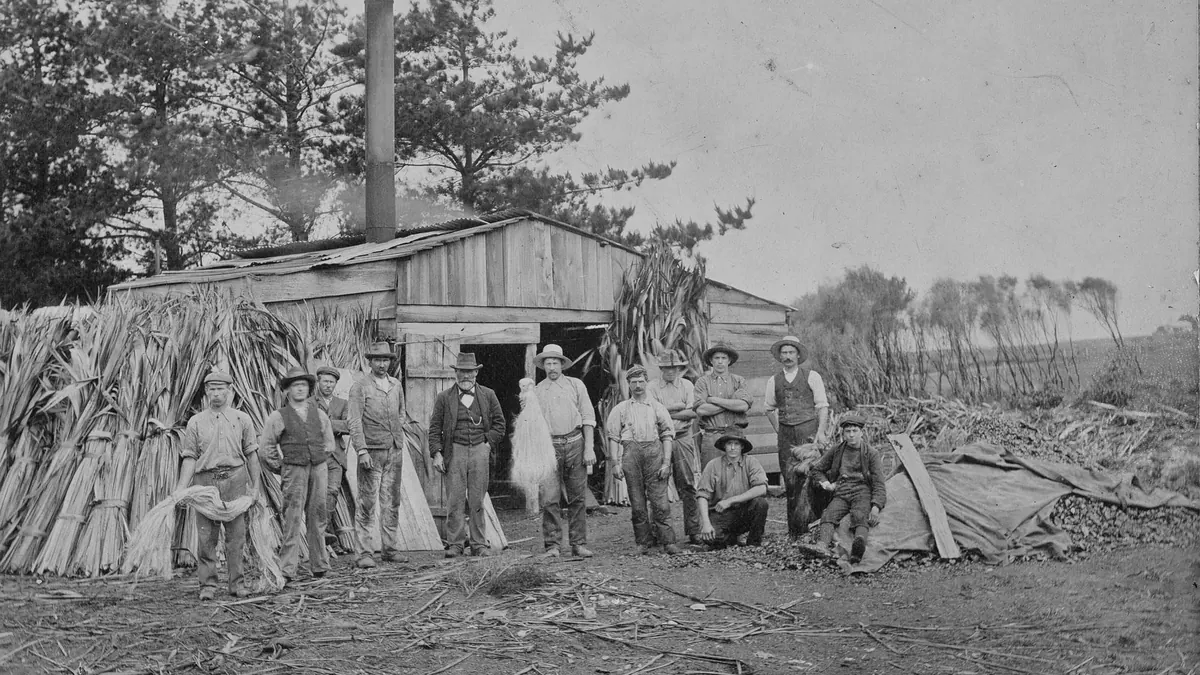
A flax mill installation startup builds the place where flax straw becomes line fibre. Lorries roll in from the farms with bundles of pulled flax straw, tall, gold and still carrying the seed bolls, and the mill takes over from there. The straw is retted until the woody stem rots just enough to let go of the fibre inside it, then it is broken, scutched and hackled until what is left is clean, combed line fibre in long, silvery lengths, ready for the spinners and weavers who buy it by the bale. The mill buys straw and sells fibre, and that simple fact draws the line around the whole trade. The farm grows the flax and pulls it, and the miller turns straw into fibre, and the two jobs need different buildings, different machines and different buyers. A flax mill never sows a field or pulls a crop; it starts where the harvest ends, at the mill gate, with a lorry full of straw.
The build itself is a processing line inside a tall mill building. There is a straw yard where loads are weighed, checked for stem length and stored dry under cover, because wet straw heats and rots in the stack. There is a retting yard or a set of retting tanks where the straw is rotted under control, either spread in the field for dew retting or steeped in water tanks, and the timing of that rot is the most skilled judgement in the mill. Then come the breaking rollers, the scutching line and the hackling benches, with drying lofts above, where retted straw and finished fibre dry in moving air before they are graded, baled and sold. Dust runs through all of it, because flax dust is a fire risk and a health risk, and a mill that ignores its dust has a short life.
This guide compares the nine AI tools that matter most when you install a flax mill from scratch in 2026. They follow the line in order, from the first load of straw at the gate to the last bale of graded fibre on the lorry, and each one settles a decision that a new mill cannot afford to get wrong: how long to ret, when the straw is ready to break, how hard to scutch without damaging the fibre, how to grade the line, and how to dry it without losing the crop to damp. A flax mill is not a workshop that takes fibre in and sends yarn out, and it is not a silk mill reeling filament from cocoons. It makes fibre from straw, and the tools below are chosen for that build alone.
Key takeaways
- A flax mill takes flax straw from the farm and turns it into line fibre through retting, breaking, scutching and hackling, in a mill building with mill power, drying lofts and a workforce.
- Retting is the decision that decides the fibre: ret too little and the wood will not leave the fibre, ret too much and the fibre itself rots and weakens.
- Buy the retting, breaking and scutching tools first, because a mill that cannot ret and scutch cleanly has nothing to hackle, grade or sell.
- Drying lofts are not spare space above the line: damp fibre in a bale heats, moulds and loses its grade before the buyer ever opens it.
- Line fibre is graded and sold by length, fineness and cleanliness, so the grading and ledger tools are what turn a working mill into a paying one.
The nine AI tools at a glance
| Tool | Best for | Stage of the line |
|---|---|---|
| StrawYard Grade AI | Grading straw at the gate | Straw intake |
| WaterRet Steep AI | Water retting in tanks | Retting |
| DewRet Watch AI | Dew retting in the field | Retting |
| BreakerRoll Gap AI | Breaking without cutting fibre | Breaking |
| ScutchWheel Blade AI | Scutching clean without damage | Scutching |
| HackleComb Draw AI | Hackling and comb settings | Hackling |
| LineFibre Grade AI | Grading line fibre for buyers | Grading |
| LoftDry Air AI | Drying straw and fibre in the lofts | Drying |
| FlaxMill Ledger AI | Costing, contracts and fibre buyers | Sales and books |
What a flax mill installation startup actually builds
A flax mill is an industrial building organised around a single line, and every part of it earns its place by serving that line. The straw yard comes first, because a mill that cannot take in, weigh and store straw cleanly will spend its first season fighting damp stacks and mixed loads. Straw arrives in bundles or bales, and the founder needs covered storage that keeps rain off the straw while letting air move through it, a weighbridge or scales, and a clear rule for what a good load looks like: long straight stems, even ripeness, no weeds tangled through the bundles, and no damp. A load of short, weedy straw retted alongside long clean straw gives fibre of two grades in one tank, and the buyer will grade the whole bale down to the worst of it.
The retting ground is the heart of the mill, and it takes two forms. Water retting happens in tanks or ponds, where bundles of straw are steeped until the pectin that glues fibre to wood softens and the stem falls apart under the breaker. Dew retting happens in the field, where pulled straw is spread in swaths and left to the rain, the dew and the soil microbes, turned regularly until the stems are ready. Both need the same judgement, which is knowing when to stop: under-retted straw holds its wood and breaks the fibre in the scutch, while over-retted straw gives weak, dark fibre that no buyer wants at a line price. A new mill usually starts with one method and learns it properly before adding the other, because the two methods need different ground, different labour and different timing, and a founder who tries to run both in the first season ends up watching neither.
After retting comes the dry work. The breaking line cracks the brittle woody stem between fluted rollers, the scutching line beats the broken wood, called shive, away from the fibre with blades or turbines, and the hackling benches comb the scutched fibre through rows of steel pins, drawing it into long, parallel line fibre and leaving the short tangled tow to be sold separately. The building has to hold all of this with room to move: straw comes in at one end, fibre goes out at the other, and the dust-heavy breaking and scutching bays need extraction that keeps the air clear and the fire risk down. Above the line, the drying lofts carry warm air through retted straw and finished fibre, and the grading and baling bench is where the fibre is sorted, weighed and pressed into bales for the buyer. The mill also needs power, water for the tanks, drainage that can take retting water safely, and a workforce that can be trained to judge straw by hand and eye, because no sensor yet replaces a worker who can feel when a stem is ready to break.
It helps to be clear about what a flax mill is not, because the neighbours on this site draw the line sharply. A spinning workshop takes fibre in one door and sends yarn out the other, fitted out with wheels and carders in a room; a flax mill makes the fibre from straw, and no workshop rets straw or runs a scutching line. A silk mill reeling filament from cocoons and weaving cloth on power looms works a different feedstock through a different process for a different product. A flour mill buys grain and sells graded flour, which is the same buy-and-process shape of trade, but grain is ground and sifted where straw is rotted, broken and beaten clean. The flax mill stands on its own line, and the nine tools below are chosen for that line alone.
The nine AI tools that launch a flax mill
The tools below follow the straw through the mill in the order the work happens. Each one is judged on the decision it settles, not on how clever it looks, because a new mill has a short list of decisions that decide whether it survives its first season, and a tool that does not settle one of them is a cost, not an asset. Prices change and suppliers come and go, so treat the notes on cost as planning ranges for 2026 and get a written quote before you commit to any of them.
1. StrawYard Grade AI: the best tool for grading straw at the gate
StrawYard Grade AI reads every load of straw as it arrives at the mill gate and grades it before it is stacked. It photographs the bundles, measures stem length and evenness, flags weed contamination and damp patches, and records moisture readings against each load, so the founder knows what went into the yard and what it is worth before a single stem is retted. A mill that takes in straw blind takes in trouble blind, because a wet load stacked against dry straw heats the whole stack, and a weedy load retted with clean straw drags the fibre grade down for the whole tank.
The tool earns its keep in the first month, when the founder is still learning to judge straw by eye and the growers are still learning what the mill will pay for. It gives every load a written grade that both sides can see, which settles the arguments about price before they start, and it builds a record of which growers deliver long clean straw and which ones deliver short weedy bundles, so the second season’s buying can be planned on evidence instead of memory. It also separates straw by grade at intake, so the long fine stems go to the tanks that make the best line fibre and the shorter stems go to the batches that will make a lower grade, instead of all of it being mixed into one average lot.
2. WaterRet Steep AI: the best tool for steeping straw in the retting tanks
WaterRet Steep AI plans the water retting tanks: how many bundles go into each tank, how deep the water stands, how warm it should be kept, how long the steep runs, and when to change the water. Water retting is fast and even when it is run properly, and it is the method that gives a new mill its most consistent fibre, but it punishes a founder who guesses. Too cold and the ret stalls for days, too warm and the fibre over-rets while the founder is still checking the first tank, and water left unchanged turns sour and stains the fibre.
The tool takes the straw grade from the intake record, the tank size, the water temperature and the season, and sets a steeping schedule for each tank with check points the crew can follow: when to test a stem by breaking it, when to lift a bundle and look at the fibre, and when to pull the tank. It logs every steep, so the mill learns its own timing instead of relearning it every spring, and it flags the tanks that are running hot or slow before the fibre is lost. A founder who keeps the log can also show a buyer exactly how a batch of fibre was retted, which is worth money when the buyer is choosing between two mills.
3. DewRet Watch AI: the best tool for watching dew retting in the field
DewRet Watch AI watches the straw that is retted in the field rather than in tanks, and it is the tool for the mill that takes straw from growers who spread and turn their own swaths. Dew retting is slow, weather-led and cheap: pulled straw lies in the field while rain, dew and soil microbes rot the pectin, and the grower turns the swaths so both sides ret evenly. The risk is the weather turning on the crop, with a wet week pushing the ret past ready and a dry spell stalling it, and a founder who cannot see the fields cannot time the intake.
The tool reads weather forecasts, soil moisture and the age of each swath, and tells the mill when each field is ready to lift and when a field needs turning first. It photographs sample stems, scores the ret from the way the wood separates from the fibre, and warns when a field is going past ready so the crew can lift it before the fibre weakens. It keeps the fields on a map with a readiness date for each one, so the mill can plan its lorries and its tank space around the fields that are ready, instead of discovering a field is over-retted when the bales arrive at the gate.
4. BreakerRoll Gap AI: the best tool for setting the breaking rollers
BreakerRoll Gap AI sets the breaking line, where fluted rollers crack the woody stem so the fibre can be freed. Breaking looks simple and is easy to get wrong: rollers set too tight cut the fibre and shorten the line, rollers set too loose leave wood clinging to the fibre that the scutch then has to beat out, and rollers fed unevenly give a mix of both in a single pass. The tool reads the retted straw as it enters the line, measures stem thickness and brittleness, and sets the roller gaps and feed rate for each batch, so the break is clean and the fibre stays long.
It watches the line while it runs, listening for the change in sound and feel that says a batch is running dry or damp, and it adjusts the gaps before the damage spreads through a whole bale of straw. It logs the settings that worked for each straw grade, so the crew can return to a known setting instead of starting from a guess every morning, and it flags rollers that are wearing unevenly, because a worn roller breaks straw on one side and crushes it on the other, and the fibre shows it.
5. ScutchWheel Blade AI: the best tool for beating the shive from the fibre
ScutchWheel Blade AI plans the scutching line, where blades and turbines beat the broken shive away from the fibre. Scutching is the loudest, dustiest and most skilled step in the mill, and it is where the fibre is either made or ruined. Beat too gently and the shive stays in the fibre, so the hackle clogs and the buyer grades the lot down; beat too hard and the fibre itself is cut short and the line yield falls with every pass. The tool sets the blade speed, the feed rate and the number of passes for each batch, from the straw grade and the break quality that came before it.
It watches the fibre coming off the line and scores it for cleanliness and length, so the crew can see the result of a setting change within minutes instead of at the grading bench at the end of the week. It balances the line against the dust extraction, because a scutch running faster than its extraction can clear is a fire risk as well as a health risk, and it schedules blade changes and turbine checks before wear turns into damage. It also tracks the shive and tow that come off the line, because both have buyers of their own, and a mill that throws its by-products away is leaving money on the floor of its own scutching bay.

6. HackleComb Draw AI: the best tool for hackling line fibre
HackleComb Draw AI sets the hackling benches, where steel combs draw the scutched fibre into long, parallel line fibre and pull the short tangled tow away. Hackling is the finishing step, and it decides the grade more than any other: fine combs on coarse fibre waste the line, coarse combs on fine fibre leave it rough, and a comb run too fast snaps the fibre it should be drawing straight. The tool photographs the fibre at each comb, reads its fineness and length, and sets the comb progression for the batch, from the coarsest pin to the finest.
It scores the line as it comes off the final comb, so the grader knows what is in the bale before it is weighed, and it separates the tow cleanly, grading the tow for its own buyers instead of mixing it back into the line. It logs which comb sets and speeds gave the best yield for each straw grade, and it warns when pins are bent or clogged, because a bent pin tears fibre and a clogged comb wastes it. A mill that hackles by eye alone can make good fibre, but it cannot prove it made the same fibre twice, and buyers pay for fibre they can rely on.
7. LineFibre Grade AI: the best tool for grading line fibre for buyers
LineFibre Grade AI grades the finished line fibre by length, fineness, cleanliness and colour, and writes the grade that goes on the bale. Grading is where the mill is paid, and it is where a founder who has done everything else right can still lose money, because a bale graded too generously comes back as a complaint and a bale graded too harshly sells below its worth. The tool measures the fibre with cameras and sensors, compares it against the grades the buyers actually pay for, and gives each bale a grade the buyer can trust.
It keeps the grading consistent across workers and across seasons, so the buyer who ordered a grade in spring gets the same grade in autumn, and it records the grade of every bale against the straw it came from, the ret it went through and the settings that scutched and hackled it. That record is what lets the founder find the batches that made the best fibre and repeat them, instead of guessing which field or which tank was responsible. It also flags bales that fall between grades, so they can be re-sorted before they are sold rather than argued over after delivery.
8. LoftDry Air AI: the best tool for drying straw and fibre in the lofts
LoftDry Air AI runs the drying lofts, where retted straw and finished fibre dry in moving air before they are graded and baled. Drying looks like waiting and is really a process: air too hot scorches the fibre and makes it brittle, air too still leaves damp pockets that mould in the bale, and a loft loaded unevenly dries one side while the other stays wet. The tool reads temperature and humidity through the loft, sets the fans and the air flow, and plots a drying curve for each load, so the crew knows when the straw is dry enough to break and when the fibre is dry enough to bale.
It watches the loads that are still drying and warns when a pocket of damp is forming, so the crew can turn or spread the load before mould takes hold. It schedules the loft space against the retting and scutching plan, so the loft is never the bottleneck that stops the line, and it logs the drying history of every bale, which is the evidence the mill needs if a buyer ever questions the condition of the fibre. A bale that heats in storage is a bale that can catch fire, and the tool’s temperature warnings are the cheapest insurance a mill can buy.
9. FlaxMill Ledger AI: the best tool for costing, contracts and fibre buyers
FlaxMill Ledger AI runs the mill’s books: the cost of every load of straw, every hour on the line, every bale of fibre and every bale of tow, set against the contracts the mill holds and the buyers it sells to. A flax mill is a margin business, and the margin is made or lost in the gap between the price of straw and the price of fibre, which moves with the season, the grade and the buyer. The tool tracks that gap load by load, so the founder knows which grades pay and which ones only keep the line busy, and it prices quotes from the real cost of the straw, the labour and the power that went into each bale.
It keeps the contracts in order, with delivery dates, grades and prices written down and reminders before each delivery falls due, and it matches graded bales to the buyers who pay best for that grade, instead of selling the finest line to the first buyer who asks. It records every sale, every complaint and every repeat order, so the founder can see which buyers are worth keeping and which ones cost more in trouble than they pay in price. It also keeps the tax and wage records straight, which matters more in a mill with a workforce than in a one-person workshop, because a mill’s books are inspected and its wages are paid on time or not at all.
How to buy the tools in the right order
Buy in the order the straw moves, not in the order the brochures arrive. The shape of the trade is a familiar one: a flour mill buys grain and sells graded flour, and a flax mill buys straw and sells line fibre. The intake tool comes first, because it decides what straw is worth milling, and the retting tool comes second, because retting decides the fibre. The breaking and scutching tools come next, with their machines, because a mill that cannot break and scutch cleanly has nothing to hackle, and the hackling and grading tools follow, because they decide the grade and the price. The drying tool should be planned with the building and bought before the first retted straw needs a loft, and the ledger should be running from the first load, because costs counted late are costs guessed.
Checklist: before you sign the lease on the mill building
- Straw supply agreed in writing with growers, with grades and prices set before the first lorry arrives.
- Retting ground or tanks planned, with water supply and drainage that can take spent retting water safely.
- Breaking and scutching bays sized for the throughput planned, with dust extraction fitted from the start.
- Drying lofts built into the plan, with fans, vents and loading access, not added as an afterthought.
- Grading and baling bench ready before the first sale, with the grade written on every bale.
- Ledger running from the first load of straw, with contracts, delivery dates and buyer prices recorded.
Frequently asked questions
What is a flax mill installation startup?
A flax mill installation startup builds a mill that takes flax straw from the farm and turns it into line fibre. The straw is retted, broken, scutched and hackled in a mill building with mill power, drying lofts and a workforce, and the finished fibre is graded, baled and sold to spinners and weavers. It makes fibre from straw; it does not spin yarn.
How is a flax mill different from a spinning workshop?
A spinning workshop takes loose fibre in one door and sends yarn out the other, fitted out with wheels, carders and dyeing kit in a room. A flax mill takes straw in at the gate and makes the fibre itself, through retting, breaking, scutching and hackling, in a mill building. The workshop starts where the mill finishes.
How is a flax mill different from a silk mill?
A silk mill reels filament from cocoons, throws it into thread and weaves silk cloth on power looms. A flax mill rets straw, breaks it, scutches it and hackles it into line fibre. The feedstock, the process and the product are all different; only the shape of the trade is shared, an industrial mill building with mill power and a workforce.
How much straw does a small flax mill need?
It depends on the size of the breaking and scutching line and the number of days it runs, but the rule is the same at every size: agree the straw supply in writing before the building is signed for. A mill with a line and no straw is a building with no business, and a mill that buys straw in a rush pays the price of the rush.
What is retting, and why does it decide the fibre?
Retting is rotting the flax straw just enough to free the fibre from the woody stem. In water retting the straw is steeped in tanks, and in dew retting it lies in the field while rain, dew and microbes do the work. Ret too little and the wood will not leave the fibre; ret too much and the fibre itself weakens.
Which AI tool should a new flax mill startup buy first?
Buy the straw intake tool first, because it grades every load at the gate and protects the whole line from straw that was never worth milling, and buy the retting tool second, because retting decides the fibre. Together they settle the two decisions that decide whether the first season makes fibre worth selling.
Bottom line
A flax mill installation startup is a straightforward trade with a demanding middle: buy straw, ret it at the right moment, break it cleanly, scutch it without damage, hackle it into graded line fibre, dry it properly and sell it to buyers who come back. The nine tools in this guide sit on those steps in order, and the founder who buys them in order, learns the ret by hand as well as by screen, and grades honestly will have a mill that earns its keep. Start with the intake and the retting, build the line around them, and let the fibre prove the mill.

Keep what speaks to you.
Leave room for your own perspective.


