
A spinning workshop turns loose fibre into yarn. That single sentence is the whole business: raw wool, alpaca, flax or cotton comes in one door, and finished skeins, wound balls and dyed hanks go out the other. Everything in between is preparation, drafting, twisting and finishing, and the tools that do that work decide whether a new workshop makes money or makes a mess. A spinning workshop installation startup is a business built around that transformation, fitted out from an empty room with wheels, carders, blending boards and dyeing kit, plus the software that prices, books and sells what the wheels produce.
Most people picture a spinning wheel and stop there, but a working startup needs far more than one beautiful wheel. Fibre arrives greasy, tangled and full of vegetable matter, so it must be washed, picked, carded and blended before it can be drafted into yarn. The wheel itself is only the middle of the line. After spinning comes plying on a lazy kate, skeining on a niddy noddy, washing and setting the twist, and often dyeing, before a single skein is ready to sell. Each of those stages has its own tools, its own skill and its own failure modes, and a founder who buys wheels before carders will spend the first month fighting fibre that was never ready to spin.
This guide compares the nine tools that matter most when you install a spinning workshop from scratch in 2026. They cover the full line, from the first drum carder to the last skein on the shelf, and they were chosen for a fibre-spinning workshop specifically: spinning wheels, carding, drafting, plying and fibre preparation. Nothing here is a lathe, a loom or a woodworking machine. If you are setting up a room where fibre becomes yarn, these are the tools to price first, buy in the right order, and build your classes and your product range around.
Key takeaways
- A spinning workshop makes yarn from fibre; carding, drafting, spinning and plying are the four stages that decide the quality of every skein.
- Buy fibre preparation tools before extra wheels, because uncarded, unblended fibre cannot be drafted into good yarn on any wheel.
- One versatile spinning wheel plus one electric spinner covers teaching, production and demonstrations better than three similar wheels.
- Plying, skeining and dyeing are where a workshop earns its margin, turning single-ply yarn into balanced, washable, saleable skeins.
- Sell to knitters, crocheters, felters and weavers who buy yarn, and keep a simple booking and inventory system running from the first week.
At a glance: the nine tools for a spinning workshop startup
The table below gives the short version. Each tool is covered in detail further down, with what it does in a fibre-spinning workshop, who it suits, and what to watch for before you buy it.
| Tool | Stage | Best for | What it does |
|---|---|---|---|
| Schacht Matchless Spinning Wheel | Spinning | Teaching and production | Double-drive wheel that drafts fibre into single-ply yarn |
| Ashford e-Spinner 3 | Spinning | Fast production spinning | Electric spinner that spins yarn without treadling |
| Strauch Finest Drum Carder | Carding | Fibre preparation | Cards washed fibre into smooth, spinnable batts |
| Louët Blending Board | Blending | Colour and fibre blends | Blends colours and fibres into rolags for spinning |
| Ashford Niddy Noddy | Finishing | Skein winding | Winds finished yarn into measured skeins |
| Schacht Lazy Kate | Plying | Two- and three-ply yarn | Holds bobbins under tension while yarns are plied together |
| Dharma Trading Acid Dyes | Dyeing | Hand-dyed yarn | Dyes protein-fibre yarn in repeatable colourways |
| Ravelry | Selling | Finding yarn buyers | Marketplace and community where knitters buy handspun yarn |
| FibreFlow AI | Running the workshop | Stock and pricing | Tracks fibre stock, dye lots and yarn costing |
Spinning wheels: where fibre becomes yarn
The wheel is the centre of the workshop and the first thing a visitor looks at, but it is worth choosing it like a workhorse rather than a showpiece. A startup wheel needs to be easy to treadle for a full teaching day, simple enough for a beginner to learn drafting on, and strong enough to spin the full range of yarns a new business will sell, from chunky woollen singles to fine, smooth worsted-style yarns. It also needs bobbins that are easy to swap, a drive system a founder can explain in plain language, and parts that can be ordered without a long wait. Two wheels that meet those tests in different ways are the Schacht Matchless and the Ashford e-Spinner 3, and together they cover almost every spinning job a new workshop will face.
1. Schacht Matchless Spinning Wheel: Best for teaching and production spinning
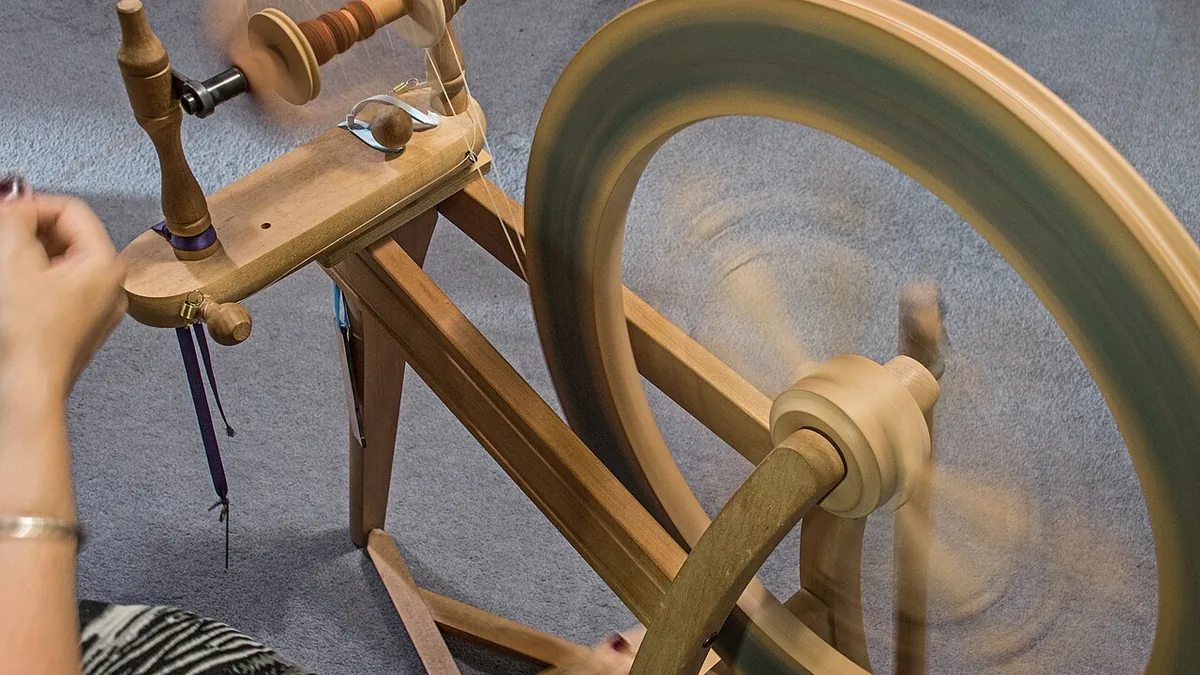
The Schacht Matchless is a double-drive spinning wheel, which means a single drive band turns both the flyer and the bobbin, and the difference in speed between them is what winds the yarn on. That sounds technical, but in practice it gives the spinner a wide, smooth range of ratios, so the same wheel can spin a fine laceweight yarn in the morning and a thick, soft chunky yarn in the afternoon without changing the setup. For a startup, that flexibility matters more than any single feature: one wheel can serve a beginner class, a production run and a demonstration, and the founder does not need a different wheel for each job.
Teaching is where the Matchless earns its place. Beginners learn drafting, which is the controlled thinning of fibre as it is drawn out and twisted into yarn, and the Matchless treadles smoothly enough that a new spinner can watch their hands instead of fighting the wheel. The double-drive system also forgives the uneven treadling that every beginner produces, so the yarn keeps forming instead of snapping or tangling. A founder who teaches on this wheel will spend less time untangling drive bands and more time teaching the drafting that actually makes good yarn. That is a real commercial point: classes are often a spinning workshop’s steadiest income, and a wheel that makes beginners feel capable in their first hour is a wheel that fills the next class.
2. Ashford e-Spinner 3: Best for fast, treadle-free production spinning
The Ashford e-Spinner 3 is an electric spinner, which means a small motor turns the flyer while the spinner uses both hands for drafting. There is no treadling, no drive band to adjust, and no rhythm to keep with the feet, so the spinner can concentrate entirely on the fibre. That makes it a production tool: when a workshop has an order for twenty skeins of the same yarn, the e-Spinner will produce them faster and more evenly than a treadle wheel, because the speed stays constant from the first bobbin to the last.
Speed is only half the story. The e-Spinner 3 is also quiet, light and portable, so it can sit on a workbench, travel to a market stall, or run during a demonstration while the founder talks to customers. It has a variable speed control and a large bobbin, which suits the medium and fine yarns that sell best as handspun, and its lazy kate attachment lets the spinner ply directly from the same unit. For a startup, that portability is a genuine advantage: the same tool that spins production yarn on a Tuesday can demonstrate spinning at a craft fair on a Saturday, and every demonstration is a chance to sell yarn, book a class or take a commission.
Fibre preparation: carding and blending
Fibre preparation is the stage most new founders underestimate, and it is the stage that decides whether the yarn is smooth or lumpy, strong or fragile, even or full of thick-and-thin surprises. Raw fleece arrives with grease, dirt, tangles and short fibres mixed in, and none of that can be spun as it stands. Washing removes the grease, picking opens the locks, carding lines the fibres up in the same direction, and blending mixes colours and fibre types into a combination that spins well and looks good. A workshop that skips preparation will blame its wheels for problems that started in the fleece, so the carding and blending tools deserve as much of the budget as the wheels do.
3. Strauch Finest Drum Carder: Best for turning washed fibre into spinnable batts
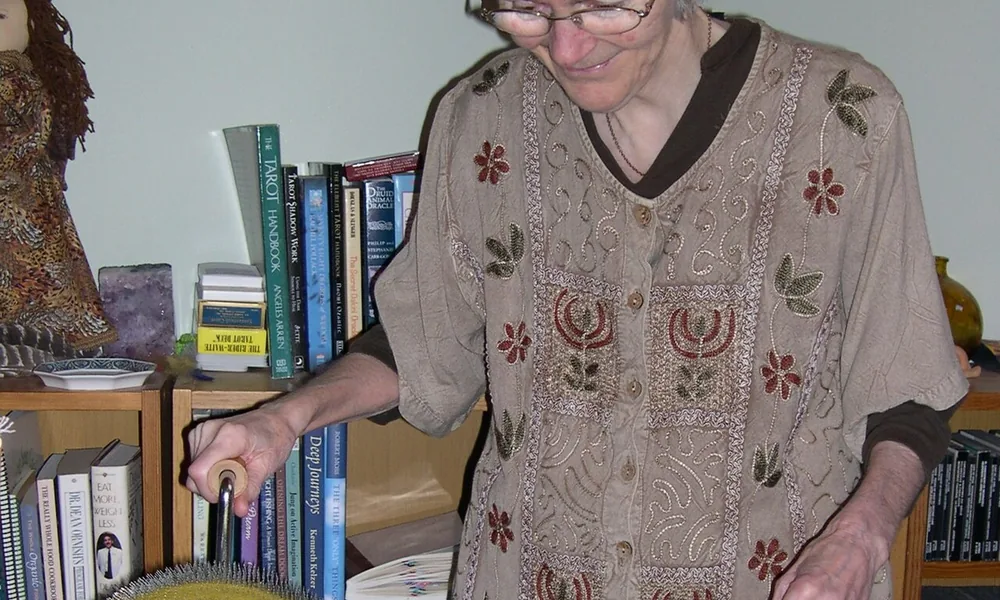
The Strauch Finest is a drum carder, a machine with two carding drums covered in fine wire teeth that comb fibre into a flat sheet called a batt. The spinner feeds washed, picked fibre onto the large drum, turns the handle, and the teeth tease the fibres apart and line them up, so that the batt that comes off the drum is smooth, even and ready to draft. Compared with hand carding, which makes small amounts slowly, a drum carder prepares enough fibre for a full skein in minutes, and it does it evenly enough that the resulting yarn is consistent from one end of the skein to the other.
Consistency is the commercial reason to own one. A workshop that sells yarn needs every skein in a batch to look and feel like the others, and that starts with the batt. The Strauch Finest is known for its fine cloth, which suits the soft wools and blends a spinning startup is most likely to sell, and its adjustable drums let the founder card delicate fibres gently and coarser fibres more firmly. It also handles blending well: feed in layers of different colours or different fibres, card them together, and the batt that comes out is a ready-made blend that would take far longer to mix by hand.
A drum carder is a shared tool in a teaching workshop, so it needs a clear place in the room and a clear routine around it. Keep it on a stable table at a comfortable height, keep the fibre feed slow and even, and clean the drums between batches so colours do not muddy each other. The carder also gives the workshop a service to sell: many knitters and smallholders have fleeces they cannot prepare themselves, and a workshop that cards fibre for a fee turns an idle morning into paid work. Carded fibre can also be sold directly to felters, and a felting workshop startup is one of the best early customers for a spinning workshop, because felters buy carded wool by the kilo and come back for more when the quality is good.
4. Louët Blending Board: Best for colour blends and fibre rolags
The Louët Blending Board is a flat carding surface with a handle, used to build up layers of fibre and colour into small, rolled bundles called rolags. The spinner lays wisps of fibre across the board, adds touches of silk, alpaca or a contrasting colour, rolls the layer off with a pair of dowels, and gets a rolag that drafts into a yarn with colour and texture running through it. It is a small, simple tool, but it is the one that turns a workshop’s yarn from plain to distinctive, and distinctive yarn is what sells at a premium.
Blending boards earn their keep in two ways. First, they let a founder use up small amounts of expensive fibre, such as silk or fine alpaca, by spreading a little through a larger amount of wool, so the finished yarn feels luxurious without costing a fortune to make. Second, they are the best tool for developing a workshop’s own colourways: lay down a base colour, add streaks of two or three others, spin a sample, and the founder can see in an hour whether a combination works. That fast sampling matters when a workshop is building a range, because it is far cheaper to test a colourway on a blending board than to dye and spin a whole batch of the wrong thing.
Plying, finishing and dyeing: turning singles into saleable skeins
Single-ply yarn, fresh off the bobbin, is only half a product. It is lively, twisty and prone to kinking, and it will bias and skew in knitting if it is sold as it stands. Plying twists two or three singles together in the opposite direction, balancing the twist so the finished yarn hangs straight, feels stronger and knits evenly. Skeining winds that plied yarn into a measured loop, washing sets the twist, and dyeing gives it colour. These finishing stages are where a spinning workshop earns its reputation, because a customer judges a skein by how it looks on the shelf and how it behaves in the knitting, and both of those are decided here.
5. Ashford Niddy Noddy: Best for winding measured, tidy skeins
The Ashford Niddy Noddy is a simple wooden frame that winds yarn into a skein of a known length. The spinner wraps the yarn around the frame in a figure of eight, counts the wraps, ties the skein in several places, and slips it off as a neat loop. Because each wrap is the same length, counting wraps gives an exact skein length, which means the founder knows how many metres are in every skein and can price by length with confidence instead of guessing.
That measurement matters more than it looks. A customer who buys a skein labelled as one hundred metres expects one hundred metres, and a workshop that under-delivers will lose repeat buyers quickly. The niddy noddy also keeps the skein tidy through washing and dyeing: a well-tied skein does not tangle in the wash, dries evenly, and arrives on the shelf looking like a professional product rather than a tangled bundle. It is a cheap, unglamorous tool, and it is one of the most used items in the workshop, because every skein the business sells passes through it.
6. Schacht Lazy Kate: Best for balanced two- and three-ply yarn
The Schacht Lazy Kate is a stand that holds two or three bobbins under gentle tension while the spinner plies their yarns together. The bobbins sit on rods, a tensioned cord keeps them from spinning freely and tangling, and the spinner drafts the plied yarn back onto a fresh bobbin or directly into a skein. It sounds like a minor accessory, but plying without a lazy kate is slow, tangled and uneven, and the difference shows in the finished yarn: properly plied yarn is round, balanced and strong, while yarn plied from bobbins rolling around on the floor is lumpy and twisty.
Balance is the key word. A balanced yarn hangs in a loose loop without twisting back on itself, and that balance is what makes it pleasant to knit and crochet with. The Lazy Kate helps achieve it by keeping the tension on each single even as they are plied, so no one ply dominates the others. For a startup, that means the yarn that leaves the workshop behaves the way customers expect, which is the foundation of repeat sales. It also lets the workshop offer two-ply and three-ply yarns, which are the most popular weights for garments, and a three-ply yarn made on a lazy kate is a genuine premium product.
7. Dharma Trading Acid Dyes: Best for repeatable hand-dyed colourways
Dharma Trading Acid Dyes are dyes made for protein fibres such as wool, alpaca and silk, which are exactly the fibres a spinning workshop spins. The dye is dissolved in hot water with a little acid, the yarn is added, and the colour bonds to the fibre so it stays bright through washing and wear. The range covers a wide palette, the colours mix predictably, and the results can be repeated, which is what a workshop needs when a customer asks for six more skeins in the same colourway next month.
Repeatability is the reason to choose a professional dye range rather than improvising with food colouring or craft dyes. A hand-dyed range is a product line, and a product line needs records: dye name, weight of dye, weight of yarn, water temperature and time in the pot. Dharma’s dyes suit that discipline, because the same recipe gives the same colour again, and the founder can build a recipe book that becomes one of the workshop’s most valuable assets. That recipe book is also what lets a workshop sell yarn to weavers, since a tapestry workshop startup buys dyed yarn in matching batches for large pieces, and matching batches are only possible when the dyeing is recorded and repeatable.
Selling the yarn and running the workshop
Making good yarn is only half the business. The other half is finding the people who buy it, taking their money smoothly, and knowing at the end of the month whether the workshop made a profit. A spinning workshop has a natural advantage here: its customers are easy to find, because knitters, crocheters, felters and weavers all need yarn, and they all talk to each other. The tools in this section are about reaching those buyers and keeping the workshop’s numbers straight, so the founder spends the working week spinning and selling instead of chasing paperwork.
8. Ravelry: Best for finding buyers for handspun yarn
Ravelry is an online community and marketplace for knitters, crocheters, spinners and dyers, and it is where a large share of the world’s handspun yarn is bought and sold. A spinning workshop can list its yarns there, show photographs of each skein, give the fibre content, weight and length, and reach buyers who already understand what handspun yarn is and why it costs more than mill-spun yarn. That audience matters: selling handspun to a general audience means explaining the product first, while selling on Ravelry means talking to people who are already looking for it.
The platform also works as a research tool. A founder can see which yarn weights, fibre blends and colourways are selling, which patterns use handspun yarn, and what prices other spinners charge, and that information shapes what the workshop makes next. If fine alpaca blends are selling well and chunky yarns are sitting unsold, the workshop can shift its production in a week. Ravelry also hosts spinning groups where founders swap advice on wheels, carders and dye recipes, so it doubles as a free source of trade knowledge for a new business.
Use it properly: photograph every skein in natural light, give honest fibre and length details, answer messages promptly, and keep listings up to date so a buyer never orders a skein that has already sold. A workshop that also teaches classes can link its listings to its class diary, because many buyers of handspun yarn want to learn to spin it themselves, and a knitting studio startup is a natural partner for that: knitters buy the yarn, then book a spinning taster to learn how it was made, and the workshop earns from both the sale and the class.
9. FibreFlow AI: Best for fibre stock, dye lots and yarn costing
FibreFlow AI is a workshop management tool built around the way a spinning business actually works: fibre comes in by the fleece or the kilo, it is washed, carded and blended, it becomes yarn, and that yarn is dyed, skeined and sold. The tool tracks each batch through those stages, records which fleece went into which yarn, keeps dye recipes against dye lots, and works out the true cost of each skein from fibre, dye, time and overheads. That costing is the feature that pays for the tool, because a spinning workshop that prices by guesswork will underprice its best yarn and overprice its slowest sellers.
Batch tracking also protects the workshop’s reputation. If a customer asks whether a yarn is pure wool or a wool and alpaca blend, the founder can answer from the record rather than from memory, and if a dye lot varies slightly, the tool flags which skeins belong together so they are sold as a matching set. For a startup that also teaches, FibreFlow AI keeps class fibre separate from production fibre, so a teaching morning never eats into the fleece that was bought for a paid order. That separation is a small discipline that prevents a common startup problem: running out of saleable stock because class materials were never costed.
Startup checklist: six steps before your first skein sells
Use this checklist in order. Each step builds on the one before it, and skipping ahead is how new workshops end up with wheels they cannot feed and yarn they cannot sell.
- Choose your fibre supply first, and secure two reliable sources of washed fleece or prepared tops before you buy any equipment, so the workshop never runs out of material in its first month.
- Fit out the preparation bench before the spinning benches, with the drum carder, blending boards and washing area in place, because fibre that is not prepared cannot be spun well on any wheel.
- Buy one teaching wheel and one electric spinner, learn both thoroughly, and add more wheels only when the class diary is full enough to justify them.
- Set up the finishing corner with a lazy kate, niddy noddies and a dyeing station, and write down a dye recipe for every colourway before you dye a full batch.
- Price every skein from its recorded fibre, dye and time costs, and list the first ten skeins for sale so the workshop is trading from its opening week.
- Open the booking and sales channels on day one, with class dates published, yarn listed for buyers, and a simple system for tracking stock, so teaching and selling grow together.
Frequently asked questions
What is the first tool a spinning workshop startup should buy?
The first purchase should be a drum carder, followed closely by a versatile spinning wheel such as the Schacht Matchless. Fibre preparation decides the quality of everything that follows, and a good carder turns washed fleece into batts that draft smoothly, while the wheel turns those batts into yarn. A workshop that buys wheels before a carder will spend its first weeks fighting tangled fibre, while a workshop that cards well can spin good yarn on a modest wheel. Buy the carder, learn to make a clean batt, then buy the wheel and learn to draft from it.
How much space does a spinning workshop need?
A working spinning workshop fits in a room of around twenty to thirty square metres, with separate zones for washing and preparation, spinning, finishing and dyeing, and a small retail shelf. The preparation bench needs the most space, because carding and blending spread fibre across a table, while the spinning benches need room for a wheel, a chair and a basket of fibre each. Dyeing needs a ventilated corner with a dedicated pot and a drying rack. A room smaller than this can work for teaching alone, but a workshop that also produces yarn for sale will quickly feel cramped without the separate zones.
Can AI tools really help run a spinning workshop?
Yes, in the practical sense that matters: costing, stock tracking and sales. Tools such as FibreFlow AI track fibre batches, dye lots and the true cost of each skein, while a marketplace such as Ravelry shows what yarns are selling and at what prices. No software can draft fibre or judge a yarn’s handle, and a founder should not expect it to. The sensible split is to let software handle numbers, records and listings, and let the spinner’s hands handle the fibre, the drafting and the finishing that make the yarn worth buying.
Do I need to be an expert spinner to open a spinning workshop?
You need to be a competent spinner who can draft evenly, ply a balanced yarn and finish a skein properly, and you need to be honest about the gap between your skill and an expert’s. Many founders open with solid intermediate skills and improve by spinning every day, teaching beginners, and learning from the spinning community. What matters more than mastery is being able to teach a beginner to draft their first length of yarn in one session, because classes are a core income for most workshops. If your drafting is still uneven, spend three months spinning daily before you open, and your classes will be far stronger for it.
How do I price handspun yarn fairly?
Price from recorded costs, not from a guess. Add the cost of the fibre, the dye, the time spent carding, spinning, plying and finishing at a realistic hourly rate, and a share of the workshop’s rent and bills, then compare the result with what similar handspun yarn sells for on Ravelry. If your price is far below the market, you are probably not counting your time; if it is far above, check whether your fibre or your process is costing more than it should. A fair price is one that pays the spinner properly and still sells, and the only way to find it is to cost every skein and review the numbers monthly.
Should a spinning workshop sell classes, yarn, or both?
Both, because they feed each other. Classes bring steady, predictable income and fill the workshop on days when yarn sales are slow, while yarn sales turn the workshop’s production into cash and give students something to buy after their first lesson. A student who spins a short length of yarn in a taster class often buys a skein to take home, and a customer who buys a skein often books a class to learn how it was made. Start with a simple offer: one beginner class a week, one production yarn range, and one dyeing day a month, then grow whichever side fills fastest.
Bottom line
A spinning workshop startup succeeds when it treats fibre preparation, spinning, plying and selling as one line, not as separate hobbies. Buy the drum carder and the blending board before you buy a second wheel, learn drafting on a wheel that forgives beginners, ply and finish every skein properly, dye in repeatable colourways, and sell to the knitters, crocheters, felters and weavers who already buy yarn. Do those things in order, cost every skein honestly, and the workshop will have a product worth selling, classes worth booking, and numbers worth growing.

Keep what speaks to you.
Leave room for your own perspective.


