An updraught kiln installation startup builds the simplest firing chamber in the pottery trade, and that simplicity is the whole selling point. The firebox sits below, the ware stacks above it on shelves, and the flame and hot gas rise straight up through the ware and out of the flue at the top. There is no bend in the heat path, no wall turning the flame back on itself, and no second chamber for the gas to climb through. A customer can stand beside the finished kiln, look at the firebox mouth at the bottom and the flue opening at the top, and understand how it works in a single glance.
That straight vertical path is what makes the updraught kiln the cheaper chamber to build and the quicker chamber to fire. A studio potter, a school art department, a community pottery group or a small brick maker does not need a tall chimney, a sloping site or a crew working in shifts. The firing runs in hours rather than days, the chamber takes any fuel the customer can supply, and it fires any ware that fits on the shelves, from stoneware bowls to earthenware planters. The startup that installs these kilns sells speed, simplicity and a low first bill, and it wins the jobs where the buyer wants a working kiln this season rather than a landmark build.
The nine AI tools in this guide are chosen for that straight-up build and nothing else. Each one plans a part of the vertical chamber, the rising heat or the firing record, so a new startup can survey a site, price a job and hand over a kiln that fires evenly from the bottom shelf to the top. A general outdoor kiln is a firing chamber first and a draught direction second, while an updraught kiln is a draught direction made into a trade, and the tools below are picked for the direction, not for the chamber in general.
Key takeaways
- An updraught kiln fires by draught direction: firebox below, ware stacked above, heat rising straight up through the ware and out of the flue at the top.
- There is no bag wall and no damper pulling heat down, no climbing chamber and no reflecting roof, so the build stays simple and the firing runs in hours.
- The same straight chamber takes any fuel and any ware, which makes it the cheapest kiln to build and the easiest to explain to a first-time buyer.
- The nine tools below cover the firebox survey, the ware stack, the shelf gaps, the top flue, the rising heat curve, the fuel choice, the quote and the firing record.
- Buy the firebox survey and the stack planner first, add the heat-mapping and curve tools once the first kilns are firing, and keep the ledger from the very first job.
The 9 tools at a glance
| Tool | What it plans | Buy it when |
|---|---|---|
| LowFirebox Survey AI | Firebox size, grate, ash pit and air inlet below the chamber | Before the first site visit |
| RiseStack Planner AI | Ware stacking so rising heat reaches every shelf | Before the first site visit |
| ShelfGap Planner AI | Shelf spacing and the gaps heat travels through | With the chamber design |
| TopFlue Draw AI | Flue size, flue height and the upward draw at the top | With the chamber design |
| UpHeat Map AI | Bottom-to-top heat readings across the shelves | Once kilns are firing |
| RiseCurve Watch AI | The rising firing curve and the hours-long climb to temperature | Once kilns are firing |
| FuelFlex Mix AI | Any-fuel firing in the same straight chamber | Before the first firing |
| UpDraught Quote AI | Priced quotes for the straight vertical build | Before the first quote |
| UpDraught Ledger AI | Firing records, rise curves and repeat orders | From the first job |
Designing the straight-up chamber
Every updraught kiln starts as a vertical question, not a horizontal one. The firebox has to sit low enough to feed heat upward, the chamber has to stand straight enough that the rising gas cannot pool in a corner, and the flue has to sit at the very top so the heat leaves only after it has passed through the ware. The four tools in this section answer those questions in order, from the ground the kiln stands on to the opening at the top. Get the vertical line right and the rest of the build is brickwork, shelves and a roof over the work.
1. LowFirebox Survey AI: the best tool for siting and sizing the firebox below the ware chamber
LowFirebox Survey AI starts every job at the bottom of the kiln, where the fire lives. The startup photographs the site, measures the ground and the wind, and the tool works out where the firebox mouth should face, how large the grate needs to be for the chamber above it, and how deep the ash pit must run so ash never chokes the air inlet. A firebox that is too small starves the top shelves, and a firebox that is too large scorches the bottom shelf while the top stays underfired, so the survey matters more here than on any other part of the build.
The tool also plans the air inlet and the stoking door as part of the same drawing, which keeps the firebox, the grate and the ash drop in one set of measurements instead of three separate guesses. A new startup can walk a customer through the survey on a phone screen, showing why the firebox sits where it does and how the air will feed the flame upward. Most startups run this tool on a monthly subscription of roughly thirty to sixty pounds, and it pays for itself the first time it stops a firebox being built a course too narrow for the chamber it has to feed.
Before buying, check that the tool exports a firebox drawing the bricklayer can actually build from, with grate bars, air inlet and ash pit drawn to scale. Ask for a sample survey of a small studio kiln and a larger community kiln, and confirm the tool lets the startup save the survey against the customer record, because the same firebox measurements come back into play at the first service visit.
2. RiseStack Planner AI: the best tool for stacking ware so rising heat reaches every shelf
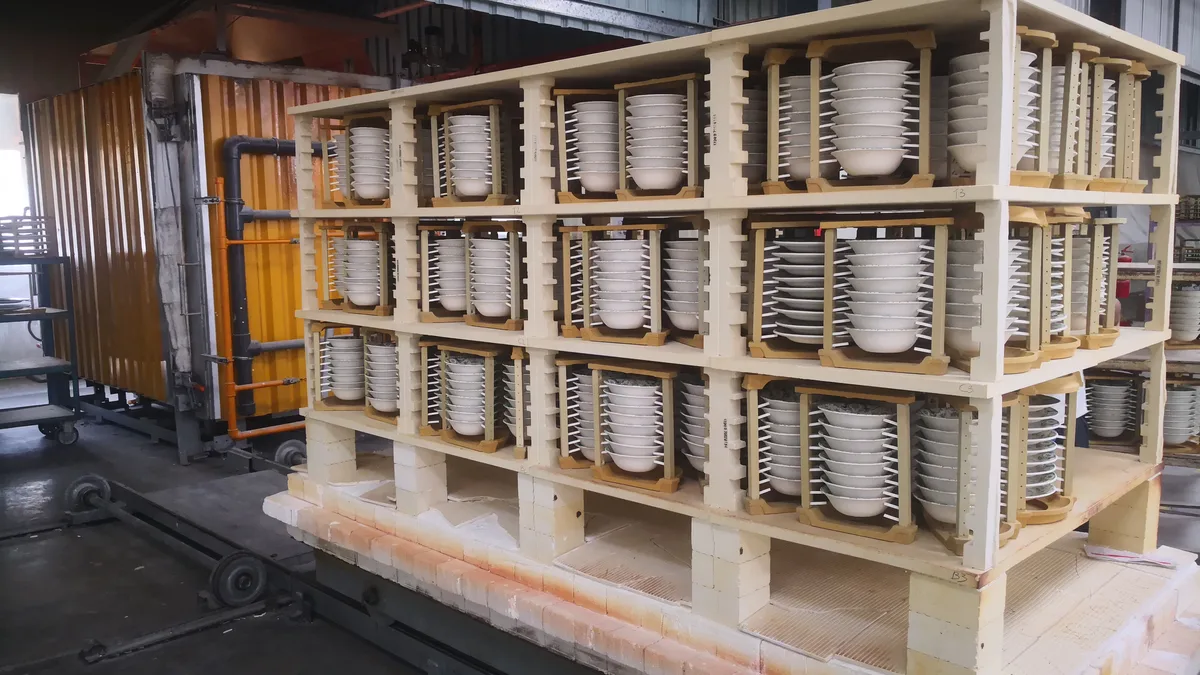
RiseStack Planner AI plans the load, which is where an updraught kiln succeeds or fails. The ware stacks above the firebox in layers, and the heat has to rise through every layer on its way to the top flue, so a shelf packed tight at the bottom and loose at the top fires unevenly. The tool takes the customer’s ware list, the shelf sizes and the chamber height, then lays out each layer so the rising gas finds the same path through every shelf, with heavier pieces low and lighter pieces high.
The planner shows the stack as a simple side view the customer can follow, shelf by shelf, which turns loading day from a guessing game into a checklist. A studio that fires mugs and bowls learns the pattern in one firing, and a school that fires mixed class work gets a plan that keeps the tall pieces from shading the small ones. The tool usually costs about twenty-five to fifty pounds a month, and the time it saves on a single loading day covers the subscription for the quarter.
Check that the planner handles mixed ware, not just one shape repeated across the shelves, and that it flags any layer where the ware would block the rising heat altogether. A good test is a mixed load of plates, bowls and tall vases: if the tool spaces them so the heat still climbs evenly, it will handle anything a real customer brings to the kiln.
3. ShelfGap Planner AI: the best tool for shelf spacing and the gaps heat travels through
ShelfGap Planner AI works on the centimetres between the shelves, which is the quiet detail that decides whether the top of the kiln fires at all. In a straight vertical chamber the heat rises through the gaps between one shelf and the next, so shelves set too close together throttle the flow and shelves set too far apart waste chamber height. The tool calculates the gap for each level from the ware height, the shelf thickness and the target temperature, then prints a setting-out sheet the installer can follow course by course.
The planner also keeps a record of the gaps that worked for each kind of ware, so the second kiln for the same customer starts from a proven setting instead of a fresh guess. A startup that installs three kilns for three different studios ends the year with three proven gap patterns it can reuse, which is a real advantage over a builder who resets the shelves by eye on every job. Expect to pay around twenty to forty pounds a month for a tool at this level.
Before committing, confirm the tool lets the startup adjust the gaps after the first firing and save the corrected version, because the first firing always teaches something the drawing could not. Also check that it prints the shelf positions in plain measurements a bricklayer can mark on the chamber wall, with no jargon and no need for a laptop on site.
4. TopFlue Draw AI: the best tool for the flue at the top, chimney height and the upward draw
TopFlue Draw AI plans the opening the heat leaves through, which sits at the very top of an updraught kiln. The flue has to be wide enough to let the hot gas out freely and tall enough to draw the flame upward through the ware, and the tool sizes both from the chamber volume, the firebox output and the roofline above the kiln. A top flue that is too narrow holds the heat back and overheats the bottom shelf, while one that is too wide lets the heat escape before it has done its work on the top shelf.
The tool also checks the flue against the building around it, so the startup knows whether the flue clears the roof, misses the neighbouring wall and keeps smoke away from the customer’s windows. That single check prevents the most common complaint after handover, which is smoke drifting where it should not. Most versions of this tool sit in the thirty to fifty pound a month range, and the flue drawing it produces doubles as the document the customer shows a building inspector.
Ask the supplier for a worked example on a kiln under an open shelter and one inside a workshop, because the flue behaves differently in each setting. Confirm the tool recalculates the draw when the customer changes fuel, since a gas burner and a wood fire pull differently through the same top opening, and the startup needs the answer before the flue is built, not after.

Firing the rising heat
Once the chamber is built, the startup’s job moves from brickwork to heat. The firebox is lit below, the temperature climbs shelf by shelf, and the firing ends when the top shelf reaches temperature and the flue at the top runs clear. The three tools in this section watch that climb, read the heat across the shelves and match the fuel to the firing, so the startup can prove the kiln fired evenly instead of asking the customer to take its word for it.
5. UpHeat Map AI: the best tool for reading bottom-to-top heat across the shelves
UpHeat Map AI turns a handful of temperature readings into a picture of the whole firing. The startup places probes or cones at the bottom, middle and top shelves, and the tool draws the heat as a rising map, showing whether the bottom shelf ran hot, the middle held steady and the top reached temperature on time. A map that climbs smoothly from bottom to top is the proof an updraught kiln fired well, and a map with a cold band in the middle tells the startup exactly which shelf gap to adjust.
The tool stores every map against the firing record, so the startup can compare the first firing with the tenth and show a customer how the kiln has settled in. That history is worth more than any single reading, because a kiln that fires evenly once might be luck, while a kiln that fires evenly ten times running is a proven build. Subscriptions usually run around thirty to fifty pounds a month, with the probe hardware bought once.
Check that the tool reads the probes the startup already owns, or that the supplier’s probes are priced honestly, because locked-in hardware can cost more over a year than the software itself. Also confirm the map exports as a simple image the customer can keep, since a picture of the heat climbing evenly is the easiest handover document a startup can hand over.
6. RiseCurve Watch AI: the best tool for watching the rising firing curve and the hours-long climb to temperature
RiseCurve Watch AI watches the firing as it happens, plotting the temperature against time so the startup can see the climb from lighting to peak. An updraught firing runs in hours, and the curve should rise steadily, hold at the soaking temperature while the ware matures, then fall away as the kiln cools. The tool flags any stall in the climb, any spike that risks the ware and any soak that runs too short, and it sends the alert to the installer’s phone while there is still time to act.
The watch tool also builds the firing schedule the customer follows after handover, turning the installer’s first firing into a repeatable curve the customer can run alone. That handover schedule is the difference between a kiln the customer trusts and a kiln the customer is afraid to light. Most startups pay twenty-five to forty-five pounds a month for this kind of live watch, and the first firing it saves from a stall covers the year.
Before buying, run the tool on a real firing, even a small test firing, and check that the alerts arrive in plain language with a suggested action, not just a graph. Confirm it stores the curve with the firing record and the heat map, because the curve, the map and the record together are the proof pack the startup shows at handover.
7. FuelFlex Mix AI: the best tool for any-fuel firing in the same straight chamber
FuelFlex Mix AI is the tool that makes the updraught kiln’s biggest selling point real: the same straight chamber fires on gas, wood, oil or an electric element, and the customer can change fuel without changing the kiln. The tool compares the fuels available at the site, works out the firing cost for each one, and adjusts the firing schedule so the rising heat behaves the same whichever fuel feeds the firebox below. A customer with cheap wood and a customer with piped gas get the same even firing from the same chamber shape.
The tool also keeps the fuel choice honest, showing the customer the true cost per firing instead of the cheapest headline price. Wood looks cheap until the startup adds the drying, splitting and storing time, and gas looks dear until the tool shows the shorter firing and the cleaner cool-down. A startup that can show those numbers wins the customers who shop on running costs rather than the build price alone. Expect a subscription of roughly twenty to forty pounds a month.
Check that the tool covers at least three fuels, including the one the customer actually has, and that it recalculates the schedule rather than just the price when the fuel changes. A fuel change that only reprices the job is a calculator, while a fuel change that also re-times the firing curve is a tool the startup can build a business on.
Pricing, records and handover
A kiln that fires well but is priced badly still loses money, and a kiln that is priced well but has no record still loses the repeat order. The last two tools cover the money side of the startup: one prices the straight vertical build so the quote is right first time, and the other keeps the firing records that turn a one-off installation into a service customer. Together they are the reason a small startup can run ten kilns a year without the paperwork swallowing the profit.
8. UpDraught Quote AI: the best tool for pricing the straight vertical build
UpDraught Quote AI prices the build from the same measurements the design tools produce, so the quote follows the kiln instead of guessing at it. The startup enters the chamber size, the firebox size, the shelf count and the flue height, and the tool prices the brickwork, the shelves, the firebox fittings and the labour as one job. A straight vertical chamber has fewer parts than a kiln with a second chamber or a reflecting roof, and the quote tool shows that saving line by line, which is exactly what a buyer comparing kilns needs to see.
The tool also holds the quote steady when the customer changes the size, repricing the whole job in seconds instead of sending the startup back to a spreadsheet for an evening. That speed matters on the jobs where two startups are quoting and the faster, clearer quote wins. Most quote tools at this level cost twenty-five to fifty pounds a month, and one won job a quarter pays for the subscription many times over.
Before buying, check that the quote breaks out materials, labour and the flue separately, so the customer can see where the money goes and the startup can defend the price. Confirm it saves each quote against the site survey, because the survey, the quote and the firing record are the three documents that follow every kiln the startup builds.
9. UpDraught Ledger AI: the best tool for firing records, rise curves and repeat orders
UpDraught Ledger AI keeps the record of every kiln the startup builds and every firing that kiln runs. Each job file holds the site survey, the quote, the stack plan, the heat maps and the rise curves, so when a customer calls a year later about a cold top shelf, the startup can open the record and see the shelf gaps, the flue size and the last firing curve in one place.
The ledger also tracks the repeat work, from replacement shelves to flue checks to a second kiln for a growing studio. It flags the customers due a service visit, the kilns due a flue inspection and the studios ready for a larger chamber, which is where a small installation business finds its second year of income. Subscriptions usually run twenty to forty pounds a month, and the first repeat order it prompts covers the cost.
Check that the ledger links the firing record to the customer rather than to a single job number, because the customer is the repeat order and the job number is just paperwork. Confirm it exports a simple handover pack for the customer, with the firing curve and the heat map included, since that pack is the document that turns a finished installation into a customer who recommends the startup.
How an updraught kiln differs from its neighbours
The kiln trade is full of chambers that look alike from the outside, so a startup has to explain the draught direction clearly, because the direction is the product. A downdraught kiln pulls its heat down through the ware instead of letting it rise, with a bag wall turning the flame and a damper and a flue at the base controlling the flow. That downward path gives very even heat through a tall load, and it costs more to build, which is why the downdraught kiln is the premium comparison every updraught buyer asks about. The updraught startup answers honestly: the downward kiln fires more evenly, the upward kiln fires faster and cheaper, and the buyer chooses between evenness and price.
A bottle kiln is an updraught kiln shaped like a bottle, with a wide round chamber, a tall neck and a chimney, fired on coal with a salt glaze over a firing that runs for days. The bottle is one shape of updraught kiln, not the whole trade, and the generic updraught chamber in this guide takes any shape, any fuel and any ware, and fires in hours. A buyer who loves the look of a bottle kiln is buying a landmark, while a buyer who wants a working kiln this season is buying the straight chamber, and the startup should say so rather than letting the two blur together.
The climbing kiln is a different shape altogether: a long sloping chamber built into a hillside, with the firebox at the low end and the flue at the high end, fired on wood over stoking shifts. An updraught kiln stands straight and vertical on flat ground, with no hillside, no slope and no shifts, and the two kilns suit different sites and different customers. The melting kiln is further away still, with a hearth, a flame path across it, an arched roof reflecting heat down and a tap for pouring liquid metal or glass. An updraught kiln fires ware, it never melts a charge, and a startup that confuses the two will quote the wrong build entirely.
The generic firing chamber sits closest of all, because it is a sound kiln with a burner or element and a controller-run schedule, and the updraught kiln is that chamber with its draught direction named and built into the trade. The startup that names the direction wins the customer who has already read about kilns online and wants to know exactly how the heat travels. Firebox below, ware above, heat rising straight up, flue at the top: say it on the first visit, draw it on the first survey, and the customer will remember the startup long after the quote is filed.
Your first-job checklist
- Survey the firebox position first, with the grate, ash pit and air inlet drawn to scale before any brick is ordered.
- Plan the ware stack shelf by shelf, with heavier ware low and clear gaps for the rising heat at every level.
- Set the shelf gaps from the planner, mark them on the chamber wall, and record the gaps that worked after the first firing.
- Size the top flue from the chamber volume and the firebox output, and check it clears the roof and keeps smoke from the windows.
- Run the first firing with probes on the bottom, middle and top shelves, and keep the heat map and the rise curve for the handover pack.
- File the survey, the quote, the stack plan and the firing record in the ledger on the day of handover, while every detail is still fresh.
Frequently asked questions
What is an updraught kiln installation startup?
It is a small building company that installs straight vertical firing chambers for potters, schools, community studios and small makers. The firebox sits below, the ware stacks above it, and the heat rises straight up through the ware and out of the flue at the top. The startup surveys the site, builds the chamber, plans the first firing and hands over a kiln the customer can fire in hours.
How is an updraught kiln different from a downdraught kiln?
The difference is the direction of the heat. In an updraught kiln the flame and hot gas rise straight up through the ware and out of the flue at the top, with no bag wall and no damper pulling the heat down. In a downdraught kiln the heat is turned down through the ware by a bag wall and leaves through a flue at the base. The downdraught kiln fires more evenly and costs more to build, while the updraught kiln fires faster and cheaper.
How long does an updraught kiln firing take?
A typical updraught firing runs in hours rather than days, which is one of the main reasons buyers choose it. The exact time depends on the chamber size, the ware load and the fuel, but a small studio kiln can be lit in the morning and cooling by the evening. The rise-curve tool in this guide tracks the climb so the startup can prove the timing on the first firing and repeat it afterwards.
What fuel does an updraught kiln use?
Any fuel the customer can supply, which is the other main advantage of the straight chamber. Gas, wood, oil and electric elements all work in the same vertical design, because the firebox below simply has to feed heat upward through the ware.
What ware can an updraught kiln fire?
Any ware that fits on the shelves, from stoneware bowls and earthenware planters to tiles and sculptural pieces. The stack planner lays out each layer so the rising heat reaches every shelf, and the shelf-gap planner keeps the gaps open so the heat climbs evenly. Mixed loads fire well as long as the stack plan is followed and no layer blocks the rising gas.
Which AI tool should a new updraught kiln startup buy first?
Buy the firebox survey tool and the stack planner first, because the firebox and the ware stack decide whether the kiln fires evenly. Add the quote tool before the first customer quote, so the price follows the measurements, and keep the ledger from the very first job so every firing record is filed. Add the heat-mapping and curve-watching tools once the first kilns are firing and there are real readings to learn from.
Bottom line
An updraught kiln is the straightest deal in the kiln trade: a firebox below, ware stacked above, heat rising straight up through the shelves and out of the flue at the top, fired in hours on any fuel. The startup that builds it well sells simplicity, speed and a low first bill, and the nine tools in this guide cover every step from the firebox survey to the firing record. Start with the survey and the stack planner, prove the first firing with a heat map and a rise curve, and file the record the same day, and the second kiln will be easier to sell than the first.

Keep what speaks to you.
Leave room for your own perspective.