A mudroom is one of the most useful rooms you can add to a home, but it is also one of the easiest to overspend on. It has a simple job: catch coats, shoes, bags, and mud before they spread through the house. When the design stays close to that job, the build stays affordable. With a clear budget, a compact layout, and a few smart material choices, you can build a space that looks tidy, holds up to daily use, and costs far less than a full-scale renovation.
Before you buy anything, decide what the room must do for your household. A family with two children and a dog needs more shoe space and tougher flooring than a couple who rarely entertain. Write down the items that land by the door every day, then design around that list.
Start With a Realistic Budget and a Simple Layout
The fastest way to save money on a new mudroom is to set a firm budget before the first quote arrives. Get two or three quotes for the same scope of work, and compare them line by line instead of looking only at the bottom number. One quote may include flooring and paint while another leaves them out, and that gap can be worth hundreds of dollars.
Keep the layout simple. A straight run of hooks, a bench, and a few cubbies along one wall costs much less than an L-shaped arrangement with corners to work around. Straight runs use standard materials, need fewer cuts, and take less time to install. Avoid moving plumbing or exterior walls, and keep the door and window openings where they already are.
If you are adding the mudroom to an existing entryway rather than building an addition, the savings are even bigger. A hallway nook or a corner near the back door can become a mudroom with a bench and some hooks, so your money goes into storage and finishes instead of framing and roofing. The same thinking applies to other projects around the house, and the guide on how to save money on a new pergola shows how keeping a build simple cuts costs in the same way.
Keep the Footprint Small
Size is the biggest cost driver in any build. A mudroom of 40 to 60 square feet is plenty for most households, and every extra square foot adds flooring, paint, trim, and labor. Before you commit to dimensions, lay out the bench and storage on the floor with tape. You may find that a five-foot bench holds everything, and that a six-foot bench only adds cost.
A smaller room is also cheaper to heat, light, and clean for years after the build. That long-term saving matters as much as the upfront price, because a mudroom sits near an exterior door and loses heat every time someone comes in. Good weatherstripping on the door costs very little and pays for itself quickly. For more ideas on cutting running costs at home, see the guide to the best ways to save money on heating your home.
Choose Storage That Does More for Less
Storage is where mudroom budgets usually explode. Custom built-ins look wonderful, but they can cost several times more than ready-made pieces that do the same job. A sturdy bench with cubbies underneath, a row of wall hooks, and a few baskets will hold coats, shoes, and sports gear just as well as a wall of bespoke cabinetry.
Open storage is cheaper than closed storage and easier to live with. Doors, drawers, and soft-close hardware all add cost, and they hide clutter instead of preventing it. Open cubbies make it obvious when shoes pile up, and hooks make it easy for children to hang their own coats. Baskets and bins keep the open shelves looking tidy without the price of cabinet doors.
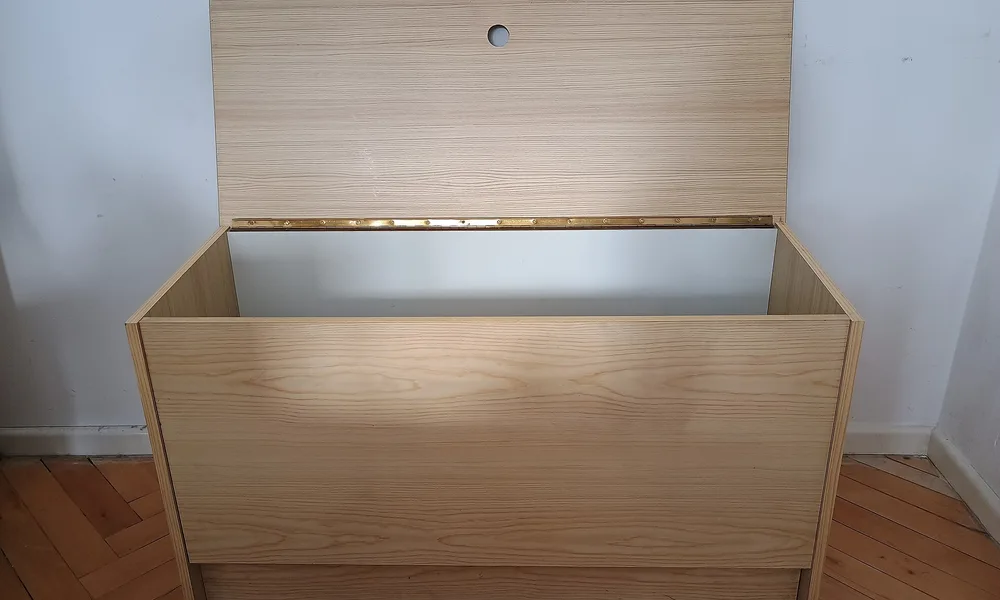
Buy storage in stages if the budget is tight. Start with the bench and hooks, live with the room for a month, and then add baskets or a second row of hooks only where you notice a gap. A storage bench like the one below is a good example of a single piece doing two jobs at once: a seat for putting on shoes and a box for hiding the things you do not want on display.
Pick Flooring That Survives Mud Without a Big Price Tag
Mudroom flooring takes more abuse than almost any other floor in the house. It needs to handle wet boots, grit, and daily traffic, and it needs to clean up easily. Luxury vinyl plank is the best value for most mudrooms: it resists water, stands up to scratches, and installs quickly. It also comes in styles that look like wood or stone, so the room still feels finished without the price of the real thing.
Ceramic or porcelain tile is another strong choice, especially if you find it on sale or as a discontinued line. Tile handles water better than any other material, and a small room needs only a few boxes. Keep the layout simple with a straight pattern, since diagonal layouts waste more tile and take longer to install. Avoid natural stone and hardwood here. Stone costs more to buy and seal, and hardwood swells and stains when wet boots sit on it all winter.
Save on Materials Without Making It Look Cheap
Paint is the cheapest way to make a mudroom look expensive. A fresh coat in a light, durable color brightens a small space and hides the wear that comes with daily use. Choose a washable finish so scuffs and fingerprints wipe off instead of staying put.
Use standard sizes wherever you can. Standard hooks, baskets, and shelving cost less than custom sizes and are easier to replace later. The same applies to trim: simple, straight profiles are cheaper than ornate ones and suit a hardworking room better. Save the decorative details for one or two touches, such as a row of good-looking hooks or a small mirror.
Do the Right Work Yourself and Hire Out the Rest
Doing some of the work yourself is one of the biggest savings available, but only if you pick the right tasks. Painting, installing hooks, assembling flat-pack storage, and laying vinyl plank flooring are all within reach for most homeowners with basic tools. These jobs are forgiving, and mistakes are cheap to fix.
Leave electrical work, structural changes, and anything involving water to a licensed professional. A mistake in wiring or framing costs far more to fix than hiring it out in the first place, and it can create safety problems that no amount of savings justifies. Get the skilled work quoted separately so you can see exactly what it costs.
Small Choices That Keep Costs Down for Years
A cheap mudroom is only a bargain if it lasts. Choose hardware that feels solid, hinges that close smoothly, and hooks rated for heavy coats. Spending a little more on these small parts avoids replacements within a year.
Keep the decor simple and easy to change. A mudroom does not need artwork or expensive accessories to look good. A clean bench, tidy hooks, and a swept floor are the whole look. The same restrained approach works across the house, and the guide on how to save money on home decor has more ideas for getting a finished look without overspending.
A new mudroom does not have to be a big project or a big bill. Start with a firm budget, keep the room small and the layout simple, and spend your money on storage and flooring that can take daily punishment. Do the easy work yourself, hire out the skilled work, and let paint and simple finishes do the decorating.

Keep what speaks to you.
Leave room for your own perspective.