
Heating is one of the biggest household costs in winter, and it is also one of the easiest to trim. You do not need a new boiler or a full renovation to spend less. A few small changes to how you heat your home, and when, can keep every room comfortable while the bill comes down.
Start with the free fixes, then move on to the low-cost ones. Seal the drafts, use your thermostat properly, and heat only the rooms you actually use. If you want to cut your monthly bills, heating is a good place to begin.
The 10 Best Ways to Save Money on Heating Your Home
1. Turn the Thermostat Down by One Degree
Turning your thermostat down by just one degree is the simplest saving of all, and most people barely notice the difference. Wear a warm layer indoors and let your body adjust over a few days. Try 19 or 20 degrees during the day and a few degrees lower overnight, then try one degree lower again next week.
2. Use a Programmable or Smart Thermostat
A programmable thermostat heats your home only when you need it. Set it to warm the house before you wake up and get home, and let it drop while you are out or asleep. There is no point heating an empty house all day. A smart thermostat learns your routine and lets you adjust the heating from your phone.
3. Seal Drafts Around Doors and Windows
Warm air escapes through gaps around doors and windows, and cold air sneaks in to replace it. Hold a lit candle or a strip of tissue near the frames on a windy day: anywhere the flame flickers is a draft worth fixing. Self-adhesive draft strips are cheap and easy to fit.
4. Bleed Your Radiators
If the top of a radiator feels cooler than the bottom, trapped air is stopping the hot water from circulating, so your boiler works harder for less heat. Bleeding a radiator takes a few minutes and needs only a radiator key and a cloth. Turn the heating off, open the valve at the top corner until water appears, then close it and check the boiler pressure.
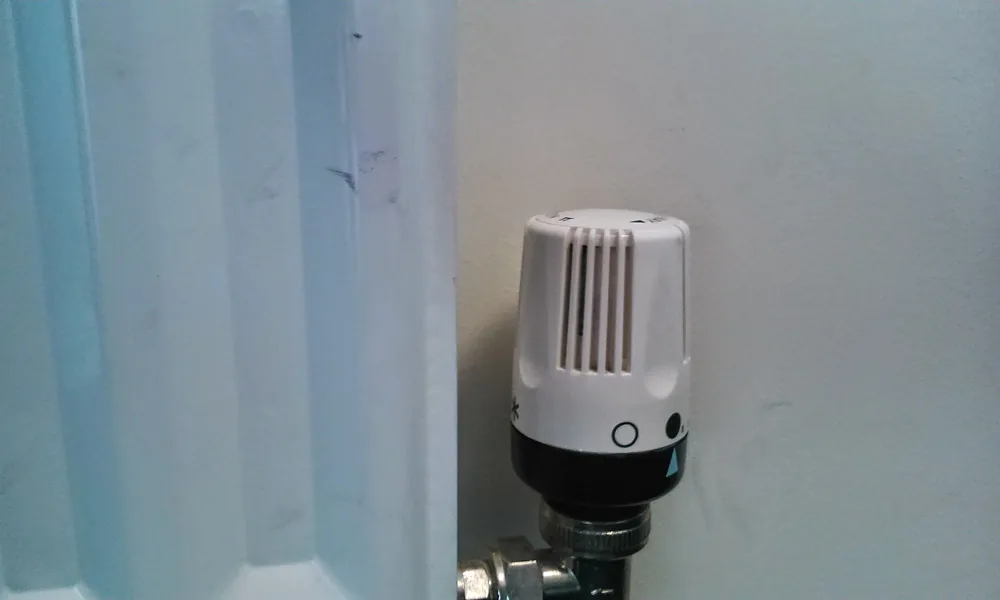
5. Use Radiator Reflector Panels
Radiators on outside walls lose some of their heat straight through the wall. Reflector panels, fixed behind the radiator, bounce that heat back into the room instead. They cost very little, need no tools to fit, and work best in older homes with solid walls. In a room you use daily, the saving adds up over winter.
6. Close Doors and Heat Only the Rooms You Use
Heating rooms nobody sits in is money spent on empty space. Close the doors of spare bedrooms and rooms you rarely use, and turn those radiators down. Keep the doors of rooms you do use closed as well, so the warm air stays put instead of drifting down the hallway. Just leave a little background heat in unused rooms to stop damp and frozen pipes.
7. Make the Most of Curtains and Sunlight
Curtains are free insulation if you use them at the right times. Open them in the morning to let the sun warm your rooms, and close them as soon as it gets dark to trap that warmth inside. Lined curtains work best, but even ordinary ones help. Keep curtains clear of radiators, too, or the warm air goes straight up behind the fabric instead of out into the room.
8. Service Your Boiler or Furnace Before Winter
A heating system that has not been serviced wastes energy. Dust, wear, and small faults make it work harder to produce the same heat, and a breakdown in midwinter costs far more than a routine check. Book a service in autumn, before the cold weather arrives. While you are at it, our guide on how to save money on home insurance pairs well with winter maintenance.
9. Insulate the Easy Spots First
Full wall insulation is a big job, but the easy spots are not. Loft insulation, pipe lagging, and a jacket for your hot water tank are all affordable and quick to fit. A bare tank loses heat all day, and lagging a pipe takes minutes. Check the loft first, because heat rises and a thin or patchy layer lets it straight out through the roof.
10. Layer Up and Warm Yourself, Not the House
Sometimes the cheapest heating is a warm jumper. Thick socks, a fleece, and a blanket on the sofa can keep you comfortable at a lower room temperature, and a hot water bottle or an electric blanket warms you directly for far less than heating a whole house. If you are warm at 19 degrees, there is no reason to pay for 22.
Heating Savings at a Glance
| Way to save | Cost | Effort | Savings |
|---|---|---|---|
| Turn the thermostat down | Free | Low | Medium |
| Programmable thermostat | Medium | Low | High |
| Seal drafts | Low | Low | Medium |
| Bleed radiators | Free | Low | Medium |
| Radiator reflector panels | Low | Low | Low |
| Heat only rooms you use | Free | Low | Medium |
| Curtains and sunlight | Free | Low | Medium |
| Service the boiler | Medium | Low | Medium |
| Insulate easy spots | Medium | Medium | High |
| Layer up | Free | Low | Medium |
Your Winter Heating Checklist
- Turn the thermostat down one degree and see how it feels for a week.
- Set heating times to match when you are actually home.
- Check doors and windows for drafts and fit strips where needed.
- Bleed every radiator so they heat evenly.
- Fit reflector panels behind radiators on outside walls.
- Close doors and turn down radiators in rooms you rarely use.
- Open curtains for sun in the day and close them at dusk.
- Book a boiler service before the coldest weather arrives.
- Lag pipes and add a jacket to the hot water tank.
- Keep warm layers, blankets, and a hot water bottle close at hand.
Frequently Asked Questions
What is the cheapest temperature to heat a home in winter?
Most households find 18 to 20 degrees comfortable during the day, with a lower setting overnight. The cheapest temperature is the lowest one everyone is genuinely comfortable at, so drop it one degree at a time.
Is it cheaper to leave the heating on all day or use a timer?
For most homes, a timer is cheaper. Heating an empty house all day wastes energy, and a well-timed system warms the house just before you need it.
Do radiator reflector panels really work?
Yes, they help, especially behind radiators on outside walls. They reflect heat back into the room instead of letting it escape through the wall. The effect is modest, but the panels are cheap and easy to fit.
How often should I bleed my radiators?
Once a year, at the start of the heating season, is enough for most homes. Bleed them again if a radiator develops cold spots at the top, and always check the boiler pressure after bleeding.
Will closing radiators in unused rooms save money?
Yes, as long as you do it carefully. Turning down radiators in rooms you do not use means the boiler heats less space. Keep a little background heat in those rooms during very cold weather to protect pipes and prevent damp.
The Bottom Line
Saving money on heating does not mean being cold all winter. It means heating smarter: sealing the gaps, timing the heat to your day, and warming the rooms you use instead of the whole house. Start with the free fixes this week. Small changes across every bill add up too, so read our guide on the best ways to save money on your phone bill next.

Keep what speaks to you.
Leave room for your own perspective.


