A good dog house does not have to cost a fortune. Prices climb fast once you add insulation, a raised floor, a weatherproof roof, and a size that actually fits your dog. The good news is that most of that cost is optional, and much of it comes from paying for features you can add yourself for far less.
The trick is to spend where it protects your dog from cold, rain, and heat, and to save everywhere else. A simple, well-built shelter keeps a dog warm and dry just as well as a fancy one, and these ten ways will help you get there.
1. Buy the Right Size, Not the Biggest One
A dog house that is too large is harder to heat and costs more to build or buy. Your dog warms the space with body heat, so a house that is only a little bigger than your dog stays warmer in winter. Measure your dog from nose to tail and from the ground to the top of the head, then add a few inches in each direction.
Your dog should be able to stand up, turn around, and lie down stretched out. Anything beyond that is wasted space and wasted money, so if you are choosing between two sizes, pick the smaller one that still meets those measurements.
2. Choose Wood Over Plastic and Metal
Wood is usually the best value for a dog house. It insulates naturally, it is easy to repair, and it is simple to work with if you decide to build or modify it later. Plastic houses can be cheap, but thin plastic cracks in cold weather and offers little insulation. Metal heats up in summer and turns cold in winter.
Pine and plywood are affordable and widely available, and a coat of exterior paint or sealant protects them for years. A solid used wooden house can be an even better deal, so check it for rot, loose nails, and sharp edges, then clean it and reseal it.
3. Build It Yourself With a Simple Plan
Building a dog house yourself is often the single biggest saving. A basic design needs only a few sheets of plywood, some framing timber, screws, and roofing felt. Free plans are easy to find, and a simple rectangular house with a sloped roof is a good first project even if you have little experience.
Keep the design simple, because every angle, window, and decorative trim adds time, materials, and cost. A single room, a small doorway, and a roof that overhangs the walls by a few inches will keep out rain and wind. Ask a local timber yard to cut the sheets to size for you.
4. Use Reclaimed and Leftover Materials
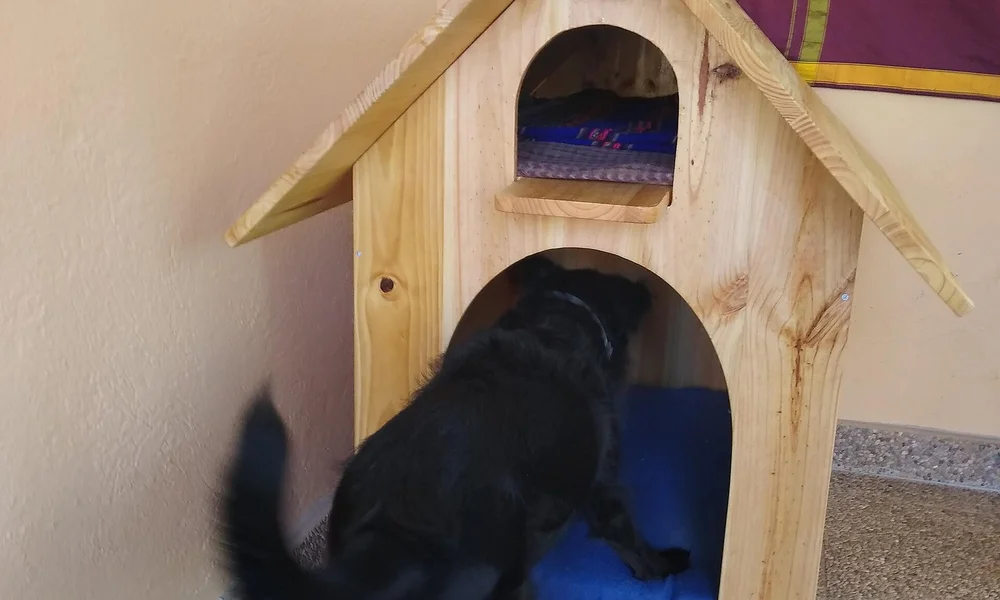
Reclaimed timber, leftover plywood, and spare roofing felt can cut the cost of a dog house by half or more. Check what you already have in the garage or shed before you buy anything. Offcuts from a decking project, old fence panels, and spare pallets can all become walls, a floor, or a roof.
Pallets are a popular free source of wood, but choose them carefully. Use only pallets marked HT, meaning heat treated rather than chemically treated, and avoid stained or oily ones. Remove all nails and staples, sand the wood smooth, and seal it before the first rain.
5. Insulate Cheaply With Straw and Foam Board
Insulation is one of the best places to spend a little money, because it keeps your dog warm without an expensive heater. Rigid foam board is cheap, easy to cut, and fits neatly between the wall studs. Cover it with a thin sheet of plywood on the inside so your dog cannot chew it.
For bedding, straw beats blankets and towels in cold weather. It does not hold moisture the way fabric does, and your dog can burrow into it to make a warm nest. Replace it regularly and keep a spare bale dry in the shed.
6. Raise the Floor Off the Ground
A raised floor is a cheap upgrade that makes a real difference. A house sitting directly on wet ground draws in cold and damp, and the floor rots faster. Raising it just a few inches on bricks, short timber feet, or a simple pallet base lets air flow underneath and keeps the floor dry.
You do not need a fancy platform. Four solid bricks or a few offcuts of treated timber will do the job, as long as the house sits level and does not rock. A dry floor also means bedding lasts longer, which saves money again over the season.
7. Add a Door Flap Instead of a Heater
A door flap is one of the cheapest ways to keep a dog house warm. It blocks wind and rain while still letting your dog come and go freely. A piece of heavy rubber, thick vinyl, or even a cut-up rubber mat works well, and it costs only a few dollars.
Cut the flap slightly larger than the doorway and fix it along the top edge so it hangs freely. In very cold weather, two overlapping flaps block even more wind. This simple addition can make a bigger difference than an expensive heater, and it uses no electricity at all.
8. Shop Second Hand and Out of Season
Second-hand dog houses are often sold for a fraction of their original price, especially when owners move house or their dog outgrows one. Check local classified ads, community groups, and garage sales before you buy new. A solid wooden house with a sound roof is worth cleaning up and resealing.
Timing matters too. Outdoor pet supplies often go on sale at the end of summer and after the winter holidays, when shops clear seasonal stock. If you can plan ahead, buy in the off-season and store the house until you need it.
9. Skip the Extras Your Dog Does Not Need
Many dog houses come with extras that look nice but add little for your dog. Decorative shutters, a porch, a name plaque, and a built-in food bowl all push the price up. Your dog cares about warmth, dryness, and space, not about how the house looks from the street.
Before you pay for an add-on, ask whether it keeps your dog warmer, drier, or safer. If the answer is no, skip it. You can always paint the house to match your garden later, for a fraction of what the factory version costs.
10. Maintain It So You Only Buy Once
The cheapest dog house is the one you never have to replace. A little maintenance each year costs far less than a new house. Check the roof for leaks before winter, tighten any loose screws, and reseal the wood every year or two. Fix small problems early, before rain gets in and rots the timber.
Keep the bedding clean and dry, and clear leaves and mud away from the doorway so water does not pool around the base. A house that is looked after can last for many years, and that long life is what turns a modest purchase into a real saving.
Saving money on a dog house is mostly about making smart choices at the start. Get the size right, pick wood, build it yourself if you can, and spend a little on insulation and a raised floor. The rest is optional, and skipping it leaves you with a warm, dry shelter and money still in your pocket. If you are cutting pet costs more broadly, our guide on how to save money on pet food covers the same kind of practical savings, and the same thinking applies to saving money on a new dog crate or saving money on a new dog bed.

Keep what speaks to you.
Leave room for your own perspective.