A woodturning workshop is not a furniture shop with a lathe pushed into the corner. It is a room built around one spinning machine, and everything else in the room exists to serve that machine. The lathe decides where the power goes, where the dust goes, where the timber waits, and where the finished bowls, pens, and spindles dry. Get the lathe position wrong and every later job costs you steps, shavings underfoot, and time you will never get back.
That is why a woodturning workshop installation startup needs a different plan from a general woodworking shop. A furniture shop spreads its work across a table saw, a planer, a jointer, and a bench. A woodturning shop concentrates it. The blank is mounted, the tool rest is set, the gouge meets spinning timber, and the shavings pile up in minutes. The tools that matter here are the ones that help you choose the right lathe, keep it sharp, keep the air clear, and turn a rough blank into a piece someone will pay for.
This guide compares nine tools that cover the whole job, from the first sketch of a bowl profile to the last coat of finish and the invoice that follows it. Each one earns its place because it solves a problem that is specific to turning, not to woodworking in general. Read the lathe section first if your budget only stretches to one big purchase, then work through dust, sharpening, and finishing before you spend anything on software or booking tools.
Key takeaways
- A woodturning workshop is a lathe-centred fit-out: lathes, blanks, dust, and finishing come first, and everything else is support.
- Buy the largest lathe your floor and budget allow, because bowl diameter and bed length are the two limits you cannot work around later.
- Dust extraction is not optional in a turning shop; a lathe throws fine dust and long shavings at speed, and both need a plan.
- Sharp tools matter more than expensive tools, so budget for a sharpening system on the same day you buy your first gouge.
- Finish and photography sell the work, so treat drying, sanding, and oiling as part of the installation, not an afterthought.
The nine tools at a glance
Use this table to compare the nine tools before you read the detail. The first three are lathes, because the lathe is the workshop. The next group covers design, dust, sharpening, and cutting. The last two cover finishing and the business side of the startup, which is where many good turners lose money without noticing.
| Tool | What it does | Best for |
|---|---|---|
| Jet JWL-1642EVS Lathe | Variable-speed bowl and spindle lathe | Startups that need one lathe for bowls and spindles |
| Laguna Revo 1836 Lathe | Heavy sliding-headstock lathe | Large bowls and outboard turning |
| Nova Comet II Midi Lathe | Compact variable-speed midi lathe | Small shops, pens, and teaching |
| Vectric VCarve Pro | Design and toolpath software | Profiles, templates, and repeatable shapes |
| Jet DC-1100VX Dust Collector | Single-stage dust collection | Clearing shavings and fine dust at the lathe |
| Tormek T-8 Sharpening System | Water-cooled sharpening | Keeping gouges and skews razor sharp |
| Easy Wood Tools Carbide Turning Set | Replaceable-carbide turning tools | Fast roughing and easy sharpening |
| General Finishes Arm-R-Seal | Wipe-on oil-based topcoat | Durable, warm finishes on bowls and vessels |
| Housecall Pro | Booking, invoicing, and job tracking | Commissions, classes, and repeat customers |
Notice what is missing from the table. There is no table saw, no planer, and no wide-belt sander, because a turning startup can buy blanks ready-cut and spend its money where turning actually happens. A log store full of green timber is useful, but it is not the workshop itself. The workshop is the lathe, the air around it, and the bench where the finish goes on.
Design and layout before you buy
Most turning startups buy the lathe first and think about the room second. That order causes most of the expensive mistakes. A lathe needs clear space on the working side, room behind it for long spindles, and a floor that can be swept clean in minutes. It also needs light from the front, not from behind the turner, so the curve of the work is easy to read while it spins.
Sketch the room before you order anything. Mark the lathe position, the sharpening station, the dust collector, the blank rack, and the finishing bench. Leave a clear path from the door to the lathe, because you will carry heavy blanks along it. Leave the finishing bench as far from the lathe as the room allows, because airborne dust is the enemy of a clean finish. Software helps here, and the first product below is the one to use for it.
Vectric VCarve Pro
Vectric VCarve Pro is design software that earns its place in a turning shop in two ways. First, it lets you draw bowl and vessel profiles to scale before you cut any timber, so you can see whether a shape is too tall, too thin, or simply awkward. Second, it produces templates and toolpaths you can reuse, which matters when a customer orders six matching bowls and expects them to look like a set.
For a startup, the repeatability is the point. A turner working freehand can make six beautiful bowls that are all slightly different. A turner working from a drawn profile can make six bowls that match, and matching sets sell for more. VCarve Pro also helps with layout work: draw the workshop floor plan, place the lathe and benches to scale, and check the clearances before the delivery van arrives.
The learning curve is real, and you should budget a week of evenings to get comfortable with it. Start with simple profiles, print them at full size, and hold the paper template against a blank before you commit. The software pays for itself the first time it stops you cutting a blank that was too small for the design you had in mind.
Lathes that anchor the shop
Three lathes follow, and they are not three versions of the same machine. One is the all-rounder, one is the heavy bowl lathe, and one is the compact lathe for small work and teaching. A startup with room for one lathe should pick the all-rounder. A startup with room for two should add the compact lathe second, because small work and classes pay the rent while large bowls dry.
When you compare lathes, look at swing over the bed, distance between centres, motor power, and speed range. Swing decides the largest bowl you can turn. Distance between centres decides the longest spindle. Motor power decides whether the lathe stalls when you take a heavy cut on a wet blank. Speed range decides whether you can sand slowly and safely at the end of a job.
Jet JWL-1642EVS Lathe
The Jet JWL-1642EVS is the lathe most turning startups should price first. It is a 16-inch swing lathe with a 42-inch distance between centres, which covers bowls up to a useful size and spindles long enough for table legs and lamp stands. The electronic variable speed control lets you dial the speed down for an out-of-balance blank and up for fine finishing cuts, without stopping to change a belt.
What makes it a startup lathe rather than a hobby lathe is the weight and the build. It is heavy enough to stay put when a wet blank is spinning out of balance, and the bed is long enough that you are not immediately wishing for an extension. The sliding headstock is useful too: slide it to the end of the bed and you can turn a large bowl outboard, with the tool rest facing the end of the machine.
Plan the installation around it. Put it on a level floor, bolt it down if the floor allows, and leave at least a metre of clear space on the working side. Keep the speed control and the stop button within easy reach of your normal stance. A lathe you have to stretch to stop is a lathe that will frighten you one day, and a frightened turner makes mistakes.
Laguna Revo 1836 Lathe
The Laguna Revo 1836 is the step up for a startup that plans to sell large bowls and hollow vessels. Its 18-inch swing and 36-inch bed, with a sliding headstock, give you room for work the Jet would struggle with, and its heavier build absorbs vibration that would show up as ripples on a large bowl. If your market is statement pieces rather than pens and small bowls, this is the lathe to build around.
The sliding headstock is the feature that matters most. Slide it along the bed and you can turn outboard, facing a large blank from the end of the lathe with the tool rest in front of you. That position is safer and more comfortable for big work, and it keeps your body out of the line of a blank that decides to come off the chuck. Outboard turning is where large-bowl work becomes practical rather than heroic.
Installation needs more thought than the Jet, because the machine is heavier and the work is bigger. Check the floor loading, check the door width for delivery, and check that your dust extraction can reach the outboard position as well as the normal one. Buy the bed extension later if you need it, but buy the right chuck and faceplate on day one, because a large lathe with a small chuck is a waste of its capacity.
Nova Comet II Midi Lathe
The Nova Comet II is the small lathe that pays for itself in a different way. It is a compact variable-speed midi lathe, light enough to move, quiet enough for a small room, and perfectly sized for pens, bottle stoppers, small bowls, and teaching. A startup that runs evening classes will earn more from this lathe than from any other machine in the shop, because beginners learn faster on a machine that does not intimidate them.
Do not judge it by its size. The variable speed control, the solid bed, and the standard spindle thread mean it takes the same chucks and accessories as larger lathes, so nothing you buy for it is wasted if you upgrade later. It is also the lathe to keep for small jobs when the big lathe is set up for a large bowl, because changing a setup halfway through a job costs more time than most startups admit.
Place it on a sturdy bench near the sharpening station, with its own small dust hood if you can manage it. Keep it clean and keep its tools separate from the big lathe tools, so a class can start without hunting through the shop. A midi lathe that is always ready is a midi lathe that gets used, and a midi lathe that gets used is a second income stream.
Dust, sharpening, and cutting
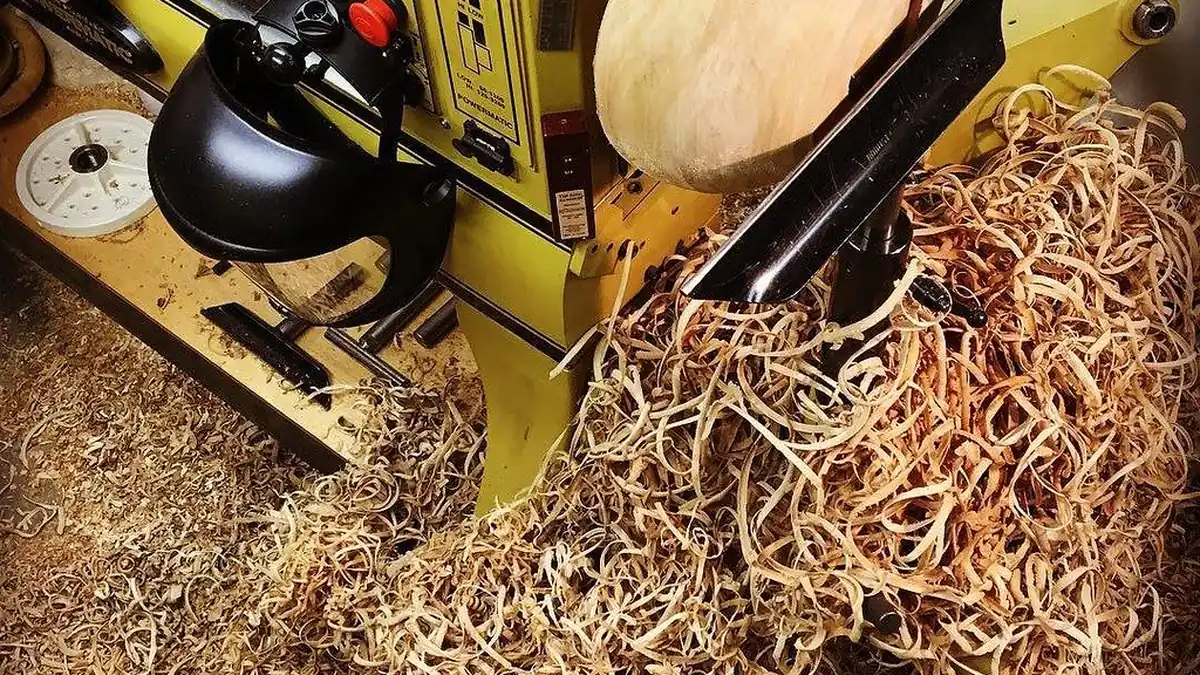
Turning makes two kinds of mess, and they need two different answers. Long shavings pile up fast and need sweeping and a collector with a wide mouth. Fine dust stays in the air, gets into your lungs, and settles on wet finish, and it needs extraction at the source plus a clean-air routine. A shop that only sweeps is a shop that breathes dust all day.
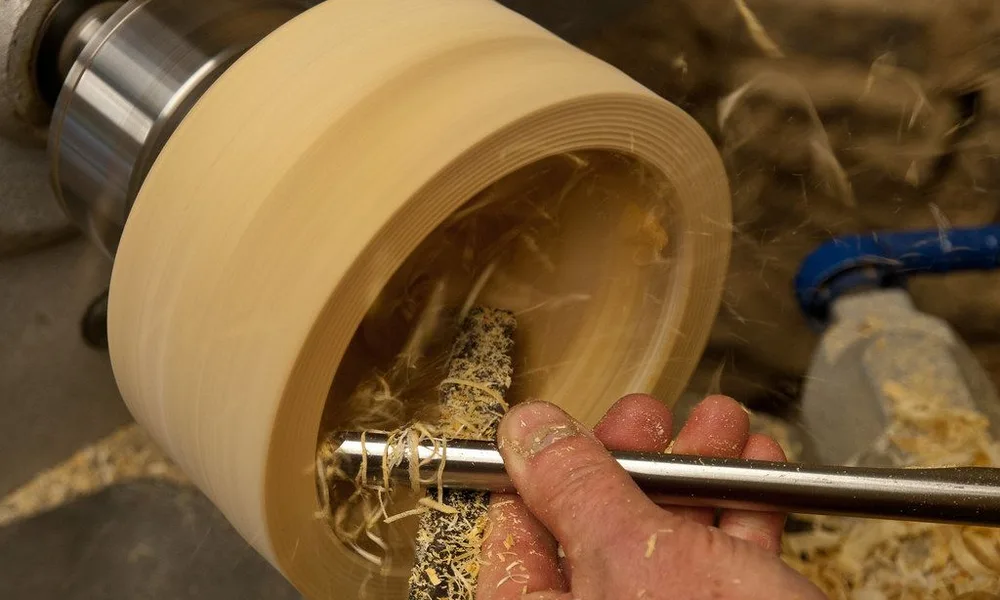
Sharpening sits in the same group because a dull tool makes more dust and fewer shavings. A sharp gouge cuts clean ribbons. A dull gouge scrapes, heats the timber, and throws fine dust everywhere. Budget for dust and sharpening on the same day as the lathe, or the lathe will teach you why you should have.
Jet DC-1100VX Dust Collector
The Jet DC-1100VX is a single-stage dust collector sized for a one- or two-machine turning shop. It moves enough air to pull shavings away from the lathe and to keep fine dust from hanging in the room, and its vortex cone design keeps the filter cleaner for longer than a basic bag collector. For a startup, that means less time shaking bags and more time turning.
Position matters more than power. Put the collector close to the lathe, run a short hose to a hood behind the tool rest, and keep the hose off the floor where you walk. A long, sagging hose loses suction and trips people, and a tripping hazard next to a spinning lathe is not a small problem. If the budget stretches, add a second short run to the sharpening station and the sanding bench.
Empty the bag before it is full, and check the filter every week in the first month so you learn how fast it loads in your shop. Wear a respirator for sanding even with the collector running, because sanding dust is the finest and most persistent dust in the shop. The collector is your first line of defence, not your only one.
Tormek T-8 Sharpening System
The Tormek T-8 is a water-cooled sharpening system, and it is the single best purchase a turning startup can make after the lathe itself. Turning tools need sharpening often, sometimes several times in one bowl, and a system that gives you the same edge every time is worth more than a drawer full of expensive gouges. The water cooling matters because it keeps the steel cool, so you never blue an edge and ruin the temper.
What the Tormek really sells is repeatability. Set the jig for your bowl gouge, sharpen it, and the next time you sharpen it you get the same bevel in the same place. That consistency shows in the work: clean cuts, fewer catches, and less sanding. Beginners benefit most, because they can stop guessing at angles and start learning how a sharp tool actually feels.
Put the Tormek on its own bench near the lathe, with good light and a towel for wet hands. Keep the stone clean and the water fresh, and learn one jig at a time rather than trying to master them all in a weekend. A sharpening station that is always set up gets used. A sharpening station buried under blanks does not.
Easy Wood Tools Carbide Turning Set
Easy Wood Tools carbide turning tools replace the cutting edge with a small carbide cutter that you rotate or swap when it dulls, instead of grinding a new edge. For a startup, that is a practical advantage: a new turner can rough out a bowl without learning to grind a gouge first, and an experienced turner can rough quickly and save the traditional tools for the fine work.
The set usually covers roughing, finishing, and hollowing, and the cutters last a long time before they need replacing. The finish they leave is good, though rarely as fine as a well-sharpened traditional gouge, so plan to finish with a sharp skew or gouge and sanding. Used that way, carbide tools speed up the rough work without limiting the quality of the final piece.
Keep the carbide tools on a rack by the lathe, with spare cutters and the right screwdriver in the same place. A carbide cutter that is loose or chipped will catch, so check the screws before each session. They are not a replacement for learning to sharpen, but they are a sensible bridge while the startup finds its feet.
Finishing and running the business
A bowl is not finished when it comes off the lathe. It is finished when it is sanded, sealed, oiled, dried, photographed, and paid for. Startups that plan the finishing bench and the paperwork with the same care as the lathe make more money from the same hours, because the last ten percent of the job is where the price is decided.
Finishing needs a clean, warm, dust-free corner with racks for drying pieces. The business side needs a simple system for commissions, deposits, and repeat customers. Both are cheap to set up and expensive to fix later, so build them into the installation from the start rather than bolting them on when the first commission arrives.
General Finishes Arm-R-Seal
General Finishes Arm-R-Seal is a wipe-on oil-based topcoat that suits turned work well. It goes on with a cloth, builds a warm, durable film, and forgives the small imperfections that a brushed finish would show. For bowls, vessels, and boxes that will be handled every day, that durability matters more than a high-gloss showroom shine.
Application is simple, but the routine around it is what counts. Sand through the grits without skipping, remove every speck of dust with a tack cloth, and apply thin coats rather than one thick one. Let each coat dry properly, and keep the drying rack away from the lathe and the sharpening station. A finish ruined by drifting dust is a bowl remade from scratch.
Keep a finishing shelf with the Arm-R-Seal, clean cloths, gloves, and a notebook recording which finish went on which piece and when. Customers ask, and a turner who can answer knows their craft. The finish is the last thing a buyer touches, and it is the thing they remember when they decide whether to come back.
Housecall Pro
Housecall Pro is booking and job-management software, and it fits a turning startup that takes commissions, runs classes, and sells at markets. It handles enquiries, quotes, deposits, invoices, and reminders in one place, so a commission does not live in a text message, a deposit does not live in a notebook, and a class list does not live in your head.
The practical benefit is follow-up. A customer who ordered a wedding gift in March should get a reminder in April, a photo when the piece is finished, and a thank-you after delivery. That sequence turns one sale into a repeat customer and a referral, and it is the cheapest marketing a small workshop will ever do. Housecall Pro automates the reminders so they actually happen.
Set it up before the first commission, not after the tenth. Enter every enquiry, even the ones that do not buy, because that list becomes your mailing list for the next market. Price the work properly in the system, including the timber, the finish, and your time, and the software will show you which jobs pay and which ones only look busy.
How to sequence the installation
Install in the order the work flows, not the order the boxes arrive. Power and dust come first, because everything else depends on them. The lathe comes second, positioned with space around it. Sharpening comes third, close to the lathe. Blank storage and the finishing bench come last, as far apart as the room allows.
Test the sequence with a single bowl before you declare the shop open. Mount a blank, rough it, sharpen the tool, sand it, and finish it, walking the route the work will take every time. If you cross your own path, move a bench. If the dust hose trips you, reroute it. A day spent testing saves a year of working around a bad layout, and it is the cheapest day in the whole installation.
Think about general workshop installation lessons here too: lighting, storage, and a clear floor matter in every workshop, but in a turning shop they matter more, because the work spins and the waste flies. A tidy turning shop is a safe turning shop, and a safe turning shop is one a founder can work in for ten hours without dreading the next day.
Installation checklist
Work through this list before the first paying job. If any item is missing, fix it before you take a deposit, because deposits create deadlines and deadlines expose every gap in the shop.
- Lathe levelled, bolted down, and tested at low speed with an out-of-balance blank.
- Dust collector positioned with a short hose to the lathe and a respirator on the hook.
- Sharpening station set up, clean, and tested on every gouge you own.
- Blank rack full, labelled by species and moisture, with dry blanks kept separate from green ones.
- Finishing bench clean, warm, and far from the lathe, with drying racks ready.
- Booking, pricing, and deposit system live, with the first class or commission already entered.
Frequently asked questions
What is the first tool a woodturning workshop startup should buy?
The lathe, and the largest one the floor and budget allow. Everything else in the shop supports the lathe, so a lathe that is too small limits every job that follows. Buy the Jet JWL-1642EVS as the all-rounder if you can only afford one machine, and add the Nova Comet II later for small work and classes.
How much space does a woodturning workshop need?
A single-lathe shop works in a space around four metres by three metres, with clear room on the working side of the lathe and space behind it for long spindles. Add a metre in each direction for a second lathe, a sharpening bench, and a finishing area. Small rooms work if the layout is honest about what fits and nothing is stored in the walkways.
Do I need dust extraction for a small turning shop?
Yes. Turning throws fine dust into the air even on small jobs, and sanding makes it worse. A collector like the Jet DC-1100VX at the lathe, plus a respirator for sanding, is the minimum. A shop without extraction is a shop where the finish is dusty and the turner is breathing timber all day.
Are carbide turning tools good enough for a professional startup?
They are good enough for roughing and for much of the shaping, and they are excellent while a new turner learns. For the finest finish, most professionals still reach for a sharp traditional gouge or skew. Use carbide tools to work fast and traditional tools to finish well, and keep both sharp.
How do I price turned bowls and commissions?
Price the timber, the finish, and your time, then add the cost of the workshop itself. A bowl that takes three hours is not a thirty-minute job with a long drying time. Record every job in your booking system, review the real hours monthly, and raise prices on the pieces that sell out first rather than the ones that sit on the shelf.
Can a woodturning startup make money from classes?
Yes, and classes are often the steadiest income in the first year. A beginner class needs a midi lathe, sharp tools, and blanks that are easy to turn. Charge for the class, the materials, and the finished piece the student takes home. Students become customers, and customers who have turned their own bowl understand its price.
The bottom line
A woodturning workshop installation succeeds when the lathe is right, the dust is controlled, the tools are sharp, and the finish is clean. The nine tools in this guide cover that whole chain: three lathes for different scales of work, design software for repeatable shapes, dust collection and sharpening for safe cutting, carbide tools for fast roughing, a durable finish for pieces that get handled, and booking software for the business that pays for it all.
Start with the lathe and the sharpening station, add dust extraction before the first long session, and build the finishing bench before the first commission is due. Test the layout with a single bowl, fix what trips you, and only then take a deposit. A workshop built in that order is a workshop that earns its keep from the first month, and a founder who can turn, finish, and sell from the same room is a founder with a business, not just a hobby with a lathe.

Keep what speaks to you.
Leave room for your own perspective.