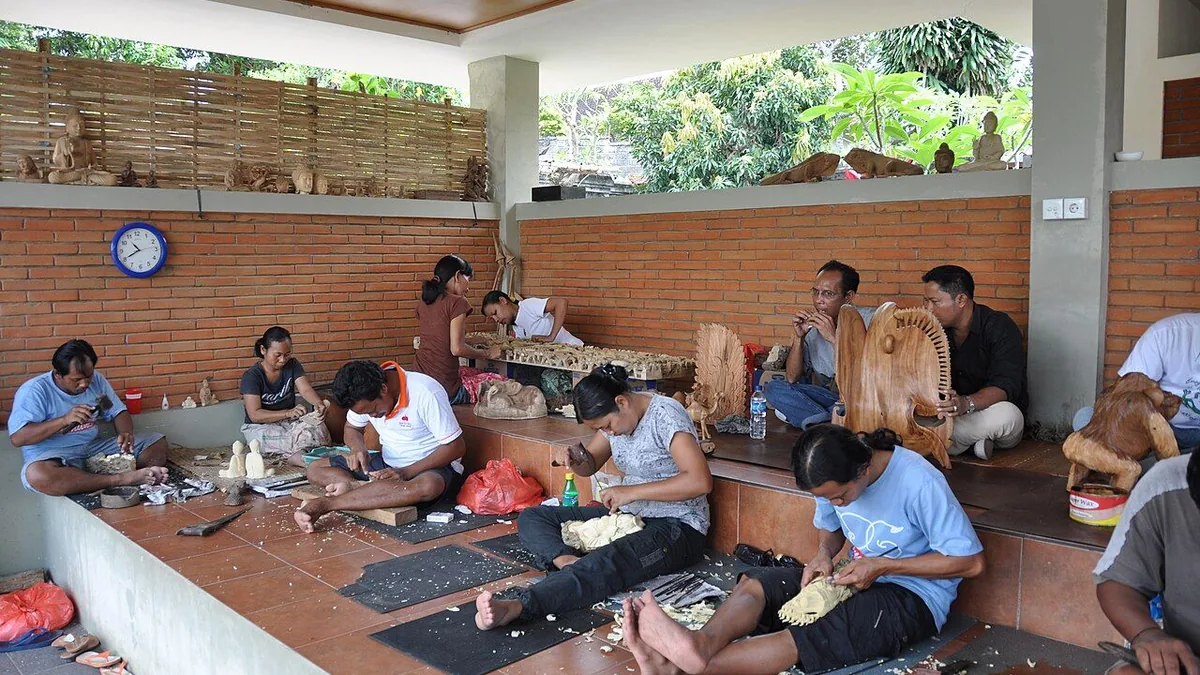
A wood carving workshop is a different kind of fit-out from a furniture shop. There is no big table saw at the centre of the room and no stack of sheet goods waiting to be cut. The centre of the room is a bench, a set of chisels and gouges, and a carver working by hand. The work is slow, quiet and close up, and the tools that matter most are the ones that sit within arm’s reach: the edge tools, the holding devices, the sharpening stones and the finishing oils.
That difference is exactly why a carving startup should not copy a general workshop shopping list. Artificial intelligence can still help a great deal, but it helps in carving-specific ways: generating motif ideas and pattern variations, turning a client’s rough description into a visual reference, pricing a commission from the hours and the timber involved, and keeping track of orders, timber stock and sharpening schedules. The software earns its place by supporting the handwork, not by replacing it.
This guide covers nine products that build a working hand-carving fit-out, from the first AI pattern ideas to the final coat of oil. It is a different list from the AI tools for a general woodworking shop, because a carving bench, a gouge set and a finishing shelf are not furniture-shop equipment. Every product below was chosen for a chisel-and-gouge workshop, and nothing here assumes a production line.
Key takeaways
- A wood carving workshop is a hand-tool fit-out built around chisels, gouges, a bench and finishing, not around saws and sheet goods.
- AI earns its place by generating pattern ideas, visualising commissions for clients and pricing work, while the carving itself stays in human hands.
- Buy the edge tools first, then the bench and the holding devices, then sharpening and finishing; the rest can wait until orders arrive.
- Sharp tools are the whole business: a carver with dull gouges works harder, risks slips and produces rougher surfaces.
- Fine carving dust is a health issue even in a small room, so air cleaning belongs in the first fit-out, not in a later upgrade.
The nine tools at a glance
| Product | Best for | Why it fits a carving fit-out |
|---|---|---|
| Adobe Firefly | AI pattern and motif ideas | Turns a brief into visual references before a single cut |
| Pfeil Swiss Made carving chisels | Core edge tools | Hard, keen steel in the sweeps a carver reaches for daily |
| Flexcut carving knives | Detail and whittling work | Comfortable handles and keen edges for close, controlled cuts |
| Two Cherries gouge set | Curves, hollows and lettering | A matched set of sweeps that covers most relief work |
| Sjöbergs Elite 2000 workbench | The carving bench itself | Solid beech, good height and dogs and vices that hold work firm |
| Veritas carver’s vise | Holding awkward pieces | Grips carved work at any angle without marking it |
| Shapton Kuromaku whetstones | Sharpening station | Fast, flat stones that keep edges keen with little fuss |
| Record Power AC400 air cleaner | Fine dust control | Filters the fine dust that hand carving throws into the air |
| Osmo Polyx-Oil | Finishing carved work | A hard-wearing, natural-looking finish that suits touchable pieces |
Design and pattern tools
Carving starts before the first cut, with the drawing. A client usually arrives with a photograph, a rough sketch or a few words, and the startup has to turn that into something that can be carved. This is where AI genuinely helps a small carving business: it is fast at producing variations, it costs little, and it lets the carver show a client a direction before committing timber and hours.
1. Adobe Firefly: the best tool for AI pattern and motif ideas
Adobe Firefly is an AI image generator built for commercial use, and that commercial-use footing is the reason it leads this list. A carving startup can ask it for a leaf motif in three styles, a border pattern for a box lid, or a simple animal form for a child’s toy, and have visual references in minutes. Those references are starting points, not finished patterns: the carver still redraws them, simplifies the lines so a gouge can follow them, and adjusts the depth so the design works in wood rather than on a screen.
The practical workflow is simple. Take the client’s brief, generate a handful of variations, and print the two or three strongest as discussion pieces. Clients choose faster when they can point at something, and the carver wastes less timber on designs the client never wanted. Firefly also helps with the business side of the bench: a quick mockup of a finished piece on a plain background makes a better listing photograph brief, and a set of motif studies can become social media posts that show the range of the workshop without giving away a commission in progress.
There are limits worth respecting. AI images often include fine detail that no gouge can cut, undercuts that would snap, and textures that look carved but are only shading. Treat every generated image as a sketch to be corrected by hand, and keep a folder of the patterns that actually carved well so the next brief starts from proven work. Used that way, Firefly is a pattern assistant that costs less than a single wasted board, and it keeps the design conversation moving while the bench stays free for carving.
Chisels and gouges: the heart of the fit-out
If the budget only stretches to one category, spend it here. A carving workshop lives or dies on its edge tools, and three well-chosen sets cover almost everything a startup will be asked to carve: straight chisels for paring and lettering, knives for detail and whittling, and gouges for curves, hollows and relief. Buy fewer tools of better steel rather than a large cheap set, and learn each sweep properly before adding another.
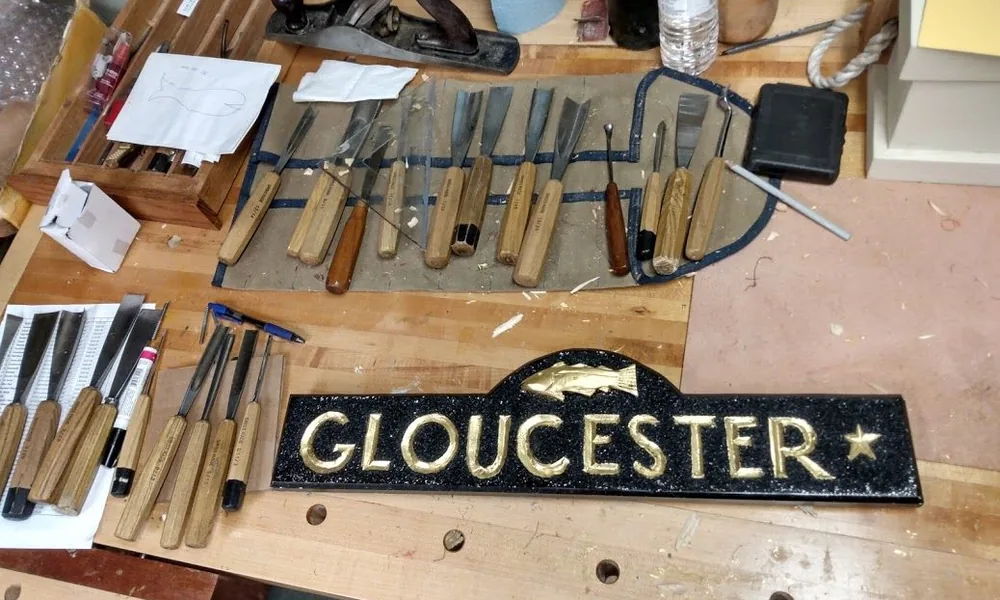
2. Pfeil Swiss Made carving chisels: the best tool for core edge tools
Pfeil, the Swiss maker, is the name most professional carvers reach for first, and for a startup that is a useful shortcut: the steel is consistent, the handles are comfortable for long sessions, and the range of sweeps is wide enough that a small set still covers a lot of ground. A sensible first set is a straight chisel, a shallow gouge, a medium gouge and a V-tool, in widths around 6 to 12 millimetres, with a mallet for the heavier cuts and hand pressure for the fine ones.
The reason to start with Pfeil rather than a budget set is edge retention. Carving is a long series of small cuts, and a soft edge needs honing every few minutes, which breaks concentration and slows the work. Harder, well-tempered steel holds a keen edge through a session and only needs a quick strop to come back. Over a year, the time saved pays for the difference several times over, and the carver learns the feel of a good edge instead of compensating for a poor one.
Look after them from day one. Keep each tool in its own slot or roll so edges never touch, wipe them after use, and store them dry. A startup that treats its chisels as the business asset they are will find they last for decades, and the set can grow one sweep at a time as commissions demand new shapes.
3. Flexcut carving knives: the best tool for detail and whittling work
Not every carving job wants a mallet. Detail work, whittling, small figures and the final cleaning of a relief are knife jobs, and Flexcut has built its reputation on knives shaped for exactly that. The handles are rounded and comfortable, the blades arrive sharp, and the range covers roughing knives, detail knives and hook knives for spoons and bowls.
A carving knife earns its keep in the last third of a piece, when the gouges have done the heavy shaping and the surface needs refining. A sharp knife slices end grain cleanly, trims a curve without tearing, and reaches into corners a gouge cannot enter. For a startup, a set of three Flexcut knives plus a strop is a small investment that changes the quality of finished work immediately, and it opens up a product line of its own: whittled spoons, small animals and ornaments that sell at markets and online.
Knife work also teaches control. A beginner who learns to carve with a knife learns grain direction, safe hand placement and the pressure a cut needs, and those lessons carry straight over to the gouges. Keep the knives razor sharp, cut away from the body and the holding hand, and never force a cut that the edge is not ready for.
4. Two Cherries gouge set: the best tool for curves, hollows and lettering
Gouges are the tools that make carving look like carving. A straight chisel can pare and a knife can whittle, but only a gouge scoops a hollow, rounds a leaf or cuts the flowing line of a letter. Two Cherries, the German maker also known as Kirschen, offers matched sets of gouges in a range of sweeps, and a set of six to eight covers most relief work a startup will meet.
The value of a matched set is that the sweeps relate to each other. A shallow sweep cleans a background, a medium sweep shapes a petal, a deep sweep hollows a bowl, and a V-tool outlines and textures. Working through a commission with a coherent set is faster than hunting through a mixed drawer, and the carver builds a mental map of which sweep does which job. Two Cherries steel takes a fine edge and holds it well, and the octagonal handles sit comfortably in the hand and do not roll off the bench.
When choosing the set, favour the sweeps the workshop will actually use. A set weighted toward medium sweeps suits relief panels and signs, while a set with deeper sweeps suits bowls and sculptural pieces. Add single gouges later for the odd sweep a commission demands, and keep a simple chart on the wall showing each sweep number and its curve so anyone in the workshop can find the right tool.
Benches and holding work still
Carving is a two-handed job, so the work itself has to be held by something else. A bench that rocks, a piece that slips, or a clamp that marks the timber will ruin a carving faster than a dull tool. The bench and the holding devices are the second purchase after the edge tools, and they are worth buying properly: a good bench is the workshop, and everything else hangs off it.
5. Sjöbergs Elite 2000 workbench: the best tool for the carving bench itself
The Sjöbergs Elite 2000 is a solid beech bench built for hand-tool work, and it suits a carving startup because it is heavy, stable and full of holding options. The top is thick enough to take bench dogs and holdfasts, the vices are smooth and strong, and the working height suits both standing carving and seated detail work. A bench that does not move when a mallet lands is not a luxury; it is the difference between a confident cut and a spoiled one.
For a carving fit-out, the bench is also the layout of the room. Put it where the light falls over the carver’s shoulder, keep the sharpening station within a few steps, and leave clear floor around it for turning a long panel. The storage beneath the bench holds the gouge rolls, the mallets and the finishing shelf, so the top stays clear for the work itself. If most of the work spins on a lathe instead of sitting on a bench, a woodturning workshop needs a different layout, but a carving workshop is built around this one bench.
Buy the bench once and buy it well. A cheap bench that racks and wobbles will be replaced within a year, while a solid beech bench will still be the centre of the workshop in twenty years. Add a non-slip mat for small pieces, a bench hook for sawing, and a row of holdfast holes drilled where the carver’s hands naturally fall.
6. Veritas carver’s vise: the best tool for holding awkward pieces
Carved work is rarely square. A bowl is round, a figure is lumpy, and a panel may need to be worked at an angle, and none of those sit well in a standard bench vice. The Veritas carver’s vise solves that by gripping the work on a ball joint, so the carver can tilt and rotate the piece to bring every surface to the tool instead of contorting around it.
The practical gain is control and safety. A piece held firmly at a comfortable angle lets the carver cut with the grain and with both hands on the tool, which means cleaner surfaces and fewer slips. The vise grips without crushing, which matters when the work is a nearly finished piece worth a week’s labour. It bolts to the bench, swings out of the way when not needed, and takes pieces from a small ornament to a fair-sized bowl.
Pair it with a few soft jaw liners and a non-slip pad. Leather-faced jaws protect finished surfaces, and a cork or rubber pad stops a round piece from rotating under the mallet. The vise is a modest purchase next to the bench, but it is the tool that makes the bench work for carving rather than for joinery.
Sharpening, air and finishing
The third group of purchases is the one startups most often postpone, and postponing it is a mistake. A carving edge needs honing little and often, fine dust needs filtering even in a small room, and a carved piece is only finished when the oil is on and cured. These three products close the loop: they keep the tools keen, the air clean and the work saleable.
7. Shapton Kuromaku whetstones: the best tool for the sharpening station
Shapton Kuromaku stones, also known as the Shapton Pro range, are ceramic whetstones that cut fast, stay flat and need only a splash of water. For a carving startup that is a better fit than a powered grinder: they are quiet, they take up no more room than a tray, and they cannot overheat an edge the way a dry grinder can. A 1000-grit stone for shaping and a 5000-grit stone for polishing, plus a leather strop charged with compound, will keep every chisel, gouge and knife in the workshop keen.
The sharpening station should sit beside the bench, not across the room. A carver who has to walk to sharpen will put it off, and a dull edge is where mistakes happen. Keep the stones in a shallow tray of water, a towel underneath, and a simple angle guide for the first months until the hands learn the angle. Ten minutes of honing at the start of the day and a quick strop during the session is all a well-kept edge needs.
Learn to sharpen properly before buying more tools. A carver who can put a keen edge on a gouge can make a modest set perform beautifully, while a carver who cannot sharpen will struggle with the finest set money can buy. There are good video guides for gouge sharpening, and an hour spent practising on a cheap chisel pays for itself many times over.
8. Record Power AC400 air cleaner: the best tool for fine dust control
Hand carving looks dust-free compared with sawing, but it is not. Every cut releases fine dust, sanding releases more, and the smallest particles are the ones that stay in the air longest and reach deepest into the lungs. The Record Power AC400 is a ceiling-mounted air cleaner that draws in workshop air, filters out the fine dust and returns clean air, and it is sized for exactly the small single-room workshop a startup usually rents.
Hang it above the bench, run it during work and for a while afterwards, and change the filters on schedule. It does not replace a mask for sanding, and it does not replace sweeping up, but it keeps the background level of fine dust down all day, which is the exposure that matters most over a career. The remote control means it can be switched on without climbing up to it, and the timer lets it run on after the carver has gone home.
Air cleaning is also a business decision. A clean workshop photographs better, welcomes clients for a viewing, and keeps finished pieces free of the dust film that spoils a fresh finish. It is a modest running cost for a healthier room and a more professional shop.
9. Osmo Polyx-Oil: the best tool for finishing carved work
A carved piece is touched as much as it is looked at, so the finish has to feel good as well as look good. Osmo Polyx-Oil is a hard-wax oil that soaks into the timber, hardens, and leaves a natural, low-sheen surface that shows the carving instead of burying it under a plastic-looking film. It is easy to apply with a cloth, it does not raise the grain badly, and a worn spot can be spot-repaired without stripping the whole piece.
For a startup, the finish is also part of the sale. A bowl finished in Polyx-Oil is food-safe once cured, a box lid feels smooth under the fingers, and a panel keeps the crisp edges of the carving visible instead of softening them under thick varnish. Offer two sheens, matt and satin, and let the client choose. Keep the workshop’s finishing shelf simple: the oil, clean cloths, a brush for carved detail, and a dust-free corner where pieces can cure undisturbed.
Finish in thin coats and let each one cure properly. Thick coats stay tacky, trap dust and dull the detail, while two thin coats with a light buff between them give a durable surface that ages gracefully. Note the curing time on every job card so a piece never ships before the finish is hard.
The startup checklist
- Choose the room and the bench position first, with light falling over the carver’s shoulder and clear floor around the bench.
- Buy the edge tools, the bench and the vise before anything else, and learn each sweep before adding to the set.
- Set up the sharpening station beside the bench, with stones, strop and towel ready every morning.
- Hang the air cleaner, stock masks and filters, and make dust control part of the daily routine.
- Build the finishing corner early, with oil, cloths and a dust-free curing space.
- Photograph every finished piece, record the hours and the timber, and use those records to price the next commission.
What a first-year budget looks like
A hand-carving startup can open for far less than a machine-heavy shop, because the expensive purchases are a bench and a set of edge tools rather than large machines. A realistic first-year budget puts the edge tools and the bench first, sharpening and air cleaning second, and finishing stock third, with the AI pattern software on a modest monthly subscription. Keep a reserve for timber, because good carving wood is bought in boards and blanks, and a startup that runs out of its best timber mid-commission loses time it cannot bill.
Price commissions from the records, not from guesswork. Log the hours each piece takes, including design, carving, sanding and finishing, and add the timber, the finish and a share of the rent. Most new carvers undercharge their first pieces; the log makes the true cost visible and gives the confidence to quote properly. For the wider fit-out costs, power, dust extraction and layout, the AI tools for workshop installation give a useful comparison, but a carving room will always cost less to fit out than a machine shop of the same size.
Frequently asked questions
What is the first tool a wood carving workshop startup should buy?
A small set of good carving chisels and gouges, plus a strop. The edge tools are the business, and everything else supports them. A bench comes next, then sharpening stones, then the vise and the finishing shelf.
How much does it cost to set up a wood carving workshop?
Far less than a machine shop. The main costs are the bench, the edge tools and the vise, with sharpening, air cleaning and finishing adding a modest amount. Timber stock and a reserve for the first quiet months matter as much as the tools themselves.
Can AI design a carving pattern on its own?
No. AI can generate motif ideas and visual references quickly, but a carving pattern has to work in wood: lines a gouge can follow, depths that will not snap, and surfaces that read in real light. The carver always redraws and corrects the AI suggestion by hand.
Do I need a separate sharpening station?
Yes, and it should sit beside the bench. A carver who has to walk across the room to sharpen will put it off, and dull edges cause slips and rough surfaces. A tray, two stones and a strop are all the station needs.
How do I price carved commissions?
Record the hours, the timber and the finish for every piece, then quote from those records. Add a share of rent and running costs, and do not discount the design time: the pattern work is skilled labour, not a free extra.
Can a wood carving workshop make money from classes?
Yes, and classes are a good second income for a startup. A Saturday whittling or relief-carving class uses the same bench and tools, fills quiet weeks, and turns students into buyers of finished pieces and gift vouchers.
Bottom line
A wood carving workshop is built by hand, and its shopping list should reflect that: AI pattern ideas, a small set of excellent edge tools, a solid bench with a carver’s vise, a sharpening station, clean air and a finish that lets the timber speak. Buy in that order, keep every edge keen, and let the commissions, not the catalogue, decide what gets added next.

Keep what speaks to you.
Leave room for your own perspective.