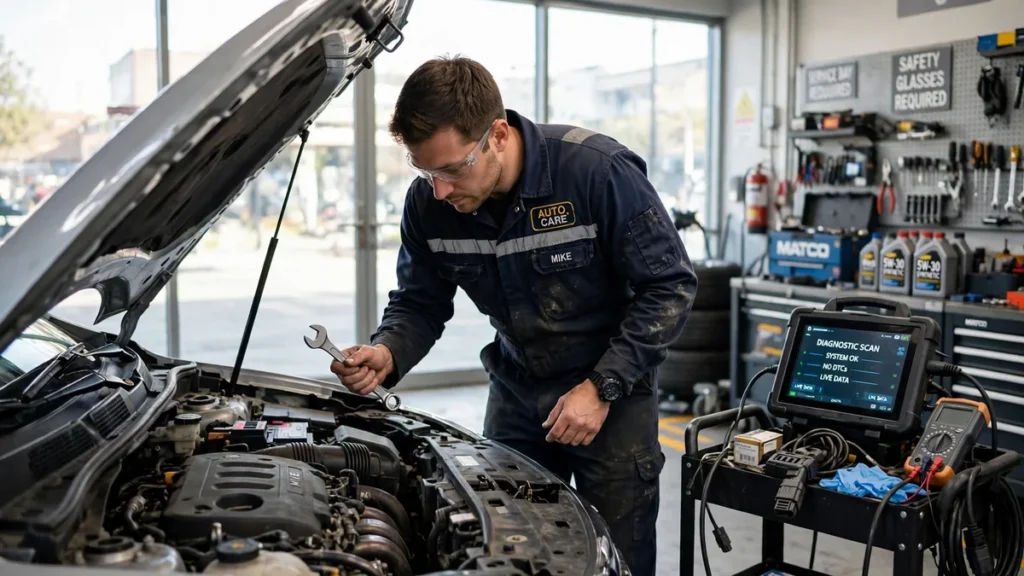
The best AI tools for truck repair startups in 2026 decide whether a new diesel shop becomes the place fleet managers call first when a truck is down, or just another garage that waits for the phone to ring. A truck repair startup lives or dies on uptime. Every hour a heavy-duty truck sits in a bay, or waits on a highway shoulder, costs its owner money, missed deliveries and broken promises to customers. The shops that win in 2026 are the ones that use artificial intelligence to find faults faster, schedule work more honestly, dispatch roadside help more quickly and keep fleet customers informed at every step.
A truck repair startup is not a car repair shop with bigger lifts. Diesel engines, aftertreatment systems, air brakes, transmissions and trailers each carry their own diagnostic language, their own parts lead times and their own safety rules. A single missed fault code can send a truck back onto the road only to break down again fifty miles later, and that second breakdown destroys trust far faster than the first one built it. At the same time, the owner is answering calls from drivers, quoting fleet work, ordering parts, planning bay time, chasing invoices and trying to keep technicians busy without overbooking them. Artificial intelligence helps here not by replacing the diesel technician, but by turning fault codes, service history, telematics, bookings and customer messages into clear daily decisions.
This guide compares the best AI tools for truck repair startups across the work that matters most in 2026: diesel diagnostics and predictive maintenance, shop management and scheduling, roadside dispatch, fleet contracts and preventive maintenance, parts inventory and pricing, customer communication, invoicing and payments, local marketing, safety and compliance, and technician training. Each section explains what the tool category does, who it suits and what to check before paying for it. The goal is simple: help a new truck repair owner pick a short list of tools that pay for themselves quickly, fit a small team and grow from one or two bays to a shop that fleets rely on.
Key takeaways
- Start with diagnostics, scheduling and roadside dispatch. Those three carry most of the revenue and most of the saved time for a new truck repair startup.
- Choose tools that understand diesel fault codes, heavy-duty service intervals and fleet maintenance schedules, not generic car repair software that treats a semi truck like a family car.
- Predictive maintenance is the fastest route to fleet contracts, because fewer breakdowns and clearer service records directly protect a fleet manager’s delivery promises.
- Answer roadside calls fast and quote honestly. Speed, clear pricing and regular updates matter more to a stranded driver than any single diagnostic feature.
- Measure bay utilisation, first-time fix rate, average repair time and repeat breakdowns every week, and keep only the tools that move those numbers in the right direction.
How to Choose AI Tools for a Truck Repair Startup
Choosing AI tools for a truck repair startup starts with an honest map of where the business actually loses money. For most new shops, the losses are not mysterious. Trucks wait too long for a diagnosis, bays sit empty between jobs, parts arrive late, roadside calls go unanswered at night, invoices go out late, and fleet customers drift away because nobody told them what was happening with their vehicle. Write down the three biggest losses first, then look for tools that fix those losses directly. A tool that does not fix a named loss is a distraction, however impressive its demonstration looks.
| Tool category | Best for | Main benefit | Watch out for |
|---|---|---|---|
| Diesel diagnostics and predictive maintenance | Shops doing engine, aftertreatment and electrical work | Faster fault finding and fewer comebacks | Coverage gaps for older trucks and rare engines |
| Shop management and scheduling | Every truck repair startup | Fuller bays and shorter waiting times | Tools built for cars, not heavy-duty bays |
| Roadside dispatch | Shops offering mobile and emergency repair | Faster response and clearer driver updates | Poor offline working in areas with weak signal |
| Fleet maintenance platforms | Shops chasing fleet contracts | Planned work and steadier income | Reports that fleet managers cannot read easily |
| Parts inventory and pricing | Shops holding diesel and trailer parts | Fewer delays and less dead stock | Catalogues that miss heavy-duty parts |
| Customer messaging and reviews | Shops building a local reputation | More repeat work and better reviews | Automated messages that sound cold or pushy |
| Invoicing and payments | Every truck repair startup | Faster payment and fewer disputes | Hidden fees on fleet and card payments |
Diesel Diagnostics and Predictive Maintenance
Diesel diagnostics is the heart of a truck repair startup, and it is where artificial intelligence earns its keep first. Modern trucks produce a constant stream of data from the engine, the aftertreatment system, the transmission, the brakes and the trailer, and a good diagnostic platform reads that data, links fault codes to likely causes and ranks the checks a technician should run first. That ranking matters, because a technician who starts with the most likely cause finishes sooner, orders the right part first time and sends the truck back onto the road with confidence. For a new shop, that speed is the difference between a profitable bay and a bay that eats labour hours.
Predictive maintenance takes the same idea one step further. Instead of waiting for a truck to fail, the tool watches patterns across oil analysis, fault history, mileage, idle time and sensor readings, and flags the trucks most likely to need work soon. A fleet manager who hears that a truck needs a service next week, before it breaks down on a delivery run, will remember who warned them. That warning is also the strongest sales tool a truck repair startup owns, because it turns the shop from a place that fixes breakdowns into a partner that prevents them. Offer a short predictive report with every fleet inspection, and keep the language plain: what might fail, when, what it would cost now, and what it would cost if it failed on the road.
Shop Management and Scheduling
A truck repair shop is a scheduling puzzle. Bays are large, jobs vary from a two-hour brake service to a three-day engine rebuild, parts arrive on different days, and fleet customers expect honest completion times. Shop management software with AI scheduling helps by matching each job to the right bay, the right technician and the right parts window, and by warning the owner when a job is likely to overrun. That warning is worth money, because it lets the shop call the next customer early, move a smaller job forward and keep the bay earning instead of sitting idle.
The best systems for a truck repair startup also handle the paperwork that surrounds the work. Digital vehicle inspections with photographs, clear estimates that a fleet manager can approve from a phone, work orders that update as the job progresses, and service history that follows each truck by unit number all reduce arguments and speed up payment. When a customer asks why a job cost what it did, a photograph of the worn part and a clear line-by-line estimate answers the question better than any phone call. That transparency builds the trust that turns a first visit into a fleet contract, and it protects the shop when a repair is questioned weeks later.
Roadside Dispatch and Mobile Repair
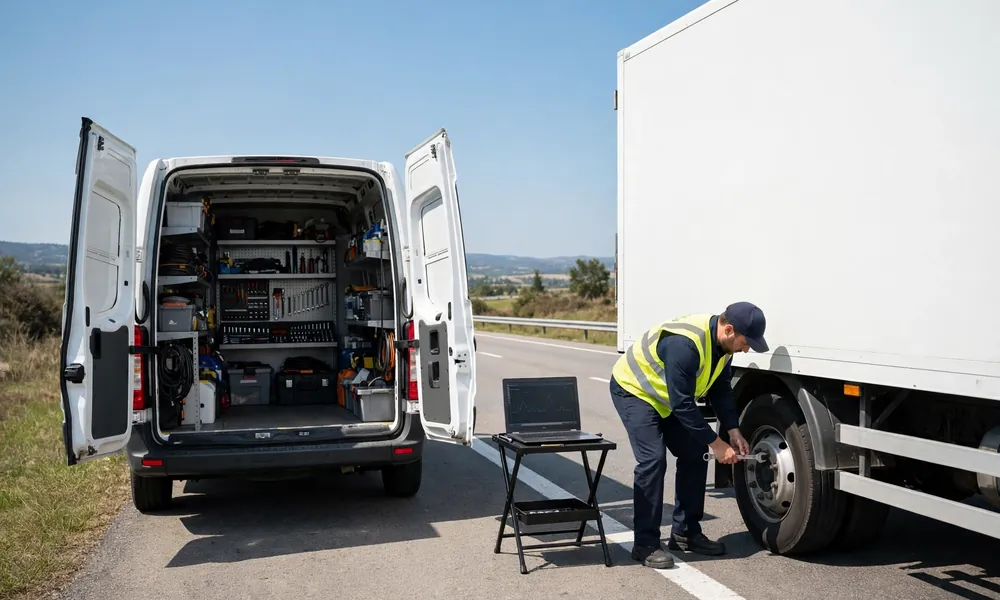
Roadside repair is where a truck repair startup earns its reputation fastest, and where it can lose it fastest too. A driver stranded on a highway at night does not care about software. They care about how quickly someone answers, how honestly the problem is explained and how soon help arrives. AI dispatch tools help by taking the call, the location and the fault description, matching the job to the nearest available technician with the right parts and skills, and sending the driver regular updates with an honest arrival time. That steady flow of information calms a stressful situation and makes the shop look professional from the first minute.
Mobile repair also needs tools that work in the field, not just in the office. The technician needs the fault history, the service manual, the parts list and the payment screen on a phone or tablet that works with gloves on and in bright sunlight. They need to photograph the repair, record the parts used and send the invoice before leaving the roadside, because a job that is not invoiced on the day is a job that may not be paid for weeks. The best roadside tools also track response times, first-time fix rates and repeat callouts, so the owner can see which routes, which trucks and which faults cost the most time and money.
Fleet Contracts and Preventive Maintenance
Fleet work is the steadiest income a truck repair startup can win, and AI tools make it far easier to win and to keep. A fleet maintenance platform tracks every truck in a customer’s fleet, its mileage, its service history, its inspection dates and its upcoming maintenance, and turns that data into a clear plan. Instead of reacting to breakdowns, the shop can offer a schedule: inspections this month, brake work next month, aftertreatment service before winter. That plan gives the fleet manager something they value more than a low hourly rate, which is certainty about when trucks will be available and what maintenance will cost.
The reporting matters as much as the scheduling. Fleet managers need short, readable reports that show what was done, what it cost, what is due next and which trucks are at risk. A report full of fault codes and jargon will be ignored, while a one-page summary with clear costs and dates will be read and forwarded to the person who signs the contract. The best fleet tools also flag patterns across a whole fleet, such as the same brake fault appearing on several trucks of the same age, or one route causing more tyre wear than others. Those patterns let the shop offer advice, not just repairs, and advice is what turns a supplier into a partner.
Parts Inventory and Pricing
Parts are where many truck repair startups quietly lose money. Heavy-duty parts are expensive, they take up space, and ordering the wrong one can delay a job by days. AI inventory tools help by tracking which parts the shop actually uses, how often, for which trucks and at what time of year, and by suggesting sensible stock levels. A filter that is used every week should be on the shelf. A rare transmission part that is used once a year should be ordered on demand. That simple discipline frees up cash, clears shelf space and shortens repair times.
Pricing is the other half of the problem. Diesel parts prices move, suppliers offer different terms, and fleet customers expect consistent, honest pricing. An AI pricing tool that checks supplier prices, tracks the shop’s own costs and suggests a fair margin helps the owner quote quickly and confidently, without undercharging on a complex job or overcharging a loyal customer. The tool should also link parts to the work order and the invoice automatically, so nothing is fitted and forgotten. Every part that leaves the shelf without appearing on an invoice is profit walking out of the door, and in a small shop those losses add up quickly.
Customer Communication, Reviews and Local Marketing
Most truck repair customers are not shopping for a friendly chat. They are shopping for certainty, and the shop that communicates best usually wins the work. AI messaging tools help a small team answer enquiries quickly, send clear estimates, share photographs of the work in progress and confirm completion times without tying up a technician on the phone. The messages should sound like a person who knows trucks, not like a robot reading a script. Short, plain updates work best: what was found, what it will cost, when it will be ready, and what happens next. That clarity is especially important for fleet managers, who need to tell their own customers when a truck will be back on the road.
Reviews carry real weight in truck repair, because fleet managers and owner-drivers ask each other for recommendations before trusting a new shop. An AI review tool that asks for feedback at the right moment, usually just after a successful repair, and makes it easy for a happy customer to leave a review, will slowly build a reputation that no advertisement can match. The shop should also reply to every review, good or bad, in a calm and professional tone. A thoughtful reply to a complaint, explaining what went wrong and what was done about it, often impresses future customers more than a page full of five-star reviews. Honesty about mistakes, followed by a clear fix, is a sign of a shop that takes its work seriously.
Local marketing for a truck repair startup should stay close to the roads and the fleets it serves. A clear website, accurate opening hours, photographs of real work, and content that answers the questions fleet managers actually ask will do more than a broad advertising campaign. For ideas on how other vehicle businesses present their services online, it is worth reading the guide to the best AI tools for car detailing startups, because the lessons about clear booking, honest pricing and good photographs apply just as well to a truck workshop. Keep the marketing honest, keep the photographs real, and let the quality of the repair work do most of the talking. A truck repair startup that answers quickly, quotes honestly and finishes on time will grow by recommendation, and that growth is the most durable kind.
Invoicing, Payments and Cash Flow
Cash flow is the quiet test of a truck repair startup. A shop can be busy every day and still struggle if invoices go out late, fleet payments take sixty days and card fees eat the margin on small jobs. AI invoicing tools help by turning a finished work order into a clear invoice within minutes, with parts, labour and taxes shown separately, photographs of the work attached and payment terms stated plainly. The invoice should be easy for a fleet accounts team to process, because an invoice that is easy to process is an invoice that gets paid sooner.
Payments need to fit the customer. Owner-drivers often want to pay by card on collection, while fleets usually pay by bank transfer or account. The best invoicing tools handle both, show which invoices are overdue, send polite reminders automatically and flag the customers who always pay late. That information helps the owner decide who gets account terms and who pays on collection, which is a decision that protects the business without damaging good relationships. It also helps to agree payment terms in writing before starting work for a new fleet customer, and to stick to them calmly and consistently.
Safety, Compliance and Technician Training
Safety and compliance are not paperwork for a truck repair startup. They are the reason a truck leaves the workshop fit for the road, and the reason the shop stays in business. AI tools can help by tracking inspection dates, brake test results, torque settings, recall notices and service bulletins, and by flagging the trucks and jobs that need extra checks. A system that reminds the team that a trailer inspection is due, or that a particular truck model has a safety bulletin, prevents the kind of oversight that can have serious consequences on the road. That reminder is worth far more than the cost of the software.
Training is the other side of the same coin. Diesel technology changes quickly, with new aftertreatment systems, new electrical architectures and new driver assistance features appearing every year. AI training platforms that offer short, practical lessons, fault-finding simulations and assessments help technicians keep their skills current without spending days away from the workshop. The best platforms let the owner see who has completed which module, and link training to the jobs the shop actually takes on. A technician who has just completed a module on air brake diagnostics should be given the next air brake job, while the lesson is still fresh.
What a Truck Repair Startup Should Pay
The cost of AI tools for a truck repair startup varies widely, and the cheapest option is rarely the best value. A single diagnostic platform may cost a few hundred dollars a month, a shop management system a similar amount, and a roadside dispatch tool a little less. Taken together, a sensible starter stack often costs between five hundred and fifteen hundred dollars a month, depending on the size of the team and the number of trucks served. That sounds like a lot to a new owner, until it is set against the cost of one empty bay, one comeback or one lost fleet contract. One prevented breakdown, or one extra fleet customer, can pay for a whole year of software.
Common Mistakes New Truck Repair Startups Make
The most common mistake is buying too many tools too quickly. A new owner sees a dozen impressive demonstrations, signs up for all of them and then discovers that the team uses none of them properly. Technicians fall back on paper notes, the office falls back on phone calls and the software sits unused while the subscription keeps charging. The fix is simple: buy one tool, use it properly for a month, measure the result and only then buy the next one. A small stack that is used every day beats a large stack that is ignored.
Your First Ninety Days With AI Tools
The first month should be about foundations. Set up diagnostics and shop management, train every technician on both, and agree on how every job will be recorded, from the first phone call to the final invoice. Create a simple template for estimates, work orders and fleet reports, and use it for every job without exception. That consistency is what makes the data useful later, because a system full of half-completed records tells the owner nothing. Also set up a simple dashboard that shows bay utilisation, first-time fix rate and average repair time, and look at it every week with the whole team.
Hiring is part of that foundation too, because a truck repair startup needs technicians who understand heavy vehicles and the drivers who operate them. Many experienced drivers and former mechanics look for a second career in the trade, and the guide to the best side hustles for retired truck drivers is a useful reminder of how much practical knowledge sits in that community. A retired driver who joins the team as a roadside technician or a customer adviser can spot a fault from a driver’s description in seconds, and that experience is something no software can replace. Pair that experience with good AI tools, and a small shop can offer a level of service that larger competitors struggle to match.
Checklist for Launching a Truck Repair Startup With AI
- Map your three biggest losses first, then choose tools that fix those losses directly before buying anything else.
- Test every diagnostic tool on your own trucks, including older diesels with stored fault codes and intermittent electrical problems.
- Set up shop management so every job has a clear estimate, a work order, photographs and a final invoice linked by one job number.
- Agree roadside pricing, response times and update messages in writing, and make sure the dispatch tool shows them to the driver before work starts.
- Offer a free fleet health check to a small number of local fleets, and follow it with a simple preventive maintenance agreement.
- Review bay utilisation, first-time fix rate, average repair time and repeat breakdowns every week, and cancel any tool that has not earned its place within three months.
Frequently Asked Questions
What is the best AI tool for a new truck repair startup?
There is no single best tool, because the right choice depends on what the shop does most. For most new truck repair startups, the best first purchase is a diesel diagnostic platform that covers the trucks the shop actually sees, paired with shop management software that handles scheduling, estimates and invoicing. Those two tools touch every job, save time from the first week and produce the records that win fleet work. Add roadside dispatch and fleet maintenance tools once mobile work and fleet customers become a regular part of the business, rather than buying everything on day one.
How much do AI tools cost for a truck repair shop?
A sensible starter stack usually costs between five hundred and fifteen hundred dollars a month, depending on team size and the number of trucks served. Diagnostics and shop management make up most of that cost, with roadside dispatch and fleet platforms added later. The real question is not the monthly fee but the return: a tool that saves one hour of diagnostic time a week, fills one empty bay slot a week or prevents one comeback a month has already paid for itself. Ask every supplier for the full price in writing, including extra users and add-ons, and set a three-month test for each tool before committing for a year.
Can AI really predict truck breakdowns?
Artificial intelligence can flag trucks that are more likely to break down soon, based on fault history, sensor readings, mileage, idle time and oil analysis, but it cannot predict every failure with certainty. The value is in the pattern, not the prophecy. A truck that shows the same fault repeatedly, or a fleet where several trucks of the same age develop the same brake problem, deserves attention before it fails on the road. Use predictive reports as a reason to inspect, service and talk to the fleet manager, not as a guarantee. A shop that warns a customer early, even when the warning turns out to be cautious, earns more trust than a shop that says nothing and then charges for an emergency repair.
Do truck repair startups need roadside assistance tools?
Roadside assistance is not essential for every truck repair startup, but it is one of the fastest ways to build a reputation and win fleet work. A driver who is rescued quickly, quoted honestly and kept informed will remember the shop and recommend it to other drivers. The tools matter because they keep that rescue organised: matching the job to the nearest technician, sharing the fault history, recording the parts used and invoicing before leaving the roadside. If the shop does not offer roadside work, it should still have a clear plan for referring stranded drivers to a trusted partner, because a helpful referral is better than an unanswered phone.
How do AI tools help win fleet contracts?
Fleet managers choose a repair partner on certainty, not just price. AI tools help by producing clear maintenance plans, readable reports, honest completion times and complete service records for every truck. A fleet manager who receives a one-page report showing what was done, what it cost, what is due next and which trucks are at risk can justify the contract to their own managers. A free fleet health check is often the best first step, because it shows the fleet manager the quality of the shop’s work and reporting before any contract is signed. Keep the agreement simple, deliver on every promise and let the records speak for the shop.
What should a truck repair startup avoid when buying AI software?
Avoid buying too many tools at once, avoid tools built for cars that claim to cover trucks, and avoid suppliers who will not offer a trial on your own vehicles. Also avoid long contracts before the tool has proved itself, and avoid any platform that does not work offline or on a mobile device in the field. The most expensive mistake is a tool the team will not use, because it keeps charging while the shop falls back on paper and phone calls. Buy one tool at a time, train the team properly, measure the result after a month and only then move on to the next purchase. A small, proven stack will always beat a large, ignored one.
The Bottom Line
The best AI tools for truck repair startups in 2026 are the ones that keep trucks moving, bays full and fleet customers informed. Start with diesel diagnostics and shop management, add roadside dispatch and fleet maintenance as the business grows, and choose every tool by the same test: does it save time, prevent a breakdown or win a customer? A truck repair startup that answers quickly, diagnoses honestly, quotes fairly and finishes on time will build a reputation that no software can buy and no competitor can copy easily. The tools help, but the trust is earned one repair, one roadside rescue and one fleet report at a time, and that trust is what turns a new workshop into a shop that fleets rely on. For a wider view of how AI is changing vehicle businesses, the guide to the best AI tools for automotive startups shows where the wider industry is heading, and a truck repair startup that keeps learning from those changes will stay ahead of the shops that stand still.

Keep what speaks to you.
Leave room for your own perspective.