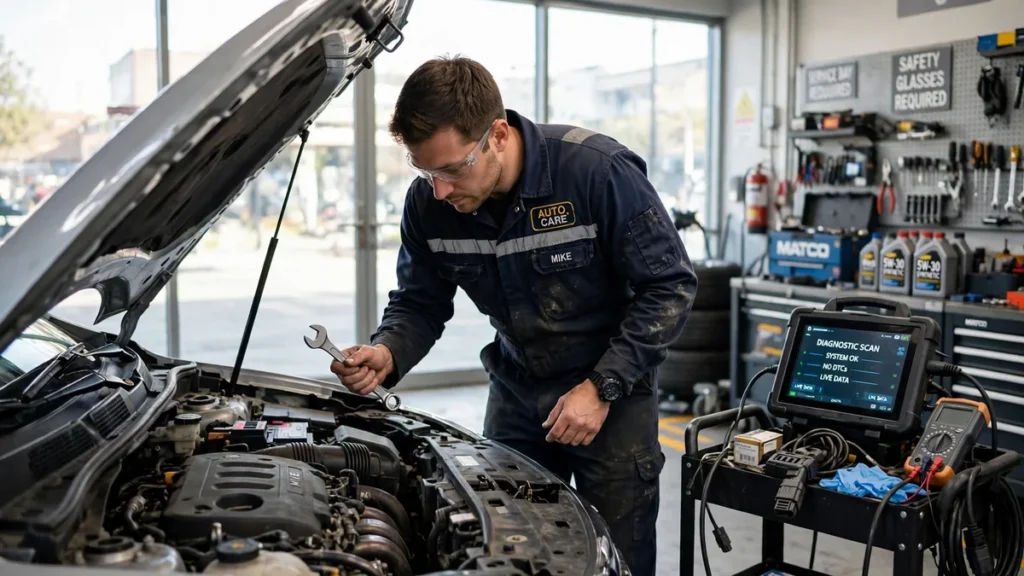
The best AI tools for car detailing startups in 2026 decide whether a new mobile detailing van or a small detailing studio becomes the trusted name drivers recommend to their neighbours, or just another service that struggles to fill its diary. Car detailing is a craft business built on patience, care and attention to the smallest marks on paintwork and leather, and customers judge the result with their eyes and their hands the moment they collect their car. A swirl mark missed under bright light, a streak on a windscreen, a leather seat that still smells of smoke, or a ceramic coating that fails after a few weeks can undo months of careful work. The tools that win in 2026 are the ones that help a small team protect that craft while running the business around it calmly, from the first enquiry to the final handover.
A car detailing startup faces a different challenge from most other local service businesses. Every car is different, every customer expects a personal result, and every job takes real time in a way that cannot be rushed without the quality suffering. A paint correction job can take a full day, a ceramic coating needs careful preparation and curing time, and an interior detail on a family car can reveal surprises that no booking form predicted. At the same time, the owner is answering messages, quoting jobs, ordering products, planning routes between customers, taking before and after photographs, asking for reviews and trying to keep cash flow steady. Artificial intelligence helps here not by replacing the detailer, but by turning enquiries, photographs, bookings, customer messages and job history into clear daily decisions that save hours and prevent costly mistakes.
This guide compares the best AI tools for car detailing startups across the jobs that matter most in 2026: online booking and scheduling, customer messaging, quoting and paint inspection, ceramic coating records, interior detailing checklists, route planning for mobile work, payments and deposits, reviews and photographs, local marketing, pricing and repeat customers. Each section explains what the tool category does, who it suits and what to check before paying for it. The goal is simple: help a new detailing owner pick a short list of tools that pay for themselves quickly, fit a small team and grow from one van or one studio bay to a booked-out business without forcing a painful switch later.
Key takeaways
- Start with one booking platform, one messaging tool and one quoting tool. Those three carry most of the revenue and most of the saved time for a new detailing startup.
- Choose tools that understand detailing jobs, vehicle sizes and service times, not just generic appointment slots that treat a ceramic coating like a haircut.
- Photograph every car before and after the work, and keep coating and correction records for every customer, because clear records build trust and prevent disputes.
- Automate reminders, deposit requests and review requests first. Fast, friendly follow-up wins local detailing customers and fills quiet days.
- Measure revenue per job, rebooking rate and cost per booking every week, and keep only the tools that move those numbers in the right direction.
How to Choose AI Tools for a Car Detailing Startup
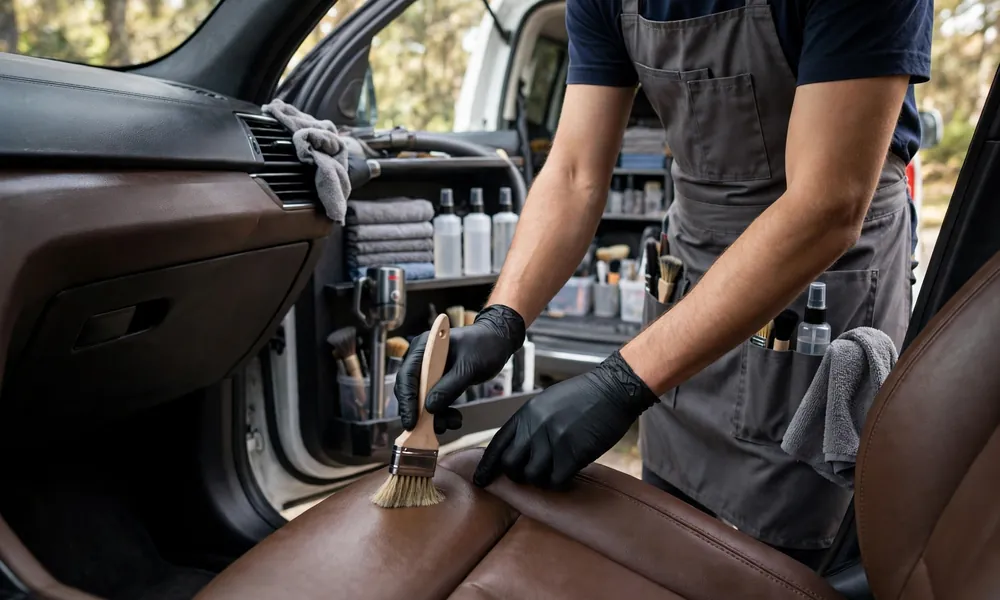
Choosing AI tools for a car detailing startup starts with an honest map of how your business actually works. A mobile detailer, a fixed detailing studio and a detailer who does both run on different rhythms, even though they all clean and protect cars. A mobile detailer worries about travel time between jobs, water and power supply at each location, parking space and booking density in each neighbourhood. A studio worries about bay availability, lighting for paint inspection, curing time for coatings and keeping several jobs moving without one delaying the next. A paint correction specialist worries about inspection time, machine polishing hours and managing customer expectations about what correction can and cannot fix. Before comparing any software, write down your service type, your busiest days and your biggest daily pain.
The next step is to separate tools that save time every day from tools that only look impressive in a demonstration. A booking tool that fills quiet weekday mornings is worth more than a dashboard with fifty charts nobody opens. A quoting tool that turns a customer photograph into a sensible price range is worth more than a clever feature that is used once a month. A messaging tool that answers the same five questions about prices, availability and coating options in seconds is worth more than a chatbot that tries to do everything and does nothing well. Ask every supplier for a trial with your real prices, your real service packages and your real working hours, and judge the tool on a busy Saturday, not on a quiet demonstration call.
Best AI Tools for Car Detailing Startups at a Glance
The table below gives a quick view of where each type of tool helps most in a car detailing startup. The sections that follow explain how to use each one in a real detailing business, what to look for before you pay and where small teams usually go wrong. Use the table to build a short list, then test only two or three tools at a time so you can judge each one fairly against your real work.
| Tool type | Main job | Best for | Watch for |
|---|---|---|---|
| Booking and scheduling | Online bookings and diary planning | Mobile and studio detailers | Real job times, not generic slots |
| Customer messaging | Replies, reminders and follow-ups | Small teams with busy phones | Human handover for complaints |
| Quoting and inspection | Photo quotes and paint checks | Correction and coating work | Honest ranges, not false promises |
| Coating records | Product, warranty and aftercare | Ceramic coating studios | Complete records for every car |
| Route planning | Mobile job order and travel time | Mobile detailing vans | Tight routes that still allow breaks |
| Payments and deposits | Deposits, invoices and receipts | Every detailing startup | Clear refund and cancellation terms |
| Reviews and photos | Before and after proof | New studios building trust | Real results, never stock images |
| Local marketing | Search, maps and nearby drivers | New businesses building awareness | Real local reach, not vanity clicks |
Booking and Scheduling Tools
Booking tools are the backbone of a detailing startup, because a detailing diary is not a simple list of half-hour appointments. A maintenance wash may take ninety minutes, a full interior detail may take four hours, a one-stage paint correction may take a full day, and a ceramic coating may need the car for two days including preparation and curing. A good booking tool lets you set a different duration, price and preparation note for every service, and it blocks the right amount of time so a coating job never collides with a school-run interior clean. It should also understand vehicle size, because a large SUV takes longer to wash, polish and protect than a small hatchback, and the price and the time should reflect that difference.
When you test a booking tool, book a full week of imaginary jobs that match your real services, including a two-day coating, a mobile job at a customer home and a last-minute cancellation. Check that the diary stays readable, that the customer receives clear messages, and that a cancelled slot can be offered to a waiting customer quickly. The tool should also keep a customer history, so when a regular driver books again you can see their car, their last service and any notes about paint condition or leather care. That history is what turns a booking system into a relationship, and it is one of the reasons experienced detailers recommend starting with a proper booking platform rather than a shared calendar. Solo operators who want a closer look at the daily workflow of an independent detailer can learn from the guide to the best AI tools for car detailers, which covers the same booking and messaging jobs from a one-person perspective.
Customer Messaging and AI Reception
Most detailing enquiries arrive when the detailer is working, with wet hands, a machine polisher running, or a customer car in the bay. A messaging tool with AI reception answers those enquiries in seconds, asks the right questions about the car and the service wanted, and books or holds a slot while the detailer finishes the job in hand. It should sound friendly and human, use your real prices and your real availability, and hand over to a person the moment a customer sounds unhappy, confused or ready to spend a large amount on a coating package. Speed matters here, because a driver who messages three detailers on a Saturday morning will usually book with the one who replies first with a clear answer.
The best messaging tools do more than answer the first question. They send a reminder the day before the job, ask the customer to confirm the location and the vehicle, share preparation advice such as removing personal items from the car, and follow up after the work with aftercare guidance and a review request. They keep every message in one place, so the whole team can see what was promised to a customer and nobody repeats a question the customer already answered. They also learn the questions your customers ask most often, which lets you improve your website, your booking form and your price list instead of answering the same query fifty times a month.
Quoting, Paint Inspection and Ceramic Coating Tools
Quoting is where many detailing startups lose money, because a price given too quickly can lock the business into a job that takes twice as long as expected. AI quoting tools help by turning customer photographs and a short description into a sensible price range before the detailer ever sees the car. A customer uploads photographs of the paintwork, the wheels, the seats and any damage, and the tool highlights swirl marks, scratches, stone chips, kerb damage and interior wear that the customer may not have noticed. The detailer then reviews the photographs, adjusts the quote and explains what each stage of the work will achieve. The customer gets a faster answer, and the detailer gets a clearer picture of the job before the car arrives.
Paint inspection tools go further by helping the detailer record the condition of every panel in a structured way. Photographs taken under consistent lighting, notes about paint depth readings, and a record of existing defects protect both sides. If a customer later claims a scratch appeared during detailing, the inspection record shows whether it was already there. If a coating fails early, the record shows which products were used, how the paint was prepared and what aftercare advice was given. This discipline matters most for paint correction and ceramic coating, where the work is expensive, the expectations are high and the difference between a good result and a great result is often invisible to an untrained eye until months later.
Ceramic coating tools also help with the business side of coatings. They store the product batch, the number of layers, the curing time, the warranty terms and the aftercare schedule for every coated car, and they remind the customer when a maintenance wash or a top-up is due. That reminder is not just good service; it is repeat revenue, because a coated car that returns for regular maintenance stays in better condition and the customer stays connected to your business. Choose a tool that keeps these records searchable by registration number, customer name and date, and that can produce a simple aftercare sheet the customer can keep in the car or on their phone.
Payments, Deposits and Invoicing
Payments are a quiet test of professionalism. A detailing startup that takes a deposit at booking, sends a clear invoice and offers easy card payment looks established from the first job, while one that relies on cash and handwritten notes looks temporary. AI payment tools help by sending deposit links automatically when a booking is made, chasing unpaid balances politely, issuing receipts and keeping a clean record of every transaction for tax and accounting. They also flag failed payments, expired cards and overdue invoices before they become a problem, so the owner is not chasing money weeks after the work is done.
Deposits deserve special attention in detailing, because a no-show on a full-day correction or coating booking costs the business a whole day of income that cannot be recovered. A deposit of a sensible percentage, clearly explained at booking and covered by fair cancellation terms, protects the diary without putting customers off. The payment tool should make the deposit easy to pay, explain the cancellation window in plain language and refund promptly when the terms allow it. Customers accept deposits when the process is clear and professional; they resent them when the terms are hidden or the refund takes weeks.
Local Marketing and Repeat Customers
Local marketing for a detailing startup is about being found by drivers nearby at the moment they need a detailer. AI marketing tools help by keeping the business profile complete and up to date, suggesting posts that show real work on real cars, and helping the owner respond to local search questions about services, prices and availability. They can also analyse which services bring in the most enquiries, which neighbourhoods produce the most bookings and which times of year are busiest, so marketing effort goes where it earns the most. A small budget spent on the right local audience is worth far more than a large budget spent on drivers who live too far away to book.
Repeat customers are the most profitable part of a detailing business, because a driver who returns every few months for a maintenance detail costs almost nothing to win again. AI customer tools help by tracking how long it has been since each customer last visit, suggesting a maintenance detail at the right interval for their car and their coating, and sending a friendly reminder with an easy booking link. They can also suggest a suitable next service, such as a leather treatment before winter or a paint protection top-up before a long journey, based on the car history rather than a generic promotion. That personal approach feels like good service, not sales pressure, when it is based on real records.
Pricing and Packages with AI
Pricing is one of the hardest decisions for a new detailing startup, because the price must cover products, time, travel, insurance and profit, while still looking fair to a customer who may be comparing several local detailers. AI pricing tools help by analysing your job history, your costs and your local market, then suggesting prices that reflect the real time each service takes on each vehicle size. They can show which services are underpriced, which packages are rarely booked and which add-ons, such as engine bay cleaning or pet hair removal, earn well without adding much time. That evidence is far more useful than copying a competitor price list that may be based on a completely different cost structure.
Demand also affects pricing, and AI forecasting can help a startup plan for it. Detailing demand often rises in spring, before holidays and after winter, and falls during wet or very cold periods. A forecasting tool that looks at past bookings, local weather patterns and seasonal trends can suggest when to offer a maintenance detail promotion, when to block diary time for coatings and when to plan holidays or training. Use that forecast to smooth income across the year, rather than to raise prices sharply at busy times in a way that damages trust. Drivers remember a fair price during a busy month far longer than they remember a discount, and a detailing business that treats its customers fairly in busy periods will keep them in quiet ones too. The contrast with high-volume wash operations is useful here, because a detailing startup sells time, skill and protection rather than speed, and the guide to the best AI tools for car wash startups shows how different the tools and the pricing logic are when throughput, rather than craft, is the priority.
A Simple Starter Stack and Your First 90 Days
A new detailing startup does not need ten tools on day one. It needs a small starter stack that covers booking, messaging, quoting and payments, and it needs ninety days of disciplined use before adding anything else. In the first month, set up the booking platform with your real services, durations and prices, connect the messaging tool with your approved answers, and start photographing every car before and after. In the second month, add coating records and interior checklists, review your prices against your actual job times, and ask every happy customer for a review. In the third month, add route planning if you are mobile, review which tools are saving time and which are not, and cancel anything that is not earning its cost.
Your Car Detailing Startup Checklist
Use this checklist before you spend money on any new tool, and return to it every few months as your detailing startup grows. A tool that passes all six checks is likely to be a good fit; a tool that fails more than one is likely to become a burden, however impressive it looks in a demonstration.
- It understands detailing jobs, vehicle sizes and real service times, not just generic appointment slots.
- It connects booking, messaging, payments and customer records, so nobody retypes the same details twice.
- It keeps photographs, inspection notes and coating records for every car, searchable by registration or customer name.
- It is easy to cancel or downgrade, with clear pricing and no long contract that traps a small startup.
- It hands tricky or unhappy customers to a human quickly, and never promises a result the detailer has not inspected.
- It shows a clear weekly result, such as more bookings, fewer no-shows or faster replies, within the first month.
Common Mistakes to Avoid
The most common mistake is buying too many tools too quickly. A startup that signs up for five platforms in its first week will spend more time learning software than detailing cars, and the team will use none of them properly. Start with three tools, use them every day for a month, and only then decide what is missing. Another common mistake is choosing a tool because it is cheap, then discovering that it cannot handle two-day coatings, mobile addresses or vehicle sizes, and having to switch after customers are already used to the old system. Test the difficult jobs first, not the easy ones, because the difficult jobs are where a poor tool fails.
Another mistake is letting automation replace the human touch that makes detailing special. Customers choose a detailer because they trust the person who will work on their car, and a business that hides behind automated messages, generic replies and no phone number will lose that trust quickly. Use AI to reply faster, to remind, to organise and to record, but keep a human available for inspections, for coating advice and for any complaint. A short conversation with a knowledgeable detailer will sell a correction or a coating far better than any automated message, and it will prevent misunderstandings that lead to refunds and bad reviews.
Frequently Asked Questions
What is the best AI tool for a car detailing startup to buy first?
A booking and scheduling tool is usually the best first purchase, because it controls the diary, the deposits and the customer reminders that protect income from day one. Add a messaging tool next, so enquiries are answered quickly while you are working on a car, and then a quoting tool once you are handling regular paint correction or ceramic coating enquiries. Buy in that order, test each tool for a month, and only add the next one when the first is working smoothly for your real jobs.
How much should a detailing startup spend on AI tools each month?
Most small detailing startups spend a modest monthly amount on a booking platform, a messaging tool and a payment system, with the total depending on job volume and team size. Start with the lowest tier that covers your real services and your real number of bookings, and check the cost per job rather than the cost per month. If a tool costs the same as one small job each month and saves you several hours, it is good value; if it costs several jobs a month and saves little time, cancel it and try a simpler option.
Can AI really quote a paint correction or ceramic coating accurately?
AI can give a sensible price range from customer photographs and a description, and it can highlight swirl marks, scratches and interior wear that help the detailer prepare a quote. It cannot give a final accurate price until the car has been inspected in person under proper lighting, with paint depth readings where needed. Use AI quoting to reply faster and to set expectations, then confirm the final price after inspection, and explain that process clearly to the customer from the start.
Do mobile detailers need different AI tools from studio detailers?
Yes, mobile detailers need strong route planning, address and access notes, and realistic arrival windows, because travel time and parking affect every job. Studio detailers need stronger bay planning, coating curing records and multi-day diary control, because a coating job can occupy a bay for two days. Both need booking, messaging, quoting, payments and reviews, so the core stack is similar, but the diary and the route features should match how and where the work is actually done.
How do AI tools help a detailing startup get more reviews?
AI review tools ask for a review at the right moment, usually shortly after the customer has collected a clean car, and they make it easy to leave that review with a single link. They also help the owner reply quickly and personally to every review, which encourages more customers to leave one. The most important factor is still the work itself: a car that looks superb when collected, with clear before and after photographs, will naturally earn more reviews than any automated request.
Will AI replace car detailers?
No, AI will not replace car detailers, because detailing is hands-on craft work that depends on touch, judgement and experience with paint, leather and trim. AI can answer messages, organise bookings, plan routes, keep records and remind customers, but it cannot polish paint, remove a stain or judge whether a coating has cured properly. Detailers who use AI well will work more efficiently, earn more from the same hours and deliver a more professional service, while detailers who ignore it may find themselves spending more time on administration than on the cars themselves. The future of the trade belongs to skilled detailers who let AI handle the office work, and the wider automotive world is moving the same way, as shown by the guide to the best AI tools for automotive startups, where AI supports engineers, drivers and dealers rather than replacing the people who build and care for vehicles.
The Bottom Line
The best AI tools for car detailing startups in 2026 are the ones that protect the craft, fill the diary and keep customers coming back. Start with booking, messaging and quoting, add coating records, checklists, route planning and payments as the business grows, and measure every tool by the bookings, the time saved and the reviews it earns. Photograph every car, keep honest records, price fairly, reply quickly and let a human handle the inspections and the difficult conversations. A detailing startup that combines skilled hands with calm, well-organised systems will build a brand drivers trust, recommend and return to, one beautifully finished car at a time.

Keep what speaks to you.
Leave room for your own perspective.