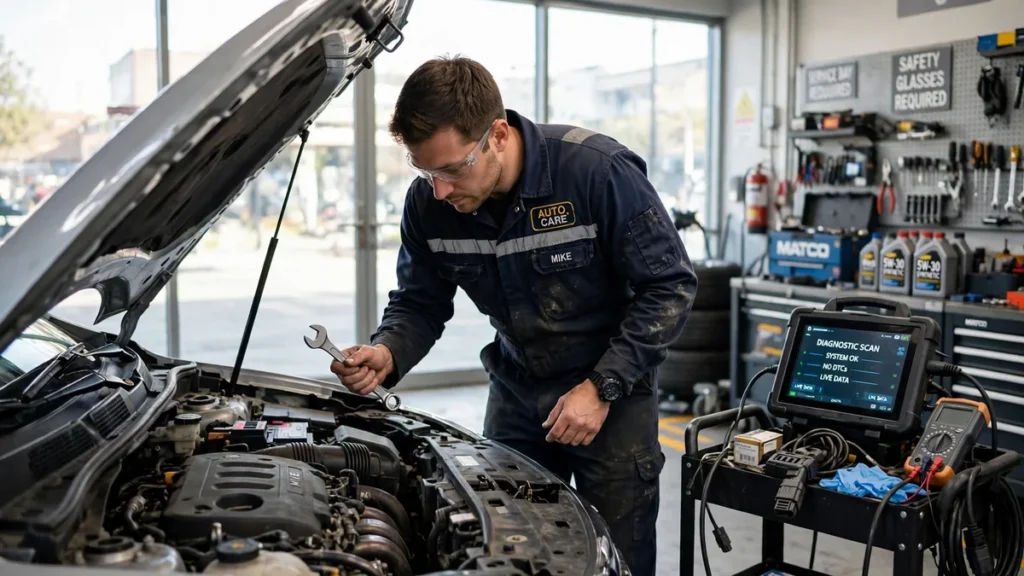
Car detailing has always been a craft built on patience, steady hands, and an eye for the smallest swirl mark. Yet the business side of detailing has changed fast. In 2026, the best AI tools for car detailers are no longer a novelty reserved for large chains. They are practical, affordable helpers that answer the phone at midnight, fill empty slots on a Tuesday, remind customers about their next ceramic coating, and turn a five-star review into the next booking. A one-person mobile detailer and a ten-bay studio can now use the same kind of smart software that big service businesses rely on every day.
The change matters because detailing is a time business. Every hour spent answering the same three questions about pricing, chasing no-shows, or writing social media captions is an hour not spent on a car. AI tools take over the repetitive work so the detailer can stay focused on the paint, the leather, and the customer standing in front of them. The best tools in this guide do not replace skill. They protect it, by keeping the diary full, the customer informed, and the reputation growing while the work itself stays human.
This guide compares the strongest AI tools for car detailers in 2026, from booking and quoting software built for the detailing trade to AI receptionists, review platforms, and marketing assistants. Each tool is judged on the same points: how well it fits a detailing workflow, how much time it genuinely saves, how easy it is to set up, and what it costs for a small shop. Whether you run a mobile rig or a fixed studio, you will find a combination here that fits your size and your budget.
Key takeaways
- Booking and quoting software built for detailers saves the most time, because it removes the back-and-forth messages that fill a detailer’s day.
- An AI receptionist or review tool pays for itself quickly when it turns missed calls and happy customers into confirmed bookings.
- The best setup is a small stack, not one giant platform: one booking tool, one review tool, and one marketing assistant cover almost everything.
- Free tiers and trials are generous in 2026, so test a tool on real customers for two weeks before paying for it.
- AI should handle scheduling, reminders, and first replies, while pricing decisions, paint correction, and customer relationships stay with the detailer.
Best AI Tools for Car Detailers at a Glance
| Tool | Best for | Standout AI feature | Starting price |
|---|---|---|---|
| OrbisX | Detailing studios | Smart scheduling and package upsells | From $99 per month |
| Urable | Mobile detailers | Automated booking and route planning | From $49 per month |
| Square Appointments | Small shops on a budget | AI-assisted booking and payments | Free plan available |
| Podium | Missed calls and reviews | AI receptionist that answers and books | From $249 per month |
| Birdeye | Reputation and reviews | AI review responses and summaries | From $299 per month |
| NiceJob | Review generation | Automated review requests and replies | From $75 per month |
| ChatGPT | Quotes, captions, and emails | Drafting and customer message help | Free plan available |
| Canva Magic Studio | Marketing visuals | AI design for before-and-after posts | Free plan available |
| ManyChat | Social media leads | AI chatbot for Instagram and Facebook | Free plan available |
| Loomly | Social media planning | AI post ideas and scheduling | From $42 per month |
What AI Tools Actually Do for a Detailing Business
A detailing business runs on three things: bookings, trust, and repeat customers. AI tools help with all three, but they help in different ways, and understanding the difference keeps you from buying software you do not need. Booking tools handle the diary. They let a customer choose a package, pick a time, pay a deposit, and get a confirmation without a single phone call. For a detailer who is mid-polish with both hands busy, that is the difference between a booked week and a missed customer who simply moved on to the next listing.
Communication tools handle the conversations around the booking. An AI receptionist answers when you cannot, takes the details of the car and the service wanted, and books the slot or promises a callback with the notes already written down. Review tools ask happy customers for feedback at the right moment and draft replies that sound like you wrote them. None of this replaces talking to customers. It makes sure the small, routine conversations happen on time, every time, even on your busiest day.
How We Compared the Tools
Every tool in this guide was judged against the real working day of a car detailer. The first test was fit: does the tool understand services like paint correction, ceramic coating, interior detailing, and engine bay cleaning, or does it force you to bend your packages into generic appointment slots? Tools built for the detailing trade scored higher here, because package-based pricing and vehicle size are central to how a detailer quotes.
The second test was time saved. A tool only earns its place if it removes a recurring task from the detailer’s day. Automatic reminders that cut no-shows, instant quotes that stop the message tennis, and review requests that go out without being remembered all count. Features that look clever in a demo but need daily babysitting do not. The third test was ease of use. A detailing team needs software that a new hire can learn in an afternoon, not a system that needs a manual and a training day.
1. OrbisX: The All-in-One Platform for Detailing Studios
OrbisX is built specifically for car detailing businesses, and it shows in the details. Instead of generic appointment slots, you build service packages by vehicle size, add options like pet hair removal or engine bay cleaning, and let customers book the exact service their car needs. The AI side of the platform works quietly in the background: it suggests the right package based on the vehicle and the customer’s history, spots gaps in the diary and offers them to waiting customers, and nudges clients toward the next logical service, such as a maintenance wash six weeks after a ceramic coating.
For a studio with several bays and a small team, OrbisX earns its keep through scheduling. The system assigns jobs to detailers, tracks each car’s progress from check-in to handover, and sends the customer updates without anyone having to remember. The built-in point of sale and invoicing mean the whole job, from first click to final payment, lives in one place. That matters when a customer asks what was done to their car six months ago, because the answer is two clicks away instead of a search through notebooks and messages.
2. Urable: Booking Software Built for Mobile Detailers
Urable is designed around the way mobile detailers actually work: driving between jobs, working from a van, and booking customers who want the service at their home or office. Customers choose their vehicle, pick a package, and select a time slot, while the system handles deposits, directions, and reminders. The AI features focus on the diary itself, suggesting the best order for the day’s jobs, flagging travel time between addresses, and filling cancellations from a waiting list.
What sets Urable apart is how little admin it leaves behind. After each job, the detailer can send a branded invoice, request a review, and offer the next booking in a few taps. The customer keeps a record of what was done, which makes it easy to sell a maintenance plan instead of a one-off clean. For a mobile detailer, that repeat business is the whole game, and Urable is built to win it.
Who should choose Urable
Choose Urable if you detail cars at the customer’s location, juggle driving and detailing in the same day, and want bookings, routes, and payments handled together. It is the natural first platform for a growing mobile detailing business in 2026.
3. Square Appointments: The Budget-Friendly Starting Point
Square Appointments is not built for detailers, but it is the easiest way for a small shop to start taking online bookings with AI help and no monthly fee on the free plan. Customers book from a link on your website or social media, pay a deposit by card, and get automatic reminders. Square’s AI features assist with the routine work, such as suggesting appointment times, drafting reminder messages, and summarising the week’s bookings.
The real strength of Square is the payment side. Card payments, deposits, and no-show fees are handled in the same system as the booking, which cuts down on awkward money conversations and protects the diary from empty slots. For a new detailer who is still building a customer base, that combination of free booking and built-in payments is hard to beat. It also connects with Square’s other tools, so a shop can add a simple online store for gift cards or detailing products later.
The limits show up as the business grows. Square does not understand detailing packages the way a trade-specific platform does, so vehicle-size pricing and add-ons need workarounds. Reporting is basic, and there is no built-in review engine. Even so, as a starting point it is excellent, and many detailers keep Square for payments long after they move their bookings to a specialist platform. Keeping the cost of a wash down matters to customers too, and our guide to how to save money on a car wash in 2026 explains the habits that keep a car looking its best between professional details.
4. Podium: The AI Receptionist That Never Misses a Call
Podium’s AI receptionist is the single most valuable tool in this guide for a busy detailing shop, because missed calls are missed money. When a detailer is polishing a bonnet, the phone keeps ringing, and every unanswered call is a customer who will try the next detailer on the list. Podium answers those calls with a natural-sounding AI voice, takes the customer’s details, answers common questions about services and prices, and books the appointment or sends a clear summary for a callback.
Beyond the phone, Podium brings text messaging, review requests, and payments into one inbox. A customer can text a photo of their car, get a rough quote, confirm a slot, and pay a deposit without ever speaking to a person, yet the whole conversation is visible to the team. The AI drafts replies in the shop’s tone, so messages go out fast and sound human. For a studio that gets most of its work from Google and local search, Podium’s review tools also help turn finished jobs into fresh five-star reviews at the moment the customer is happiest.
Podium is the most expensive tool on this list, and its price puts it out of reach for a brand-new solo operator. But for a studio losing even two or three bookings a week to missed calls, the maths is simple: one recovered ceramic coating job can pay for the month. Test it with a trial, count the bookings it saves, and let the numbers decide.
5. Birdeye: AI-Powered Reputation and Reviews
Birdeye is built around a simple truth for local service businesses: the detailer with the most recent five-star reviews wins the next customer. The platform uses AI to ask for reviews at the right moment, usually by text just after handover, and to draft thoughtful replies to every review, including the difficult ones. Its AI also summarises what customers are saying across Google, Facebook, and other sites, so a shop owner can see in one place whether customers praise the interior work, the punctuality, or the ceramic coating results.
For a detailing business, Birdeye’s strength is consistency. Reviews do not depend on anyone remembering to ask, and replies do not depend on finding time at the end of a long day. The platform also helps with local search visibility, because fresh reviews and complete business listings push a shop higher in the map results where most detailing customers start their search. The AI survey tools can even ask customers about specific services, giving the owner real feedback on which packages are loved and which need work.
6. NiceJob: Simple, Automatic Review Generation
NiceJob does one job and does it well: it turns finished detailing jobs into Google reviews without anyone having to ask in person. After a job is marked complete, NiceJob sends the customer a friendly text or email inviting them to leave a review, and its AI helps draft the shop’s reply. The system also creates simple shareable pages that showcase the best reviews, which can be linked from a website or a social media profile.
The appeal of NiceJob is its price and simplicity. It costs far less than the big reputation platforms, it connects with common booking and payment tools, and it takes minutes to set up. For a small detailing business, that is the right trade-off: you get the review engine without the enterprise dashboard you will never open. The AI reply drafts are short and natural, and they can be edited before sending, so nothing goes out in a tone the owner would not use.
Who should choose NiceJob
Choose NiceJob if you are a small or mobile detailing business that wants more Google reviews without a big monthly bill. It is the simplest way to make review requests automatic and reliable.
7. ChatGPT: The Everyday AI Assistant for Quotes and Content
ChatGPT is the most flexible tool on this list, because it is not detailing software at all. It is a general AI assistant that a detailer can use for almost every writing and planning task in the business. Paste in a customer’s message and a photo description, and it drafts a polite quote. Describe the day’s jobs, and it writes the social media caption. Feed it a list of services and prices, and it produces a clear price list, a set of frequently asked questions, or a friendly email explaining how to care for a fresh ceramic coating.
The practical value is speed. A detailer who used to spend an hour on Sunday writing the week’s posts can now do it in fifteen minutes, and the replies to common customer questions can be drafted, checked, and sent in moments. ChatGPT can also help with the business side: comparing package prices, planning a quiet-week promotion, or writing a polite message to a customer who cancelled late. The free plan covers most of this, while the paid plan adds faster responses, image understanding, and the ability to keep the shop’s price list and tone saved for every conversation.
The risk with ChatGPT is the same as its strength: it will confidently write anything, including a wrong price or a claim about a product it does not know. Every output needs a quick human check before it goes to a customer. Used that way, as a fast first draft rather than a final answer, it is the cheapest productivity boost a detailing business can buy. Similar AI assistants are reshaping other trades too, and the lessons carry across, as our look at the best AI tools for landscapers shows for outdoor service businesses with the same booking and customer-care challenges.
8. Canva Magic Studio: Before-and-After Marketing in Minutes
Detailing is a visual trade, and Canva Magic Studio turns that into marketing without a design budget. The AI tools inside Canva can remove backgrounds, tidy up a photo, generate a clean caption, and lay out a before-and-after post in the shop’s colours in a few minutes. A detailer can photograph a car at handover, build a post before the customer drives away, and have it live on Instagram the same afternoon.
Magic Studio also helps with the less glamorous marketing a shop needs: price lists, service menus, loyalty cards, and seasonal promotion graphics. The AI suggests layouts, writes headline options, and keeps the branding consistent, so the shop looks professional even if nobody on the team has design training. Templates made for car care and local services mean the starting point is already close to what a detailing business needs.
Who should choose Canva Magic Studio
Choose Canva Magic Studio if your before-and-after photos deserve better than a rushed phone post, and you want professional-looking marketing without hiring a designer. It is ideal for detailers who already post on social media and want to do it better in less time.
9. ManyChat: An AI Chatbot for Instagram and Facebook Leads
ManyChat is an AI chatbot that lives on Instagram and Facebook, where most detailing customers first discover a shop. When someone comments on a post or sends a direct message asking about prices, ManyChat replies instantly, asks about the vehicle and the service wanted, and collects the details for a quote or a booking link. It can also run simple promotions, such as offering a discount on an interior detail to everyone who comments on a post.
For a detailing business, the value is in the speed of the first reply. Social media messages often arrive in the evening, when the detailer is off work, and a reply that comes the next morning is often too late. ManyChat answers in seconds, keeps the conversation going, and hands over to a human when the customer is ready to book. The AI can be trained on the shop’s real prices and packages, so its answers are accurate rather than generic.
10. Loomly: AI Help for Planning Social Media
Loomly is a social media planning tool with AI built in, designed for small businesses that want to post regularly without thinking about it every day. The AI suggests post ideas based on the shop’s services, drafts captions, recommends the best time to post, and keeps a calendar so the whole month’s content can be planned in one sitting. Before-and-after photos, seasonal offers, and tips for keeping a car clean can all be scheduled in advance.
The difference between Loomly and a simple scheduler is the planning help. The AI notices when the shop has not posted about interior detailing for a while, suggests a post about pet hair removal before the summer holidays, and flags the best-performing posts so the owner can repeat what works. For a detailer who knows social media matters but never finds the time, that gentle structure is the whole point.
Loomly is not a chatbot and will not answer customer messages, so it works best alongside ManyChat or a similar tool. It is also a paid tool with no free plan, though the starting price is modest. For a detailing business that wants a steady, professional social media presence without a daily effort, Loomly is a solid final piece of the stack. Tradespeople in every field face the same challenge of turning good work into steady enquiries, and the best AI tools for electricians follow the same pattern of booking, reviews, and marketing working together.
Who should choose Loomly
Choose Loomly if you want your social media planned a month ahead, with AI ideas and captions that keep the shop visible. It suits detailers who post regularly and want that work to take an hour a month instead of an hour a day.
Choosing the Right AI Stack for Your Detailing Business
The best AI setup for a car detailer is a small stack of tools that work together, not a single platform that tries to do everything. A booking tool keeps the diary full, a review tool keeps the reputation growing, and a marketing assistant keeps the shop visible. Adding a fourth tool, such as an AI receptionist, makes sense once the phone is ringing more often than you can answer it. The mistake is buying everything at once and using none of it properly. Start with the tool that fixes your biggest daily frustration, use it for a month, and add the next one only when the first is part of your routine.
Budget matters, and the good news is that a strong starter stack can cost very little. Square Appointments and ChatGPT both have free plans, NiceJob starts at a modest monthly price, and Canva’s free plan covers basic marketing. That combination gives a new detailer online bookings, automatic review requests, simple marketing, and an AI writing assistant for less than the cost of a single ceramic coating job each month. As the diary fills, the upgrade path is clear: move bookings to a detailing-specific platform, add an AI receptionist, and let the review engine scale with the volume of jobs.
Your AI Setup Checklist
- List the three tasks that eat most of your non-detailing time, such as answering messages, chasing reviews, or posting on social media.
- Pick one booking tool that fits your work style, whether mobile, studio, or solo, and test it with a free trial on real customers.
- Add one review tool so every finished job gets a review request automatically, without anyone having to remember.
- Set up one marketing assistant for captions and before-and-after posts, and keep your photos consistent and honest.
- Train any chatbot or AI receptionist on your real prices and packages before it talks to a customer.
- Review the stack after thirty days, keep the tools that saved real time, and cancel the ones nobody opened.
Frequently Asked Questions
Do AI tools replace the need for a receptionist in a detailing shop?
No, they handle the routine parts of the job, such as answering common questions, booking standard services, and sending reminders. A human is still needed for unusual requests, unhappy customers, and the personal touch that keeps clients coming back. The best setup lets AI cover the evenings and the busy hours, while the team handles the conversations that need judgement and care.
How much should a small detailing business spend on AI tools?
A new solo detailer can start for free with tools like Square Appointments and ChatGPT, then add a review tool for around seventy-five dollars a month. A busy studio may spend two to four hundred dollars a month on a fuller stack, which is usually covered by one or two extra bookings. The right amount is whatever the tools return in saved time and new bookings, so track both for the first month.
Can AI tools quote a detailing job accurately?
AI can draft a quote from the vehicle details and the service list, and it can be very accurate when it is trained on your real prices and packages. It cannot see swirl marks, pet hair, or paint condition from a message, so final prices should always allow for an inspection. The best approach is to let AI give a clear price range and a booking link, then confirm the exact price when the car arrives.
Will customers mind talking to an AI receptionist?
Most customers care about getting a fast, correct answer, not about whether a human or an AI gave it. An AI receptionist that answers in seconds, books the right service, and hands over to a human when asked is usually preferred to a phone that rings unanswered. Problems only arise when the AI gives wrong prices or cannot hand over, so good training and a clear handover matter.
Which AI tool should a mobile detailer choose first?
A mobile detailer should start with a booking tool built for mobile work, such as Urable, because it handles bookings, routes, deposits, and reminders together. Add a review tool next, since mobile work depends heavily on local reviews and word of mouth. A simple AI writing assistant can cover marketing until the diary is full enough to justify more.
Do these AI tools work with the software I already use?
Most of the tools in this guide connect with common payment, calendar, and booking systems, and many offer simple integrations or exports for the rest. Before paying, check that the tool connects with your payment provider and your calendar, and that you can export your customer list. That keeps your business portable if you ever decide to switch tools.
The Bottom Line
The best AI tools for car detailers in 2026 are the ones that give a detailer their time back. A booking platform built for the trade, a review tool that works on its own, and a marketing assistant that turns great work into visible posts cover almost everything a small detailing business needs. Add an AI receptionist when the phone becomes the bottleneck, and keep the stack small enough that every tool is actually used.
Start with the frustration that costs you the most time, test one tool on real customers for a month, and let the results decide what comes next. The cars will still need a skilled pair of hands, and no software will ever replace that. But the right AI tools make sure those hands spend their hours on paint and leather instead of paperwork, and that is a difference every customer will see in the shine.

Keep what speaks to you.
Leave room for your own perspective.