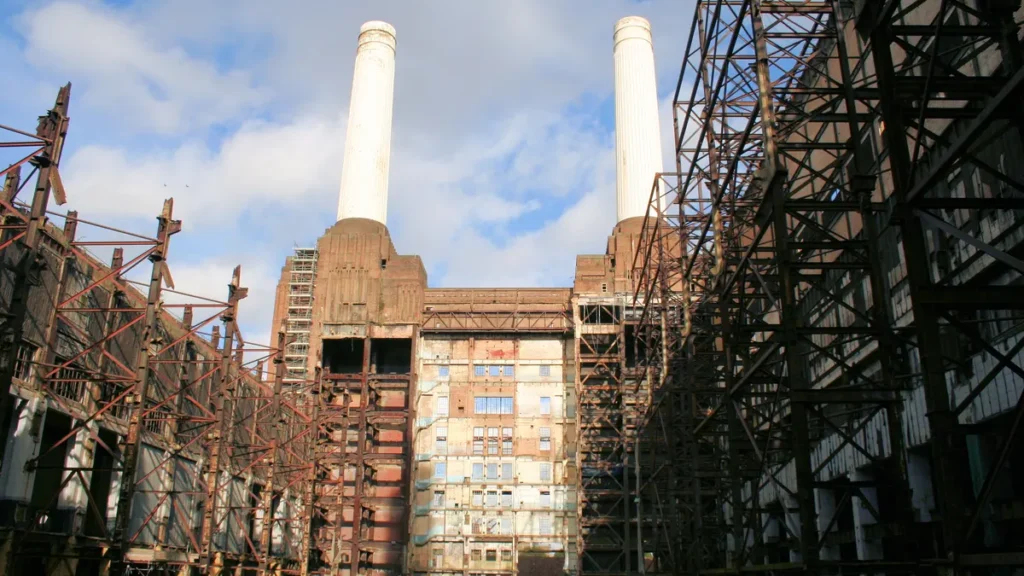
A trout farm is a food-production business that happens to take place in water. Before a single fish is sold for the table, somebody has to find a site with clean, cold, reliable water, build a set of raceways that keep that water moving at the right speed, stock them with fry at a density the oxygen supply can support, feed the fish every day without wasting a pellet, grade them as they grow so the big fish do not bully the small ones, and harvest them on a schedule that matches the orders coming in. Get any one of those steps wrong and the farm loses fish to disease, wastes feed, or misses the harvest window that pays the bills. That is why a trout farm installation startup lives or dies on its process, not just on how good its raceways look in a photograph.
Artificial intelligence will not pour a concrete raceway or net a trout out of the water. What it can do is take the work around the build and make it fast, consistent and cheap: watching the fish through cameras to judge how much they are eating, estimating biomass without handling a single fish, warning the farmer when oxygen or temperature starts to drift, keeping a record of every batch from stocking to harvest, and answering the phone while the founder is standing knee-deep in a raceway. This guide compares the nine AI tools that matter most for a trout farm installation startup in 2026, from raceway design and water monitoring to feeding, grading, harvest planning, fish health and customer records.
Every tool below is judged on what a new founder actually needs: a low starting cost where possible, no long contract, useful from the first week, and able to grow with the business from a single set of raceways to a small farm with several ponds and a packing shed. Pick the water and feeding tools first, then add the management and health tools, and only buy the rest once the first harvest is sold. The build comes first, the software follows it, and the fish always come before the dashboard.
Key takeaways
- Start with three tools only: AI water monitoring, AI feeding control, and AI farm management. Everything else can wait until the first harvest is sold.
- Raceway design, water flow and oxygen are where trout farm installs go wrong, so use AI monitoring and written water records to protect yourself on every job.
- Feeding is the biggest running cost on a trout farm, so tools that measure appetite and biomass pay for themselves faster than any other purchase.
- Grade early and grade often, because uneven fish sizes mean uneven feeding, more stress, and a harvest that arrives in dribs and drabs instead of one clean lot.
- Keep the human in charge of fish welfare, water quality, food safety and customer relationships. AI should speed those decisions up, never make them alone.
The best AI tools for trout farm installation startups at a glance
Use this table to see the whole startup stack before you read the detail. Every row earns its place by winning a job, preventing an expensive mistake, or saving hours of farm work, and the best new installation startups usually pick one strong tool from each row rather than buying everything at once.
| Tool | Best for | What it does best | Starting point |
|---|---|---|---|
| AquaManager | Farm management and records | Stocking, feeding and harvest records for every batch | Licensed per farm, quote on application |
| Aquabyte | Biomass and feeding cameras | Camera estimates of fish size and weight without handling | Hardware plus subscription, quote on application |
| Umitron | Feeding optimisation | AI feeding that matches the ration to fish appetite | Subscription, quote on application |
| Innovasea | Water monitoring | Real-time oxygen, temperature and water-quality sensing | Sensor packages, quote on application |
| ReelData | Biomass analytics | AI analysis of fish growth and feeding behaviour | Subscription, quote on application |
| Observe Technologies | Feeding intelligence | AI that reads feeding behaviour and cuts waste | Subscription, quote on application |
| CageEye | Acoustic biomass sensing | Sound-based sensing of fish distribution and feeding | Hardware plus subscription, quote on application |
| Manolin | Fish health and disease risk | Health data and disease-risk signals across farms | Subscription, quote on application |
| XpertSea | Growth prediction and planning | Data platform that forecasts growth and harvest dates | Subscription, quote on application |
The trout farm build, in order
A trout farm installation is a sequence, and the order matters. The site comes first: a reliable supply of cold, clean water, usually from a spring, a borehole or a clean river, with the right to abstract it and the fall to move it through the farm by gravity. A founder who gets the water wrong spends the life of the farm fighting it, so the first job is measuring flow, temperature and oxygen across the seasons, not pouring concrete. AI monitoring helps here, but it cannot invent water that is not there.
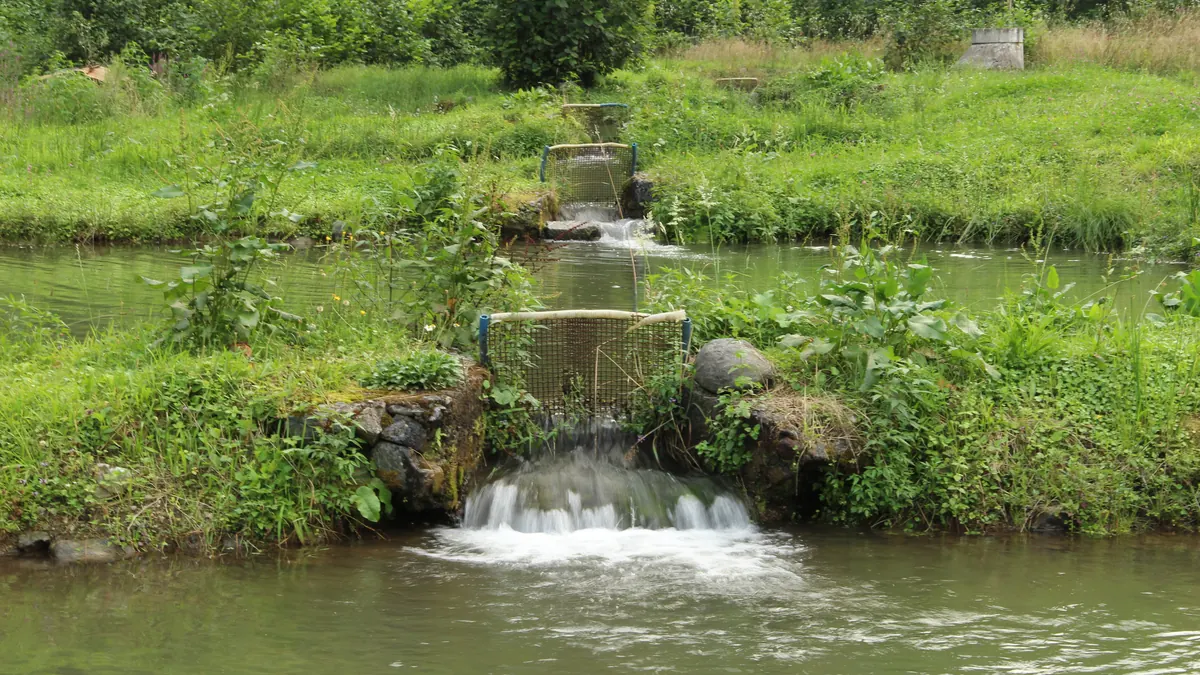
Next come the raceways themselves: long, narrow concrete or lined channels where water flows in one end and out the other, carrying oxygen in and waste away. Raceways are usually built in series, so water leaving one raceway enters the next, and each one holds fish of a different size. The build has to be level, smooth and easy to drain, with screens that keep fish in and debris out, and with access for feeding, grading and harvest. A raceway that is hard to drain is a raceway that is hard to clean, and a dirty raceway is where disease starts.
Stocking follows the build. Fry arrive from a hatchery and go into the smallest raceways, then move downstream as they grow, a process the trade calls grading and moving on. Feeding is daily work: trout eat a measured ration of pellets, and the ration changes with water temperature, fish size and appetite. Overfeed and the pellets rot on the raceway floor, fouling the water; underfeed and growth stalls. Harvest is the end of the line: fish are crowded, netted, chilled and packed, usually to order, and the raceway is cleaned and rested before the next batch. Every one of those steps leaves a record, and the startups that keep good records are the ones that get better with every batch.
That record-keeping is where the AI tools in this guide earn their keep. A trout farm is not a garden pond and it is not a decorative tank. The fish are not there to look pretty; they are a crop, grown for the table, and the farm is judged on feed conversion, survival, growth rate and harvest weight. The tools below are built for that production job, and the comparisons in this guide keep the farm’s economics in view at every step.
The nine AI tools, in detail
1. AquaManager for farm management and records
AquaManager is the farm’s memory. It is farm management software built for fish farming, and it holds the record of every batch on the farm: when the fry arrived, how many went into each raceway, what they were fed and when, how fast they grew, what treatments they received, and when they were harvested. For a new trout farm installation startup, that record is the difference between guessing and knowing. A founder who can show a buyer the full history of a batch, from stocking to harvest, sells with confidence, and a founder who can look back at the last batch and see exactly where feed was wasted or growth stalled can fix it next time.
The software earns its place first because it is useful from the first week. Stocking records, feeding logs and mortality notes are all entered in one place, and the dashboard shows the state of every raceway at a glance. It also helps with the paperwork that food production brings: traceability, treatment records and harvest lots are the kind of detail a buyer or an inspector asks for, and having them ready beats scrambling through notebooks. The trade-off is that it is licensed software priced per farm, so ask for a quote and start with the modules you need, which for a new farm are stocking, feeding and harvest records. Add the rest as the farm grows.
2. Aquabyte for biomass and feeding cameras
Aquabyte puts cameras in the water and turns what they see into numbers. Its systems watch the fish, estimate their size and weight, and track how they respond to feed, all without handling a single fish. Handling stresses trout, and stressed trout stop eating and get sick, so a tool that measures growth without a net is worth real money. For a startup, the camera also gives a daily picture of how the stock is doing, which is far better than a monthly sample that may or may not represent the whole raceway.
The biomass estimate is the headline feature, because harvest planning depends on it. A founder who knows the average weight in a raceway, and how fast it is rising, can promise a harvest date and a weight to a buyer and hit it. The feeding read is nearly as valuable: cameras show whether the fish are feeding hard or drifting away from the pellets, which is the earliest sign that the ration is wrong or the water has turned. The cost is hardware plus a subscription, so it is a bigger commitment than a software-only tool, and it makes most sense once the farm has fish in the water and a harvest to plan. Start with one camera on the biggest raceway and expand from there.
3. Umitron for feeding optimisation
Umitron builds AI feeding systems that match the ration to the fishes’ appetite on the day. Its technology watches how the fish behave at feeding time and adjusts the feed so the farm gives what the fish will actually eat, no more and no less. Feed is the biggest running cost on a trout farm, often more than half of the cost of growing a fish, so even a small improvement in feed conversion goes straight to the bottom line. A farm that wastes a tenth of its feed is throwing away a tenth of its biggest bill.
What makes Umitron stand out for a new startup is that it attacks the cost that matters most. A founder installing a trout farm can pair it with a simple feeder and let the AI decide the timing and the amount, rather than feeding by the clock and hoping. The system also builds a record of appetite against water temperature and fish size, which becomes a planning tool in its own right: the founder learns what the fish eat on a cold morning versus a warm afternoon, and stops feeding on autopilot. Pricing is by subscription and quote, so ask for a figure based on the number of raceways, and start with the raceways holding the largest fish, where the feed bill is heaviest.
4. Innovasea for water monitoring
Innovasea makes the sensing and monitoring equipment that watches the water around the clock. Its systems measure oxygen, temperature and other water-quality readings in real time and raise the alarm when a reading drifts out of range. On a trout farm, oxygen is the number that kills fish fastest: a warm night, a blocked screen or a pump failure can drop oxygen in a raceway within an hour, and a farm that finds out at dawn finds dead fish. A sensor that calls the founder’s phone at midnight is the cheapest insurance on the farm.
For an installation startup, Innovasea matters twice over. First, the sensors protect the stock once the farm is running. Second, the data they collect during the first season tells the founder whether the site and the raceway design are actually delivering the water the fish need, which is the evidence that the build was right. The equipment is sold as sensor packages, priced on application, so plan for at least one sensor per raceway group and a spare. The habit to build is checking the readings every morning and acting on a trend before it becomes an emergency, because a slow fall in oxygen over three days is a warning, not a mystery.
5. ReelData for biomass analytics
ReelData turns camera and sensor data into growth and feeding analytics. Its AI reads the behaviour of the fish, estimates biomass and growth rates, and shows the founder where feeding is working and where it is not. Where a camera tool gives the raw picture, ReelData gives the analysis: which raceway is growing fastest, which one is falling behind, and whether the feed going in is turning into fish or into waste. For a startup that is still learning its water, that kind of comparison across raceways is the fastest way to learn.
The practical value is in the decisions it supports. A founder who can see that one raceway is converting feed badly can check its flow, its oxygen and its stocking density before the problem costs a month of growth. A founder who can see growth slowing across the whole farm can check the water temperature and the feed before blaming the fish. ReelData is a subscription product, so the cost is predictable, and it makes most sense once there are fish in more than one raceway to compare. Pair it with a camera system and it becomes the farm’s growth dashboard.
6. Observe Technologies for feeding intelligence
Observe Technologies builds AI that reads feeding behaviour and turns it into feeding decisions. Its systems watch how trout respond when feed hits the water, measure the appetite of the shoal, and tell the feeder when to stop, which is the moment most farms get wrong. The classic mistake on a trout farm is feeding on a schedule rather than on appetite: the pellets go in because it is ten o’clock, not because the fish are hungry, and the uneaten half sinks to the raceway floor. Observe Technologies is built to end that habit.
For a new installation startup, the value is twofold. The first is the feed saving, which shows up in the first month. The second is the welfare signal: fish that stop feeding are usually the first sign of a problem, whether it is low oxygen, a temperature swing or the start of disease, and a system that notices the change in appetite notices the problem a day earlier than a human walking the raceways. It is a subscription product, so the monthly cost is easy to budget, and it pairs naturally with a feeding system already on the farm. Start with the raceway holding the most valuable stock and let the results argue for the rest.
7. CageEye for acoustic biomass sensing
CageEye uses sound to sense what is happening in the water. Its acoustic systems track how fish are distributed in the water column and how they respond to feed, giving the farmer a picture of the stock without a camera and without handling. Sound works where light does not, which matters on a trout farm where the water is not always clear and the fish are not always in view. A founder who can see the fish spread through the raceway, rather than guessing from the surface, feeds with far more confidence.
The acoustic read is most useful for feeding and stocking decisions. If the fish are holding deep and ignoring the surface, the ration should wait; if they are spread through the whole water column and rising to feed, the ration can go in. Over a season, the distribution data also shows whether a raceway is overstocked, because crowded fish behave differently from comfortable ones. CageEye is hardware plus a subscription, so it is a capital purchase, and it suits a farm that is scaling up rather than a farm with a single raceway. Buy it when the farm has enough fish that feeding by eye no longer works.
8. Manolin for fish health and disease risk
Manolin is a fish health platform that gathers health data from farms and turns it into disease-risk signals. It tracks treatments, mortality and health events, and it helps a farmer see a risk coming before it becomes an outbreak. Disease is the fear that keeps trout farmers awake, because a sick raceway can lose a whole batch in days, and the cost of a late response is measured in dead fish and wasted feed. A tool that flags a rising risk early is worth far more than the subscription it costs.
For a startup, Manolin also brings a second benefit: the record. A farm that keeps clean health records, with every treatment dated and every mortality logged, can show a buyer or an inspector that its fish were well kept, and it can look back at its own history and see which batches had trouble and why. The platform works best when the founder feeds it honest data every day, because a risk model is only as good as the records behind it. It is a subscription product, so start it from the first stocking and treat the daily health note as part of the feeding round, not as extra paperwork.
9. XpertSea for growth prediction and planning
XpertSea is a data platform that forecasts growth and harvest dates from the farm’s own records. It takes stocking numbers, feeding data, water temperature and growth samples, and turns them into a prediction of when each batch will reach harvest weight. That prediction is what lets a founder promise a buyer a date and a weight, plan the grading schedule, and order feed in the right quantities. A farm without a forecast is always reacting; a farm with one can plan.
The tool earns its place for a startup because planning is where young farms lose money. Feed ordered late costs more, a harvest promised early disappoints a buyer, and a raceway that holds fish past their best weight wastes feed on fish that are barely growing. XpertSea’s forecasts are only as good as the data fed into them, so it pairs best with a farm management record and a biomass tool, and the founder should check the forecast against the real weights every week. It is a subscription product, so the cost is steady, and it is worth adding once the first batch is in the water and the farm has a harvest to plan for.
How to build your stack
Buy in the order the farm needs them, not the order that looks impressive. Water monitoring and farm records come first, because they protect the fish and prove the build. Feeding tools come next, because feed is the biggest bill and the fastest payback. Biomass and health tools follow once there are fish to measure and a harvest to plan. A founder who buys all nine tools on day one spends the first month learning software instead of learning the farm.
Cost is the other discipline. Most of the tools in this guide are priced on application, because the price depends on the number of raceways, the number of fish and the hardware involved. That is normal for aquaculture, but it means a founder should get written quotes for the first three tools, compare them against the farm’s first-year budget, and only then commit. A tool that costs more than the feed it saves is a hobby, not an investment. And remember that the farm’s economics are different from a shop’s: the closest comparison on this site is the guide to the best AI tools for fish market startups, which shows how the same fish becomes a retail product once it leaves the farm, while a farm’s own job is growing it well and cheaply.
Integration matters too. The best stack is one where the feeding tool, the biomass tool and the farm record all agree, because a founder who has to copy numbers between three systems will stop copying them. Ask each supplier what it exports and what it imports before buying, and prefer tools that talk to each other. The farm’s data is an asset in its own right: a year of clean feeding, growth and water records is what lets the farm borrow money, win a contract, or sell the business one day.

Trout farm installation checklist
- Confirm the water first: measure flow, temperature and oxygen across the seasons, and secure the abstraction rights before pouring any concrete.
- Build the raceways level, smooth and easy to drain, with screens that keep fish in, debris out, and a cleaning routine the farm can actually keep up.
- Install water monitoring on every raceway group and set alarms for oxygen and temperature, so a problem calls the founder before it kills fish.
- Stock by size and grade early, moving fish downstream as they grow so the big fish do not out-compete the small ones for feed.
- Feed by appetite, not by the clock, and record every ration, so the farm learns its real feed conversion rate batch by batch.
- Keep the record from day one: stocking, feeding, treatments and harvest lots in one place, ready for a buyer or an inspector at any time.
Frequently asked questions
How much does it cost to start a trout farm?
It depends on the site, the number of raceways and the water supply, but the build is the biggest cost and the tools in this guide are a small part of it. Concrete raceways, water intake, screens, drainage and a packing shed come first, and the AI tools should be budgeted as a share of the first year’s running costs, not as part of the build. Get written quotes for water monitoring, farm management and one feeding tool before committing, and keep a reserve for the first season, because the first batch always teaches the farm something expensive.
Is a trout farm the same as a pond?
No. A garden pond is an ornamental water feature with a small number of decorative fish, a liner, plants and edging, while a trout farm is a food-production farm with raceways, stocking densities, feeding rations, grading and a harvest sold for the table. The two jobs share water and fish, but they do not share a business model, and the tools are different too. The guide to the best AI tools for pond installation startups shows what a pond build looks like, and the difference is the point: a pond is landscaped, a farm is farmed.
Can I keep trout in an aquarium?
Not as a farm. An aquarium is a decorative tank in a room, built around a stand, lighting and a filter, and it holds a handful of fish for display. Trout need cold, flowing, highly oxygenated water and room to grow to table size, which is what raceways provide. The guide to the top AI tools for aquarium installation startups covers the tank trade, and it is a different job from aquaculture: one decorates a room, the other grows food.
How much feed does a trout farm use?
Feed is the biggest running cost, often more than half the cost of growing a fish. The exact amount depends on fish size, water temperature and appetite, and it changes daily, which is why feeding by appetite rather than by the clock matters so much. A farm that records every ration and measures its feed conversion rate, the weight of feed needed to grow a kilogram of fish, can see whether it is improving batch by batch. The feeding tools in this guide exist to make that number better.
When should I grade my trout?
Grade early and grade often, starting when the size spread in a raceway becomes obvious. Trout grow at different rates, and the bigger fish take more than their share of the feed while the smaller ones fall further behind. Grading sorts them into even-sized groups so every fish gets its share, and it also gives the founder a clean count and a weight sample for the growth forecast. A grading session is also the best time to check fish health, because the fish are in hand and any problems are easy to see.
Do I need all nine tools to start?
No. Start with water monitoring, farm management and one feeding tool, and add the rest as the farm grows. The first harvest is the test of the whole business, and a founder who has spent the first season learning the water and the fish will know exactly which tool to buy next. The tools are there to make a good farm better, not to replace the daily work of walking the raceways, watching the fish and keeping the record.
The bottom line
A trout farm installation startup is a food-production business, and the AI tools that matter most are the ones that protect the water, cut the feed bill, measure growth without stressing the fish, and keep a record a buyer can trust. Start with monitoring, records and feeding, add biomass and health tools once the fish are in the water, and let the farm’s own numbers decide what comes next. The raceways are the farm, the fish are the crop, and the software is there to make both of them pay.

Keep what speaks to you.
Leave room for your own perspective.