
A tortoise house installation startup builds heated reptile shelters for gardens, and the job is nothing like putting up a garden shed. A tortoise needs a warm basking spot, ultraviolet light, deep substrate it can dig into, a safe place to hibernate, and an outdoor run that keeps predators out. Get the heating wrong and the tortoise stops eating. Get the fencing wrong and a fox or a badger can end the whole project in one night. The shelter looks simple from the outside, but every part of it has to work together, in all four seasons, for an animal that may live for fifty years or more.
That is why founders are turning to AI tools. A survey tool can map sun, shade, drainage and slope from a phone, a heat tool can model the temperature gradient across the shelter floor, and a lamp tool can check whether the ultraviolet light reaches the basking spot at the right strength. The tools do not replace reptile knowledge, but they turn it into measurements a customer can see, a quote can be built on, and a handover pack can prove.
This guide compares nine tools that cover the whole job, from the first site visit to the final invoice. Each one is judged on what it does for a tortoise house specifically: heat, basking, ultraviolet light, substrate, hibernation, predator-proofing and the outdoor run. You will also find a comparison table, a realistic cost guide, a pre-installation checklist, and answers to the questions new founders ask most.
Key takeaways
- A tortoise house is a heated reptile shelter, not a pet box: heat, basking light, ultraviolet light, substrate and hibernation all have to be designed together.
- Start with a site survey, a basking plan and a UV check, because sun, shade and lamp distance decide whether the shelter works at all.
- Hibernation and substrate are where most new installers fail, so design the hibernation box and the digging depth before you order materials.
- Quote from measurements, not from memory, and show the customer the heat map, the lamp plan and the fencing spec in the quote itself.
- Buy three tools first — survey, basking and quoting — and add the rest once you have five or six installs behind you.

The nine tools at a glance
| Tool | Best for | What it handles |
|---|---|---|
| TortoiseSite AI | Site surveys | Sun, shade, drainage, slope and predator risk on the plot |
| BaskZone AI | Basking design | Lamp placement and the heat gradient across the shelter floor |
| UVTrack AI | Ultraviolet light | UVB coverage, lamp distance and replacement timing |
| HeatGuard AI | Heating control | Thermostats, ceramic heaters and night temperatures |
| HiberBox AI | Hibernation | Hibernation box size, insulation and temperature logging |
| SubstrateMix AI | Substrate | Substrate mix, digging depth and humidity control |
| RunFence AI | Outdoor runs | Run fencing, buried mesh and predator-proofing |
| TortoiseQuote AI | Quoting | Measured estimates, materials and job costing |
| TortoiseLedger AI | Bookkeeping | Jobs, invoices, payments and business records |
What makes a tortoise house different from other animal housing
A tortoise house is a climate-controlled shelter for a cold-blooded animal, and that changes every decision. A rabbit hutch mainly needs to be dry, draught-free and safe from foxes. A tortoise house needs all of that plus a controlled temperature gradient, so the tortoise can move between a hot basking spot of around 30 to 35 degrees and a cooler end of around 20 degrees. It needs ultraviolet light for shell and bone health, and it needs substrate deep enough for the tortoise to dig and bury itself. None of the other animal houses in this series carry all five requirements at once, which is why the tools below are built around heat, light and digging rather than bedding and feeding.
The closest parallel is reptile housing indoors. Like terrarium installation startups, a tortoise house startup has to think about lamps, thermostats and humidity, but it has to do it outdoors, in real weather, with a structure that must survive frost, rain and digging. An indoor enclosure sits in a heated room. A garden tortoise house sits in a garden in January, and the heating has to hold the night temperature on its own. Design the insulation and the heater first, and choose the timber and the roof second.
Survey the site and design the heated shelter
1. TortoiseSite AI: the best tool for site surveys and garden placement
TortoiseSite AI turns a garden visit into a measured survey. You walk the plot with a phone, mark the corners of the proposed house and run, and the tool maps sun and shade through the day and through the seasons. It flags the spots that stay damp after rain, the low corner where cold air pools, and the fence line where a neighbour’s tree will shade the basking area by October. That matters because a tortoise house placed in the wrong corner will be cold in the morning, when the tortoise most needs to warm up, and a founder who discovers that in November has to move a finished building.
The survey also scores drainage and ground slope, and it checks predator risk: gaps under fences, overhanging branches a cat could use, and the distance to the nearest compost heap, which attracts rats. The output is a short report with a placement recommendation, a sun chart and a list of groundworks needed, which you can attach to the quote. For a new founder, the biggest gain is confidence on the first visit. You can show the customer why the sunny corner by the wall is better than the flat lawn they had in mind, and you can show your working instead of asking them to trust you.
Use it on every job, even small ones, because the survey takes twenty minutes and prevents the most expensive mistake in this trade: building in the wrong place. Keep the reports. After a year you will have a local map of which gardens drain well, which flood, and which orientations work best.
2. BaskZone AI: the best tool for basking lamp placement and heat gradients
BaskZone AI designs the hot end of the shelter. You enter the house dimensions, the lamp type and wattage, and the height of the fitting, and the tool models the temperature across the floor, showing where the basking spot will sit and how quickly the heat falls away towards the cool end. A tortoise needs that gradient: a hot spot to warm up under the lamp, and a cooler area to retreat to when it has had enough. A house with one even temperature is not a tortoise house, it is an oven, and a house with no clear hot spot leaves the tortoise sluggish and off its food.
The tool also tests changes before you build them. Raise the lamp by ten centimetres and the basking spot cools by a few degrees. Swap a spot bulb for a flood bulb and the warm area widens but the peak temperature drops. Move the lamp closer to the door and the draught from the entrance steals the heat. Seeing those effects on screen is far cheaper than rewiring a finished house, and it gives you numbers to put in the handover pack: basking spot temperature, cool end temperature, and the lamp height that produces them.
For the customer, the heat map is the most persuasive page in the whole job. It shows the shelter was designed, not guessed, and it lets them check the house with a cheap thermometer. Founders who include the printout in every handover get fewer call-backs about tortoises that will not bask.
3. UVTrack AI: the best tool for UVB coverage, lamp distance and replacement timing
UVTrack AI deals with the invisible half of the lighting: ultraviolet B, which a tortoise needs to make vitamin D and grow a healthy shell. The catch is that UVB output falls with distance and fades as the lamp ages, so a lamp that looks bright can be doing nothing useful. UVTrack AI models the UVB level at the basking spot from the lamp type, the distance to the tortoise and the presence of any mesh or glass, which blocks UVB almost completely. It tells you whether the tortoise is actually getting what it needs, rather than whether the lamp is switched on.
The tool also tracks replacement timing, which is where most owners go wrong. A UVB lamp can still shine visibly for a year after its useful UVB output has dropped by half, and a tortoise kept under a dead lamp slowly develops a soft shell and weak bones. UVTrack AI logs the install date, the rated life and the measured output, and it sends a reminder when the lamp is due for replacement, with the right product noted. For a startup, that reminder is also a gentle reason to stay in touch with the customer, and a natural opening for a paid annual service visit.
Hold the heat, the cold and the long winter
4. HeatGuard AI: the best tool for thermostats, heaters and night temperatures
HeatGuard AI manages the heating system as a whole, not just the basking lamp. It sizes the background heater, usually a ceramic heat emitter or a tubular heater, sets the thermostat thresholds, and models the night temperature when the basking lamp is off and the outside temperature drops. That night figure is the one that matters most. A tortoise that spends the night at five degrees in a damp house is at risk, while the same tortoise at ten degrees in a dry, insulated house is fine. HeatGuard AI shows you the difference before the first frost.
The tool also plans for failure, which is the part new founders most often skip. It asks what happens if the thermostat sticks, if the heater burns out on a Friday night, or if the power trips while the owner is away. The answer is a second thermostat as a cut-out, an alarm that messages the owner if the temperature falls, and a heater sized so that one unit can hold the night temperature on its own. Those extras cost little and they are the difference between a scary morning and a dead tortoise, so they belong in every quote as standard, not as an optional extra the customer can decline.
Use the tool to produce a one-page heating schedule for the owner: day temperature, night temperature, and what each heater does. Owners who understand the system check it, and owners who check it catch problems early.
5. HiberBox AI: the best tool for hibernation box design and temperature logging
HiberBox AI designs the hibernation box, the small insulated chamber inside or beside the house where a temperate tortoise spends the winter asleep. The box has to hold a steady temperature, roughly three to seven degrees, for months, without freezing and without warming up during a mild spell. That is a narrow window, and it depends on insulation thickness, box size, the amount of substrate inside, and where the box sits in the garden. HiberBox AI models those factors and tells you how much insulation to use and how deep the box should be buried or banked with soil.
The tool also plans the monitoring. A temperature logger inside the box records the temperature every hour through the winter, and the owner checks it weekly against a safe range, with clear instructions for what to do if the box gets too cold or too warm. HiberBox AI turns those readings into a simple chart the owner can read at a glance, and it flags the two danger moments: the first hard frost in November, and the warm spell in February that can wake a tortoise too early. Waking early is dangerous, because the tortoise burns its fat reserves before there is food outside.
Not every tortoise hibernates, so the tool also helps you say no. If the garden is too exposed, the species does not hibernate, or the tortoise is underweight or unwell, the honest answer is to overwinter it indoors under heat and light. A founder who refuses an unsafe hibernation loses one sale and gains a reputation that brings five more.
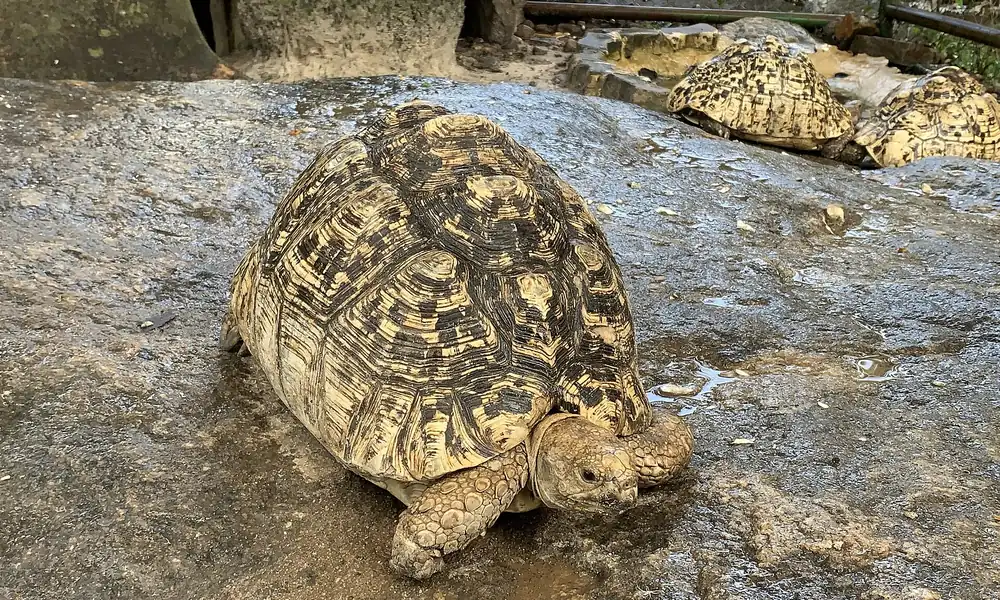
6. SubstrateMix AI: the best tool for substrate mix, digging depth and humidity
SubstrateMix AI designs the floor of the house, which is more important than most founders expect. A tortoise digs, buries itself, and spends hours in contact with the floor, so the substrate has to hold a burrow, hold a little moisture without going mouldy, and never contain anything sharp or dusty. The tool recommends a mix, usually topsoil with a little sand and leaf litter, gives the depth for the species and the size of the tortoise, and warns against the common mistakes: pure sand, which dries out and irritates eyes, wood chips, which can be eaten, and anything with fertiliser or pesticide in it.
Depth is the number that surprises customers. A small Hermann’s tortoise needs at least fifteen centimetres of substrate to dig into properly, and a larger tortoise needs more, which means the house floor has to be built deep enough to hold it, with a retaining board at the door so the substrate does not spill into the run. SubstrateMix AI calculates the volume needed, so you order the right amount instead of guessing, and it gives a topping-up schedule, because substrate compacts and breaks down over the season and needs refreshing.
The outdoor run and the business behind the build
The last three tools cover the outdoor run, where the tortoise spends its days, and the business systems that turn good builds into a living. A run that is not predator-proof is a liability, and a business that cannot quote or invoice properly is a hobby. These tools handle both.
7. RunFence AI: the best tool for outdoor run fencing and predator-proofing
RunFence AI designs the outdoor run and its fencing. A tortoise run needs walls high enough that the tortoise cannot climb out, sunk deep enough that it cannot dig under them, and strong enough to stop a fox, a badger, a dog or a rat. The tool calculates the wall height and the buried depth for the species, recommends mesh size for any wire sections, and plans the footing so the fence cannot be pushed under. It also designs the lid or netting for the run, because crows and magpies will take a small tortoise, and a cat can kill one just by playing with it.
The tool also plans the inside of the run, not just the fence: planting for shade and grazing, a shallow water dish the tortoise can climb in and out of, and hiding places out of the sun. A bare run is a pen, not a home, and tortoises kept in bare pens pace the fence, stress and try to escape. RunFence AI gives you a planting plan with tortoise-safe species, so the run looks like a garden and works like one.
Walk the run with the customer before you build it, and show them the fence specification on the tool’s printout: height, buried depth, mesh size, and the lid. Predator-proofing is the part of the job where customers most need reassurance, and a printed specification is far more convincing than a promise that the fence will be strong enough.
8. TortoiseQuote AI: the best tool for measured estimates and job costing
TortoiseQuote AI turns the survey and the design into a quote the customer can understand. It pulls in the measurements from the survey tool, the materials from the heating and fencing plans, and the labour hours for the build, and it produces a line-by-line estimate: groundworks, timber, insulation, heating, lighting, substrate, fencing, planting, and the handover pack. Each line shows the quantity and the price, so the customer can see where the money goes, and you can see where the margin sits.
That transparency matters because a tortoise house is not cheap, and customers will compare your quote with a general builder’s. The general builder’s quote will be lower, because it will not include a thermostat, a UVB lamp, a hibernation box or buried mesh. Your quote has to show why those items are there, and TortoiseQuote AI attaches a one-line explanation to each specialist item, in plain language. The customer who understands why the hibernation box costs what it does stops seeing it as an upsell and starts seeing it as the point of the whole build.
The tool also tracks your actual costs against the quote, job by job, so you learn which jobs you underpriced and which materials keep coming in over budget. After ten jobs you will know your true hourly rate, your most profitable house size, and the extras that customers always say yes to, and that is the information that turns a busy founder into a profitable one. Dog kennel installation startups face the same quoting problem, and the lesson is the same there: dog kennel installation startups that quote from measurements keep their margins, while those that quote from memory give the profit away.
9. TortoiseLedger AI: the best tool for jobs, invoices and bookkeeping
TortoiseLedger AI is the quiet tool that keeps the business legal and paid. It tracks each job from quote to invoice to payment, chases overdue invoices with polite reminders, logs materials and mileage, and produces the records you need for tax. It sounds dull next to heat maps and hibernation boxes, but it is the tool that decides whether the startup survives its first winter, when installs slow down and the money has to stretch.
The job tracking is the part founders use most. Each job has a status, a schedule, a materials list and a photo record, so you always know which jobs are booked, which are waiting on materials, and which are ready for handover. When a customer calls six months later about a thermostat, you can see the exact heater fitted and answer in a minute instead of digging through notebooks.
Keep the bookkeeping simple and do it weekly, not at the end of the year. Log every expense as it happens, photograph every receipt, and reconcile the bank account every Friday. TortoiseLedger AI makes that a twenty-minute job, and twenty minutes a week is the difference between a founder who knows their numbers and one who finds out in January that the business lost money all year.
How to choose your first three tools
Do not buy all nine tools on day one. Start with the three that decide whether the house works and whether you get paid: TortoiseSite AI for the survey, BaskZone AI for the heat design, and TortoiseQuote AI for the quote. Those three cover the first visit, the design and the sale, which is the whole of your first job. Add UVTrack AI and HeatGuard AI with your second or third install, when you have seen a real lamp distance and a real night temperature and the tools will make sense. Add HiberBox AI, SubstrateMix AI and RunFence AI once you are building complete houses with runs, and add TortoiseLedger AI the moment you have more than five jobs on the go, because that is when memory stops being a filing system.
When you compare tools, judge them on tortoise questions, not generic features. Does the survey tool understand sun angles in winter, or only in summer? Does the heat tool model a gradient, or just one temperature? Does the quoting tool let you explain specialist items, or hide them in a lump sum? A tool that answers the tortoise questions is worth paying for. And remember the tools are only as good as the reptile knowledge behind them: learn the species first, because the species decides the size, the heat and the hibernation.
What a tortoise house installation costs
A basic tortoise house for a small temperate species, with insulation, a basking lamp, a UVB lamp, a thermostat and a small run, typically costs the customer between £800 and £1,500, including installation. A larger house for a big tortoise, with a heated night box, a hibernation chamber, buried mesh fencing and planting, usually lands between £1,500 and £3,500. The biggest cost drivers are house size, groundwork, and the quality of the heating and fencing. A flat, sunny, well-drained corner is a straightforward build; a slope, shade or heavy clay costs more, and the survey tells you which one you are looking at.
For the founder, the startup costs are modest. The three starter tools, a decent thermometer and UV meter, basic carpentry tools and a van will get you through your first season, and most founders spend under £3,000 before their first paid job. The expensive mistakes are the ones this guide is built to prevent: building in the wrong place, fitting a lamp at the wrong height, and quoting a price that does not cover the heating. A rabbit hutch installation startup works to a similar cost pattern, with the house itself cheaper but the same need to price the specialist parts properly, which is why rabbit hutch installation startups that itemise their quotes tend to last longer than those that quote a single round number.
Pre-installation checklist
Run through this checklist on every job before you order materials. If any item fails, fix it before you build, not after.
- Survey done: sun, shade, drainage, slope and predator risk are mapped, and the house position is agreed with the customer in writing.
- Species confirmed: the tortoise species, size and age are known, and the house size, heat and hibernation plan match that species, not a generic tortoise.
- Heat designed: basking spot, cool end and night temperatures are modelled, the lamp height is set, and a backup thermostat is in the plan.
- UV checked: the UVB lamp type, distance and replacement date are recorded, and no glass or fine mesh sits between the lamp and the tortoise.
- Run secured: fence height, buried depth, mesh size and lid are specified, and the water dish and hiding places are in the plan.
- Quote signed: the itemised quote is agreed, the deposit is paid, materials are ordered, and the handover date is in the diary.
Frequently asked questions
How much does it cost to start a tortoise house installation startup?
Most founders start for under £3,000, covering the three starter tools, a thermometer and a UV meter, basic carpentry tools, insurance and a van or trailer. The first jobs are usually small houses for Hermann’s or Horsfield’s tortoises, which keep material costs low while you learn the trade. Do not spend heavily on tools before your first five jobs. The survey, basking and quoting tools earn their keep immediately, while the rest can wait until you know which jobs you actually win.
What size should a tortoise house be?
As a rule, the house floor should be at least ten times the length of the tortoise in its longest direction, with room for a clear hot end and a clear cool end, and the outdoor run should be much larger still. A small Hermann’s tortoise needs a house of roughly a metre by sixty centimetres as a minimum, while a sulcata needs one several times that size. Build for the adult size of the species, not the tortoise today, because a house outgrown in two years is a wasted build.
How hot should the basking spot be?
For most temperate species, the basking spot directly under the lamp should sit between 30 and 35 degrees, with the cool end of the house around 20 degrees, and the night temperature held above 10 degrees in the heated area. Check it with a thermometer at tortoise height, not at lamp height, and check it again on a cold morning, because that is when the system is under the most strain. If the basking spot is too cool, the tortoise will not warm up, will not eat properly, and will not digest its food.
Does a tortoise house need UV light outdoors too?
Outdoors in real sunlight, a tortoise gets all the ultraviolet it needs, and no lamp can compete with the sun. The UVB lamp matters inside the house, where the roof blocks the sun, and on dull days when the tortoise stays indoors. That is why the lamp must hang over the basking spot inside the shelter, with nothing between the lamp and the tortoise, and why the lamp’s replacement date matters even though it still looks bright. A tortoise that basks outdoors all summer and sleeps in a house with a dead UVB lamp all winter is still at risk.
How do you predator-proof a tortoise house and run?
Bury the fence or wall at least 30 centimetres deep so the tortoise cannot dig out and a fox cannot dig in, build the walls high enough that the tortoise cannot climb them, use mesh no wider than 13 millimetres for any wire section, and fit a lid or strong netting over the run to stop birds and cats. Lock the house door at night with a latch a badger cannot work, and keep the run away from fences and compost heaps that attract rats. Check the whole run every month, because frost, digging and growing plants open gaps faster than most owners expect.
What is the most profitable service for a tortoise house startup?
The annual service visit is the most profitable service, because it is recurring, quick, and hard for a general builder to copy. Once a year you check the heating, test the thermostat, measure the UVB output, replace the lamp, refresh the substrate, inspect the fencing and check the hibernation box before winter. Charge a flat fee, book visits in spring and autumn, and you have income in the months when new installs slow down.
Bottom line
A tortoise house installation startup succeeds when it treats the house as a climate system, not a wooden box. Survey the garden, design the basking spot and the UV coverage, hold the night temperature, plan the hibernation box, get the substrate deep enough, and fence the run like a fox is already watching it. Three tools will get you started, the other six will make you professional, and the checklist and the handover record will keep your customers coming back. Build the heat first, and the business will follow.

Keep what speaks to you.
Leave room for your own perspective.


