A sorghum farm installation startup does one job that never changes: it turns bare, dry ground into a standing field of sorghum, and then into grain in the store, silage in the clamp, or syrup in the tank. Sorghum is a warm-season grain crop that keeps growing when the rain stops, and that toughness is the whole reason farmers plant it. The work runs in a strict order. First the seed goes into warm soil at the right depth and the right rate. Then the crop is watched through the hot months as the heads form and fill. Then the combine takes it off in a short window, and the grain has to be dried and stored before it spoils. Miss a step, or get the timing wrong by a week, and the whole season pays for it.
That order is exactly why artificial intelligence fits sorghum farming so well. The crop gives off signals all season long: soil moisture readings, leaf colour, head development, grain moisture, weather windows. A new business that installs a sorghum farm has to read those signals across hectares of field, not across a single garden bed, and it has to do it with a small crew and a tight budget. The nine tools in this guide do that reading. Each one covers one stage of the build, from choosing the seed to selling the grain, and each one earns its place by saving a decision that a founder would otherwise have to make by guesswork.
This guide walks through the build in the order a startup actually does it. It starts with seed, rows and soil, moves through the growing season and the watch on the grain heads, and finishes with harvest, drying, silage and the books. Every tool is judged on the same question: does it help a small team put a working sorghum farm in the ground, keep it standing through a dry summer, and bring the grain home in good condition? The tools that pass that test are the ones below.
Key takeaways
- Sorghum is a drought-tolerant grain crop, and the startup build is seed, rows, harvest and grain, with silage and syrup as second products from the same field.
- Seed rate and row spacing decide the season before the crop emerges, so the planting tools carry more weight than any other group in the list.
- Head scouting matters more on sorghum than on most grain crops, because the grain head is where yield, moisture and bird damage all show up first.
- Grain drying and storage decide whether the harvest keeps its value, so the drying tool is a core purchase, not an afterthought.
- The nine tools below cover the whole build with no overlap, and a startup can start with the planting three and add the rest as the first crop grows.
The nine tools at a glance
The table below sums up the nine tools before the detail begins. Each tool has one job, one stage of the season, and one clear output the founder can act on.
| Tool | Job | Stage |
|---|---|---|
| SorghumSeed AI | Variety choice and seed rate | Planting |
| SorghumRow AI | Row spacing and field layout | Planting |
| SorghumSoil Sense | Soil moisture and fertility mapping | Planting |
| HeadScout AI | Grain-head scouting and yield estimates | Growing season |
| SorghumWater AI | Irrigation timing and water budgeting | Growing season |
| SorghumHarvest AI | Combine timing and harvest windows | Harvest |
| GrainDry Sense | Grain drying and moisture control | Harvest |
| SilageSorghum AI | Silage cutting and clamp planning | Harvest |
| SorghumLedger AI | Grain sales, costs and farm accounts | Year round |
Before a seed goes in
The first three tools decide the season. Sorghum forgives a dry summer, but it does not forgive seed sown too deep, rows set too tight, or a field whose dry patches were never mapped. A startup that gets the planting right spends the rest of the season managing a crop; a startup that gets it wrong spends the rest of the season explaining a thin stand. These three tools are the cheapest insurance in the whole list, and they are the ones to buy first.
SorghumSeed AI
SorghumSeed AI picks the variety and the seed rate for each field. Sorghum varieties differ in height, maturity, grain colour and end use, and a variety bred for grain is not the same plant as one bred for silage or syrup. The tool asks for the field’s location, soil type, expected rainfall and the buyer’s purpose, then ranks varieties by how they have performed in matching conditions. It does not hand the founder a single answer and walk away; it shows the trade-offs, so a variety that yields well but matures late is flagged against a variety that yields less but beats the first frost.
The seed rate is where the tool earns its fee. Sorghum seed is small, and the gap between too thin and too thick is narrow. A thin stand leaves bare ground that weeds colonise, while a thick stand makes tall, weak stems that lodge in the first storm. SorghumSeed AI sets the rate from the seed’s germination score, the row width and the target plant population, then turns that rate into a drill setting the operator can actually use. It also keeps a record of what was sown where, so the harvest figures at the end of the season can be traced back to the seed decision that produced them.
For a startup, the practical value is that the seed choice stops being a guess made in a merchant’s yard. The founder walks into the seed order with a named variety, a rate in kilograms per hectare, and a reason for both that can be shown to the farmer paying for the job. That paper trail matters when the crop comes up patchy and someone asks why. SorghumSeed AI is the first tool to buy because every tool after it works on the crop this one helped put in the ground.
SorghumRow AI
SorghumRow AI plans the rows. Row spacing decides how much light reaches the lower leaves, how easily the sprayer and the combine move through the field, and how much soil stays shaded and moist in a dry spell. The tool takes the field boundary, the drill width and the machinery the farm already owns, then lays out a row plan that the drill can follow without leaving awkward headlands or half-width passes at the edges. It also marks the tramlines, so the sprayer runs on the same wheelings all season instead of crushing fresh crop on every pass.
The layout work is where a new farm gains or loses money that never shows up on an invoice. A field planned on paper in ten minutes can waste an afternoon of drilling time if the rows do not line up with the gate, the headland turn, or the slope. SorghumRow AI tests the plan against the field’s shape before the drill moves, and it flags slopes where rows should follow the contour rather than run downhill and carry the topsoil with the first heavy rain. It also keeps the row plan with the seed record, so the harvest map at the end of the season lines up with the rows that were actually drilled.
The tool also handles the awkward fields, the ones with a wet corner, a rocky patch, or a neighbour’s hedge shading one edge. It can split a field into zones with different row widths, so the shaded edge gets wider rows and more light while the open middle keeps the standard spacing. That kind of detail is easy to skip when a crew is in a hurry, and it is exactly the detail that shows up in the yield map later. A startup that plans its rows properly looks professional from the first day, because straight, even rows are the first thing any farmer judges.
SorghumSoil Sense
SorghumSoil Sense maps what is under the field before the seed goes in. Sorghum tolerates poor soil better than most grain crops, but tolerance is not the same as indifference: a field with a dry sand patch and a wet clay hollow will not give an even crop unless the startup knows where those patches are. The tool combines soil samples, satellite imagery and the farmer’s own knowledge of the field into a moisture and fertility map, then turns that map into a variable-rate plan for seed and fertiliser. The dry patches get more seed and less fertiliser; the strong ground gets the full rate.
The moisture side of the map is the part that pays for sorghum in particular. The crop’s reputation is drought tolerance, and that reputation tempts founders to skip soil checks altogether. SorghumSoil Sense shows that even a drought-tolerant crop has a moisture floor, and it shows where the field sits relative to that floor in a normal year and in a dry one. A founder who can point at a map and say which corner will stress first can plan the irrigation, the variety and the harvest order around that fact instead of discovering it in August when the heads are already filling.
The tool also keeps the map alive through the season. As new moisture readings come in, the map updates, and the startup can see whether the dry patches are spreading or holding. That record becomes the evidence for next year’s seed and fertiliser order, and it is the document a landlord or a lender asks for when the farm expands to a second field. Soil sense is not glamorous work, but it is the difference between a farm that is installed and a farm that is guessed at.
Through the growing season
Once the crop is up, the startup’s job changes from building to watching. Sorghum grows fast in hot weather, and a field can look fine on Monday and stressed on Friday. The two tools in this section keep eyes on the crop without sending a person to walk every row, and they turn what they see into decisions about water, spraying and harvest order. A founder who watches properly spends less on water and chemicals and still brings in a better crop, because the problems get caught while they are still small and cheap to fix.
HeadScout AI
HeadScout AI watches the grain heads. The head is where a sorghum crop declares itself: the size of the head, the colour of the grain, the evenness of fill across the field, and the first signs of bird damage or mould all show there before they show anywhere else. The tool works from drone photographs and phone photographs taken in the field, counts and grades the heads it can see, and builds a map of which parts of the field are filling well and which are falling behind. A founder can stand at the gate with a phone and get a read on a field that would take an hour to walk.
The yield estimate is the output the farmer cares about most. HeadScout AI turns head counts and grain-fill scores into a yield figure per zone, and it updates that figure as the season goes on. The estimate is never exact, and an honest tool says so, but it is close enough to plan the harvest: how many trailers to book, how much store space to clear, and whether the crop is worth cutting for grain at all or should be diverted to silage instead. That last call is one of the hardest in sorghum farming, and it is much easier to make with a head map in hand than with a walk around the field edge.
Bird damage deserves its own mention, because birds take sorghum grain in a way they do not take most other crops. A flock can strip the exposed heads of a ripe field in days, and the damage is worst at the field edges near trees and hedges. HeadScout AI flags the edge zones where head loss is running ahead of the field average, so the startup can put scarers and netting where they will actually help instead of scattering them across the whole farm. The same head map also supports the harvest order, because the zones that are ripening fastest get combined first while the slower ground gets another week.
SorghumWater AI
SorghumWater AI decides when the crop gets water and how much. Sorghum needs less water than most grain crops, and that fact causes two opposite mistakes: some founders never irrigate at all, and some irrigate on a fixed schedule whether the crop needs it or not. The tool avoids both by tying water to soil moisture readings and to the crop’s growth stage. It waters heavily when the heads are forming and filling, because that is when a shortage costs yield, and it holds water back earlier in the season, when a mild shortage pushes the roots deeper and makes the plant tougher.
The budgeting side matters as much as the timing. Water is often the most expensive input on a dry farm, whether it comes from a borehole, a river licence or a mains supply. SorghumWater AI keeps a running total of what has been applied against the season’s budget, and it shows the cost of each watering in money as well as in millimetres. A founder who can show a farmer that the third watering buys more grain than it costs has an easy conversation; a founder who cannot show that is asking the farmer to spend on faith. The tool also records which zones got water and when, so the yield map at harvest can be read against the water record.
Compared with the watering logic in the sweetcorn farm installation guide, where water must arrive in force while the plants are tasselling and the cobs are milky, sorghum watering is a lighter, more patient job: the crop waits for water better than a cob vegetable does, and the tool’s job is to spend that patience wisely rather than to flood the field on a calendar. The contrast is worth knowing, because a startup that waters sorghum like sweetcorn wastes the very advantage the crop was chosen for.
Harvest, grain and the books
Harvest is where the season is won or lost in a fortnight. The grain has to come off at the right moisture, dry down without cracking, and go into a store that keeps it dry and safe from pests.
SorghumHarvest AI
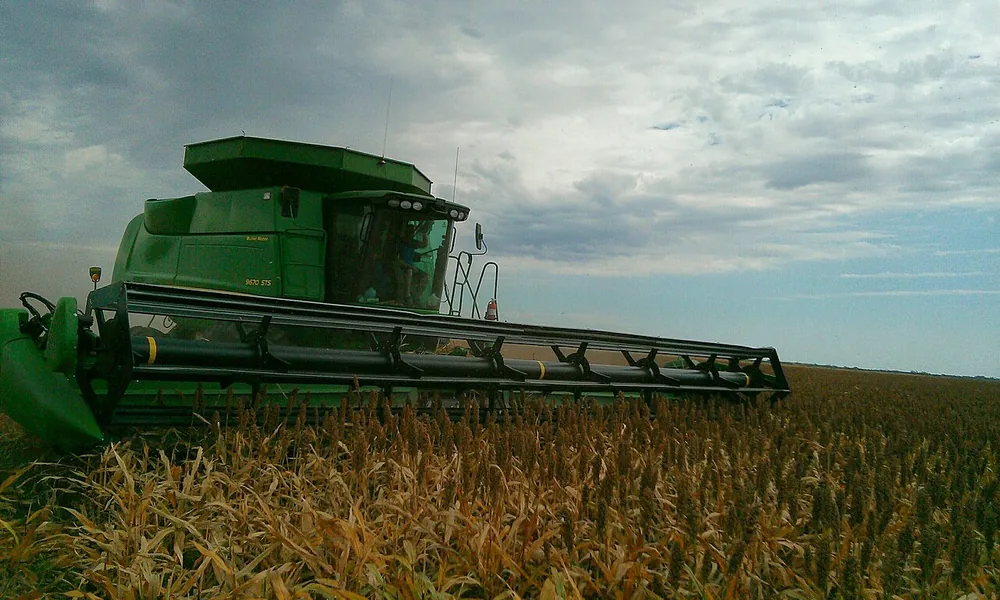
SorghumHarvest AI times the combine. The harvest window for grain sorghum is short: cut too early and the grain is wet, light and costly to dry; cut too late and the heads shatter, the birds take more, and a storm can lay the whole field flat. The tool tracks grain moisture from field samples and weather forecasts, then names the days when each zone is ready and the order the zones should be cut in. It also watches the forecast for rain, because a wet harvest day costs more in drying than a dry day ever saves in waiting.
The logistics are as important as the timing. A combine, a tractor and trailer, and a driver all have to arrive on the same day, and on a small farm that means booking machinery that is also wanted by every other farm in the district. SorghumHarvest AI turns the harvest order into a day-by-day schedule with trailer counts, so the founder can book the kit a week ahead instead of ringing around on the morning the crop is ready. It also flags the fields where the crop is uneven, so the combine driver knows to slow down on the thin patches and keep the header low where the crop has lodged.
The tool’s harvest map is the record that ties the season together. It shows what came off each zone, at what moisture, and on which day, and that record goes straight into the drying plan and the sales ledger. A founder who can hand a farmer a map of the harvest, zone by zone, has proof of the work that no invoice can match. Harvest timing is the most time-pressured decision in the whole build, and it is the one where an AI tool’s calm, forecast-driven schedule is worth the most.
GrainDry Sense
GrainDry Sense controls the drying. Sorghum grain that goes into store above its safe moisture will heat, mould and lose its value in weeks, and the loss is invisible until the store is opened. The tool reads moisture and temperature sensors in the dryer and in the store, then sets the drying temperature and airflow to bring the grain down to its safe level without cracking it. Cracking matters because cracked grain stores badly and sells for less, so the tool trades a slightly slower dry for grain that keeps its quality.
The store monitoring continues after the dryer stops. GrainDry Sense watches the store through the winter, flagging hot spots where moisture has crept back in and pests where the temperature pattern suggests insect activity. A founder who checks the store with this tool can catch a problem while it is still a single warm pocket, instead of discovering it when a whole bin has to be written off. The tool also keeps the drying record, which is the document a grain buyer asks for first: what moisture the grain went in at, how it was dried, and what it has done since.
Storage is a separate craft from growing, and the corn crib installation guide shows the older end of it, with slatted walls and moving air drying maize on the cob through the winter. A sorghum grain store is a different build, sealed and sensor-watched rather than open to the wind, but the lesson carries over: the store decides whether the harvest keeps its value, and a startup that treats storage as an afterthought hands its profit to damp and pests.
SilageSorghum AI
SilageSorghum AI plans the silage cut for the part of the crop that will feed livestock rather than fill a grain store. Sorghum makes good silage when it is cut at the right stage, with the grain in the head soft and doughy and the plant still green enough to pack and ferment. Cut too early and the clamp is wet and sour; cut too late and the stems are woody, the grain is hard, and the feed value drops. The tool reads the crop’s growth stage and moisture, then names the cutting window field by field, so the forage harvester arrives on the right day rather than the convenient one.
The clamp plan is the tool’s second job. Silage is only as good as its packing and sealing, and a clamp that is filled too slowly or sealed badly will heat and spoil from the top down. SilageSorghum AI works out the clamp size from the expected tonnage, the filling order, and the sheet and weighting needed to seal it, then tracks the filling so the crew knows how far through the plan they are. It also records the cut date, the moisture and the additive used, which is the information a livestock farmer needs to ration the silage through the winter without guessing its feed value.
For a startup, silage is the safety valve that makes the whole sorghum build less risky. A field that will not make grain grade, whether from drought, bird damage or a late season, can still make good silage if the call is made in time. SilageSorghum AI gives the founder the numbers to make that call early, while the crop is still worth cutting, instead of late, when the only choice left is a poor grain harvest. That flexibility is one of the strongest selling points a sorghum startup has.
SorghumLedger AI
SorghumLedger AI keeps the books. A sorghum farm installation startup lives on thin margins, and the money leaks out through small, unrecorded costs: a spare part here, an extra day of hire there, a trailer of grain sold without an invoice. The tool records every cost against the field and the job it belongs to, from seed and fertiliser to drying fuel and haulage, and it records every sale of grain, silage and syrup against the field it came from. At the end of the season, the founder can see which fields made money and which ones only looked busy.
The grain sales side is where the tool earns its keep. Sorghum grain prices move with the feed and food markets, and the decision to sell now or store and wait is worth real money. SorghumLedger AI tracks the price the farm has been offered, the cost of storing until a later date, and the moisture and quality grade of the grain in store, then shows whether waiting pays. It does not make the sale for the founder, but it makes the choice a calculation instead of a hunch. The same ledger also produces the invoices, the VAT records and the year-end accounts, so the business side of the startup stays as tidy as the field side.
Installation checklist
Use this checklist before the first drill pass. A startup that can tick all six has a farm that will stand up to its first dry summer; a startup that skips one will meet it again later, usually at harvest.
- Variety and seed rate settled with SorghumSeed AI, with the variety matched to grain, silage or syrup and the rate written down as a drill setting.
- Row plan drawn with SorghumRow AI, including tramlines, headland turns and contour rows on any slope, and shared with the drill operator before the day starts.
- Soil map built with SorghumSoil Sense, with dry patches, wet hollows and fertility zones marked, and the variable-rate plan loaded before drilling.
- Head scouting scheduled with HeadScout AI from first head emergence, with edge zones near trees checked first for bird damage.
- Harvest order and drying capacity agreed before the crop ripens, with the combine booked, the dryer tested and store space cleared.
- Ledger opened with SorghumLedger AI on day one, with every cost booked to its field so the season’s profit is a fact, not a guess.
Frequently asked questions
What does a sorghum farm installation startup actually build?
It builds a working grain field: seed drilled in straight rows at the right rate, soil mapped and fed, water managed through the hot months, and a harvest plan that brings the grain off, dries it and stores it safely. The field may also produce silage for livestock and syrup from sweet-stemmed varieties, but the core build is always seed, rows, harvest and grain.
Why choose sorghum over other grain crops?
Sorghum keeps growing when the rain stops, which makes it the right grain for dry ground and hot summers where a thirstier crop would fail. It also gives the farm two second products, silage and syrup, from the same planting. The wheat farm installation guide covers the temperate alternative, a cool-season grain drilled in autumn and combined in high summer, and the two builds suit different climates rather than competing for the same field.
How much water does a sorghum field need?
Less than most grain crops, but not none. Sorghum needs water most while the heads are forming and filling, and it tolerates a dry spell earlier in the season that would damage other crops. SorghumWater AI ties watering to soil moisture and growth stage, so the farm spends its water where it buys yield and holds it back where it does not.
When is the right time to harvest grain sorghum?
When the grain moisture has fallen to the level the dryer and the buyer both accept, and the heads are hard and dry rather than soft and milky. SorghumHarvest AI tracks moisture and the weather forecast together, because cutting a day early costs drying fuel while cutting a day late risks shattering, birds and storms. The window is short, so the combine and trailers should be booked before the crop is ready, not after.
What happens to sorghum that does not make grain grade?
It can still be cut for silage if the call is made in time. SilageSorghum AI watches the crop’s stage and moisture and names the cutting window, so a field that will not pay as grain still pays as livestock feed. The decision has to come while the plant is still green enough to ferment; once the stems turn woody, the feed value is gone.
Can a small team run a sorghum farm with these tools?
Yes, and that is the point of the list. The nine tools replace the walking, guessing and paperwork that used to take a large crew, and a founder with a drill operator, a combine booking and this toolkit can install and run a sorghum field that would once have needed twice the people. The tools do not remove the judgement, but they give the judgement better numbers to work with.
The bottom line
A sorghum farm installation startup succeeds on the same things any grain farm succeeds on: the right seed at the right rate, straight rows, soil that has been mapped rather than guessed at, a harvest timed to the moisture and the weather, and grain that goes into store dry and stays dry. The nine tools in this guide cover that whole build, from SorghumSeed AI at the seed merchant to SorghumLedger AI at the kitchen table, and none of them duplicates another. Start with the planting three, add the watching and harvest tools as the first crop grows, and keep the ledger open from day one. A field of sorghum rewards a startup that plans it properly, and it punishes one that does not, in exactly the same way every season.

Keep what speaks to you.
Leave room for your own perspective.