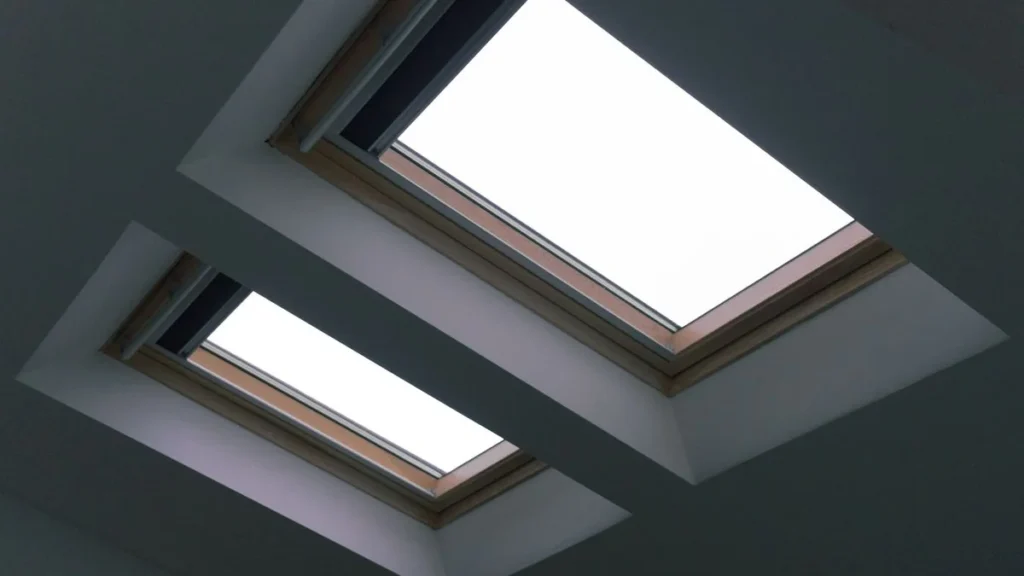
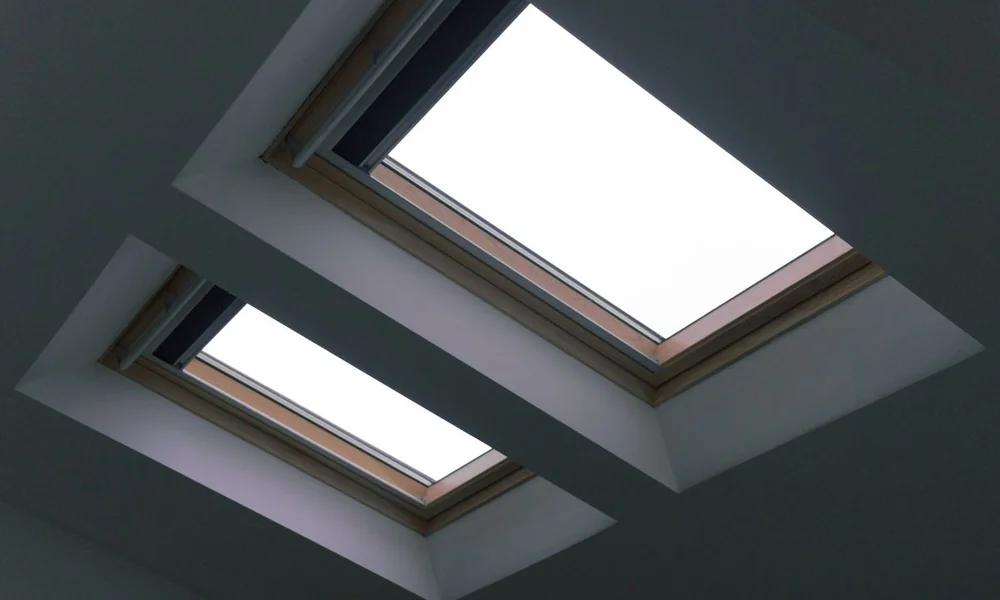
The best AI tools for skylight installation startups in 2026 help a small crew turn a single roof opening into a watertight, well-lit room without the office overhead that slows most new trades businesses down. A skylight job looks simple from the ground: cut an opening, set the unit, flash it, and finish the shaft inside. In practice, every job depends on exact measurements, the right choice between a curb-mounted and a deck-mounted unit, flashing that sheds water in every direction, and a venting plan that keeps the room comfortable instead of turning it into a greenhouse. The tools that win in this trade are the ones that remove doubt at each of those steps, not the ones with the longest list of features.
A skylight installation startup is a specialist business, and that specialism is its advantage. Homeowners do not buy a skylight the way they buy a repair; they buy daylight, fresh air, and a room that finally feels finished. They compare two or three firms, study the flashing detail, ask what happens if it leaks, and want a written quote that explains the unit, the curb or deck detail, the venting option, and the warranty in plain language. A startup that answers quickly, measures accurately, photographs the flashing before the tiles go back on, and follows up after the first heavy rain earns trust that no amount of advertising can buy. The startup that guesses at sizes, hides the flashing detail, or goes quiet after installation does not, however neat its finishing work may be.
This guide compares the nine AI tools that fit a skylight installation startup best in 2026, judged on what a new skylight business actually needs: low starting cost, no long contract, useful from the first week, and able to grow from one van to several crews without forcing a painful switch. Every tool below is chosen for skylight work specifically, not for general roofing or for window fitting. You will find a comparison table, a startup checklist, and answers to the questions new skylight founders ask most often, all focused on the work this trade really does: measuring roof openings, choosing curb-mounted or deck-mounted units, detailing flashing, preventing leaks, planning venting, scheduling installs, and earning the reviews that bring the next street of customers.
Key takeaways
- Start with three tools only: AI roof and opening measurement, AI photo documentation for flashing, and AI customer messaging. Everything else can wait until the diary is full.
- Flashing is the job. A skylight that leaks is almost never a faulty unit; it is a flashing detail, a curb height, or a step flashing sequence that was rushed, so photograph every layer before it is covered.
- Choose curb-mounted or deck-mounted before you quote, not on the roof. The choice changes the unit price, the flashing kit, the curb build, and the labour time, so a quote that ignores it is a quote that will lose money.
- Venting sells the job. Homeowners choose an opening skylight when they understand fresh air, heat release, and condensation control, not when they are given a list of technical codes.
- Keep the stack small and the customer record single. One record per home, with every measurement, photo, quote, and payment on it, will serve a startup far better than six overlapping apps.
Best AI Tools for Skylight Installation Startups at a Glance
The table below gives a quick view of where each tool helps most in a new skylight installation business. The sections that follow explain how to use each one on a real skylight job, what to look for before you pay, and where small teams usually go wrong.
| Tool | Main job for a skylight startup | Standout AI feature | Starting price |
|---|---|---|---|
| Hover | Measure roof openings from phone photos | AI measurements and 3D roof models from photos | Per report |
| EagleView | Aerial roof measurement and skylight placement | AI roof reports with pitch, area, and dimensions | Per report |
| DroneDeploy | Drone inspection of roofs and finished skylights | AI-assisted maps and roof models from drone photos | Monthly subscription |
| AccuLynx | Roofing job management and estimating | AI-assisted estimates, job tracking, and payments | Monthly per user |
| CompanyCam | Photo documentation of flashing and installs | AI-organised before, during, and after photos | Monthly per user |
| JobNimbus | Lead and job tracking for skylight work | AI-assisted pipeline, scheduling, and follow-up | Monthly per user |
| ServiceTitan | Field service for install crews | AI scheduling, dispatch, and invoicing | Monthly subscription |
| Buildertrend | Project management for skylight projects | AI-assisted schedules, selections, and client updates | Monthly subscription |
| NiceJob | Reviews and reputation for new installers | AI-timed review requests after each install | Monthly subscription |
What Makes a Skylight Installation Startup Different
A skylight installation startup is not a smaller version of a roofing company, and it is not a window company that happens to work on roofs. A roofing company sells a large, planned project with weeks of lead time and a crew on site for days. A skylight startup sells a precise, high-trust intervention in a roof that must stay watertight: one opening, one unit, one flashing system, and a finished interior shaft that the homeowner will look at every day. The economics are different, the customer is different, and the tools that fit are different too.
Another difference is that the work is mostly hidden once it is finished. The flashing, the underlayment laps, the curb build, and the insulation around the shaft are all covered by tiles outside and plaster inside, so the homeowner cannot judge them by looking at the finished room. They judge the company on everything else instead: how fast the phone was answered, how clearly the curb-mounted or deck-mounted choice was explained, how tidy the site was left, and whether anyone came back after the first heavy rain to check for leaks. AI photo documentation matters more in this trade than in almost any other, because a dated photograph of each flashing layer is the only proof that the hidden work was done properly. The best AI tools for roofing startups share this habit of documenting the roof, and a skylight startup should borrow it from day one.
Curb-Mounted or Deck-Mounted: Decide Before You Quote
Every skylight installation starts with one decision that shapes the whole job: curb-mounted or deck-mounted. A curb-mounted skylight sits on a raised wooden curb built on the roof deck, lifting the unit above the roof surface so water runs around it. A deck-mounted skylight sits directly on the roof deck, with its flashing integrated into the roofing material around it. Neither is better in every case, and a startup that treats them as interchangeable will quote wrong, order wrong, and leak later.
Curb-mounted units suit flat and low-slope roofs, where standing water is a real risk and height is protection. The curb gives the installer room to detail the flashing properly, and it makes replacement easier years later because the new unit sits on the same curb. The cost is the curb itself: timber, insulation, waterproofing, and the labour to build it square and level. Deck-mounted units suit pitched roofs, where the slope sheds water and the unit can sit low and neat in the roofline. They look cleaner from outside and need no curb, but they demand exact flashing work, because the unit has no height to hide behind. AI measurement tools help the founder choose correctly by showing the true roof pitch, the available flat area around the opening, and the distance to ridges, valleys, and walls, all before the quote is written.
Flashing and Leak Prevention: Where Skylight Jobs Are Won or Lost
Ask any experienced skylight installer where jobs go wrong and the answer is almost always the same: the flashing. The unit itself rarely fails. Water finds its way in through a step flashing sequence that was fitted in the wrong order, a head flashing that was not lapped over the underlayment, a sill flashing that directs water under the unit instead of away from it, or a curb that was built out of square so the flashing kit never sat flat. Every one of those mistakes is invisible once the tiles are back on, which is why the best skylight startups treat flashing as a photographed process, not a remembered one.
Leak prevention starts before the roof is touched. The survey should check the roof covering around the proposed opening, the condition of the underlayment, the rafter spacing, and any signs of existing damp in the ceiling below. A skylight fitted above a damp patch will be blamed for the damp even if the water came from elsewhere, so the survey should record the ceiling condition in photographs and note it on the quote. After installation, the follow-up matters just as much: a message after the first heavy rain, asking whether everything stayed dry, catches small problems while they are still small and turns a nervous customer into a reviewer. The same discipline applies to the wider roof, and the best AI tools for roof repair startups are built around tracing leaks to their real source rather than patching the stain, a habit a skylight installer should copy.
Venting, Light, and Comfort: Selling More Than a Window
A skylight is not just a window in a roof; it is the way a room breathes and the way it is lit. A fixed skylight brings in daylight and nothing else, which suits a hallway, a stairwell, or a room that already vents well. A venting skylight opens, letting hot air out and fresh air in, which suits kitchens, bathrooms, and loft rooms that overheat in summer. The difference in price is modest compared with the difference in comfort, yet many startups quote only the fixed unit because it is simpler, and then lose the job to a competitor who explained the venting option properly.
AI tools help the founder sell venting honestly. A quoting tool that lists the venting upgrade, the electric opener, the rain sensor, and the blind as separate lines lets the homeowner choose, rather than forcing the founder to push. A follow-up tool that sends a short message after the survey, summarising the room, the light, and the venting choice, keeps the decision moving while the homeowner is still thinking about it. And a review tool that asks for feedback a week after installation, when the homeowner has lived with the new light and air, collects the kind of detailed praise that wins the next job: a cooler loft, a brighter kitchen, a bathroom that no longer steams up.
How to Choose AI Tools for a Skylight Installation Startup
Choosing tools for a skylight startup is a budgeting exercise as much as a technology one. A new business should spend its first money on the tools that win jobs and prevent leaks, and defer everything else until the diary is full. That means measurement first, photo documentation second, and customer messaging third. A founder who can measure accurately, prove the flashing, and answer every enquiry within the hour will win more work than a founder with a perfect accounting system and no jobs to account for.
Before paying for any tool, check four things. First, does it work from a phone on a roof, with gloves on and poor signal, or does it need an office and a desktop? Second, does it charge per report, per user, or per month, and what does that cost when the business has three jobs a month rather than thirty? Third, does it export the data, so the customer record, the measurements, and the photographs are not trapped if the startup switches tools later? Fourth, does it fit the skylight workflow, with opening sizes, curb or deck details, flashing kits, and venting options, or is it a generic contractor tool that will need constant workarounds?
The 9 Best AI Tools for Skylight Installation Startups in Detail
The nine tools below are ordered by the skylight workflow, from measuring the roof to collecting the review. Each section explains what the tool does on a real skylight job, where it helps most, and what to watch out for before paying.
1. Hover: AI Measurement From Phone Photos
Hover turns photographs taken on a phone into measurements and a three-dimensional model of the roof, which is exactly what a skylight startup needs before it can price an opening. The founder photographs the roof from the ground or from a ladder, and Hover returns the pitch, the roof planes, and the dimensions the team needs to size the opening and the unit. For a small startup, that removes the most time-consuming part of the survey: climbing the roof with a tape measure on every enquiry, including the ones that never become jobs.
2. EagleView: Aerial Roof Measurement and Skylight Placement
EagleView produces detailed roof reports from aerial imagery, giving pitch, area, ridge lengths, and dimensions without anyone climbing a ladder. For a skylight startup, the report answers the placement question early: where on the roof is there enough clear area for the unit, how far is it from ridges and valleys, and what is the true pitch that decides between a curb-mounted and a deck-mounted unit. That information shapes the quote before the survey, so the founder arrives knowing which units are realistic and which are not.
3. DroneDeploy: Drone Inspection of Roofs and Finished Skylights
DroneDeploy turns drone photographs into maps and three-dimensional models of a roof, letting a skylight startup inspect a roof properly without walking every slope. The founder can fly the roof before the job to check the covering, the valleys, and the area around the proposed opening, and fly it again after installation to photograph the finished unit, the flashing, and the surrounding tiles from angles that are hard to reach on foot. For steep or fragile roofs, that is safer as well as faster.
4. AccuLynx: Roofing Job Management and Estimating
AccuLynx is a roofing business platform that combines estimating, job tracking, customer records, and payments in one place, and it fits a skylight startup that wants a single system rather than several overlapping apps. The founder can build an estimate that lists the unit, the flashing kit, the curb build, the labour, and the finishing separately, so the homeowner sees what they are paying for and the founder knows the margin on each line. The job record then carries that estimate through to scheduling, installation, and payment without anyone retyping it.
5. CompanyCam: Photo Documentation of Flashing and Installs
CompanyCam organises site photographs by job, so every photograph of a skylight installation lands in the right job file, dated and labelled, instead of disappearing into a phone gallery. The founder photographs the bare opening, each flashing layer, the finished unit, and the interior shaft, and the team, the office, and the homeowner can all see the same record. AI organisation helps by sorting and labelling photographs, so a photograph taken six months ago can be found in seconds when a leak is reported or a warranty question arises.
6. JobNimbus: Lead and Job Tracking for Skylight Work
JobNimbus tracks leads and jobs from the first enquiry to the final payment, which matters for a skylight startup because the sales cycle is long and enquiries go quiet for weeks. The founder can see at a glance which homeowners have been quoted, which are waiting for a survey, which have paid a deposit, and which need a polite follow-up. AI-assisted pipeline tools help by flagging the jobs that have gone quiet and suggesting the next step, so no warm lead is forgotten while the crew is busy on a roof.
7. ServiceTitan: Field Service for Install Crews
ServiceTitan is a field service platform that handles scheduling, dispatch, invoicing, and customer communication for install crews, and it suits a skylight startup that is growing from one crew to two or three. The founder can schedule installs, dispatch the right crew with the right unit and flashing kit, send the homeowner a message with the arrival time, and invoice as soon as the job is finished. AI scheduling helps by fitting jobs around travel time, crew availability, and weather, so a rainy day does not waste a crew that could be doing interior shaft work instead.
8. Buildertrend: Project Management for Skylight Projects
Buildertrend manages construction projects with schedules, selections, documents, and client updates, and it fits skylight installations that are part of a larger project, such as a loft conversion or an extension. The founder can share the schedule with the homeowner, record the skylight selection with the unit, the venting option, and the blind choice, and keep every document and photograph in one project file. AI-assisted scheduling helps by flagging clashes, such as a skylight delivery arriving before the roof opening is ready, before they become expensive delays.
9. NiceJob: Reviews and Reputation for New Installers
NiceJob automates review requests, sending them at the right moment after an installation so that happy homeowners leave a review while the new skylight is still fresh in their minds. For a skylight startup with no long history to point to, reviews are the most valuable marketing asset it can build, because every homeowner considering a hole in their roof will read them first. AI-timed requests help by choosing the moment when the homeowner is most likely to respond, and by making it easy to leave a review with a single tap.
Building Your Starter Stack for a Skylight Installation Startup
A sensible starter stack for a skylight installation startup has three tools, not nine. Start with Hover or EagleView for measurement, so every quote is based on real roof dimensions rather than a guess. Add CompanyCam for photo documentation, so every flashing layer is photographed and filed. Add a messaging and follow-up tool, such as JobNimbus, so every enquiry is answered quickly and every quote is chased politely. Those three tools cover the work that wins jobs and prevents leaks, and they cost far less than a full platform.
Once the diary is full for two months in a row, add the next layer. AccuLynx or ServiceTitan can take over estimating and scheduling when the founder can no longer keep the jobs in their head. DroneDeploy can be added when steep or large roofs become a regular part of the work. NiceJob should be switched on from the first job, because reviews compound from day one and a startup that waits a year to ask for them has lost a year of reputation. The same staged approach applies to the wider trade, and the best AI tools for window replacement startups follow a similar pattern of measuring first, quoting clearly, and following up until the job is signed.
Mistakes to Avoid When Choosing AI Tools
The most common mistake is buying too much software too soon. A new skylight startup does not need a full project management platform, a separate accounting system, a marketing suite, and a drone package in its first month. Each tool needs setting up, learning, and maintaining, and every hour spent on software is an hour not spent measuring roofs or fitting skylights. Start with three tools, use them on real jobs, and add the next one only when a specific problem appears.
The second mistake is choosing a tool that cannot handle the skylight workflow. A generic contractor tool that has no place for curb-mounted or deck-mounted details, flashing kits, or venting options will force the founder to keep the real information in a notebook, which defeats the purpose of the software. Check before paying that the tool can record the opening size, the unit type, the flashing kit, and the venting choice, and that those details flow into the quote, the order, and the job record without retyping.
Skylight Installation Startup Checklist
- Measure the roof and the opening with an AI measurement tool, and confirm the opening size on site before ordering the unit.
- Decide curb-mounted or deck-mounted in writing, with the reason and the flashing kit listed on the quote.
- Photograph the bare opening, each flashing layer, the finished unit, and the interior shaft, and file the photographs against the job.
- Check the venting, blind, and rain sensor options with the homeowner before ordering, not after installation.
- Send a written quote the same day as the survey, with the unit, the flashing, the labour, and the warranty listed separately.
- Follow up after the first heavy rain, ask whether everything stayed dry, and request a review once the homeowner is happy.
Frequently Asked Questions
How much should a skylight installation startup spend on AI tools?
A new skylight startup should budget for three tools in its first months: a measurement tool charged per report, a photo documentation tool charged per user, and a messaging or job tracking tool on a low monthly plan. That combination usually costs far less than a single lost job, and it covers the work that wins jobs and prevents leaks. Add a full job management platform only when the diary is full for two months in a row, and add drone inspection only when steep or large roofs become a regular part of the work.
Can AI tools really measure a roof opening accurately?
AI measurement tools are accurate enough to quote from, but not accurate enough to order from without a site check. Aerial and photo-based tools return pitch, area, and dimensions that are reliable for pricing and for choosing between curb-mounted and deck-mounted units. Before the unit is ordered, the founder should confirm the opening size, the rafter positions, and the available clear area on site with a tape measure. Use AI to quote quickly, and confirm by hand before spending money on the unit.
What is the first AI tool a new skylight company should buy?
The first tool should be a measurement tool, because accurate measurements drive everything else: the unit size, the flashing kit, the curb build, and the quote. A founder who can measure from photographs or aerial imagery can quote the same day, which wins jobs from homeowners who are comparing three firms. The second tool should be a photo documentation app, because photographs of the flashing protect the business on every job. Customer messaging comes third, so no enquiry is ever missed while the crew is on a roof.
How do AI tools help prevent skylight leaks?
AI tools prevent leaks indirectly, by making the flashing process visible and repeatable. Measurement tools ensure the opening and the unit are the right size, so the flashing kit sits flat instead of being forced. Photo tools ensure each flashing layer is photographed and filed, so mistakes are spotted before the tiles go back on and the record exists if a leak is ever reported. Follow-up tools ensure the founder checks in after the first heavy rain, when a small leak is still cheap to fix. No software can flash a skylight, but the right tools make it far harder to rush the work that keeps water out.
Should a skylight startup choose curb-mounted or deck-mounted units?
The choice depends on the roof. Curb-mounted units suit flat and low-slope roofs, where the raised curb keeps the unit above standing water and gives room to detail the flashing. Deck-mounted units suit pitched roofs, where the slope sheds water and the unit can sit low and neat in the roofline. The founder should decide before quoting, write the choice and the reason on the quote, and order the matching flashing kit. A quote that ignores the choice is a quote that will lose money or leak later.
Do I need a drone to run a skylight installation startup?
No, a drone is not essential for a new skylight startup. Most roofs can be measured from photographs or aerial reports, surveyed from a ladder, and photographed from the roof itself. A drone becomes useful when the startup regularly works on steep, fragile, or large roofs that are hard to walk, or when it wants high-quality photographs of finished work for marketing. Until then, the money is better spent on measurement, photo documentation, and customer messaging, which earn their keep on every job.
The Bottom Line
The best AI tools for skylight installation startups in 2026 are the ones that make the hidden work visible: accurate measurements before the quote, a clear choice between curb-mounted and deck-mounted units, photographed flashing on every layer, and a follow-up after the first heavy rain. Start with measurement, photo documentation, and customer messaging, keep the customer record single, and add the next tool only when the diary proves it is needed. A skylight startup that measures well, flashes carefully, and follows up honestly will earn the reviews that fill the next year of work, one watertight roof at a time.

Keep what speaks to you.
Leave room for your own perspective.