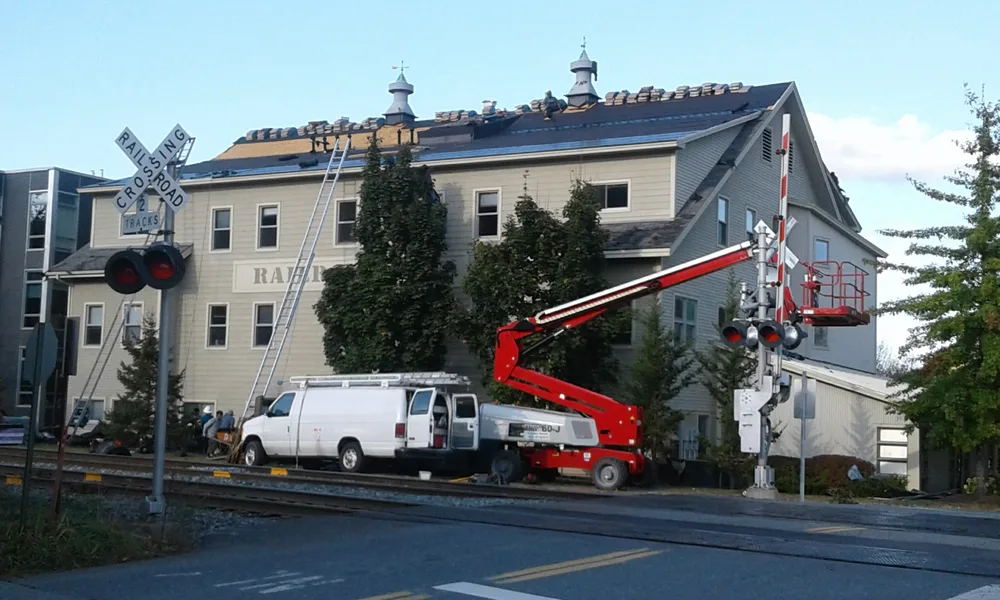
A roof repair startup lives or dies on the first phone call. The homeowner on the other end has water dripping through a bedroom ceiling, a patch of shingles missing after last night’s wind, or a brown stain spreading slowly across the plaster. They are not shopping around for a month. They want someone who answers quickly, explains what is wrong in plain language, gives a fair price, and turns up when promised. The company that does those four things first usually wins the job, even when it is the newest name in town.
That is exactly where AI tools earn their keep for a roof repair business. A small crew cannot afford a full office team, yet every repair job still needs the same careful sequence: find the leak, measure the damaged area, match the shingles, price the patch, book the crew, photograph the work, and follow up so the customer recommends the company to the next street. Done by hand, that sequence eats the whole evening. Done with the right AI tools, most of it happens while the crew is still on the roof, and the founder can spend the evening quoting the next three jobs instead of chasing paperwork.
This guide compares the nine AI tools that fit a roof repair startup best in 2026, judged on what a new repair business actually needs: low starting cost, no long contract, useful from the first week, and able to grow from one van to several crews without forcing a painful switch. Every tool below is chosen for repair work specifically, not for full roof replacement. You will find a comparison table, a startup checklist, and answers to the questions new repair founders ask most often, all focused on the work this trade really does: tracing leaks, replacing shingles, fixing flashing, repairing storm damage, inspecting roofs properly, and earning the repeat work that makes the business worth owning.
Key takeaways
- Start with three tools only: AI roof measurement and repair quoting, AI leak and damage inspection, and AI customer messaging. Everything else can wait until the diary is full.
- Speed wins roof repair jobs. A clear, professional quote sent within the hour beats a perfect quote sent the next day, because the homeowner with a leaking roof hires the first company that responds well.
- Repair is a diagnosis business, not a sales business. The tool that helps you find the real source of a leak, rather than just patching the stain, is the one that earns referrals.
- Photograph everything before, during, and after the repair. Dated photos protect the business when a customer questions the work and prove the quality of a repair that nobody will ever see again once the shingles are back on.
- Keep the stack small and the customer record single. One record per home, with every inspection, quote, photo, and payment on it, will serve a startup far better than six overlapping apps.
Best AI Tools for Roof Repair Startups at a Glance
The table below gives a quick view of where each tool helps most in a new roof repair business. The sections that follow explain how to use each one on a real repair job, what to look for before you pay, and where small teams usually go wrong.
| Tool | Main job for a roof repair startup | Standout AI feature | Starting price |
|---|---|---|---|
| Roofr | AI roof measurement and repair quoting | Instant roof measurements and repair estimates from aerial imagery | Per report |
| RoofSnap | Aerial measurement for patch and repair scope | AI roof diagrams drawn from satellite and aerial images | Per report |
| IMGING by Loveland Innovations | AI roof inspection and damage detection | Automated damage detection from drone and aerial imagery | Custom quote |
| Pix4D | Drone roof inspection and mapping | AI-assisted 3D roof models built from drone photos | From around $100 per month |
| Xactimate | Insurance estimating for repair work | AI-assisted repair pricing matched to insurer price lists | Monthly subscription |
| Encircle | Leak and moisture documentation | AI-organised photo and moisture records for every repair | Monthly subscription |
| JobProgress | Repair job tracking and scheduling | AI job boards, scheduling, and customer updates | From around $99 per user per month |
| Podium | AI messaging and reviews for emergency calls | AI replies to missed calls and review requests | Monthly subscription |
| Housecall Pro | Field service for repair crews | AI scheduling, dispatch, and invoicing for small crews | From around $49 per month |
What Makes a Roof Repair Startup Different
A roof repair startup is not a smaller version of a roofing company. A full roofing company sells a large, planned project with weeks of lead time, a big materials order, and a crew on site for days. A repair startup sells speed and certainty on a small, urgent job. The average repair is a few hours of work, a modest materials bill, and a customer who is stressed about water damage. The economics are different, the customer is different, and the tools that fit are different too.
The first difference is diagnosis. On a replacement job, the whole roof comes off, so the exact source of a leak matters less. On a repair job, the source is everything. Water travels along rafters and underlayment, so the stain on the ceiling is often metres away from the failed shingle or the cracked flashing that let it in. A startup that guesses wrong pays for the mistake twice: once in the free return visit, and again in the lost referral. AI inspection tools that flag damaged areas from drone and aerial imagery help a small team diagnose properly before anyone climbs a ladder, and they give the homeowner a picture that explains why the repair costs what it does.
The third difference is trust. A homeowner cannot see most of a roof repair once it is finished, and they usually cannot judge whether it was done well. They judge the company on everything else instead: how fast the phone was answered, how clearly the problem was explained, how tidy the site was left, and whether the follow-up call happened. AI tools that handle messaging, photo records, and review requests turn those small trust signals into a system, so a one-van startup looks as organised as a company ten times its size. The best AI tools for roofing startups cover the wider replacement business well, but a repair founder should judge every tool against repair work first: leak tracing, small patches, flashing fixes, and storm damage callouts.
How to Choose AI Tools for a Roof Repair Startup
Choose tools by the repair workflow, not by the feature list. Start by writing down the five jobs your business does most often: emergency leak callouts, shingle replacement, flashing repair, storm damage inspection, and annual roof check-ups. Then score every tool against those five jobs. A tool that is excellent at full-roof estimating but clumsy at pricing a single valley repair will slow the business down, however impressive its demo looks.
The 9 Best AI Tools for Roof Repair Startups in Detail
Each tool below is judged on repair work specifically: how it handles leaks, shingles, flashing, storm damage, and inspections, and how it fits a startup with one or two crews. Prices change often, so treat the starting prices as a guide and confirm the current plan before you commit.
1. Roofr: AI roof measurement and repair quoting
Roofr is the fastest way for a new repair startup to quote without a site visit. The founder types in the address, and the tool returns AI roof measurements, a roof diagram, and a repair estimate built from aerial imagery. For a leak callout, that means the first conversation with the homeowner can include a realistic price range instead of a vague promise to call back after measuring. The customer feels looked after immediately, and the founder knows before driving out whether the job is worth the trip.
Where Roofr really helps a repair business is in scoping small jobs accurately. A shingle repair needs the slope, the area, and the number of courses affected, and Roofr provides those figures from imagery rather than from a tape measure on a wet roof. The estimate can be adjusted for the specific repair, such as a valley, a ridge, or a section around a chimney, so the quote reflects the real work instead of a flat guess. That accuracy protects the margin on small jobs, where a single wrong guess can wipe out the profit for the day.
The tool also produces professional-looking reports that the homeowner can understand. A diagram showing the damaged area, with the repair scope marked, does more to win trust than any sales pitch. It shows the customer exactly what will be fixed and why, and it gives them something to keep for their records or their insurer. For a startup with no reputation yet, that kind of clarity is the closest thing to a referral.
2. RoofSnap: aerial measurement for patch and repair scope
RoofSnap turns satellite and aerial images into a roof diagram that a repair crew can work from. The founder sketches the repair area on the diagram, and the tool calculates the measurements, the shingle count, and the materials needed for that patch. For a startup doing several small repairs a day, that turns materials ordering from a guess into a list, and it stops the familiar problem of arriving on site one bundle of shingles short.
The sketching feature matters more for repairs than for replacements. A full roof is a simple shape to measure, but a repair is a small, awkward patch around a vent, a skylight, or a damaged valley. RoofSnap lets the founder draw exactly that patch, so the estimate covers the real area and the crew knows where to start. The diagram can be shared with the customer as part of the quote, which reduces the back-and-forth about what is included and what is not.
3. IMGING by Loveland Innovations: AI roof inspection and damage detection
IMGING is built for the inspection side of roof repair, and it is the closest thing to a second pair of expert eyes on every job. The tool analyses drone and aerial imagery and automatically flags damaged shingles, hail hits, lifted flashing, and worn areas, marking each one on a roof map. For a repair startup, that turns a visual inspection from a memory exercise into a documented survey that the customer and the insurer can both see.
The damage detection is most valuable after storms, when a startup may be inspecting twenty roofs in a week and every one of them looks damaged to its owner. IMGING helps the founder sort genuine storm damage from old wear, and prioritise the homes where a repair cannot wait. That honesty protects the business: a customer who is told their roof needs a small repair now, rather than a full replacement they do not need, becomes a customer for life and a source of referrals.
The tool also creates inspection reports that are easy to share. A homeowner who can see a marked-up image of their own roof understands the problem immediately, and an insurer who receives a tidy report with dated imagery processes the claim faster. For a startup chasing storm work, that speed matters, because the companies that document well get paid first and get recommended to the next street.
4. Pix4D: drone roof inspection and mapping
Pix4D turns drone photographs into detailed 3D models and maps of a roof, giving a repair startup a way to inspect a roof thoroughly without walking every slope. The founder or a trained crew member flies a small drone around the property, and the software stitches the photos into a model that shows the condition of every shingle, flashing, and valley. For steep or fragile roofs where walking is risky, that is both safer and more thorough than a ladder inspection.
The 3D model is particularly useful for leak tracing. A leak that appears in one room often starts far away, and a flat photograph rarely shows the path. A model that can be rotated and zoomed lets the founder follow the water’s likely route across the roof surface, check the flashing around every penetration, and compare the suspect area with the rest of the roof. That kind of inspection finds the real fault more often, and it prevents the costly return visit to fix the leak that was missed the first time.
5. Xactimate: insurance estimating for repair work
Xactimate is the estimating tool that insurers and loss adjusters know best, and for a roof repair startup that wants storm and insurance work, that familiarity is the point. The tool prices repair work using the same price lists that insurers use, so a quote produced in Xactimate speaks the same language as the claim handler on the other end of the phone. A repair estimate that matches the insurer’s pricing gets approved faster, with fewer arguments about line items.
The AI-assisted features help a small team build a detailed repair estimate without an experienced estimator on staff. The founder selects the damaged area, the materials, and the repair method, and the tool suggests the line items and prices that a claim usually needs. That structure stops the common startup mistake of forgetting the small items that add up: underlayment, flashing, ridge caps, waste removal, and access equipment. A complete estimate protects the margin and looks professional to the adjuster.
6. Encircle: leak and moisture documentation
Encircle is a documentation tool for restoration and repair work, and it fits roof repair because a leak is as much a moisture problem as a roofing problem. The tool organises photos, moisture readings, and notes for every job, so the startup can show exactly where water entered, how far it spread inside, and what was done to dry and repair it. That record is useful for the homeowner, essential for an insurer, and protective for the business.
The AI organisation is what makes Encircle worth using over a phone camera roll. Photos are tagged to rooms, areas, and stages of the job automatically, so the founder can find the picture of the loft insulation or the ceiling stain in seconds rather than scrolling through hundreds of images. Moisture readings are logged against the same record, which lets the team prove that a ceiling is dry before the plasterer arrives, instead of guessing.
For a repair startup, the strongest use of Encircle is on leak callouts where the visible damage is inside the house. The customer is worried about their ceiling, their belongings, and the smell of damp, not just about the shingles. A tidy report that shows the moisture readings falling after the repair gives them confidence that the job is truly finished, and it gives them a document to keep for their home records or a future sale.
7. JobProgress: repair job tracking and scheduling
JobProgress is a job management platform built for exterior contractors, and it fits a roof repair startup because it keeps every repair on one board, from the first call to the final payment. The founder can see all live jobs at a glance: which ones are booked, which crews are where, which materials are ordered, and which invoices are still unpaid. For a business that runs on many small jobs, that single view is the difference between a calm week and a chaotic one.
The AI scheduling features help a startup pack the diary sensibly. Repair jobs vary in length, and a morning leak callout can easily overrun into the afternoon shingle repair. JobProgress helps the founder sequence jobs by location, urgency, and crew skill, so the van spends less time driving across town and more time on roofs. Customers receive automatic updates when the crew is on the way, which cuts the missed-appointment calls that waste the office’s time.
The customer record is another strength. Every quote, photo, message, and payment for a home stays in one place, so the founder who returns to a house six months later knows exactly what was repaired, which shingles were used, and what was promised. That memory is a competitive advantage for a local repair business, because the customer feels known rather than processed, and the second job is easier to win than the first.
8. Podium: AI messaging and reviews for emergency calls
Podium solves the problem that kills most new repair startups: the phone rings while the crew is on a roof, and the call goes unanswered. The tool’s AI replies to missed calls and messages instantly, asks the customer what the problem is, and books the inspection or callout into the diary. The homeowner with a leaking ceiling gets an answer in seconds instead of a voicemail, and the startup wins a job it would otherwise have lost.
The AI messaging is designed to sound like a helpful member of staff rather than a robot. It asks sensible questions about the leak, the roof type, and the urgency, and it passes a clear summary to the founder. That triage saves time on every job, because the crew arrives knowing whether they need a ladder, a tarpaulin, or a full set of matching shingles, instead of discovering the problem on the doorstep.
Podium also automates review requests, which matter enormously for a repair business. A customer is most willing to leave a review in the hours after a leak is fixed, when the relief is fresh, and Podium sends the request at exactly that moment. Over a year, those reviews become the startup’s reputation in local search, and they bring the next street of customers without any advertising spend.
9. Housecall Pro: field service for repair crews
Housecall Pro is an all-round field service platform for small trade businesses, and it is a good fit for a roof repair startup that wants one tool to run the working day. It handles scheduling, dispatch, quoting, invoicing, and payments, so the founder can run the business from a phone. A crew member can accept a job, navigate to the house, photograph the repair, send the invoice, and take payment without ever returning to an office.
The AI scheduling helps a repair startup deal with the unpredictability of the trade. A leak callout can take twenty minutes or three hours, and the diary has to absorb that without collapsing. Housecall Pro suggests sensible gaps between jobs, flags clashes before they happen, and lets the founder move a job with a drag rather than a phone call. That flexibility keeps the crew busy and the customers informed, even on a day when everything changes.
The quoting and invoicing features are built for small jobs. A repair quote can be produced on site, sent to the customer by text, and approved with a tap, so the work can start immediately instead of waiting for an evening of paperwork. The invoice follows the same path, and the customer can pay by card on the spot. That speed of payment matters for a startup’s cash flow, because repair work is often paid by homeowners who want the job finished and the bill settled the same day.
Building Your Starter Stack for a Roof Repair Startup
The best starter stack for a roof repair startup has three tools, not nine. Start with an AI measurement and quoting tool, an AI inspection tool, and an AI messaging tool. That trio covers the three moments that decide whether a repair business survives its first year: winning the job, diagnosing it correctly, and answering the customer quickly. Everything else can be added once the diary is full and the cash flow is steady.
A sensible first stack is Roofr for measurement and quoting, IMGING or a drone inspection workflow for damage detection, and Podium for missed calls and reviews. That combination costs less than hiring a part-time office assistant, and it works around the clock, including the Sunday evening when a storm has just passed and every homeowner in the neighbourhood is calling at once. The founder still makes every important decision, but the routine work of measuring, documenting, and replying happens without them.
Do not forget the work around the roof itself. Flashing, gutters, and downspouts are part of most leak repairs, and a founder who understands the whole water path will diagnose better than one who only looks at shingles. The AI tools for gutter installation startups are a useful reference for that side of the trade, because gutter and flashing problems cause a large share of the leaks a repair startup is called to fix. A repair founder who can quote a small flashing or gutter fix alongside the roof repair wins more work from every visit.
Roof Repair Startup Checklist
Use this checklist before spending money on any new tool. It keeps the startup focused on the work that pays, rather than the software that impresses.
- Pick the three starter tools first: AI measurement and quoting, AI inspection, and AI customer messaging, and run them for a month before adding anything else.
- Price every tool per repair, not per month, and drop any tool that costs more per job than the time it saves.
- Photograph every roof before, during, and after the repair, and store the photos against the customer record so they can be found in seconds.
- Build a simple repair price list for the most common jobs: shingle replacement, flashing repair, valley repair, vent sealing, and emergency tarpaulin cover, so quotes stay consistent.
- Offer a roof check-up and maintenance plan to every repair customer, because a roof that is inspected once a year produces steadier work than one that is only seen in an emergency. The AI tools for roof cleaning startups show how a related trade sells that kind of repeat maintenance work.
- Ask for a review within hours of finishing every repair, while the customer is still relieved that the leak has stopped, and reply to every review personally.
Frequently Asked Questions
How much should a roof repair startup spend on AI tools?
Most repair startups can start well for a few hundred dollars a month, and many begin with per-report measurement tools that cost only a few dollars per quote. The right budget is the one where the tools pay for themselves in saved time and won jobs within the first month. A good rule is to spend no more than the profit from two or three repairs a month on software until the diary is full, and to review every subscription quarterly. If a tool has not saved time or won work in three months, cancel it and spend the money on materials or marketing instead.
Can AI tools really find the source of a roof leak?
AI inspection tools can narrow the search considerably by flagging damaged shingles, cracked flashing, and worn areas from drone and aerial imagery, and they can show the pattern of damage across a whole roof. They cannot replace a person in the loft with a torch, watching where water actually enters. The best results come from combining the two: use the AI survey to plan the inspection, then confirm the source on site before quoting the repair. A startup that quotes from the AI report alone will eventually pay for a wrong diagnosis.
What is the first AI tool a new roof repair company should buy?
An AI measurement and quoting tool is the best first purchase for most repair startups, because quoting is the bottleneck that decides how many jobs the business can win. A tool like Roofr or RoofSnap turns a quote from a half-day task into a ten-minute one, and it produces a professional estimate that helps a new company look established. The second purchase should be an AI messaging tool, because answering the phone quickly is the other half of winning repair work.
Do I need a drone to run a roof repair startup?
No, a drone is not required to start a roof repair business, and most founders begin with ladders, binoculars, and a good camera. A drone becomes worth the investment when the startup wants to offer paid inspections, win storm damage work, or inspect steep and fragile roofs safely. If the business buys a drone, the operator needs proper training and an understanding of local flight rules, and the inspection service should be priced as a separate product rather than given away free with every quote.
How do AI tools help with storm damage repairs?
After a storm, AI tools help a repair startup work through a surge of calls in order of urgency. Damage detection flags the roofs with genuine storm damage, measurement tools produce quick repair estimates, and messaging tools answer the flood of calls while the crew is on site. The tools also create the dated photos and reports that insurers need, which means claims are processed faster and the startup is paid sooner. The companies that document storm work well are the ones that get recommended to the next street.
Will AI replace roof repair technicians?
No, AI will not replace roof repair technicians, because the work itself is physical, skilled, and different on every roof. No software can climb a ladder, remove a damaged shingle, fit new flashing, or judge whether a repair will hold through the next winter. What AI does is remove the office work around the repair: measuring, quoting, scheduling, messaging, and documenting. That leaves the technician with more time on the roof, which is where the value of the business actually lives.
The Bottom Line
A roof repair startup does not need the most tools, and it does not need the most expensive tools. It needs three tools that work together from the first call to the final invoice: one to measure and quote the repair quickly, one to inspect the damage properly, and one to answer the customer while the crew is busy. With that trio in place, a small team can quote faster than larger rivals, diagnose leaks properly, document every job, and earn the reviews that fill the diary. The rest of the stack can wait until the work justifies it. Start small, measure what each tool saves, and let the repair work itself decide what to buy next.

Keep what speaks to you.
Leave room for your own perspective.