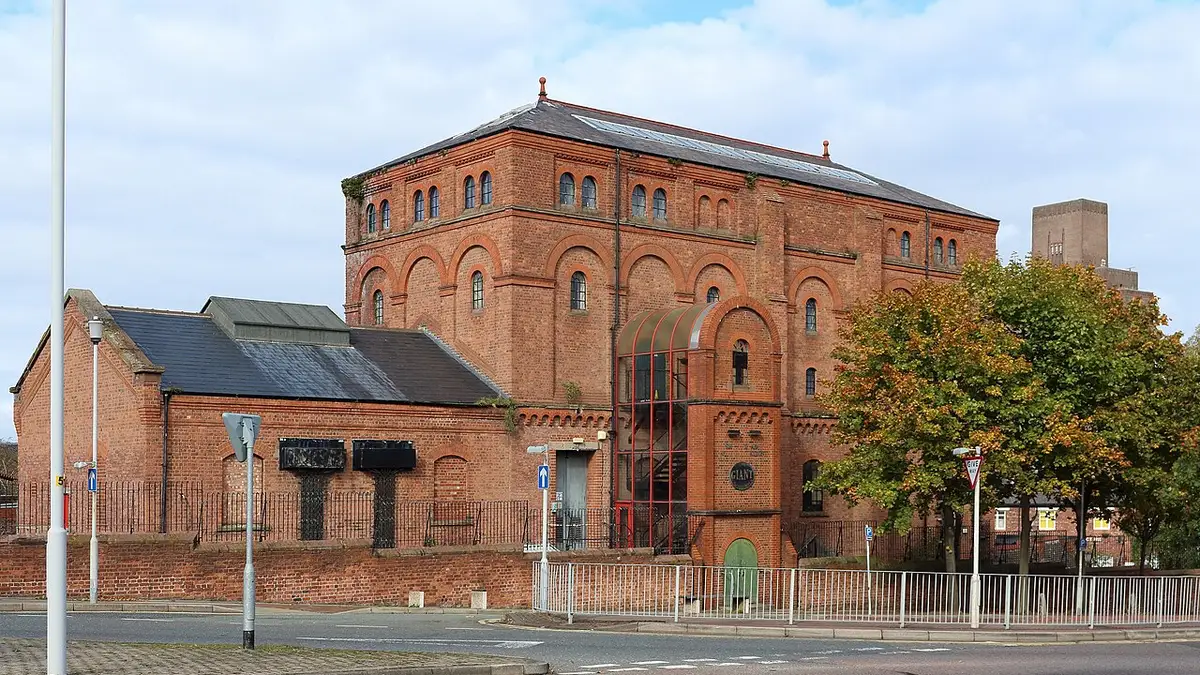
A former pumping station is one of the most rewarding buildings a conversion startup can take on, and one of the easiest to get wrong. The shell is usually superb: thick brick walls, tall arched windows, a vast open pump hall with a roof structure worth keeping, and a story that sells itself. Underneath that shell sits a different building altogether — decommissioned pumps the size of cars, valve chambers, wet wells, rising mains, buried tanks, oil-stained floors and pipework that nobody has fully mapped since the station stopped pumping.
That split is what makes the pumping station conversion trade different from every other conversion on the market. A barn conversion worries about roof trusses and planning. A church conversion worries about stained glass and acoustics. A pumping station conversion worries about all of that plus live hydraulics: what happens to the water that still passes through the site, which pumps and valves are heritage fabric and which are scrap, how a wet well becomes a wine cellar or a lift pit without flooding the ground floor, and how you put homes inside a hall that was built around machines, not people.
The AI tools below are picked for that exact job. They survey the pump hall before you draw a line, model the pumps and pipework you are keeping or removing, schedule the valves and tanks, protect the heritage brickwork and steel, and price a job where the unknowns sit below ground. Use them in the order they appear here and you will walk into a pumping station knowing what you are buying, instead of finding out six months into the build.
Key takeaways
- A pumping station conversion is a hydraulics job first and a housing job second — survey the pumps, valves, tanks and wet wells before you design the homes.
- Model the pipework you plan to keep: a pump or rising main removed in the wrong order can flood a hall, a basement or a neighbour.
- Heritage fabric is the selling point, so record every pump, valve wheel, gantry crane and brick detail before the strip-out starts.
- Budget for what is buried — wet wells, culverts and tanks are the items that blow pumping station budgets apart.
- Start with one survey tool, one hydraulics modeller and one estimator; add the rest once the first site survey is complete.
The 9 tools at a glance
| Tool | Best for | Where it fits |
|---|---|---|
| PumpSurvey AI | Surveying the pump hall and plant | First site visit |
| OpenFlows WaterGEMS | Modelling pumps and rising mains | Feasibility and design |
| EPANET | Free hydraulic network simulation | Feasibility and design |
| AFT Fathom | Pump sizing and pipe flow checks | Detailed design |
| ValveSchedule AI | Valve schedules and reuse decisions | Detailed design |
| TankLevel AI | Tanks, wet wells and level planning | Detailed design |
| RisingMain AI | Rising main and wet-well layout | Detailed design |
| HeritageFabric AI | Recording heritage brickwork and steel | Survey to handover |
| PumpQuote AI | Estimating and quoting the conversion | Pricing and tender |
Survey the pump hall before you draw anything
Every pumping station conversion that goes wrong starts the same way: somebody draws homes inside the hall before anybody has properly looked at the plant. The pumps, the valve chambers, the wet well and the rising main decide where walls can go, where floors can sit and where drainage can run. A startup that surveys first designs once; a startup that designs first surveys twice and pays for both surveys. The three tools in this section give you a complete picture of the building and its hydraulics before a single layout is fixed.
PumpSurvey AI
PumpSurvey AI is the tool you open on the first walk around a pumping station. It turns phone photos and short video clips of the pump hall into a structured plant survey: each pump, motor, valve, gantry and pipe run gets tagged, measured against the room, and logged with a condition note. In a hall full of machinery that all looks the same to an untrained eye, that structure is the difference between a survey you can design from and a pile of photographs you have to revisit three times.
Its strongest feature is plant identification. Point it at a centrifugal pump, a valve wheel or a control panel and it suggests what the item is, what it connects to and what usually fails on it. That matters in a pumping station because the plant is often a mix of eras: a 1960s pump next to a 1990s motor, a Victorian valve beside a modern actuator. A startup that can tell the client which items are worth keeping as heritage features and which are scrap with a disposal cost is a startup that looks like it has done this before, even on its first conversion.
Use it to build the survey pack that every other tool in this list feeds on. Walk the hall, the valve chamber, the wet well surround and the tank room, and let PumpSurvey AI produce the item list, the photo log and the condition grades. Hand that pack to your structural engineer and your hydraulics modeller on day one and the rest of the project moves faster, because nobody is waiting on a second site visit to answer a question a photograph should already have answered.
OpenFlows WaterGEMS
OpenFlows WaterGEMS is Bentley’s hydraulic modelling software for water networks, and it is the serious tool for any pumping station that still connects to a live water system. It models pumps, pipes, valves, tanks and demand together, so you can test what happens when a pump is removed, a rising main is capped or a tank is taken out of service. In a conversion, that is not an academic exercise: the station may still drain a catchment, feed a reservoir or carry a storm overflow, and the water authority will want proof that your conversion does not break the network.
For a startup, WaterGEMS earns its place at feasibility stage. Before you agree a price with the seller, model the existing system and the proposed system side by side. If the model shows the rising main needs diverting around your new homes, that is a six-figure cost you need in the offer, not a surprise in month four. If it shows the wet well can be isolated cleanly, that is a risk you can price with confidence and a fact you can put in front of the planning officer.
The learning curve is real, and that is the honest warning. WaterGEMS is professional engineering software, not a drag-and-drop app, so budget time or a freelance modeller for the first two projects. Once the first model exists, though, it becomes a template: every later pumping station starts from a working network model instead of a blank file, and your feasibility reports start to look like they came from a firm ten times your size. The closest sibling to this kind of conversion thinking is the way water tower conversions handle tanks and height, and the water tower conversion guide shows how tank-led conversions are scoped when the vessel itself drives the design.
EPANET
EPANET is the free, open-source hydraulic simulation tool from the United States Environmental Protection Agency, and it is the best value in this list by a wide margin. It models water distribution networks — pipes, pumps, valves, tanks and junctions — and simulates flow, pressure and water age over time. For a startup that cannot yet justify a WaterGEMS licence on every project, EPANET does the core job: it tells you whether the pipework you plan to keep will still work when the building becomes homes.
Its sweet spot is the early feasibility check. Build a simple model of the station’s pipework from the survey pack, run the existing pumps against the proposed domestic demand, and see where pressure drops, where water sits still for too long and where a valve needs to move. Those three answers shape the layout more than any mood board will: a flat above a dead leg of pipework is a flat with stale water, and a home beside a pump that still runs at night is a home with a noise complaint built in.
Because EPANET is free, there is no reason not to run it on every pumping station you look at, including the ones you walk away from. A model that shows a station cannot be converted without a new rising main is worth as much as a model that shows it can: it stops you buying a problem. Keep the models filed by site, because the second pumping station you survey will reuse half the pipe fittings, valve types and pump curves of the first, and your feasibility turnaround will halve.
Size the wet works: valves, tanks and rising mains
Once the survey is done and the hydraulics are modelled, the conversion becomes a wet-works job. The valves have to be scheduled one by one, the tanks and wet wells have to be given a new purpose or a safe decommissioning, and the rising main has to be routed, capped or diverted without flooding the site. This is the part of the build where a generic conversion toolkit falls apart, because generic tools do not know what a wet well is. The three tools in this section do.
AFT Fathom
AFT Fathom is Applied Flow Technology’s software for modelling incompressible pipe flow, and it is the tool for the detailed pump and pipe questions that EPANET sketches and WaterGEMS networks. Where the network modellers look at the whole system, Fathom looks at the pump itself: its curve, its duty point, its net positive suction head, and what happens when the system curve changes because you have removed a tank or shortened a rising main.
In a pumping station conversion, Fathom answers the questions that decide whether retained plant can stay. Can the old pump still lift to the new tank level? Will the pipework cavitate when the new homes draw water at breakfast? What size replacement pump do you need if the heritage pump becomes a display piece and a modern unit takes over the duty? Each answer is a number, and numbers are what a building control officer and a water authority want to see before they sign off a conversion that keeps live pipework inside a home.
Use Fathom alongside the network model, not instead of it. The network model proves the system works; Fathom proves the pump works. Together they cover the two conversations that stall pumping station conversions: the one with the water authority about the network, and the one with the structural engineer about the pump plinth, the vibration and the noise. A startup that arrives at both meetings with modelled answers gets its approvals faster than a startup that arrives with opinions, and faster approvals are the cheapest money in this trade.
ValveSchedule AI
ValveSchedule AI does one job and does it well: it turns the valve chaos of a pumping station into a schedule a contractor can actually build from. Every valve gets a line — type, size, location, condition, whether it stays, goes or becomes a heritage feature — and the schedule links each valve to the pipe run it controls and the room it sits in. In a station with forty valves across three chambers, that schedule is the document that stops the demolition crew removing the one valve that still isolates the live main.
The reuse decision is where the tool pays for itself. Pumping stations are full of beautiful old valves: brass gate valves, cast-iron handwheels, penstocks with makers’ plates. Some belong in a museum display inside the new home; some belong back in service because they still seal; most belong in the skip. ValveSchedule AI scores each valve for heritage value, remaining life and replacement cost, so the decision is recorded and defensible instead of being made by whoever is holding the angle grinder that morning.
Run the schedule early and share it with the heritage officer. Planning officers love a conversion that can show, valve by valve, what is kept and why, and a valve schedule is much easier to approve than a vague promise to “retain features of interest”. Keep the schedule live through the build, because valves get discovered behind panels and under floors until the last week, and a schedule that is updated is a schedule that still protects the live pipework. The same discipline applies to the pump trade itself, and the sewage ejector pump installation guide covers pump sizing and selection for the smaller pump jobs that often sit alongside a station conversion.
TankLevel AI
TankLevel AI plans what happens to the tanks and wet wells that a pumping station leaves behind. A tank is never just an empty box: it has a level history, a sludge line, a coating, an access hatch sized for a person who is not coming back, and a structural relationship with the building above it. TankLevel AI models levels, volumes and access for each tank and wet well, then tests conversion options — sealed and buried, opened as a basement room, lined as a rainwater store, or removed altogether — against cost, structure and damp risk.
The wet well is the highest-risk item on most pumping station sites, and it deserves the attention this tool gives it. A wet well that is simply capped can become a damp problem for the flat above it; a wet well that is filled badly can settle and crack the new floor; a wet well that is converted into a room needs tanking, ventilation and a pump of its own. TankLevel AI forces those decisions before the floor goes down, when they are cheap, instead of after the first winter, when they are not.
Use it to produce the tank pack for the structural engineer and the damp specialist. Levels, volumes, coating condition, access routes and the chosen future for each tank, all in one document that the whole team can work from. When the client asks why the basement costs what it costs, the tank pack is the answer: it shows the buried work in the open, and buried work that is shown is buried work that gets paid for without an argument.
Keep the heritage fabric and price the job
The last three tools cover the two things that make a pumping station conversion sellable and the one thing that makes it survivable: the heritage fabric that buyers fall in love with, the layout of the rising main and wet well that the engineers need, and the price that has to hold from tender to handover. Get the heritage wrong and the planning officer stops the job. Get the layout wrong and the engineers stop the job. Get the price wrong and the job stops itself.
RisingMain AI
RisingMain AI plans the rising main — the pressurised pipe that lifts water from the pumps to the high point of the system — and the wet-well layout around it. In a conversion, the rising main is often the single most awkward item on site: it runs through the middle of the best room, it rises through the floor where the kitchen wants to go, or it exits through a wall that the heritage officer will not let you touch. RisingMain AI maps its route, its supports and its isolation points, then tests diversion, capping and retention options against the layout.
The tool’s most useful output is the diversion drawing. A rising main diversion is the kind of work that looks simple on a sketch and turns expensive on site, because it involves live pipework, thrust blocks, pressure testing and a water authority witness. RisingMain AI produces a diversion sequence — isolate, drain, cut, cap, test, recommission — with the downtime window for each step, so the programme can be built around the water authority’s shutdown slots instead of hoping they will fit around yours.
Use it before the layout is frozen. A home designed around a rising main that later has to move is a home redesigned at the most expensive stage of the project. A layout designed after the rising main route is settled is a layout that survives contact with the engineers, the water authority and the heritage officer, and that is the layout that gets built without a redesign fee.
HeritageFabric AI
HeritageFabric AI records the fabric that makes a pumping station worth converting: the brickwork, the steel roof trusses, the gantry crane, the tiled valve chamber, the makers’ plates and the pump plinths. It builds a room-by-room heritage record from photos and scans, grades each element for significance, and flags what needs a specialist repair, what can be cleaned and left, and what is beyond saving. In a listed pumping station, that record is the document the conservation officer works from; in an unlisted one, it is the document that stops a contractor stripping out the very features the buyer is paying for.
The grading is the feature that matters most. Not everything old is significant, and a startup that treats every brick as sacred will price itself out of the job, while a startup that treats nothing as significant will lose the listing consent. HeritageFabric AI separates the two: the arched window heads and the crane beam are significant; the 1980s blockwork partition in the corner is not. That separation lets you argue for the demolition you need and defend the retention you promise, both with evidence instead of adjectives.
Keep the heritage record live from the first survey to handover, and photograph every element before the strip-out, during the repair and after completion. The before-and-after record is marketing for the next pumping station you pitch for, and it is also protection: if a heritage element is damaged on site, the record shows what it was and what it will cost to put right, before the argument starts. Civic buildings converted to homes share this heritage-first discipline, and the fire station conversion guide shows how another listed civic building is handled when its original fabric is the selling point.
PumpQuote AI
PumpQuote AI is the estimator for pumping station conversions, and it exists because generic estimating software does not know what a wet well costs. It prices the conversion from the survey pack, the valve schedule, the tank pack and the rising main diversion, with line items for decommissioning, tanking, pump removal, heritage repair and the buried work that generic pricers lump into a single “contingency” line. The result is a quote that a client can read and a contractor can build from, instead of a single number that everybody argues about later.
Its strength is the buried-work allowance. Pumping station budgets fail underground: a culvert nobody mapped, a tank that is bigger than the drawings, a rising main that runs further than the survey showed. PumpQuote AI prices those unknowns as explicit allowances with a trigger — if the tank is bigger than the survey, the allowance pays for the extra; if it is not, the allowance comes off. That honesty wins work: clients would rather see a priced unknown than discover an unpriced one in month five.
Use it to produce the tender pack, then re-run it at every design change. A conversion that is re-priced when the layout changes stays in budget; a conversion that is priced once and never revisited drifts. When the job is finished, keep the actual costs against the quote line by line, because the second pumping station you price will be faster and tighter than the first, and a startup that prices pumping stations well is a startup that gets asked back for the next one.
Your first-30-days checklist
- Walk the station with PumpSurvey AI and produce the plant survey pack — pumps, valves, tanks, wet wells and pipe runs tagged and graded.
- Model the existing hydraulics in EPANET, then confirm the critical runs in OpenFlows WaterGEMS before you agree a purchase price.
- Build the valve schedule and the tank pack, and agree with the heritage officer what stays, what goes and what becomes a feature.
- Settle the rising main route and the wet-well future before the layout is frozen — diversion, capping or retention, with the water authority’s shutdown slots booked.
- Price the job in PumpQuote AI with explicit allowances for buried work, and re-price at every design change.
- Photograph every heritage element before the strip-out and keep the record live to handover — it is your planning evidence and your next pitch.
Frequently asked questions
What is a pumping station conversion?
A pumping station conversion turns a former municipal pumping station — its pump hall, valve chambers, tanks and wet wells — into homes or workspaces. The building’s pumps, valves and pipework are surveyed first, then kept as heritage features, decommissioned or diverted, while the hall itself becomes living space.
Do I need a hydraulics model to convert a pumping station?
Yes, if the station still connects to a live water system. The water authority will want proof that removing a pump, capping a rising main or taking a tank out of service does not affect the network. A model in EPANET or OpenFlows WaterGEMS is the standard way to provide that proof.
Can the old pumps stay in a converted pumping station?
Often, yes — as display pieces. A heritage pump can become the centrepiece of a hall, but it usually stops being a working pump. A modern unit takes over the duty, and the old pump is cleaned, secured and lit as a feature instead.
What is the biggest cost risk in a pumping station conversion?
The buried work. Wet wells, culverts, tanks and rising mains are the items most often missing from the original drawings, and they are the items that cost the most to deal with once the floor is up. Price them as explicit allowances, not as a single contingency line.
Is a pumping station conversion the same as a water tower conversion?
No. A water tower conversion is driven by a tall tank and height, while a pumping station conversion is driven by pumps, valves, wet wells and live pipework at ground level. The two trades share tank thinking, but the plant, the risks and the approvals are different.
How long does a pumping station conversion take?
Longer than a barn conversion of the same floor area, because the survey, hydraulics modelling and water authority approvals come before the build. Allow extra months at the front for the survey pack, the valve schedule and the rising main agreement, and the build itself will run more smoothly.
The bottom line
A pumping station conversion rewards the startup that respects the machine before it designs the home. Survey the pump hall, model the hydraulics, schedule the valves, settle the tanks and the rising main, protect the heritage fabric and price the buried work honestly. Do those six things in order and the building does the rest: a hall with height, brickwork with character and a story no new build can buy. Start with PumpSurvey AI, EPANET and PumpQuote AI, add the rest as the project grows, and let the pumps set the pace.

Keep what speaks to you.
Leave room for your own perspective.