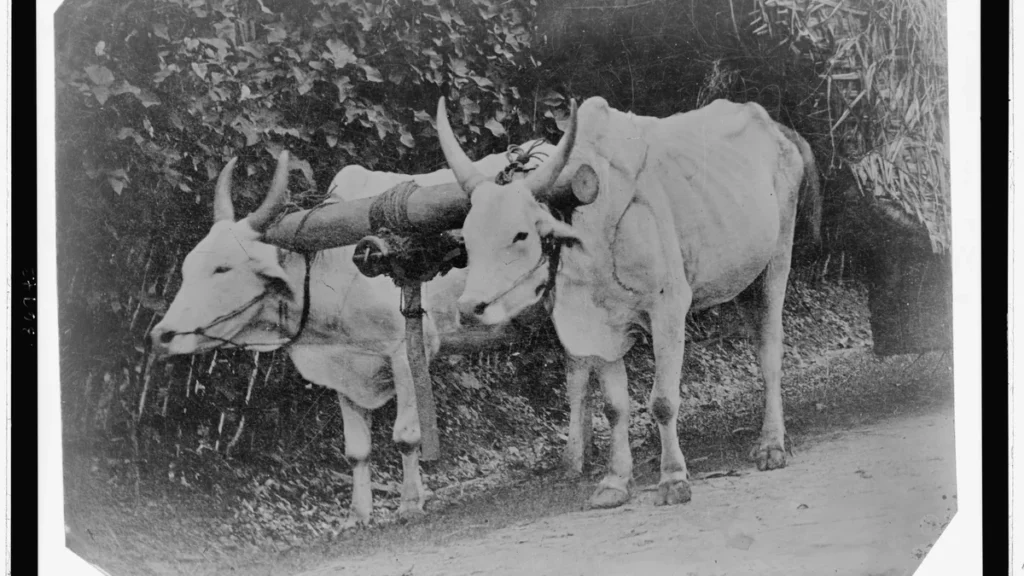
An ox barn is a working building for working cattle. The animals inside it are not being fattened for market, and they are not young stock being raised to join a herd. They are oxen: castrated male cattle trained to pull, kept in yoked pairs, and worked most days of the week. Everything about the barn follows from that one fact. The stalls are built for pairs that stand, eat and rest side by side in the yoke. The doors are wide enough for two animals to walk through together without breaking step. The floor has to take the weight of a team that leans into a load, and the yard outside has to give a yoked pair room to turn without tangling the harness.
An ox barn installation startup is the small business that designs, builds and fits out that building for farms, smallholdings and heritage sites that still work oxen. The work is part carpentry, part animal sense and part farm planning. A new startup has to survey the site, size the stalls for the team the farm actually keeps, plan the yokes and harness storage, lay out a yard where a pair can be hitched and turned safely, and price the whole job so the farm can afford it and the startup can stay in business. Get the stalls wrong and the oxen stand badly. Get the yard wrong and every working day starts with a struggle. Get the price wrong and there is no second job.
That is where the AI tools in this guide earn their place. They do not replace the site visit, and they do not replace knowing how a yoked pair moves. What they do is take the slow, error-prone parts of the job — measuring stalls, matching yokes to animals, planning workloads, costing materials — and turn them into work a two-person startup can do quickly and check twice. The nine tools below were picked for the ox barn build specifically: paired stalls, yokes, draught harness, team workloads and rest. Every one of them is judged on the working-ox build, not on generic barn work.
Key takeaways
- An ox barn houses working oxen in yoked pairs, so its stalls, doors, yard and harness store are all sized for two animals moving as one team.
- The build is distinct from beef-cattle group pens, young-calf group housing, single-bull pens and horse stables, and the tools below are chosen for that difference.
- Yoke fitting is the skill that makes or breaks the job: a yoke that fits badly sores the animals and wastes the team’s strength.
- Workload planning matters as much as construction, because a working team needs rest days, recovery bays and feed matched to the work ahead.
- Start with stall layout, yoke fitting and job costing, then add harness, workload and readiness tools as the order book grows.
The nine tools at a glance
Use this table to see the whole kit before reading the detail. Each tool covers one part of the ox barn job, and together they cover the build from the first survey to the handover.
| Tool | Best for | Buy it when |
|---|---|---|
| OxStall Plan AI | Paired working stalls and stall sizing | First — every job starts here |
| YokeFit AI | Yoke sizing and fitting for draught pairs | First — the fitting clients judge you on |
| TeamYard Layout AI | Yard, turning space and hitching area | With the first full barn job |
| HarnessStore AI | Draught harness storage, drying and repair | With the first full barn job |
| TeamWork Planner AI | Draught workload planning for the team | Once you advise on working routines |
| TeamReady Check AI | Daily readiness checks before yoking | Once you advise on working routines |
| OxFeed Ration AI | Work-day and rest-day rations | With the first handover pack |
| OxRest Plan AI | Rest bays, recovery and hoof care | With the first handover pack |
| OxJob Ledger AI | Quotes, materials and handover records | First — every job needs a price |
What an ox barn is — and what it is not
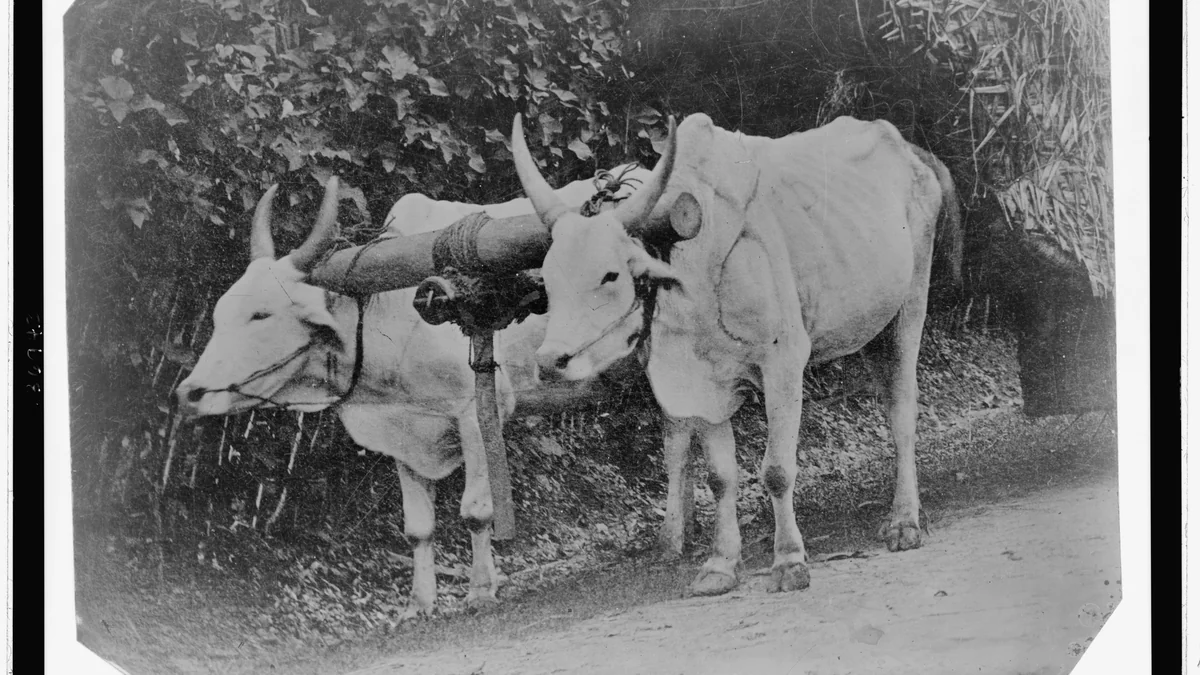
Start with the animals, because the animals decide the building. An ox is a castrated male bovine trained for draught work, and oxen almost always work in pairs, joined by a wooden yoke that sits across the back of their necks or on their foreheads. A pair that has worked together for a season moves as one animal: they step together, turn together and lean into the load together. The barn has to respect that partnership. Stalls are built in pairs, with a shared manger the two animals can reach without crossing each other, and a partition that keeps the pair together while keeping the next pair separate. Feed and water are placed so the team can eat in the yoke order they work in, because a pair that feeds calmly works calmly.
The building itself is a plain, heavy working barn, and its details are all about weight and wear. Floors are laid to drain and to stand up to hooves that scuff the same lines every day. Doors are wide and tall, with no low lintel a yoke can catch on and no narrow gap a pair has to squeeze through. The yard is the part beginners forget: a yoked pair cannot turn like a single animal, so the hitching area needs a wide, level sweep of ground, good footing in wet weather and a clear line from the barn door to the field gate. A handling race helps, but it is a race for a heavy pair, not a single animal, so its sides are stronger, its gates are wider and its corners are eased so a yoke never jams.
The neighbours on this site draw the line clearly. A cattle barn installation startup builds group pens for adult beef and finishing cattle, with feed passages wide enough for a mixer wagon and slurry handling for a whole pen at a time. That is herd housing, and an ox barn is not herd housing. The ox barn holds a small number of animals in pairs, and every detail — the stall, the yoke, the harness, the yard — is about a team that works. A startup that prices an ox barn like a beef pen will build the wrong building at the wrong price, and the farm will know it on the first working morning.
The other near neighbours are just as distinct. A calf barn raises young calves in groups on milk and starter feed. A bull barn holds one strong animal to a pen, with heavy gates and breeding records. A horse stable houses horses along an aisle, with a tack room for saddles. An ox barn has none of those: no group pens, no single-bull isolation, no saddles — just working stalls, yokes, draught harness and a yard built for a pair.
Designing the working-ox build
The design stage is where an ox barn startup wins or loses the job. The farm already knows its team: how many pairs it works, how big the animals are, which pair leads and which pair follows. The startup’s job is to turn that knowledge into a building that fits the team it has, with room for the team it will have in a few years. The three tools in this section cover the three design decisions that matter most: the stalls, the yokes and the yard.
1. OxStall Plan AI: The Best Tool for Paired Working Stalls and Stall Sizing
OxStall Plan AI designs stalls for yoked pairs instead of single animals or groups. The startup enters the team’s measurements — shoulder height, body length, yoke width, the size of the largest pair — and the tool lays out paired stalls with a shared manger, a partition between pairs and a standing area that lets both animals lie down without pressing on each other. It checks the stall length against the animal’s full stretch, the width against the yoke’s swing and the manger height against the neck line of a working ox, which sits lower and heavier than a young animal’s.
What makes it an ox tool rather than a generic pen planner is the pair logic. A group-pen planner asks how many animals fit in a pen. OxStall Plan AI asks how many pairs fit in the barn, and how the pairs sit in order: the steady lead pair nearest the door, the young pair where the handler can watch them, the spare pair where they can rest undisturbed. It also plans the standing area behind the stalls, because a working team needs room to be yoked up inside the barn on a wet morning without backing into the next pair.
2. YokeFit AI: The Best Tool for Yoke Sizing and Fitting for Draught Pairs
YokeFit AI is the tool clients judge an ox barn startup on, because the yoke is the part of the build the animals feel every working day. A yoke that fits badly rubs the neck raw, throws the pair out of step and wastes the team’s strength on every pull. A yoke that fits well disappears: the pair leans in, the load moves, and nobody thinks about the wood at all. The tool takes neck measurements, shoulder width and the distance between the pair, then produces a yoke pattern with the right bow, the right length and the right fit for each animal in the pair.
The tool also keeps the pair’s history. Oxen grow, fill out and change shape across a season, and a yoke that fitted in spring can pinch by autumn. YokeFit AI stores each animal’s measurements, flags the pair for re-measuring when the shape has changed, and keeps the old pattern so the startup can adjust the existing yoke instead of starting from scratch. It also records which yoke belongs to which pair, so a farm with three teams never hitches the wrong yoke to the wrong animals.
Use it on every job, even when the farm already owns yokes. Measuring the existing yokes against the animals is the fastest way to show the farm what the startup knows, and it often turns into paid work: a yoke re-cut here, a new yoke there, a spare made before the busy season. The tool’s fitting report, with a plain diagram and a short note on what was changed and why, is the kind of document a farmer keeps and shows to the next farm. That is how a new startup gets its second and third jobs.
3. TeamYard Layout AI: The Best Tool for Yard, Turning Space and the Hitching Area
TeamYard Layout AI plans the ground outside the barn, which is where a yoked pair spends the hardest minutes of its day. The tool takes the barn’s door positions, the slope of the ground and the route to the field gate, then lays out a hitching area with enough room for a pair to be yoked, turned and walked out without reversing. It checks the turning circle of a yoked pair — wider than most beginners allow — and marks where the ground needs levelling, where the footing needs hardening and where a gate needs moving so the pair never has to turn short.
The tool also plans the handling race for a heavy pair, with stronger sides, wider gates and eased corners so a yoke cannot jam. It places the race where the handler can work it from the barn door, with a clear escape route and a sightline to the yard, because handler safety starts with being able to see the whole pair and step clear. Drainage is part of the plan too: a yard that holds water in winter turns to mud under a working team, and mud is where feet slip and yokes twist.
Harness, workload and daily readiness
A barn is only half the job. Once the building stands, the team has to work from it day after day, and the startup that understands the working routine is the one the farm calls back. The three tools in this section cover the daily life of the team: the harness that connects the animals to the load, the workload that keeps the team fit without wearing it out, and the morning check that decides whether a pair works or rests. A horse stable installation startup fits stalls, an aisle and a tack room for horses, with saddles and bridles stored ready for riding. An ox barn needs something different: no saddles, no riding tack, just heavy draught harness, yokes and the tools that keep a working pair sound.

4. HarnessStore AI: The Best Tool for Draught Harness Storage, Drying and Repair
HarnessStore AI plans the harness store, which is the room the whole working day depends on and the room most barns get wrong. Draught harness is heavy leather and rope, and it comes back from the field damp with sweat and weather. Left in a heap it stiffens, cracks and chafes the animals. Hung right, with air moving around it and a drying rail near the door, it stays supple and lasts for years. The tool lays out the store with a rail for each pair’s harness, a rack for yokes, a bench for repairs and a drying line that uses the barn’s own airflow instead of fighting it.
The tool also keeps the repair list. Every piece of harness is logged with its pair, its age and its condition, and the tool flags the strap that is wearing thin, the buckle that needs replacing and the yoke pad that has gone hard. A small repair done in the evening is a ten-minute job. The same repair ignored for a month becomes a sore neck, a lost working day and a vet bill. HarnessStore AI turns that quiet wear into a list the handler can work through on a wet afternoon.
5. TeamWork Planner AI: The Best Tool for Draught Workload Planning for the Team
TeamWork Planner AI plans the working week for the whole team, because a working ox is an athlete and athletes need a training plan, not just a list of jobs. The tool takes the farm’s work — ploughing, carting, hauling timber, dragging — and spreads it across the pairs by strength, age and experience. The steady old pair takes the heavy, slow work. The young pair takes the light work and learns the lines. No pair works every day, and no pair works two hard days in a row without a rest day between them.
The plan also respects the seasons. Spring ploughing is the hardest work of the year, and the tool builds the team up to it over several weeks instead of throwing a rested team at a full field on the first dry day. Harvest carting is steady and long rather than heavy, so the tool plans shorter days with more of them. Winter is for rest, light work and keeping the team ticking over, with the tool cutting the workload back as the days shorten and the ground softens.
6. TeamReady Check AI: The Best Tool for Daily Readiness Checks Before Yoking
TeamReady Check AI is the morning tool: a short check, done before the yoke goes on, that decides whether a pair works, works lightly or rests. The handler walks the pair, checks the feet, the legs, the neck where the yoke sits and the animal’s general manner, and the tool turns those answers into a clear call. A sound pair with a good appetite works. A pair with a hot hoof, a stiff step or a dull eye rests, and the tool says which jobs can wait and which pair can cover them.
The value is in the record. Every morning check is logged against the animal, so a small change over a week becomes visible: the ox that is a little slower on Monday and a little stiffer on Wednesday is the ox that needs attention before Friday’s heavy work. The tool flags patterns a busy handler would miss, and it keeps the history so the vet, when called, gets a week of notes instead of a guess. That history is also the startup’s proof that the barn and the routine it handed over are working as designed.
Feed, rest and the job ledger
The last three tools cover the parts of the job that happen after the building is finished: feeding a team that works, resting it properly, and keeping the books straight. A calf barn installation startup raises young calves together in groups, so its feeding tools plan milk and starter intake for animals that are still growing. A working ox eats for the work ahead, not for growth, and its ration changes with the workload: heavy feed before a hard week, lighter feed on rest days, and a close eye on condition so the team stays strong without going fat.
7. OxFeed Ration AI: The Best Tool for Work-Day and Rest-Day Rations for Draught Oxen
OxFeed Ration AI sets the ration for each pair against the work the pair is about to do. A team facing a week of ploughing needs more energy feed than a team on light carting, and a team on a rest week needs the ration cut back so the animals hold condition without putting on fat that will slow them down. The tool takes the workload plan, the animals’ weights and the feed the farm already grows, then builds a daily ration for each pair: how much hay, how much concentrate, how much of the farm’s own crop, and when to feed it relative to the working day.
The tool also watches the change of seasons. Green feed in spring is rich and easy to overdo, and the tool trims the concentrate as the grass comes through. Winter feed is bulky and slower, and the tool adds the energy the team needs to keep warm and keep working. It keeps the cost visible too, so the farm can see what the team costs to feed in a working week against a rest week, and the startup can show that the barn it built is not eating the farm’s margin.
8. OxRest Plan AI: The Best Tool for Rest Bays, Recovery and Hoof Care
OxRest Plan AI plans the rest side of the barn, which is the side that keeps a working team working for years instead of seasons. A working ox needs a deep, dry bed to lie on after a hard day, a quiet bay where it can rest without being disturbed by the next pair, and a routine for feet that are checked, cleaned and trimmed on a regular round. The tool lays out the rest bays with the right depth of bedding, the right drainage underneath and enough room for a tired animal to lie flat and stretch.
Recovery is planned, not left to chance. After a heavy week the tool schedules a lighter week, with the rest bays kept fresh and the team turned out to grass where the farm allows it. Hoof care is on the same calendar: a regular trim, a check after wet weather, and a note against any animal that has gone tender. A sore foot ignored for a week becomes a lame ox, and a lame ox means the pair cannot work at all, because a yoked pair is only as strong as its weaker animal.
9. OxJob Ledger AI: The Best Tool for Quotes, Materials and Handover Records
OxJob Ledger AI is the business end of the kit: the tool that prices the job, orders the materials and keeps the record of what was built. The startup enters the stall plan, the yard work and the harness store, and the tool builds a quote with materials, labour and a margin the business can live on. It prices the timber, the fixings, the drainage and the gates separately, so the farmer can see where the money goes and the startup can see where the margin is thin.
Materials ordering is where small startups lose money, and the ledger keeps it tight. Every order is logged against the job, every delivery is checked against the order, and the tool flags the shortfall before the crew arrives on site without the right timber. At handover, the ledger becomes the record of the barn: what was built, what was measured, which yoke fits which pair, and what the farmer should check first. That record is the startup’s memory, and it is what makes the second barn easier than the first.
Buy this tool with the stall planner on day one. A startup that prices well and keeps good records can survive a quiet month, because it knows exactly what each job is worth and exactly what it has already promised. A startup that guesses at prices and loses its notes cannot. The ledger is not the most exciting tool in this guide, but it is the one that keeps the business open long enough to use the other eight.
How to choose your first three tools
If the budget only stretches to three tools, buy OxStall Plan AI, YokeFit AI and OxJob Ledger AI, in that order. The stall planner wins the job, because it turns the survey into a drawing the farmer can approve. The yoke fitter keeps the job, because it proves the startup understands the animals, not just the timber. The ledger pays for the job, because it prices the work honestly and keeps the record straight. Everything else in this guide can wait until the second or third barn.
When the order book grows, add TeamYard Layout AI and HarnessStore AI next, because the yard and the harness store turn a good barn into one that works every day. Then add the routine tools — workload, readiness, feed and rest — as a handover pack with every barn. By then the startup is selling a working routine, not just a building, and that is harder for a general builder to copy.
First-month checklist for a new ox barn startup
- Measure three local working teams, yokes included, and keep the measurements as your first reference set for stall and yoke sizing.
- Price one complete ox barn — stalls, yard, harness store and all — with OxJob Ledger AI, and check the margin on every line before quoting it.
- Walk two farms with working oxen and note where the yard helps the team and where it fights them, so your first yard plan is drawn from real ground.
- Set up the nine-tool kit on trial where trials exist, and run one practice job through the stall planner, yoke fitter and ledger end to end.
- Build a handover pack template with the stall plan, yoke records, workload plan, ration plan and rest calendar, ready to hand over with the keys.
- Ask your first client for a short written note on the working team a month after handover, and keep it as the proof your next client will ask for.
Frequently asked questions
What is an ox barn installation startup?
It is a small business that designs, builds and fits out barns for working oxen: paired stalls, yokes and draught harness, a yard where a yoked pair can turn, and a harness store. The startup surveys the farm’s team, sizes the building to the animals, builds it and hands over the records, the yoke patterns and the working routine the team needs.
How is an ox barn different from a cattle barn?
A cattle barn houses adult beef and finishing cattle in group pens, with feed passages for a mixer wagon and slurry handling for whole pens. An ox barn houses a small number of working oxen in yoked pairs, with paired stalls, yokes, draught harness and a yard built for a team. The animals, the daily routine and the building details are all different, even though both buildings hold cattle.
How is an ox barn different from a calf barn?
A calf barn raises young calves together in groups, with deep bedding, careful ventilation and feeding built around milk and starter intake. An ox barn houses mature, trained working animals in pairs, with stalls, yokes and a workload plan. The calf barn is about raising stock; the ox barn is about working a team.
How is an ox barn different from a horse stable?
A horse stable houses horses in stalls along an aisle, with a tack room for saddles and bridles and care built around riding and yard work. An ox barn houses yoked pairs of draught cattle, with no saddles, no riding tack and no tack room. The harness is draught harness, the fitting is the yoke, and the yard is built for a pair that pulls together.
How much does an ox barn installation cost?
There is no single price, because the cost follows the team: the number of pairs, the size of the animals, the state of the ground and the distance to materials. A small two-pair barn on good ground costs far less than a four-pair barn that needs drainage and a new yard. The honest way to price it is to measure the team, plan the stalls and yard, and cost every line with a tool like OxJob Ledger AI before quoting.
Which AI tool should a new ox barn startup buy first?
Buy OxStall Plan AI first, because every job starts with the stall plan and every quote depends on it. Add YokeFit AI next, because the yoke fitting is the work the animals feel and the clients judge. Add OxJob Ledger AI at the same time, because a startup that prices badly does not stay in business long enough to use the other tools.
The bottom line
An ox barn is a working building for a working team, and the startups that succeed respect the pair: stalls that fit two animals moving as one, a yoke that fits without rubbing, a yard that lets the team turn, and a routine that rests the animals as carefully as it works them. The nine tools here cover that whole job, from the first survey to the handover pack. Start with the stalls, the yoke and the ledger, prove the build on one farm, and let the team do the talking for the next job.

Keep what speaks to you.
Leave room for your own perspective.